Category Archives: Mathematics

Word Problem Review

problem-solving-assessment

Arithmetic Word Problems

Exercise: Integer Problems from Dubb

Exercise: Arithmetic Expression Problems from Dubbs

Algebra Word Problems

Chapter 1: Simple Equation Problems

Chapter 2Percent Problems

Chapter 3: Advanced Level Age Problems

Chapter 4Mixing Problems

Chapter 5: Measurement (Ratio) Problems

Chapter 6: Rate Problems

Chapter 7Statistics & Probability

Chapter 8: Geometry Problems

Chapter 9Review of Equations

Answers to Practice Problems

.

Algebra Review

pre-algebra

Reference: Remedial Math

For application by the student

UNIT 1: Real Numbers

Answers to Unit 1

UNIT 2: Variable Expressions

Answers to Unit 2

UNIT 3: Solving Equations

Answers to Unit 3

UNIT 4: Applications

Answers to Unit 4

UNIT 5: Polynomials

Answers to Unit 5

UNIT 6: Factoring

Answers to Unit 6

UNIT 7: Algebraic Functions

Answers to Unit 7

UNIT 8: Graphs & Linear Equations

Answers to Unit 8

UNIT 9: Systems of Linear Equations

Answers to Unit 9

UNIT 10: Inequalities

Answers to Unit 10

UNIT 11: Radical Expressions

Answers to Unit 11

UNIT 12: Quadratic Equations

Answers to Unit 12

.

Remedial Math Level 2B

mc-001

Middle School Review 2B

Lesson 7: Equations & Transposition

.

Primary School Review

numbers2

Reference: Remedial Math

Lesson 1: Numbers

Exercise: Reading Numbers from Dubb 

Exercise: Writing Numbers from Dubb 

.

Lesson 2: Addition

Exercise: Addition Problems from Dubb

.

Lesson 3: Multiplication

Exercise: Multiplication Problems from Dubb

.

Lesson 4: Subtraction

Exercise: Subtraction Problems from Dubb

Exercise: Integer Problems from Dubb

.

Lesson 5: Division

Exercise: Short Division Problems from Dubb

Exercise: Long Division Problems from Dubb

Exercise: Arithmetic Expression Problems from Dubbs

.

Lesson 6: Units

Table for the Units of Measure

Exercise: Problems on Units from Dubb

Long Measure

Square Measure

Rectangles

Cubic Measure

Time Measure

Miscellaneous Tables

Promiscous Examples

Addition of Compound Numbers

Subtraction of Compound Numbers

Time between two Dates

Time in Days between Two Dates

Multiplication of Compound Numbers

Division of Compound Numbers

———————————————————————————-

Program 1: A Level 1 Math Program

To be used for a summary review of Level 1.

———————————————————————————-

DETAILED VERSIONS

To be used for children needing more details.

MS A1 Numbers

MS A2 Addition

MS A3 Subtraction

MS A4 Multiplication

MS A5 Division

———————————————————————————-

.


A MATHEMATICIAN’S APOLOGY

g-h-hardy-6

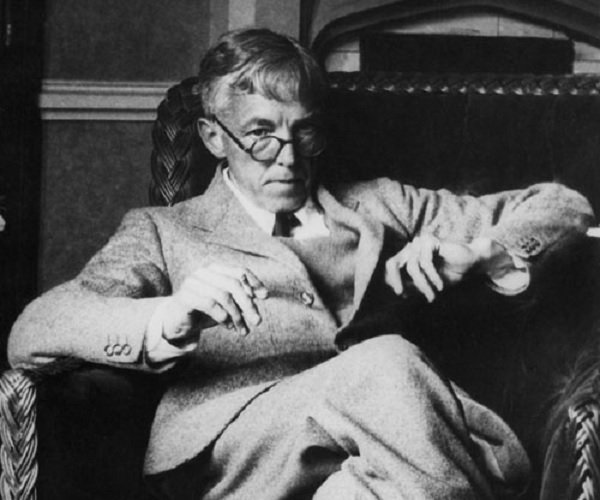
Here are my notes from A MATHEMATICIAN’S APOLOGY by G.H. Hardy. I studied this essay to better understand the nature of patterns, which are described by the Laws of Metaphysics on a grander scale.

Hardy seems to be obsessed with good and evil, which makes him less objective. But here is the essence of his essay.

.

It is preferable to do mathematics than talk about it. Satisfaction in mathematics comes from discovering new patterns rather than putting those patterns to use. Mathematics requires the freshness of a young mind. Doing mathematics is very pleasurable and its achievements have certain permanence.

Mathematics is done for its own sake. It is quite something to express mathematical ideas in understandable language. Mathematics consists of patterns of ideas that have permanence. The best mathematics lies not in its practical consequences but in the significance of the ideas which it connects.

Simple examples are (a) Euclid’s proof of the existence of infinity of prime numbers, and (b) Pythagoras’s proof of the ‘irrationality’ of √2.

Mathematical patterns may be judged by their beauty and seriousness. The theorems of Euclid and Pythagoras have influenced thought profoundly, even outside mathematics. Practical applications are concerned only with approximations.

A ‘serious’ theorem contains ‘significant’ ideas that consist of certain generality and depth. Abstraction refers to any pattern of ideas, but generality is marked by how many different ideas are connected. Mathematical ideas may be viewed as arranged in strata. Generality and depth go hand-in-hand.

Mathematical reality lies outside of us. Our function is to discover or observe the continuity, harmony and consistency of its beautiful patterns. The aesthetics of mathematics lies in the creativity and simplicity of the proofs of its theorems.

The physical patterns have their own structure which derives its explanation from the patterns discovered in mathematics. The physical reality is an approximation derived from mathematical reality.

The mathematics of great mathematicians has permanent aesthetic value. That knowledge goes much beyond providing merely the material comfort of mankind.

Real mathematics is the most austere and the most remote of all the arts and sciences. It is not a contemplative but a creative subject. It may be justified as art.

.