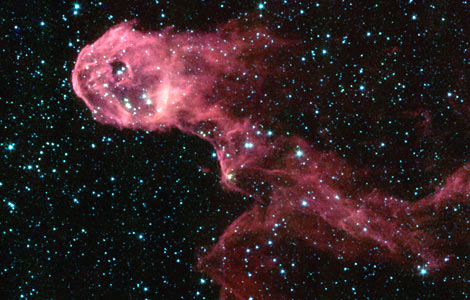
The Brain Structure

From Paper on Hinduism

Looking at the participation of electrons in chemical reactions, they seem to determine all the physical properties that we perceive. All properties of the body seem to come from how the atoms of carbon, oxygen, hydrogen, etc. bond together in large chains. This bonding comes about from sharing of electrons among atoms. The nuclei in atoms seem to act as anchors for the electronic distribution. These macromolecules are large enough to have computing circuits, which generate their own computation. This, probably, gives rise to a rudimentary form of thought. However, this cannot be entirely looked upon as “materialism” because there is an unknowable spiritual element determining that electronic configuration. I believe that physical and spiritual are aspects of a single overall system that is yet to be fully comprehended.

It may be interesting to look at the macromolecule as a genetic computer, and how a psychedelic drug may affect its operation, to fully understand the chemistry of reality.

.

Here is what I have found on brain waves:

Delta wave (0–4 hertz): A high amplitude brain wave… usually associated with the deepest stages of sleep.

Theta wave (4–7 Hz): Tends to appear during drowsy, meditative, or sleeping states… but not during the deepest stages of sleep.

Alpha wave (8–12 Hz): Dominate during wakeful relaxation with closed eyes… reduced with open eyes, drowsiness and sleep

Mu wave (8–13 Hz): Most prominent when the body is physically at rest… suppressed when one performs or observes a motor action

Beta wave (12-30 Hz): States associated with normal waking consciousness

Gamma wave (25-100 Hz): May be implicated in creating the unity of conscious perception

It seems that brain waves move toward a higher frequency as the brain wakes up more and more. Finally, at the level of “Gamma” one is increasingly operating at the level of intuition. Here one seems to be continually resolving inconsistencies as they arise.

With the practice of KHTK Looking, one may be able to raise the activity of the brain to the level of producing more Gamma waves. This may provide us with some understanding about the physics of reality.

.
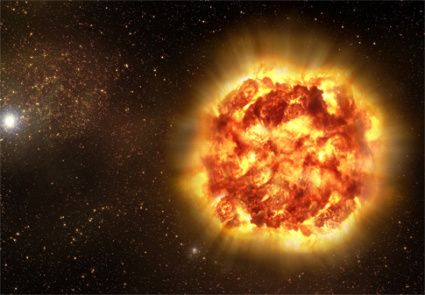
Energy: A Definition

Hubbard says in THE PHOENIX LECTURES:

AXIOM FIVE: ENERGY CONSISTS OF POSTULATED PARTICLES IN SPACE.

Now, we’ve got space: a viewpoint of dimension.

You say: “I am here looking in a direction.” We’ve actually got to have three points out there to look at, to have three dimensional space. If we only had linear space we would have only one dimension point. One point to view. And energy consists of postulated particles in space, so we’ll demark these three points out there to have some three dimensional space and we’ll have these particles which we will call Anchor Points, and we’ll have energy.

To have 3-dimensional space, we need three directions that are independent and cannot be projected on each other. These directions are as follows:

(1) Back to front
(2) Left to right
(3) Bottom to top

When we move a point from back to front, a one-dimensional line is produced. When we move this line from left to right, a two-dimensional surface is produced. When we move this surface from bottom to top, a three-dimensional block of space is produced.

Additional independent considerations, such as, time, shall add more dimensions to this space. For example, two cars may cross the same point at an intersection, but may not crash when times are different.

There may be any number of independent “directions,” or considerations, added, and each such consideration shall introduce a new dimension to space.

Energy would be the shifting and vibrating of considerations that make up the space. The most fundamental of these considerations would be the point or location in space and the shifting of this location in the three spatial dimensions. An electromagnetic wave may be the result of spatial locations shifting and vibrating as such. The electromagnetic wave may be looked upon as a ripple in the very fabric of space.

Space is made up of considerations that are NOT nothing. It is the shifting and vibrating of space, which manifests as energy. The conjecture introduced here postulates the relationship of space to energy. 

Vibrating space shall have the fundamental dimension of frequency associated with it. The higher the frequency, the more solid the ripple in space may appear to be. The constraints generated by spatial dimensions may make this energy wave appear as a particle like electron and others that make up protons and neutrons.

What is presented here is a wild conjecture that may come to nothing. But we do know from Einstein’s research that  energy condenses as matter. So the ideas presented here need to be looked at more closely for consistency or inconsistencies.

.

Space: A Definition

Hubbard, the founder of Scientology, says in THE PHOENIX LECTURES:

AXIOM FOUR: SPACE IS A VIEWPOINT OF DIMENSION.

Do you know that physics has gone on since the time of Aristotle without knowing that! Yet we read in the Encyclopedia Britannica of many years ago (the Eleventh Edition, published in 1911) that space and time are not a problem of the physicist. They are the problem of one working in the field of the mind. And it says that when the field of psychology solves the existence of space and time why then physics will be able to do something with it. And all those fellows with their Ph.D.’s — not for centuries actually but a number of decades (it seems like centuries if you’ve ever listened to their lectures) — going back to the days of Wundt, The Only Wundt — about 1867 — they didn’t read the Encyclopedia Britannica and find out that they held the responsibility for identifying space and time so that physics could get on its way.

And because they avoided this responsibility we have to pitch in here and discover and develop Scientology — not to work in the field of physics, however, but to work in the field of the Humanities. But it so happened that I discovered very, very early while I was studying nuclear physics at George Washington University that physics did not have a definition for space, time and energy. It defined energy in terms of space and time. It defined space in terms of time and energy, and it defined time in terms of energy and space. It was going around in a circle. I first moved out of that circle by putting it into human behavior — be, do and have, which you’ll find in Scientology: 8-8008, but the point is here that without a definition for space, physics was and is adrift. One of our auditors was recently talking to an engineer in an Atomic Energy Commission plant, and happened to remark, “Well, we have a definition for space.” This engineer said, “Uh, you do?” and got instantly interested. Of course we didn’t make this definition for nuclear physics, but they could certainly use one. The engineer asked, “What is the definition of space?” and the auditor said, “Space is viewpoint of dimension.” This fellow just sat there for a moment, and he sat there, and then all of a sudden he rushed to the phone and dialed a number and he said, “Close down number five.!” He had suddenly realized that an experiment in progress was about to explode and one of the reasons he knew it was about to explode is that he had found out what space was. This is of great interest to nuclear physicists, but they will get one of these definitions and then they will start to figure, figure, figure, figure, figure. They don’t take the definition as such and use it as such. They figure-figure, and they lose it.

.

Hubbard implies that space is generated by viewpoint. But a viewpoint, being a point, must itself be part of space. It appears that space has both physical and mental (spiritual) aspects to it. The following seems to be the characteristics of space:

  1. Space is basically a field, or an expanse, made up of points or locations.

  2. This expanse of points is infinite having no limits.

  3. Each point is recognized by considerations attached to it.

  4. The primary consideration is that of being part of a matrix.

  5. The consideration at a point may acquire the dimension of being a “point of reference.”

  6. That point then becomes a viewpoint from which other points may be viewed or considered.

  7. The points in space may have considerations of their own as matter, energy, space and time (MEST).

  8. These points may also be viewed through considerations generated at the viewpoint, such as, perceptions, experience, information, hypothesis, theory, principles, axioms, and self.

  9. A point in space is known by its considerations, and the considerations that are attached to it by the viewpoint.

  10. The points become unknowable as they move farther and farther away from the viewpoint.

.

Applied Algebra

Contents

.

UNIT  01 Real Numbers

                Answers to Unit 01

.

UNIT  02 Variable Expressions

                Answers to Unit 02

.

UNIT  03 Solving Equations

                Answers to Unit 03

.

UNIT  04 Solving Equations: Applications

                Answers to Unit 04

.

UNIT  05 Polynomials

                Answers to Unit 05

.

UNIT  06 Factoring

                Answers to Unit 06

.

UNIT  07 Algebraic Functions

                Answers to Unit 7

.

UNIT  08 Graphs & Linear Equations

                Answers to Unit 08

.

UNIT  09 Systems of Linear Equations

                Answers to Unit 09

.

UNIT  10 Inequalities

                Answers to Unit 10

.

UNIT  11 Radical Expressions

                Answers to Unit 11

.

UNIT  12 Quadratic Equations

                Answers to Unit 12

.

KHTK Axiom Zero

INITIAL ASSUMPTIONS:

The implicit assumptions of this project are:

  1. KNOWLEDGE IS NOT ABSOLUTE BUT RELATIVE.
  2. THE UNKNOWN MAY BE MADE KNOWN THROUGH THE RESOLUTION OF INCONSISTENCIES.

For an understanding of inconsistency please refer toInconsistency & Looking.]

.

OBSERVATIONS:

The initial observations of this project are:

  1. THERE IS LOOKING AND PERCEIVING
  2. ANYTHING THAT CAN BE PERCEIVED IS MANIFESTED. 
  3. ANYTHING THAT IS MANIFESTED IS EXISTING.
  4. CERTAIN AMOUNT OF PHILOSOPHY AND LOGIC IS BUILT INTO THE LANGUAGE AND IT IS DIFFICULT TO CIRCUMVENT AT TIMES.

.

CONJECTURES:

  1. EXISTENCE DEPENDS ON THE ABILITY TO LOOK AND PERCEIVE.
  2. THE ABILITY TO LOOK AND PERCEIVE EXISTS.

.

For the next axiom please refer to KHTK AXIOMS: A Work in Progress.

.