Category Archives: Self-Improvement

These are exercises that one may apply to oneself to improve.

DIANETICS: Introduction

Reference: Hubbard 1950: Dianetics TMSMH

These are some comments based on the Introduction of Dianetics from the book, DIANETICS: THE MODERN SCIENCE OF MENTAL HEALTH.

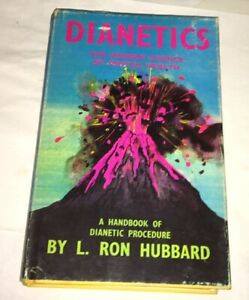
NOTE: Winter wrote the introduction to the first edition of the DIANETICS book. A year later, he critiqued only minor assumptions and outrageous claims of Hubbard in a book whose cover is reproduced above. After about 70 years, we are now in a position to navigate through the hype of Hubbard, and really strengthen the actual discovery of Dianetics—that there are impressions in the mind generated by traumas that underlie consciousness and influence human thinking, health and behavior.

.

Comments on
Introduction

KEY WORDS: Unconsciousness, Engrams

This introduction by physician J. A. Winter states, “In the creation of any New Idea, there is one step which is highly important. It is so obvious as to be frequently overlooked. This step, the sine qua non of any idea, consists in examining the basic assumptions of the subject and determining whether or not they need to be revised. The creator of a New Idea asks, ‘What would happen if I assume that this belief which everyone has had for centuries isn’t necessarily so?’”

The above statement defines Subject Clearing too. What makes Dianetics so revolutionary, and at the same time evolutionary, is that it examines the basic assumptions underlying the subject of life and the functioning of the mind. Dianetics exposes some of these assumptions.

One of the assumptions has been that the mind cannot record what is happening in the environment when the person is unconscious.

In Dianetics therapy, impressions  from the periods of unconsciousness were found to exist in the mind. This led to the speculation of impressions from existence prior to birth, such as, in the womb, or in the DNA. Such past impressions have been known as samskara in the ancient Vedic philosophy. It is interesting to note that, in Buddhism, the mind is considered to be an organ of perception. We, therefore, have six organs of perception—touch, sight, hearing, smell, taste and the mental matrix.

The actual discovery of Dianetics is that the mind is capable of recording events, such as, severe injury, delirium, or surgical anesthesia, while the person appears to be unconscious. Such recordings normally stay below the level of consciousness, but can be retrieved back into consciousness with some effort.

Such recordings, called ENGRAMS, are susceptible to reactivation during future periods of mental anguish. The engram, hidden beneath unexplored layers of “unconsciousness,” possesses a power of command not unlike that of a post-hypnotic suggestion, in a far more insidious and tragic effect. This fact has been found to be a single, direct source of aberrated behavior in Man. 

Winter states, “We should feel free to examine the basic assumptions of any body of knowledge we wish, without fear of committing lese majeste. If any system of thought is going to wither in the light of investigation, it does not deserve the title of Authority.”

Soon after a very successful publication of Dianetics in May 1950, Hubbard, the originator of Dianetics, started to act as an Authority. Dr. Winter, who served as the medical director of the Hubbard’s Dianetics Research Foundation, resigned in October 1950, stating “there was a difference between the ideals inherent within the dianetics hypothesis and the actions of the Foundation.” He published A Doctor’s Report on Dianetics in 1951 (see the image above), that was critical of Hubbard’s Authority. Some detail’s of Winter’s book may be found at Early Scientology / Dianetics – 1950.

It is important to look beyond the Authority of Hubbard at the actual scientific facts that support or deny the claims made by Hubbard with respect to Dianetics.

.

DIANETICS: Synopsis

Reference: Hubbard 1950: Dianetics TMSMH

These are some comments based on the Synopsis of Dianetics from the book, DIANETICS: THE MODERN SCIENCE OF MENTAL HEALTH.

.

Comments on
Synopsis

KEY WORDS: Dianetics, Individuality, Survival

Dianetics was more or less theoretical at the time this book was published, and lots of kinks remained to be smoothed out of its procedure. But it was a great step forward.

Dianetics was designed to handle the psychosomatic causes of illnesses. Shocks and pains were the starting points for looking for the cause that contributed to all illnesses and aberrations. This was identified as engram (cellular impression) because of past trauma. Resolution of illnesses occurred when these engrams were located and desensitized through repeated recounting.

Finding the engram took a lot of clever guessing and questioning on the part of the auditor, since the preclear (the patient) was under reverie and passively obeying auditor’s commands. This yielded at least one engram per case. The running of the engram was usually quite dramatic and affected the case positively.

Locating and resolving the engrams do yield some remarkable results.

However, the rest of the case was not that easy to resolve. Other anomalies that made up the majority of the case were mostly out of reach of Dianetics. Thus, Dianetics results have been quite dramatic but limited in terms of resolving the whole case of a person.

Dianetics’ assertion, “The problems of thought and mental function can be resolved within the bounds of the finite universe,” is quite logical. This approach was taken by Buddha 2600 years ago. It freed Buddhism from mysticism and metaphysics.

Hubbard’s states, “THE DYNAMIC PRINCIPLE OF EXISTENCE IS: SURVIVE!” An individual is surviving along four “dynamics” as follows:

Hubbard’s principle, however, fixes his whole philosophy on survival such that evolution is ignored. The truth is that the individual and the rest of the universe is surviving with the goal to EVOLVE.

The stated goal of Dianetics therapy is to clear the individual of all his mental and physical aberrations. This means freeing the person from all fixations so he can operate freely. But this includes freeing the individual from fixation on his survival. Many individuals have been fixated on personal survival so much that they have been dreaming of immortality in terms of their souls living forever. But, the truth is:

No specific individuality survives permanently. All individualities go through life cycles, so that the consciousness of the universe evolves toward Knowingness.

The current situation in all civilized societies around the world is the focus of individuals on personal survival. Such individuals are unable to evolve beyond living on the first dynamic. Evolution requires willingness to live as well as to die. An individual fixated on living will crave for immortality of his individuality. He will resist death at all costs. He cannot sacrifice himself willingly when circumstances ask for it. 

This is an aspect of the mental impression or engram. When this is shared by all humanity it becomes a “fourth dynamic engram.” This particular fourth dynamic engram is FIXATION ON FIRST DYNAMIC SURVIVAL.

Dianetics, which focuses on the individual, is not capable of handling this fourth dynamic engram of fixation on survival. 

There is no individual decision-making beyond the “body-mind system.” The individual soul is still part of the body-mind system. The “spirit” energizes the body-mind system, just as electricity energizes a machine. There is no individuality in the realm of spirit. Yet, Dianetics seems to postulate “spirit” to have individuality, which is spelled out later in Scientology as “Thetan.” Buddhism has no such concept of a permanent soul, thetan or atman.

But there is consciousness that goes beyond individuality. The true “I” represents a certain level of consciousness.

There are a lot of good ideas in Dianetics, and there is no intention here to minimize the effectiveness of Dianetics in making the sick well. But the handling the whole case of a person requires the handling of the fourth dynamic engram. Dianetics, and its extension, Scientology, is not designed to handle that. Buddhism, on the other hand, is designed to handle the fourth dynamic engram and it can use the technology developed in Dianetics.

Dianetic engrams are just a few low hanging fruits that do bring significant relief on the first dynamic of a person. But the Dianetic therapy does not bring about the evolution of the individual in expanding his viewpoint, or “I,” to other dynamics.

It may be possible to greatly enhance the value of Dianetics by aligning its techniques with the postulates of Buddhism.

Subject Clearing Overwhelm

Reference: Course on Subject Clearing

Do this exercise whenever you feel overwhelmed by a sense of responsibility.

Preparation

  1. Be well-fed and well-rested as much as possible.
  2. Get your attention as much extroverted as possible by taking a walk and examining your environment.
  3. Select a peaceful environment for meditation where you would not be disturbed.
  4. Sit in a cross-legged position, or in a chair with feet flat on the ground.

The Meditation

  1. Close your eyes. Inhale and exhale gently, slowly.
  2. With each inhalation, mentally say to yourself: “I am responsible for the body,” The inhalation should last the whole duration of that thought.
  3. With each exhalation, mentally say to yourself: “I am responsible for the mind.” The exhalation should last the whole duration of that thought.
  4. As you do the above:
    • Face the the situation and the feeling of overwhelm. Do not resist.
    • Face any regret about having done (or not done) something. Do not resist.
    • Face whatever is difficult to look at. Do not resist.
    • Look again at the problem that you have been trying to solve.
    • Do not avoid, suppress or deny any feelings and/or sensations.
    • Decide what you need to do in the present to fulfill your responsibility.
    • Visualize yourself doing it.
  5. Repeat this for as long as the feeling of overwhelm last.
  6. Do not end this exercise until you are on top of the feeling of overwhelm.

.

Subject Clearing Fear and Anxiety

Reference: Course on Subject Clearing

Do this exercise whenever fear and anxiety are dominant. Please take all medical precautions.

Preparation

  1. Be well-fed and well-rested as much as possible.
  2. Get your attention as much extroverted as possible by taking a walk and examining your environment.
  3. Select a peaceful environment for meditation where you would not be disturbed.
  4. Sit in a cross-legged position, or in a straight-backed chair with feet flat on the ground.

The Meditation

  1. Close your eyes. Inhale and exhale gently, slowly.
  2. With each inhalation, mentally say to yourself: “I am not the body,”  while facing the sensations of fear and anxiety in the body, without resisting them. The inhalation should last the whole duration of that thought.
  3. With each exhalation, mentally say to yourself: “I am not even the mind,” while facing the feeling of fear and anxiety without resisting it. The exhalation should last the whole duration of that thought.
  4. Do not avoid, suppress or deny any sensations and feelings. Face them fully.
  5. Repeat this for as long as the fear and anxiety last.
  6. Do not end this exercise until you are on top of the fear, or anxiety, bothering you.

.

Subject Clearing Detachment

Reference: Course on Subject Clearing

Do this meditation exercise whenever you feel too attached to things.

Preparation

  1. Be well-fed and well-rested as much as possible.
  2. Get your attention as much extroverted as possible by taking a walk and examining your environment.
  3. Select a peaceful environment for meditation where you would not be disturbed.
  4. Sit in a cross-legged position, or in a straight-backed chair with feet flat on the ground.

The Meditation

  1. Close your eyes. Inhale and exhale gently, slowly.
  2. With each inhalation, mentally say to yourself: “I am not the body.” The inhalation should last the whole duration of that thought.
  3. With each exhalation, mentally say to yourself: “I am not even the mind.” The exhalation should last the whole duration of that thought.
  4. Repeat this for 7 to 11 minutes.
  5. Do this exercise at least twice a day for a week.
  6. You can remind yourself that “I am not the body. I am not even the mind. anytime during the day.

NOTE: You may do this as a walking meditation on a treadmill at a slow, comfortable pace.

.