Grounding Instruction

ground-600x450

References:

The 3 Rules of Mindfulness

Triggering of Memory

Mindfulness Meditation

.

A Grounding Instruction is the instruction one keeps at the back of one’s mind during meditation. The idea is to maintain awareness of the grounding instruction the same way as one maintains awareness of breathing. To accomplish that one keeps coming back to the grounding instruction intermittently during the meditation session.

For example, the grounding instruction could be “Remember something”. One keeps this instruction at the back of one’s mind. This is an instruction for the mind. During meditation, the mind reconstructs the memories by free association as it sees fit and brings it up to consciousness. One acknowledges each memory as it comes up and continues with meditation.

Before starting the meditation one makes sure that one is fully familiar with the The 3 Rules of Mindfulness. These rules define the mindfulness meditation.

One should also make oneself fully familiar with the necessity of letting the memory come up naturally by practicing the two exercises provided in Triggering of Memory.

One then starts the meditation session with deep breathing as explained in the document Mindfulness Meditation. One settles down in meditation according to this document.

One then places the grounding instruction at the back of one’s mind and lets the mind associate freely.

.

Grounding instruction provides a new dimension to the mindfulness meditation. It should be used carefully together with the instructions outlined above.

.


From Chaos to Order (old)

chaos1

Reference: Mindfulness Approach

.

The fundamental principle of the universe is that there is precipitation of order from chaos. This order is continually being added to the universe. In fact, this universe is the manifestation of the cumulative order. If that were not so, there wouldn’t be a universe.

Maybe this order is also converting back to chaos; but there is more order precipitating from chaos than order converting back to chaos. So, there is a net increase in order that is irreversible. It is this irreversibility of increasing order that provides the idea of time.

The fundamental principle of “chaos to order” is driving the creation of this universe. We don’t know where this principle comes from. So, this is where science comes closest to acknowledging God.

This work does not question whether God exists or not. It leaves the origins of chaos open to investigation. The ancient texts of the East hint that this universe is forming and dispersing cyclically; but that is also considered beyond the scope of this work. The purpose of this work is to look at the human evolution in the context of the present universe.

The order precipitates from chaos as a pattern. This pattern grows and evolves into more complex patterns. Thus there is a sequence in which the order precipitates and grows. We see a very early rendition of this sequence in the Bible as “six days of creation”. It starts with light on the first day and ends with mankind on the sixth. The whole sequence is as follows.

  • Creation of light from darkness
  • Creation of firmament from waters
  • Creation of earth and plant life from the seas
  • Creation of regularity in terms of day, night, year and seasons
  • Creation of sea life in water and fowl on land
  • Creation of higher animal life and humans.

The above sequence ends here because “God rested on the seventh day”. So the evolution rests here per the writers of the Bible. Coming forward to the modern scientific era, we, however, think that evolution is continuing after having gone through the following stages.

  1. From electromagnetic energy to matter
  2. From matter to animation
  3. From animation to life
  4. From life to thought

These stages are studied by the various subjects as follows..

  • Stage 1 is the domain of COSMOLOGY & PHYSICS.
  • Stage 2 is the domain of CHEMISTRY & BIOCHEMISTRY.
  • Stage 3 is the domain of BIOLOGY & PROGRAMMING.
  • Stage 4 is the domain of AWARENESS & MINDFULNESS.

The fundamental principle of “chaos to order” never rests. The fundamental directive of this universe is,therefore, EVOLVE! However, this seems to contradict the popular belief that “God rested on the seventh day”, which then shows up in the belief that the fundamental directive of the universe is SURVIVE! But survive is flanked by birth and death, which are natural. The desire to survive for ever is subjective. The cycle of “birth, survive, death” is the objective reality of evolution.

The fundamental directive of this universe is EVOLVE! Relative to this the fixation on “SURVIVE” is subjective.

Presently, thought is evolving toward some goal. Complete awareness of earlier stages is needed to understand that goal. For this purpose we need to see things for what they are with full awareness of all assumptions. This is the basic intention underlying the idea of mindfulness that was developed by Buddha 2600 years ago.

According to the fundamental principle, if we let the mind freely associate all thoughts without suppression then some order is bound to precipitate. Realization of order helps us resolve confusions. Resolution of confusion brings clarity to thoughts. This is how the thoughts evolve.

When we look at Stage 1, we find that the electromagnetic spectrum is flanked by space on one side and matter on the other. This is obvious when we look at the structure of the atom, which extends from nucleus out into space. Thus, there is continuity from matter to space through an electromagnetic field.

When we look at Stage 2, we find that animation comes about with the evolution of RNA and DNA molecules. These complex molecules have enough electrons to form programmable circuits. There is a whole range of motion among atoms and molecules of matter, and there is harmony from the smallest to the largest atomic and molecular structure.

When we look at Stage 3, we find that life begins with naturally programmed motion at the level of cell. It is able to reproduce itself with continuity and harmony. It is able to grow into infinite and complex varieties of organisms. Furthermore, in spite of that complexity, life manages to remain consistent throughout. We see that in all ecosystems nurtured in nature.

When we look at these first three stages of evolution we find that this universe is continuous, harmonious and consistent at a fundamental level. These, then, are the characteristics of order.

Matter provides a structure that lends itself to animation. The animation provides life organisms, which lend themselves to programming. The ability of programming evolves into the formation of the mind within the organism. The mind perceives the environment and responds to it by directing the activity of the organism to bring more order to it. The order extends beyond the individual organism to a whole ecosystem of life .

There is disorder at higher levels visible as discontinuity, disharmony and inconsistency. Such disorder is there around us and within us. We are trying to sort it out every moment of our lives. It is as if the universe is trying to evolve toward higher levels of order through us. This is the activity going on at stage 4.

Thought is the self-directed effort of life to bring order at higher levels of the universe.

Thus, thought is on a mission to resolve chaos, disorder, misalignments etc., wherever it finds them. When the mind is resolving disorder, the fundamental principle of “chaos to order” manifests itself in the form of free association. This is the natural thinking of evolution.

Free association may be observed readily in the simple minds of animals. It also occurs naturally in the complex human mind when it is simply observing without consciously thinking. Conscious human thinking is most efficient when it is consistent with natural free association.

The free association operates in an unbounded, universal context when nothing is suppressed. This is the “thinking” in animals, which allows them to become part of a natural ecosystem with other life organisms.

Free association is objective in nature because of its universal context.

The human mind is capable of highly complex thinking. This thinking is totally objective when it is in sync with free association in a universal context. However, the flaw of human mind is that it can get overloaded with chaos. When that happens; then parts of the mind get suppressed and  thinking occurs in narrow, bounded contexts.

When thought is not allowed to associate freely in a universal context it becomes subjective.

This is an outline of the evolution up to the current level of thought. In subsequent chapters we look closely at the human mind, which forms the seat of thought.

.

[Revised February 5, 2017 by Vinaire]

.

Mindfulness Class Format

IM_mindfulness_class10_4646

Previous: Mental Discomfort
Next: The 3 Rules of Mindfulness

Here is the current Mindfulness Class Format. This format may be revised based on feedback.

(1) Begin the class at 5:45 pm.

(2) Have attendees close their eyes and take five deep breaths, and then return to normal breathing.

(3) Help the attendees settle down in the mindfulness mode per the three rules of mindfulness.

(3a) Become grounded–meaning you keep coming back intermittently to the awareness of your breathing and to a sense of harmony.

(3b) Establish free association–meaning you become aware of the concern uppermost in your mind and let free association take over. You may look for data but don’t dig for it. Let the desired information bubble up as it may.

(3c) Establish universal context–meaning you become aware of the universality of what you are looking at setting aside bias, prejudice and fixed ideas. Look at it with compassion for all beings.

(3d) Get ready for the mindfulness discussion. Open your eyes when you are ready..

(4) Start mindfulness discussion. Continue the discussion for next half hour.

(4a) Focus on the question, “What are you hoping for in today’s class and what would you like to leave behind.”

(4b) Have each attendee respond to the above question if they wish. Let them know that it is ok to “pass” if they are uncomfortable talking.

(4c) Formulate a general question for mindfulness discussion from earlier preparation and the feedback received above. Give everyone a chance to speak.

(4d) Continue the discussion for next half hour. Make sure everyone is comfortable with the concept of mindfulness.

(5) Have the attendees start meditation on whatever they consider pertinent, which was stimulated during the mindfulness discussion. .

(6) End the meditation at 7:10 pm. Use the next 5 minutes to get feedback on the class.

(7) End the class at 7:15 pm.

.

A MATHEMATICIAN’S APOLOGY

g-h-hardy-6

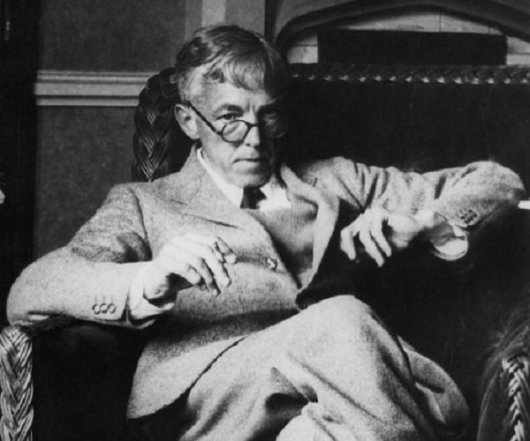
Here are my notes from A MATHEMATICIAN’S APOLOGY by G.H. Hardy. I studied this essay to better understand the nature of patterns, which are described by the Laws of Metaphysics on a grander scale.

Hardy seems to be obsessed with good and evil, which makes him less objective. But here is the essence of his essay.

.

It is preferable to do mathematics than talk about it. Satisfaction in mathematics comes from discovering new patterns rather than putting those patterns to use. Mathematics requires the freshness of a young mind. Doing mathematics is very pleasurable and its achievements have certain permanence.

Mathematics is done for its own sake. It is quite something to express mathematical ideas in understandable language. Mathematics consists of patterns of ideas that have permanence. The best mathematics lies not in its practical consequences but in the significance of the ideas which it connects.

Simple examples are (a) Euclid’s proof of the existence of infinity of prime numbers, and (b) Pythagoras’s proof of the ‘irrationality’ of √2.

Mathematical patterns may be judged by their beauty and seriousness. The theorems of Euclid and Pythagoras have influenced thought profoundly, even outside mathematics. Practical applications are concerned only with approximations.

A ‘serious’ theorem contains ‘significant’ ideas that consist of certain generality and depth. Abstraction refers to any pattern of ideas, but generality is marked by how many different ideas are connected. Mathematical ideas may be viewed as arranged in strata. Generality and depth go hand-in-hand.

Mathematical reality lies outside of us. Our function is to discover or observe the continuity, harmony and consistency of its beautiful patterns. The aesthetics of mathematics lies in the creativity and simplicity of the proofs of its theorems.

The physical patterns have their own structure which derives its explanation from the patterns discovered in mathematics. The physical reality is an approximation derived from mathematical reality.

The mathematics of great mathematicians has permanent aesthetic value. That knowledge goes much beyond providing merely the material comfort of mankind.

Real mathematics is the most austere and the most remote of all the arts and sciences. It is not a contemplative but a creative subject. It may be justified as art.

.

The Laws of Metaphysics

600_332158572

Previous: Objective View of God
Next: Mindfulness Approach

Here are the laws of metaphysics that I have been fortunate enough to pry them apart from knowledge already available.

Law # 1 – The fundamental principle of this universe is a natural precipitation of order out of chaos. This order manifests as the universe.

NOTE: The Law # 1 is looked upon as “God” in most religions. With the knowledge of physics that we now have, we may state:

Corollary # 1a – The nature of chaos is space. The property of space is awareness.

Corollary # 1b – The order precipitates as electromagnetic patterns. The property of patterns is consciousness.

Corollary # 1c – This precipitaion of order is irreversible.

Law # 2 – The order precipitates as a basic pattern, which then forms increasingly complex patterns.

Note: The Law # 2 is how evolution starts. We may further state:

Corollary # 2a – The electromagnetic patterns are  described by a spectrum of frequencies. At the lower end of this spectrum are radio waves, and at the higher end are gamma rays.

Corollary # 2b – Below radio waves is space, and above gamma rays is matter. In between there are increasing frequencies that have properties of feelings, perceptions, emotions and sensations.

Corollary # 2c – The electromagnetic patterns condense as matter at high frequencies.

Law # 3 – A pattern is made up of movement. Underlying the movement there is nothing motionless. Anything motionless is relative only. 

NOTE: Everything in this universe is changing whether rapidly or very slowly. There is nothing that is absolutely permanent.

Corollary # 3a – The chaos, of course, is unsettled and every bit impermanent. Any settling starts in the form of precipitating patterns.

Corollary # 3b – Original patterns are very light and ephemeral. Only as they evolve toward greater complexity that they tend to become more permanent.

Corollary # 3c – Thus the universe does not start out with anything eternal.

Law # 4 – Patterns mix, interfere, resonate, condense and generate new patterns. Thus there is evolution.

Corollary # 4a – Frequencies in gamma region generate electrons. Still higher frequencies collapse into nucleons that have property of mass. Nucleons in a nucleus surrounded by electrons form a pattern called atoms.

Corollary # 4b –  The atoms represents basic identities that are arranged in a periodic table of lighter to heavier atoms.

Corollary # 4c – Atoms combine to form molecules from simple to very complex. Each of these molecules has an identity with unique properties.

Law # 5 – Basic patterns are continuous but have discrete frequencies. These patterns evolve into discrete solid forms. But underlying all discrete forms there is a basic continuity.

Corollary # 5a – The discrete property of forms evolves from frequencies in the form of resonances, particles, groups of particles and discrete contexts of different types.

Corollary # 5b – All discrete parts of the universe are connected at some basic level.

Law # 6 – Patterns evolve gradually. They are stable and orderly only when they maintain continuity, harmony and consistency at all levels.

Corollary # 6a – Complex molecules like RNA and DNA have enough electrons around the many nuclei to form circuits for molecular computers.

Corollary # 6b – The naturally programmed sequence of motions in these molecules maintain continuity, harmony and consistency. Thus comes about life.

Corollary # 6c – The programmed motions are triggered by appropriate conditions in the environment. Thus there is perception.

Corollary # 6d – All motions are connected through the conditions in the environment. Thus, there is universal continuity, harmony and consistency.

Corollary # 6e – Motion together with perception appears as waves of feelings, sensations and emotions.

Corollary # 6f – Thinking evolves from reactions among chemicals to plant life, animal life and finally to responses determined by associations perceived by human life. Thus there is logical thinking.

Law # 7 – When the continuity, harmony and consistency of natural evolution is resisted there comes about tension and inflexibility.

Corollary # 7a – Human actions are determined by logical thinking. When human thinking is restricted to narrow contexts the resulting actions interfere with universal continuity, harmony and consistency. Such actions are called ‘karma’.

Corollary # 7b – Such actions generate tensions and they lead to inflexibility in thinking.  This outcome is called ‘dukkha’. Much of human reality consists of ‘dukkha’.

Corollary # 7c – The efforts to deal with ‘dukkha’  generate further tensions and inflexibilities. There is anxiety and craving underlying such efforts. This is called ‘thirst’.

Corollary # 7d – This ‘thirst’ comes about as a reaction to the presence of ‘dukkha’. It dominates human thinking and generates further ‘karma’.

Corollary # 7e – The way out is human thinking in universal context, away from thinking in narrow context of “self”.

Law # 8 – Restoration of the flexibility of natural evolution is achieved by letting the tension unwind freely in a universal context.

Corollary # 8a – Freedom comes from restraining ‘thirst’ and letting ‘dukkha’ unwind freely in a universal context until all ‘karma’ is released. This is ‘nirvana’.

Corollary # 8b – One then returns to the continuity, harmony, consistency and flexibility of the natural evolution.

Law # 9 – Natural evolution started by trial and error. This process gradually became sophisticated and evolved to scientific method among humans.

Corollary # 9a – The scientific method takes into account the universal context. This universal context is the basis of objectivity. Any lesser context leads to subjectivity and error.

Corollary # 9b – Human inventiveness becomes part of the natural evolution when it is applied in a universal context.

Law # 10 – The scientific view is universal and, therefore, objective. A human-centric view is less than  universal and, therefore, subjective and prone to error.

Corollary # 10a – A human-centric views, such as, “earth is at the center of the universe,” is subjective and erroneous.

Corollary # 10b – Most religious knowledge has been put forth from a human-centric view, and therefore it is subjective and has led to erroneous behavior.

Corollary # 10c – The scientific method currently limits itself to physics only. It may be extended to metaphysics in the form of mindfulness.

Corollary # 10d – Religious knowledge expressed from an objective viewpoint of mindfulness may lead to far more useful behavior.

Corollary # 10e – The religious concept of “higher power of God” may be expressed through mindfulness in terms of fundamental principles yet to be discovered. The Law # 1 above is an attempt in that direction.

Law # 11 – The next stage of evolution from present human condition seems to depend upon the attainment of the universal objectivity of mindfulness.

Corollary # 11a – According to Buddhism, the root of all evil is ignorance and false views. The ultimate true view is the objective view. The endeavor in Buddhism is the attainment of universal objectivity through the practice of mindfulness.

Corollary # 11b – All religions should be respected and understood from an objective viewpoint. This helps acquire an independent understanding of truth.

Corollary # 11c – Objective viewpoint is developed by viewing everything in a universal context and removing all discontinuities, disharmonies and inconsistencies in one’s life through observations and thought experiments.

Corollary # 11d – True knowledge is not the inflexibilities one carries around in one’s head as memory. True knowledge is continuous observation from an objective viewpoint.

.