Obsolete: The Background

See: The Mind’s Flaw
turner1

Reference: Mindfulness Approach

.

The background of free association in the West is found in mesmerism, hypnotism, psychoanalysis and Dianetics. It involves giving commands to the person in highly suggestive state. The Eastern background, however, is found in mindfulness of “seeing things as they are”. It involves clearing up the unassimilated nodes implanted in the mind by the environment and their effects down the line.

Mesmerism

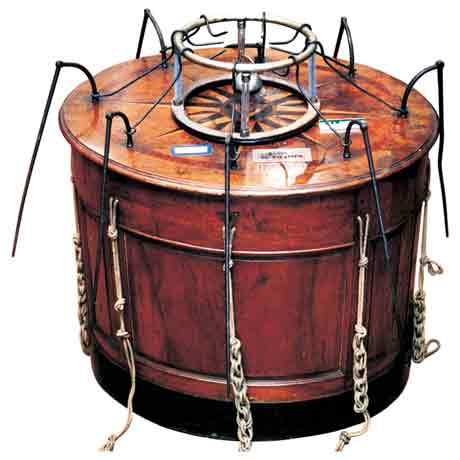
Mesmerism became popular in the 18th century as it did provide some cures by addressing the mind of the person. Franz Mesmer was a German physician with a flamboyant personality. Wikipedia states:

“According to d’Eslon, Mesmer understood health as the free flow of the process of life through thousands of channels in our bodies. Illness was caused by obstacles to this flow. Overcoming these obstacles and restoring flow produced crises, which restored health. When Nature failed to do this spontaneously, contact with a conductor of animal magnetism was a necessary and sufficient remedy. Mesmer aimed to aid or provoke the efforts of Nature. To cure an insane person, for example, involved causing a fit of madness. The advantage of magnetism involved accelerating such crises without danger.”

Mesmer was able to produce crises in his patients by looking fixedly into their eyes using certain hand gestures, gently stroking their arms, and pressing abdominal area of the body with fingers. It appears that Mesmer was triggering hitherto suppressed experiences in people. It was the proper assimilation of those experiences by the person, which affected the cure. That process took place through natural free association.

Hypnotism

In 1841 James Braid claimed to produce the phenomenon of mesmerism without the proximity, acts, or influence of a second party. He defined the phenomenon as “a peculiar condition of the nervous system, induced by a fixed and abstracted attention of the mental and visual eye, on one object, not of an exciting nature. His theory of hypnotism dispelled many fallacies in the theory of Mesmer. Wikipedia states:

“In his later works, Braid reserved the term “hypnotism” for cases in which subjects entered a state of amnesia resembling sleep. For other cases, he spoke of a “mono-ideodynamic” principle to emphasize that the eye-fixation induction technique worked by narrowing the subject’s attention to a single idea or train of thought (“monoideism”), which amplified the effect of the consequent “dominant idea” upon the subject’s body by means of the ideo-dynamic principle.”

But hypnotism did not allow the free association of mesmerism. It did not affect any cures. It only explained the relationship of mental impulses with various systems of the body. This relationship was used by unassimilated nodes to generate illnesses in the person. Free association helped assimilate those nodes and remove their ill effects on the body.

In the course of his investigations Braid reached the conclusion that hypnotism was wholly a matter of suggestion, implying that cures were affected by suggestions. This was a wrong conclusion. The suggestions under hypnotism simply implanted ideas in the person that could not be assimilated into his mental matrix. Hypnotism explained only the problem and not the cure. The cure due to free association was ignored by hypnotism

Psychoanalysis

In early 1890s Freud came up with the system of psychoanalysis for treating mental disorders. He theorized that psychological disturbances are largely caused by personal conflicts existing at the unconscious level. Liberation from the effects of the “unconscious” is achieved by bringing this material into the conscious mind. This was done by patient talking to the therapist, and the therapist guiding the patient until the patient became aware of the hidden causes of his conflicts. Wikipedia states:

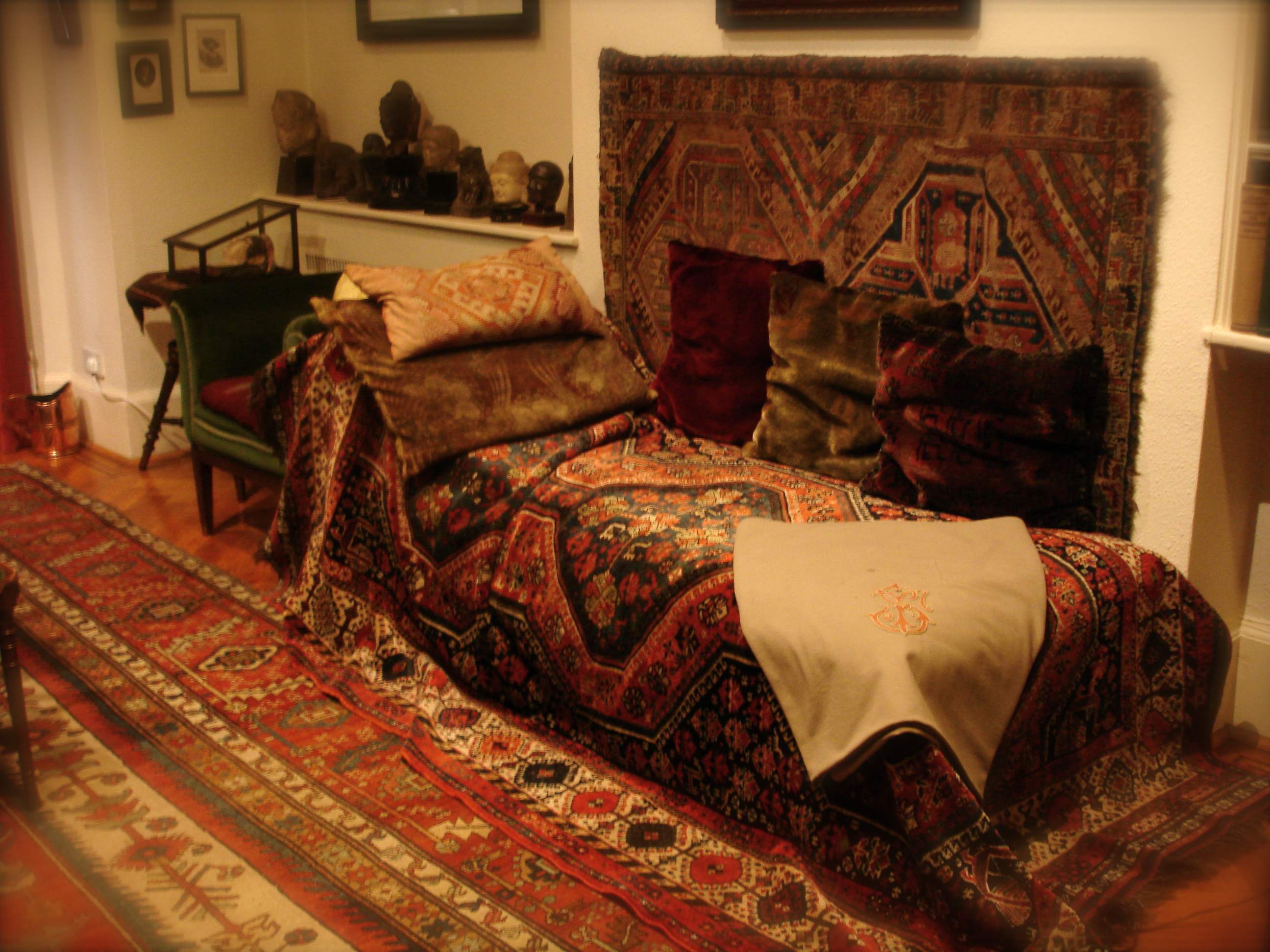
“During psychoanalytic sessions…the patient… may lie on a couch, with the analyst often sitting just behind and out of sight. The patient expresses his or her thoughts, including free associations, fantasies and dreams, from which the analyst infers the unconscious conflicts causing the patient’s symptoms and character problems. Through the analysis of these conflicts… the analyst confronts the patient’s pathological defenses to help the patient gain insight.”

Freud recognized the importance of free association. In psychoanalysis, “free association” is one of the techniques to draw unconscious material out of the patient. However, Freud also used hypnotic techniques. Significant liability exists in psychoanalysis in terms of the analyst interpreting that material and adding his own ideas, which may then act on the patient as hypnotic suggestions.

Dianetics

The next advance came in 1950, when Hubbard expounded the Dianetics process of auditing the mind. He theorized that the cause of all psychosomatic illnesses and irrational behavior was an unknown reactive mind that was always “conscious”. Relief came when a person analytically access the painful contents of the reactive mind.

Hubbard addressed the liabilities of psychoanalysis to a large degree, and came up with a much more efficient procedure. The preclear’s ability to freely associate is, however, limited to the “programming” of a person’s case by a Case Supervisor. Upper level procedures seem to condition the person to Hubbard’s esoteric beliefs of “thetan” and “past lives”. In addition there is abundant possibility of misuse of detailed personal information collected by Hubbard’s monopolistic organizations.

Mindfulness

When we look at the Eastern background we find an emphasis on the “therapist” being none other than the person himself. Thus mindfulness does not have the liabilities accrued in the Western systems.

Mindfulness was taught by Buddha 2600 years ago. The discipline of mindfulness requires that one does not avoid, resist, deny or suppress the activity of the mind, but looks at things as they are.

Buddha’s system empowered the individual to handle his psychosomatic illnesses and irrational behavior by his own efforts. It led to a grass roots movement that spread like wildfire. It not only cured but also uplifted a large number of people.

Present Effort

The present effort is to learn from both western and eastern experiences, and to work out techniques that can be applied very simply. The free association of mindfulness is natural.and, therefore, it is a much safer approach.

The next chapter describes the results of the mindfulness application of free association.

.
The Cleared Individual

clear4

Reference: The Book of Subject Clearing

A cleared individual is one who has resolved anomalies in his own thinking. He is now on a path to clear anomalies in life in general. 

Enlightenment would be the point when the person has freed himself of all personal anomalies. He can now look at the world with a wonderful composure.

All religions and philosophies have been trying to reach this state of enlightenment. Subject clearing visualizes this state as follows.

.

The Cleared Individual

A cleared individual is not absolutely free of flaws, but he is very close to being completely rational. He has a mind in which sensations continually break down into fine discriminative elements, and get freely associated and assimilated into an orderly mental matrix providing rational solutions.

The cleared individual does not avoid, resist, suppress or deny any thoughts, emotions, and sensations when thinking; and so he perceives things objectively with clarity. He is able to examine and overcome all prejudices, biases and fixations. He is keenly perceptive and knowledgeable and continues to explore new areas of knowledge.

The cleared individual is universal in his outlook. He rises above any idea of self or individuality. He is not subjective, self-centric, or human-centric. There are no conflicts within him. He would not hesitate to sacrifice himself if need be.

The cleared individual can look from the viewpoint of others as well as objectively from the viewpoint of all life and the environment. He continues to expand his understanding of the physical and spiritual aspects of the universe without resorting to superstitions.

The cleared individual is the first to realize his error and correct himself. Whenever he senses resistance or observes some oddity, he follows it up until it is cleared. If he suffers a painful experience, heavy loss, or confusion he is able to sort it out quietly in his mind.

The cleared individual is in good health and has no psychosomatic illnesses. He is purposeful in his demeanor, and graceful in his movements. He is strong and calm even in adversity. In no way is he trying to win or dominate, but he is passionately engaged in bringing order to his environment.

Above all, he is compassionate.

.

Obsolete: The Correction of Error

See: Mindfulness Approach

freuds-couch

Reference: Mindfulness Approach

.

The mind is a matrix of perceptual nodes. It is structured such that it is continuous, harmonious and consistent throughout. The fundamental activity of the mind is free association. Mind is freely associating when we are observing without thinking consciously.

On top of free association is the layer of conscious thinking in the mind, where the mind is knowingly associating various relationships. Such conscious thinking is optimum when it is in line with the underlying free association.

The fundamental activity of the mind is free association.

As perceptions from the environment enter the mind they break down into patterns of perceptual elements. These elements associate freely with the nodes of the matrix and get assimilated into its orderly structure. Any chaotic pattern from the environment is converted into orderly patterns. This is the mechanics of natural logic at work.

The mind naturally converts chaos into order in conceptual form.

This assimilation either generates new relationships, or confirms existing relationships in a new unit of time. For example, when a person eats the same breakfast day after day then the pattern of that breakfast exists only once in the mind but it is indexed for different times.

A relatively small number of nodes in the mental matrix assimilate an incredibly large number of perceptions.

Based on the conceptualization of order, the mind sends impulses to the body. The impulses regulate the system in the body to keep it healthy. They also direct body’s actions to implement order in the environment.

The mind implements its concept of order into the environment by directing the body.

When the mind is unable to break the perceptions down into finer elements and assimilate them into its orderly matrix, it becomes infested with unassimilated nodes, and its impulses become crude reactions.

The mental logic suffers as the metal matrix becomes less refined due to unassimilated nodes.

The reactive impulses generated by the mind create havoc with systems making the body sick. They also manifest as dramatizations of rage and anger, insane behavior, wrong decisions and destructive ideas.

Reactive impulses from the mind generate psychosomatic illnesses and irrational conduct.

Given a proper approach the unassimilated nodes within the mental matrix may be refined making the mind function logically and resulting in a healthy body and rational conduct.

Any correction of the error shall then target unassimilated nodes in the mental matrix. Such method shall consist of.

  1. Recognition of free association as the fundamental activity of the mind.

  2. Bringing conscious thinking in line with free association.

  3. Resolving losses and painful experiences into finer elements as a priority.

  4. Resolving all misunderstandings into finer elements on a continuous basis.

Conscious thinking is out of line with free association, whenever there is avoidance, resistance, suppression and denial of thoughts, emotions, and sensations. So, just by recognizing this fact, and letting free association take thoughts to their conclusion, will go a long way in reducing stresses in the mind and make it function better.

Conscious thinking is brought in line with free association by not avoiding, resisting, suppressing or denying any thoughts, emotions, and sensations.

Unassimilated nodes of painful experiences, losses and misunderstandings, are resolved by carefully observing sensations, emotions and thoughts in the order that they come up naturally. They will appear dissociated with surrounding context. As one holds these sensations, emotions and thoughts closely in one’s mind, and lets the free association occur, the dissociations start to resolve and ultimately vanish.

It is to be noted that the pain, uncomfortable feelings and confusion may at first increase because attention is now being paid to them, but as one willingly experiences them; they start to resolve into finer elements and assimilate into the mental matrix.

Unassimilated nodes of painful experience, loss and misunderstanding resolve quickly when they are re-experienced willingly.

During this process, by all means, consult a dictionary, encyclopedia or Wikipedia to handle confusion. This applies especially to meaning of words, symbols and concepts.

It is important not to interfere with free association. One may get lost in thoughts, become oblivious and even doze off during this process but the free association continues. One does not interrupt these manifestations. One will wake up sooner or later feeling quite refreshed.

.

Obsolete: The Introduction of Error

See: Mindfulness Approach

roman-statue

Reference: Mindfulness Approach

.

The human mind usually does a good job of resolving chaos of the environment into order. It perceives the chaos as situations existing in the environment. It then arrives at solutions in the form of the order to be implemented back in the environment.

The human mind proceeds first by breaking the environmental perceptions down into patterns of fine perceptual elements. The finer are the perceptual elements the more sophisticated are the relationships among them. From this sophistication we can get a detailed and far reaching solution. This factor alone determines the intelligence of the individual.

The human mind then assimilates these fine patterns into a perceptual matrix. The perceptual matrix is continuous, harmonious and consistent throughout. The incoming patterns are freely associated into this matrix while maintaining the attributes of continuity, harmony and consistency. This automatically results in a rational solution. The faster is the free association, the more agile is the mind in arriving at the solution. This factor alone determines the dynamism of the individual.

But there is a limit to the mind’s ability to handle situations. Errors are introduced when the mind cannot break down the perception and assimilate it. This error gets lodged into the mind such that, from then on, even a remotely similar perception is treated by the mind in the same erroneous fashion.

For example, a person as a child fell into the pool and almost drowned. He was extremely shaken up with that painful experience. Now he avoids going near pools and other bodies of water. He gets nauseated at the smell of chlorine that is similar to smell which was present when he almost drowned.

In this example the painful experience of drowning exists in that person’s mind as an unassimilated node. Therefore, the pain and extreme dread that he felt during near drowning immediately gets activated at the sight of a pool and the smell of chlorine.

A painful experience gets lodged in the mental matrix as an unassimilated node, which then generates irrational reactions.

We may say that an irrational reaction occurs whenever perceptions in the environment approximate those contained in an unassimilated experiences. An unassimilated experience thus short-circuits an otherwise well-functioning mind.

Like rest of the mental matrix these unassimilated nodes are also hard-wired into the body. The short-circuited Impulses generated by them are not integrated with rest of the impulses on which the body is running. So the reactive impulses of unassimilated nodes may also create havoc with the systems of the body leading to psychosomatic illnesses. Though, more often, these reactive impulses appear as “desires” that lead to aberrated behavior on part of the person.

The psychosomatic illnesses may appear to be stress-related or even auto-immune. Aberrated behavior may show up as eccentric, irrational or even bizarre conduct, which adversely affects the individual and also the environment. Such aberrations have always existed in human societies. There cause can always be traced back to some unassimilated experience in the mind.

The unassimilated node may also be created when there is an intense emotional experience, such as, the loss of a loved one. Minor experiences of unassimilated node come from misunderstood words and phrases, which are subsequently misinterpreted by the person creating embarrassing moments.

We may categorize the unassimilated nodes as follows.

  • A painful experience that generates a compressed node of sensation
  • A loss of a loved one that generates a compressed node of emotion
  • A misunderstanding that generates a compressed node of thought

By eliminating all painful experiences, losses, and misunderstandings from the mind, it is possible to restore the mind back to a near flawless condition. We may summarize the rational capabilities of the mind as follows.

Rationality of the mind depends on its ability to break perceptions down and associate them freely into an orderly matrix; and also upon the ability to go back and correct any error.

The model of the mind described in this essay provides a basis from which to determine the approach for handling the mind. As the mind is handled so are handled many unwanted conditions related to his physical and mental health.

This approach for resolving the errors of the mind is taken up in the next essay.

.

The Mind as a Matrix (old-1)

universe-brane-dendritic-matrix

Please see Course on Subject Clearing

The human mind is not physical but it exists within a physical environment. The mind is actually a reflection of the physical environment. We may say that the mind is made up of perceptions and it stores perceptions of the environment.

The environment is best represented as a matrix type structure. A matrix is made up of nodes where each node is in some relationship with every other node. The environment is made up of objects where each object is related to every other object by distance, gravity, etc. These objects are the nodes of the matrix of the environment.

Being a reflection of the environment, the mind also is a matrix in which the nodes are perception of objects. These perceptual nodes are related to each other by the properties perceived for these objects. For example, in an animal mind, these perceptual nodes may be related by their property of being safe and edible.

The human mind is more complex than the animal mind. It is much more perceptive of properties of the objects. Such properties may be expressed as being part of a scale. For example, the property “red” may be expressed as part of the color scale. Thus, nodes in the human mind become more discriminative, abstract and numerous. We may call them “perceptual elements”.

Thus, in the human mind, perceptions from the environment get refined rapidly as patterns of perceptual elements. They are related to each other by means of scales in infinite number of ways. This makes the matrix of the human mind extremely refined and complex. Errors creep in only when perceptions do not get refined and assimilated into this mental matrix.

The mind is a matrix made up of elements derived from the perception of the environment.

The present work proposes this “matrix” model for the mind. Looking at earlier models, we find Freud’s model of conscious and unconscious mind proposed in 1890s, and Hubbard’s model of analytical and reactive mind proposed later in 1950s.

In the matrix model, the greater is the refinement of the perceptual elements and relationships among them, the higher is the consciousness. Thus human consciousness is much higher than the consciousness in animals. When perceptions from the environment are not refined into patterns of perceptual elements they are just lodged into the mental matrix as “unassimilated nodes”. The person is not conscious of such unassimilated experiences. This describes the concept of “unconscious mind” proposed by Freud.

In the matrix model “consciousness” is the depth of refinement of the perceptual elements and relationships.

Thinking is the activity that associates information according to some logic to come up with conclusions. In the matrix model, thinking takes place when patterns of perceptual elements interact with each other. The logic of the mind comes from its ability to generate associations within the matrix such that continuity, harmony and consistency are maintained at all times throughout the mental matrix. The creative aspect of the mind originates from the fundamental principle of “chaos to order”. That is where its faculty to imagine and to make projections comes from. And that is also the source of intuition, which goes beyond ordinary logic. In a refined and well assimilated matrix the thinking is rational, or analytical. However, as more “unassimilated nodes” are activated the thinking becomes irrational and reactive. This describes the concept of “reactive mind” proposed by Hubbard.

Thinking is a creative activity that originates  from the fundamental principle of “chaos to order”. The rationality of thinking depends on the perceptual patterns activated.

The “binary” models of Freud and Hubbard imply that perceptions are stored “as-is” in the mind. However, the “matrix” model describes the storage of perceptions as patterns of perceptual elements well assimilated within the mental matrix. Since same perceptual elements may be utilized many times in different patterns, the “matrix” model provides a more efficient way of storing perceptions in the mind. A “memory” is a pattern of perceptual elements that is activated by attention. Memory is clear and precise when its pattern is made up of refined and well assimilated elements. It would be difficult to recall a memory if it contains “unassimilated nodes”.

A “memory” is a pattern of perceptual elements that is activated by attention.

With the matrix model of the mind it is easy to see the difference between the animal mind and the human mind in terms of how finely the perceptions are broken down as discriminative perceptual elements. This property defines the intelligence of the mind.

Intelligence of the mind depends on the refinement of the perceptual elements and relationships.

These perceptual elements are connected within the matrix in infinite number of ways by means of scales. Thus all patterns of perceptual elements are continuous, harmonious and consistent throughout the mental matrix. The better assimilated the perceptions are, the more powerful is the mind.

Power of the mind depends on the assimilation of perceptual elements within the matrix.

The mind is hard-wired to the body through the brain and the nervous system. As perceptions are received from the environment, they are continually assimilated into the mental matrix. This continually generates impulses in the body to bring appropriate responses from the endocrine, respiratory, muscular and other systems. These impulses are sensed as emotions and sensations.

Emotions are the impulses generated by the mental activity. Sensations are the response of the body to these impulses.

This determines the health of the body internally and actions of the organism externally. The external actions then bring changes to the environment.

As the chaos in the environment impresses itself upon the mind through perceptions, the mind assimilates them in its refined perceptual matrix, thus converting their chaos into order. This generates impulses that motivate the body to implement order in the environment. Thus we have a continuous cycle, which operates from the environment through the mind-body system back on the environment, thus converting chaos into order. This explains the role of living organisms in the universe.

The whole purpose of the living mind-body organisms is to speed up the evolution of the universe by bringing changes to its immediate environment.

The basic animal mind can be observed to operate entirely on automatic assimilation of perceptions from the environment into its coarse mind. This assimilation takes place on a continual basis. We may call this assimilation “free association”. Please note that this free association is not same thing as the “technique of free association” in psychoanalysis.

The refined and complex human mind augments free association with its powerful ability to think. Human thought, operating with free association, then brings deeply complex and far ranging order to the environment.

The human mind acts as a powerful catalyst for the evolution in nature.

The mind is continually observing the environment and bringing greater order to it. But the mind is prone to error when it encounters disorder beyond its control. The errors introduced into the mind are then reflected through sickness in the body and aberrations in the conduct of the organism.

The introduction of errors into the mind is taken up in the next chapter.

.

[Revised February 9, 2017 by Vinaire]

.