Physics II: Chapter 2

Reference: Beginning Physics II

Chapter 2: SOUND

.

KEY WORD LIST

Sound Velocity, Rms Velocity, Wave-Front, Wave Power (Two Dimensional), Wave Power (Three Dimensional), Intensity, Plane Wave, Reflection, Refraction, Interference, Decibel Scale, Reverberation, Reverberation Time, Absorption Coefficient, Absorbing Power, Quality, Pitch, Beats, Doppler Shift, Shock Waves

.

GLOSSARY

For details on the following concepts, please consult Chapter 2.

SOUND VELOCITY
The velocity of sound in air is,

RMS VELOCITY
The root-mean-square velocity of the gas molecules themselves is,

WAVE-FRONT
Waves in two and three dimensions have a wave-front. It is circular or spherical as shown below.

The wave-front isan imaginary line or surface drawn through the crest (or trough) of one of the ripples at a given instant of time. We are looking at the same phase of the disturbance at all different locations in the fluid. The circular or spherical shape of the wave-front means that the wave propagation of the disturbance is characteristic of the material through which the wave moves. The direction of propagation of the wave at any location is perpendicular to the wave front at that location.

WAVE POWER (TWO DIMENSIONAL)
For water ripples, the power transmitted through a unit length parallel to the wave-front is being diluted as the circular wave-front expands to larger circumference. Since the circumference of a ripple increases in proportion to its growing radius R, the power per unit wave-front length must decrease as 1/R.

WAVE POWER (THREE DIMENSIONAL)
Similarly, the energy and power of the wave, per unit area perpendicular to the direction of propagation of the wave fall off as 1/R2.

INTENSITY
The power per unit area perpendicular to the direction of propagation is called the intensity, I. The intensity for a three-dimensional wave is given by,

I = P/A

PLANE WAVE
A wave moving through space in which the wave-front is planar is called a plane wave, and is characterized by the fact that every point on the planar wave-front is in phase at the same time. A small window on the spherical wave front is almost planar if the dimensions are small compared to the distance from the source of the wave. The wave equation for such a wave is exactly the same as for the longitudinal waves in a long tube.

REFLECTION
When sound wave-fronts hit a barrier, such as, the side of a mountain, part of the wave reflects and part is transmitted into the barrier. The part of the wave that is reflected has diminished amplitude but the same frequency and velocity as the original wave, and hence the same wavelength.

REFRACTION
When a wave travels through a medium of varying densities (for example, layers of air at different temperatures) the velocity of different parts of the wave-front are different, and the direction of propagation of the wave changes as a consequence. This is called refraction.

INTERFERENCE
Interference is the effect of having more than one wave passing a given point, and the possibility that the two waves will reinforce or weaken each other as a consequence of the phase difference between the waves.

DECIBEL SCALE
To describe the range of sound intensities it is useful to create a logarithmic scale called the decibel scale (db), which gives a quantitative measure to “loudness”, which we label n, and define as:

n = 10 log (I/Io)

REVERBERATION
The persistence of a sound after its source has stopped, caused by multiple reflection of the sound within a closed space.

REVERBERATION TIME
The reverberation time is defined as the time it takes for the intensity of a given steady sound to drop 60 db (or six orders of magnitude in intensity) from the time the sound source is shut off. Reverberation times depend on the total acoustic energy pervading the room, the surface areas of the absorbing materials and their absorption coefficients. A formula that gives good estimates of the reverberation time is given by:

tr = 0.16V / A

where tr is the reverberation time (s), V is the volume of the room (m3) and A is called the absorbing power of the room.

ABSORPTION COEFFICIENT
The absorption coefficient of a surface is defined as the fraction of sound energy that is absorbed at each reflection. Thus, an open window has an absorption coefficient of 1 since all the energy passes out of it and none reflects back in. Heavy curtains have a coefficient of about 0.5, and acoustic ceiling tiles have a coefficient of about 0.6.

ABSORBING POWER
The absorbing power A is just the sum of the products of the areas of all the absorbing surfaces (m2) and their respective absorption coefficients.

QUALITY
When a note on a musical instrument is played, the fundamental is typically accompanied by various overtones (harmonics, i.e., integer multiples of the fundamental) with differing intensity relative to that of the fundamental. The sound of harmonics is pleasing to the ear, and while the note is identified by the listener with the fundamental frequency, the same note from different instruments will sound differently as a consequence of the different harmonic content. These different sound recognitions by the human ear are called the quality of the note.

PITCH
The pitch of a note is the human perception of the note as “high” or “low” and is closely related to the frequency but is not identical to it. The pitch involves human subjective sense of the sound. While a higher frequency will be perceived as a higher pitch, the same frequency will be perceived as having slightly different pitches when the intensity is changed. When the human ear hears a fundamental and harmonics it perceives the pitch as that of the fundamental.

BEATS
If we have two frequencies that differ only by a few Hz we can indeed detect “interference” effects that oscillate in time slowly enough to be easily detectable. This variable amplitude corresponds to a maximal loudness in the sound, called a beat. The number of beats per second is just the difference of the two frequencies.

DOPPLER SHIFT
The Doppler shift is a change in pitch caused by motion of the source of a sound wave through the air (as in the example of the siren of an ambulance) or by the motion of the listener through the air. If the source is moving toward the listener, the sound waves are bunched up, and the listener would detect shorter wavelengths or higher frequencies. If the source is moving away from the listener, the sound waves are more separated, and the listener would detect longer wavelengths or lower frequencies.

For more general case, when the velocity of the listener is included,

SHOCK WAVES
When supersonic (faster than the speed of sound) motion occurs a compressional wave, due to the object cutting through the air, is emitted by the traveling body and forms what is called a shock wave. The shock wave moves at a specific angle relative to the direction of motion of the object through the air, and can sometimes be of sufficient intensity to cause a loud booming sound.

R/x is the ratio of the opposite side to the hypotenuse of a right triangle with angle  as shown. Then:

The direction of propagation of the shock wave is perpendicular to the wave-front and makes an angle (90° – ) to the direction of motion of the object. Shock waves accompany speeding bullets, and an example in a medium other than air is the bow wave of a speed boat in water.

CHRISTIANITY: The End and the Beginning

Reference: Christianity

[NOTE: In color are Vinaire’s comments.]

The resurrection reversed the cosmic position in which the cross had placed Jesus’ goodness. Instead of being fragile, the compassion the disciples had encountered in him was victorious over even death itself.

The way that Jesus’ earthly ministry ended is known to everyone. After mingling with his people and teaching them for a number of months, he was crucified. 

Jesus was crucified very soon after mingling with his people and teaching them.

That might well have been the end of the story. History abounds with visionaries who proposed schemes, died, and that is the last that is heard of them. In this case, however, it was just the beginning. Within a short time his followers were preaching the gospel of their Risen Lord. 

But Jesus was resurrected. Within a short time his followers were preaching the gospel of their Risen Lord. 

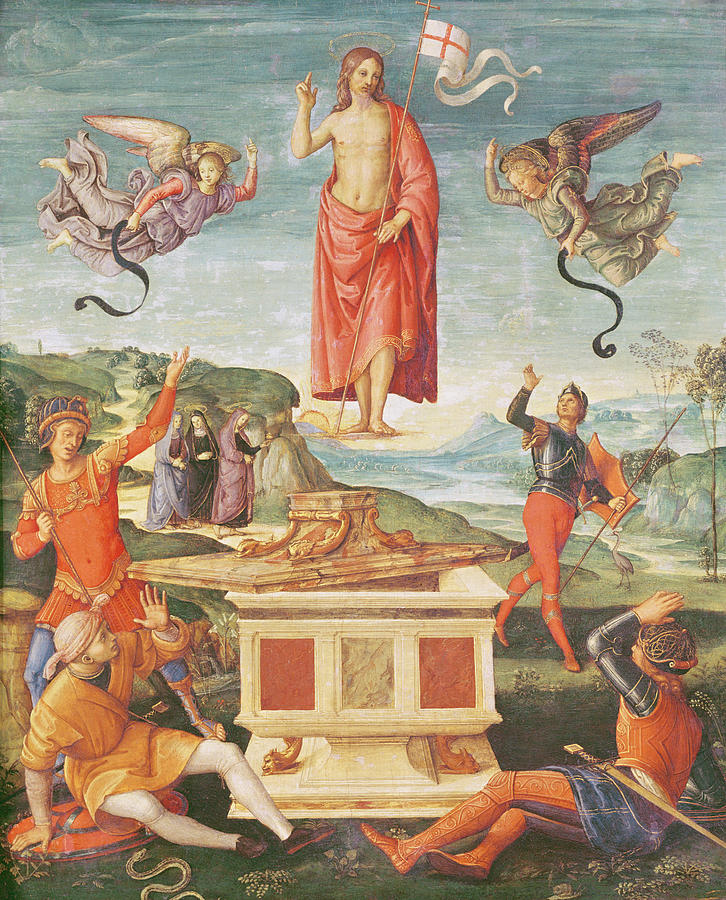
We are given too few details to know exactly what happened after the crucifixion; virtually all that is certain is that his followers were convinced that death had not held him. They reported that beginning on Easter Sunday he “appeared to them” as the same person they had known during his ministry but in a new way. It is not possible to determine exactly what that new way was; certain accounts suggest corporeality—eating, and Thomas’s touching the wound in his side—while others are more visionary, reporting him as passing through closed doors. Fidelity to the reports, all of which were entered by disciples who were convinced of Jesus’ resurrection, make clear that he did not simply resume his former physical body; resurrection was not resuscitation. Instead, it was entry into another mode of being, a mode that was sometimes visible but usually was not. What is clear is that Jesus’ followers began to experience him in a new way, namely as having the qualities of God. He could now be known anywhere, not just in physical proximity.

The disciples were convinced of Jesus’ resurrection. For them, it was entry into another mode of being, a mode that was sometimes visible but usually was not. Jesus’ followers began to experience him as having the qualities of God.

Faith in Jesus’ resurrection produced the Church and its Christology. To grasp the power of the belief, we must see that it did not merely concern the fate of a worthy man. Its claim extended ultimately to the status of goodness in the universe, contending that it was all-powerful. If Golgotha’s cross had been the end, the goodness Jesus embodied would have been beautiful, but how significant? A fragile blossom afloat on a torrential stream, soon to be dashed—how relevant is goodness if it has no purchase on reality, no power at its disposal? The resurrection reversed the cosmic position in which the cross had placed Jesus’ goodness. Instead of being fragile, the compassion the disciples had encountered in him was powerful; victorious over everything, even the seeming end of everything, death itself. “Grave, where is your victory? Death, where is your sting?” 

The resurrection reversed the cosmic position in which the cross had placed Jesus’ goodness. Instead of being fragile, the compassion the disciples had encountered in him was victorious over even death itself.

The way this message moved into, and eventually took over, the Mediterranean world is our next concern.

.

BUDDHISM: The Rebel Saint

Reference: Buddhism

[NOTE: In color are Vinaire’s comments.]

“Therefore, O Ananda, be lamps unto yourselves. Betake yourselves to no external refuge. Hold fast as a refuge to the Truth. Work out your own salvation with diligence.

In moving from Buddha the man to Buddhism the religion, it is imperative that the latter be seen against the background of the Hinduism out of which it grew. Unlike Hinduism, which emerged by slow, largely imperceptible spiritual accretion, the religion of the Buddha appeared overnight, fully formed. In large measure it was a religion of reaction against Hindu perversions—an Indian protestantism not only in the original meaning of that word, which emphasized witnessing for (testis pro) something, but equally in its latter-day connotations, which emphasize protesting against something. Buddhism drew its lifeblood from Hinduism, but against its prevailing corruptions Buddhism recoiled like a whiplash and hit back—hard. 

Buddhism drew its lifeblood from Hinduism, but against Hinduism’s prevailing corruptions Buddhism recoiled like a whiplash and hit back—hard. 

To understand the teachings of the Buddha, then, we shall need a minimal picture of the existing Hinduism that partly provoked it. And to lead into this, several observations about religion are in order. 

Six aspects of religion surface so regularly as to suggest that their seeds are in the human makeup. One of these is authority. Leaving divine authority aside and approaching the matter in human terms only, the point begins with specialization. Religion is not less complicated than government or medicine. It stands to reason, therefore, that talent and sustained attention will lift some people above the average in matters of spirit; their advice will be sought and their counsels generally followed. In addition, religion’s institutional, organized side calls for administrative bodies and individuals who occupy positions of authority, whose decisions carry weight. 

In religion, talent and sustained attention will lift some people above the average in matters of spirit. There will also be administrative bodies and individuals who occupy positions of authority, whose decisions carry weight. 

A second normal feature of religion is ritual, which was actually religion’s cradle, for anthropologists tell us that people danced out their religion before they thought it out. Religion arose out of celebration and its opposite, bereavement, both of which cry out for collective expression. When we are crushed by loss or when we are exuberant, we want not only to be with people; we want to interact with them in ways that make the interactions more than the sum of their parts—this relieves our isolation. The move is not limited to the human species. In northern Thailand, as the rising sun first touches the treetops, families of gibbons sing half-tone descending scales in unison as, hand over hand, they swoop across the topmost branches. 

Religion arose out of celebration and its opposite, bereavement, both of which cry out for collective expression.

Religion may begin in ritual, but explanations are soon called for, so speculation enters as a third religious feature. Whence do we come, whither do we go, why are we here?—people want answers to these questions. 

Religion may begin in ritual, but explanations are soon called for, so speculation enters as a third religious feature. 

A fourth constant in religion is tradition. In human beings it is tradition rather than instinct that conserves what past generations have learned and bequeath to the present as templates for action. A fifth typical feature of religion is grace, the belief—often difficult to sustain in the face of facts—that Reality is ultimately on our side. In last resort the universe is friendly; we can feel at home in it. “Religion says that the best things are the more eternal things, the things in the universe that throw the last stone, so to speak, and say the final word.”

A fourth constant in religion is tradition. A fifth typical feature of religion is grace. In last resort the universe is friendly.

Finally, religion traffics in mystery. Being finite, the human mind cannot begin to fathom the Infinite it is drawn to. 

Finally, religion traffics in mystery. 

Each of these six things—authority, ritual, speculation, tradition, grace, and mystery—contributes importantly to religion, but equally each can clog its works. In the Hinduism of the Buddha’s day they had done so, all six of them. Authority, warranted at the start, had become hereditary and exploitative as brahmins took to hoarding their religious secrets and charging exorbitantly for ministrations. Rituals became mechanical means for obtaining miraculous results. Speculation had lost its experiential base and devolved into meaningless hair-splitting. Tradition had turned into a dead weight, in one specific by insisting that Sanskrit—no longer understood by the masses—remain the language of religious discourse. God’s grace was being misread in ways that undercut human responsibility, if indeed responsibility any longer had meaning where karma, likewise misread, was confused with fatalism. Finally, mystery was confused with mystery-mongering and mystification—perverse obsession with miracles, the occult, and the fantastic.

Each of these six things—authority, ritual, speculation, tradition, grace, and mystery—contributes importantly to religion, but equally each can clog its works. In the Hinduism of the Buddha’s day they had done so, all six of them. 

Onto this religious scene—corrupt, degenerate, and irrelevant, matted with superstition and burdened with worn-out rituals—came the Buddha, determined to clear the ground that truth might find new life. The consequence was surprising. For what emerged was (at the start) a religion almost entirely devoid of each of the above-mentioned ingredients without which we would suppose that religion could not take root. This fact is so striking that it warrants being documented. 

The Buddha came determined to clear the ground that truth might find new life. 

1. Buddha preached a religion devoid of authority. His attack on authority had two prongs. On the one hand he wanted to break the monopolistic grip of the brahmins on religious teachings, and a good part of his reform consisted of no more than making generally accessible what had hitherto been the possession of a few. Contrasting his own openness with the guild secrecy of the brahmins, he pointed out that “there is no such thing as closed-fisted-ness in the Buddha.” So important did he regard this difference that he returned to it on his deathbed to assure those about him: “I have not kept anything back.” But if his first attack on authority was aimed at an institution—the brahmin caste—his second was directed toward individuals. In a time when the multitudes were passively relying on brahmins to tell them what to do, Buddha challenged each individual to do his own religious seeking. “Do not accept what you hear by report, do not accept tradition, do not accept a statement because it is found in our books, nor because it is in accord with your belief, nor because it is the saying of your teacher. Be lamps unto yourselves. Those who, either now or after I am dead, shall rely upon themselves only and not look for assistance to anyone besides themselves, it is they who shall reach the topmost height.”

Buddha preached a religion devoid of authority. There is no closed-fisted-ness in the Buddha. Be lamps unto yourselves. Those who shall rely upon themselves only shall reach the topmost height.

2. Buddha preached a religion devoid of ritual. Repeatedly, he ridiculed the rigmarole of Brahmanic rites as superstitious petitions to ineffectual gods. They were trappings—irrelevant to the hard, demanding job of ego-reduction. Indeed, they were worse than irrelevant; he argued that “belief in the efficacy of rites and ceremonies” is one of the Ten Fetters that bind the human spirit. Here, as apparently everywhere, the Buddha was consistent. Discounting Hinduism’s forms, he resisted every temptation to institute new ones of his own, a fact that has led some writers to characterize his teachings (unfairly) as a rational moralism rather than a religion. 

Buddha preached a religion devoid of ritual. They were trappings—irrelevant to the hard, demanding job of ego-reduction.

3. Buddha preached a religion that skirted speculation. There is ample evidence that he could have been one of the world’s great metaphysicians if he had put his mind to the task. Instead, he skirted “the thicket of theorizing.” His silence on that front did not pass unnoticed. “Whether the world is eternal or not eternal, whether the world is finite or not, whether the soul is the same as the body or whether the soul is one thing and the body another, whether a Buddha exists after death or does not exist after death—these things,” one of his disciples observed, “the Lord does not explain to me. And that he does not explain them to me does not please me, it does not suit me.” There were many it did not suit. Yet despite incessant needling, he maintained his “noble silence.” His reason was simple. On questions of this sort, “greed for views…tends not to edification.” His practical program was exacting, and he was not going to let his disciples be diverted from the hard road of practice into fields of fruitless speculation. 

His famous parable of the arrow smeared thickly with poison puts the point with precision.

It is as if a man had been wounded by an arrow thickly smeared with poison, and his friends and kinsmen were to get a surgeon to heal him, and he were to say, I will not have this arrow pulled out until I know by what man I was wounded, whether he is of the warrior caste, or a brahmin, or of the agricultural or the lowest caste. Or if he were to say, I will not have this arrow pulled out until I know of what name of family the man is;—or whether he is tall, or short, or of middle height; or whether he is black, or dark, or yellowish; or whether he comes from such and such a village, or town, or city; or until I know whether the bow with which I was wounded was a chapa or a kodanda, or until I know whether the bow-string was of swallow-wort, or bamboo fiber, or sinew, or hemp, or of milk-sap tree, or until I know whether the shaft was from a wild or cultivated plant; or whether it was feathered from a vulture’s wing or a heron’s or a hawk’s, or a peacock’s; or whether it was wrapped round with the sinew of an ox, or of a buffalo, or of a ruru-deer, or of a monkey; or until I know whether it was an ordinary arrow, or a razor-arrow, or an iron arrow, or of a calf-tooth arrow. Before knowing all this, that man would die.

Similarly, it is not on the view that the world is eternal, that it is finite, that body and soul are distinct, or that the Buddha exists after death, that a religious life depends. Whether these views or their opposites are held, there is still rebirth, there is old age, there is death, and grief, lamentation, suffering, sorrow, and despair…. I have not spoken to these views because they do not conduce to absence of passion, or to tranquillity and Nirvana. 

And what have I explained? Suffering have I explained, the cause of suffering, the destruction of suffering, and the path that leads to the destruction of suffering have I explained. For this is useful. 

Buddha preached a religion that skirted speculation. His practical program was exacting, and he was not going to let his disciples be diverted from the hard road of practice into fields of fruitless speculation.  

4. Buddha preached a religion devoid of tradition. He stood on top of the past and its peaks extended his vision enormously, but he saw his contemporaries as largely buried beneath those peaks. He encouraged his followers, therefore, to slip free from the past’s burden. “Do not go by what is handed down, nor on the authority of your traditional teachings. When you know of yourselves: ‘These teachings are not good: these teachings when followed out and put in practice conduce to loss and suffering’—then reject them.” His most important personal break with archaism lay in his decision—comparable to Martin Luther’s decision to translate the Bible from Latin into German—to quit Sanskrit and teach in the vernacular of the people. 

Buddha preached a religion devoid of tradition. His most important personal break with archaism lay in his decision to quit Sanskrit and teach in the vernacular of the people.

5. Buddha preached a religion of intense self-effort. We have noted the discouragement and defeat that had settled over the India of Buddha’s day. Many had come to accept the round of birth and rebirth as unending, which was like resigning oneself to a nightmarish sentence to hard labor for eternity. Those who still clung to the hope of eventual release had resigned themselves to the brahmin-sponsored notion that the process would take thousands of lifetimes, during which they would gradually work their way into the brahmin caste as the only one from which release was possible.

Nothing struck the Buddha as more pernicious than this prevailing fatalism. He denies only one assertion, that of the “fools” who say there is no action, no deed, no power. “Here is a path to the end of suffering. Tread it!” Moreover, every individual must tread this path himself or herself, through self-arousal and initiative. “Those who, relying upon themselves only, shall not look for assistance to any one besides themselves, it is they who, shall reach the topmost height.” No god or gods could be counted on, not even the Buddha himself. When I am gone, he told his followers in effect, do not bother to pray to me; for when I am gone I will be really gone. “Buddhas only point the way. Work out your salvation with diligence.” The notion that only brahmins could attain enlightenment the Buddha considered ridiculous. Whatever your caste, he told his followers, you can make it in this very lifetime. “Let persons of intelligence come to me, honest, candid, straightforward; I will instruct them, and if they practice as they are taught, they will come to know for themselves and to realize that supreme religion and goal.”

Buddha preached a religion of intense self-effort. The notion that only brahmins could attain enlightenment the Buddha considered ridiculous. Whatever your caste you can make it in this very lifetime. 

6. Buddha preached a religion devoid of the supernatural. He condemned all forms of divination, soothsaying, and forecasting as low arts, and, though he concluded from his own experience that the human mind was capable of powers now referred to as paranormal, he refused to allow his monks to play around with those powers. “By this you shall know that a man is not my disciple—that he tries to work a miracle.” For all appeal to the supernatural and reliance on it amounted, he felt, to looking for shortcuts, easy answers, and simple solutions that could only divert attention from the hard, practical task of self-advance. “It is because I perceive danger in the practice of mystic wonders that I strongly discourage it.” 

Buddha preached a religion devoid of the supernatural. Looking for shortcuts, easy answers, and simple solutions could only divert attention from the hard, practical task of self-advance.

Whether the Buddha’s religion—without authority, ritual, theology, tradition, grace, and the supernatural—was also a religion without God will be reserved for later consideration. After his death all the accoutrements that the Buddha labored to protect his religion from came tumbling into it, but as long as he lived he kept them at bay. As a consequence original Buddhism presents us with a version of religion that is unique and therefore historically invaluable, for every insight into the forms that religion can take increases our understanding of what in essence religion really is. Original Buddhism can be characterized in the following terms:

1. It was empirical. Never has a religion presented its case with such unequivocal appeal to direct validation. On every question personal experience was the final test of truth. “Do not go by reasoning, nor by inferring, nor by argument.” A true disciple must “know for himself.” 

Original Buddhism was empirical. On every question personal experience was the final test of truth.

2. It was scientific. It made the quality of lived experience its final test, and directed its attention to discovering cause-and-effect relationships that affected that experience. “That being present, this becomes; that not being present, this does not become.” There is no effect without its cause. 

Original Buddhism was scientific. There is no effect without its cause. 

3. It was pragmatic—a transcendental pragmatism if one wishes, to distinguish it from the kind that focuses on practical problems in everyday life, but pragmatic all the same in being concerned with problem solving. Refusing to be sidetracked by speculative questions, Buddha kept his attention riveted on predicaments that demanded solution. Unless his teachings were useful tools, they had no value whatsoever. He likened them to rafts; they help people cross streams, but are of no further value once the further shore is reached. 

Original Buddhism was pragmatic in being concerned with problem solving. . There is no effect without its cause. Unless his teachings were useful tools, they had no value whatsoever. 

4. It was therapeutic. Pasteur’s words, “I do not ask you either your opinions or your religion; but what is your suffering?” could equally have been his. “One thing I teach,” said the Buddha: “suffering and the end of suffering. It is just Ill and the ceasing of Ill that I proclaim.”

Original Buddhism was therapeutic. “One thing I teach,” said the Buddha: “suffering and the end of suffering.”

5. It was psychological. The word is used here in contrast to metaphysical. Instead of beginning with the universe and moving to the place of human beings within it, the Buddha invariably began with the human lot, its problems, and the dynamics of coping with them. 

Original Buddhism was psychological. Buddha invariably began with the human lot, its problems, and the dynamics of coping with them. 

6. It was egalitarian. With a breadth of view unparalleled in his age and infrequent in any, he insisted that women were as capable of enlightenment as men. And he rejected the caste system’s assumption that aptitudes were hereditary. Born a kshatriya (warrior, ruler) yet finding himself temperamentally a brahmin, he broke caste, opening his order to all regardless of social status. 

Original Buddhism was egalitarian. He insisted that women were as capable of enlightenment as men. He opened his order to all regardless of social status. 

7. It was directed to individuals. Buddha was not blind to the social side of human nature; he not only founded a religious order (sangha)—he insisted on its importance in reinforcing individual resolves. Yet in the end his appeal was to the individual, that each should proceed toward enlightenment through confronting his or her individual situation and predicaments.

Original Buddhism was directed to individuals. He taught that each should proceed toward enlightenment through confronting his or her individual situation and predicaments.

Therefore, O Ananda, be lamps unto yourselves. Betake yourselves to no external refuge. Hold fast as a refuge to the Truth. Work out your own salvation with diligence. 

.

The Definition of BODY THETAN (old)

Please see Postulate Mechanics: Dianetics Theory

Scientology provides the following definitions associated with BODY THETAN (BT).

.

Scientology Technical Dictionary

Please see The Definition of THETAN.

Let’s examine the definitions for BODY THETAN given in the OT materials:

“BT 1. By BODY THETAN is meant a thetan who is stuck to another thetan or body but is not in control. BTs stick to pictures, other BTs and clusters. A BT can go into a valence of anything – BTs can be being anything at all.”

A BT is an anomaly that exists at the deep level of beingness. A BT is, therefore, perceived as something like a thetan that is stuck to the body. The BT exists at such a deep level, that it influences all thinking and behavior. It underlies all facsimiles that are addressed on Scientology Grades.

“BT 2. Body thetans are just thetans. When you get rid of one he goes off and possibly squares around, picks up a body or admires daisies. He is in fact a sort of cleared being. He cannot fail to eventually, if not at once, regain many abilities. Many have been asleep for the last 75 million years.” 

A BT is an “individuality” that simply doesn’t fit with rest of the elements of a particular beingness. It may fit with some other package of beingness. This may actually happen.

“BT 3. Huge amounts of charge have already been removed from the case and the body thetans by Clearing and OT 1 and OT 2 to say nothing of engrams and lower grades.” 
… “IMPLANT, 1. a painful and forceful means of overwhelming a being with artificial purpose or false concepts in a malicious attempt to control and suppress him.”
… “IMPLANT, 2. an electronic means of overwhelming the thetan with a significance.”
… “IMPLANT, 3. an unwilling and unknowing receipt of a thought. An intentional installation of fixed ideas, contra-survival to the thetan.”

BTs exist so deep in the psyche that they are said to be “implanted.” BTs do not surface until huge amount of charge in facsimiles and other layers submerging them has been resolved.

“BT 4. The pc cognites he is not running his own incident but a body thetan. This requires only TR 4 as it is only an origin.”

BTs are anomalies embedded in the viewpoint that distort the view of all incidents and other content on the time track. One only needs to discover and acknowledge these anomalies.

“BT 5.  BTs are sometimes not very bright and perceive poorly.”

BTs themselves are difficult to view because they are distorting the view itself.

“BT 6.  If a Pre-OT can put his attention on a BT and blow it off, without even working too hard at it, BTs, with their attention must be sort of blindly in-drawn.”

BTs appears to be lodged deeply but quite loosely in the mental matrix, as they resolve easily when attention is finally put on them.

.

Subject Clearing

Hubbard says, ”One’s body is a mass of individual thetans stuck to oneself or to the body. One has to clean them off by running incident II and Incident I. It is a long job, requiring care, patience and good auditing. You are running beings. They respond like any preclear. Some large, some small. Thetans believed they were one. This is the primary error. Good luck.” Essentially, a body thetan (BT) is a thetan stripped of all its capabilities and reduced to its most pathetic state.

According to Subject Clearing, BTs are misconceptions or postulated anomalies that have become part of a person’s beingness. Examples of BTs are “blind spots” like fixed ideas, false beliefs, biases, and prejudices. A specific blind spot could be a hidden consideration that one is superior to others. Such blind spots distort the person’s viewpoint and he can see neither the present nor the past as it is.

.

CHRISTIANITY: The Christ of Faith

Reference: Christianity

[NOTE: In color are Vinaire’s comments.]

In the end it seemed to those who knew him best that here was a man in whom the human ego had disappeared, leaving his life so completely under the will of God that it was transparent to that will. 

How does one move from the Jesus of history, whose life and work have thus far occupied us, to the Christ whom his followers came to believe had been God in human form? His disciples did not reach that conclusion before Jesus’ death, but even in his lifetime we can witness momentum building in its direction. Having tried in the preceding section to describe the facts of Jesus’ life, we turn now to the way he appeared to his disciples. Here we are on firmer ground, for if the Gospels disclose little in the way of historical facts, they are transparent as to his impact on his associates. Our presentation will fall into three parts: what they saw Jesus do, what they heard him say, and what they sensed him to be. 

How did the followers of Jesus came to believe that he had been God in human form? What was the impact of Jesus on his associates?

“He Went About Doing Good.” We begin with what Jesus did. The Gospel accounts, written by members of the early Church, vibrate with wonder at his performances. Their pages, especially those of Mark, teem with miracles. We have seen that these impressed multitudes, but it would be a mistake to place our emphasis there. For one thing, Jesus did not emphasize his miracles. He never used them as devices to strong-arm people into believing in him. He was tempted to do so, but in the wilderness soul-searchings that prefaced his ministry he rejected this temptation. Almost all of his extraordinary deeds were performed quietly, apart from the crowds, and as a demonstration of the power of faith. Moreover, other writings of the times abound in miracles, but this didn’t lead witnesses to deify their agents. They merely credited the miracle-workers with unusual powers. 

Jesus was a miracle worker but there were others too. But Jesus was different in that he did not emphasize his miracles. Almost all of his extraordinary deeds were performed quietly, apart from the crowds, and as a demonstration of the power of faith. 

We get a better perspective on Jesus’ actions if we place the emphasis where one of his disciples did. Once, in addressing a group, Peter found it necessary to compress into short compass what Jesus did during his lifetime. His summary? “He went about doing good” (Acts 10:38). A simple epitaph, but a moving one. Circulating easily and without affectation among ordinary people and social misfits, healing them, counseling them, helping them out of chasms of despair, Jesus went about doing good. He did so with such single-mindedness and effectiveness that those who were with him constantly found their estimate of him modulating to a new key. They found themselves thinking that if divine goodness were to manifest itself in human form, this is how it would behave. 

Jesus went about doing good, circulating easily and without affectation among ordinary people and social misfits, healing them, counseling them, helping them out of chasms of despair. He did so with such single-mindedness and effectiveness.

“Never Spoke Man Thus.” It was not only what Jesus did, however, that made his contemporaries think of him in new dimensions. It was also what he said. There has been a great deal of controversy over the originality of Jesus’ teachings. Possibly the most balanced view is that of the great Jewish scholar Joseph Klausner. If you take the teachings of Jesus separately, he wrote, you can find every one of them paralleled in either the Old Testament or its commentary, the Talmud. But if you take them as a whole, they have an urgency, an ardent, vivid quality, an abandon, and above all a complete absence of second-rate material that makes them refreshingly new. 

What Jesus said can be found in earlier writings in form or other. But if you take them as a whole, they have an urgency, an ardent, vivid quality, an abandon, and above all a complete absence of second-rate material that makes them refreshingly new. 

The language of Jesus has proved to be a fascinating study in itself, quite apart from its content. If simplicity, concentration, and the sense of what is vital are marks of great religious literature, these qualities alone would make Jesus’ words immortal. But this is just the beginning. They carry an extravagance of which wise men, tuned to the importance of balanced judgment, are incapable. Their passionate quality has led one poet to coin a special word for Jesus’ language, calling it “gigantesque.” If your hand offends you, cut if off. If your eye stands between you and the best, gouge it out. Jesus talks of camels that hump through needles’ eyes, of people who fastidiously strain gnats from their drinks while oblivious of the camels that caravan down their gullets. His characters go around with timbers protruding from their eyes, looking for tiny specks in the eyes of others. He talks of people whose outer lives are stately mausoleums while their inner lives stink of decaying corpses. This is not language tooled for rhetorical effect. The language is part of the message itself, prompted by its driving urgency. 

The language of Jesus has a passionate quality which is extraordinary in its driving urgency.

A second arresting feature of Jesus’ language was its invitational style. Instead of telling people what to do or what to believe, he invited them to see things differently, confident that if they did so their behavior would change accordingly. This called for working with peoples’ imaginations more than with their reason or their will. If listeners were to accept his invitation, the place to which they were being invited would have to seem real to them. So, because the reality his hearers were most familiar with consisted of concrete particulars, Jesus began with those particulars. He spoke of mustard seeds and rocky soil, of servants and masters, of weddings and of wine. These specifics gave his teachings an opening ring of reality; he was speaking of things that were very much a part of his hearers’ worlds. But having gotten them that far, having roused in them a momentum of assent, Jesus would then ride that momentum while giving its trajectory a startling, subversive twist. That phrase, “momentum of assent,” is important, for its deepest meaning is that Jesus located the authority for his teachings not in himself or in God-as-removed but in his hearers’ hearts. My teachings are true, he said in effect, not because they come from me, or even from God through me, but because (against all conventionality) your own hearts attest to their truth. 

Instead of telling people what to do or what to believe, Jesus invited them to see things differently. He worked with peoples’ imaginations more than with their reason or their will. He spoke of things that were very much a part of his hearers’ worlds and their own truth.

So what did Jesus use his invitational, gigantesque language to say? Quantitatively, not a great deal, as far as the records report; everything that the New Testament records can be spoken in two hours. Yet his teachings may be the most repeated in history. “Love your neighbor as yourself.” “Whatsoever you would that men should do unto you, do you also unto them.” “Come unto me, all you that labor and are heavy laden, and I will give you rest.” “You shall know the truth, and the truth shall make you free.” Most of the time, however, he told stories that we call parables: of buried treasure, of sowers who went out to sow, of pearl merchants, of a good Samaritan, of a young man who blew his inheritance on a binge and found himself cadging scraps from the pigs, of a man who had two sons. The world knows them well. People who heard these stories were moved to exclaim, “This man speaks with authority…. Never spoke man thus!” 

Jesus didn’t say much, yet his teachings may be the most repeated in history. Most of the time he told stories that we call parables. People who heard these stories were moved at their authenticity.

They were astonished, and with reason. If we are not it is because we have heard Jesus’ teachings so often that their edges have been worn smooth, dulling their subversiveness. If we could recover their original impact, we too would be startled. Their beauty would not cover the fact that they are “hard sayings” for presenting a scheme of values so counter to the usual as to rock us like an earthquake. 

His sayings had an edge of subversiveness. They presented a scheme of values so counter to the usual as to rock the hearers like an earthquake. 

We are told that we are not to resist evil but to turn the other cheek. The world assumes that evil must be resisted by every means available. We are told to love our enemies and bless those who curse us. The world assumes that friends are to be loved and enemies hated. We are told that the sun rises on the just and the unjust alike. The world considers this undiscriminating; it would like to see clouds over evil people and is offended when they go unpunished. We are told that outcasts and harlots enter the kingdom of God before many who are perfunctorily righteous. Again unfair, the world thinks; respectable people should head the procession. We are told that the gate to salvation is narrow. The world would prefer it to be broad. We are told to be as carefree as birds and flowers. The world counsels prudence. We are told that it is more difficult for the rich to enter the Kingdom than for a camel to pass through a needle’s eye. The world admires wealth. We are told that the happy people are those who are meek, who weep, who are merciful and pure in heart. The world assumes that it is the rich, the powerful, and the wellborn who are happy. The great Russian philosopher Nikolai Berdyaev said that a wind of freedom blows through these teachings that frightens the world and makes us want to deflect them by postponement—not yet, not yet! H. G. Wells was evidently right: Either there was something mad about this man, or our hearts are still too small for his message. 

A wind of freedom blows through these teachings that frightens the world and makes us want to deflect them by postponement. Either there was something mad about this man, or our hearts are still too small for his message. 

Again we must come back to what those teachings were about. Everything that came from his lips formed the surface of a burning glass to focus human awareness on the two most important facts about life: God’s overwhelming love of humanity, and the need for people to accept that love and let it flow through them to others. In experiencing God as infinite love bent on peoples’ salvation, Jesus was an authentic child of Judaism; he differed, we have seen, only in not allowing the post-Exilic holiness code to impede God’s compassion. Time after time, as in his story of the shepherd who risked ninety-nine sheep to go after the one that had strayed, Jesus tried to convey God’s absolute love for every single human being. To perceive this love and to let it penetrate one’s very marrow was to respond in the only way that was possible—in profound and total gratitude for the wonders of God’s grace. 

Jesus emphasized God’s overwhelming love of humanity, and the need for people to accept that love and let it flow through them to others. He did not allow the post-Exilic holiness code to impede God’s compassion. 

The only way to make sense of Jesus’ extraordinary admonitions as to how people should live is to see them as cut from this understanding of the God who loves human beings absolutely, without pausing to calculate their worth or due. We are to give others our cloak as well as our coat if they need it. Why? Because God has given us what we need. We are to go with others the second mile. Why again? Because we know, deeply, overwhelmingly, that God has borne with us for far longer stretches. Why should we love not only our friends but our enemies, and pray for those who persecute us? “So that you may be children of your Father in heaven; for he makes his sun rise on the evil and on the good, and sends rain on the righteous and the unrighteous…. Be perfect, therefore, as your heavenly Father is perfect” (Matthew 5:45, 48). We say his ethic is perfectionistic—a polite word for unrealistic—because it asks that we love unreservedly. But the reason we consider that unrealistic, Jesus would have answered, is because we do not experience the constant, unstinted love that flows from God to us. If we did experience it, problems would still arise. To which of the innumerable needy should limited supplies of coats and cloaks be given? If the target of evil is someone other than myself, should I still not resist it? Jesus offered no rule book to obviate hard choices. What he argued was the stance from which they should be approached. All we can say in advance, as we face the demands of a tangled world, is that we should respond to our neighbors—all of them insofar as we can foresee the consequences of our acts—not in proportion to what we judge to be their due, but in proportion to their need. The cost to us personally should count for nothing. 

We are to give others our cloak as well as our coat if they need it. Why? Because God has given us what we need. Jesus offered no rule book to obviate hard choices. What he argued was the stance from which they should be approached. The cost to us personally should count for nothing. 

We have spoken of what Jesus did and what he said. But these alone would not have been enough to edge his disciples toward the conclusion that he was divine had it not been for a third factor: what he was. 

“We Have Seen His Glory.” “There is in the world,” writes Dostoevsky, “only one figure of absolute beauty: Christ. That infinitely lovely figure is…an infinite marvel.” 

Certainly, the most impressive thing about the teachings of Jesus is not that he taught them but that he appears to have lived them. From the accounts that we have, his entire life was one of humility, self-giving, and love that sought not its own. The supreme evidence of his humility is that it is impossible to discover precisely what Jesus thought of himself. His concern was what people thought of God—God’s nature and God’s will for their lives. True, by indirection this tells us something about Jesus’ own self-image, but it is the obvious, that he esteemed himself to be less than God. “Why do you call me good? Don’t you know that only God is good?” It is impossible to read what Jesus said about selflessness without sensing how free of pride he was himself. Similarly with sincerity. What he said on the subject could only have been said by someone whose life was uncluttered by deceit. Truth was like the air to him. 

Jesus appears to have lived what he taught. His entire life was one of humility, self-giving, and love that sought not its own. His life was uncluttered by deceit. Truth was like the air to him.

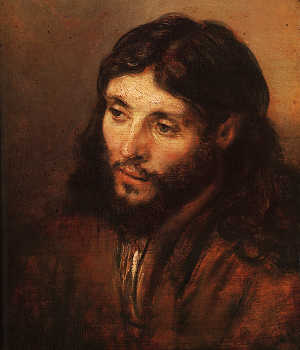
Through the pages of the Gospels Jesus emerges as a man of strength and integrity who bore about him, as someone has said, no strangeness at all save the strangeness of perfection. He liked people and they liked him in turn. They loved him; they loved him intensely and they loved him in numbers. Drawn to him not only for his charismatic powers but for the compassion they sensed in him as well, they surrounded him, flocked about him, followed him. He stands by the Sea of Galilee and they press so hard that he has to speak to them from a boat. He sets out for the day and a crowd of several thousand accumulates, missing their lunch, staying on until suddenly they discover that they are famished. People responded to Jesus, but equally he responded to them. He felt their appeal, whether they were rich or poor, young or old, saints or sinners. We have seen that he ignored the barriers that mores erected between people. He loved children. He hated injustice because of what it did to those he called, tenderly, “the least of these” (Matthew 25:40). Above all he hated hypocrisy, because it hid people from themselves and precluded the authenticity he sought to build into relationships. In the end it seemed to those who knew him best that here was a man in whom the human ego had disappeared, leaving his life so completely under the will of God that it was transparent to that will. It came to the point where they felt that as they looked at Jesus they were looking at something resembling God in human form. 

In the end it seemed to those who knew him best that here was a man in whom the human ego had disappeared, leaving his life so completely under the will of God that it was transparent to that will.

This is what lies behind the lyric cry of the early Church: “We have seen his glory,…full of grace and truth” (John 1:14). Centuries later, Shakespeare put it this way:

Some say that ever ’gainst that season comes
Wherein our Savior’s birth is celebrated,
The bird of dawning singeth all night long;
And then, they say, no spirit can walk abroad;
The nights are wholesome; then no planets strike,
No fairy tales, nor witch hath power to charm,
So hallow’d and so gracious is the time.

It came to the point where people felt that as they looked at Jesus they were looking at something resembling God in human form. 

.