
Author Archives: vinaire

I am originally from India. I am settled in United States since 1969. I love mathematics, philosophy and clarity in thinking.

Comments: Theory Asserted as Factual

Reference: A History of Man
Reference: FOREWORD

Comments on FOREWORD
Theory Asserted as Factual

The HISTORY OF MAN contains a theory of Hubbard, which he developed with the help of the E-meter. See E-Meter and OT Auditing.

In this foreword, Hubbard is making a big deal out of the idea of whole track because it is something new to the Western civilization. But the whole track has been known in ancient India as SAMSKARAS (latent impressions that manifest as tendencies) that get passed down from one life time to the next. This has been known in India since Buddha’s time, or maybe even earlier.

So, the whole track is not really the issue. The issue is Hubbard’s theory of the whole track.

Miraculous results are achieved when samskaras (latent impressions) are resolved through meditation. Of course, abilities are recovered too when such impressions are assimilated in the mental matrix. This has happened routinely in India. Nobody cares about the content of such impressions, because it is not relevant to the process of meditation. In the book, HISTORY OF MAN, however, Hubbard has come up with a theory about the content of such impressions, because it, apparently, helps the process of auditing.

Hubbard theory relates to the contents of the whole track.

Hubbard says,

“By adding up and checking probabilities on scores of persons, the character, extent and content of the whole track was mapped. Once the E-meter gave reliable data, the main problem became the estimation of intentions, of sources, of the reasons behind the reasons…”

When the e-meter’s needle reacts on a question it doesn’t necessarily means that the answer to the question be interpreted as YES or NO. It simply means that there is a charge on how the question is being interpreted by the mind. In other words, the mind is confronted with an anomaly.

THE E-METER DOES NOT VALIDATE A QUESTION OR ITS IMPLIED CONTENT.

The E-meter was used by Hubbard to date the “incident” on the time-track. For example, Hubbard would come up with a number like “3,296,843,125 years ago.” But the E-meter is not reacting to that particular number in the person’s mind. It, however, is reacting to some anomaly that we know nothing about. The number may serve to put the attention of the person on the anomaly. This does not mean that the datum “3,296,843,125 years ago” can unquestionably be admitted as factual.

Hubbard has the past track data described in the book HISTORY OF MAN with E-meter’s help; but the literalness of all that data is suspect. For example, when you ask a person about his identity in a past life, he may get a picture of being the Buddha. But that is merely a dream-like picture, which may represent some feeling, tendency, or desire.

THE E-METER DOES NOT PROVIDE ANY CONTENT IN RESPONSE TO A QUESTION.

Unfortunately, Hubbard used the E-meter to validate his own theory for the whole track’s content. He formulated questions based on his theory. Then, if the meter reacted to the question, he assumed the implication from that question to be correct. Thus he “verified” his theory from E-meter reactions.

Hubbard’s theory about the contents of the whole track, thus, became factual data to him.

Many of Hubbard’s followers have taken Hubbard’s SCI-FI type assertions about the whole track as factual. This seems to have led them, in many cases, down a rabbit hole.

The contents of the whole track in Scientology is simply a dreamlike visualization of various mental tendencies, and nothing more.

.

DEFINITIONS

E-METER
Electropsychometer; An electronic instrument for measuring mental state and change of state in individuals, as an aid to precision and speed in auditing. [Note: The E-meter actually measures change in body resistance in reaction to momentary thought.]

WHOLE TRACK
The whole track is the moment to moment record of a person’s existence in this universe in picture and impression form. [Note: The whole track is made of impressions on the mind that are not necessarily continuous.]

For other Scientology words, please see: Technical Dictionary
For regular English words, please see: https://www.dictionary.com/ 

.
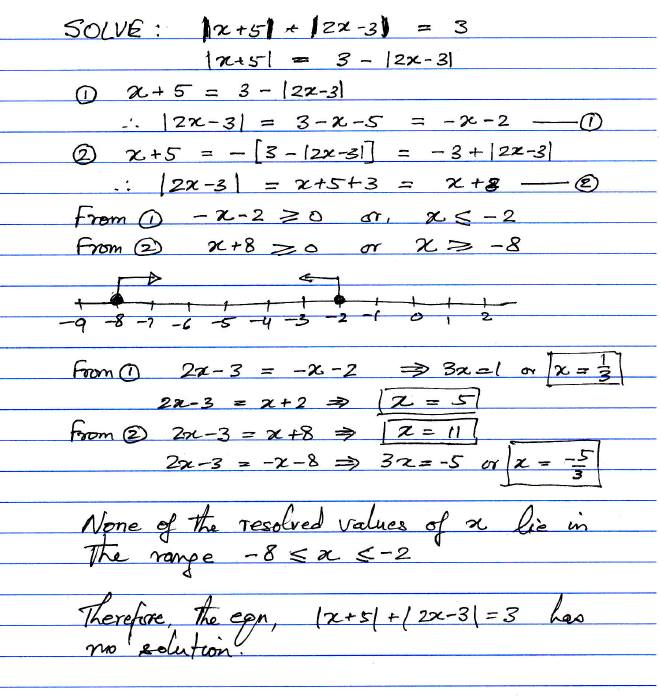
Inequality Problem

The above is a very instructive problem and solution.

Subject Clearing Articles and Books

Reference: The Book of Subject Clearing

As you study an article or a book on a subject, your purpose is to grasp it fully. The data contained in the material can be quite complicated or obscure. So, you carefully study one paragraph, or section, at a time. 

When there confusion, doubt or perplexity in a paragraph, clear it up using the procedure given in Word Meanings. After each paragraph, or section, briefly write down your your understanding and any doubts or questions. It may help you identify anomalies after you complete your study of the article, or the chapter of the book.

Once you reach the end of the article, or the chapter, some of the anomalies that you observed earlier may get resolved. So, you review all your comments and write a summary of them at the end of the article, or the chapter. In the summary, you may also refer to the key words related to the anomalies still to be resolved. 

Here is an example of a book that has been subject cleared: Hubbard 1952: A History of Man.

.

Gaps in Materials

As you make progress in your study of a subject as above, you become aware of the gaps in knowledge that you would like to fill. The most important gaps to fill are in the broadest concepts of the subject. So you become more selective in choosing the materials to study on that subject.

You might end up with a list of anomalies present in the subject.

.

Key Concepts & Glossary

You may keep a record of the key concepts in a subject from the broadest to the narrowest in that order. You may maintain a personal glossary for support.

In a Subject clearing project all notes and definitions are in a flux. They are continuously being reviewed and updated based on feedback from others and from further study.

Here is a current project listing some key concepts: Postulate Mechanics

In my case, my whole blog supports me in my subject clearing effort.

.

A Study of Scientology

Hubbard painted as Buddha

Reference: Course on Subject Clearing
Reference: Comments on Books

Here is my study of Scientology.

  1. Hubbard 1948: The Original Thesis
  2. Hubbard 1950: Dianetics TMSMH
  3. The Dianetics Axioms
  4. Hubbard 1952: A History of Man
  5. Hubbard 1953: Scientology 8-8008
  6. The Factors
  7. Hubbard 1954: The Phoenix Lectures
  8. Hubbard 1955: Dianetics 55
  9. The Scientology Axioms
  10. Scientology Fundamentals
  11. Scientology Grades
  12. Scientology OT Levels
  13. E-Meter and OT Auditing

.

Subject Clearing Your Schooling (old)

Please see Course on Subject Clearing

When we are young, we receive considerable “schooling” from our parents and from the school. We never question that data because it is all new to us. We are told that data in an authoritative manner, so we are not encouraged to question it. This amounts to your understanding being suppressed or conditioned. This has unwanted consequences later.

The outpoints that you are looking at here are ALTERED PURPOSE and OMITTED UNDERSTANDING. The truth is: as you understand better, you know what to do better.

.

TAKE SUPPRESSION OFF FROM LEARNING

It is important to take any suppression off your understanding. The first step is to make a list of the school subjects that you had trouble with. List them in the order they come to your mind. Then you may rearrange them in the sequence you would like to take them up.

Next, carry out the Viewpoint Expansion exercise with each subject using the following question:

“On learning __(the subject)__(the button)__?”

Use the buttons in the order given on the exercise. You may even cycle through all the buttons many times. Do this until you no longer feel threatened by the subject, or feel aversion towards it. You now feel that you can comfortably confront the subject.

Do this with all the subjects that you ever had trouble with. This could go very fast. You may now feel excited about learning in general.

.

CLEAR UP FEELINGS OF NOT UNDERSTANDING

Now that you feel excited about learning, make a list of the school subjects which make you feel that some understanding is missing. List them in the order they come to your mind. Then you may rearrange them in the sequence you would like to tackle them.

Take the first subject, and list all the key words as they come to your mind. The key words would represent the main concepts in that subject. For example, the key words of MATHEMATICS may be listed as follows:

Mathematics, digit, number, place value, counting, adding, subtracting, multiplying, dividing, integer, zero, negative numbers, terms, expressions, factoring, and so on.

As you clear the meaning of these key words, arrange them in the order from the earliest in development to the latest. This correct sequence shall provide you with the context in which you may evaluate the concepts underlying these key words. Do this until you no longer have the feeling of not understanding the subject. You may now see clearly what you understand and what you don’t.

Do this with all the subjects toward which you have the feeling of not having understood something. You will now have certainty on what you know, and what you don’t know.

.

ONGOING STUDY

Now that you have isolated what you know and what you don’t, you may prioritize your study, and plan your education according to your interests.

As you select textbooks and start to study them, make sure you do not go by any paragraph, sentence, or word that you do not understand the meaning of.

Use the tips provided at Word Meanings

Good luck!

.