You can find out more about KHTK at What is KHTK?
1. Mindfulness & “I”
2. Thetan is an Introversion
3. The Basic Approach
4. From Confusion to Clarity
5. Clarity of Observation
6. Observation & Sickness
.
 Vinaire's Blog
You can find out more about KHTK at What is KHTK?
.

The idea of space comes from dimensions of solids or matter. But matter is not the most basic physical substance. Underlying matter we have the field. How does this change the concept of space?
It is interesting to study the interface between matter and field. That is the area Quantum Mechanics is looking at. Quantum Mechanics have had lots of successes, so Quantum Mechanics is mostly right. But its math is very complicated. Can that math be simplified without rendering QM wrong, because QM is not wrong! If we can simplify the math of QM then I am sure we can get further mileage out of it.
Where is the limitation on QM coming from? I think it is the uncertainty in our concept of space. Our feel for space is based on matter. We do not have a feel for field. Our concept of space is tied to physical substance. Our understanding of the basic physical substance has moved from matter to field, but not the understanding of space.
What is field compared to matter? When particles collide in atomic and nuclear reactions, we see emission of radiation. It seems that matter cannot be divided indefinitely as matter. Somewhere along the way matter seems to divide into field.
What is wave function? A wave function is trying to define the field. What does probability in a wave function mean? I don’t think it provides the chance of locating a particle in space because the concept of particle and space is in question here. A particle seems to be a “peak in probability”, and the background is not space but the adjacent valley. These “peaks and valleys” are relative, which are mimicking “particles and space”.
The atom exists as a “particle” in the relative “space” of outside low-frequency field. The nucleus of an atom exists as a “particle” in the relative “space” of the electronic region. This idea is not very different from the idea of a “quantum” in QM.
Different particles are different “peaks” in the space provided by the “valleys” of the field. The “peak” is a sudden jump in frequency (energy) from the frequency that is characteristic of the field. The characteristic frequency of a field gives a character to “space”.
There seems to be a spike in frequency at the surface of the atom, and another huge spike at the surface of the nucleus. “Particles”, such as, electrons, atoms, and nuclei are stable configurations. The “particles” of Standard Model are also relatively stable configurations. This explains how there are particles within particles.
What does the zero mass of a photon means? Mass seems to come about when there is sharp spike in frequency. That means there is no sharp spike in frequency within a photon. The photon is the “space” part of a field. The photon then stands out as a “particle” in a “space” of lowest frequency possible. That would be a field approaching zero frequency. That would be “pure space”.
.
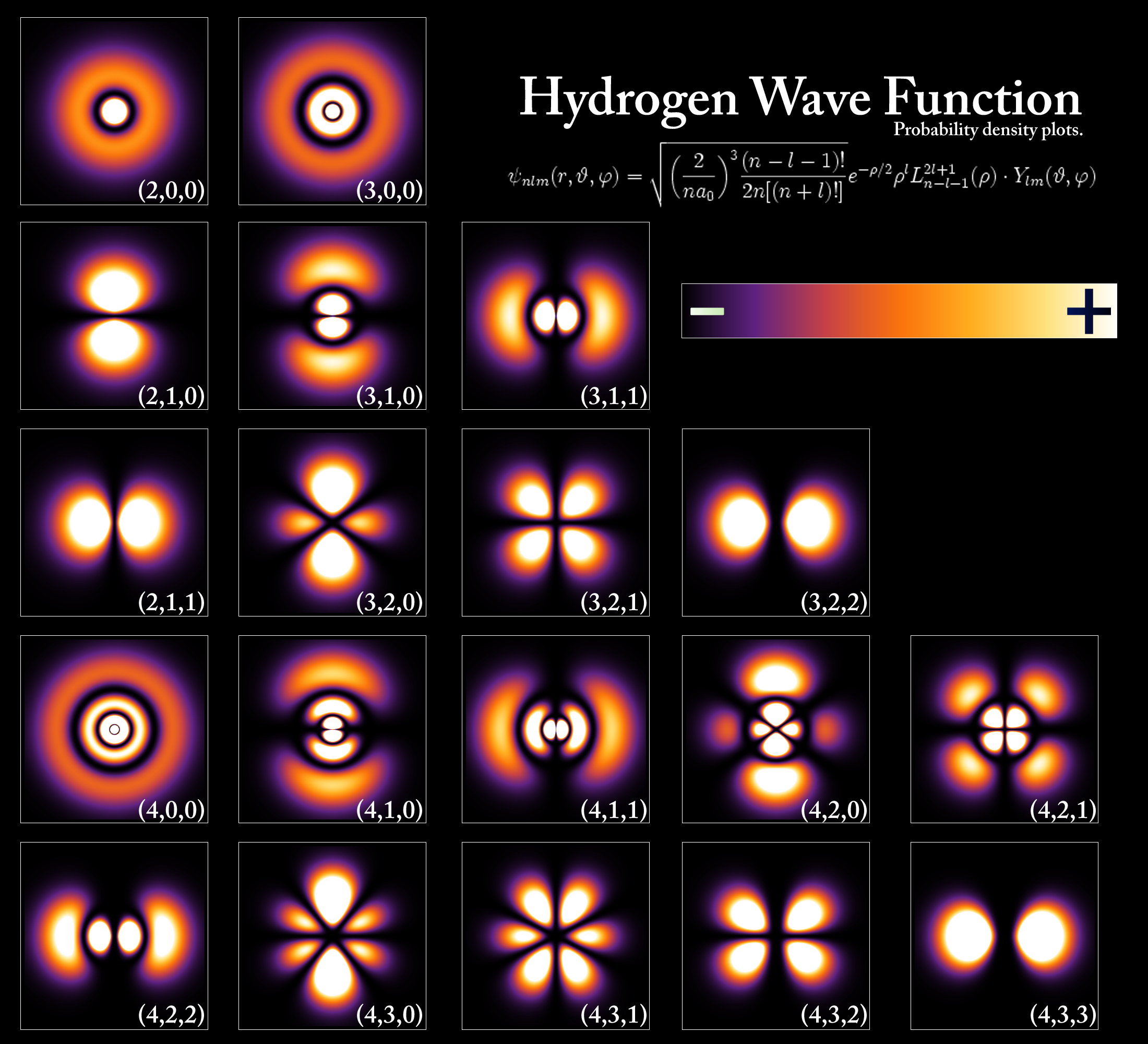
My study of interface between Physics and Metaphysics has, at this moment, led me to investigate the interface between Matter and Field.
The concept of electromagnetic waves is vital to the understanding of the field concept. Our idea of waves comes from waves on the surface of water, or sound waves in air. But unlike water waves or sound waves, the electromagnetic waves do not travel in a medium. They are their own medium. So math applied to field-centric idea of electromagnetic waves have to be interpreted differently from the math applied to matter-centric idea of waves.
Electromagnetic waves are waves of space, and we don’t quite know what space is. Space splits into electrical and magnetic fields when it is disturbed. All we then have is a fluctuation of these fields. These electrical and magnetic fields are not really propagating in space. They are merely creating a fluctuating condition of space.
Math describes a pattern. That pattern is interpreted in a certain way for matter-centric waves. The same math pattern may apply to field-centric electromagnetic waves, but it would have to be interpreted very differently because there is no distance being traversed. The distance is being “created” by the electromagnetic wave so to speak. So, the ‘x’ in the wave functions for electromagnetic waves means something entirely different.
The ‘x’ applied to the disturbance in the nucleus of an atom is extremely small. It seems to overlap itself. What does that mean? If it is the wavelength then what does this wavelength mean within a nucleus? I now have to study wave equation without assuming that ‘x’ means distance.
It seems that we see the distance from the perspective of matter. If there were no matter we shall see no distance. The whole idea of distance changes when only field is there. The field has extent, but it seems to be entirely different kind of extent. For example, what is the extent when the frequency of electromagnetic wave is very small and there is no mass around? We cannot say if the wavelength is very large or small because there is nothing to compare it to except to other wavelengths.
How do we compare two different wavelengths when there is no concept of distance? We compare distance by looking at the dimensions provided by matter. Dimension of matter is made up of infinity of infinitesimal wavelengths, and that is the basis of Calculus.
There is nothing wrong with calculus. We just need to make its interpretation consistent not only with matter but also with the concept of field.
.
Please see The Uncertainty Principle.
Here is an excellent explanation of uncertainty principle by Richard Muller, Professor of Physics, U. Calif. Berkeley, coFounder of Berkeley Earth.
The key point is that the Heisenberg’s uncertainty principle is the result of math applied to wave-like property.
The mathematical analysis assumes that we can always approximate a location in space as a Euclidean point. Is this assumption correct?
I believe that this uncertainty comes from using Euclidean point for location in space. The dimensionless Euclidean point seems to adequately define locations occupied in space by mass. But this doesn’t seem to be so for locations in space occupied by energy field.
When we look closely we find that location in space has an innate dimension equal to the wavelength of disturbance at that location. The de Broglie wavelength for matter is very, very small and it is possible to approximate it by the “dimensionless” Euclidean point. But the wavelengths of disturbance in energy field are not small enough to be so approximated.
The uncertainty seems to come from the use of this assumption for locations in energy field. We cannot “pinpoint” a location that has a significant dimension.
If this is properly understood and we can correct the mathematics being applied at quantum levels, then probably it will lead to much simpler understanding of the quantum phenomenon.
.