A Basic Model of Universe

Shiva Shakti

Previous: Self-Determinism and Laws of the Universe
Next: The Process of Evolution

All properties of the universe must converge back to the reference point of absolute zero for proper orientation. We call this point STATIC. This reference point is theoretical but very essential. The static is the orientation point from which to view this vast universe. For further data on the logic which helped arrive at the concept of static, please refer to Nirvana and Realization of God.

The key characteristic of the universe is the cycle of action, which is described as “begin-change-end”. There are cycles within cycles ad infinitum. One cycle leads into another cycle. This gives us a universe of change where no form survives permanently. We symbolize this change as DELTA. We refer to this DELTA in general as disturbance.

Another characteristic of this universe is the Law of Alignment. Every state of the universe emerges from a previous state. We may only speculate on how the universe began, but we can logically say that each state of the universe aligns with the state just before it. For further data on the logic which helped arrive at this law, please refer to Self-Determinism and Laws of Alignment. This Law of Alignment underlies all other laws of this universe.

Thus this universe has a natural tendency to align the disturbance within it. There is continual movement toward greater order. We call this movement EVOLUTION. The chaotic disturbance is gradually evolving into organized motion.

We refer to the chaotic disturbance as PHI. We refer to the organized motion as THETA. Thus we may state the following.

  1. DELTA (disturbance) is the basic characteristic of change in this universe
  2. DELTA has the aspects of PHI (chaos) and THETA (order).
  3. PHI is continually evolving into THETA, goaded by the Law of Alignment.

THETA evolves as more and more disturbance gets aligned. THETA has spiritual and physical aspects that are always equivalent as follows.

  1. THETA is goaded spiritually by Desire, the physical equivalent of which is Time.
  2. THETA starts out as Awareness, the physical equivalent of which is Space.
  3. THETA then changes into Consciousness, the physical equivalent of which is Energy.
  4. THETA then condenses into Identity, the physical equivalent of which is Matter.

We may refer to the spiritual aspects of THETA as ICAD using the first letters of Identity, Consciousness, Awareness and Desire. We may refer to the physical aspects of THETA as MEST using the first letters of Matter, Energy, Space and Time.

Thus, we may state the following.

  1. The spiritual aspect of THETA is ICAD, the physical equivalent of which is MEST.
  2. Evolution of THETA means the evolution of ICAD and MEST.

The interface between THETA (order) and PHI (chaos) are the life organisms. The symbol used for life organism is LAMBDA.

PHI forms the environment of LAMBDA. LAMBDA perceives the random efforts in the environment, and converts them into experience by aligning and assimilating them into an experiential matrix. The efforts have the characteristics of MEST. The experiences have the characteristics of ICAD.

  1. The interface between THETA and PHI is called LAMBDA (the life organism).
  2. The interaction of LAMBDA with PHI is in terms of MEST efforts.
  3. The interaction of LAMBDA with THETA is in terms of ICAD experience.

The experiential matrix acts as the Control Center of LAMBDA. It guides the physical form of LAMBDA, which then senses the efforts in the environment and interacts with them. This way the efforts in the environment get aligned. Thus evolution takes place not only in terms of experiential matrix (ICAD) but also in terms of physical forms (MEST)

The experiential matrix combines among individual life organisms, colonies, species, and all properties in the universe to become a universal experiential field. This is THETA.

On the other hand all random efforts in the environment combine among all regions on a planet, solar systems, and galaxies in the universe to become the universal disorder. This is PHI.

There is always free association going on in the experiential field with the perceptions received from the environment to align all the experiences. These aligned experiences then guide the efforts to bring order in the chaotic environment.

  1. The Law of Alignment is continually converting PHI into THETA through the interface of LAMBDA.

It is important to know the basic terminology here as we shall be using them again in subsequent essays.

STATIC: The absolute zero physically and metaphysically
DELTA: The symbol for change or disturbance
THETA: The symbol for organized motion
PHI: The symbol for chaotic disturbance.
ICAD: Identity, Consciousness, Awareness and Desire
MEST: Matter, Energy, Space and Time
LAMBDA: The symbol for living organisms

.
The Ultimate Reference Point, Active Agent & Goal

sublime-5-copy

Reference: A Critique of Scientology Philosophy

Hubbard’s Approach in Scientology

STATIC: Zero physically but infinite metaphysically
>>> Static has peculiar and particular properties
.
THETA: It is the metaphysical portion of Static (LIFE STATIC)
>>> THETA = a part of STATIC
.
SURVIVAL: The goal of THETA is survival.
>>> THETA produces MEST (matter, energy, space, time)

.

.

Mindfulness Approach in Buddhism

STATIC: Zero both physically and metaphysically
>>> All properties converge to the static 
>>> Static has no properties
.
DELTA: It is the CHANGE away from Static (DISTURBANCE)
>>> We may say, THETA = STATIC + DELTA
.
EVOLUTION: The goal of DELTA is evolution
>>> DELTA evolves into MEST (matter, energy, space, time)

.

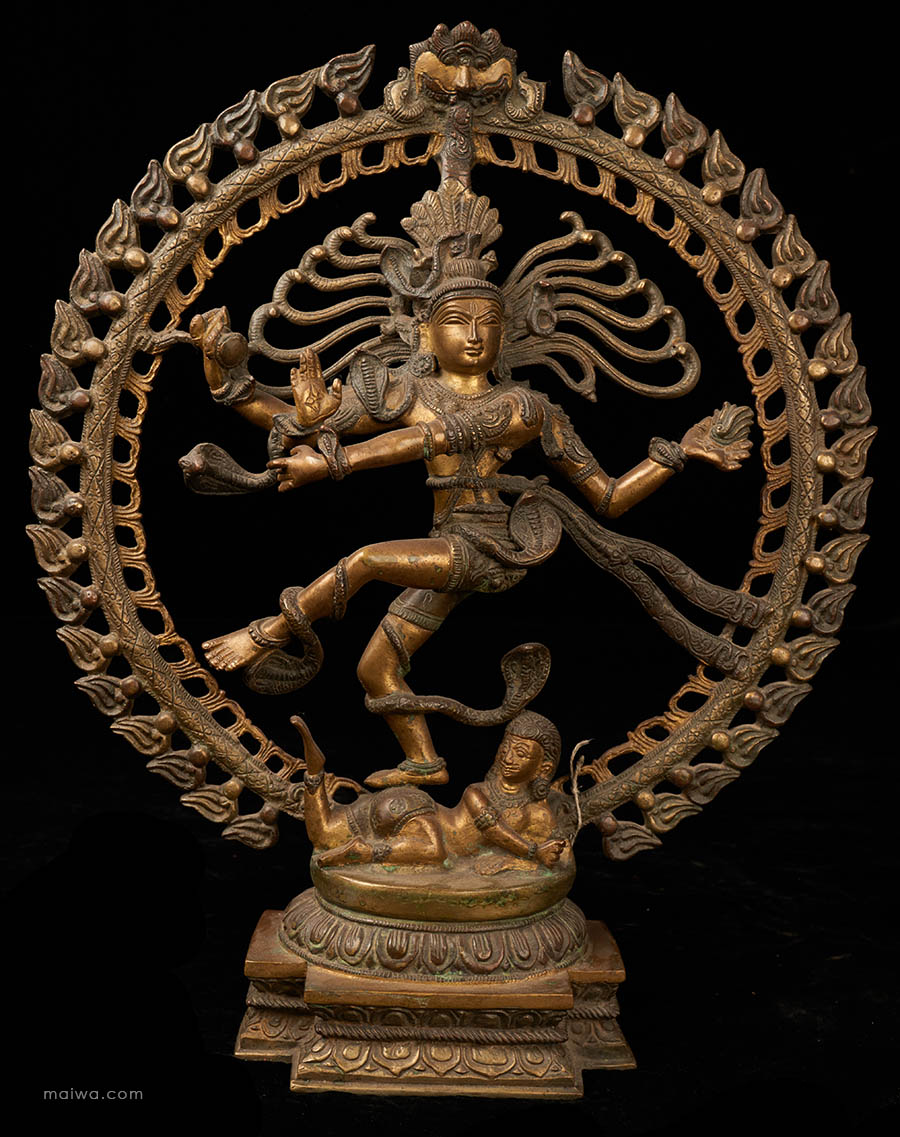
In Vedic Hinduism, STATIC is Shiva, and DELTA is Shakti, and THETA may be Shakti dancing on the body of Shiva. It seems that Shakti and Shiva are confused with each other in Hinduism.

.

Dianetics Axioms 106 – 120

mathison

Reference: The Dianetics Axioms

L. Ron Hubbard found that man is obeying very definite laws and rules which could be set forward in axioms. The very first and most fundamental of these is: The dynamic principle of existence is survive. That is the basic axiom of Dianetics.

The original Dianetic axioms are referenced below in black.

.

Executive Summary 2025

.

Axioms 106-120

DN AXIOM 106: The introduction of an arbitrary factor or force without recourse to natural laws of the body or the area into which the arbitrary is introduced brings about plus or minus randomity.

An arbitrary factor or force is one that does not fit the context. Therefore, it cannot be assimilated into oneness along with surrounding factors or forces. Natural laws arise from oneness of assimilation. Anything that conflicts with these natural laws brings about disharmony and unpredictability. 

.

DN AXIOM 107: Data of plus or minus randomity depends for its confusion on former plus or minus randomity or absent data.

If a randomity or misalignment cannot be resolved, then the source of that difficulty is some earlier randomity that is missing from view and is arbitrary.

.

DN AXIOM 108: Efforts which are inhibited or compelled by exterior efforts effect a plus or minus randomity of efforts.

If an organism’s efforts are inhibited or compelled by external efforts, then that will generate more randomity or misalignment of efforts, because the assimilation into oneness is missing.

.

DN AXIOM 109: Behavior is modified by counter-efforts which have impinged on the organism.

Counter-efforts impinge on the organism in the form of sensations. These sensation may or may not be fully assimilated. Reactions come from unassimilated sensations; whereas, learned analytical behavior comes from assimilated sensations. In either case the behavior of the organism is modified.

.

DN AXIOM 110: The component parts of THETA are affinity, reality and communication.

THETA is essentially the awareness of what is there, and the natural tendency of this awareness is to see ONENESS in what is there. This Oneness consists of continuity, consistency and harmony. Affinity is the seeking of continuity; reality is the seeking of consistency; and communication is the seeking of harmony.

.

DN AXIOM 111: Self-determinism consists of maximal affinity, reality and communication.

Self-determinism is the natural tendency to establish Oneness, which brings about evolution. There is tendency toward maximal continuity, consistency and harmony.

.

DN AXIOM 112: Affinity is the cohesion of THETA.

Affinity manifests itself as the recognition of similarity of efforts and goals amongst organisms by those organisms.

Affinity is the continuity of awareness of THETA.

.

DN AXIOM 113: Reality is the agreement upon perceptions and data in the physical universe.

All that we can be sure is real is that on which we have agreed is real.
Agreement is the essence of reality.

It is not agreement but consistency throughout the universe that makes it real. 

.

DN AXIOM 114: Communication is the interchange of perception through the material universe between organisms or the perception of the material universe by sense channels.

.

DN AXIOM 115: Self-determinism is the THETA control of the organism.

.

DN AXIOM 116: A self-determined effort is that counter-effort which has been received into the organism in the past and integrated into the organism for its conscious use.

.

DN AXIOM 117: The components of self-determinism are affinity, communication and reality.

Self-determinism is manifested along each dynamic.

.

DN AXIOM 118: An organism cannot become aberrated unless it has agreed upon that aberration, has been in communication with a source of aberration and has had affinity for the aberrator.

The organism does not have arbitrary will. It is discontinuity, inconsistency and disharmony of sensations that generates aberration within it.

.

DN AXIOM 119: Agreement with any source, contra- or prosurvival, postulates a new reality for the organism.

Agreement really means becoming aligned with something. That something may not be consistent with the natural laws.

.

DN AXIOM 120: Nonsurvival courses, thoughts and actions require nonoptimum effort.

PM AXIOM 120: To think, act or continue on a non-survival course means there is considerable misalignment generating non-optimum effort.

.

Dianetics Axioms 91 – 105

lrhlecture

Reference: The Dianetics Axioms

L. Ron Hubbard found that man is obeying very definite laws and rules which could be set forward in axioms. The very first and most fundamental of these is: The dynamic principle of existence is survive. That is the basic axiom of Dianetics.

The original Dianetic axioms are referenced below in black.

.

Executive Summary 2025

.

Axioms 91-105

DN AXIOM 91: Past randomity can impose itself upon the present organism as THETA FACSIMILES.

Past randomity exists in the form of sensations that are waiting to be assimilated in the mental matrix. The organism is not aware of these sensations because they are not assimilated. These unassimilated sensations can distort the surrounding perceptions and cause aberrations.

.

DN AXIOM 92: The engram is a severe area of plus or minus randomity of sufficient volume to cause unconsciousness.

Engrams are heavy unassimilated sensations. When a mental circuit connected to them gets activated, it causes unconsciousness (no perception). 

PM AXIOM 92: The engram is a severe area of plus or minus randomity of sufficient volume to cause unconsciousness.

.

DN AXIOM 93: Unconsciousness is an excess of randomity imposed by a counter-effort of sufficient force to cloud the awareness and direct function of the organism through the mind’s control center.

PM AXIOM 93: Unconsciousness is the clouding of awareness and direct function of the organism under the imposition of excess randomity.

.

DN AXIOM 94: Any counter-effort which misaligns the organism’s command of itself or its environment establishes plus or minus randomity or, if of sufficient magnitude, is an engram.

The organism commands itself through the assimilated mental matrix. Any counter-effort exists as a fixed pattern of sensations that is not assimilated in this mental matrix. It interrupts the organism’s command of itself. When this unassimilated fixed pattern of sensations is of sufficient magnitude it is an engram.

.

DN AXIOM 95: Past engrams are restimulated by the control center’s perception of circumstances similar to that engram in the present environment.

When sensations that are similar to past unassimilated sensations embedded in the mental matrix arrive, then they all get hooked up together and become activated. This is restimulation.

PM AXIOM 95: Past engrams are restimulated by the control center’s perception of circumstances similar to that engram in the present environment.

.

DN AXIOM 96: An engram is a THETA FACSIMILE of atoms and molecules in misalignment.

“Theta facsimile” is the term used by Hubbard for unassimilated sensations embedded in the mental matrix. In an engram, these sensations are so misaligned that that they cannot be assimilated in the mental matrix without special effort.

PM AXIOM 96: An engram is made up of unassimilated sensations in severe misalignment.

.

DN AXIOM 97: Engrams fix emotional response as that emotional response of the organism during the receipt of the counter-effort.

The organism’s response to the counter-effort becomes part of the engram that is formed.  The engram, when restimulated, plays back that fixed emotional response because they are not yet assimilated in the mental matrix.

.

DN AXIOM 98: Free emotional response depends on optimum randomity. It depends upon absence of or non-restimulation of engrams.

All sensations containing optimum motion are processed with full awareness by an assimilated mental matrix. Such response are emotionally free. This is also the case when engrams in circuits are not activated.

.

DN AXIOM 99: THETA FACSIMILES can recombine into new symbols.

“Theta facsimile” are unassimilated sensations embedded in the mental matrix. These sensations with partial assimilation may be treated as new symbols.

DN AXIOM 99: Partially assimilated sensations can recombine into new symbols.

.

DN AXIOM 100: Language is the symbolization of effort.

PM AXIOM 100: Language is the symbolization of effort.

.

DN AXIOM 101: Language depends for its force upon the force which accompanied its definition.

(Note: Counter-effort, not language, is aberrative.)

.

DN AXIOM 102: The environment can occlude the central control of any organism and assume control of the motor controls of that organism.

(Engram, restimulation, locks, hypnotism.)

.

DN AXIOM 103: Intelligence depends on the ability to select aligned or misaligned data from an area of randomity and so discover a solution to reduce all randomity in that area.

.

DN AXIOM 104: Persistence obtains in the ability of the mind to put solutions into physical action toward the realization of goals.

.

DN AXIOM 105: An unknown datum can produce data of plus or minus randomity.

.

Dianetics Axioms 76 – 90

b28e53a85da410ba5f6a6e71e26a

Reference: The Dianetics Axioms

L. Ron Hubbard found that man is obeying very definite laws and rules which could be set forward in axioms. The very first and most fundamental of these is: The dynamic principle of existence is survive. That is the basic axiom of Dianetics.

The original Dianetic axioms are referenced below in black.

.

Executive Summary 2025

.

Axioms 76-90

DN AXIOM 76: Randomity amongst organisms is vital to continuous survival of all organisms.

Randomity is the degree of lack of assimilation of sensations. It is a departure from Oneness. It induces a tension for greater assimilation toward oneness. As assimilation occurs, evolutionary progress is made.

.

DN AXIOM 77: THETA affects the organism, other organisms and the physical universe by translating THETA FACSIMILES into physical efforts or randomity of efforts.

DEFINITION: The degree of randomity is measured by the randomness of effort vectors within the organism, amongst organisms, amongst races or species of organisms or between organisms and the physical universe.

The above definition is important to understand. There can be departures from oneness within the organism, amongst organisms, amongst races or species of organisms. There is natural drive to evolve towards greater oneness by overcoming these departures. The effort reasoned through thought translates into the physical effort of the body.

.

DN AXIOM 78: Randomity becomes intense in indirect ratio to the time in which it takes place, modified by the total effort in the area.

An engram is an area of randomity.

.

DN AXIOM 79: Initial randomity can be reinforced by randomities of greater or lesser magnitude.

.

DN AXIOM 80: Areas of randomity exist in chains of similarity plotted against time. This can be true of words and actions contained in randomities. Each may have its own chain plotted against time.

In a matrix all elements are associated with each other. Similarities are easy to associate. An area of similar randomity (engram, word, action) may be followed back in time to its first occurrence.

.

DN AXIOM 81: Sanity consists of optimum randomity.

.

DN AXIOM 82: Aberration exists to the degree that plus or minus randomity exists in the environment or past data of an organism, group or species, modified by the endowed self-determinism of that organism, group or species.

PM AXIOM 82: Aberration exists to the degree that plus or minus randomity exists in the environment, or in the past data of an organism, group or species.

.

DN AXIOM 83: The self-determinism of an organism is determined by its THETA endowment, modified by minus or plus randomity in its environment or its existence.

“THETA endowment” shall essentially be the property of configuration of the organism, or the system.

.

DN AXIOM 84: The self-determinism of an organism is increased by optimum randomity of counter-efforts.

A counter-effort is any effort in the environment exerted against the efforts of the organism. 

.

DN AXIOM 85: The self-determinism of an organism is reduced by plus or minus randomity of counter-efforts in the environment.

.

DN AXIOM 86: Randomity contains both the randomness of efforts and the volume of efforts.

(Note: An area of randomity can have a great deal of confusion, but without volume of energy, the confusion itself is negligible.)

.

DN AXIOM 87: That counter-effort is most acceptable to an organism which most closely appears to assist its accomplishment of its goal.

.

DN AXIOM 88: An area of severe plus or minus randomity can occlude data on any of the subjects of that plus or minus randomity which took place in a prior time.

(Note: Shut-off mechanisms of earlier lives, perceptics, specific incidents, etc.)

PM AXIOM 88: An area of severe plus or minus randomity is yet to be assimilated. Therefore, its sensations have not been converted into perceptions.

.

DN AXIOM 89: Restimulation of plus, minus or optimum randomity can produce increased plus, minus or optimum randomity respectively in the organism.

.

DN AXIOM 90: An area of randomity can assume sufficient magnitude so as to appear to the organism as pain, according to its goals.

PM AXIOM 90: An area of randomity can assume sufficient magnitude so as to appear to the organism as pain.

.