The Unified Field Theory

discreteness

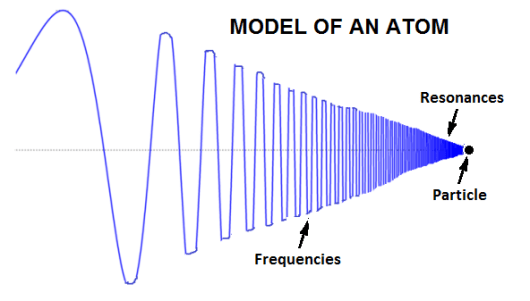
Evolution starts by increasing discreteness. This aspect of evolution covers the whole realm of physics. Discreteness evolves from

  1. Frequency of disturbance to
  2. Resonance as reinforced frequency to
  3. Particle as collapsed resonance.

.

The subject of physics started from observation of the motion of planets and other heavenly bodies in the sky. The fundamental property associated with these bodies was mass. So, physics evolved within a frame of reference based on mass. This aspect of physics was rounded up by Newton in the second half of 17th century.

Another aspect of Physics emerged in the beginning of 20th century when Einstein formulated the Theory of Relativity. This theory established the speed of light as a universal constant. The concepts of space and time could no longer be conceived as independent of each other as it was in the frame of reference based on mass. The frame of reference of Physics had now shifted from mass to energy.

NOTE 12/05/19: Both mass and energy are forms of substance.

Following the above development, another aspect of physics evolved very rapidly during the first quarter of 20th century to explain the observations made at atomic dimensions. This aspect was called Quantum Mechanics because it did not have a well-grounded theory, and was based primarily on mathematical models. It seemed to have a frame of reference based on resonance.

Physics has long been trying to come up with a unified theory that can bring these three aspects of physics together. We may make some progress in that direction by relating the frames of reference of Theory of Relativity, Quantum Mechanics, and Newtonian Physics on a scale of increasing discreteness. On this scale space shall have zero discreteness.

Energy (frequency) obviously is disturbed space; resonance is reinforced frequency; and mass (particle) appears to be collapsed (folded up) resonance. We may be able to use space as a reference point for all these frames of references.

Thus, if we can reformulate the Theory of Relativity, Quantum Mechanics, and Newtonian Physics using a frame of reference based on space, we may be able to come up with a unified theory. This is the idea underlying the Disturbance theory, which is currently under development.

Granted the above ideas are very sketchy and are nothing more than conjectures at this stage, but they provide an overall coherence within which a unified theory may be developed.

.

The Stages of Evolution

man

Previous: The Process of Evolution
Next: The Dynamics

The stages of evolution seem to be as follows:

  1. From continuity to discreteness
  2. From stillness to animation
  3. From reaction to analytical thinking
  4. From analytical thinking to critical thinking (intelligence).

.

FROM CONTINUITY TO DISCRETENESS

Both continuity and discreteness come into picture with disturbance. The discreteness grows as follows:

  1. The frequencies of the electromagnetic spectrum
  2. The resonances of the electronic structure
  3. The particles of the atomic structure

At first, we see continuity manifested more at low frequencies, whereas, discreteness is manifested more at higher frequencies. The next level of discreteness is manifested as resonances among frequencies. This is the area of Quantum Mechanics. The ultimate level of discreteness is manifested as particles, with the atoms.

There is a spectrum of discreteness from frequencies to resonances to particles visible in the atoms. The nucleus of an atom is particle-like; and the electronic structure is resonance-like. The atomic structure then extends beyond in a frequency-like manner.

.

FROM STILLNESS TO ANIMATION

Atoms as particles combine and grow in complexity of forms. We have rocks, metals, minerals, etc. All these material forms do not have the ability of self-animation. Therefore, we do not consider them to have life. A piece of rock just sits there totally still and lifeless.

Self-animation seems to enter at the level of RNA and DNA molecules. These molecules are large and they have enough number of electrons in their orbitals to carry out the functions of electronic circuits. So, these molecules are programmable, and they are programmed by nature. These molecules are, therefore, self-animated. This self-animation of forms is what we call life.

.

FROM REACTION TO ANALYTICAL THINKING

The life enters into the picture and becomes more and more complex – first as plant life, then animal life, and finally human life. At first, the animation is purely in the form of reaction. By reaction is meant, that there is only one option in how to respond to some stimuli. Gradually, analytical thinking starts to enter the picture. Here we have more than one option on how to respond to some stimuli.

When we see the organisms of the same specie responding differently to the same stimuli, then we know that some analytical thinking going on there. There is greater analytical thinking at the level of highly evolved animal life.

.

FROM ANALYTICAL THINKING TO CRITICAL (INTELLIGENT) THINKING

Analytical thinking, at its highest stage, evolves into critical thinking (intelligence). This occurs at the level of humans. Intelligence is the ability to recognize differences, similarities and identities, and to take a decision based on one’s observation of things as they are. This is the highest evolution we have gotten to so far.

However, the reactive mode is still retained in humans. The critical thinking mode often descends into analytical and reactive modes under stress. It remains in the lower modes when the person is stressed. To evolve further, we need to fully understand the critical, analytical and reactive modes.

.

CONCLUSION

An objective philosophy must focus broadly on the whole process of evolution and not just on Man. It should now consider the next step of evolution beyond Man.

Awareness develops into consciousness along the steps outlined above. Any “free will” shall exist only within the perimeter of the laws of evolution.

Life, as we know it,  first emerges with RNA and DNA molecules that can act as self-animated molecular computers because of their advance electronic structure. Life is a manifestation of something more fundamental.

That something more fundamental is the Law of Alignment (consistency, harmony and continuity).

.

The Process of Evolution

1591020_1410750348602

Previous: A Basic Model of Universe
Next: The Stages of Evolution

This universe is evolving. The evolution is gradually bringing order to the randomness of this universe. Underlying this evolution is the Law of Alignment that naturally seeks continuity, harmony and consistency (ref: Self-Determinism and Laws of Alignment).

In our model of the universe, the chaotic disturbance or randomness is symbolized by PHI; and the organized motion or ordered experience is symbolized by THETA (ref: A Basic Model of Universe). During the process of evolution PHI is gradually being converted into THETA per the Law of Alignment.

At the interface of PHI and THETA there lays LAMBDA, the life organism. LAMBDA is made up of a “physique” and a “control center”. The physique senses the misalignment between its own efforts and the random efforts of PHI. The control center sorts out those misalignments by freely associating them with the universally-indexed, experiential field of THETA.

Within LAMBDA itself, the misalignment of efforts on the “physique” side is immediately reflected as the misalignment in experience on the “control center” side. Similarly, the alignment of experience on the “control center” side is immediately reflected as the alignment of efforts on the “physique” side.

In short, the process of evolution is made up of the following steps.

  1. LAMBDA has a “physique” made up of physical elements.

  2. LAMBDA also has a “control center” made up of metaphysical elements called experience.

  3. The “physique” is directed by the “control center”.

  4. The physique of LAMBDA senses the misalignment between its own efforts and the random efforts in its environment (PHI).

  5. This misalignment of efforts is immediately reflected as misalignment in experience in the control center. The control center consists of a well-aligned and indexed experiential matrix that immediately applies its alignment and indexing to the incoming misalignment.

  6. The control center brings the misalignment into alignment through free association. Any gaps in free associations are filled by working out the required continuity, harmony and consistency with appropriate starting postulate.

  7. The incoming misalignment thus gets straightened out and assimilated into the experiential matrix of the control center.

  8. This assimilated and aligned experience is immediately reflected in the efforts of the physique.

  9. The newly aligned efforts of the organism then interact with further random efforts in the environment as in step 4 above.

  10. And the cycle continues.

Here we see that a misalignment immediately triggers free association (and postulation) until the alignment in the experiential matrix of the organism is restored. But the experiential matrix of the organism seems to be surrounded by an experiential matrix of the society. So, this triggering of free association may have a ripple effect beyond the organism into the society of that organism.

We may look at THETA as the “universal experiential field”. This experiential field will then contain all the smaller experiential matrices. The experiential matrices may act respectively as control centers of species, societies, groups and individual organisms. We may therefore say that THETA functions as the “control center” of the entire universe per the Law of Alignment.

This is a description of the mechanism by which randomness of PHI gets converted into the organization of THETA.

This is evolution.

.

Dianetics Axioms 136 – 150

natural-law

Reference: The Dianetics Axioms

L. Ron Hubbard found that man is obeying very definite laws and rules which could be set forward in axioms. The very first and most fundamental of these is: The dynamic principle of existence is survive. That is the basic axiom of Dianetics.

The original Dianetic axioms are referenced below in black.

.

Executive Summary 2025

.

Axioms 136-150

DN AXIOM 136: The mind is plastically capable of recording all efforts and counter-efforts.

The sensations may enter the mind as recordings; but the effort of the mind is to assimilate these sensations into a matrix of finer and finer elements. The counter-effort create randomity to be assimilated.

.

DN AXIOM 137: A counter-effort accompanied by sufficient (enrandomed) force impresses the facsimile of the counter-effort personality into the mind of an organism.

The sensation of the counter-effort received in the mind has its own personality that may force itself upon the organism until it is assimilated.

.

DN AXIOM 138: Aberration is the degree of residual plus or minus randomity accumulated by compelling, inhibiting or unwarranted assisting of efforts on the part of other organisms or the physical (material) universe.

Aberration is caused by what is done to the individual, not what the individual does, plus his self-determinism about what has been done to him.

Other organisms and the physical universe are part of the environment. The counter-efforts from the environment cause plus and minus randomity that generates misalignments in the efforts of the organism. These misalignments are the aberrations displayed by the organism. The self-determinism of the organism attempts to assimilate the randomity to resolve its aberrations.

.

DN AXIOM 139: Aberrated behavior consists of destructive effort toward prosurvival data or entities on any dynamic, or effort toward the survival of contrasurvival data or entities for any dynamic.

Aberrated behavior is not targeting anybody or anything. It is simply irrational and disorderly in itself.

.

DN AXIOM 140: A valence is a facsimile personality made capable of force by the counter-effort of the moment of receipt into the plus or minus randomity of unconsciousness.

A valence is the coherence among the sensations of counter-efforts. They appear as a “personality” that does not align with the personality of the organism. The personality of the mental matrix  is aligned with the natural laws, but a valence is not. The surrounding universal matrix represents those natural laws.

.

DN AXIOM 141: A control center effort is aligned toward a goal through definite space as a recognized incident in time.

The mental matrix forms the control center of the organism. It operates optimally when in sync with the natural laws. Its primary goal is to evolve by resolving anomalies as it comes across them. 

.

DN AXIOM 142: An organism is as healthy and sane as it is self-determined.

The environmental control of the organism motor controls inhibits the organism’s ability to change with the changing environment, since the organism will attempt to carry forward with one set of responses when it needs by self-determinism to create another to survive in another environment.

Everything operates according to the laws of nature. The environment seems to control the organism only when the organism is unable to assimilate the effects of the environment.

.

DN AXIOM 143: All learning is accomplished by random effort.

Postulates are used to define the unknowable. Consistency is then sought among the postulates to enlarge the knowingness. This gives birth to natural laws. The effort then becomes to apply and further refine the natural laws. Any random effort is in the form of new postulates. 

.

DN AXIOM 144: A counter-effort producing sufficient plus or minus randomity to record is recorded with an index of space and time as hidden as the remainder of its content.

Anything not assimilated in the mental matrix will appear to be hidden. “Recording” exists only in the form of unassimilated traumatic sensations. Space and time index is a natural part of the content of sensations that are waiting to be assimilated.

.

DN AXIOM 145: A counter-effort producing sufficient plus or minus randomity when activated by re-stimulation exerts itself against the environment or the organism without regard to space and time, except reactivated perceptions.

A counter-effort producing sufficient plus or minus randomity is actually the traumatic sensation that did not get assimilated. Therefore, when activated, it generates the same counter-efforts as were originally felt by the organism, without regard to space and time.

.

DN AXIOM 146: Counter-efforts are directed out from the organism until they are further enrandomed by the environ at which time they again activate against the control center.

Restimulation of counter-efforts makes the organism behave so as to act out those counter-efforts, even when the environment is now different. So, additional misalignments come about that the control center must handle. But any effort to do so turns those counter-efforts against the control center of the organism.

.

DN AXIOM 147: An organism’s mind employs counter-efforts effectively only so long as insufficient plus or minus randomity exists to hide differentiation of the facsimiles created.

The counter-efforts when assimilated can be employed by the organism effectively.

.

DN AXIOM 148: Physical laws are learned by life energy only by impingement of the physical universe producing randomity, and a withdrawal from that impingement.

The laws of the universe are learned when anomalies are properly recognized and resolved.

.

DN AXIOM 149: Life depends upon an alignment of force vectors in the direction of survival and the nullification of force vectors in the direction of succumb in order to survive.

COROLLARY: Life depends upon an alignment of force vectors in the direction of succumb and the nullification of force vectors in the direction of survive in order to succumb.

The ultimate goal is evolution. Survive and succumb depends upon whether the organism is able to resolve anomalies or not.

.

DN AXIOM 150: Any area of randomity gathers to it situations similar to it which do not contain actual efforts but only perceptions.

An area of randomity is an area of misalignment and confusion. It gathers to it similar perceptions by association.

.

Dianetics Axioms 121 – 135

memory-engram-cells

Reference: The Dianetics Axioms

L. Ron Hubbard found that man is obeying very definite laws and rules which could be set forward in axioms. The very first and most fundamental of these is: The dynamic principle of existence is survive. That is the basic axiom of Dianetics.

The original Dianetic axioms are referenced below in black.

.

Executive Summary 2025

.

Axioms 121-135

DN AXIOM 121: Every thought has been preceded by physical action.

.

DN AXIOM 122: The mind does with thought as it has done with entities in the physical universe.

Giving appropriate meaning to the unknown sensation amounts to assimilating that sensation. It the sensation is complex and condensed it may have to be unbundled before it can be properly assimilated. Assimilation requires that the thoughts or meanings assigned to sensations are consistent. The mind essentially assimilates the sensations in this way using thoughts.

.

DN AXIOM 123: All effort concerned with pain is concerned with loss.

Organisms hold pain and engrams to them as a latent effort to prevent loss of some portion of the organism. All loss is a loss of motion.

An engram is a complex cluster of sensations that needs to be assimilated. The high intensity of those sensations is felt as pain. There is effort by managing thought to assimilate such pain of the engram. The lack of assimilation means that optimum motion is missing. The effort is, therefore, to establish optimum motion. The attempt to reestablish optimum motion may appear as handling a loss.

.

DN AXIOM 124: The amount of counter-effort the organism can overcome is proportional to the THETA endowment of the organism, modified by the physique of that organism.

The THETA endowment of the organism is the the aligned motion that exists within it. The greater is its aligned motion the more easily it can overcome the misalignments of the counter-efforts. This also requires alignment of the physique of the organism.

.

DN AXIOM 125: Excessive counter-effort to the effort of a life organism produces unconsciousness.

COROLLARY: Unconsciousness gives the suppression of an organism’s control center by counter-effort.
DEFINITION: The control center of the organism can be defined as the contact point between THETA and the physical universe and is that center which is aware of being aware and which has charge of and responsibility for the organism along all its dynamics.

Excessive counter-effort can overwhelm the effort of the organism. There is simply too much misalignment for the organism to overcome. When that misalignment overpowers the organism unconsciousness results. Unconsciousness is the drowning of perception, which occurs as the organism becomes misaligned, and its control center is suppressed. The control center is the alignment of the mental matrix that determines the awareness of the organism.

.

DN AXIOM 126: Perceptions are always received in the control center of an organism whether the control center is in control of the organism at the time or not.

This is an explanation for the assumption of valences.

The mental matrix assimilates the incoming sensations to produce perception and awareness for the organism. A condition of alignment of mental and physical circuits exists. When the sensations of excessive counter-efforts cannot be assimilated, they form their own pockets within the mental matrix, and develop their own separate interface with the body circuits. These pockets, when activated, serve as alternate personality that bypasses organism’s awareness. This is called a valence in Scientology. It has very limited reasoning ability. Its “perceptions” are not available to the organism.

.

DN AXIOM 127: All perceptions reaching the organism’s sense channels are recorded and stored by THETA FACSIMILE.

DEFINITION: Perception is the process of recording data from the physical universe and storing it as a THETA FACSIMILE.
DEFINITION: Recall is the process of regaining perceptions.

The sense channels receive sensations and not perceptions. Only when these sensations are assimilated do perceptions come about. Those sensations that do not get assimilated get embedded in the mental matrix as a recording, which Hubbard calls Theta facsimiles. These facsimiles cannot be perceived. Perceptions exist as matrix elements and not as recordings. Recall is the process of reconstructing perceptions based on the time stamp of matrix elements.

.

DN AXIOM 128: Any organism can recall everything which it has perceived.

.

DN AXIOM 129: An organism displaced by plus or minus randomity is thereafter remote from the perception recording center.

Increased remoteness brings about occlusions of perceptions. One can perceive things in present time and then, because they are being recorded after they passed THETA perception of the awareness unit, they are recorded but cannot be recalled.

Sensations containing plus and minus randomity are difficult to assimilate. They do not get converted into perceptions. The organism is not aware of them. They are considered to be “occluded.” The unassimilated sensations are embedded waiting to be assimilated. The unassimilated sensations cannot be recalled as perceptions. It may appear that the organism is displaced by the randomity and has become remote.

.

DN AXIOM 130: THETA FACSIMILES of counter-effort are all that interpose between the control center and its recalls.

.

DN AXIOM 131: Any counter-effort received into a control center is always accompanied by all perceptics.

The force of impact which gives the pc an engram is a counter-effort. Counter-efforts are received as sensations. The sensations are then converted into perceptions upon assimilation.

.

DN AXIOM 132: The random counter-efforts to an organism and the intermingled perceptions in the randomity can re-exert that force upon an organism when restimulated.

DEFINITION: Restimulation is the reactivation of a past counter-effort by appearance in the organism’s environment of a similarity toward the content of the past randomity area.

The engram containing the sensations of random counter-efforts becomes embedded in the mental matrix waiting to be assimilated. Similar sensation when received in the present can reactivate the embedded engram making its sensations impinge on the organism. This mechanism is called restimulation.

.

DN AXIOM 133: Self-determinism alone brings about the mechanism of restimulation.

Self-determinism is the inherent drive to bring about maximal continuity, consistency and harmony of Oneness among all content of the mental matrix. This drive is manifested in the effort to assimilate. Restimulation is the activation of unassimilated sensations. The activation occurs because of the inherent drive to assimilate.

.

DN AXIOM 134: A reactivated area of the past randomity impinges the effort and the perceptions upon the organism.

The randomity of past counter-effort exists within the organism as unassimilated sensations. When such sensations are reactivated by the receipt of similar sensations, they impinge upon the organism in the form of those counter-efforts and perceptions of the past.

.

DN AXIOM 135: Activation of a randomity area is accomplished first by the perceptions, then by the pain, finally by the effort.

The randomity area is activated first by the perceptions, then by the pain, and finally by the effort encountered by the organism.

.