Old Geometry Book

Reference: Course on Mathematics

For application by the student

These sections are taken from PLANE AND SOLID GEOMETRY by George Wentworth and David Eugene Smith, first published in 1888.

G00 – Contents

G01 – Introduction

G02 – BOOK I. Rectilinear Figures

G03 – BOOK II. The Circle

G04 – BOOK III. Proportion. Similar Polygon

G05 – BOOK IV. Area of Polygons

G06 – BOOK V. Regular Polygons and Circles

G07 – Appendix to Plane Geometry

G08 – BOOK VI. Lines and Planes in Space

G09 – BOOK VII. Polyhedrons, Cylinders and Cones

G10 – BOOK VIII. The Sphere

G11 – Appendix to Solid Geometry

G12 – Miscellaneous & Index

.

Troubleshooting Math

To troubleshoot any difficulty you first look at the broad area of that difficulty, and then you gradually narrow it down until you have defined the actual difficulty precisely.

So, to troubleshoot a difficulty in math you start with the broad area of Mathematics.

Mathema (Greek) = Learn
Mathematics = Tools for learning

Mathematics provides you with analytical tools for learning. When you are troubleshooting mathematics, you are troubleshooting the difficulties a person is having with learning analytically. You narrow down to the area of mathematics where the person cannot think analytically.

Mathematics is analytical learning and not just memorizing of materials.

If the student is having trouble with higher mathematics, such as, Trignometry, Analytical Geometry, or Calculus, then start from there. You may explain the area the student does not understand. But if the student cannot understand the explanation analytically, then the troubleshooting may lead to one of the three areas below.

When you select one of these areas, explain it per Math Overview. You do not have to explain that whole document. Keep to the trail of trouble.

Ask, “What part of this area you have most difficulty with?”

Use the answer to narrow down further to the area of difficulty. Quiz the student on the key math vocabulary in that area. From student’s answers you may narrow down the area of difficulty further.

If the student cannot answer the question, simply start with the first lesson
related to that area at Mathematics. Follow student’s attention to fish around for the actual difficulty.

As you narrow down the area of difficulty, keep asking, “What part of this area you have most difficulty with?”

Check the key math vocabulary in the narrowed down area. Soon you’ll reach the actual difficulty. Handle it using the right materials selected from the appropriate level at Mathematics, or from student’s own materials.

Once that area is handled, the student may come up with another area that he or she has attention on. Narrow down to the actual difficulty in that area as above, and handle it.

Otherwise, start all over again from the diagram above. This time you may follow a different trail to a different area of difficulty.

Ultimately, teach the student how to troubleshhoot difficulties. This is the best thing you can ever do for the student.

.

The Background of Modern Physics

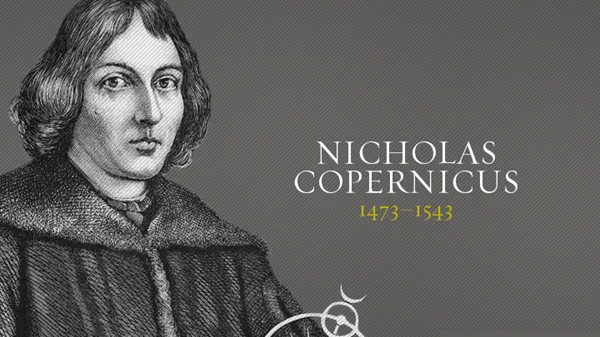
Copernicus (1473 – 1543)
Tycho Brahe (1546 – 1601)
Galileo Galilei (1564 – 1642)
Johannes Kepler (1571 – 1630)
René Descartes (1596 – 1650)
Robert Boyle (1627 – 1691)
Robert Hooke (1635 – 1703)
Christian Huygens (1629 – 1695)
Isaac Newton (1642 – 1726)

We start learning physics through mathematics that describes space and time in a material world. The mathematics uses the Cartesian coordinates, which assign continuity and uniformity to space and time. One learns to plot graphs of the relationships between space and time. These graphs describe the paths traced by moving particles of matter.

Matter appears in the form of particles because it is not continuous. Particle ends where void starts. The “void” is the empty space. Particles occupy space by displacing the void.  Particles move in the void. They have certain uniform velocities. These particles accelerate when pushed and their velocities change. When the force of the push goes away the velocity becomes uniform again.

We study the motion of particles in straight lines and in circles and spirals. This requires the consideration of more than one dimension of space. We consider motion to be relative because we can’t image a particle being at absolute rest. We find this subject of mechanics thoroughly explored by Newton, and so we study Newton’s Laws of Motion.

The background of modern physics started with simple concepts of void, particle, motion and force.

These concepts seem to model the big picture of the cosmos adequately, where the laws of motion apply to the satellites, planets and stars in the huge void. With a little modification, these concepts also appear to model the phenomenon of heat. This brings us to the laws of thermodynamics. Furthermore, these concepts are employed to explain the phenomena of sound, light, electricity, and magnetism . We see them used even in the explanation of atomic, nuclear and quantum phenomenon. In the succeeding chapters we shall review these basic concepts.

Physics is characterized by the scientific method, which started with Galileo. This method uses experiements and mathematics to establish consistency between theory and reality. The scientific method starts with certain postulates and assumptions. New discoveries are made when we examine past assumptions and improve upon them. This is where logic comes in.

This work stresses upon that logic.

.

Walking Meditation

Walking meditation is very helpful when one finds sitting meditation hard to do. It extroverts one’s attention enough so that one can then sit down to meditate. A student may do walking meditation until he feels comfortable enough to do sitting meditation.

Walking meditation is done while walking in an open and pleasant environment, such as, in a farm, park or a garden. One meditates on the body and the physical environment while walking. Like in any meditation, the guiding principle is “being there and seeing things as they are.” Walking meditation may be done on the body or on the physical environment as described below.

.

The Body

In walking meditation on the body, one allows stresses in the body to unwind, so the body regains its relaxed and natural form.

Once you start walking you, simply start observing the body without interfering with it.  Become aware of the natural pattern of your breathing. Notice the disposition of the various parts of the body at different times: in walking, turning, bending, stretching, stopping, etc. Get the feel of the clothes on the body, their weight, temperature, etc.

Do the above for a while and then start putting you attention on different body parts. Feel the sensations, aches or pains present in a body part.  Let the stresses in that body part unwind, so it becomes increasingly relaxed.

Whenever your attention wanders away in this exercise, bring it back to your breathing and start observing the body again.

.

The Physical Environment

In walking meditation on the physical environment, one observes the physical environment until the perceptions become clear and sharp.

Once you start walking you, simply start observing the physical environment without interfering with the perceptions.  Use breathing as stabilizing factor, as before. At first you focus on sight. Notice the size, shape and color of the things in the environment and their overall visual pattern. Look as far as you can see.

Next focus on the perception of touch. Touch the bench, the swing, the bark of the trees, the leaves of the plants, the flowers, and other surfaces. Feel the different textures, the hot and cold temperatures, the bulkiness, etc. Experience as thoroughly as you can.

Next focus on the perception of hearing. Notice the quality, tone and loudness of sounds. Do this until your perception of hearing start to become sharper.

At the end of your walk you may go to a coffee or tea place. There you practice the perceptions of taste and smell in addition to the three perceptions above.

.

Summary

The whole idea of walking meditation is to extrovert one’s attention. One then perceives the sensations, pains and aches in the body and the things in the environment from an extroverted viewpoint.

This exercise may be done again and again until one’s attention is extroverted and the perceptions of the body and the physical environment become clear and sharp.

.

Exercise: Suppressed Memories

Up until now you have been running out the reactions triggered by the external environment. In this exercise you shall be running out the suppression of past experiences. It is possible that the suppressed memories may have already been released through pervious exercises.

Meditation Exercise:

Unwinding suppressed memories

Purpose:

To train the student to BE there and let the mind unwind. The idea is to get the student to BE there and not do anything else but BE there.

Pre-requisites:

Complete the exercises up to Exercise: Reaction to Locations

Study Unwinding the Mind

Instructions:

Find a quiet location to meditate, where you may be undisturbed for at least half an hour. Start by observing your breathing. Let your attention roam freely. Notice if there is an area of memory where your attention goes to automatically. Notice if there is a location or a person central to that area of memory. Use this “item” as your stabilizing factor for the successive steps. In other words, if your attention gets lost, then you bring it back to this item, and start all over again.

Use the location or a person central to the area of suppressed memory as your stabilizing factor.

Let you mind roam freely in that area of memory. Simply follow the natural flow of attention and observe whatever is unfolding. Do not avoid, resist, deny, or suppress what the mind brings up. Just be curious. Do not interfere and try to figure it all out. Let the mind associate the data as it may. You simply observe and experience the thoughts and emotions as they arise.

Observe and experience the thoughts and emotions as they arise without interfering with the mind.

If attention gets lost during meditation, then you simply bring it back to the location or the person that you are using as your stabilizing factor. Continue to observe and experience without interfering. You simply BE there and not do anything else but BE there.

If the mind has stopped unwinding and nothing new is coming up then go back to the beginning. Let your attention roam freely and notice the area of memory it is going to automatically. It may take some trial and error on your part before you discover the area of memory that is ready to unwind. Make sure you are not rushing the mind.

It is absolutely imperative that you do not dig into the mind in your anxiety for answers.

Continue this exercise for at least 20 minute. You may continue for longer if it is going well. Soon or later you will have the area of suppressed memory that is ready to unwind, Very soon after that you will find yourself in possession of some answers and relief.

If, all of a sudden, there is a big realization that makes you very happy, you may end the session immediately and enjoy your win.

You may repeat this exercise often as long as suppressed data is coming up..

End of Exercise:

When major suppression of memory has been released, accompanied by great relief, then this exercise is passed.

NOTE: At any point you may return to a previous exercise if you feel that you need to complete it.

.