
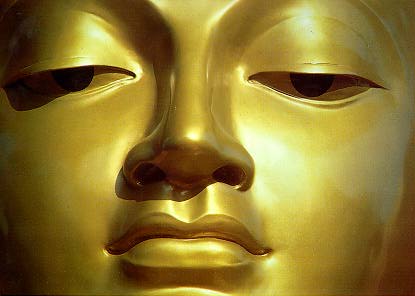
The Absolute Truth is that there is nothing absolute in the world, that everything is relative, conditioned and impermanent, and that there is no unchanging, everlasting, absolute substance like Self, Soul, or Ātman within or without. ~ Buddha
.
Introduction
The goal of KHTK is to help develop the ability to spot and resolve inconsistencies.
01: What is KHTK?
02: The Premise of KHTK
03: Inconsistency Defined
04: Filter in KHTK
05: Guide in KHTK
06: The Guru Complex
07: How to use KHTK Mindfulness
.
Mindfulness
Mindfulness provides the discipline for observation and contemplation.
10: Mindfulness
11: The 12 Aspects of Mindfulness (in English) / (in Spanish)
12: EXERCISE: Technique of Mindfulness
13: TR0 and Mindfulness
14: Walking and Mindfulness
15: Solving Real-Life Problems
.
Mindful Discussion
20: Mindful Discussion
21: The 12 Aspects of Mindfulness
22: Discussions and what needs to be avoided
23: “If You Meet the Buddha on the Road, Kill Him”
24: Subject Clearing
25: Application of Mindful Discussion
.
Mindfulness Therapy
30: Mindfulness Therapy
31: Basic Care
32: Recognizing Objects
33: Being Objective
34: Memory Recall
.
Mindful Meditations
40: Kundalini and the Chakras
41: Mindful Meditation
42: Spotting Inconsistencies
43: Things Avoided
44: Loss
45: Rightness
46: The Intention to Harm
47: Running Scientology Grade 0 with Mindfulness (Part 1)
48: Time Track and Un-stacking of Mind
.
Mindfulness Exercises from Buddhism
50: Mindfulness in Breathing
51: Mindfulness in Bodily Activities
52: Mindfulness in Feelings
53: Mindfulness in Consciousness
54: Mindfulness in Mental Objects (Hindrances)
55: Mindfulness in Mental Objects (Clinging)
56: Mindfulness in Mental Objects (Sense Bases)
57: Mindfulness in Mental Objects (Enlightenment)
58: Mindfulness in Mental Objects (Truths)
.
Research References & Material
500: SCIENTOLOGY
501: BUDDHISM
502: PSYCHOLOGY
.

Comments
Expectations alloy and filter your perception of what is actually there.
If one is feeling depressed, then simply looking at what one has been expecting knowingly or unknowingly, and comparing it to what is actually there, can start to bring one out of depression.
It is getting back to that place within you, which is your “home”. This is what Elizabeth Gilbert is talking about in this TED talk.
Success, failure and the drive to keep creating
EXERCISE 6: Let the mind un-stack itself.
1. Observe as usual. Notice the environment and other people.
2. Do not pursue a question when there is no response. The right question will naturally bring up a response.
3. Simply look at what is right there in front of your physical and mental vision.
4. Do not search the mind or dig into it for explanation. Let the mind present what it may.
5. Do not put any resistance to the mind. Simply observe fully what the mind presents.
6. If there are many issues, let the mind choose what to look at first.
7. Do not manipulate. Simply observe the issue uppermost in the mind.
8. Contemplate patiently on whatever is there by looking at it from various angles.
9. If the mind wants to get lost, let it get lost. Get some rest. The mind will return.
10. Let the mind un-stack itself naturally in the order it wants to.
11. Expand your span of attention and let the perceptions pour in.
12. Let the realizations present themselves to you without you making any effort.
You may do this exercise while sipping coffee in a café, or strolling along a river. You may even find a place where you can sit comfortably for a while without being disturbed and patiently observe the stage that this world presents.
Develop this exercise to a point where you may execute it even while interacting socially with others. Keep observing patiently without forcing the mind in any manner. Many things may come up naturally to be scrutinized. Simply observe them and become aware of them without making any effort.
Easy for retired guys to say! 🙂
No really, this is excellent advice.
One can always operate at a level of relative unknowness. This advice is to improve upon that level with better awareness.
I have quite a bit to say to you, but it’s payroll right now and I have to finish reports. I’ll will write a worthy reply soon, both here and on the Gita thread.
Nice work here, Vinaire!
so how is this KTHK mindfulness different to Vippassana ?
In principle, KHTK mindfulness is not different from Vipassana. It simply explores those principles further. Please see Mindful Discussion
.