Monthly Archives: September 2013

Old Algebra Book

bk05ray1866

Reference: Remedial Math

For application by the student

These sections are taken from PRIMARY ELEMENTS OF ALGEBRA by Joseph Ray, first published in 1866.

A00 Contents

A01 Definitions

A02 Addition

A03 Subtraction

A04 Multiplication

A05 Division

A06 Factoring

A07 Fractions

A08 Equations 1

A09 Equations 2

A10 Equations 3

A11 Equations 4

A12 Powers

A13 Radicals

A14 Quadratic Eqn

A15 Progressions

A16 Ratio

.

The most honest three and a half minutes…

I would like to have an honest discussion on this subject. No doubt America was great once. What has happened to that greatness?
.

California 2004

DSCF0003

Meeting Ashok Dhawan, a friend through High School and  room mate at IIT Kanpur

.

DSCF0010

Meeting  Suphal Agrawal, a friend through High School and IIT Kanpur

.

DSCF0039

Vishal and Vibha posing for Dad

.

DSCF0042

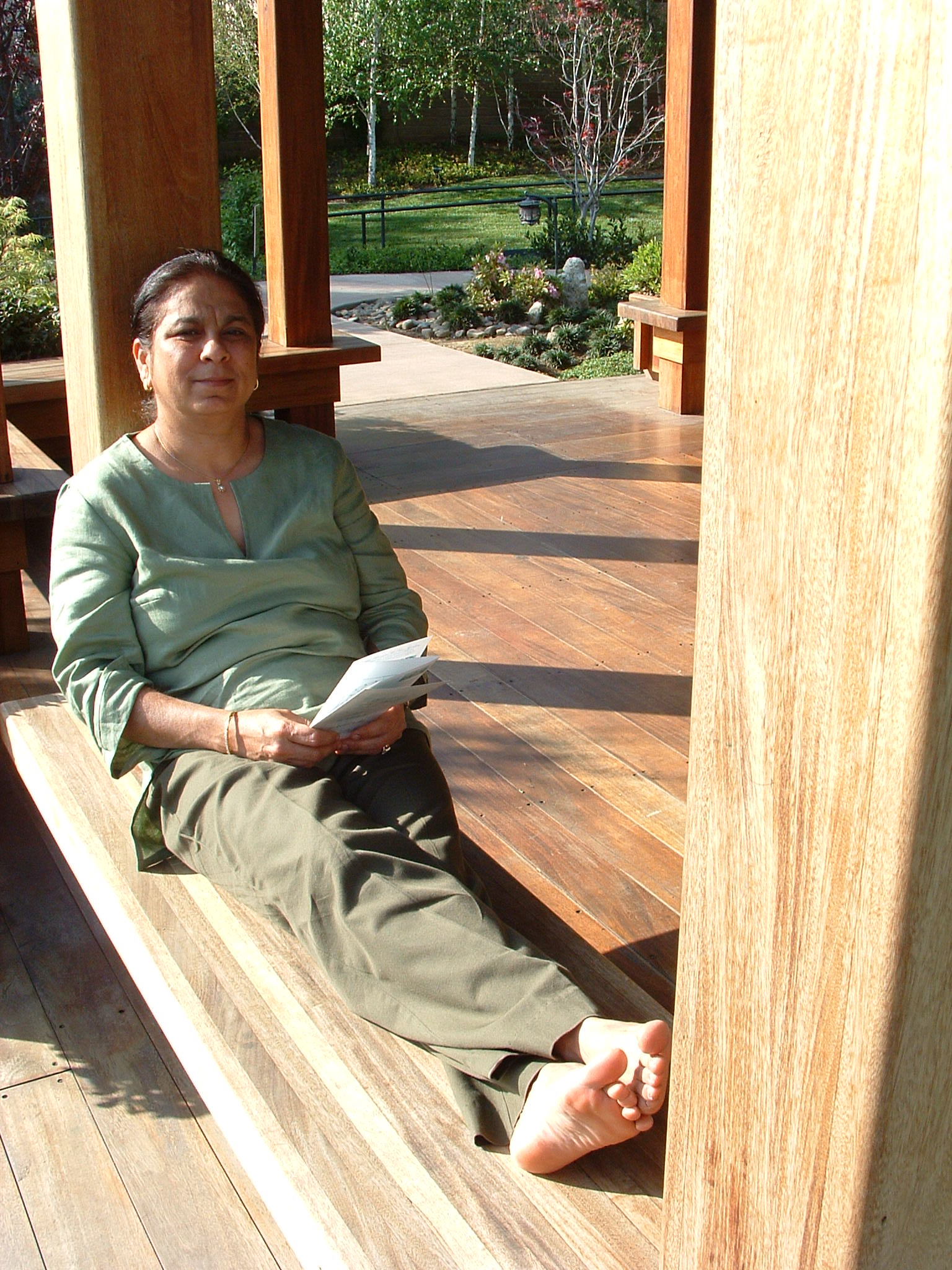
A moment of relaxation for Jyoti in Buddha Gardens

.

DSCF0063

A beautiful place

.

Exercise: Being There

looking5

August 18, 2014
This issue is now obsolete. For latest reference please see: Mindfulness 12: Let it be effortless.
This exercise is about practicing all the 12 aspects of mindfulness together.

.

[Reference: THE 12 ASPECTS OF MINDFULNESS]

When there is an immediate response in the mind to looking, there is satisfaction and one moves on. But, when there is no response, anxiety may take over, and one may find it difficult to move on. The immediate reaction is to start searching for an explanation.

A better thing to do is to stop searching and just keep some attention in the area of interest while going about one’s daily routine. As one waits patiently without searching, figuring, digging, expecting, etc., the mental fog may ultimately start to lift from that area and bring to view long suppressed material followed by realizations. Sometimes things may take days to sort themselves out before the realization appears.

Relief comes from looking patiently and not from searching anxiously and trying to be in control. Actually, hectic digging into the mind for explanations has occasionally driven people toward madness.

It is completely safe to look at an area of the mind for as long as one wants, provided one does not start searching for explanations.

Here are some observations about the process of looking at mind naturally without trying to control it.

(1) When a person looks at an area of the mind, the mind starts to un-stack itself. As the top layer comes fully into awareness it dissolves giving way to the next layer. And so it continues.

(2) These layers are connected by significance in a certain order. A person is much less likely to be overwhelmed if these layers are brought into awareness and dissolved in the order they are presented by the mind.

(3) This natural process of un-stacking is interrupted when one anxiously starts to ask questions and search for explanations.

(4) One exposes oneself to overwhelm only when one interferes with the way the mind wants to un-stack itself.

A person who is routinely digging into his mind searching for explanations is definitely exposing himself to harm. He will do himself a big favor by learning to look patiently in and around the area of interest and letting the mind un-stack itself, rather than straining to figure things out.

The exercise to help rapidly un-stack the mind is provided here.

Exercise

  1. Find a place where you can sit comfortably and be there for a while without being disturbed or distracted. Make sure you have had enough to eat and rest. You do not want your body to be a distraction.

  2. Sit in a comfortable position with your back straight and upright.  If you are sitting in a chair, keep feet flat on the floor, and hands in the lap.

  3. Become aware of breathing and stay aware of it without interfering with it throughout this exercise. Awareness of breathing helps you stay grounded in reality.

  4. Become aware of the mind and stay aware of it without interfering with it throughout this exercise. Awareness of mind as a sense organ that is viewing mental objects helps you stay objective.

  5. Do not move or do anything. Simply observe the physical objects, such as, chair, table, wall, etc., and the mental objects, such as, ideas, thoughts, feelings, emotions, etc. Let your eyes be open, half-closed, or closed naturally and not be controlled.

  6. Do not add anything to this exercise. If you just see blackness, then observe that blackness. If you see a play of light and darkness, then observe that play of light and darkness. And so on.

  7. Let your attention roam freely. Observe what your senses present to you. Let various perceptions of sound, smells, taste, touch, temperature, gravity, etc. come to you. Do not strain to perceive them. Do not look for anything in particular.

  8. Do not resist anything. Let reactions, such as, twitches in muscles, minor pains and aches, sleepiness, etc., come and go. Experience the body as a whole without interfering with it. If some discomfort lasts, readjust the body to a more comfortable position, while experiencing the effort.

  9. The mind may present “pictures” of the current and past events, some flattering and some not so flattering. Simply experience them without resisting. The scene may shift around continually.

  10. The mind may present emotions, such as, embarrassment, guilt, anxiety, anger, fear, grief, and even apathy. Simply experience them thoroughly without trying to judge or justify them.

  11. If you find yourself getting involved in thoughts, or mentally doing something else, then simply recognize this fact, and continue. Do not suppress anything. Do not add anything.

  12. Let these feelings, emotions and sensations play themselves out. Do not speculate on reasons and possibilities. As you persevere, the uncomfortable feelings and sensations will clear out.

  13. Try ending this exercise at a point when some persistent thought, emotion or effort has just left, though this may not always be possible.

.

One can do this exercise up to a couple of hours at a stretch, but how long you do it is up to you. Do this exercise as often as practical until it becomes a second nature to you.

.

Contemplation (old)

contemplation4


August 11, 2014: This essay is superseded by 

Contemplate thoughtfully.

.

Reference: 

THE 12 ASPECTS OF MINDFULNESS

Being There

.

When mindfulness is practiced, thinking becomes contemplation. Problems are solved by looking at them closely and obtaining the relevant data. There is no random figuring out.

  1. Become aware of inconsistencies.

    Inconsistencies are things that seem out of place and do not make sense. We naturally question such things. But often, as children, we are told to shut up because we are too young to understand.  Our questions tend to get suppressed.

    A child who has been discouraged from asking questions, and punished in his attempts to find answers, may grow doubting his opinions and judgments. He may think that he is not a good student. He may be afraid of speaking in front of people. He may suffer from a sense of inadequacy.

    The remedy is to practice mindfulness and become aware of those questions that never got answered, and to become aware of the inconsistencies, which surround one even now.

  2. Inconsistency comes about when missing understanding is filled by assumptions.

    When we observe an inconsistency, the complete understanding is not there. Either some relevant information is missing, or false data is being added. There are assumptions in play. Any explanation forwarded needs to be closely examined.

    When one becomes aware of an inconsistency, it is better to acknowledge it and pause for a closer examination.

  3. Always look at the area of inconsistency more closely.

    Contemplation is patiently looking in and around the area of inconsistency without assuming anything. One looks for things that have been put out of sight or suppressed. One examines relationships that are out of sequence or misplaced. One separates what is actually there from what is being assumed to be there.

  4. Narrow down the inconsistency more precisely.

    Narrowing down is separating what makes sense from what does not make sense. Inconsistency is something that continues to be puzzling. One follows the trail of what continues to be puzzling.

  5. Alternate the steps 3 and 4 to progress as far as you can.

    Follow the trails of inconsistencies as far as you can. If a trail dead ends then take another broad view of the inconsistency and find another trail to follow.

  6. As you continue with this process clarity will start to manifest itself.

    As you become increasingly familiar with the area around the inconsistency, you will start to get a better definition. There will be increasing clarity about what does and what does not make sense. The key is to stay alert to assumptions.

  7. Sooner or later the whole inconsistency may fall apart.

    It may come as a bright flash of insight. Suddenly, there is complete understanding.

.

Exercise

  1. Get settled as per KHTK Exercise BEING THERE , and simply be there practicing mindfulness.

  2. Review your childhood confusions and questions to see if any of them is still unresolved.

  3. If none appear then review your current period for things that seem out of place and do not make sense.

  4. Pick up the first inconsistency that comes to your mind from the childhood or current period. 

  5. Acknowledge to yourself that the inconsistency is there.

  6. Look in and around this area of inconsistency to see if any details have been hidden from you.

  7. Become aware of such details one by one until nothing more is hidden.

  8. Look in and around this area of inconsistency to see if any details have been suppressed.

  9. Become aware of such details one by one until nothing more is suppressed.

  10. Review the area of inconsistency to see what does not make sense now.

  11. The  earlier inconsistency may have been cleared up. In that case pick up the next inconsistency that comes to your mind.

  12. If the earlier inconsistency is not cleared up then a new area for that inconsistency might appear.

  13. Repeat steps 6 to 12 above.

  14. End this exercise when an inconsistency has been cleared up.

.

One can do this exercise up to a couple of hours at a stretch, but how long you do it is up to you. Do this exercise as often as practical until it becomes a second nature to you.

.

[For further details, please see: KHTK Mindfulness]

.