The Definition of Reality

Reality does not depend on agreement as Scientology states. Reality depends on the Principle of Oneness, which applies to postulates and to the reasoning that proceeds from those postulates. Reality gets distorted by anomalies.

.

POSTULATE
A postulate is a self-created truth that gives form to the unknowable, and attempts to make it knowable. Based on postulates further reasoning follows. To be valid postulates and reasoning must adhere to the principle of oneness.

PRINCIPLE OF ONENESS
Oneness does not imply sameness. Oneness means that all that is known is continuous, consistent and harmonious. This principle of oneness underlies the very concept of the universe. It also underlies the Scientific method. This principle gives us the ideal scene for logic, because its violation gives us anomalies.

ANOMALY
An anomaly is any violation of the principle of oneness, such as, discontinuity (missing data), inconsistency (contradictory data), or disharmony (arbitrary data).

.

  1. KHTK Factor # 1: Before the beginning was the Unknowable and the entire purpose of the Unknowable was to know itself.
  2. KHTK Factor # 1-1: In the beginning and forever is the ability to postulate and become aware.
  3. KHTK Factor # 1-2: The postulates attempt to convert the Unknowable into Knowable.
  4. KHTK Factor #  1-3: And thus there is substance.
  5. KHTK Factor # 1-4: And thus there is oneness.

.

References:
Reality and Anomaly
Reality and Logic
The Reality of “Ether”
Perception and Reality
The Logic of Reality
Physics & Reality

.

Scientology and its Derivatives

Reference: Course on Subject Clearing

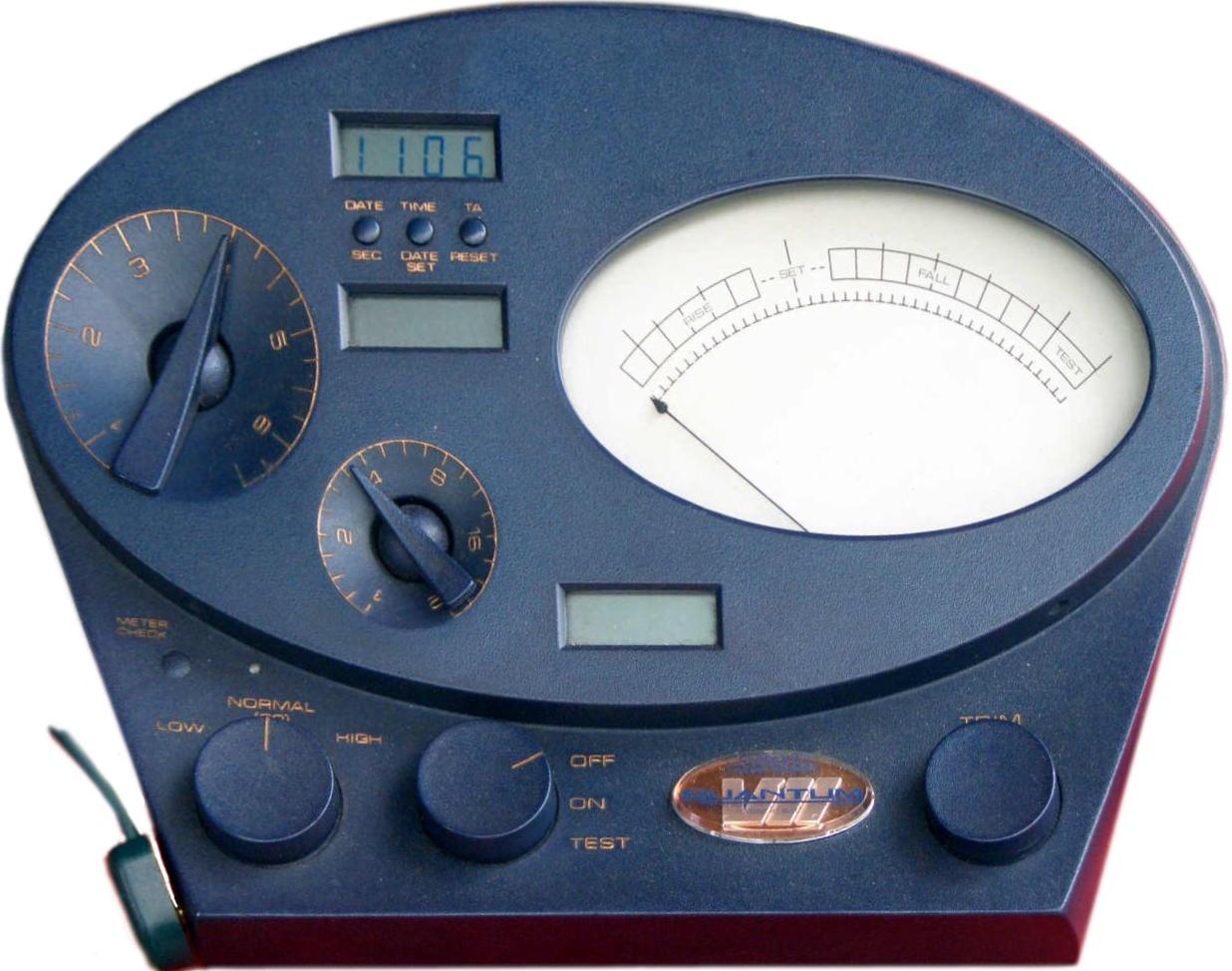
The whole problem with these Scientology derivative OT procedures seems to be the same as with the Scientology OT procedures. This problem arises with their dependence on the E-meter. All kind of strange symbology at these OT levels exists only because of the apparent “support” of the E-meter reads.

The basic misconception is that E-meter reads support whatever whacky theory one comes up with. This misconception started with Hubbard himself.

E-meter reads do not corroborate any theories. They do not replace the scientific method.

The Scientific Method rests on the Principle of Oneness. That is where the validity of any theory rests ultimately. It rests with the resolution of anomalies. 

PRINCIPLE OF ONENESS
Oneness does not imply sameness. Oneness means that all that is known is continuous, consistent and harmonious. This principle of oneness underlies the very concept of the universe. It also underlies the Scientific method. This principle gives us the ideal scene for logic, because its violation gives us anomalies.
 

Subject Clearing follows the Scientific Method as it focuses on the resolution of anomalies.

Hubbard rejected the Principle of Oneness (see Identity vs Individuality). His procedures do not deal with anomalies. His concept of outpoints falls far short of the concept of anomalies. The point is,

Any OT Theory based on E-meter reads is not scientific because it does not follow the scientific method.

.

Handling the Charge

Reference: Course on Subject Clearing

When you are following the path of self-improvement, you are basically handling charge on your case.

You handle charge on your case either in big chunks or just let it bleed away slowly.

In meditation you bleed the charge away, but it is a very slow process because you are spreading your attention in a very general way. You are either concentrating on the divine, or on a mantra. Or, you are following a breathing technique to free your attention from fixation.

To bleed the charge away more rapidly, you need a method to selectively guide your attention. 

Selectively guiding the attention was first introduced in Buddhism.

.

Buddhism

Buddhism made a big advance on the technique of meditation. In the Kalama Sutta, Buddha says,

Yes, Kalamas, it is proper that you have doubt, that you have perplexity, for a doubt has arisen in a matter which is doubtful.  Now, look you Kalamas, do not be led by reports, or tradition, or hearsay. Be not led by the authority of religious texts, nor by mere logic or inference, nor by considering appearances, nor by the delight in speculative opinions, nor by seeming possibilities, nor by the idea: ‘this is our teacher’. But, O Kalamas, when, you know for yourselves that certain things are unwholesome (akusala), and wrong, and bad, then give them up… And when you know for yourselves that certain things are wholesome (kusala) and good, then accept them and follow them.’

Today, this advice of Buddha is expressed in the The Discipline of Subject Clearing.

.

Dianetics & Scientology

The subjects of Dianetics and Scientology suddenly burst on the scene in the 1950s. Their founder, L. Ron Hubbard, claimed the foundations of these subjects to be the Vedas of the Hindus, and Buddhism.

The subject of Dianetics did seem to handle charge in big chunks by selectively focusing the attention on somatics (bodily pains and sensations). This is where the idea of engram came from. See Hubbard’s original research first published in 1948: The Original Thesis.

The problem with Dianetics was that after you handled the charge in a few big chunks (engrams), the person was no longer able to access any more charge. Hubbard was then forced into the Scientology approach of bleeding the charge away from the case slowly. This resulted in the various Grades of Scientology. See Running Scientology Processes.

When I came across Scientology in 1969, Hubbard had gone back to researching Dianetics again. He issued it in a streamlined fashion as Hubbard Standard Dianetics Course (HSDC). I was run on the HSDC process and I was able to handle a few big chunks of charge in my first forty hours of auditing (see My Introduction to America). But after that I ran many hundreds of hours on Dianetics with no results. I knew there was more to handle on my case but I was getting nowhere. I felt like I could no longer be audited.

What saved me at that time was Word Clearing. I then realized that Word Clearing was an excellent way of bleeding the charge away from a case. Word Clearing combined with Hubbard’s Data Evaluation Tech, ultimately, led to the Subject Clearing approach.

.

Subject Clearing

The Principle of Oneness based on the Vedas and Buddha’s approach, was, unfortunately, rejected by Hubbard (see Identity vs Individuality). This is a very basic principle. Subject Clearing reintroduces the Principle of Oneness and then builds up on Hubbard’s technology of Word Clearing and Data Evaluation.

Subject Clearing, thus, advances the concept of ANOMALY (see Introduction to Subject Clearing). It focuses selectively on anomalies to bleed away the charge rapidly. In this process large chunks of charge (engrams) may seem to come off, but that is not the focus in Subject Clearing.

Subject Clearing does not use the Scientology device of E-meter. Instead it uses the understanding of how to handle the Auditing Question.

With Subject Clearing approach, you can run the whole bridge of Scientology quite rapidly by yourself. You may even run the exercises provided by other spiritual paths.

.

The House GPM

Reference: The Level of OT II
Previous/Next

The House GPM addresses the universe and how it is put together.

LRH Instructions for House GPM

According to LRH, “So called because a House (internal room) may appear when it is contacted.”

.

Subject Clearing Prerequisites

Study and understand the following concepts:

  1. The Universe
  2. The Oneness

.

The House GPM


This GPM is made up of 5 pairs (10 items). Each set of 5 pairs is repeated with the 5 different end words. This gives us total of 50 items.

.

The End Words

These 5 different end word are used with the items of the GPM:

… (pairs 1-4) / (pair 5)
(a) Create / Creations
(b) View / Views
(c) Exist / Existences
(d) Know / Knowns
(e) Remember / Memories

.

The GPM Items

A set of 5 pairs of items is as follows:

  1. (a) I should __________.
    (b) I shouldn’t __________.
  2. (a) I must __________.
    (b) I mustn’t __________.
  3. (a) I do __________.
    (b) I don’t __________.
  4. (a) I can __________.
    (b) I can’t __________.
  5. (a) There are __________.
    (b) There aren’t __________.

A House (interior) appears when this GPM is run.

.

Running the House GPM

There are 25 pairs of opposite postulates. One contemplates on these pairs as in the earlier GPMs. Looking at the pair of opposites exteriorizes one from any identification with thoughts.

The Universe impinges on awareness. The impingement generates sensations. Postulates arise to give meaning to those sensations. The “Creation” of postulates is followed by a “view” of what is created. The creation now “exists.” One comes to “know” the Universe as one assimilates it. One then “remembers” the aspects of the universe in relation to each other.

On this GPM one is addressing the understanding of the Universe. The oneness of the universe requires that these postulates be continuous, consistent and harmonious.

.

The Big Being GPM

Reference: The Level of OT II
Previous/Next

The Big Being GPM addresses space, form and its survival. The big being suggests the expansiveness of space an form.

LRH Instructions for Big Being GPM

.

Subject Clearing Prerequisites

Study and understand the following concepts:

  1. The Space
  2. The Spectrum of Substance

.

The Big Being GPM

This GPM is made up of 15 pairs of items (a total of 30 items) as follows.

Explosion
Appearance of a huge Being in sky.

  1. (a) You must survive.
    (b) You mustn’t survive.
  2. (a) You should survive.
    (b) You shouldn’t survive.
  3. (a) You can survive.
    (b) You can’t survive.

  1. (a) He must survive.
    (b) He mustn’t survive.
  2. (a) He should survive.
    (b) He shouldn’t survive.
  3. (a) He can survive.
    (b) He can’t survive.

  1. (a) They must survive.
    (b) They mustn’t survive.
  2. (a) They should survive.
    (b) They shouldn’t survive.
  3. (a) They can survive.
    (b) They can’t survive.

  1. (a) We must survive.
    (b) We mustn’t survive.
  2. (a) We should survive.
    (b) We shouldn’t survive.
  3. (a) We can survive.
    (b) We can’t survive.

  1. (a) All must survive.
    (b) All mustn’t survive.
  2. (a) All should survive.
    (b) All shouldn’t survive.
  3. (a) All can survive.
    (b) All can’t survive.

Explosion.

The Big Being GPM starts with an explosion and also ends with an explosion. In between we have the postulate regarding different aspects of survival of all existence.

.

Running the Big Being GPM

There are 15 pairs of opposite postulates. One contemplates on these pairs as in the earlier GPMs. Looking at the pair of opposites exteriorizes one from any identification with thoughts.

Thoughts are as expansive as space. Survival means continuation of the expansive postulates. One is unconsciously postulating the survival of all that one has ever postulated and the reasoning proceeding from those postulates. The idea here is to become aware of that automaticity.

On this GPM one is handling fixation on survival.

.

Definitions

SURVIVE
When “survive” becomes concerned with the continuation of a certain form only, it is a fixation that generates this GPM.

.