The Nature of Awareness (Part 2)

nature6
September 30, 2014
This issue is now obsolete. For latest reference please see: Motion and Space-Time.

.

Reference: The Nature of Awareness (Part 1)

Awareness arises from non-awareness. It evolves into this universe. It may then dissolve back ultimately into non-awareness. The form of awareness is relative motion. Awareness implies existence.

POSTULATE: Awareness has the form of relative motion. This is existence.

.

The fundamental relative motion is perceived in physics as a varying field that has wavelike characteristics of a wavelength, period and frequency. Thus, we may postulate different awareness to have different wavelengths, periods and frequencies.

The fundamental form of awareness is wavelike that has a wavelength, period and frequency.

.

The wavelength of awareness provides a sense of extent, which is defined by the dimension of space. Therefore, space is not absolutely empty at fundamental level. Space is filled with awareness.

Space is a measure of how far awareness extends. Space is not empty.

.

The period of awareness provides a sense of duration, which is defined by the dimension of time. Therefore, time is not absolutely arbitrary at the fundamental level. It is marked by awareness.

Time is a measure of how long awareness endures. Time is not arbitrary.

.

Awareness has a wavelike form that may be described as light. It seems to condense along a spectrum of increasing frequency as energy. It seems to condense further along a spectrum of increasing density as matter.

Awareness condenses as energy and matter. Awareness has form.

.

This is a universe of awareness. Everything is made up of awareness. A stone has extent and duration. It has a form with certain physical and chemical properties. All these characteristics are manifestation of awareness.

We are not saying that a stone is aware the same way that humans are. The awareness of humans is manifested as human characteristics. We are moving away from a human-centric explanation of awareness.

Awareness of an object is manifested as its characteristics.

.

It was the human-centric viewpoint that maintained, “Earth is at the center of this universe, and the sun revolves around the earth.” The human-centric viewpoint seems to maintain, “Awareness originates from a humanlike beingness called God.”

From a reality-centric viewpoint all reality is awareness. This has been so even before animated life and humans emerged in this universe. Everything in this universe is imbued with awareness.

Awareness is not limited to humans and animated life. Awareness forms the very fabric of this universe. 

.

Next: The Nature of Awareness (Part 3)

.

The Nature of Awareness (Part 1)

aware1

September 30, 2014
This issue is now obsolete. For latest reference please see: Universe and Awareness and Awareness and Motion.

.

Reference: The Creation Hymn of Rig Veda

Of all the dichotomies in this Universe, the most interesting dichotomy is “awareness – no awareness.”

“Non-awareness” is like a curtain. We do not know what is behind that curtain. We only know what is in front of it. When something emerges from that curtain we become aware of it. Until then we may only speculate about what is behind that curtain.

The Universe begins as it emerges from behind the “curtain” of non-awareness.

.

Like any dichotomy “awareness – no awareness” may represent two ends of a single continuum that extends to infinity in either direction. The “curtain” is a transition point on this continuum, and not a point of creation.

The “curtain” is a transition point from non-awareness to awareness on a continuum.

.

The Universe begins when it transitions from non-awareness into awareness. This does not imply that the universe is created. In fact, we cannot tell whether the universe is created or it has always been there.

The Universe begins as it comes into awareness. This does not imply that the universe is created.

.

The state of the Universe “before the beginning” can only be speculated. This would be the case with any idea of a Divine Principle that stands above the Universe. On the other hand, the idea of a divine principle identified with the unity of the Universe may be expressed as Awareness.

The Divine Principle identified with the unity of Universe is awareness.

.

The idea, “God created this universe” simply divides the awareness associated with the Universe into awareness of “God” and “universe.” God cannot be excluded from the awareness of the overall Universe. The Universe simply boils down to any and all awareness.

The Universe as awareness includes all speculations, mythologies, and religions.

.

The entire Universe evolves from awareness. The Universe has to be aware of itself because that is all there is.

The Universe has evolved from awareness and is aware of itself.

.

If you are out in interstellar space with nothing else there, you shall be hard put to decide if you are totally still or moving at the speed of light. In short, you will have no awareness of your motion when there is nothing to compare with.

Non-awareness is absence of relative motion.

.

Awareness begins as relative motion. The two cannot be separated. We may say awareness is perceived as relative motion. Since Universe evolves from awareness, it consists entirely of relative motion.

The form of awareness comes from relative motion.

.

The relative motion can be very simple, such as, a ripple in water. Or, it can be very complex as the motions inside a watch. The degree of relative motion may be reckoned from “no relative motion,” as numbers are reckoned from zero. This provides an objective view of awareness.

Awareness may be viewed objectively in terms of the simplicity or complexity of relative motion.

.

When one is completely free of thoughts, there is still the awareness of present moment. But when one is in “deep sleep,” where hours pass in a blink of an eye, there is little awareness.

There is lesser awareness in “deep sleep” than in a thoughtless state.

.

This is a universe of awareness. No part of this universe is, therefore, without relative motion. Nothing in this universe can be totally still as that would imply non-awareness.

Everything in this universe is in relative motion. Absolute static cannot be part of it. 

.

Next: The Nature of Awareness (Part 2)

.

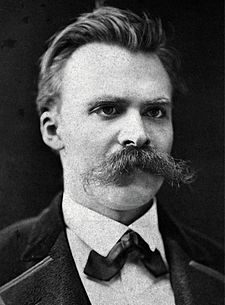
Übermensch of Nietzsche

Reference: Friedrich Nietzsche

Basically, Nietzsche was very dissatisfied with the current morality and the condition of man. He dreamed of evolution of man toward Übermensch, a state that transcended the current state of man. Nietzsche was looking for coherency and consistency in nature.

.

“While Nietzsche injects myriad ideas into the book, a few recurring themes stand out. The overman (Übermensch), a self-mastered individual who has achieved his full power, is an almost omnipresent idea in Thus Spoke Zarathustra. Man as a race is merely a bridge between animals and the overman. Nietzsche also makes a point that the overman is not an end result for a person, but more the journey toward self-mastery.” ~ Wikipedia

The word “self-mastery” is the key to understanding the above passage correctly. Übermensch was not created by adding, training or inculcating “desirable” characteristics in man. Übermensch was an evolution brought about by reducing man to his natural state.

To Nietzsche, Übermensch was a state in which man was congruent with his natural self.

.

“The eternal recurrence, found elsewhere in Nietzsche’s writing, is also mentioned. ‘Eternal recurrence’ is the possibility that all events in one’s life will happen again and again, infinitely. The embrace of all of life’s horrors and pleasures alike shows a deference and acceptance of fate, or Amor Fati. The love and acceptance of one’s path in life is a defining characteristic of the overman. Faced with the knowledge that he would repeat every action that he has taken, an overman would be elated as he has no regrets and loves life. Opting to change any decision or event in one’s life would indicate the presence of resentment or fear; contradistinctly the overman is characterized by courage and a Dionysian spirit.” ~ Wikipedia

We may understand the character of Übermensch by looking at self per A Model of Self.

A self is made up of a multi-dimensional matrix of “definitions and logics.” This matrix was distorted as social, cultural, and moral contexts were forced in place. Such distortions then reduced the potential of man and made him behave irrationally. This was the current state of man. By resolving such inconsistencies man could be propelled toward the state of Übermensch.

For Nietzsche, a resolution of the social, cultural, and moral contexts was necessary to evolve man toward Übermensch.

.

Application of Mindful Discussion

Beacon
Reference: Mindful Discussion

If you want to help somebody, you may apply the method of mindful discussion as follows:

(1) Encourage the person to do mindfulness exercises per The 12 Aspects of Mindfulness. Leave it to the person to do these exercises. Do not insist.

(2) In your conversations with the person, listen to his (or her) concerns carefully. Try to understand where he (or she) is coming from. The person may or may not know his (or her) unwanted condition.

(3) At first focus on the visible confusions the person has. He may even be aware of those confusions and want to discuss them with you. Or, he may indirectly indicate his confusions to you through

• The area where his attention dwells most of the time.
• The area when talked about, disperses his attention.
• The area when talked about, lessens his awareness.
• How the person thinks, behaves or dramatizes.
• How the person reacts to things in the environment.

(4) Be aware of such confusions. Discuss and help resolve them as and when the opportunity arises. Start by taking up the most obvious inconsistency. (See Inconsistency in KHTK).

(5) Discussion of one inconsistency may bring another consistency to view. Keep discussing such inconsistencies to make sense out of them. Do not continue with something that the person does not want to discuss. He is simply not ready for it.

(6) Simply take up another confusion related to his present concern and find an inconsistency that he is willing to discuss. In short, take up the inconsistency that the person is most willing to discuss at any time. The purpose of such discussion would be to make sense out of what is puzzling.

(7) When discussing, always apply The 12 Aspects of Mindfulness. Do not let the person talk endlessly. Spot the inconsistency in what he is saying and gently question him about it saying that you don’t understand it.

(8) When the person reacts to something you said and starts to dramatize, keep in mind that you are looking at some confusion. Gently follow up on the inconsistency that you now see. Just tell him what you don’t understand in a way that is acceptable to him.

(9) Many a times you may find that something is misunderstood by that person. You both can then consult a third party explanation in a dictionary, encyclopedia or on Internet to resolve that misunderstanding.

(10) All this time, always be aware of his basic concerns, and the possible unwanted condition. Whenever possible, get him to explain these things briefly, without going into lengthy explanations. Now and then you may ask him what his attention is on.

(11) When a specific unwanted condition becomes visible, see if you can help locate the source of that condition. You want to find out, “When did the unwanted condition start?” The source of his condition does not have to be a painful experience. It could be some fixed idea.

(12) If some incident comes up, have the person look over it thoroughly. No need for him to tell you the details. Just make sure that he looks at all possible data with nothing suppressed or resisted. See Cleaning up Traumas.

(13) If the incident contains pain and unconsciousness, have the person go through it many times until no new details are emerging. The person does not have to vocalize every detail.

(14) The unwanted condition could have started during this incident, or in some earlier similar incident. It could be an entirely different incident all together. Just make sure that the incident is looked at thoroughly.

(15) Keep discussing the unwanted condition and how it started. More incidents may come up. If the person cannot access the beginning, then other stuff may be stacked on it. Follow what comes up naturally. If more confusions come up then handle them as above. You may get to the exact point of beginning eventually.

(16) When the beginning of the unwanted condition is found, keep narrowing it down to an exact point. Get whatever is suppressed around the area of beginning Help purge the emotions, impulses, thoughts, etc. that are still lingering from that point. See Handling Unwanted Condition.

(17) Whether there is an exact beginning or not, we are targeting the resolution of circuits (logical associations among definitions) in the mind, which trigger more easily than rational associations.

(18) Keep going back to the basic concern and coming forward to understand some inconsistency. Follow the trail of inconsistencies and exhaust it as far as you can.

(19) After going back and forth many times, hopefully you’ll get to the bottom of the unwanted condition. The person will eventually thank you for all your work when his unwanted condition is gone.

(20) If the person is not able to participate in mindful discussion then work with him on the appropriate exercise per Mindfulness Therapy.

.

Time Track and Un-stacking of Mind

dim1
Reference: KHTK Mindfulness

The visible time-track of a human life starts from birth and moves forward through childhood, adolescence, youth, adulthood, old age and death.

When one is searching for the cause of some unwanted condition, one starts to look earlier and earlier on the time-track. Freud looked for reasons in early childhood. Hubbard looked for reasons in birth and also in the earlier pre-natal period in Dianetics. Today, scientists are looking for reasons in the Genetic Code.

Hubbard also went looking for reasons farther back in past lives in Scientology. He projected the time track backwards to trillions of years. Was he really discovering incidents in the life of a single individual that far back?

Bible does not believe in past lives. It believes in a sort of storage system identified as purgatory, heaven or hell for the spiritual elements of a person (soul). Hubbard changed the definition of soul from “spiritual elements of a person” to the “person” himself. He insisted that the soul is a single permanent unit which is the person (thetan), and this thetan moves from body to body.

The original eastern idea of reincarnation is very different. Just like there is the disintegration of body into molecules and reintegration of molecules into a new body. Similarly, there is disintegration of self into “spiritual elements” and reintegration of “spiritual elements” into a new self. Buddha never looked at self as a single permanent unit. Buddha talked about non-human reincarnations as well.

But Hubbard assumed that if a memory came from an earlier life, then it meant that the whole person (thetan) came from an earlier life. This supported Hubbard’s idea of a linear time track. But this idea has never worked in Dianetics, where the “basic-basic” was never found. This idea of a linear time track has only served to produce delusional states in Scientology.

The truth is that mind is a matrix of definitions and logics. The logics connect the definitions in multiple dimensions. Such connections are far from being linear.

An incident has many parts, and these parts have many definitions. These definitions are indexed with definitions in parts of other incidents. This situation is far from linear. Therefore, it is an error to treat an incident from one’s experience as an independent unit as assumed in the “earlier similar” methodology of Dianetics and Scientology.

The linear methodology of Dianetics and Scientology is therefore very limited. To address the multi-dimensional matrix structure of the mind one needs to apply the un-stacking methodology of mindfulness.

.