The Scientific Observer

Reality1

Reference: What is Awareness, Scientifically?

In my opinion, the Theory of Relativity treats the “observer” as a human whose awareness is limited by the speed of light. The sense of time for this observer comes from watching the Sun move across the sky at a constant rate. From this sense he then perceives the rates of other changes in the universe.

The observer’s sense of rest comes from his motion relative to earth. That sense characterizes his frame of reference, which he then uses to estimate the rest mass of objects. In short, the concept of the frame of reference in the theory of relativity is tied to the characteristics of human awareness.

The Theory of Relativity is limited by a human-centric notion of awareness.

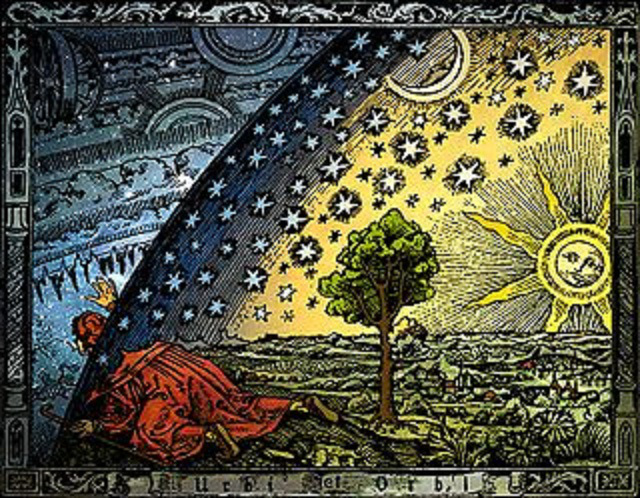
An observer is basically awareness. Awareness in reality is much broader than the limited notion of human awareness. In order to define awareness scientifically, let’s do the following thought experiment. Imagine being out there in the interstellar space, but with no stars or heavenly bodies around to provide any reference points. Pay attention to your motion.

You could be standing still or you could be moving at the speed of light. But you will find that there is no awareness of motion as long as it is uniform.  Awareness arises only when there is a change in motion that causes acceleration, and which immediately gives rise to inertial resistance.

Light that brings about awareness of other objects is made up of changing electrical and magnetic fields. Such changes are accompanied by inertial resistance as permittivity and permeability. Objects of awareness also consist of changing motion and accompanying inertia at atomic and molecular levels.

There are structures in the brain like visual cortex that are used to explain awareness. But the brain too is made up of neurons, electrical impulses, etc. that consists of changes in motion and inertial forces. So there is motion outside as well as inside the brain. Science is simply associating the motion inside the brain with awareness.

Thus awareness cannot be separated from inertial forces that are inherent to all phenomena. Human awareness is an instance of this. But, objectively, awareness, as inertial force, is present in all phenomena. It need not be defined in human terms.

Appearance of awareness of the characteristics of a phenomenon forms scientific observation. This is tied to the appearance of inertial forces. Every aspect of this universe is changing, and giving rise to inertial forces at all times. This is awareness, which is inherent to the universe. Both observer and observed are part of reality. There is no separate observer as such.

Science has been observing the universe from the viewpoint of the universe.

In this “frame of reference” the scientific observer is simultaneously aware of the whole universe. This awareness is not limited by the speed of light. The Scientific Observer can observe light creeping among stars. He can see earth rotating. He can see motion at all different scales.

Once we understand this universal “frame of reference” of the Scientific Observer, no other frame of reference is needed to explain things. In this frame of reference inherent uniform motion of an object is determined by its inertia. The uniform motion is restored whenever it is deviated from.

Though all aspects of the universe are continually changing, its overall energy and momentum are apparently constant. This condition “no change” means that the universe as a whole has infinite inertia and persistence. Since there is nothing beside the universe, the velocity of the universe may be assumed to be zero.

The scientific observer is inherently static and has infinite persistence like the universe.

The scientific observer derives its sense of motion and time from the frame of reference of the universe as a whole.

.

Abstract Thinking

mind5

Here is a description of an experiment in learning.

Today we had a student who came to the GED center for the first time. We started her on the self-learning pilot on MILESTONE A1: Numbers & Place Values.

Milestone A1 is written in very simple English. It consists of lots of pictures that explain the abstract concept of regrouping and the use of it to generate the numbering system. So it is very easy to understand. This is the most basic concept in math, so no other knowledge of math is required. Therefore, this pilot provides a measure of the learning ability of a student to grasp an abstract mathematical concept.

I started this student on the pilot. She seemed quite enthusiastic. She claimed that she had made it to the 12th grade but then failed the FCAT. So, I expected her to zip through Milestone A1.

Milestone A1 consists of 15 lessons. Usually I go over the first two lessons with the student to give an idea of how to proceed through rest of the milestone by oneself. I did the same with this student, then let her continue by herself, while keeping an eye on her.

She proceeded through the lessons fast. Then I found her stopped on lesson A1.7. She didn’t ask for help. She just sat there. So I went to help her. I checked her knowledge of lesson A1.5, because that is the key lesson on regrouping on which the understanding of all other lessons depend. She said that she understood it. But when I asked her to demonstrate regrouping on abacus, she couldn’t do it.

This is the common problem I am finding with school dropouts. They think that they know a concept but they really don’t. Asking them to demonstrate is a quick way to check their understanding. You cannot see what is going in their mind. But you can definitely see whether they can demonstrate a concept or not.

This student didn’t get the idea of regrouping on abacus despite the fact that the procedure of regrouping was clearly shown with pictures in Lesson A1.5. It took repeated demonstrations of regrouping on actual abacus for about 30 minutes before this student could get it. But this effort was worth it. After that, she was able to read and write numbers in millions and billions, and was quite happy about it.

.

You can improve your abstract thinking by learning to demonstrate abstract concepts using concrete elements. You may also use thought experiments to assure yourself of the consistency of the concept.

.

Unified Field, Inertia, Observer and Consciousness

space

The following is my answer to the question asked on Quora.com:

If energy/mass and space/time are all observer-dependent ways of construing the unified field, what is the observer? Is consciousness a property of the unified field?

.

UNIFIED FIELD

The theoretical ground state for this universe is inertia-less primordial field. It may be referred to as the unified field. This field, when disturbed, gives rise to the electromagnetic radiation that possesses inertia. The inertia of electromagnetic radiation then condenses into mass within an atom.

.

INERTIA

Inertia is primarily associated with mass. However, inertia is part of all phenomena. Motion is not infinite because motion is defined by inertia. There is a speed-limit to light because of inertia. The universe is kept together only because of inertia.

Inertia is analogous to friction. We can walk because there is friction. Similarly, a phenomenon exists because there is inertia. Inertia is ubiquitous just like motion. Inertia and motion are intimately related.

Energy may be looked upon as a form in which motion may be stored. Mass may be looked upon as a condensation of energy. We see inertia transitioning from wave-frequency to particle-mas within the atom.

Inertia may be plotted on a scale as described in INERTIA: A Summary

At the extreme left of this scale where inertia is approaching zero, we have the inertia-less unified field as “space.” At the extreme right of this scale, where inertia is approaching infinite, we have the extreme concentration of mass as “black hole.”

.

OBSERVER

In the broadest sense there is no observer separate from what is being observed. Both observer and observed are part of reality. Ultimately, it is reality observing itself. Science is observing the universe from the viewpoint of the universe.

The net velocity of the universe relative to itself is zero. So, the velocity of a scientific observer relative to the universe is zero.

.

CONSCIOUSNESS

Motion and awareness seem to be aspects of each other. The properties of animated organisms and inanimate objects are an expression of the motion and awareness that they are composed of. The universe is imbued with motion, and thus, it is imbued with awareness.

These ideas are expanded upon in What is Awareness, Scientifically?

The investigation to bring consistency to various concepts continues.

.

The Struggle of Capitalism Today

new_world
Reference: The Philosophy of Karl Marx

The gap between haves and have-nots continues to increase today. Conclusion by Karl Marx that this is an inevitable class struggle was flawed from the outset as explained in the reference above.

The actual problem is identified as follows:

The problem lies with greed and exploitation on one hand and a lack of education and indolence on the other. It is not a universal problem with classes. It may only appear to be so in certain societies at certain times.

Since this problem is becoming increasingly relevant today, I shall like to consolidate my comments from the above reference here.

Karl Marx was observing the dissatisfaction of common people of his time. The powers knew that such dissatisfaction could be inflamed to create problems for them. The Communist agitators could do it.

With the advent of the Industrial Age, considerable destabilizing forces were unleashed into the society of the time. Communism was a reaction to this situation. Karl Marx set out to formulate a philosophy to explain that reaction.

The assumption of class struggle is based on the conflict between those who exploit and those who are exploited. In the absence of exploitation there is no class struggle. In Communist manifesto, the bourgeoisie (the wealthy middle class) is identified with exploiters and the proletariat (the industrial working class) is identified with those exploited.

The problem is with greed and exploitation on one hand and a lack of education and indolence on the other. It is not a universal problem with classes. It may only appear to be so in certain societies at certain times.

The occurrence of classes in a complex society is natural because many different functions become necessary. People also have different ambitions, education and skills. Not everybody is alike. When ambition, education and skill are matched with functions in the society, and appropriate compensation is provided to meet the needs for different stations, then there remains no cause for any conflict or struggle.

In the communist manifesto I see a complex situation being oversimplified. The situation is not broken down to its basic parts, so logic could be applied. Crude black and white logic cannot be applied to complex situations. Like the binary principle of computer logic, it may only be applied after breaking a complex situation down to its basic parts. 

These are good observations made by Karl Marx. There were definitely big changes in the European societies as raw material poured in from colonies in the undeveloped world, and steam and machinery revolutionized industrial production. Feudal societies gave way to industrial societies. World market came about with overall increase in prosperity. Capitalism seems to be the natural outcome of these factors.

The purpose of capital was to fuel the engine of progress when there were plenty of resources and entrepreneurs.

In the manifesto, feudalism is being described as “natural” and bourgeoisie as an aberration that is motivated by cold, calculated self-interest. This resulted in the large scale exploitation of proletarians. Marx is incorrectly equating bourgeoisie with free trade, and free trade with exploitation.

Marx seems to be aware of the power that the exploited proletarians could exercise if they could only be united in their dissatisfaction. He is reacting against the fast pace of constant change in the modes of production that seem to be destroying the traditional character of society. This was quite unsettling and was looked upon as dilution of the quality of life.

Marx is reacting against the globalization of industry and commerce that seem to be destroying the national industries and threatening the self-sufficiency and the boundaries of individual nations.

Marx seems to be lamenting the loss of the traditional independence. He sees globalization resulting in increasing interdependence. This mode of production seems to be leading to concentration of property in the hands of a few. The situation appears to be moving toward political centralization.

It seems like Marx did not want the very conditions, which then came about in Russia and China under the name of Communism. This contradiction points to the weakness of the conjecture of class struggle, which his philosophy starts out with.

We are dealing with complex human nature that cannot be addressed through simplistic conjectures, such as, class struggle.

What needs to be resolved is the lack of education. Without proper education the greed and the desire for exploitation cannot be resolved.

My recommendation for forward progress is:

The Noble Eight-Fold Path

.

What is Self Learning?

Self-learning

The Safety Harbor Math Club

I am currently involved with a Training center at a ministry where I live. This ministry serves people who are homeless, or who are at risk of becoming homeless. It helps them meet their basic needs of food and shelter with the proviso that they should now attempt to improve their lot by educating themselves and getting a job.

Self-learning is based on one’s desire to know. You are self-learning even when you are being helped.

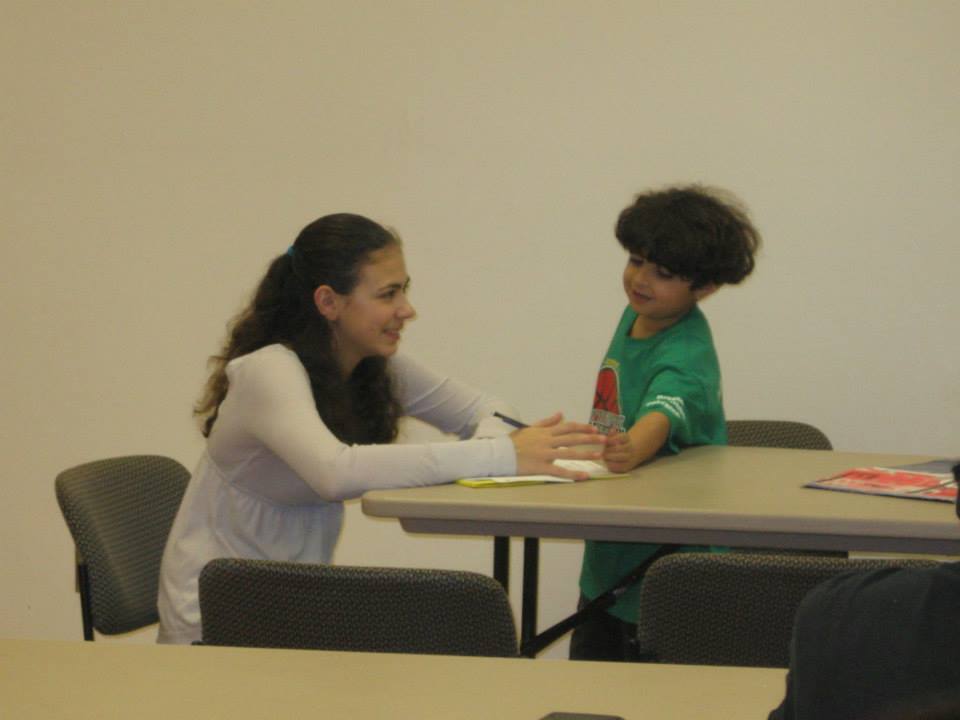
The Training center at the ministry helps people learn English and Mathematics toward obtaining a GED certificate. I am currently volunteering at this center as a tutor. I would like to see a Self-Learning Program implemented at this center.

Self-learning involves responsibility.  Responsibility means, “A response that is proper and adequate to a situation.”

The situation that a person at risk faces is lack of education to be employed. The proper response is to get educated. This sense of responsibility is the basis of Self-Learning. But to build up this sense of responsibility, conditions need to be set right.

Self-learning requires access to materials that are easy to understand. It also involves alert supervision that helps one overcome tough spots in learning.

This book will help a student learn the fundamentals of mathematics. When he is very young, parents can help. When the fundamentals are cleared, he can pick up other text books on mathematics and learn from them by himself.

The Book of Mathematics

.