The Electron (old)

Please see The Electron

Reference: INERTIA: A Summary

You cannot locate the whole snake at a point, but you can locate it with total certainty in a patch of space. If you assume that the snake must be located at a point then you will come up with something like the Heisenberg’s Uncertainty Principle.

This is the case with an electron. An electron is much smaller than an atom, but it cannot be located at a point because it hardly has any mass. An electron is spread out in space like a snake.

There is no uncertainty if the location of an electron is recognized as a “patch of space” rather than a point. Then there would be no “probability function,” which makes Quantum Mechanics math very complicated.

The physical location can be approximated as a point only to the degree there is mass. To the degree there is less mass and more wavelength, the location cannot be approximated as a point.

Maybe the Heisenberg’s Uncertainty Principle gives the minimum size of a “point” location.

The current view of Electron as a “point particle” seems to be inconsistent.

Electron has a wavelength and it is definitely spread over a patch of space. The location of electron cannot be approximated as a point because it hardly has any mass.

.

INERTIA: A Summary

Mass

.

Reference:

Propagation of Light

Disturbance Levels of Space

A New Model of Atom

.

From the article on Inertia from Wikipedia:

Inertia is the resistance of any physical object to any change in its state of motion (including a change in direction). In other words, it is the tendency of objects to keep moving in a straight line at constant linear velocity. The principle of inertia is one of the fundamental principles of classical physics that are used to describe the motion of objects and how they are affected by applied forces. Inertia comes from the Latin word, iners, meaning idle, sluggish. Inertia is one of the primary manifestations of mass, which is a quantitative property of physical systems. Isaac Newton defined inertia as his first law in his Philosophiæ Naturalis Principia Mathematica, which states:
The vis insita, or innate force of matter, is a power of resisting by which every body, as much as in it lies, endeavours to preserve its present state, whether it be of rest or of moving uniformly forward in a straight line.

.

Einstein’s concept of inertia remained unchanged from Newton’s original meaning. However, this concept of inertia may be extended to motion that does not involve mass.

A very fundamental motion appears as light. Light is made up of oscillating electric and magnetic fields. The formation of electric and magnetic fields encounter resistance, called permittivity and permeability respectively. Since light has no mass and it travels in space where no medium exists,  this resistance may be viewed as an inherent property of light. Thus, light has inertia. Inertia is defined in this article as follows.

Inertia is the inherent tendency of motion to maintain its status quo.

Per Maxwell’s equations, the speed of light is the inverse of the square root of the product of permittivity and permeability. Thus inertia acts to define the speed of light. We may express this as follows.

Inertia defines the boundaries of motion.

Inertia resists any change in uniform speed regardless of what that speed is. Therefore inertia is the same in all inertial frames of reference. That means inertia is a universal property.

Inertia provides a universal frame of reference.

Thus, inertia underlies all phenomena. It applies to electromagnetic waves throughout the spectrum as frequency, or quantization levels. It applies to all matter throughout the spectrum of elements, compounds and mixtures as mass.

Inertia underlies all phenomena whether wave or a particle.

The inertia may be pictured over a scale that extends from zero to infinity. This picture may look like Gabriel’s Horn.

GabrielHorn

When inertia is decreasing toward zero (left end of the scale) it may said to be increasingly spreading out in the form of space. When inertia is increasing toward an infinite value (right end of the scale) it may said to be increasingly concentrated at a point. Space is a continuous entity, while the point is discrete.

Space may be filled with points; but space is continuous, and not a set of discrete points.

Inertia appears as mass on the right of the scale. Mathematically, mass may be treated as if located at a point. But inertia that appears on the left of the scale as quantization levels, cannot be represented by a point location. This was expressed by Heisenberg as uncertainty of location. That view erroneously assumes that the location of inertia must always be defined in terms of points. That is not so. Location of inertia may be defined as a region of continuous space. Euclidean “point” is not always appropriate to describe a physical location.

Heisenberg’s uncertainty occurs because physical space and location are being interpreted mathematically through dimensionless points.

Somewhere in the  middle of the above scale, inertia transitions in its characteristics from “quantization” to “mass.” In reality, this transition occurs inside the atom at the interface of the electron region and the nucleus.

Inertia transitions from “quantization” to “mass” inside the atom.

This view of inertia brings about a new understanding to the phenomena occurring at subatomic levels. It extends classical mechanics to explain the phenomena which currently lies in the domain of quantum mechanics.

Inertia seems to transition in some way at the boundary of an atom, and at the boundary of the nucleus. These transitions need to be investigated.

Concept of inertia seems to be more basic than the concept of space, time, and spacetime. This needs to investigated.

Inertia arises only when there is “change” This compares to the arising of the sense of motion. It is conjectured that the sense of gravity may also be comparative. Better understanding of inertia may lead to a deeper understanding of gravity.

.

Notes added February 25, 2015
  1. The surface of an atom seems to provide the threshold quantization level at which light starts to slow down and converge as if by a lens.
  2. The surface of the nucleus of an atom seems to provide the threshold quantization level at which transition takes place from electromagnetic disturbance to mass.
Notes added November 30, 2018
  1. In the above essay, the word “disturbance” is replaced by an already existing word “quantization”. Therefore, the disturbance levels are now referred to as quantization levels. Quantization comes from the word quanta that was introduced by Einstein in 1905, to describe the particle-like behavior of light. Einstein observed that as the frequency of the blackbody radiation increased, the wave-like radiation appeared increasingly as particle-like packets (quanta) of energy. This is the process of quantization. An example of quanta is the photon of light.
  2. Inertia basically refers to substance. Since light has a finite velocity it  has inertia. Therefore, light is an electromagnetic substance that is different from material substance.

A New Model of Atom (old)


dl10c

Reference:

Propagation of Light

Disturbance Levels of Space

.

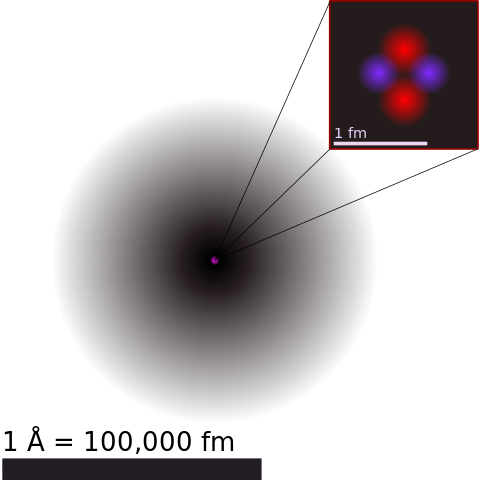
An atom is the smallest unit of matter that defines the chemical elements. Atoms are very small. The modern atom is visualized as a small nucleus surrounded by an electronic region.

All the mass of the atom is concentrated in the nucleus, which is made up of still smaller particles called nucleons. The surrounding electron cloud is made up of particles called electrons. Atoms attach to each other by sharing electrons in their outer shells.

In solids, the atoms and molecules are packed much more tightly. They form a rigid structure. Even then the electrons in outer shells of atoms in materials called metals can flow as electric current.
atom2

Many properties within the atomic structures, when expressed as ratios, appear impressively as ordered sets of integers. This has led to the assumption that the atomic structure consists of smaller particles. This assumption is reinforced by the appearance of particles in atomic and nuclear reactions. However, these same sets of integers can be explained in terms of resonances among electromagnetic waves, without assuming the presence of subatomic particles within atoms.

So, there are subatomic particles that are generated during atomic and nuclear reactions. There are also properties of atoms that can be expressed in terms of orderly integer ratios. But this does not necessarily justify that atoms are made of subatomic particles.

It is very likely that an atom is a homogeneous entity with no discrete particles existing inside it. There need not be electrons circling around a nucleus that is made up of protons and neutrons. The interactions at the surface of atom may suffice to generate electrons. Similarly, other interactions with the atom may suffice to generate protons and neutrons.

If we do not assume subatomic particles to reside within an atom, we can express the atomic structure in terms of rapidly condensing wave-frequency of electromagnetic disturbance.

Inertia may be described as the natural tendency of any motion to maintain itself when no external force is acting on it. Because of this inertia an internal resistance is generated when a change in motion is attempted by force. A wave-frequency can be said to have inertia because it tends to maintain itself.

The higher is the frequency of electromagnetic disturbance, the more it tends to maintain itself. We may say that electromagnetic disturbance of higher frequency has higher inertia.

The electromagnetic disturbance has a large spectrum that extends from extremely low frequencies of radio waves to extremely high frequencies of gamma rays. This range of frequencies may be described as disturbance levels (exponent of 2) from 1 to 67 and higher (see the reference above).

The atom may be modeled as a “sink” for wave-frequency inertia. This means that the atom provides a location where wave-frequency inertia may condense and terminate as mass (See the graphics at the beginning of this article).

In other words, the disturbance levels increase rapidly as the electromagnetic disturbance enters the electronic region of the atom and moves towards its center. These disturbance levels are the same that appear at the upper end of the electromagnetic spectrum.

There is a threshold frequency at which the disturbance becomes rotational and forms an electronic region. There seems to be another threshold frequency within the electronic region at which disturbance collapses from wave-frequency into particle-mass form of inertia. The particle-mass formation appears as the nucleus at the center of the atom.

In this model of atom, the electronic region is like a rotating “whirlpool” within the ubiquitous electromagnetic field in space. The electronic region consists of rapidly increasing disturbance levels toward the center. The extremely high disturbance level at the center collapses into mass forming the nucleus of the atom.

The Bohr’s model of atom has helped provide insight into the Periodic Table; but, it soon becomes very complex when describing the atomic structure beyond the simplest hydrogen atom. The “Disturbance” model of atom outlined in this article is intended to provide a deeper insight into the structure of the atom with simpler math.

In the Disturbance model of the atom, there are “oscillators” in the electronic region of the atom instead of electrons. These “oscillators” achieve characteristic resonances when irradiated with energy. These resonances then emit characteristic radiation and electrons.

In a blackbody, the atomic configurations consist of “oscillators” over the whole range of frequency spectrum. When a blackbody is heated, it emits radiation at all frequencies. Radiation at high frequencies is limited because it requires increasing energy to activate high frequency oscillators.

Energy required to activate an oscillator is proportional to its frequency, E = hf. The proportionality factor is the Planck’s constant h.

The Planck’s constant ‘h’ may be defined as the energy involved in each cycle of oscillation.

In the photoelectric effect, the metal surface emits electrons. Electrons are rotating electromagnetic fields spun off from the electronic region of the atomic configuration. The metallic surface seems to act as a lens to concentrate the wave front of the falling radiation at oscillators within the surface.

The photon seems to be created right at the metallic surface and may not exist in space. Thus, light may just be a wave phenomenon. Its only discrete element may be a frequency cycle containing the energy ‘h’.

Electrons and atoms are stable configurations of extremely high disturbances in space. A free electron may be looked upon as an “atom without a nucleus”.

.

Disturbance Levels of Space

dl10c

Reference: Propagation of Light

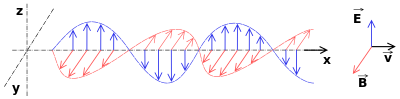
When space is disturbed electric and magnetic fields are generated. These fields oscillate as a transverse wave. The disturbance travels in a straight line at the speed of light.

Disturbance is manifested in space as oscillating electric and magnetic fields.

In each oscillation the disturbance advances by a distance called wavelength. The oscillations occur at a certain frequency. The speed of propagation is then determined by the product of frequency and wavelength. Oscillations are the result of a rotating vector. The propagation of disturbance may be compared to the advance of a rotating screw.

The disturbance propagates like a rotating vector threading into the space.

The space does not provide any resistance. The disturbance contains its own inertia through the interaction between electric and magnetic fields. This inertia resists any change to frequency and wavelength, and keeps the disturbance going.

The disturbance consists of its own inertia that sustains it.

The disturbance has a large range of frequencies and wavelengths. This range is represented by the electromagnetic spectrum consisting of radio waves, microwaves, infra-red light, visible light, ultra-violet light, X-rays and Gamma rays. This spectrum presents increasing frequency and shortening wavelengths, while the speed of propagation remains practically the same.

The disturbance forms a spectrum of increasing frequency and shortening wavelengths.

Since the spectrum extends over a very large range of frequencies, it may be managed more conveniently as Disturbance Levels on a logarithmic scale of base 2 (similar to octaves).

Disturbance Level                 Frequency

                0                                  20 or 1

                1                                  21 or 2

                2                                  22 or 4

                3                                  23 or 8

                …                                 …

                n                                 2n

The disturbance levels of some of the electromagnetic frequencies are as follows

     EM Frequency                 Disturbance Level

Visible light ………………….. ~ 49  

Gamma Rays ………………… ~ 65

Electron ………………………. 66.7

Proton ………………………… 77.6

Neutron ……………………….. 77.6

Inertia seems to increase with increasing disturbance levels. The disturbance levels may provide a measure of inertia.

Ln 2

x represents frequency; y represents Disturbance Levels

These disturbance levels may be plotted as above. It can be seen from this graph that negative disturbance levels may be postulated to exist with the halving of frequency. The frequency never reaches zero, except theoretically. We may postulate a level of zero frequency to describe undisturbed space. This space forms the background of all disturbance. The undisturbed space has zero inertia.

The background of all phenomena is undisturbed space of zero frequency and no inertia.

The disturbance levels express inertia. When disturbance level crosses a threshold, the inertia transitions from “wave-disturbance” to “particle-mass.” Inside the atom, this transition occurs at the boundary of the nucleus.

The concept of “Disturbance Level” shall be used in subsequent discussions.

.

Propagation of Light

Light appears to be like a screw that threads through space.

This is a very rough analogy but here are some interesting points.

  1. A rotational motion is relative to its own axis of rotation. It may be felt merely as force, where the lines of forces may originate from one end of the axis and terminate at the other end. This is like a magnetic force field.

  2. Light consists of magnetic and electrical force fields. Change in one field generates the other field.

  3. The magnetic and electrical fields oscillate in phase but normal to each other. It is as if space splits into these two fields.

    EM

  4. Each “oscillation” is like a vector rotation that advances the disturbance of light along its axis by a wavelength.

  5. The propagation of light takes place as the inertia of its vector rotation simply persists in an inertia-less space.

  6. As the speed of vector rotation increases, wavelength decreases. The increase in vector rotation is similar to the increase in frequency.

  7. With faster vector rotation and shorter wavelength, the “threads” of this corkscrew motion come closer to each other.

  8. Inertia increases with faster vector rotation. It is expected that this increase in inertia may slow down the forward propagation to some degree.

    Note 2/23/15: This may be the threshold disturbance level at which light starts to slow down and start to converge as by a lens. This disturbance level shall occur at the surface of an atom, and also at the surface of an electron.
  9. As the closeness of threads crosses a certain threshold, they may start to congeal into a motion that resembles more like a fast rotating disk. Thus come about the mass type characteristics of inertia.

    Note 2/23/15: This may be the threshold disturbance level at which transition from disturbance to mass takes place. This disturbance level shall occur at the surface of the nucleus of an atom. This disturbance level may only be approached in an electron but not reached.
  10. Hence there is a transition from wave to a particle type motion, which is accompanied by a rapid decrease in forward propagation.

The above are simply some conjectures. Much work needs to be done mathematically and experimentally to support or reject them.

This article provides a crude unidirectional picture. In reality the phenomenon is 3-dimensional. The idea of “disk rotation” may need to be expanded into a more complicated “centered rotation.”

The atom may act as a “sink” for inertia. The electromagnetic radiation approaches the “sink” and its spread-out “threads” start to get compressed, until they transition into mass type centered inertia when approaching the center of the atom.

It is very likely that an atom is made up of electromagnetic patterns of different densities  with no separate electrons, protons and neutrons inside. The atom simply happens to spit out such particles when disturbed at different levels of “depth.”

.