Mindfulness Class Format

IM_mindfulness_class10_4646

Previous: Mental Discomfort
Next: The 3 Rules of Mindfulness

Here is the current Mindfulness Class Format. This format may be revised based on feedback.

(1) Begin the class at 5:45 pm.

(2) Have attendees close their eyes and take five deep breaths, and then return to normal breathing.

(3) Help the attendees settle down in the mindfulness mode per the three rules of mindfulness.

(3a) Become grounded–meaning you keep coming back intermittently to the awareness of your breathing and to a sense of harmony.

(3b) Establish free association–meaning you become aware of the concern uppermost in your mind and let free association take over. You may look for data but don’t dig for it. Let the desired information bubble up as it may.

(3c) Establish universal context–meaning you become aware of the universality of what you are looking at setting aside bias, prejudice and fixed ideas. Look at it with compassion for all beings.

(3d) Get ready for the mindfulness discussion. Open your eyes when you are ready..

(4) Start mindfulness discussion. Continue the discussion for next half hour.

(4a) Focus on the question, “What are you hoping for in today’s class and what would you like to leave behind.”

(4b) Have each attendee respond to the above question if they wish. Let them know that it is ok to “pass” if they are uncomfortable talking.

(4c) Formulate a general question for mindfulness discussion from earlier preparation and the feedback received above. Give everyone a chance to speak.

(4d) Continue the discussion for next half hour. Make sure everyone is comfortable with the concept of mindfulness.

(5) Have the attendees start meditation on whatever they consider pertinent, which was stimulated during the mindfulness discussion. .

(6) End the meditation at 7:10 pm. Use the next 5 minutes to get feedback on the class.

(7) End the class at 7:15 pm.

.

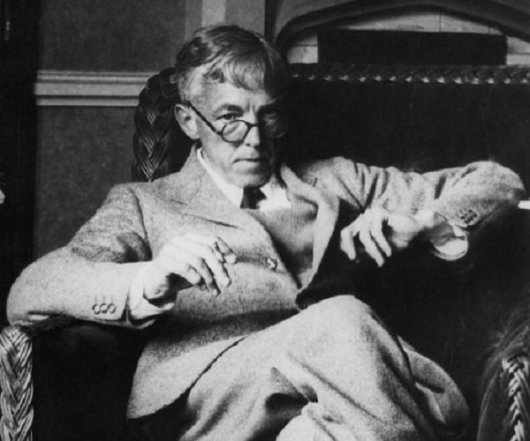
A MATHEMATICIAN’S APOLOGY

g-h-hardy-6

Here are my notes from A MATHEMATICIAN’S APOLOGY by G.H. Hardy. I studied this essay to better understand the nature of patterns, which are described by the Laws of Metaphysics on a grander scale.

Hardy seems to be obsessed with good and evil, which makes him less objective. But here is the essence of his essay.

.

It is preferable to do mathematics than talk about it. Satisfaction in mathematics comes from discovering new patterns rather than putting those patterns to use. Mathematics requires the freshness of a young mind. Doing mathematics is very pleasurable and its achievements have certain permanence.

Mathematics is done for its own sake. It is quite something to express mathematical ideas in understandable language. Mathematics consists of patterns of ideas that have permanence. The best mathematics lies not in its practical consequences but in the significance of the ideas which it connects.

Simple examples are (a) Euclid’s proof of the existence of infinity of prime numbers, and (b) Pythagoras’s proof of the ‘irrationality’ of √2.

Mathematical patterns may be judged by their beauty and seriousness. The theorems of Euclid and Pythagoras have influenced thought profoundly, even outside mathematics. Practical applications are concerned only with approximations.

A ‘serious’ theorem contains ‘significant’ ideas that consist of certain generality and depth. Abstraction refers to any pattern of ideas, but generality is marked by how many different ideas are connected. Mathematical ideas may be viewed as arranged in strata. Generality and depth go hand-in-hand.

Mathematical reality lies outside of us. Our function is to discover or observe the continuity, harmony and consistency of its beautiful patterns. The aesthetics of mathematics lies in the creativity and simplicity of the proofs of its theorems.

The physical patterns have their own structure which derives its explanation from the patterns discovered in mathematics. The physical reality is an approximation derived from mathematical reality.

The mathematics of great mathematicians has permanent aesthetic value. That knowledge goes much beyond providing merely the material comfort of mankind.

Real mathematics is the most austere and the most remote of all the arts and sciences. It is not a contemplative but a creative subject. It may be justified as art.

.

The Laws of Metaphysics

600_332158572

Previous: Objective View of God
Next: Mindfulness Approach

Here are the laws of metaphysics that I have been fortunate enough to pry them apart from knowledge already available.

Law # 1 – The fundamental principle of this universe is a natural precipitation of order out of chaos. This order manifests as the universe.

NOTE: The Law # 1 is looked upon as “God” in most religions. With the knowledge of physics that we now have, we may state:

Corollary # 1a – The nature of chaos is space. The property of space is awareness.

Corollary # 1b – The order precipitates as electromagnetic patterns. The property of patterns is consciousness.

Corollary # 1c – This precipitaion of order is irreversible.

Law # 2 – The order precipitates as a basic pattern, which then forms increasingly complex patterns.

Note: The Law # 2 is how evolution starts. We may further state:

Corollary # 2a – The electromagnetic patterns are  described by a spectrum of frequencies. At the lower end of this spectrum are radio waves, and at the higher end are gamma rays.

Corollary # 2b – Below radio waves is space, and above gamma rays is matter. In between there are increasing frequencies that have properties of feelings, perceptions, emotions and sensations.

Corollary # 2c – The electromagnetic patterns condense as matter at high frequencies.

Law # 3 – A pattern is made up of movement. Underlying the movement there is nothing motionless. Anything motionless is relative only. 

NOTE: Everything in this universe is changing whether rapidly or very slowly. There is nothing that is absolutely permanent.

Corollary # 3a – The chaos, of course, is unsettled and every bit impermanent. Any settling starts in the form of precipitating patterns.

Corollary # 3b – Original patterns are very light and ephemeral. Only as they evolve toward greater complexity that they tend to become more permanent.

Corollary # 3c – Thus the universe does not start out with anything eternal.

Law # 4 – Patterns mix, interfere, resonate, condense and generate new patterns. Thus there is evolution.

Corollary # 4a – Frequencies in gamma region generate electrons. Still higher frequencies collapse into nucleons that have property of mass. Nucleons in a nucleus surrounded by electrons form a pattern called atoms.

Corollary # 4b –  The atoms represents basic identities that are arranged in a periodic table of lighter to heavier atoms.

Corollary # 4c – Atoms combine to form molecules from simple to very complex. Each of these molecules has an identity with unique properties.

Law # 5 – Basic patterns are continuous but have discrete frequencies. These patterns evolve into discrete solid forms. But underlying all discrete forms there is a basic continuity.

Corollary # 5a – The discrete property of forms evolves from frequencies in the form of resonances, particles, groups of particles and discrete contexts of different types.

Corollary # 5b – All discrete parts of the universe are connected at some basic level.

Law # 6 – Patterns evolve gradually. They are stable and orderly only when they maintain continuity, harmony and consistency at all levels.

Corollary # 6a – Complex molecules like RNA and DNA have enough electrons around the many nuclei to form circuits for molecular computers.

Corollary # 6b – The naturally programmed sequence of motions in these molecules maintain continuity, harmony and consistency. Thus comes about life.

Corollary # 6c – The programmed motions are triggered by appropriate conditions in the environment. Thus there is perception.

Corollary # 6d – All motions are connected through the conditions in the environment. Thus, there is universal continuity, harmony and consistency.

Corollary # 6e – Motion together with perception appears as waves of feelings, sensations and emotions.

Corollary # 6f – Thinking evolves from reactions among chemicals to plant life, animal life and finally to responses determined by associations perceived by human life. Thus there is logical thinking.

Law # 7 – When the continuity, harmony and consistency of natural evolution is resisted there comes about tension and inflexibility.

Corollary # 7a – Human actions are determined by logical thinking. When human thinking is restricted to narrow contexts the resulting actions interfere with universal continuity, harmony and consistency. Such actions are called ‘karma’.

Corollary # 7b – Such actions generate tensions and they lead to inflexibility in thinking.  This outcome is called ‘dukkha’. Much of human reality consists of ‘dukkha’.

Corollary # 7c – The efforts to deal with ‘dukkha’  generate further tensions and inflexibilities. There is anxiety and craving underlying such efforts. This is called ‘thirst’.

Corollary # 7d – This ‘thirst’ comes about as a reaction to the presence of ‘dukkha’. It dominates human thinking and generates further ‘karma’.

Corollary # 7e – The way out is human thinking in universal context, away from thinking in narrow context of “self”.

Law # 8 – Restoration of the flexibility of natural evolution is achieved by letting the tension unwind freely in a universal context.

Corollary # 8a – Freedom comes from restraining ‘thirst’ and letting ‘dukkha’ unwind freely in a universal context until all ‘karma’ is released. This is ‘nirvana’.

Corollary # 8b – One then returns to the continuity, harmony, consistency and flexibility of the natural evolution.

Law # 9 – Natural evolution started by trial and error. This process gradually became sophisticated and evolved to scientific method among humans.

Corollary # 9a – The scientific method takes into account the universal context. This universal context is the basis of objectivity. Any lesser context leads to subjectivity and error.

Corollary # 9b – Human inventiveness becomes part of the natural evolution when it is applied in a universal context.

Law # 10 – The scientific view is universal and, therefore, objective. A human-centric view is less than  universal and, therefore, subjective and prone to error.

Corollary # 10a – A human-centric views, such as, “earth is at the center of the universe,” is subjective and erroneous.

Corollary # 10b – Most religious knowledge has been put forth from a human-centric view, and therefore it is subjective and has led to erroneous behavior.

Corollary # 10c – The scientific method currently limits itself to physics only. It may be extended to metaphysics in the form of mindfulness.

Corollary # 10d – Religious knowledge expressed from an objective viewpoint of mindfulness may lead to far more useful behavior.

Corollary # 10e – The religious concept of “higher power of God” may be expressed through mindfulness in terms of fundamental principles yet to be discovered. The Law # 1 above is an attempt in that direction.

Law # 11 – The next stage of evolution from present human condition seems to depend upon the attainment of the universal objectivity of mindfulness.

Corollary # 11a – According to Buddhism, the root of all evil is ignorance and false views. The ultimate true view is the objective view. The endeavor in Buddhism is the attainment of universal objectivity through the practice of mindfulness.

Corollary # 11b – All religions should be respected and understood from an objective viewpoint. This helps acquire an independent understanding of truth.

Corollary # 11c – Objective viewpoint is developed by viewing everything in a universal context and removing all discontinuities, disharmonies and inconsistencies in one’s life through observations and thought experiments.

Corollary # 11d – True knowledge is not the inflexibilities one carries around in one’s head as memory. True knowledge is continuous observation from an objective viewpoint.

.

Objective View of God

klee-color_-1-1

Previous: Objective View of Spirituality
Next: Mindfulness Approach

The main topic of mindfulness discussion in this class on Mindfulness Course is the OBJECTIVE VIEW OF GOD.

  1. The objective view is a universal view that is consistent within the whole universe. On the other hand, a subjective view is a narrow view that is consistent only within its local context. The objective view is unique, since it is consistent within the whole universe. On the other hand, there are numerous subjective views for the same phenomenon depending on their narrow contexts.

  2. In modern terminology and understanding we can say that this universe is essentially the precipitation of order out of chaos. We may call the underlying reason as the “principle of settling down” or the “Law of Equilibrium”.  The ancients called this creation the “function of God” using the vocabulary they had. Let us call it the God principle. This is an objective view.

  3. This gives us a better understanding of what “monotheism” is all about. It is the recognition of a single principle responsible for the creation of this universe. This is the God principle (the precipitation of order out of chaos). Being universal, this principle is broad and general in its statement.

  4. However, the suffix “theism” in monotheism refers to the conception of God as a deity, or as a powerful, human-like, supernatural being. This conception amounts to looking at an abstract God principle through a human-centric filter.  It is assigning a human role to an abstract principle. Thus, this idea of “theism” is subjective.

  5. Polytheism assigns a deity to each fundamental aspect of the universe. These aspects are the categorization of the universal order evolved from chaos. Thus, we may assign a deity to the phenomenon of thunder, and another deity to the phenomenon of wealth. Although it is made to look that polytheism contradicts monotheism, it is not really so. The two views dovetail. Out of a fundamental principle, come out many other principles or manifestations.

  6. Pantheism considers God principle (the precipitation of order out of chaos) as the property of the whole universe. It is closer to the original abstraction because in this conception the idea of deity is diffused. Pantheism sees the God principle  as an integral part of the universe. In fact, the universe is made up of the order that has precipitated out of chaos.

  7. Atheism simply rejects the idea of deities, but not necessarily the God principle. It acknowledges the fact of abstraction.

  8. The concept of God is described by most theologians as having the attributes of omniscience (infinite knowledge), omnipotence (unlimited power), omnipresence (present everywhere), divine simplicity, and as having an eternal and necessary existence. These are just the concrete human perspectives applied to the abstract God principle.

  9. God is conceived of as the principal object of faith. In this case, faith is confidence or trust in the God principle of “order out of chaos” applied to life. No matter how chaotic life has become, it can always be put in order. This is a very fundamental faith that gives hope to Man.

.

Objective View of Spirituality

business-intel1

Previous: The “Six Days” of Creation
Next: Objective View of God

The main topic of mindfulness discussion in this class on Mindfulness Course is the OBJECTIVE VIEW OF SPIRITUALITY.

  1. The objective view is a universal view that is consistent within the whole universe. On the other hand, a subjective view is a narrow view that is consistent only within its local context. The objective view is unique, since it is consistent within the whole universe. On the other hand, there are numerous subjective views for the same phenomenon depending on its narrow context.

  2. The classical view of creation has been “creation out of chaos”. This implies creation from pre-existing materials. This view is consistent with universal experience and, therefore, it is an objective view. The theological view (developed in second-century) of creation is “creation out of nothing”. This view denies pre-existing materials. This view is not consistent with universal experience. It seems to be based on personal logic and, therefore, it is a subjective view.

  3. Thus, the objective view of creation is the order precipitatng in chaos. We call this activity “spirituality” and the resulting order “universe”. We may only speculate on how the chaos and spirituality came about. But we can see that “creation out of chaos” happened at the beginning of the universe, it has been happening all along in the existence of the universe, and it is happening right now in our lives.

  4. We may look at this spirituality as the work of some agency, and we may call that agency God; but that is symbolization. The actual understanding comes from tracing the sequence in which order has come about from the beginning until now. We call this sequence of order “evolution”. We can trace that evolution in the present from light to humans. See reference: The “Six Days” of Creation.

  5. Objectively we see the elements of spirituality, chaos and universe existing together. It is a system in which these three elements are well-integrated. This system may be described using mathematical notation as. “Spirituality + chaos = universe”. It may be described as, “Precipitation of the universe from chaos”.

  6. Spirituality may be looked upon as a property of chaos, or chaos may be looked upon as an aspect of spirituality. Either way it tells us that the separation of spirituality from the physical universe is a matter of categorization. The idea that there is a God, which is separate and independent of the physical universe, is a subjective notion.

  7. Other subjective notions that are also simplistic are as follows:

    • The spiritual element is superior to the physical element. Objectively, both spiritual and physical elements are equal aspects of reality.

    • The spiritual element is orderly, whereas the physical elements are chaotic. Objectively, both spiritual and physical elements can be orderly or chaotic.

    • The spiritual element is in conflict with physical elements. Objectively, the spiritual and physical elements are reflection of each other. They rise and fall together.

    • The spiritual element brings order to the physical elements. Objectively, both spiritual and physical elements evolve from chaos towards order per some principle of precipitation (Law of Equilibrium).

  1. The current phase of evolution is from subjectivity toward objectivity. Subjective views come from personal assumptions, which are not consistent with universal observations. Objectivity brings about better understanding of reality from a universal perspective.

.