MN: Introduction to Comments

Reference: A Course on Buddhism

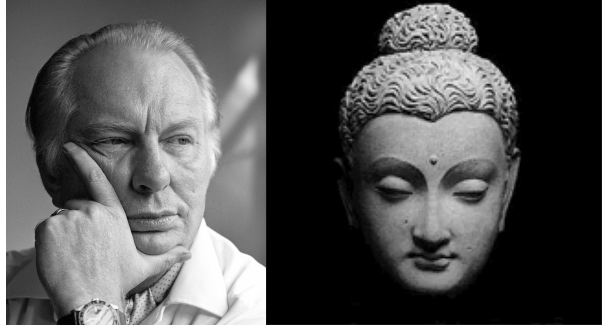
L. Ron Hubbard claimed to be the reincarnation of Buddha. He believed that his system of Scientology was a much improved version of Buddhism. However, I found myself rejecting the claim because of the following fundamental difference between Scientology and Buddhism.

Scientology believes that a soul is eternal, and that its individuality is maintained forever. God has an individuality too. Therefore, the souls cannot merge with each other or with God.

Buddhism, on the other hand, does not believe on logical grounds that there can be eternally unchanging substance. Therefore, it does not believe in the eternity of soul. According to Buddhism, souls are part of a changing reality that has the property of “Oneness.” (See Ground State of the Universe). In short,

Scientology is based on the stable data of “Being”; whereas, Buddhism is based on the stable data of “Oneness.” 

In Scientology 8-8008 Hubbard says, “There is evidently no Nirvana. It is the feeling that one will merge and lose his own individuality that restrains the thetan from attempting to remedy his lot.”

Hubbard did not understand that Nirvana is the attainment of oneness that permits the wisdom of seeing things as they are.

With this fundamental difference in Scientology and Buddhism, I must reject Hubbard’s claim that he is the reincarnation of Buddha. Scientology is unable to produce Nirvana that permits a person to, “See with wisdom.”

But Scientology does push the activity of meditation to produce rapid improvement in the beginning. It is more suited to get a person started on the path of improvement, even though it cannot carry that improvement all the way through.

.

My Conclusion

I have decided to be consistent in my thinking with the stable data of ONENESS of Buddhism. At the same time I feel that the insightful innovations of Scientology, when applied to Buddhism, will make Buddhism better appreciated by the modern mind.

Scientology has a modern vocabulary that can be used to better explain the concepts of Buddhism. Scientology vocabulary has to be updated with better definitions from the consideration of ONENESS.

Scientology also has a better organizing system, such as, the “Grade Chart,” to explain spiritual progress. This system can be used quite beneficially to make Buddhism more effective.

By making the approach of Scientology more consistent with Buddhism, it is possible to come up with a powerful system of rapid spiritual progress. This system is currently being attempted through Subject Clearing.

.
Exploring the Words of the Buddha

Reference: Course on Subject Clearing

Abbreviations:
MN = Majjhima_Nikaya (Middle Length Discourses of the Buddha)
SN = Saṃyutta Nikāya (Connected Discourses of the Buddha)
AN = Aṅguttara Nikāya (Numerical Discourses of the Buddha)
DN = Dīgha Nikāya (Long Discourses of the Buddha)

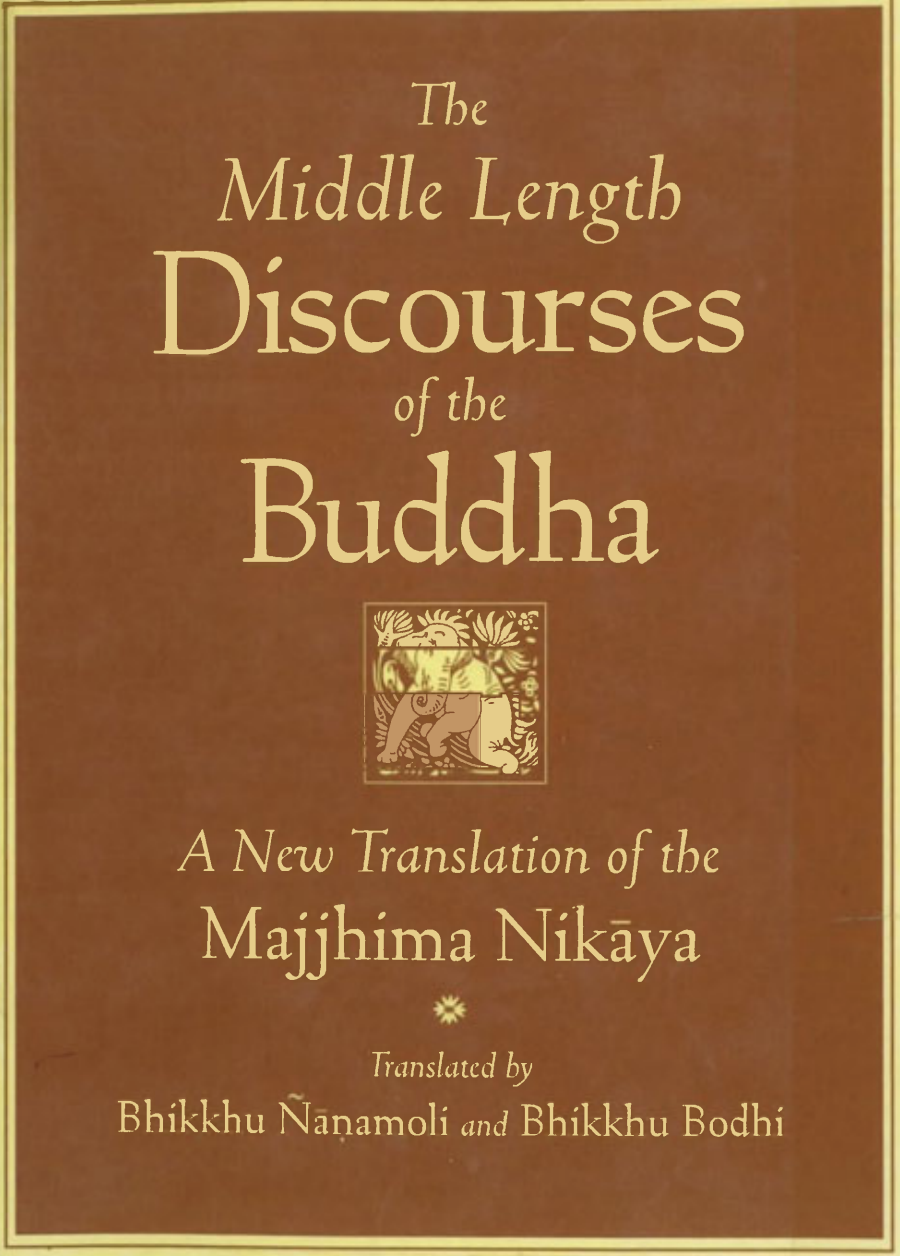
The following course on Buddhism is based on the text The Middle Length Discourses of the Buddha: A New Translation of the Majjhima Nikaya. This course was recently suggested to me by my old friend Chuck Beatty. I plan to subject clear this course and record my thoughts.

In doing this course, it is important to have the following references handy.

TEXT: Majjhima_Nikaya

  1. Contents
  2. List of Abbreviations
  3. Summary of Sutta
  4. Notes on Sutta
  5. Glossary

.

The Course

A Systematic Study of the Majjhima Nikaya

MN 26:13 = Majjhima Nikaya Sutta 26 Section 13
MN 26 (1 – 4) = MN 26:1 to MN 26:4

I.  The Buddha’s Enlightenment

II. Approaching the Dhamma

  1. Making wise choices
  2. Test the Buddha himself
    • MN 47 The Inquirer 
  3. Faith, practice, and attainment
    • MN 95 With Cankī

III.  The Ethical Life

  1. Four ways of life
    • MN 46 The Greater Discourse on Ways of Undertaking Things
  2. Karma and its results
    • MN 57 The Dog-Duty Ascetic
    • MN 135 The Shorter Exposition of Action (handout)
  3. The path to a higher rebirth
    • MN 41 The Brahmins of Sālā
    • MN 120 Reappearance by Aspiration
  4. Right speech and patience
    • MN 61 Advice to Rāhula at Ambalaṭṭhikā
    • MN 21 The Simile of the Saw

IV. Deepening One’s Perspective on the World

  1. The faults of the worldly life
    • MN 13 The Greater Discourse on the Mass of Suffering
  2. The shortcomings in sensual pleasures
    • MN 54 To Potaliya
    • MN 75 To Māgandiya
  3. The misery of saṃsāra
    • SN 15 Connected Discourses on Without Discoverable Beginning (handout)
  4. Raṭṭhapāla and the call to renunciation
    • MN 82 On Raṭṭhapāla

V.  The Path to Liberation (General)

  1. The purpose of the spiritual life
    • MN 63 The Shorter Discourse to Mālunkyāputta
    • MN 29 The Greater Discourse on the Simile of the Heartwood
  2. The gradual training
    • MN 27 The Shorter Discourse on the Simile of the Elephant’s Footprint (handout-1,handout-2,handout-3)
    • MN 39 The Greater Discourse at Assapura
  3. What makes one a monk?
    • MN 40 The Shorter Discourse at Assapura
  4. The benefits of virtue
    • MN 6 If a Bhikkhu Should Wish
  5. Purifying the mind
    • MN 19 Two Kinds of Thought
    • MN 20 The Removal of Distracting Thoughts
    • MN 7 The Simile of the Cloth (handout)
    • MN 8 Effacement
  6. Eliminating the taints

VI. The Practice in Detail

  1. The Noble Eightfold Path
    • MN 117 The Greater Forty
  2. The way of mindfulness
  3. Mindfulness of breathing
    • MN 118 Mindfulness of Breathing
  4. The aids to enlightenment, etc.
    • MN 77 The Greater Discourse to Sakuludāyin

VII.  The Cultivation of Wisdom

  1. Right view
    1. MN 9 Right View (handout)
    2. MN 11 The Shorter Discourse on the Lion’s Roar
    3. MN 22 The Simile of the Snake
    4. MN 38 The Greater Discourse on the Destruction of Craving (handout)
  2. Penetrative insight
    1. MN 148 The Six Sets of Six
    2. MN 146 Advice from Nandaka
    3. MN 149 The Great Sixfold Base
    4. MN 28 The Greater Discourse on the Simile of the Elephant’s Footprint
    5. MN 64 The Greater Discourse to Mālunkyāputta
  3. Final realization
    1. MN 52 The Man from Aṭṭhakanāgara (handout-1handout-2)
    2. MN 140 The Exposition of the Elements
  4. A typology of persons
    1. MN 1 The Root of All Things (handout)
  5. A typology of noble disciples
    1. MN 70 At Kīṭāgiri (part) (handout)

VIII.  The Tathāgata

  1. MN 12 The Greater Discourse on the Lion’s Roar

IX. Life in the Sangha

  1. Monks living in harmony
    • MN 31 The Shorter Discourse on Gosinga
  2. The ideal monk
    • MN 32 The Greater Discourse on Gosinga
  3. A recalcitrant monk
    • MN 65 To Bhaddāli
  4. Guidelines for future harmony
    • MN 104 At Sāmagāma
  5. After the Buddha’s parinibbāna
    • MN 108 With Gopaka Moggallāna

.

SUMMATION

  1. Introduction to Comments
  2. Grade Chart of Buddhism

.

KHTK Factor # 16

Reference: A Course on the Factors

KHTK Factor # 16: As forms combine and get more complex, their motion also gets increasingly complex.

With the expansion and consolidation of viewpoints and dimension points, the forms start to get increasingly complex. With the complexity of forms, the motion that is generated, also gets increasingly complex.

We can see this in the motion of a galaxy as compared to the motion of a planet. Or, we may observe it in the motion of the human body, as compared to the motion of an ant.

.

Scientology

Compare the above to the following factor in Scientology.

Scientology Factor # 16. The viewpoint can combine dimension points into forms and the forms can be simple or complex and can be at different distances from the viewpoints and so there can be combinations of form. And the forms are capable of motion and the viewpoints are capable of motion and so there can be motion of forms.

This Scientology Factor simply states how the motion of forms comes about.

.

Logic

Things simply get more complex as they evolve.

.

Ground State of the Universe

Reference: A Course on the Factors

The following is quoted from the book The Tao of Physics.

“The term ‘physics’ is derived from this Greek word [physis] and meant…, originally, the endeavour of seeing the essential nature of all things… The Milesians… saw no distinction between animate and inanimate, spirit and matter. In fact, they did not even have a word for matter, since they saw all forms of existence as manifestations of the ‘physis’, endowed with life and spirituality…

“Heraclitus [c. 535 – c. 475] believed in a world of perpetual change, of eternal ‘Becoming’. For him, all static Being was based on deception and his universal principle was fire, a symbol for the continuous flow and change of all things. Heraclitus taught that all changes in the world arise from the dynamic and cyclic interplay of opposites and he saw any pair of opposites as a unity. This unity, which contains and transcends all opposing forces, he called the Logos.

“The split of this unity began with the Eleatic school, which assumed a Divine Principle standing above all gods and men. This principle was first identified with the unity of the universe, but was later seen as an intelligent and personal God who stands above the world and directs it. Thus began a trend of thought which led, ultimately, to the separation of spirit and matter and to a dualism which became characteristic of Western philosophy.

“A drastic step in this direction was taken by Parmenides of Elea [c. 515/540 -c. 450] who was in strong opposition to Heraclitus. He called his basic principle the Being and held that it was unique and invariable. He considered change to be impossible and regarded the changes we seem to perceive in the world as mere illusions of the senses. The concept of an indestructible substance as the subject of varying properties grew out of this philosophy and became one of the fundamental concepts of Western thought.

“In the fifth century B.C., the Greek philosophers tried to overcome the sharp contrast between the views of Parmenides and Heraclitus. In order to reconcile the idea of unchangeable Being (of Parmenides) with that of eternal Becoming (of Heraclitus), they assumed that the Being is manifest in certain invariable substances, the mixture and separation of which gives rise to the changes in the world.”

.

Parallel to Buddha’s principle of anatta in the East, is Heraclitus’ theory of perpetual change in the West. This happened just about the same time. A departure from this view was championed by Parmenides, who came up with the principle of Being. This principle was first identified with the unity of the universe, but was later seen as an intelligent and personal God who stands above the world and directs it. This departure came about from the logic to have a stable reference point for the perpetual change.

But for Buddha, underlying the principle of anatta was the principle of “oneness of reality” from the Vedas. In other words, there is no permanent substance but all that impermanence  has “oneness,” in the sense that it is continuous, consistent and harmonious. Any random change from this “oneness” is an aberration. That aberration, ultimately, settles itself out.

So we have the stable reference point of “oneness of reality” in the East. But the stable reference point in the West became an “intelligent and personal God.”

.

KHTK Factor # 15

Reference: A Course on the Factors

KHTK Factor # 15: As reality is simplified according to principles, it is reduced to classification based on scales.

The viewpoint and dimension points, together, form our reality. As they expand they become complex. As they are consolidated they reduce to principles and relationships that appear as classifications. 

Such classes may be arranged further into subclasses for analysis and understanding. All such classes and subclasses remain consistent per the dimensional scale principle.

.

Scientology

Compare the above to the following factor in Scientology.

Scientology Factor # 15. The dimension point can be different from other dimension points and thus can possess an individual quality. And many dimension points can possess a similar quality, and others can possess a similar quality unto themselves. Thus comes about the quality of classes of matter.

The system of classification emerges based on similarities and differences and according to the principle of dimensional scales.

.

Logic

The concept of classification is vital to logical analysis.

.