The Nature of Awareness (Part 3)

Lagoon Nebula
October 1, 2014
This issue is now obsolete. For latest reference please see: The Human-Centric Fixation.

.

Reference: The Nature of Awareness (Part 2)

Let’s look more closely at the “human-centric” view of awareness.  A stone does not respond to its environment with animation, so it is not aware. An animal responds to his environment with animation, but objectively only, so he is partially aware.  But a human being can respond to his environment objectively, as well as subjectively. He is aware of being aware. That is the true measure of awareness.

From human-centric viewpoint, it is the subjectivity of humans that defines awareness.

.

But the universe did not start with humans. In the time frame of this universe, humanity is a very recent development. Humanlike subjective awareness exists only now that there are humans. The “human-centric” viewpoint shall like to think that humanlike awareness has been there since the beginning of time. To make it so, it projects its humanlike awareness into a God, and claims that this God created the universe.

The human-centric viewpoint claims humanlike awareness to exist before the universe started.

.

Awareness cannot exist without something to be aware of. Therefore, God awareness cannot exist prior to the universe. If God awareness was aware of itself then the beginning universe would be that awareness. And this awareness shall arise from non-awareness.

The human-centric viewpoint leads to the concept of a universe at the beginning that had humanlike awareness.

.

Basic awareness corresponds to relative motion. The primitive motion has the form of light. Humanlike attributes consist of very complex motion. Therefore, the beginning universe is more likely to have the form of light than something with humanlike attributes. See The Nature of Awareness (Part 2).

From reality-centric viewpoint the beginning universe is more likely to start as “light” than with human attributes.

.

From reality-centric viewpoint awareness may be defined as the characteristics of existence. Light will have the characteristics of fundamental motion as awareness. Stone will have characteristics of its physical and chemical properties as its awareness. Plants will have their characteristics of germinating and growing as their awareness, and so on. Humans will have the most complex characteristics as their awareness.

Awareness is truly the characteristics of existence. Awareness starts with the simplest form of light and evolves into the most complex form of humans.

.

The universe does not start with a humanlike awareness that is projected as God. That is just a human-centric viewpoint, which may be compared to the viewpoint, such as, “earth is at the center of the universe.” The universe is simply an evolution of awareness as relative motion from simple to complex. Divinity lies in this evolution and not separate from it.

The reality-centric view of God is one that has evolved with the universe. This concept of God is much more abstract than humanlike.

.

Next: The Nature of Awareness (Part 4)

.

The Nature of Hypnotism

mathison-3
Reference: A Model of Self /  A Model of the Mind

We may model the mind as a matrix made of definitions. These definitions are connected to each other by logics. Each definition itself may be a matrix of associations among considerations. This kind of matrix structure may go to deeper levels.

Mind is a multi-dimensional matrix made up of considerations, definitions and logics.

.

We may model thinking as activating logical associations of definitions along a certain route in the matrix. Each logical association may be looked upon as a vector. Output of thinking would then be the sumtotal of the logic vectors along this route.

Thinking is activating logical associations in the “definition-logic’ matrix of the mind.

.

Thinking is used to resolve inconsistencies. The thinking is analytical when one is able to (a) freely examine the definitions and logics related to the inconsistency (b) rapidly conduct the necessary thought experiments, and (c) choose the best route of thinking to resolve inconsistency.

Analytical thinking can activate any route through the “definition-logic’ matrix of the mind.

.

Restrictions may be placed on how one thinks by following means: (a) Fixing the definitions by deeper manipulations of considerations. (b) Fixing the associations that can be made among definitions. (c) Fixing the route within the matrix along which associations may be activated. Such restrictions reduce the routes for thinking available in the mind.

Thinking is reactive to the degree restrictions are placed on the routes that can be activated in the mind.

.

When thinking is so restricted in certain cases that only one set of logical associations can be activated, then it has become hypnotic. Here no options are allowed in choosing the routes in the “definition-logic” matrix of the mind. The outcome of thinking is pre-determined. Of course, the person is unaware of the restrictions in the mind, and he must own the thinking.

Thinking is hypnotic when logical associations in the mind can be activated in a pre-determined manner only.

.

There are feedback circuits in the mind that continually examine one’s thought process. They catch inconsistencies in the thought process before thinking is acted upon. It seems that hypnotism somehow quiets these circuits. This can be done only by isolating the area of thinking from its wider context, so inappropriateness is not visible.

Hypnotism suppresses a person’s ability to examine his conclusions and impulses in a wider context.

.

Such restrictions on thinking and suppression of examination are part of hypnotism. Hypnotism is imposed through trust and agreement at first, and then through the installation of considerations and definitions in the mind. The person’s mindfulness (the ability to see things as they are) is somehow suppressed. Therefore, he is unable to see the inconsistency of the thinking process that makes him act irrationally.

Hypnotism installs itself by suppressing the mindfulness (ability to see things as they are) of the person.

.

Hypnotic associations are not integrated within the person’s “definitions-logic” matrix. They are compartmentalized in the mind. They appear to be rational within that compartment and so they persist. Inability to break through such compartmentalization keeps the hypnotic influence in place. The remedy is to look at one’s thinking process in a wider context.

Hypnotism may be resolved by examining one’s considerations, beliefs, and conclusions in a wider context with mindfulness.

.

A common source of condition is the following:

When some know-how works, but a person does not fully understand why it works, he starts to blindly follow the source, or purveyor, of that know-how. This is a form of conditioning.

Hypnotism works by generating associations in the mind that are not integrated. This is the case when one has not thought through something that one does not understand. The remedy does not come from “figuring things out.” It comes from looking more closely in a wider context.

See Mindfulness 11: Contemplate thoughtfully .

The Nature of Awareness (Part 2)

nature6
September 30, 2014
This issue is now obsolete. For latest reference please see: Motion and Space-Time.

.

Reference: The Nature of Awareness (Part 1)

Awareness arises from non-awareness. It evolves into this universe. It may then dissolve back ultimately into non-awareness. The form of awareness is relative motion. Awareness implies existence.

POSTULATE: Awareness has the form of relative motion. This is existence.

.

The fundamental relative motion is perceived in physics as a varying field that has wavelike characteristics of a wavelength, period and frequency. Thus, we may postulate different awareness to have different wavelengths, periods and frequencies.

The fundamental form of awareness is wavelike that has a wavelength, period and frequency.

.

The wavelength of awareness provides a sense of extent, which is defined by the dimension of space. Therefore, space is not absolutely empty at fundamental level. Space is filled with awareness.

Space is a measure of how far awareness extends. Space is not empty.

.

The period of awareness provides a sense of duration, which is defined by the dimension of time. Therefore, time is not absolutely arbitrary at the fundamental level. It is marked by awareness.

Time is a measure of how long awareness endures. Time is not arbitrary.

.

Awareness has a wavelike form that may be described as light. It seems to condense along a spectrum of increasing frequency as energy. It seems to condense further along a spectrum of increasing density as matter.

Awareness condenses as energy and matter. Awareness has form.

.

This is a universe of awareness. Everything is made up of awareness. A stone has extent and duration. It has a form with certain physical and chemical properties. All these characteristics are manifestation of awareness.

We are not saying that a stone is aware the same way that humans are. The awareness of humans is manifested as human characteristics. We are moving away from a human-centric explanation of awareness.

Awareness of an object is manifested as its characteristics.

.

It was the human-centric viewpoint that maintained, “Earth is at the center of this universe, and the sun revolves around the earth.” The human-centric viewpoint seems to maintain, “Awareness originates from a humanlike beingness called God.”

From a reality-centric viewpoint all reality is awareness. This has been so even before animated life and humans emerged in this universe. Everything in this universe is imbued with awareness.

Awareness is not limited to humans and animated life. Awareness forms the very fabric of this universe. 

.

Next: The Nature of Awareness (Part 3)

.

The Nature of Awareness (Part 1)

aware1

September 30, 2014
This issue is now obsolete. For latest reference please see: Universe and Awareness and Awareness and Motion.

.

Reference: The Creation Hymn of Rig Veda

Of all the dichotomies in this Universe, the most interesting dichotomy is “awareness – no awareness.”

“Non-awareness” is like a curtain. We do not know what is behind that curtain. We only know what is in front of it. When something emerges from that curtain we become aware of it. Until then we may only speculate about what is behind that curtain.

The Universe begins as it emerges from behind the “curtain” of non-awareness.

.

Like any dichotomy “awareness – no awareness” may represent two ends of a single continuum that extends to infinity in either direction. The “curtain” is a transition point on this continuum, and not a point of creation.

The “curtain” is a transition point from non-awareness to awareness on a continuum.

.

The Universe begins when it transitions from non-awareness into awareness. This does not imply that the universe is created. In fact, we cannot tell whether the universe is created or it has always been there.

The Universe begins as it comes into awareness. This does not imply that the universe is created.

.

The state of the Universe “before the beginning” can only be speculated. This would be the case with any idea of a Divine Principle that stands above the Universe. On the other hand, the idea of a divine principle identified with the unity of the Universe may be expressed as Awareness.

The Divine Principle identified with the unity of Universe is awareness.

.

The idea, “God created this universe” simply divides the awareness associated with the Universe into awareness of “God” and “universe.” God cannot be excluded from the awareness of the overall Universe. The Universe simply boils down to any and all awareness.

The Universe as awareness includes all speculations, mythologies, and religions.

.

The entire Universe evolves from awareness. The Universe has to be aware of itself because that is all there is.

The Universe has evolved from awareness and is aware of itself.

.

If you are out in interstellar space with nothing else there, you shall be hard put to decide if you are totally still or moving at the speed of light. In short, you will have no awareness of your motion when there is nothing to compare with.

Non-awareness is absence of relative motion.

.

Awareness begins as relative motion. The two cannot be separated. We may say awareness is perceived as relative motion. Since Universe evolves from awareness, it consists entirely of relative motion.

The form of awareness comes from relative motion.

.

The relative motion can be very simple, such as, a ripple in water. Or, it can be very complex as the motions inside a watch. The degree of relative motion may be reckoned from “no relative motion,” as numbers are reckoned from zero. This provides an objective view of awareness.

Awareness may be viewed objectively in terms of the simplicity or complexity of relative motion.

.

When one is completely free of thoughts, there is still the awareness of present moment. But when one is in “deep sleep,” where hours pass in a blink of an eye, there is little awareness.

There is lesser awareness in “deep sleep” than in a thoughtless state.

.

This is a universe of awareness. No part of this universe is, therefore, without relative motion. Nothing in this universe can be totally still as that would imply non-awareness.

Everything in this universe is in relative motion. Absolute static cannot be part of it. 

.

Next: The Nature of Awareness (Part 2)

.

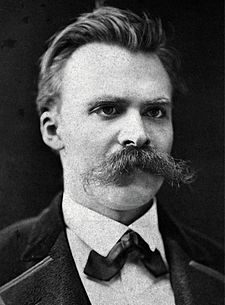
Übermensch of Nietzsche

Reference: Friedrich Nietzsche

Basically, Nietzsche was very dissatisfied with the current morality and the condition of man. He dreamed of evolution of man toward Übermensch, a state that transcended the current state of man. Nietzsche was looking for coherency and consistency in nature.

.

“While Nietzsche injects myriad ideas into the book, a few recurring themes stand out. The overman (Übermensch), a self-mastered individual who has achieved his full power, is an almost omnipresent idea in Thus Spoke Zarathustra. Man as a race is merely a bridge between animals and the overman. Nietzsche also makes a point that the overman is not an end result for a person, but more the journey toward self-mastery.” ~ Wikipedia

The word “self-mastery” is the key to understanding the above passage correctly. Übermensch was not created by adding, training or inculcating “desirable” characteristics in man. Übermensch was an evolution brought about by reducing man to his natural state.

To Nietzsche, Übermensch was a state in which man was congruent with his natural self.

.

“The eternal recurrence, found elsewhere in Nietzsche’s writing, is also mentioned. ‘Eternal recurrence’ is the possibility that all events in one’s life will happen again and again, infinitely. The embrace of all of life’s horrors and pleasures alike shows a deference and acceptance of fate, or Amor Fati. The love and acceptance of one’s path in life is a defining characteristic of the overman. Faced with the knowledge that he would repeat every action that he has taken, an overman would be elated as he has no regrets and loves life. Opting to change any decision or event in one’s life would indicate the presence of resentment or fear; contradistinctly the overman is characterized by courage and a Dionysian spirit.” ~ Wikipedia

We may understand the character of Übermensch by looking at self per A Model of Self.

A self is made up of a multi-dimensional matrix of “definitions and logics.” This matrix was distorted as social, cultural, and moral contexts were forced in place. Such distortions then reduced the potential of man and made him behave irrationally. This was the current state of man. By resolving such inconsistencies man could be propelled toward the state of Übermensch.

For Nietzsche, a resolution of the social, cultural, and moral contexts was necessary to evolve man toward Übermensch.

.