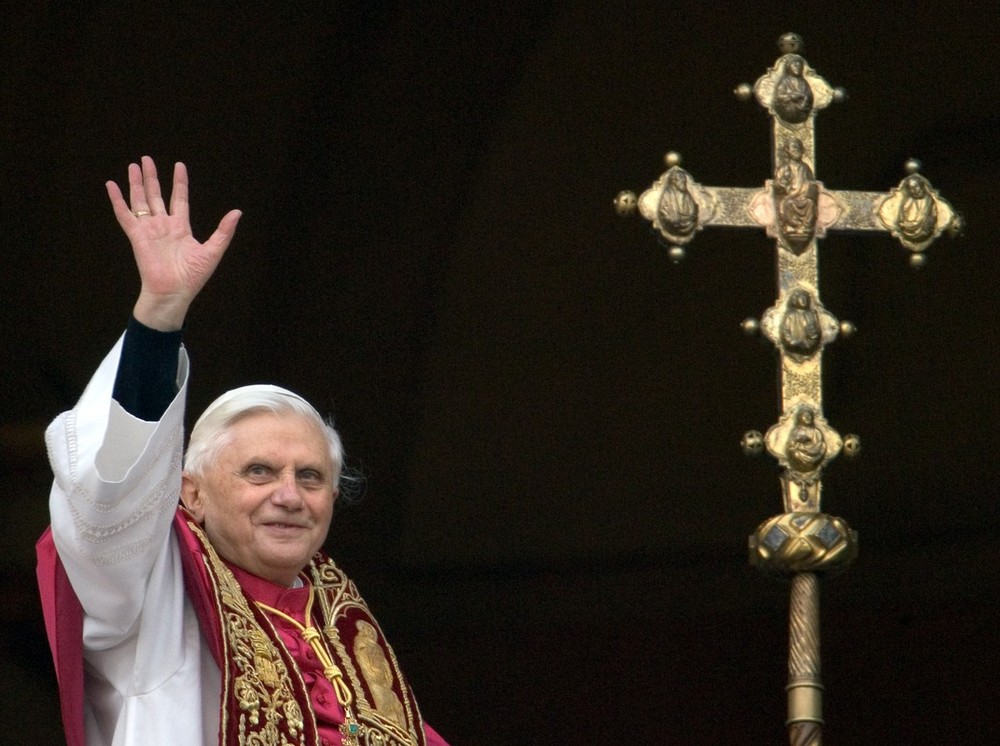
The Human-Centric Fixation

Human8
Reference:  Motion and Space-Time

The scientific method searches for truth in the Universe by coming up with a hypothesis from empirical observations, testing the hypothesis by making predictions, and then verifying the predictions. This works to the degree one is objective.

It is much easier to be objective when studying physical objects. This is not so when studying mental objects because the mental processes one uses to study are very similar. This difficulty may be overcome by the practice of mindfulness (seeing things as they are). Mindfulness requires the following criterion.

POSTULATE: Truth is determined by consistency of definitions and data in the broadest context possible.

.

The scientific observations are reality-centric because rigorous consistency with physical reality is maintained through the use of experiments and mathematical models. Any assumption that cannot be verified by actual experiment is discarded.  Any inconsistency associated with a hypothesis must be resolved before it is accepted as a theory.

When it comes to maintaining rigorous consistency with mental reality, thought experiments become very necessary. But such thought experiments must be conducted for consistency in the broadest context possible.

Reality-centric observations are accepted only after rigorous verification.

.

It is the human-centric observations that made us believe that (1) Earth is the center of the universe; (2) the Sun revolves around the earth; and (3) the Earth is flat. These conclusions were proven wrong when science established greater consistency in celestial observations through the use of experiments and mathematics.

The human-centric observations are limited to human context. Assumptions are made to compensate for that limitation. When such assumptions are elevated to the level of beliefs it becomes very difficult to correct them. Even when the human-centric observations were shown to be inconsistent with celestial observations, science had to fight long and hard to get its conclusions accepted.

Human-centric observations suffer from belief in unverified assumptions.

.

Many believe that this Universe was created. When one conducts thought experiments in a broader context, one finds that the Universe could have transitioned from non-awareness into awareness. The Universe did not have to be created. The belief that this Universe is created has never been verified objectively. In fact, the ancient Vedas do not believe that this Universe was created. This raises doubt about this religious belief in creation.

It is a human-centric belief that this universe was created.

.

Furthermore, the religious belief goes on to say that this Universe was created by an eternal Being who has awareness and intelligence more sophisticated than those of humans. Scientific studies show that human awareness is only a recent development that has evolved from earlier forms of awareness. Ancient Vedas speak only in terms of elemental awareness at the beginning of the universe. It is highly unlikely that a highly sophisticated Being existed at the beginning of the universe.

It is a human-centric belief that this Universe started from highly developed awareness.

.

It is a religious belief that spirit and matter are separate, and that awareness can exist all by itself. Thought experiments show that awareness arises only when there is relative motion. Relative motion is a material characteristic. We find that awareness and relative motion cannot be separated from each other.  Separation between spirit and matter cannot be verified objectively. In fact, ancient Vedas speak of Brahma and existence to be one.

It is a human-centric belief that “spirit and matter” are separate.

.

It is commonly thought that an observer must be separate from what is being observed; that an observer cannot observe itself. But we find that the reality-centric observation is essentially reality observing itself. The observer is part of the reality. The observer does not have to be identified with a self. When one observes in as broad a context as possible then it becomes possible to recognize reality for what it is. From this viewpoint the observer is not separate from what is observed.

It is a human-centric belief that observer must be separate from the observed.

.

It is commonly assumed that “observer” is a being with humanlike awareness. This being is unique, permanent and separate from reality. However, thought experiments show awareness is also relative motion that forms the basis of all reality. Further studies show that human awareness has evolved from earlier awareness. There is no unique, permanent being that is separate from reality. “Beingness” is changing all the time like the rest of reality.

It is a human-centric belief that observer is unique, permanent and not part of reality.

.

The observer is not some fixed point from which reality is being observed. Observer is part of reality as is that, which is being observed. It is reality observing itself. It is the fixation on self that makes one believe that one is unique and separate from reality.

The human-centric belief is characterized by fixation on self.

.

Next: A View on Enlightenment

.
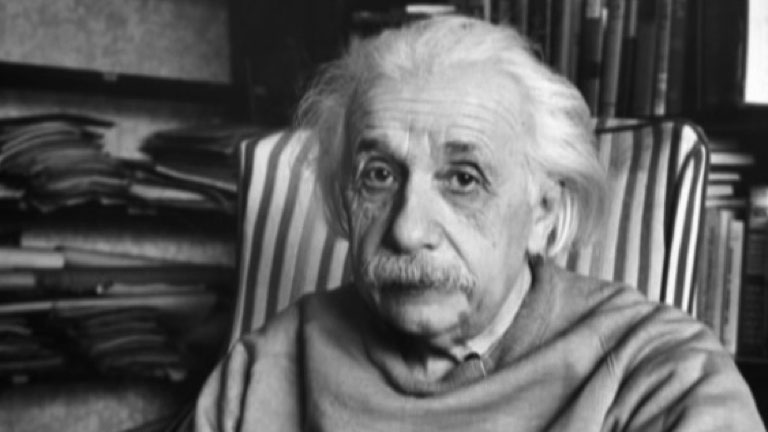
Einstein & New Thinking

Einstein

“A human being is part of the whole called by us Universe, a part limited in time and space.

“We experience ourselves, our thoughts and feelings, as something separate from the rest. A kind of optical delusion of consciousness…

“This delusion is a kind of prison for us, restricting us to our personal desires and to affection for a few persons nearest to us.

“Our task must be to free ourselves from this prison by widening our circle of compassion to embrace all living creatures and the whole of nature in its beauty…

“The true value of human beings is determined primarily by the measure and the sense in which they have obtained liberation from the self…

“We shall require a substantially new manner of thinking if humanity is to survive.”

(Albert Einstein, 1954)

.

Motion and Space-Time

Motion
Reference: Awareness and Motion

In its most fundamental form motion is perceived in physics as a varying field that has wavelike characteristics, such as, wavelength, period and frequency. We may postulate awareness as motion to vary with different wavelengths, periods and frequencies as is the case with light.

POSTULATE: Fundamentally awareness as motion has wavelike characteristics and appearance like that of light.

.

The wavelength provides a sense of extent. This extent is defined objectively by the dimension of space. Space is not empty at fundamental level. It is filled with awareness as motion.

Space is a measure of the extent of awareness as motion. Space is not empty.

.

The period provides a sense of duration. This duration is defined objectively by the dimension of time. Time is not arbitrary at the fundamental level. It is marked by awareness as motion.

Time is a measure of the duration of awareness as motion. Time is not arbitrary.

.

Space and time describe the motion present. The basic motion may be described as a harmonic of light (electromagnetic wave). If there is no motion there is no space and time.

Space-time describes the motion actually present. There is no space-time in absence of motion.

.

As frequency increases wavelength shortens and recurs at a higher rate. Space and time describing this motion appear as increasingly solid. Layers of this increasing condensation may be observed in an atom. The inner nucleus is much more condensed than the outer electron shell.

With increasing frequency, motion condenses and space-time appears more solid.

.

The science of wave mechanics explains how certain shells of atoms are formed and how the properties of elements are established per the Periodic Table. Different properties are the expression of different awareness of atoms.

The wave nature of motion establishes the property and awareness of different atoms.

.

The science of chemistry explains how electrons are shared among elements to form molecules and a variety of matter.  Here we are looking at more complex motion expressing increasingly sophisticated properties and awareness.

Molecules represent more complex motion expressing increasingly sophisticated awareness.

.

As molecules become larger, the electrons play additional role of forming circuits in outer shells that enable the macromolecules to store and pass information. Macromolecules then combine to form still larger combinations, such as, DNAs in cells that are capable of performing functions we identify with life.

Macromolecules provide still more sophisticated awareness that starts to approximate life.

.

Further combination of cells produces organisms. The evolution of organisms then peaks at humankind. It is the sophisticated motion at every stage in the structure of an organism that represents its awareness. The sophisticated awareness in humans has the capability of turning inward to observe itself.

This subjective awareness in humans cannot exist without the complex human structure.

.

Neither this human structure nor its sophisticated awareness existed at the beginning of the Universe. It is the human-centric bias, which projects such humanlike awareness to exist before the Universe.

It is human-centric bias that projects humanlike awareness to exist before the universe.

.

It was the human-centric viewpoint that maintained, “Earth is at the center of this universe, and the sun revolves around the earth.” The human-centric viewpoint seems to maintain, “Universe is created by a humanlike being called God.”

From a reality-centric viewpoint all reality is awareness. This has been so even before animated life and humans emerged in this universe. Everything in this universe is imbued with awareness.

Awareness is not limited to humans and animated life. Awareness forms the very fabric of this universe. 

.

Next: The Human-Centric Fixation

.

Awareness and Motion

earth-alone
Reference: Universe and Awareness

If you are alone out in interstellar space, you shall be hard put to decide if you are totally still or moving at the speed of light. Your awareness shall arise only with relative motion.

In this thought experiment, awareness cannot be separated from relative motion. We may, therefore, postulate that relative motion is the outward form of awareness.

POSTULATE: Relative motion is the outward form of awareness.

.

The relative motion can be very simple, such as, a ripple in water. This is simple awareness. Or, relative motion can be very complex, such as, the motion inside a watch. This is complex awareness. Thus, complexity of awareness is related to complexity of motion.

Awareness may be assessed objectively in terms of motion present.

.

When one is completely free of thoughts, there is still the perception of the present. So there is some motion. But when one is in deep sleep, in which hours pass by in a blink of an eye, there is no perception. There is no motion either. Thus, any perception, including the perception of space and time, relates to motion.

All perception, including the perception of space and time, relates to motion.

.

According to Buddha (India, c. 563 BCE or c. 480 BCE), the Absolute Truth is that there is nothing absolute in the world, that everything is relative, conditioned and impermanent, and that there is no unchanging, everlasting, absolute substance like Self, Soul, or Ātman within or without.

In other words, the principle of the unity of Universe is awareness in the form of relative motion. Absolute stillness would be non-awareness.

This is a universe of awareness and motion. There is no absolute stillness in it.

.

Awareness represents the spiritual aspect of this universe, whereas motion represents the material aspect of this universe. The material aspect is the visible form of this universe. The spiritual aspect is the inherent nature of this universe.

The material aspect of this universe is its visible form . The spiritual aspect of this universe is its inherent nature.

.

According to Heraclitus (Greece, c. 535 – c. 475 BCE) there is only perpetual change and eternal ‘Becoming.’ This condition is created from a dynamic and cyclic interplay of opposites. These opposites are dichotomies that may be represented as the two directions in which a continuum may extend. This continuum may be expressed as a scale with infinite gradient of values. This makes each value to be relative and none that is absolute.

All values in this universe are relative (determined by other values). There is no absolute value.

.

The Eleatic school first identified a Divine Principle with the unity of the universe. This basic principle may be stated as “awareness – motion”. Parmenides (Greece, c. 515 – c. 460 BCE), however, identified this principle with a unique and invariable Being that stood above all gods and men. This Being was later seen as an intelligent and personal God who stands above the world and directs it.

Anything that stands above the universe shall remain behind the “curtain” of non-awareness from which the Universe emerges into awareness. We may only speculate what is behind this “curtain” of non-awareness. The Being of Parmenides, therefore, has to be a human-centric speculation. This speculation leads to the separation of spirit and matter, which contradicts the principle of “awareness that has the outward form of motion.”

The idea that an absolute Being stands above this universe comes from a human-centric speculation.

.

Awareness develops into self and motion develops into body. The two are one and same. Body is the outward form of self. Self is the inherent nature of the body. If there is a universal Self, then its body is the Universe. Awareness and motion, or Self and body, are not really separate.

A universal Self shall have the Universe as its outward form. There is no absolute Being separate from the Universe.

.

The self of a stone shall be its inherent nature. We are not saying that the self of a stone is similar to the human self. Human self is characterized by the inherent nature of humans. We cannot use human self as the criterion to define the self of other things.

Awareness shall be the inherent nature of visible forms. It shall be determined by the motion within that form, the most fundamental motion shall be that at atomic level. We have been using a “human-centric” view of awareness as the criterion to declare material objects to be unaware. That is a very narrow view.

In humans, awareness is much more complex because of the complexity of motion in the human form. It is expressed as the subjectivity of the human mind. In material objects, awareness is much simpler because of much simpler motion in their form. It is expressed as the physical, electrical and chemical properties.

In Vedas, the word “dharma” is used to describe the inherent nature of things. This is same as the concept of awareness described here.

Awareness is truly represented by the inherent nature of things. Thus all things are aware in their own way.

.

Next: Motion and Space-Time

Universe and Awareness

Laniakea

Reference: The Creation Hymn of Rig Veda

Of all the dichotomies in this Universe, the most interesting dichotomy is “awareness – non-awareness.”

“Non-awareness” is like a curtain. We do not know what is behind that curtain. We only know what is in front of it. When something emerges from that curtain we become aware of it. Until then we may only speculate about what is behind that curtain.

POSTULATE: The Universe begins as it emerges from behind the “curtain” of non-awareness.

.

Like any dichotomy, “awareness – non-awareness” may represent a single continuum, and the two ends extend to infinity in either direction. The “curtain” described above is a transition point on this continuum, and not a point of creation.

We cannot tell whether the universe was ever created or if it has always been there.

.

The state of the Universe behind the “curtain” can only be speculated. If there is a Divine Principle that stands above the Universe, it would lie behind the “curtain,” and would only represent a speculation.

Any Divine Principle that stands above the Universe may be relegated to speculation.

.

Since the Universe begins when it transitions from non-awareness into awareness, the common denominator of the entire Universe may be established as AWARENESS. Awareness is, however, only half of the dichotomy. The Vedic process of “Neti, Neti” (not this, not that) essentially asserts that the basis of this universe lies beyond awareness.

The Universe is made up of AWARENESS, the basis of which lies in non-awareness.

.

The idea, “God created this world” arbitrarily divides the awareness of Universe into “God” and “world.” God cannot be excluded from the awareness of Universe.

The Universal awareness shall include awareness attributed to gods or God.

.

The universe begins with awareness. It has evolved entirely out of awareness. It may end by transitioning back into non-awareness. The universe has to be aware of itself because it is all that there is.

The Universe is aware of itself.

.

Next: Awareness and Motion