When the crowded command control room of India’s Mars mission exploded into applause after it successfully put a satellite into orbit around the Red Planet, photographer Manjunath Kiran of the AFP news agency clicked this remarkable image of scientists congratulating each other.
.

The purpose of these exercises is to spot inconsistencies using the following steps.
- Observe one’s attention and see where it is drawn naturally.
- Look non-judgmentally at that area of interest.
- Let the general purpose of that area sink in.
- Let things come to notice that are not consistent with that purpose.
- Continue until you spot exactly what is drawing your attention.
.
Exercise 1
Move around in your living space. Let your attention roam freely to discover if there is anything hidden or suppressed. Apply the five steps listed above as necessary. Do this until there is nothing hidden or suppressed.
Exercise 2
Go for a walk in the neighborhood. Let your attention roam freely to discover if there is anything hidden or suppressed. Apply the five steps listed above as necessary. Do this until there is nothing hidden or suppressed.
Exercise 3
Go for a walk in a park. Look at things as far as your eye can see. Let your attention roam freely to discover if there is anything hidden or suppressed. Apply the five steps listed above as necessary. Do this until there is nothing hidden or suppressed.
Exercise 4
Go to a coffee shop. Observe the surroundings. Let your attention roam freely to discover if there is anything hidden or suppressed. Apply the five steps listed above as necessary. Do this until there is nothing hidden or suppressed.
Exercise 5
Go to crowded places like a market, bus station, or airport. Quietly observe the people and surroundings. Let your attention roam freely to discover if there is anything hidden or suppressed. Apply the five steps listed above as necessary. Do this until there is nothing hidden or suppressed.
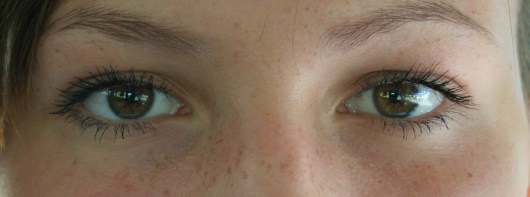
The secret of hypnotism lies in the compartmentalization of the reality of a person. Broadly, it works as follows:
-
Break down the reality of a person into compartments.
-
Fix the attention of the person at the compartment level.
-
Make irrational items appear rational within the confines of that compartment.
.
An example would be as follows.
- People generally go clothed in public. That is rational in most societies.
- People unclothe themselves in the security of their bedroom. That is also rational.
- “Being in public” or “being in bedroom” are two different compartments of reality.
- A person’s reality may be compartmentalized and focused on “being in bedroom.”
- This person, regardless of where he is, feels the security of his bedroom.
- He could then be made to unclothe himself in public easily.
This is an extreme example, and this particular hypnotism may rarely work, but this illustration makes the following point.
By restricting the context of thinking, a person can be made to believe that he is thinking and behaving in a rational manner, whereas it would be irrational in a broader context.
Thus, certain thinking and behavior that is irrational in society can be made to look rational to the person within the confines of a cult. He would never think that he is acting irrationally.
Of course, there are other aspects to hypnotism. It is not only one’s thinking, but also the autonomic nervous system that can be controlled through hypnotism. Unfortunately, this latter aspect gets noticed mostly because it is dramatic.
.
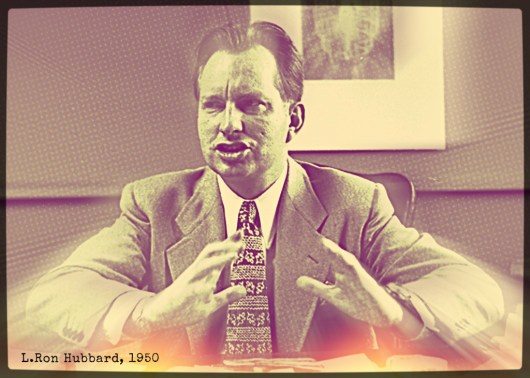
When a person is moving through his life as if hypnotized, the entrance point to resolving his case is attention. Maybe his attention was free when he was a child, but now he adheres to irrational beliefs and strange rituals to get by in life. This is because he has a lot of unresolved inconsistencies stacked on top of each other.
He does not recognize the inconsistency that is so obvious to you because he has probably explained it to himself as life. Such earlier inconsistencies are somehow taken for granted by him because his attention is now on inconsistencies stacked on top of them.
The inconsistency available to be resolved in any case is the one where the person’s attention now rests.
.
An inconsistency becomes obvious to you only after you have resolved it for yourself. There may be other inconsistencies in you that you are not yet aware of. As you see in others those inconsistencies that you have resolved for yourself, you want others to resolve them too. But you do not know how inconsistencies are stacked up in the other person. He may need to resolve some other inconsistency first.
But if you feel compelled that the other person should be resolving some inconsistency that is so very obvious to you, then there is something wrong with your effort. You are trying to bypass the order in which inconsistencies are stacked up in his case. This compulsion points to some inconsistency in you that you are not aware of.
If a person feels compelled to rid another person of some aberration, with no regard to whether it is accessible, then it is an inconsistency.
.
The Guru complex refers to this compulsion to help a person. One tries to resolve the case of the other person in the same sequence that one resolved it for oneself. It ignores the fact that some other sequence may be more helpful to the other person.
You cannot assume that the other person needs to resolve the inconsistency that is obvious to you. All you can do is carefully observe his attention and assist him in resolving the inconsistency that he is struggling with. This may even help you resolve some inconsistency that you are not aware of. This is how Application of Mindful Discussion works.
This Guru Complex (compulsion to help randomly) may be resolved through Mindful Discussion.
.