Subject: Unwanted Condition

Reference: Course on Subject Clearing

Unwanted condition is probably the most intimate subject to clear. An unwanted condition is something that persists and does not go away. It may be described in terms of life events on which the person’s attention dwells often. These life events are often those that are somehow connected to some trauma. It takes a review of related life events to process them completely.

A life events happens in one’s environment. The environment is continually sensed through sense organs. The sensations are continually transmitting to the mind. The mind breaks the sensations down into fine elements. These elements are then assimilated in a mental matrix. Until these sensations are assimilated, there are no perceptions of the environment. Perceptions arise through the process of assimilation.

When a person receives a trauma, the sensations generated are very chaotic as they consist of shock and confusion. Such traumatic sensations are difficult to break down into fine elements in real time. Therefore, they are not assimilated in the mental matrix, and thus, never converted into perceptions. Therefore, unconsciousness occurs during a trauma. The traumatic sensations are placed in a holding area for later processing.

Later, when the mind is considering the situation, the memory reconstructs perceptions from the mental matrix. But the perception of actual trauma is not available. The traumatic sensations are still waiting to be broken down into fine elements and assimilated. Such sensations appear only as pain and discomfort.

Pain and discomfort from unwanted conditions, therefore, are indications of unprocessed traumatic sensations. The processing requires a closer examination of related life events. A life event may be identified as described in the glossary below. 

NOTE #1: In subject clearing, the subject of Unwanted Condition follows the subject of Self, because it is only after some understanding of self can you really start clearing up your unwanted conditions for good.

NOTE #2: The content of this document are just to get you started. You should continue the subject clearing on your own exploring other theories and methods until you achieve the clarity that you are looking for.

.

Key Words

Unwanted Condition, Environment, Sense Organ, Sensation, Mental Matrix, Perception, Memory, Trauma, Traumatic sensation, Life event, Anomaly, … (Life events as “key words”) …

.

Reading Materials

  1. Mind: The Matrix Model
  2. The Mind as a Matrix
  3. The Basics of Meditation

.

Glossary

Unwanted Condition
These are conditions, such as, anxiety, depression, loneliness, and illnesses that seem to persist. They start to resolve as traumatic sensations are finally assimilated.

Environment
The environment is “the aggregate of the conditions in which a person or thing lives”; the natural world.

Sense organ
A specialized bodily structure that senses the environment and conveys those sensations to the mind.

Sensation
Sensations are generated continuously as the sense organs interact with the environment. The sensations are transmitted to the mind where they are broken down into fine elements. Until then the sensations exist in a literal “picture” form.

Mental matrix
The mental matrix is a knowledge repository where the sensations from the sense organs are assimilated after being broken down into fine elements.  

Perception
Perceptions arise only after the sensations from sense organs get assimilated into the mental matrix, and not before.

Memory
Memory is a reconstruction of original perceptions from the assimilated matrix elements. Memory is reconstructed automatically when needed for consideration. 

Trauma
A life event may contain a trauma. The basic sense of trauma is “wound.” The general meaning of trauma is “a body wound or shock produced by sudden physical injury, as from violence or accident.”

Traumatic Sensation 
These are sensations of shock and confusion that are too intense to be assimilated in real time. Therefore, they do not get converted into perceptions and the organism appears to be unconscious for the duration of such sensations. The sensations remain in a holding area in the form of a “literal recording” waiting to be processed.

Pain and Discomfort
Traumatic sensations appear as pain and discomfort until they are assimilated and converted into perceptions.

Life Event
A life event is some event that occurred on which a person’s attention dwells often. There is some anomaly associated with that event that needs to be resolved. A life event may be identified by age, location and season. It may be described by the dominating thought, emotion, effort and the anomaly associated with it. For example,

  1. Age: 3 years and 6 months (03-06), 
  2. Location: New Orleans, 
  3. Season: summer 
  4. Thought: birds 
  5. Emotion: happiness
  6. Effort: running
  7. Anomaly: Attention is fixed on a scene

Anomaly
An anomaly is something that is perplexing and leads to some doubt. The anomaly fundamentally consists of

  1. A disharmony,
  2. An inconsistency,
  3. A discontinuity.

.

Processing the Unwanted Condition

An unwanted condition may be processed as follows:

  1. Treat the “unwanted condition” as a subject.
  2. Treat the life events related to that unwanted condition as “key words.”
  3. Arrange all related life events in the time sequence that they occurred in your life.
  4. Scan over the anomalies connected with these life events.
  5. Start meditating over the anomalies in the order attention goes to them. See Subject Clearing Step 4.
  6. During the meditation, If more life events come to mind, then add them to the list. 
  7. Continue the meditation until the pain starts to break down into fine elements.
  8. Let the assimilation takes place at which point the details of the trauma shall start to appear.

The unwanted condition resolves as the related traumatic sensations get assimilated in the mental matrix. 

.
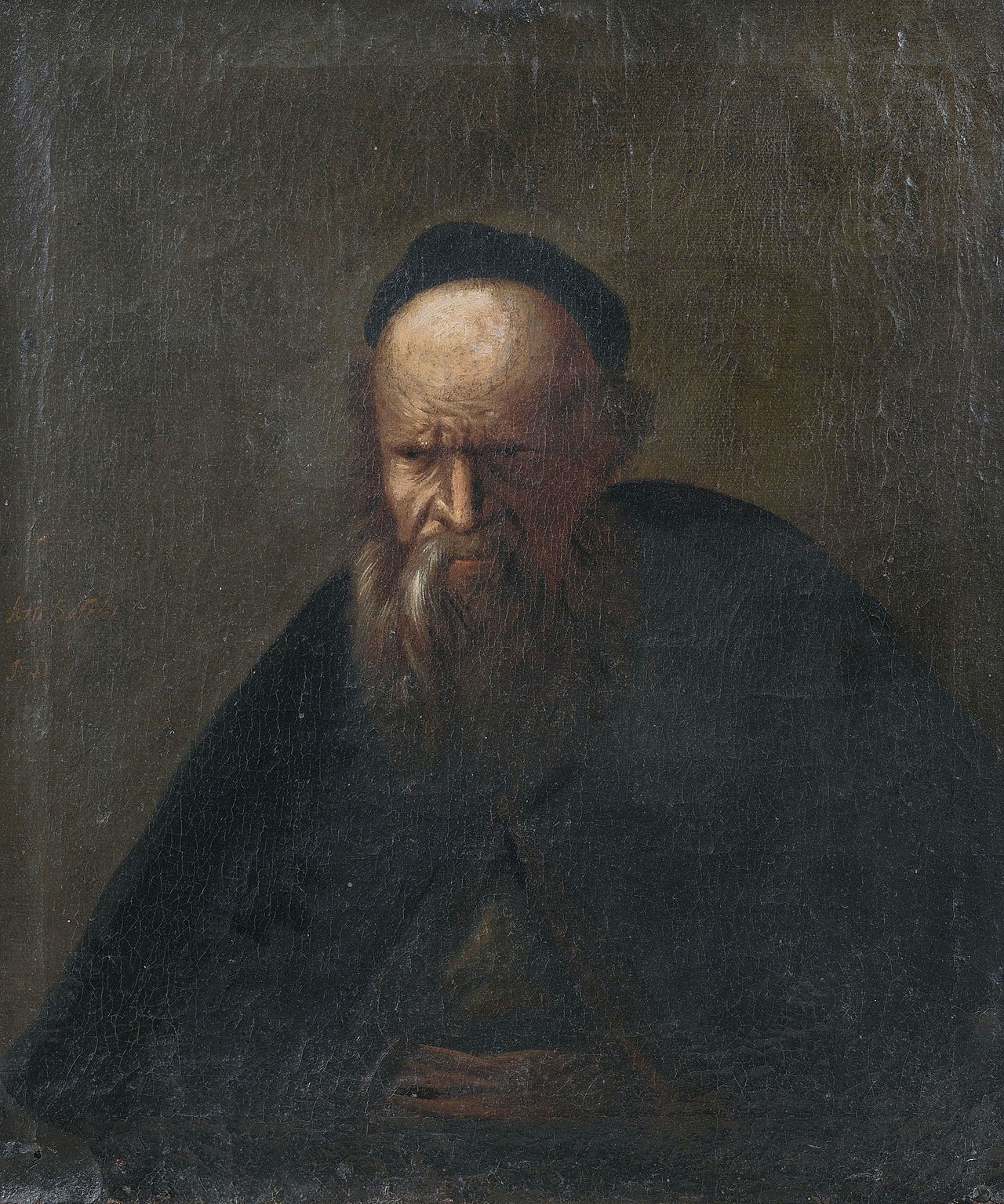
ARISTOTLE: Later Life and Death

Reference: The Story of Philosophy 

This paper presents Chapter II, Section 10 from the book THE STORY OF PHILOSOPHY by WILL DURANT. The contents are from the 1933 reprint of this book by TIME INCORPORATED by arrangement with Simon and Schuster, Inc.

The paragraphs of the original material (in black) are accompanied by brief comments (in color) based on the present understanding.  Feedback on these comments is appreciated.

The heading below is linked to the original materials.

.

X. Later Life and Death

Meanwhile life had become unmanageably complicated for our philosopher. He found himself on the one hand embroiled with Alexander for protesting against the execution of Callisthenes (a nephew of Aristotle), who had refused to worship Alexander as a god; and Alexander had answered the protest by hinting that it was quite within his omnipotence to put even philosophers to death. At the same time Aristotle was busy defending Alexander among the Athenians. He preferred Greek solidarity to city patriotism, and thought culture and science would flourish better when petty sovereignties and disputes were ended; and he saw in Alexander what Goethe was to see in Napoleon—the philosophic unity of a chaotic and intolerably manifold world. The Athenians, hungering for liberty, growled at Aristotle, and became bitter when Alexander had a statue of the philosopher put up in the heart of the hostile city. In this turmoil we get an impression of Aristotle quite contrary to that left upon us by his Ethics: here is a man not cold and inhumanly calm, but a fighter, pursuing his Titanic work in a circle of enemies on every side. The successors of Plato at the Academy, the oratorical school of Isocrates, and the angry crowds that hung on Demosthenes’ acid eloquence, intrigued and clamored for his exile or his death. 

Aristotle was besieged with conflicts and a lot of controversy.

And then, suddenly (323 B. C.), Alexander died. Athens went wild with patriotic joy; the Macedonian party was over-thrown, and Athenian independence was proclaimed. Antipater, successor of Alexander and intimate friend of Aristotle, marched upon the rebellious city. Most of the Macedonian party fled. Eurymedon, a chief priest, brought in an indictment against Aristotle, charging him with having taught that prayer and sacrifice were of no avail. Aristotle saw himself fated to be tried by juries and crowds incomparably more hostile than those that had murdered Socrates. Very wisely, he left the city, saying that he would not give Athens a chance to sin a second time against philosophy. There was no cowardIce in this; an accused person at Athens had always the option of preferring exile. Arrived at Chalcis, Aristotle fell ill; Diogenes Laertius tells us that the old philosopher, in utter disappointment with the turn of all things against him, committed suicide by drinking hemlock. However induced, his illness proved fatal; and a few months after leaving Athens (322 B. C.) the lonely Aristotle died.

Aristotle committed suicide by drinking hemlock in utter disappointment with the turn of all things against him.

In the same year, and at the same age, sixty-two, Demosthenes, greatest of Alexander’s enemies, drank poison. Within twelve months Greece had lost her greatest ruler, her greatest orator, and her greatest philosopher. The glory that had been Greece faded now in the dawn of the Roman sun; and the grandeur that was Rome was the pomp of power rather than the light of thought. Then that grandeur too decayed, that little light went almost out. For a thousand years darkness brooded over the face of Europe. All the world awaited the resurrection of philosophy. 

After Aristotle, the light of philosophy almost went out for a thousand years.

.

Subject: SELF

Reference: Course on Subject Clearing

SELF is the most basic subject that raises the question, “Who am I?”

We are definitely different from each other in terms of identity. The soul we hear of so much is part of the identity because it is different from person to person. That is why, in some religions we cannot be one with God because those religions look upon God as an identity.

We may be more similar in terms of aliveness (the Spirit). In fact, some religions consider the Spirit to be a universal reality that manifests as all the different identities.

We can be very similar in our viewpoint on reality, especially in the absence of illusion. That seems to be the concept underlying the Atman of Vedas. The Atman is said to be present in all life cycles, attempting to be free itself of illusions, and ultimately becoming one with “paramatman” (God). Thus, Atman is the dynamic form of Spirit that is forever evolving from one life cycle to the next. It is at the core of identity.

In the chart (see below) by David R. Hawkins and Kasey Claytor, the View of Life column may describe the viewpoint (beingness). The Energetic Frequency column may represent the spirit (liveliness). The soul will, then, function as the carrier of the spirit (liveliness). The soul, as the identity, will change from one life cycle to the next, while atman, as the dynamic spirit, shall progress toward the state of paramatman through these life cycles.

Below is a list of key words, reading materials and a glossary. You are free to add key words, reading materials, and definitions from other reference materials as you see fit. The idea is to consolidate your understanding of the fundamental concepts involved in the subject of SELF. The introduction above presents SELF as atman (or spirit) plus identity, but that is just a starting point. Your understanding may take you where it may.

NOTE: The content of this document are just to get you started. You should continue the subject clearing of SELF on your own until you achieve the clarity through your own meditation.

.

KEY WORDS

Soul, Atman, Viewpoint, Static viewpoint, Evolution, Life cycle, Death, Body-mind system, Body, Mind, Spirit, Self, Ego, Consciousness, Élan vital, Theta, Thetan, …

.

READING MATERIALS

  1. Interiorization & Exteriorization
  2. The Cleared Individual
  3. The Doctrine of No-Soul: Anatta
  4. Bhagavad Gita, Chapter 2

.

GLOSSARY

Soul
A person’s “soul” is believed to be that aspect of his self that is non-physical, separate from the body, and survives death. It is associated with the sense of “I” or “me”. The soul, in Christianity, cannot be one with God because of its association with personal identity. The belief that the soul survives death seems to come from the experience of the person, that he is separate from the body, as in a lucid dream, under the influence of drugs, or in a near death experience. No identity of the person survives death. In reality, what survives death, is the improvement a person’s life brought to the condition of other lives and the environment. It is the evolution his life cycle brought to the universe.

Atman
Buddha does not deny Atman in the sense of “general awareness” that is evolving life after life. Buddha does deny the interpretation of Atman as “personal awareness,” which is always associated with an identity. When we look at the meaning given to Atman in Bhagavad Gita (Hinduism), it is in the sense of “universal awareness.” Neither Hinduism, nor Buddhism, defines Atman the way Christianity defines “soul.” The Brahmins in the times of Buddha were interpreting Atman in the sense of “individual soul” and Buddha’s purpose was to correct that misinterpretation. Thus, Buddha is not contradicting Bhagavad Gita. Atman is not what the person thinks he is. Atman is the metaphysical essence of the person that goes beyond thought even.

Atman and Soul
The understanding of ATMAN is as basic and important as the understanding of QUANTUM. A quantum is not a particle; similarly, atman is not the soul. A particle has a center of mass; similarly, a soul is centered on ‘I’ – the awareness of an identity. A quantum has no mass, instead it has consistency; similarly, atman has no identity but it has awareness. An electron is a quantum and not a particle; it has no mass. It is mistakenly thought of as having mass. Similarly, your essence is The Static Viewpoint of atman and not the ‘I’ of soul. You are mistakenly thought of as being an identity. The identity is the characteristic of the body-mind system just like mass is the characteristic of matter. Atman is beyond the body-mind system just like quantum is beyond matter.

Viewpoint
A viewpoint is a window into the person’s beingness. It is different from the identity of a person. We use the word “viewpoint” to refer to the evolutionary status of that beingness. In Hinduism this viewpoint has the characteristics of TAMAS (ignorance), RAJAS (passion) or SATTVA (purity). In today’s vocabulary we may plot the viewpoint on a scale from mystery to knowingness (see Meditation from Mystery to Knowing). Life after life a person is trying to progress up this scale towards full knowingness, which he views as Paramatman or God. A personal viewpoint progresses toward the Static viewpoint as it lets go of its fixations. 

Static Viewpoint
The Static viewpoint refers to the ultimate beingness recognized as Paramatman or God (see The Static Viewpoint). It is the eternal beingness from which everything in this universe is viewed fully. The Static viewpoint sees things as they are without fixations. It penetrates everything. Therefore, the eternal essence of a person, and also of the universe, is the Static viewpoint and not some idea of soul. The Static Viewpoint is attained when all fixations are removed from a person, society, mankind, and the universe. Subject Clearing helps one attain the Static Viewpoint.

Evolution
At this stage, the universe is evolving most rapidly through human life cycles. As the condition of life improves so does the evolution of the universe. The conditions of life may be represented on a “scale” from mystery to knowingness. A person is somewhere on this scale in terms of his beingness, or viewpoint. Life cycles after life cycles one is trying to progress up this scale towards the knowingness of Static Viewpoint, Paramatman or God.

Life Cycle
A life cycle, broadly, starts at birth and it ends with death. The whole purpose of life cycles is to bring about evolution to the universe. The contribution of each life cycle to the evolution may not be visible; but it starts to become appreciable over hundreds and thousands of life cycles. Man is the peak expression of the evolution of the universe that supposedly started about 14 billion years ago. Human life cycles have accelerated that evolution by leaps and bounds.

Death
Upon death, the body-mind system gets unplugged and the spirit stops flowing through it. The body-mind system loses its aliveness, and the sense of self also disappears. The body-mind system, ultimately, disintegrates into molecules and genes that carry forward the mental programming from the life just lived. Such molecules and genes are then reused to assemble new and updated body-mind systems that are plugged back in to the life force, or spirit, to start a new life cycle. 

Body-Mind System
A person is represented by his body-mind system. It is a single system because body and mind are intimately connected. The body influences the mind, and the mind influences the body. The body-mind system provides the sense of individual identity. The body-mind system extends way beyond the body.

Body
Body means a physical organism. It refers to the material organism of an individual, human or animal, either living or dead.

Mind
Mind is that part of a human being that thinks, feels, and wills, as contrasted with body: His mind was capable of grasping the significance of the problem.

Spirit
The original meaning of the word “spirit” is “breath” signifying the aliveness of a person. The spirit may be thought of as energizing the body-mind system, the same way as electricity energizes a machinery. In this sense, spirit is not the identity of the person, but a “life force.” 

Self
Self operates as the “center of awareness” of the body-mind system. It refers to itself as ‘I’. The self is a person’s essential beingness that distinguishes him from others. Self is the complete individuality of the person that forms the basis of all his identities.

Ego
Ego is defined as the self, especially with a sense of self-importance. Thus, ego implies that the attention of a person is fixed on “self.” When one has no attention, either on oneself or on the self of others, then there is an extroverted self and no ego.

Theta (Scientology)
The concept of “theta” In Scientology is similar to the concept of “spirit.”

Thetan (Scientology)
The concept of “thetan” In Scientology is similar to the concept of “soul.”

.

DIANETICS: Contagion of Aberration

Reference: Hubbard 1950: Dianetics TMSMH

These are some comments on Book Two, Chapter 8, “Contagion of Aberration” from  DIANETICS: THE MODERN SCIENCE OF MENTAL HEALTH.

.

Comments on
Contagion of Aberration

KEY WORDS: Aberration

Aberrations are contagious. They are passed along through dramatizations of engrams just like disease are carried by germs. The common source of contagion is somebody dramatizing his engram around an “unconscious” person; for example, on operating table under anaesthetic, after an accident, or when sick or injured. The father and mother, in dramatizing their own engrams around sick or injured children, pass them along just as certainly as if those engrams were bacteria. This is how misconceptions and poor data also gets manifested in a society’s culture.

Aberration passes from people to other people in a society like a communicable disease does.

Aberration is also passed through the programming recorded on the genes. Birth itself may contribute to contagion as it can be a very painful experience for both mother and child that causes unconsciousness. Mother and child can then become mutually restimulative to each other. If the husband has been aberrated, he will have aberrated or restimulated his wife and children in one way or another, even when he used no physical violence upon them.

Aberration passes from parents to children in a family.

In the larger sphere of society contagion of aberration is extremely dangerous and cannot but be considered as a vital factor in undermining the health of that society. A society which practices punishment of any kind against any of its members is carrying on a contagion of aberration. Contagion of aberration is never more apparent than in that social insanity called war.

Engrams enter from the exterior world into the hidden recesses below rational thinking and prevent rational answers being reached. This is exterior-determinism. Any interference with self-determinism cannot but lead to wrong computations. Forced groups are invariably less efficient than free groups working for the common good. 

In a society, the passing of aberration has much more severe consequences than the passing of misinformation alone.

.

ARISTOTLE: Criticism

Reference: The Story of Philosophy

This paper presents Chapter II, Section 9 from the book THE STORY OF PHILOSOPHY by WILL DURANT. The contents are from the 1933 reprint of this book by TIME INCORPORATED by arrangement with Simon and Schuster, Inc.

The paragraphs of the original material (in black) are accompanied by brief comments (in color) based on the present understanding.  Feedback on these comments is appreciated.

The heading below is linked to the original materials.

.

IX. Criticism

What shall we say of this philosophy? Perhaps nothing rapturous. It is difficult to be enthusiastic about Aristotle, because it was difficult for him to be enthusiastic about anything; and si vis me flere, primum tibi flendum.* His motto is nil admirari—to admire or marvel at nothing; and we hesitate to violate his motto in his case. We miss in him the reforming zeal of Plato, the angry love of humanity which made the great idealist denounce his fellow-men. We miss the daring originality of his teacher, the lofty imagination, the capacity for generous delusion. And yet, after reading Plato, nothing could be so salutary for us as Aristotle’s sceptic calm. 

*[“If you wish me to weep you must weep first”-Horace (Ars Poetica) to actors and writers.]

Aristotle approached his investigations very calmly.

Let us summarize our disagreement. We are bothered, at the outset, with his insistence on logic. He thinks the syllogism a description of man’s way of reasoning, whereas it merely describes man’s way of dressing up his reasoning for the persuasion of another mind; he supposes that thought begins with premisses and seeks their conclusions, when actually thought begins with hypothetical conclusions and seeks their justifying premisses,—and seeks them best by the observation of particular events under the controlled and isolated conditions of experiment. Yet how foolish we should be to forget that two thousand years have changed merely the incidentals of Aristotle’s logic, that Occam and Bacon and Whewell and Mill and a hundred others have but found spots in his sun, and that Aristotle’s creation of this new discipline of thought, and his firm establishment of its essential lines, remain among the lasting achievements of the human mind. 

Aristotle was a pioneer in organizing the subject of logic.

It is again the absence of experiment and fruitful hypothesis that leaves Aristotle’s natural science a mass of undigested observations. His specialty is the collection and classification of data; in every field he wields his categories and produces catalogues. But side by side with this bent and talent for observation goes a Platonic addiction to metaphysics; this trips him up in every science, and inveigles him into the wildest presuppositions. Here indeed was the great defect of the Greek mind: it was not disciplined; it lacked limiting and steadying traditions; it moved freely in an uncharted field, and ran too readily to theories and conclusions. So Greek philosophy leaped on to heights unreached again, while Greek science limped behind. Our modern danger is precisely opposite; inductive data fall upon us from all sides like the lava of Vesuvius; we suffocate with uncoordinated facts; our minds are overwhelmed with sciences breeding and multiplying into specialistic chaos for want of synthetic thought and a unifying philosophy. We are all mere fragments of what a man might be. 

Aristotle lacked experimentation in the field of science, instead he depended on making wild suppositions.

Aristotle’s ethics is a branch of his logic: the ideal life is like a proper syllogism. He gives us a handbook of propriety rather than a stimulus to improvement. An ancient critic spoke of him as “moderate to excess.” An extremist might call the Ethics the champion collection of platitudes in all literature; and an Anglophobe would be consoled with the thought that Englishmen in their youth had done advance penance for the imperialistic sins of their adult years, since both at Cambridge and at Oxford they had been compelled to read every word of the Nicomachean Ethics. We long to mingle fresh green Leaves of Grass with these drier pages, to add Whitman’s exhilarating justification of sense joy to Aristotle’s exaltation of a purely intellectual happiness. We wonder if this Aristotelian ideal of immoderate moderation has had anything to do With the colorless virtue, the starched perfection, the expressionless good form, of the British aristocracy. Matthew Arnold tells us that in his time Oxford tutors looked upon the Ethics as infallible. For three hundred years this book and the Politics have formed the ruling British mind, perhaps to great and noble achievements, but certainly to a hard and cold efficiency. What would the result have been if the masters of the greatest of empires had been nurtured, instead, on the holy fervor and the constructive passion of the Republic?

Aristotle’s Ethics is passionless and full of platitudes.

After all, Aristotle was not quite Greek; he had been settled and formed before coming to Athens; there was nothing Athenian about him, nothing of the hasty and inspiriting experimentalism which made Athens throb with political elan and at last helped to subject her to a unifying despot. He realized too completely the Delphic command to avoid excess: he is so anxious to pare away extremes that at last nothing is left. He is so fearful of disorder that he forgets to be fearful of slavery; he is so timid of uncertain change that he prefers a certain changelessness that near resembles death. He lacks that Heraclitean sense of flux which justifies the conservative in believing that all permanent change is gradual, and justifies the radical in believing that no changelessness is permanent. He forgets that Plato’s communism was meant only for the elite, the unselfish and ungreedy few; and he comes deviously to a Platonic result when he says that though property should be private, its use should be as far as possible common. He does not see (and perhaps he could not be expected in his early day to see) that individual control of the means of production was stimulating and salutary only when these means were so simple as to be purchasable by any man; and that their increasing complexity and cost lead to a dangerous centralization of ownership and power, and to an artificial and finally disruptive inequality. 

Aristotle is looking for order in everything so much so that he loses any sense of adventure.

But after all, these are quite inessential criticisms of what remains the most marvelous and influential system of thought ever put together by any single mind. It may be doubted if any other thinker has contributed so much to the enlightenment of the world. Every later age has drawn upon Aristotle, and stood upon his shoulders to see the truth. The varied and magnificent culture of Alexandria found its scientific inspiration in him. His Organon played a central role in shaping the minds of the medieval barbarians into disciplined and consistent thought. The other works, translated by Nestorian Christians into Syriac in the fifth century A. D., and thence into Arabic and Hebrew in the tenth century, and thence into Latin towards 1225, turned scholasticism from its eloquent beginnings in Abelard to encyclopedic completion in Thomas Aquinas. The Crusaders brought back more accurate Greek copies of the philosopher’s texts; and the Greek scholars of Constantinople brought further Aristotelian treasures with them when, after 1453, they fled from the besieging Turks. The works of Aristotle came to be for European philosophy what the Bible was for theology—an almost infallible text, with solutions for every problem. In 1215 the Papal legate at Paris forbade teachers to lecture on his works; in 1231 Gregory IX appointed a commission to expurgate him; by 1260 he was de rigueur in every Christian school, and ecclesiastical assemblies penalized deviations from his views. Chaucer describes his student as happy by having 

At his beddes hed
Twenty bookes clothed in blake or red,
Of Aristotle and hill philosophie;

and in the first circles of Hell, says Dante, 

I saw the Master there of those who know,
Amid the philosophic family,
By all admired, and by all reverenced; 
There Plato too I saw, and Socrates, 
Who stood beside him closer than the rest.
 

Such lines give us some inkling of the honor which a thousand years offered to the Stagirite. Not till new instruments, accumulated observations, and patient experiments remade science and gave irresistible weapons to Occam and Ramus, to Roger and Francis Bacon, was the reign of Aristotle ended. No other mind had for so long a time ruled the intellect of mankind. 

But Aristotle’s mind remains unmatched in its contribution to the enlightenment of the world.

.