Reference: Course on The Bhagavad Gita
English Translation By Shri Purohit Swami
.
Chapter 18
अर्जुनउवाच
संन्यासस्यमहाबाहोतत्त्वमिच्छामिवेदितुम्।
त्यागस्यचहृषीकेशपृथक्केशिनिषूदन।।18.1।।
18.1 Arjuna asked: O mighty One! I desire to know how relinquishment is distinguished from renunciation.
श्रीभगवानुवाच
काम्यानांकर्मणांन्यासंसंन्यासंकवयोविदुः।
सर्वकर्मफलत्यागंप्राहुस्त्यागंविचक्षणाः।।18.2।।
18.2 Lord Shri Krishna replied: The sages say that renunciation means forgoing an action which springs from desire; and relinquishing means the surrender of its fruit.
त्याज्यंदोषवदित्येकेकर्मप्राहुर्मनीषिणः।
यज्ञदानतपःकर्मनत्याज्यमितिचापरे।।18.3।।
18.3 Some philosophers say that all action is evil and should be abandoned. Others that acts of sacrifice, benevolence and austerity should not be given up.
A fine distinction is being made here between forgoing an action which springs from desire, and surrendering the fruits of action. Shall we abandon all action, or surrender simply the fruits of all action?
निश्चयंश्रृणुमेतत्रत्यागेभरतसत्तम।
त्यागोहिपुरुषव्याघ्रत्रिविधःसंप्रकीर्तितः।।18.4।।
18.4 O best of Indians! Listen to my judgment as regards this problem. It has a threefold aspect.
यज्ञदानतपःकर्मनत्याज्यंकार्यमेवतत्।
यज्ञोदानंतपश्चैवपावनानिमनीषिणाम्।।18.5।।
18.5 Acts of sacrifice, benevolence and austerity should not be given up but should be performed, for they purify the aspiring soul.
एतान्यपितुकर्माणिसङ्गंत्यक्त्वाफलानिच।
कर्तव्यानीतिमेपार्थनिश्िचतंमतमुत्तमम्।।18.6।।
18.6 But they should be done with detachment and without thought of recompense. This is my final judgment.
Actions, such as, sacrifice, benevolence and austerity, are necessary to purify oneself, since the attainment of static viewpoint is the goal. But such actions should be done with detachment and without thought of recompense.
नियतस्यतुसंन्यासःकर्मणोनोपपद्यते।
मोहात्तस्यपरित्यागस्तामसःपरिकीर्तितः।।18.7।।
18.7 It is not right to give up actions which are obligatory; and if they are misunderstood, it is the result of sheer ignorance.
दुःखमित्येवयत्कर्मकायक्लेशभयात्त्यजेत्।
सकृत्वाराजसंत्यागंनैवत्यागफलंलभेत्।।18.8।।
18.8 To avoid an action through fear of physical suffering, because it is likely to be painful, is to act from passion, and the benefit of renunciation will not follow.
कार्यमित्येवयत्कर्मनियतंक्रियतेऽर्जुन।
सङ्गंत्यक्त्वाफलंचैवसत्यागःसात्त्विकोमतः।।18.9।।
18.9 He who performs an obligatory action, because he believes it to be a duty which ought to be done, without any personal desire to do the act or to receive any return – such renunciation is Pure.
Obligatory actions should not be avoided. They must be performed even when they involve physical suffering. One must perform one’s duty without any personal desire to do the act or to receive any return.
नद्वेष्ट्यकुशलंकर्मकुशलेनानुषज्जते।
त्यागीसत्त्वसमाविष्टोमेधावीछिन्नसंशयः।।18.10।।
18.10 The wise man who has attained purity, whose doubts are solved, who is filled with the spirit of self-abnegation, does not shrink from action because it brings pain, nor does he desire it because it brings pleasure.
नहिदेहभृताशक्यंत्यक्तुंकर्माण्यशेषतः।
यस्तुकर्मफलत्यागीसत्यागीत्यभिधीयते।।18.11।।
18.11 But since those still in the body cannot entirely avoid action, in their case abandonment of the fruit of action is considered as complete renunciation.
अनिष्टमिष्टंमिश्रंचत्रिविधंकर्मणःफलम्।
भवत्यत्यागिनांप्रेत्यनतुसंन्यासिनांक्वचित्।।18.12।।
18.12 For those who cannot renounce all desire, the fruit of action hereafter is threefold – good, evil, and partly good and partly evil. But for him who has renounced, there is none.
A person becomes wiser as he resolves his doubts. The biggest doubt exists on the subject of self. A wise person understands that self is temporary and it can be sacrificed. Such a person understands what action is. He neither shrinks from it because of pain, nor desires it because of gain. When there is action he has no attachment to the outcome of it. He can see that other people regard the fruit of action as good, evil or in-between, but he is indifferent to it.
पञ्चैतानिमहाबाहोकारणानिनिबोधमे।
सांख्येकृतान्तेप्रोक्तानिसिद्धयेसर्वकर्मणाम्।।18.13।।
18.13 I will tell thee now, O Mighty Man, the five causes which, according to the final decision of philosophy, must concur before an action can be accomplished.
अधिष्ठानंतथाकर्ताकरणंचपृथग्विधम्।
विविधाश्चपृथक्चेष्टादैवंचैवात्रपञ्चमम्।।18.14।।
18.14 They are a body, a personality, physical organs, their manifold activity and destiny.
शरीरवाङ्मनोभिर्यत्कर्मप्रारभतेनरः।
न्याय्यंवाविपरीतंवापञ्चैतेतस्यहेतवः।।18.15।।
18.15 Whatever action a man performs, whether by muscular effort or by speech or by thought, and whether it be right or wrong, these five are the essential causes.
These are the five essential causes which must concur before any action can be accomplished: a body, a personality, physical organs, their manifold activity and destiny.
तत्रैवंसतिकर्तारमात्मानंकेवलंतुयः।
पश्यत्यकृतबुद्धित्वान्नसपश्यतिदुर्मतिः।।18.16।।
18.16 But the fool who supposes, because of his immature judgment, that it is his own Self alone that acts, he perverts the truth and does not see rightly.
यस्यनाहंकृतोभावोबुद्धिर्यस्यनलिप्यते।
हत्वापिसइमाँल्लोकान्नहन्तिननिबध्यते।।18.17।।
18.17 He who has no pride, and whose intellect is unalloyed by attachment, even though he kill these people, yet he does not kill them, and his act does not bind him.
ज्ञानंज्ञेयंपरिज्ञातात्रिविधाकर्मचोदना।
करणंकर्मकर्तेतित्रिविधःकर्मसंग्रहः।।18.18।।
18.18 Knowledge, the knower and the object of knowledge, these are the three incentives to action; and the act, the actor and the instrument are the threefold constituents.
Self alone does not act as it takes concurrence of natural laws in the form of body, personality, physical organs, their manifold activity and destiny, for any action to be accomplished. For example, the killing of people takes more than just self—it takes pride and attachment. The incentives to action consist of knowledge, the knower and the object of knowledge, And the action itself consists of the act, the actor and the instrument.
ज्ञानंकर्मचकर्ताचत्रिधैवगुणभेदतः।
प्रोच्यतेगुणसंख्यानेयथावच्छृणुतान्यपि।।18.19।।
18.19 The knowledge, the act and the doer differ according to the Qualities. Listen to this too:
सर्वभूतेषुयेनैकंभावमव्ययमीक्षते।
अविभक्तंविभक्तेषुतज्ज्ञानंविद्धिसात्त्विकम्।।18.20।।
18.20 That knowledge which sees the One Indestructible in all beings, the One Indivisible in all separate lives, may be truly called Pure Knowledge.
पृथक्त्वेनतुयज्ज्ञानंनानाभावान्पृथग्विधान्।
वेत्तिसर्वेषुभूतेषुतज्ज्ञानंविद्धिराजसम्।।18.21।।
18.21 The knowledge which thinks of the manifold existence in all beings as separate – that comes from Passion.
यत्तुकृत्स्नवदेकस्मिन्कार्येसक्तमहैतुकम्।
अतत्त्वार्थवदल्पंचतत्तामसमुदाहृतम्।।18.22।।
18.22 But that which clings blindly to one idea as if it were all, without logic, truth or insight, that has its origin in Darkness.
This is beautiful. Pure knowledge is seeing the One Indivisible, which is also indestructible, in all separate lives. This is the recognition of ultimate Self. When one thinks that there are separate selves in each body, that idea comes from Passion. And when one is fixed in that view without logic, truth or insight, then, it has its origin in Darkness. These are the three Qualities of Knowledge.
नियतंसङ्गरहितमरागद्वेषतःकृतम्।
अफलप्रेप्सुनाकर्मयत्तत्सात्त्विकमुच्यते।।18.23।।
18.23 An obligatory action done by one who is disinterested, who neither likes nor dislikes it, and gives no thought to the consequences that follow, such an action is Pure.
यत्तुकामेप्सुनाकर्मसाहङ्कारेणवापुनः।
क्रियतेबहुलायासंतद्राजसमुदाहृतम्।।18.24।।
18.24 But even though an action involve the most strenuous endeavour, yet if the doer is seeking to gratify his desires, and is filled with personal vanity, it may be assumed to originate in Passion.
अनुबन्धंक्षयंहिंसामनपेक्ष्यचपौरुषम्।
मोहादारभ्यतेकर्मयत्तत्तामसमुच्यते।।18.25।।
18.25 An action undertaken through delusion, and with no regard to the spiritual issues involved, or the real capacity of the doer, or to the injury which may follow, such an act may be assumed to be the product of Ignorance.
Actions may also be categorized as above per the three Qualities (Gunas). A pure action is meticulously done for its own sake. One is bound to the results when the action is carried out of passion. And the action, which is the product of ignorance, is simply delusory and injurious.
मुक्तसङ्गोऽनहंवादीधृत्युत्साहसमन्वितः।
सिद्ध्यसिद्ध्योर्निर्विकारःकर्तासात्त्विकउच्यते।।18.26।।
18.26 But when a man has no sentiment and no personal vanity, when he possesses courage and confidence, cares not whether he succeeds or fails, then his action arises from Purity.
रागीकर्मफलप्रेप्सुर्लुब्धोहिंसात्मकोऽशुचिः।
हर्षशोकान्वितःकर्ताराजसःपरिकीर्तितः।।18.27।।
18.27 In him who is impulsive, greedy, looking for reward, violent, impure, torn between joy and sorrow,it may be assumed that in him Passion is predominant.
अयुक्तःप्राकृतःस्तब्धःशठोनैष्कृतिकोऽलसः।
विषादीदीर्घसूत्रीचकर्तातामसउच्यते।।18.28।।
18.28 While he whose purpose is infirm, who is low-minded, stubborn, dishonest, malicious, indolent, despondent, procrastinating – he may be assumed to be in Darkness.
These verses differentiate the doer according to the three Qualities. A pure doer has no attention on himself or on the idea of success; he courageously and confidently does what he must. A passionate doer has attention on himself and on succeeding; he is driven by his desires and emotions. An ignorant doer is not sure of what he wants to do; he is low-minded, dishonest, lazy, uncaring, etc.
बुद्धेर्भेदंधृतेश्चैवगुणतस्त्रिविधंश्रृणु।
प्रोच्यमानमशेषेणपृथक्त्वेनधनञ्जय।।18.29।।
18.29 Reason and conviction are threefold, according to the Quality which is dominant. I will explain them fully and severally, O Arjuna!
प्रवृत्तिंचनिवृत्तिंचकार्याकार्येभयाभये।
बन्धंमोक्षंचयावेत्तिबुद्धिःसापार्थसात्त्विकी।।18.30।।
18.30 That intellect which understands the creation and dissolution of life, what actions should be done and what not, which discriminates between fear and fearlessness, bondage and deliverance, that is Pure.
ययाधर्ममधर्मंचकार्यंचाकार्यमेवच।
अयथावत्प्रजानातिबुद्धिःसापार्थराजसी।।18.31।।
18.31 The intellect which does not understand what is right and what is wrong, and what should be done and what not, is under the sway of Passion.
अधर्मंधर्ममितियामन्यतेतमसाऽऽवृता।
सर्वार्थान्विपरीतांश्चबुद्धिःसापार्थतामसी।।18.32।।
18.32 And that which, shrouded in Ignorance, thinks wrong right, and sees everything perversely, O Arjuna, that intellect is ruled by Darkness.
These verses differentiate intellect according to the three Qualities. A pure intellect correctly sees what is there. A passionate intellect’s view is colored by his passion. An ignorant intellect sees everything perversely thinking right to be wrong.
धृत्याययाधारयतेमनःप्राणेन्द्रियक्रियाः।
योगेनाव्यभिचारिण्याधृतिःसापार्थसात्त्विकी।।18.33।।
18.33 The conviction and steady concentration by which the mind, the vitality and the senses are controlled – O Arjuna! They are the product of Purity.
ययातुधर्मकामार्थान्धृत्याधारयतेऽर्जुन।
प्रसङ्गेनफलाकाङ्क्षीधृतिःसापार्थराजसी।।18.34।।
18.34 The conviction which always holds fast to rituals, to self-interest and wealth, for the sake of what they may bring forth – that comes from Passion.
ययास्वप्नंभयंशोकंविषादंमदमेवच।
नविमुञ्चतिदुर्मेधाधृतिःसापार्थतामसी।।18.35।।
18.35 And that which clings perversely to false idealism, fear, grief, despair and vanity is the product of Ignorance.
These verses differentiate one’s conviction according to the three Qualities. The conviction and steady concentration by which the mind, the vitality and the senses are controlled, are the product of Purity. The conviction which always holds fast to rituals, to self-interest and wealth, for the sake of what they may bring forth, comes from Passion. And that which clings perversely to false idealism, fear, grief, despair and vanity is the product of Ignorance.
सुखंत्विदानींत्रिविधंश्रृणुमेभरतर्षभ।
अभ्यासाद्रमतेयत्रदुःखान्तंचनिगच्छति।।18.36।।
18.36 Hear further the three kinds of pleasure. That which increases day after day delivers one from misery,
यत्तदग्रेविषमिवपरिणामेऽमृतोपमम्।
तत्सुखंसात्त्विकंप्रोक्तमात्मबुद्धिप्रसादजम्।।18.37।।
18.37 Which at first seems like poison but afterwards acts like nectar – that pleasure is Pure, for it is born of Wisdom.
विषयेन्द्रियसंयोगाद्यत्तदग्रेऽमृतोपमम्।
परिणामेविषमिवतत्सुखंराजसंस्मृतम्।।18.38।।
18.38 That which as first is like nectar, because the senses revel in their objects, but in the end acts like poison – that pleasure arises from Passion.
यदग्रेचानुबन्धेचसुखंमोहनमात्मनः।
निद्रालस्यप्रमादोत्थंतत्तामसमुदाहृतम्।।18.39।।
18.39 While the pleasure which from first to last merely drugs the senses, which springs from indolence, lethargy and folly – that pleasure flows from Ignorance.
These verses differentiate pleasure according to the three Qualities. Pure pleasure increases day after day and delivers one from misery. It may be hard on the senses at first, but it evolves one toward greater skills, as it is born out of wisdom. The pleasure arising from Passion is always pleasing to the senses, but the outcomes are always disharmony, break ups or conflicts. The pleasure arising from Ignorance merely drugs the senses because it consists of indolence, lethargy and folly.
नतदस्तिपृथिव्यांवादिविदेवेषुवापुनः।
सत्त्वंप्रकृतिजैर्मुक्तंयदेभिःस्यात्ित्रभिर्गुणैः।।18.40।।
18.40 There is nothing anywhere on earth or in the higher worlds which is free from the three Qualities – for they are born of Nature.
ब्राह्मणक्षत्रियविशांशूद्राणांचपरंतप।
कर्माणिप्रविभक्तानिस्वभावप्रभवैर्गुणैः।।18.41।।
18.41 O Arjuna! The duties of spiritual teachers, the soldiers, the traders and the servants have all been fixed according to the dominant Quality in their nature.
The three Qualities (Purity, Passion and Ignorance) are part of natural, spiritual Laws. They apply to everything and everybody. The dominant Quality defines a spiritual teacher, a soldier, a trader and a servant.
शमोदमस्तपःशौचंक्षान्तिरार्जवमेवच।
ज्ञानंविज्ञानमास्तिक्यंब्रह्मकर्मस्वभावजम्।।18.42।।
18.42 Serenity, self-restraint, austerity, purity, forgiveness, as well as uprightness, knowledge, wisdom and faith in God – these constitute the duty of a spiritual Teacher.
शौर्यंतेजोधृतिर्दाक्ष्यंयुद्धेचाप्यपलायनम्।
दानमीश्वरभावश्चक्षात्रंकर्मस्वभावजम्।।18.43।।
18.43 Valour, glory, firmness, skill, generosity, steadiness in battle and ability to rule – these constitute the duty of a soldier. They flow from his own nature.
कृषिगौरक्ष्यवाणिज्यंवैश्यकर्मस्वभावजम्।
परिचर्यात्मकंकर्मशूद्रस्यापिस्वभावजम्।।18.44।।
18.44 Agriculture, protection of the cow and trade are the duty of a trader, again in accordance with his nature. The duty of a servant is to serve, and that too agrees with his nature.
These verses describe the duties of a spiritual teacher, a soldier, a trader and a servant. This spectrum of duties is required for a human society to function. Such duties are natural. They are also part of the natural law. Every person takes up these duties at various times in his or her life, though one of these may dominate.
स्वेस्वेकर्मण्यभिरतःसंसिद्धिंलभतेनरः।
स्वकर्मनिरतःसिद्धिंयथाविन्दतितच्छृणु।।18.45।।
18.45 Perfection is attained when each attends diligently to his duty. Listen and I will tell you how it is attained by him who always minds his own duty.
यतःप्रवृत्तिर्भूतानांयेनसर्वमिदंततम्।
स्वकर्मणातमभ्यर्च्यसिद्धिंविन्दतिमानवः।।18.46।।
18.46 Man reaches perfection by dedicating his actions to God, Who is the source of all being, and fills everything.
श्रेयान्स्वधर्मोविगुणःपरधर्मात्स्वनुष्ठितात्।
स्वभावनियतंकर्मकुर्वन्नाप्नोतिकिल्बिषम्।।18.47।।
18.47 It is better to do one’s own duty, however defective it may be, than to follow the duty of another, however well one may perform it. He who does his duty as his own nature reveals it, never sins.
सहजंकर्मकौन्तेयसदोषमपिनत्यजेत्।
सर्वारम्भाहिदोषेणधूमेनाग्निरिवावृताः।।18.48।।
18.48 The duty that of itself falls to one’s lot should not be abandoned, though it may have its defects. All acts are marred by defects, as fire is obscured by smoke.
It is one’s nature that determines one’s duty and one must follow it diligently, dedicating his actions to God. This is how one attains perfection. Sin lies in neglecting one’s duty and performing the duty of another.
असक्तबुद्धिःसर्वत्रजितात्माविगतस्पृहः।
नैष्कर्म्यसिद्धिंपरमांसंन्यासेनाधिगच्छति।।18.49।।
18.49 He whose mind is entirely detached, who has conquered himself, whose desires have vanished, by his renunciation reaches that stage of perfect freedom where action completes itself and leaves no seed.
सिद्धिंप्राप्तोयथाब्रह्मतथाप्नोतिनिबोधमे।
समासेनैवकौन्तेयनिष्ठाज्ञानस्ययापरा।।18.50।।
18.50 I will now state briefly how he, who has reached perfection, finds the Eternal Spirit, the state of Supreme Wisdom.
Perfection is the static viewpoint that is viewing everything objectively without being influenced. It lets everything happen per the natural laws. It does not interfere. It does not react. It considers everything for what it is. It does not color anything. Herein lies the Eternal Spirit, the state of Supreme Wisdom.
बुद्ध्याविशुद्धयायुक्तोधृत्याऽऽत्मानंनियम्यच।
शब्दादीन्विषयांस्त्यक्त्वारागद्वेषौव्युदस्यच।।18.51।।
18.51 Guided always by pure reason, bravely restraining himself, renouncing the objects of sense and giving up attachment and hatred;
विविक्तसेवीलघ्वाशीयतवाक्कायमानसः।
धयानयोगपरोनित्यंवैराग्यंसमुपाश्रितः।।18.52।।
18.52 Enjoying solitude, abstemiousness, his body, mind and speech under perfect control, absorbed in meditation, he becomes free – always filled with the spirit of renunciation.
After attaining the static viewpoint one is guided by pure reason, or according to the resolution of anomalies in real time. He uses the sense-objects, senses and feelings simply for the information they provide and does not get fixated on them. Thus, he enjoys solitude; he is well-restrained; he eats and drinks sparingly; his thinking, actions and speech are under perfect control; he is attentive to everything around him. He is free because he does not let anything bind him.
अहङ्कारंबलंदर्पंकामंक्रोधंपरिग्रहम्।
विमुच्यनिर्ममःशान्तोब्रह्मभूयायकल्पते।।18.53।।
18.53 Having abandoned selfishness, power, arrogance, anger and desire, possessing nothing of his own and having attained peace, he is fit to join the Eternal Spirit.
ब्रह्मभूतःप्रसन्नात्मानशोचतिनकाङ्क्षति।
समःसर्वेषुभूतेषुमद्भक्तिंलभतेपराम्।।18.54।।
18.54 And when he becomes one with the Eternal, and his soul knows the bliss that belongs to the Self, he feels no desire and no regret, he regards all beings equally and enjoys the blessing of supreme devotion to Me.
भक्त्यामामभिजानातियावान्यश्चास्मितत्त्वतः।
ततोमांतत्त्वतोज्ञात्वाविशतेतदनन्तरम्।।18.55।।
18.55 By such devotion, he sees Me, who I am and what I am; and thus realising the Truth, he enters My Kingdom.
Selfishness, power, arrogance, anger, desire and the sense of personal ownership, are human traits and are marks of human misery. Such traits fall off when the person attains the Static Viewpoint. He attains inner peace and happiness and regards all beings equally. He feels one with the universe.
सर्वकर्माण्यपिसदाकुर्वाणोमद्व्यपाश्रयः।
मत्प्रसादादवाप्नोतिशाश्वतंपदमव्ययम्।।18.56।।
18.56 Relying on Me in all his action and doing them for My sake, he attains, by My Grace, Eternal and Unchangeable Life.
चेतसासर्वकर्माणिमयिसंन्यस्यमत्परः।
बुद्धियोगमुपाश्रित्यमच्चित्तःसततंभव।।18.57।।
18.57 Surrender then thy actions unto Me, live in Me, concentrate thine intellect on Me, and think always of Me.
One can be deluded about rightness or wrongness of actions. But one can rely on traditions and one’s duty per those traditions. When such is the case, do your action without hesitation and to the best of your ability. You will find such actions backed up by the Static Viewpoint.
मच्चित्तःसर्वदुर्गाणिमत्प्रसादात्तरिष्यसि।
अथचेत्त्वमहङ्कारान्नश्रोष्यसिविनङ्क्ष्यसि।।18.58।।
18.58 Fix but thy mind on Me, and by My grace thou shalt overcome the obstacles in thy path. But if, misled by pride, thou wilt not listen, then indeed thou shalt be lost.
यदहङ्कारमाश्रित्यनयोत्स्यइतिमन्यसे।
मिथ्यैषव्यवसायस्तेप्रकृतिस्त्वांनियोक्ष्यति।।18.59।।
18.59 If thou in thy vanity thinkest of avoiding this fight, thy will shall not be fulfilled, for Nature herself will compel thee.
स्वभावजेनकौन्तेयनिबद्धःस्वेनकर्मणा।
कर्तुंनेच्छसियन्मोहात्करिष्यस्यवशोऽपितत्।।18.60।।
18.60 O Arjuna! Thy duty binds thee. From thine own nature has it arisen, and that which in thy delusion thou desire not to do, that very thing thou shalt do. Thou art helpless.
Arjuna was Kshatriya. His traditional duty was to uphold the rule of just law. He was bound by dharma to perform that duty. If Arjuna could set his pride aside and assumed the Static Viewpoint, he would see the same duty as the optimum course of action. There was no proper alternative.
ईश्वरःसर्वभूतानांहृद्देशेऽर्जुनतिष्ठति।
भ्रामयन्सर्वभूतानियन्त्रारूढानिमायया।।18.61।।
18.61 God dwells in the hearts of all beings, O Arjuna! He causes them to revolve as it were on a wheel by His mystic power.
तमेवशरणंगच्छसर्वभावेनभारत।
तत्प्रसादात्परांशान्तिंस्थानंप्राप्स्यसिशाश्वतम्।।18.62।।
18.62 With all thy strength, fly unto Him and surrender thyself, and by His grace shalt thou attain Supreme Peace and reach the Eternal Home.
इतितेज्ञानमाख्यातंगुह्याद्गुह्यतरंमया।
विमृश्यैतदशेषेणयथेच्छसितथाकुरु।।18.63।।
18.63 Thus have I revealed to thee the Truth, the Mystery of mysteries. Having thought it over, thou art free to act as thou wilt.
Man also goes through cycles like the rest of the universe. That is the nature of the universe. You are a part of this universe. Let the nature take its course. You maintain the Static Viewpoint as best as you can to understand the whole scheme of things. You are free to act as you will. May you find the Supreme Peace and Eternal Home.
सर्वगुह्यतमंभूयःश्रृणुमेपरमंवचः।
इष्टोऽसिमेदृढमितिततोवक्ष्यामितेहितम्।।18.64।।
18.64 Only listen once more to My last word, the deepest secret of all; thou art My beloved, thou are My friend, and I speak for thy welfare.
मन्मनाभवमद्भक्तोमद्याजीमांनमस्कुरु।
मामेवैष्यसिसत्यंतेप्रतिजानेप्रियोऽसिमे।।18.65।।
18.65 Dedicate thyself to Me, worship Me, sacrifice all for Me, prostrate thyself before Me, and to Me thou shalt surely come. Truly do I pledge thee; thou art My own beloved.
सर्वधर्मान्परित्यज्यमामेकंशरणंव्रज।
अहंत्वासर्वपापेभ्योमोक्षयिष्यामिमाशुचः।।18.66।।
18.66 Give up then thy earthly duties, surrender thyself to Me only. Do not be anxious; I will absolve thee from all thy sin.
This is like the universe pleading to Man, “You are part of Me; you depend on Me; yet you carry forward the evolution of the universe. You have done so by following the laws so far that have built you; just keep following those natural laws. Use the Static Viewpoint that you have always used, only now you are aware of it. Use it and you will grow as you are supposed to.”
इदंतेनातपस्कायनाभक्तायकदाचन।
नचाशुश्रूषवेवाच्यंनचमांयोऽभ्यसूयति।।18.67।।
18.67 Speak not this to one who has not practised austerities, or to him who does not love, or who will not listen, or who mocks.
यइमंपरमंगुह्यंमद्भक्तेष्वभिधास्यति।
भक्ितंमयिपरांकृत्वामामेवैष्यत्यसंशयः।।18.68।।
18.68 But he who teaches this great secret to My devotees, his is the highest devotion, and verily he shall come unto Me.
नचतस्मान्मनुष्येषुकश्िचन्मेप्रियकृत्तमः।
भवितानचमेतस्मादन्यःप्रियतरोभुवि।।18.69।।
18.69 Nor is there among men any who can perform a service dearer to Me than this, or any man on earth more beloved by Me than he.
These teachings are not for those who have not practiced austerities, or who do not love, or who will not listen, or who mock. One who brings these teachings to others is the greatest devotee. He will certainly attain the state of Brahman.
अध्येष्यतेचयइमंधर्म्यंसंवादमावयोः।
ज्ञानयज्ञेनतेनाहमिष्टःस्यामितिमेमतिः।।18.70।।
18.70 He who will study this spiritual discourse of ours, I assure thee, he shall thereby worship Me at the altar of Wisdom.
श्रद्धावाननसूयश्चश्रृणुयादपियोनरः।
सोऽपिमुक्तःशुभाँल्लोकान्प्राप्नुयात्पुण्यकर्मणाम्।।18.71।।
18.71 Yea, he who listens to it with faith and without doubt, even he, freed from evil, shalt rise to the worlds which the virtuous attain through righteous deeds.
कच्चिदेतच्छ्रुतंपार्थत्वयैकाग्रेणचेतसा।
कच्चिदज्ञानसंमोहःप्रनष्टस्तेधनञ्जय।।18.72।।
18.72 O Arjuna! Hast thou listened attentively to My words? Has thy ignorance and thy delusion gone?
In this world, most obvious is the right effort of Karma Yoga. Above that is the right emotion of Bhakti Yoga. And above that is the right thought of Jnana Yoga. Krishna has gone over these three aspects with Arjuna. He refers to it as the altar of Wisdom. Worship at this altar leads one to the Static Viewpoint of Krishna. This requires the observation that removes doubt. This is the path of faith in one’s observation. It removes all evil. Krishna is wondering if he has removed Arjuna’s ultimate doubts.
अर्जुनउवाच
नष्टोमोहःस्मृतिर्लब्धात्वत्प्रसादान्मयाच्युत।
स्थितोऽस्मिगतसन्देहःकरिष्येवचनंतव।।18.73।।
18.73 Arjuna replied: My Lord! O Immutable One! My delusion has fled. By Thy Grace, O Changeless One, the light has dawned. My doubts are gone, and I stand before Thee ready to do Thy will.”
सञ्जयउवाच
इत्यहंवासुदेवस्यपार्थस्यचमहात्मनः।
संवादमिममश्रौषमद्भुतंरोमहर्षणम्।।18.74।।
18.74 Sanjaya told: “Thus have I heard this rare, wonderful and soul-stirring discourse of the Lord Shri Krishna and the great-souled Arjuna.
व्यासप्रसादाच्छ्रुतवानेतद्गुह्यमहंपरम्।
योगंयोगेश्वरात्कृष्णात्साक्षात्कथयतःस्वयम्।।18.75।।
18.75 Through the blessing of the sage Vyasa, I listened to this secret and noble science from the lips of its Master, the Lord Shri Krishna.
At this conclusion of the Bhagavad Gita all of Arjuna’s doubts are now removed. Arjuna is now ready to do what is necessary according to his duty as a Kshatriya. Sanjay has been relaying this account to King Dhritarashtra. The philosophy of Sri Krishna is praised and the author of this narrative, sage Vyasa, is acknowledged.
राजन्संस्मृत्यसंस्मृत्यसंवादमिममद्भुतम्।
केशवार्जुनयोःपुण्यंहृष्यामिचमुहुर्मुहुः।।18.76।।
18.76 O King! The more I think of that marvellous and holy discourse, the more I lose myself in joy.
तच्चसंस्मृत्यसंस्मृत्यरूपमत्यद्भुतंहरेः।
विस्मयोमेमहान्राजन्हृष्यामिचपुनःपुनः।।18.77।।
18.77 As memory recalls again and again the exceeding beauty of the Lord, I am filled with amazement and happiness.
यत्रयोगेश्वरःकृष्णोयत्रपार्थोधनुर्धरः।
तत्रश्रीर्विजयोभूतिर्ध्रुवानीतिर्मतिर्मम।।18.78।
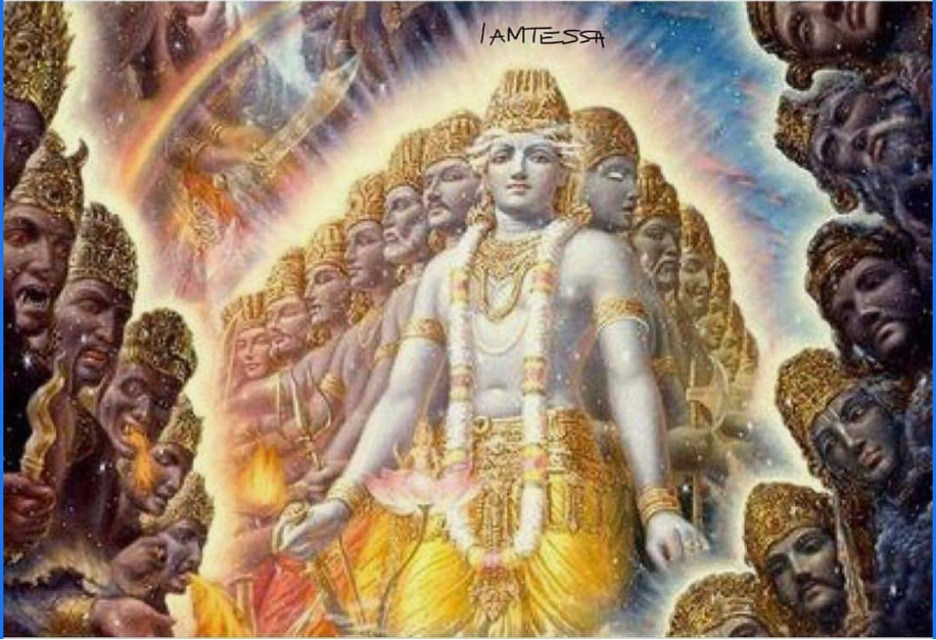
18.78 Wherever is the Lord Shri Krishna, the Prince of Wisdom, and wherever is Arjuna, the Great Archer, I am more than convinced that good fortune, victory, happiness and righteousness will follow.
These last three verses wrap up the discourse of the Bhagavad Gita. This philosophy brings joy because it answers questions and removes doubts. It has beauty because of its continuity, consistency and harmony. This philosophy exists wherever is the Lord Shri Krishna, the Prince of Wisdom, and wherever is Arjuna, the Great Archer. This philosophy ensures righteousness and it imparts good fortune, victory, and happiness.
.
Final Comment
One cannot forgo all actions. One must perform one’s duty. But an action must be performed with detachment and without thought of recompense. A wise person understands that self is temporary and it can be sacrificed. Self alone does not act as it takes concurrence of body, personality, physical organs, their manifold activity and destiny, for any action to be accomplished. The incentives to action consist of knowledge, the knower and the object of knowledge, And the action itself consists of the act, the actor and the instrument.
BG then analyzes these aspects of action according to the three GUNAS (characteristics) of SATTVA (purity), RAJAS (passion) and TAMAS (ignorance). One of these characteristics dominates a person’s viewpoint. That viewpoint defines the person. This is a brilliant analysis.
A person with RAJAS (passion) thinks that there are separate selves existing in each body, and a person with TAMAS (ignorance) is fixated on the survival of himself without logic, truth or insight. Whereas, a person with SATTVA sees only one indivisible self; to him there is no other.
The three characteristics (Purity, Passion and Ignorance) are part of the spiritual Laws. They apply to everything and everybody. The dominant characteristic defines a spiritual teacher, a soldier, a trader and a servant. This spectrum of duties is natural in a human society. One must follow one’s duty diligently, dedicating his actions to God. This leads to the perfection of the Static Viewpoint. Herein lies the Eternal Spirit, the state of Supreme Wisdom.
Such a person enjoys solitude; he is well-restrained; he eats and drinks sparingly; his thinking, actions and speech are under perfect control; he is attentive of everything around him. He is free because he does not let anything bind him. Human traits like selfishness, power, arrogance, anger, desire and the sense of personal ownership fall off. He attains inner peace and happiness and regards all beings equally. He feels one with the universe. This starts with doing one’s duty without hesitation and to the best of one’s ability.
Just keep following those natural laws and you will grow as you are supposed to. These teachings are not for those who have not practiced austerities, or who do not love, or who will not listen, or who mock.
In this world, most obvious is the right effort of Karma Yoga. Above that is the right emotion of Bhakti Yoga. And above that is the right thought of Jnana Yoga. Worship at this altar of Wisdom will lead you to the Static Viewpoint of Krishna.
.