Author Archives: vinaire

I am originally from India. I am settled in United States since 1969. I love mathematics, philosophy and clarity in thinking.

The Future of Healthcare

This is fascinating…

And General Electric (G.E.) comes through again with breaking technology
Healthcare

>>> story here tonight, we’re about to hear one of the smartphone may change his profession and personal medical his story tonight from dr. nancy snyderman.

>> why do we have people being treated like cattle herds? that’s waste. and the billions of dollars that’s being wasted each year for screening and the wrong drugs and the wrong everything. it’s astounding, and we just can’t go on like this.

>> i’ll take that, thanks.

>> reporter: dr. eric topol has long been one of the world’s foremost cardiologists. he has now become the foremost expert in the exploding field of wireless medicine. and this explosion, he says, is about to make our health care better and cheaper. watch what he does with his cell phone.

>> we’ll just pop this is phone into it like that.

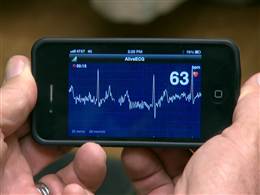
>> reporter: he shows how simply his modified iphone produces a cardiogram for a patient.

>> so you just put your fingers on it. there you go. and in a second — you know, in the first or second it stabilizes.

>> reporter: the device was approved by the fda in december and is now sold to physicians for $199. topol tells his patient he just saved a $100 technician’s fee.

>> so are we close to using this to say i’m going to diagnose you and prescribe four or five apps instead of four or five medications?

>> well, these days i’m actually prescribing a lot more apps than i am medications. you can take the phone and make it a lab on a chip. you can do blood tests, saliva tests, urine tests, all kinds of things. sweat tests through your phone. this is a powerful device.

>> and we’ll just have you hold that on there like that.

>> reporter: topol’s patient, ron thompson, is dealing with several significant heart issues.

>> you saw that on a phone. didn’t you just — weren’t you just amazed the first time you saw that?

>> absolutely. it’s like having an ecg machine hooked up to me and shaving my chest and sticking, you know, stick ’em on there and putting electrodes or whatever, but yeah, no, this is incredible.

>> reporter: topol also uses a portable ultrasound, a v-scan to image ron’s heart.

>> so get a window. there’s the aorta. you see —

>> i sure do.

>> reporter: the v-scan is made by ge, a parent company of nbc.

>> can you see that? see how strong that is coming together?

>> reporter: he does in the office what would normally be a separate test costing $800.

>> there’s 20 million, over 20 million echocardiograms done a year. so 20 million times $800, that’s a lot of money. probably 70, 80% we can get rid of just by having this as part of the physical exam.

>> i was surprised when you saw ron that the technology did not get in the way of the doctor/patient relationship.

>> actually i think it helps make the whole interaction much more intimate, because now i’m sharing the results in realtime. there’s so much technology now that we could — by using digital structure that exists today, that we could make the office visit an enjoyable thing. not only that, nancy, but it doesn’t have to be in person. there’s no reason why a lot of office visits, if not most, could be done remotely.

>> ron could take his ekg at home, send —

>> yes. we’d be looking at it together. or if i got him a wireless ultrasound and he just puts it right there and i say, okay, take a deep breath, i could be watching it in realtime. anything that we can do can be done remotely.

>> reporter: when topol came to scripps in san diego from cleveland, he started a new chapter in his life.

>> when you moved here in 2006, you had just left the cleveland clinic under not very happy circumstances.

>> right.

>> reporter: he had a rep contusion for brashness. he questioned the safety of the hugely profitable pain killer vioxx and eventually forced it off the market.

>> i resigned after having been there 14 years. it was a significant part of my career.

>> do you think, wow, i’ve done a really great job making health care better or do you think, damn, there’s so much yet to do?

>> i feel the damn, there’s so much to do problem. i feel that big-time.

>> do you ever think about how you’re going to die?

>> yeah, i do sometimes. you know, i watched my mother die at a very young age, in her early 50s, with leukemia. my father was an end-stage diabetic. he went blind at age 49.

>> reporter: topol uses dna testing and monitoring to guide his daily life. he refuses to use elevators and his day is spent walking from building to building. he incorporates an hour of exercise into virtually every day, no matter how busy. trying to live the life he thinks we’ll all be living in the near future.

>> how did you find out about that?

>> reporter: at lunch we pulled out what we were told is one of his weaknesses, tortilla chips.

>> will you partake?

>> oh, yeah, it’s hard to resist.

>> okay, come on. handful.

>> reporter: they are loaded with carbohydrates, which trigger glucose.

>> yeah, this is my guilty pleasure here.

>> reporter: so out comes his cell phone.

>> i can look at my glucose every minute. i don’t want to look at it every minute, but i can. so i can just turn it on, my glucose. fortunately i haven’t had enough chips yet. it’s 107.

>> how does it know that?

>> i have a sensor on.

>> where?

>> i have it on my abdomen, but i’ll show you what it looks like. it’s like that. touching the skin.

>> so that sends a wireless signal to this?

>> yes.

>> and if you were a diabetic and you had this, you could then send this message to your physician or to your computer.

>> oh, yeah.

>> and you could start to see triggers and trends and follow this?

>> sure, oh, yeah.

>> and there goes the lifestyle change?

>> you got it.

>> reporter: eric topol is a man who looks way over the horizon, and everywhere he looks, he sees a cell phone.

>> in the future, let’s assume i have heart disease, what could this tell me about impending trouble?

>> well, we’re working on a project that will take a nanosensor in the bloodstream that is smaller than a grain of sand and it will — it will pick up a signal when you have cells that are coming off, shed into the bloodstream, coming off from the artery lining, which is a precursor to a heart attack. and then you will get on your phone a special heart attack ring tone, which will warn you within the week or two weeks that you are very liable to have a heart attack. i know it sounds a little invasive putting this little tiny, smaller than a grain of sand in your blood, but what that will do of having your body under continuous surveillance, talking to your phone, that’s the future of medicine. so this is the heart rate.

>> reporter: this is his newest passion, the busy mobile wrist monitor. topol was involved in its development. everything a hospital intensive care unit now monitors, this does wirelessly.

>> so if my 90-year-old father is discharged from the hospital, it’s conceivable he could go home with something like this and a doctor could monitor him remotely?

>> absolutely.

>> reporter: his book lays out how the digital revolution will create better health care.

>> you write in your book that medicine is currently set up to be maximally imprecise.

>> medicine today is about as much wasteful as one can imagine. so let’s just take drugs in this country, prescription drugs. 350 billion a year, a third of which is total waste. we’re giving a drug that doesn’t work, in fact even worse now, we’re giving drugs that backfire with side effects. so that’s $100 billion plus just from the prescription medications. and what about mass screening? every woman should have a mammogram every year, colonoscopy, psas, it’s really medicine dumbed down. it’s treating everyone the same. that’s crazy. each of us are truly unique in every way.

>> what does the patient of tomorrow look like?

>> the patient of tomorrow is the biggest switch. people need to take ownership. they need to seize the moment and seize the data. the new medicine is plugged into you. it’s understanding you, which we’ve never really done before, and you drive it. you’ve got the data and you’ve got information that you never had before. wouldn’t you like that information? most people would. and wouldn’t you like to be helping to call the shots?

>> fascinating story. our thanks to doctors topol and snyderman for that.

.
The Mystery of OT Levels

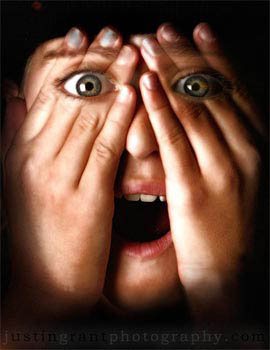
mani-occhi1

Reference: Looking at Hallucinations

Here are some of my thoughts on the OT Levels of Scientology. Hubbard says on the original OT I,

“It is not the intention of this section to exteriorize anyone but if it happens don’t worry about or fool around with the fact.”

He is trying to inject some mystery here.

But the OT I drills have to do with

(1) Counting bodies
(2) Noticng the sex (male or female) of those bodies.
(3) Noticing the size (small or large) of those bodies.
(4) Noticing the attribute in terms of there being an individual, or a crowd.
(5) Differentiating oneself from others.
(6) Noticing the degree to which one can have (tolerate) others around oneself.
(7) Noticing the body part in others that one doesn’t like having in one’s body.
(8) Spotting things in others that are not wrong with them.
(9) Noticing people walking toward you or walking away from you.
(10) Noticing how people stick to the ground (get the sense of gravity).
(11) Spotting important things about people (these would be one’s own considerations).
(12) Noticing places where there are no people.
(13) Noticing places where there are people.

Basically, this is LOOKING and recognizing what is there. The principles of mindfulness should apply here.

OT I focuses on perceiving the attributes of bodies in different ways  and then looking at oneself with respect to those attributes.

This drill may make a person look at oneself more objectively. This may free up the fixed considerations that one is a body. And one may get a new perspective on oneself, where one took oneself for granted before.

Nothing more mysterious need to be read into the OT I Level.

.

Mystery

So why would Hubbard say,

“It is not the intention of this section to exteriorize anyone but if it happens don’t worry about or fool around with the fact.”

There is considerable mystery and expectations built around the word “exteriorization” in Scientology. It would have been better not to bring this word up if it was not part of OT I. But, I suppose, it was intended by Hubbard to present these OT Levels as something mysterious.

Are OT Levels really mysterious? Or, do they simply reflect Hubbard’s own uncertainty about the process of exteriorization?

.

Exteriorization

First of all, is there anything mysterious about exteriorization? The Tech Dictionary of Scientology says,

EXTERIOR: the fellow would just move out, away from the body and be aware of himself as independent of a body but still able to control and handle the body. 

Now, what is this thing that would just move out, away from the body? Well, it’s the being. But what is a being? According to the Tech Dictionary,

BEING: a viewpoint; he is as much a being as he is able to assume viewpoints.

But is there somebody assuming this viewpoint? Yes, it is the THETAN. According to the Tech Dictionary,

THETAN: the mathematic symbol used in Scn to indicate the source of life and life itself… the awareness of awareness unit which has all potentialities but no mass, no wave-length and no location… the individual who lives in the body… not a thing, but the creator of things… that which is aware of being aware… energy space production unit… you before you mocked yourself up… a static…

It appears that “being” is a state or a condition. It is not something material. Detachment from body is getting unstuck from the consideration that one is a body. 

.

Uncertainty

But it seems that Hubbard was not sure if exteriorization is material or immaterial.

Any mystery attached to “exteriorization” would come from not understanding this phenomenon. And any misunderstanding of “exteriorization” can inadvertently create complications with a person trying to interpret his experiences on OT I.

Hubbard says on OT I,

“A great many phenomena (strange things) can happen while doing these drills if they are done honestly.”

This definitely injects trepidation and expectation in the OT process. It thus colors and corrupts one’s ability to simply look.

A person’s experience on OT Levels will be messed up to the degree these levels are made mysterious.

.

Mindfulness

The ability to simply look was presented by Hubbard as OBNOSIS. From Tech Dictionary:

OBNOSIS: observing the obvious. 

This is the same concept, which Buddha referred to as Mindfulness.

MINDFULNESS: Observe things as they are, with full awareness of one’s assumptions.

Unfortunately, Hubbard did not explore or emphasize the concept of OBNOSIS much, which, as MINDFULNESS, is central to Buddhism.

Here are the core aspects of mindfulness:

  • Observe without expecting anything, or attempting to get an answer.
  • Observe things as they are, without assuming anything.
  • If something is missing do not imagine something else in its place. 
  • If something does not make sense then do not explain it away.
  • Use physical senses as well as mental sense to observe.
  • Let the mind un-stack itself. 
  • Experience fully what is there.  
  • Do not suppress anything.
  • Associate data freely.
  • Do not get hung up on name and form.
  • Contemplate thoughtfully.
  • Let it all be effortless.

.

Concepts in Arithmetic (old 1)

dice2

ARITHMETIC = Arithmos (number) + Techne (Skill) = Number skill

.

(1)    Arithmetic starts with COUNTING.

Counting starts with one. The next count is one more.

.

(2)    What is counted is called a UNIT.

UNIT = what is counted one at a time.

If one is counting houses, then each house is a unit.

If one is counting inches in a length, then each inch is a unit.

.

(3)    Each count is represented by symbols called NUMBERS.

The numbers are 1, 2, 3, etc. They are read as ONE, TWO, THREE, and so on.

.

(4)    The counting numbers start from ‘1’. The next number is always one more.

ONE         = 1

TWO        = 1 + 1      =   2

THREE     = 2 + 1     =   3

FOUR       = 3 + 1     =   4,     and so on.

These numbers go on forever.

.

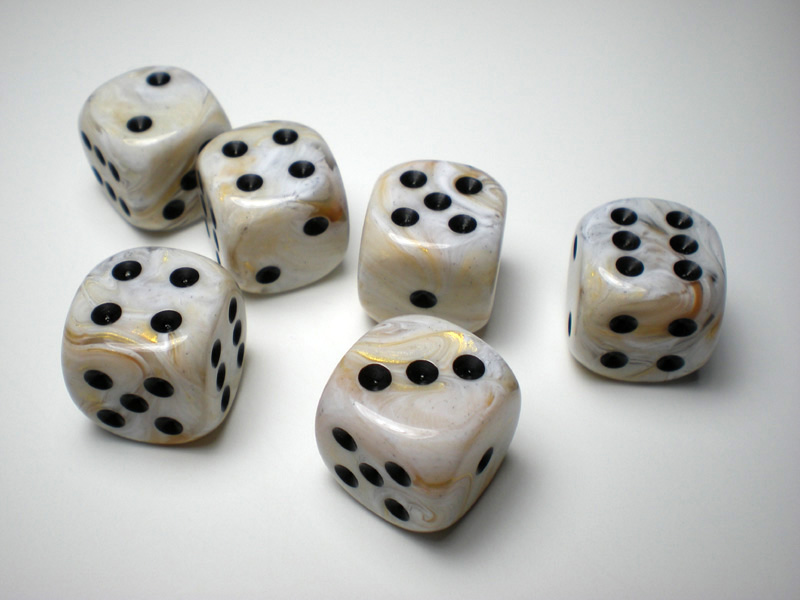
(5)    Numbers are patterns (see the picture of the dice above).

Numbers are visualized as ‘patterns’, such as, a pattern of five dots for five.

If we visualize five as the symbol ‘5’, then it is like visualizing a cat as the symbol “CAT’.

.

(6)    The concept of ‘no unit’ is represented by 0 (zero).

0 (zero) means “nothing”, and, therefore, it is not used in counting.

.

(7)    The set of counting numbers is called NATURAL NUMBERS.

The smallest natural number is 1 (one) and not 0 (zero).

.

(8)    When zero is included, the number set is called WHOLE NUMBERS.

0 (zero) is a whole number, but not a natural number.

1 (one) is a whole number as well as a natural number .

.

(9)    Numbers are written with DIGITS.

This is similar to writing words with letters.

The word CAT is written with three letters: C – A – T.

The number 105 is written with three digits: 1 – 0 – 5.

.

(10)   There are ten different digits:  0, 1, 2, 3, 4, 5, 6, 7, 8, 9.

This is just like having 26 different letters in English, which are used to write all the words in English.

The word ‘I’ is written with a single letter;  ‘ME’with two letters; and ‘YOU’ with three letters.

The number ‘7’ is written with a single digit; ‘15’ with two digits; and ‘164’ with three digits.

.

(11)   Numbers are grouped as ONES, TENS and HUNDREDS.

There are 1 to 9 ONES.

There are 1 to 9 TENS.

There are 1 to 9 HUNDREDS, and so on.

Thus, ONES, TENS and HUNDREDS, may be used as “units.” See (2) above.

For example:   369   =   3 HUNDREDS + 6 TENS + 9 ONES

.

(12)   The 1 to 9 ONES are single-digit numbers.

(1, 2, 3, 4, 5, 6, 7, 8, 9)

The 1 to 9 TENS are double-digit numbers.

(10, 20, 30, 40, 50, 60, 70, 80, 90)

The 1 to 9 HUNDREDS are three-digit numbers.

(100, 200, 300, 400, 500, 600, 700, 800, 900)

.

(13)  10 ONES become 1 TEN, like 10 pennies become 1 dime.

10 TENS become 1 HUNDRED, like 10 dimes become 1 dollar.

.

(14)   The ONES may be counted between two consecutive TENS, such as.

Between 10 and 20: 11, 12, 13, 14, 15, 16, 17, 18, and 19 (1 more gives 20)

Between 20 and 30: 21, 22, 23, 24, 25, 26, 27, 28, and 29 (1 more gives 30)

And so on…

.

(15)   The TENS may be counted between two consecutive HUNDREDS, such as,

Between 100 and 200: 110, 120, 130, 140, 150, 160, 170, 180, and 190 (10 more gives 200)

And, the ONES may be counted between two consecutive TENS within HUNDREDS.

And so on…

.

(16)   The single-digit numbers are from:   1 to 9

Note: There are nine single-digit numbers.

Zero (0) is a whole number but not a counting number.

The double-digit numbers are from:   10 to 99

Note: There are ninety double-digit numbers.

The three-digit numbers are from: 100 to 999

Note: There are nine hundred three-digit numbers.

And so on…

.

(17)   The “units” of ONES, TENS HUNDREDS make a BASIC group.

The next group of ONES, TENS HUNDREDS is called the THOUSANDS.

The next group of ONES, TENS HUNDREDS is called the MILLIONS.

The next group of ONES, TENS HUNDREDS is called the BILLIONS.

The next group of ONES, TENS HUNDREDS is called the TRILLIONS, and so on.

Number System

.

For further details, please refer to: MATH MILESTONE #1: NUMBERS & PLACE VALUES

.

.

India and its Future!

I believe that the enlightenment, which started from India and then went around the world, is coming back to India to start another iteration.

This is an inspiring speech!

There seem to be a new younger leadership of India waiting in the wings.

.

Quick Study Algebra

qqal

CONTENTS

Quick Study Algebra Part 1

Quick Study Algebra Part 2