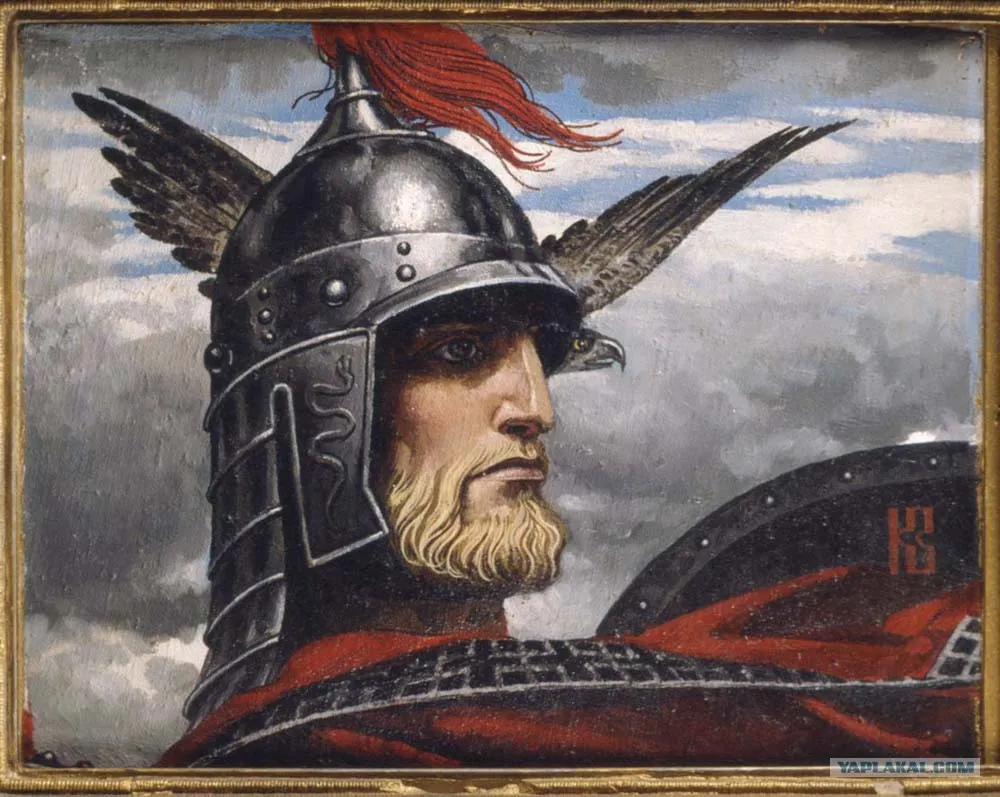
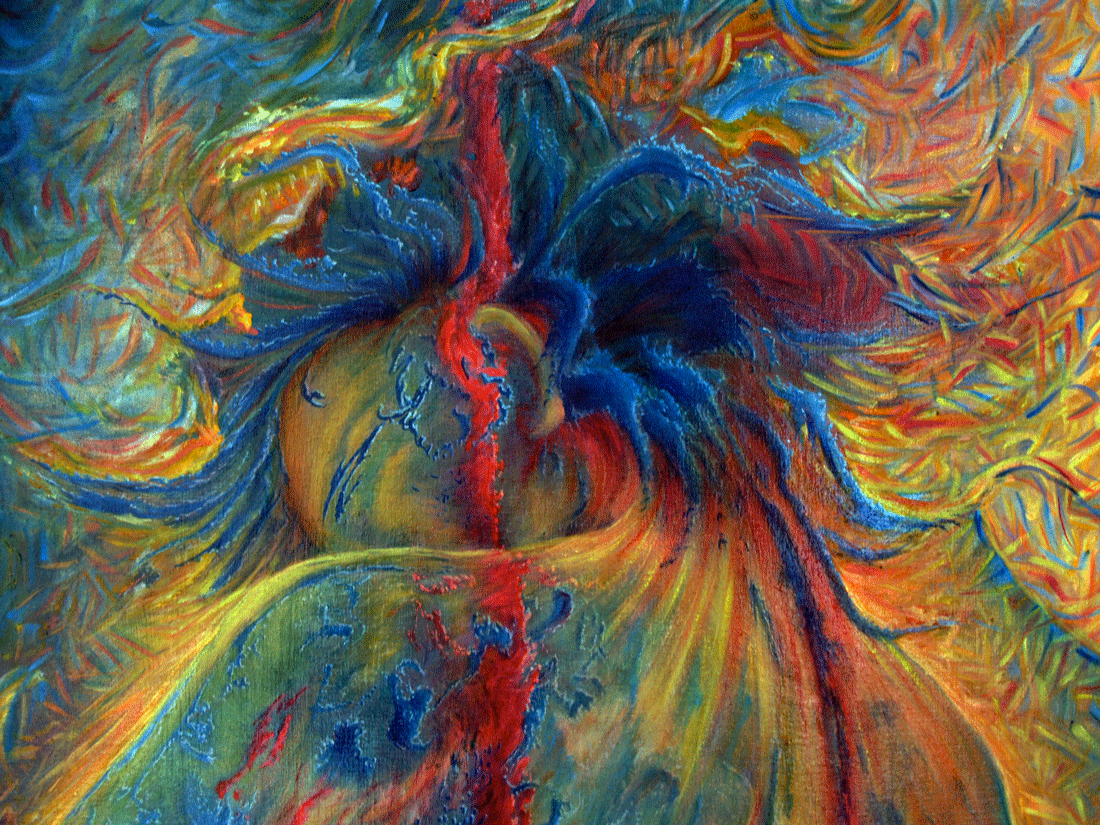
NIETZSCHE: Decadence

Reference: The Story of Philosophy

This paper presents Chapter IX Section 7 from the book THE STORY OF PHILOSOPHY by WILL DURANT. The  contents are from the 1933 reprint of this book by TIME INCORPORATED by arrangement with Simon and Schuster, Inc.

The paragraphs of the original material (in black) are accompanied by brief comments (in color) based on the present understanding.

.

VII. Decadence

Consequently, the road to the superman must lie through aristocracy. Democracy—“this mania for counting noses”—must be eradicated before it is too late. The first step here is the destruction of Christianity so far as all higher men are concerned. The triumph of Christ was the beginning of democracy; “the first Christian was in his deepest instincts a rebel against everything privileged; he lived and struggled unremittingly for ‘equal rights'”; in modern times he would have been sent to Siberia. “He that is greatest among you, let him be your servant”—this is the inversion of all political wisdom, of all sanity; indeed, as one reads the Gospel one feels the atmosphere of a Russian novel; they are a sort of plagiarism from Dostoevsky. Only among the lowly could such notions take root; and only in an age whose rulers had degenerated and ceased to rule. “When Nero and Caracalla sat on the throne, the paradox arose that the lowest man was worth more than the man on top.”

According to Nietzsche, aristocracy must be supported and democracy eradicated. The first step should be the destruction of Christianity that has spawned democracy in the first place.

As the conquest of Europe by Christianity was the end of ancient aristocracy, so the overrunning of Europe by Teutonic warrior barons brought a renewal of the old masculine virtues, and planted the roots of the modern aristocracies. These men were not burdened with “morals”: they “were free from every social restraint; in the innocence of their wild-beast conscience they returned as exultant monsters from a horrible train of murder, incendiarism, rapine, torture, with an arrogance and compromise as if nothing but a student’s freak had been perpetrated.” It was such men who supplied the ruling classes for Germany, Scandinavia, France, England, Italy, and Russia.

A herd of blond beasts of prey, a race of conquerors and masters, with military organization, with the power to organize, unscrupulously placing their fearful paws upon a population perhaps vastly superior in numbers, … this herd founded the State. The dream is dispelled which made the State begin with a contract. What has he to do with contracts who can command, who is master by nature, who comes on the scene with violence in deed and demeanour?

The aristocracy was established by the Teutonic race of conquerers and masters, who were not burdened with morals. They had masculine virtues and were free of social restraints.

This splendid ruling stock was corrupted, first by the Catholic laudation of feminine virtues, secondly by the Puritan and plebeian ideals of the Reformation, and thirdly by inter-marriage with inferior stock. Just as Catholicism was mellowing into the aristocratic and unmoral culture of the Renaissance, the Reformation crushed it with a revival of Judaic rigor and solemnity. “Does anybody at last understand, will anybody understand what the Renaissance was? The transvaluation of Christian values, the attempt undertaken with all means, all instincts and all genius to make the opposite values, the noble values triumph … I see before me a possibility perfectly magical in its charm and glorious coloring. … Caesar Borgia as Pope. … Do you understand me?”

This splendid ruling stock was corrupted, first by the Catholic laudation of feminine virtues, secondly by the Puritan and plebeian ideals of the Reformation, and thirdly by inter-marriage with inferior stock.

Protestantism and beer have dulled German wit; add, now, Wagnerian opera. As a result, “the present-day Prussian is one of the most dangerous enemies of culture.” “The presence of a German retards my digestion.” “If, as Gibbon says, nothing but time—though a long time—is required for a world to perish; so nothing but time—though still more time—is required for a false idea to be destroyed in Germany.” When Germany defeated Napoleon it was as disastrous to culture as when Luther defeated the Church; thenceforward Germany put away her Goethes, her Schopenhauers and her Beethovens, and began to worship “patriots”; “Deutschland uber Alles (Germany above everything)—I fear that was the end of German philosophy.” Yet there is a natural seriousness and depth in the Germans that gives ground for the hope that they may yet redeem Europe; they have more of the masculine virtues than the French or the English; they have perseverance, patience, industry—hence their scholarship, their science, and their military discipline; it is delightful to see how all Europe is worried about the German army. If the German power of organization could cooperate with the potential resources of Russia, in materials and in men, then would come the age of great politics. “We require an intergrowth of the German and Slav races; and we require, too, the cleverest financiers, the Jews, that we may become the masters of the world. … We require an unconditional union with Russia.” The alternative was encirclement and strangulation.

There is a natural seriousness and depth in the Germans that gives ground for the hope that they may yet redeem Europe. If the German power of organization could cooperate with the potential resources of Russia, in materials and in men, then would come the age of great politics.

The trouble with Germany is a certain stolidity of mind which pays for this solidity of character; Germany misses the long traditions of culture which have made the French the most refined and subtle of all the peoples of Europe. “I believe only in French culture, and I regard everything else in Europe which calls itself culture as a misunderstanding.” “When one reads Montaigne, La Rochefoucauld, … Vauvenargues, and Chamfort, one is nearer to antiquity than with any group of authors in any other nation.” Voltaire is “a grand seigneur of the mind”; and Taine is “the first of living historians.” Even the later French writers Flaubert, Bourget, Anatole France, etc.—are infinitely beyond other Europeans in clarity of thought and language—“what clearness and delicate precision in these Frenchmen!” European nobility of taste, feeling and manners is the work of France. But of the old France, of the sixteenth and seventeenth centuries; the Revolution, by destroying the aristocracy, destroyed the vehicle and nursery of culture, and now the French soul is thin and pale in comparison with what it used to be. Nevertheless it has still some, fine qualities; “in France almost all psychological and artistic questions are considered with incomparably more subtlety and thoroughness than they are in Germany. … At the very moment when Germany arose as a great power in the world of politics, France won new importance in the world of culture.”

Germany misses the long traditions of culture which have made the French the most refined and subtle of all the peoples of Europe. At the very moment when Germany arose as a great power in the world of politics, France won new importance in the world of culture.

Russia is the blond beast of Europe. Its people have a “stubborn and resigned fatalism which gives them even nowadays the advantage over us Westerners.” Russia has a strong government, without “parliamentary imbecility.” Force of will has long been accumulating there, and now threatens to find release; it would not be surprising to find Russia becoming master of Europe. “A thinker who has at heart the future of Europe will in all his perspectives concerning the future calculate upon the Jews and the Russians as above all the surest and the likeliest factors in the great play and battle of forces.” But all in all it is the Italians who are the finest and most vigorous of existing peoples; the man-plant grows strongest in Italy, as Alfieri boasted. There is a manly bearing, an aristocratic pride in even the lowliest Italian; “a poor Venetian gondolier is always a better figure than a Berlin Geheimrath (Berlin Privy Councillor), and in the end, indeed, a better man.”

Force of will has long been accumulating in Russia, and now threatens to find release. The Italians are the finest and most vigorous of existing peoples in Europe.

Worst of all are the English; it is they who corrupted the French mind with the democratic delusion; “shop-keepers, Christians, cows, women, Englishmen, and other democrats belong together.” English utilitarianism and philistinism are the nadir of European culture. Only in a land of cut-throat competition could anyone conceive of life as a struggle for mere existence. Only in a land where shop-keepers and ship-keepers had multiplied to such a number as to overcome the aristocracy could democracy be fabricated; this is the gift, the Greek gift, which England has given the modern world. Who will rescue Europe from England, and England from democracy?

Worst of all are the English. They have corrupted the French mind with the democratic delusion. English utilitarianism and philistinism are the nadir of European culture. 

.
NIETZSCHE: The Superman

Reference: The Story of Philosophy

This paper presents Chapter IX Section 6 from the book THE STORY OF PHILOSOPHY by WILL DURANT. The  contents are from the 1933 reprint of this book by TIME INCORPORATED by arrangement with Simon and Schuster, Inc.

The paragraphs of the original material (in black) are accompanied by brief comments (in color) based on the present understanding.

.

VI. The Superman

Just as morality lies not in kindness but in strength, so the goal of human effort should be not the elevation of all but the development of finer and stronger individuals. “Not mankind, but superman is the goal.” The very last thing a sensible man would undertake would be to improve mankind; mankind does not improve, it does not even exist—it is an abstraction; all that exists is a vast ant-hill of individuals. The aspect of the whole is much more like that of a huge experimental work-shop where some things in every age succeed, while most things fail; and the aim of all the experiments is not the happiness of the mass but the improvement of the type. Better that societies should come to an end than that no higher type should appear. Society is an instrument for the enhancement of the power and personality of the individual; the group is not an end in itself. “To what purpose then are the machines, if all individuals are only of use in maintaining them? Machines”—or social organizations—“that are ends in themselves—is that the umana commedia (human comedy)?”

Just as morality lies not in kindness but in strength, so the goal of human effort should be not the elevation of all but the development of finer and stronger individuals. The focus of Nietzsche is on the individual.

At first Nietzsche spoke as if his hope were for the production of a new species; later he came to think of his superman as the superior individual rising precariously out of the mire of mass mediocrity, and owing his existence more to deliberate breeding and careful nurture than to the hazards of natural selection. For the biological process is biased against the exceptional individual; nature is most cruel to her finest products; she loves rather, and protects, the average and the mediocre; there is in nature a perpetual reversion to type, to the level of the mass,—a recurrent mastery of the best by the most. The superman can survive only by human selection, by eugenic foresight and an ennobling education.

The superman can survive only by human selection, by eugenic foresight and an ennobling education.

How absurd it is, after all, to let higher individuals marry for love—heroes with servant girls, and geniuses with seamstresses! Schopenhauer was wrong; love is not eugenic; when a man is in love he should not be permitted to make decisions affecting his entire life; it is not given to man to love and be wise. We should declare invalid the vows of lovers, and should make love a legal impediment to marriage. The best should marry only the best; love should be left to the rabble. The purpose of marriage is not merely reproduction, it should also be development.

Thou art young, and wishest for child and marriage. But I ask thee, art thou a man who dareth to wish for a child? Art thou the victorious one, the self-subduer, the commander of thy senses, the master of thy virtues?—or in thy wish doth there speak the animal, or necessity? Or solitude? Or discord with thyself? I would that thy victory and freedom were longing for a child. Thou shalt build living monuments unto thy victory and thy liberation. Thou shalt build beyond thyself. But first thou must build thyself square in body and soul. Thou shalt not only propagate thyself, but propagate thyself upward! Marriage: thus I call the will of two to create that one which is more than they who created it. I call marriage reverence unto each other as unto those who will such a will.

The best should marry only the best; love should be left to the rabble. The purpose of marriage is not merely reproduction, it should also be development.

Without good birth, nobility is impossible. “Intellect alone does not ennoble; on the contrary, something is always needed to ennoble intellect. What then is needed? Blood … (I do not refer here to the prefix ‘Lords,’ or the ‘Almanac de Gotha’: this is a parenthesis for donkeys).” But given good birth and eugenic breeding, the next factor in the formula of the superman is a severe school; where perfection will be exacted as a matter of course, not even meriting praise; where there will be few comforts and many responsibilities; where the body will be taught to suffer in silence, and the will may learn to obey and to command. No libertarian nonsense!—no weakening of the physical and moral spine by indulgence and “freedom”! And yet a school where one will learn to laugh heartily; philosophers should be graded according to their capacity for laughter; “he who strideth across the highest mountains laugheth at all tragedies.” And there will be no moralic acid in this education of the superman; an asceticism of the will, but no condemnation of the flesh. “Cease not to dance, ye sweet girls ! No spoil-sport hath come unto you with an evil eye, … no enemy of girls with beautiful ankles.” Even a superman may have a taste for beautiful ankles.

Without good birth, nobility is impossible. But given good birth and eugenic breeding, the next factor in the formula of the superman is a severe school; where perfection will be exacted as a matter of course.

A man so born and bred would be beyond good and evil; he would not hesitate to be bose if his purpose should require it; he would be fearless rather than good. “What is good? … To be brave is good.” “What is good? All that increases the feeling of power, the will to power, power itself, in man. What is bad (schlecht)? All that comes from weakness.” Perhaps the dominant mark of the superman will be love of danger and strife, provided they have a purpose; he will not seek safety first; he will leave happiness to the greatest number. “Zarathustra was fond of all such as makes distant voyages, and like not to live without danger.” Hence all war is good, despite the vulgar pettiness of its causes in modern times; “a good war halloweth any cause.” Even revolution is good: not in itself, for nothing could be more unfortunate than the supremacy of the masses; but because times of strife bring out the latent greatness of individuals who before had insufficient stimulus or opportunity; out of such chaos comes the dancing star; out of the turmoil and nonsense of the French Revolution, Napoleon; out of the violence and disorder of the Renaissance such powerful individualities, and in such abundance, as Europe has hardly known since, and could no longer bear.

A man so born and bred would be beyond good and evil. He would be fearless rather than good. Times of strife bring out the latent greatness of individuals who before had insufficient stimulus or opportunity.

Energy, intellect, and pride,—these make the superman. But they must be harmonized: the passions will become powers only when they are selected and unified by some great purpose which moulds a chaos of desires into the power of a personality. “Woe to the thinker who is not the gardener but the soil of his plants!” Who is it that follows his impulses? The weakling: he lacks the power to inhibit; he is not strong enough to say No; he is a discord, a decadent. To discipline one’s self—that is the highest thing. “The man who does not wish to be merely one of the mass only needs to cease to be easy on himself.” To have a purpose for which one can be hard upon others, but above all upon one’s self; to have a purpose for which one will do almost anything except betray a friend,—that is the final patent of nobility, the last formula of the superman.

Energy, intellect, and pride, unified by some great purpose—these make the superman. To have a purpose for which one will do almost anything except betray a friend,—that is the final patent of nobility, the last formula of the superman.

Only by seeing such a man as the goal and reward of our labors can we love life and live upward. ”We must have an aim for whose sake we are all dear to one another.” Let us be great, or servants and instruments to the great; what a fine sight it was when millions of Europeans offered themselves as means to the ends of Bonaparte, and died for him gladly, singing his name as they fell! Perhaps those of us who understand can become the prophets of him whom we cannot be, and can straighten the way for his coming; we, indifferent of lands, indifferent of times, can work together, however separated, for this end. Zarathustra will sing, even in his suffering, if he can but hear the voices of these hidden helpers, these lovers of the higher man. “Ye lonely ones of to-day, ye who stand apart, ye shall one day be a people; from you who have chosen yourselves, a chosen people shall rise; and from it the superman.” 

Only by seeing such a man as the goal and reward of our labors can we love life and live upward.  Let us be great, or servants and instruments to the great.

.

NIETZSCHE: Hero-morality

Reference: The Story of Philosophy

This paper presents Chapter IX Section 5 from the book THE STORY OF PHILOSOPHY by WILL DURANT. The  contents are from the 1933 reprint of this book by TIME INCORPORATED by arrangement with Simon and Schuster, Inc.

The paragraphs of the original material (in black) are accompanied by brief comments (in color) based on the present understanding.

.

V. Hero-morality

Zarathustra became for Nietzsche a Gospel whereon his later books were merely commentaries. If Europe would not appreciate his poetry perhaps it would understand his prose. After the song of the prophet, the logic of the philosopher; what though the philosopher himself should disbelieve in logic?—it is a tool of clarity, if not the seal of proof. 

Following Zarathustra, Nietzsche simply used prose and logic to clarify his philosophy expressed earlier in that poem. 

He was more than ever alone now, for Zarathustra had seemed a little queer even to Nietzsche’s friends. Scholars like Overbeck and Burckhardt, who had been his colleagues at Basle, and had admired The Birth of Tragedy, mourned the loss of a brilliant philologist, and could not celebrate the birth of a poet. His sister (who had almost justified his view that for a philosopher a sister is an admirable substitute for a wife) left him suddenly, to marry one of those anti-Semites whom Nietzsche despised, and went off to Paraguay to found a communistic colony. She asked her pale, frail brother to come along, for the sake of his health; but Nietzsche valued the life of the mind more than the health of the body; he wished to stay where the battle was; Europe was necessary to him “as a culture museum.” He lived irregularly in place and time; he tried Switzerland and Venice and Genoa and Nice and Turin. He liked to write amid the doves that flock about the lions of St. Mark—“this Piazza San Marco is my finest work-room;” But he had to follow Hamlet’s advice about staying out of the sun, which hurt his ailing eyes; he shut himself up in dingy, heatless attics, and worked behind closed blinds. Because of his failing eyes he wrote henceforth no books, but only aphorisms.

Nietzsche was more than ever alone now as his friends and sister went away. He lived irregularly in place and time and gradually his eye start failing. He shut himself up in dingy, heatless attics, and worked behind closed blinds. 

He gathered some of these fragments together, under the titles Beyond Good and Evil (1886) and The Genealogy of Morals (1887); he hoped, in these volumes, to destroy the old morality, and prepare the way for the morality of the superman. For a moment he became the philologist again, and sought to enforce his new ethic with etymologies that are, not quite beyond reproach. He observes that the German language contains two words for bad: schlecht and bose. Schlecht was applied by the upper to the lower classes, and meant ordinary, common; later it came to mean vulgar, worthless, bad. Bose was applied by the lower to the upper classes, and meant unfamiliar, irregular, incalculable, dangerous, harmful, cruel; Napoleon was bose. Many simple peoples feared the exceptional individual as a disintegrating force; there is a Chinese proverb that “the great man is a public misfortune.” Likewise, gut had two meanings, as opposite to schlecht and bose: as used by the aristocracy it meant strong, brave, powerful, warlike, godlike (gut from Gott); as used by the people it meant familiar, peaceful, harmless, kind.

Nietzsche looked for a way beyond good and evil. He hoped to destroy the old morality, and prepare the way for the morality of the superman. 

Here then were two contradictory valuations of human behavior, two ethical standpoints and criteria: a Herren-moral and a Heerden-moral—a morality of masters and a morality of the herd. The former was the accepted standard in classical antiquity, especially among the Romans; even for the ordinary Roman, virtue was virtus—manhood, courage, enterprise, bravery. But from Asia, and especially from the Jews in the days of their political subjection, came the other standard; subjection breeds humility, helplessness breeds altruism—which is an appeal for help. Under this herd-morality love of danger and power gave way to love of security and peace; strength was replaced by cunning, open[ness] by secret revenge, sternness by pity, initiative by imitation, the pride of honor by the whip of conscience. Honor is pagan, Roman, feudal, aristocratic; conscience is Jewish, Christian, bourgeois, democratic. It was the eloquence of the prophets, from Amos to Jesus, that made the view of a subject class an almost universal ethic; the “world” and the “flesh” became synonyms of evil, and poverty a proof of virtue.

Here then were two contradictory valuations of human behavior—a morality of masters and a morality of the herd. Under this herd-morality, love of danger and power gave way to love of security and peace. This almost became the universal ethic. The “world” and the “flesh” became synonyms of evil, and poverty a proof of virtue.

This valuation was brought to a peak by Jesus: with him every man was of equal worth, and had equal rights; out of his doctrine came democracy, utilitarianism, socialism; progress was now defined in terms of these plebeian philosophies, in terms of progressive equalization and vulgarization, in terms of decadence and descending life. The final stage in this decay is the exaltation of pity and self-sacrifice, the sentimental comforting of criminals, “the inability of a society to excrete.” Sympathy is legitimate if it is active; but pity is a paralyzing mental luxury, a waste of feeling for the irremediably botched, the incompetent, the defective, the vicious, the culpably diseased and the irrevocably criminal. There is a certain indelicacy and intrusiveness in pity; “visiting the sick” is an orgasm of superiority in the contemplation of our neighbor’s helplessness.

Progress was now defined in terms of democracy, utilitarianism, socialism, which led to decadence and descending life. There was a waste of feeling for the irremediably botched, the incompetent, the defective, the vicious, the culpably diseased and the irrevocably criminal.

Behind all this “morality” is a secret will to power. Love itself is only a desire for possession; courtship is combat and mating is mastery:  kills Carmen to prevent her from becoming the property of another. “People imagine that they are unselfish in love because they seek the advantage of another being, often in opposition to their own. But for so doing they want to possess the other being. … L’amour est de tous les sentiments le plus egoiste, et, par consequent, lorsqu’il est blesse, le moins genereux.” * Even in the love of truth is the desire to possess it, perhaps to be its first possessor, to find it virginal. Humility is the protective coloration of the will to power.

* quoting Benjamin Constant: “Love is of all feelings the most egoistic; and in consequence it is, when crossed, the least generous.” But Nietzsche can speak more gently of love. “Whence arises the sudden passion of a man for a woman? … Least of all from sensuality only: but when a man finds weakness, need of help, and high spirits, all united in the same creature, he suffers a sort of over-flowing of soul, and is touched and offended at the same moment. At this point arises the source of great love” And he quotes from the French “the chastest utterance I ever heard: Dans Ie veritable amour c’est l’ame qui evnveloppe le corps“—“in true love It is the soul that embraces the body.”

Love is not unselfish. Underlying love is a desire to possess the object of love.

Against this passion for power, reason and morality are helpless; they are but weapons in its hands, dupes of its game. “Philosophical systems are shining mirages”; what we see is not the long-sought truth, but the reflection of our own desires. “The philosophers all pose as though their real opinions had been discovered through the self-evolving of a cold, pure, divinely indifferent dialectic; … whereas in fact a prejudicial proposition, idea or ‘suggestion,’ which is generally their heart’s desire abstracted and refined, is defended by them with arguments sought out after the event.” 

Against this passion for power, reason and morality are helpless. What we see in philosophy is not the long-sought truth, but the reflection of our own desires.

It is these underground desires, these pulsations of the will to power, that determine our thoughts. “The greater part of our intellectual activity goes on unconsciously, and unfelt by us; … conscious thinking … is the weakest.” Because instinct is the direct operation of the will to power, undisturbed by consciousness, “instinct is the most intelligent of all kinds of intelligence which have hitherto been discovered.” Indeed, the role of consciousness has been senselessly over-estimated; “consciousness may be regarded as secondary, almost as indifferent and superfluous, probably destined to disappear and to be superseded by perfect automatism.”

Instinct is the direct operation of the will to power, undisturbed by consciousness. The role of consciousness has been senselessly over-estimated.

In strong men there is very little attempt to conceal desire under the cover of reason; their simple argument is, “I wilI.” In the uncorrupted vigor of the master soul, desire is its own justification; and conscience, pity or remorse can find no entrance. But so far has the Judaeo-Christian-democratic point-of-view prevailed in modern times, that even the strong are now ashamed of their strength and their health, and begin to seek “reasons.” The aristocratic virtues and valuations are dying out. “Europe is threatened with a new Buddhism”; even Schopenhauer and Wagner become pity-ful Buddhists. “The whole of the morality of Europe is based upon the values which are useful to the herd.” The strong are no longer permitted to exercise their strength; they must become as far as possible like the weak; “goodness is to do nothing for which we are not strong enough.” Has not Kant, that “great Chinaman of Koenigsberg,” proved that men must never be used as means? Consequently the instIncts of the strong—to hunt, to fight, to conquer and to rule—are introverted into self-laceration for lack of outlet; they beget asceticism and the “bad conscience”; “all instincts which do not find a vent turn inward—this is what I mean by the growing ‘internalization’ of man: here we have the first form of what came to be called the soul.” *

* The student of psychology may be interested to follow up psychoanalytic sources in … (theory of dreams); … (Adler’s theory of the neurotic constitution); and … (“overcorrection”). Those who are interested in pragmatism will find a fairly complete anticipation of it in …

For Nietzsche, the source of strength are the instincts and desires, and the Judaeo-Christian-democratic point-of-view is the aberration. However, he is ignoring that there can be conflicting and self-destructive instincts in a person that can drive him insane.

The formula for decay is that the virtues proper to the herd infect the leaders, and break them into common clay. “Moral systems must be compelled first of all to bow before the gradations of rank; their presumption must be driven home to their conscience—until they thoroughly understand at last that it is immoral to say that ‘what is right for one is proper for another.'” Different functions require different qualities; and the “evil” virtues of the strong are as necessary in a society as the “good” virtues of the weak. Severity, violence, danger, war, are as valuable as kindliness and peace; great individuals appear only in times of danger and violence and merciless necessity. The best thing in man is strength of will, power and permanence of passion; without passion one is mere milk, incapable of deeds. Greed, envy, even hatred, are indispensable items in the process of struggle, selection and survival. Evil is to good as variation to heredity, as innovation and experiment to custom; there is no development without an almost-criminal violation of precedents and “order.” If evil were not good it would have disappeared. We must beware of being too good; “man must become better and more evil.” 

The leaders need not follow the “morality“ of the herd; instead, they must follow the instincts demanded by their role. The best thing in man is strength of will, power and permanence of passion; without passion one is mere milk, incapable of deeds. 

Nietzsche is consoled to find so much evil and cruelty in the world; he takes a sadistic pleasure in reflecting on the extent to which, he thinks, “cruelty constituted the great joy and delight of ancient man”; and he believes that our pleasure in the tragic drama, or in anything sublime, is a refined and vicarious cruelty. “Man is the cruelest animal,” says Zarathustra. “When gazing at tragedies, bull-fights and crucifixions he hath hitherto felt happier than at any other time on earth. And when he invented hell … lo, hell was his heaven on earth”; he could put up with suffering now, by contemplating the eternal punishment of his oppressors in the other world.

For Nietzsche, instinct is uppermost regardless of it being good or evil. 

The ultimate ethic is biological; we must judge things according to their value for life; we need a physiological “transvaluation of all values.” The real test of a man, or a group, or a species, is energy, capacity, power. We may be partly reconciled to the nineteenth century—otherwise so destructive of all the higher virtues—by its emphasis on the physical. The soul is a function of an organism. One drop of blood too much or too little in the brain may make a man suffer more than Prometheus suffered from the vulture. Varying foods have varying mental effects: rice makes for Buddhism, and German metaphysics is the result of beer. A philosophy therefore is true or false according as it is the expression and exaltation of ascending or of descending life. The decadent says, “Life is worth nothing”; let him rather say; “I am worth nothing.” Why should life be worth living when all the heroic values in it have been permitted to decay, and democracy—that is, disbelief in all great men—ruins, with every decade, another people?

The gregarious European man nowadays assumes an air as if he were the only kind of man that is allowable; he glorifies his qualities, such as public spirit, kindness, deference, industry, temperance, modesty, indulgence, sympathy,—by virtue of which he is gentle, endurable, and useful to the herd,—as the peculiarly human virtues. In cases, however, where it is believed that the leader and bellwether cannot be dispensed with, attempt after attempt is made nowadays to replace commanders by the summoning together of clever gregarious men; all representative constitutions, for example, are of this origin. In spite of all, what a blessing, what a deliverance from a weight becoming unendurable, is the appearance of an absolute ruler for these gregarious Europeans—of this fact the effect of the appearance of Napoleon was the last great proof; the history of the influence of Napoleon is almost the history of the higher happiness to which the entire century has attained in its worthiest individuals and periods.

Napoleon is the ideal for Nietzsche, because the real test of a man, or a group, or a species, is energy, capacity, power. He looks at the ultimate ethic to be biological; the soul as a function of an organism; and varying foods having varying mental effects.

.

NIETZSCHE: The Song of Zarathustra

Reference: The Story of Philosophy

This paper presents Chapter IX Section 4 from the book THE STORY OF PHILOSOPHY by WILL DURANT. The  contents are from the 1933 reprint of this book by TIME INCORPORATED by arrangement with Simon and Schuster, Inc.

The paragraphs of the original material (in black) are accompanied by brief comments (in color) based on the present understanding.

.

IV. The Song of Zarathustra

And now from art, which seemed to have failed him, he took refuge in science—whose cold Apollonian air cleansed his soul after the Dionysian heat and riot of Tribschen and Bayreuth—and in philosophy, which “offers an asylum where no tyranny can penetrate.” Like Spinoza, he tried to calm his passions by examining them; we need, he said, “a chemistry of the emotions.” And so, in his next book, Human All Too Human (1878-80), he became psychologist, and analyzed with a surgeon’s ruthlessness the tenderest feelings and the most cherished beliefs,—dedicating it all bravely, in the midst of reaction, to the scandalous Voltaire. He sent the volumes to Wagner, and received in return the book of Parsifal. They never communicated again. 

And now from art, which seemed to have failed him, Nietzsche took refuge in science—whose cold Apollonian air cleansed his soul after the Dionysian heat and riot of Tribschen and Bayreuth—and in philosophy, which “offers an asylum where no tyranny can penetrate.” 

And then, at the very prime of life, in 1879, he broke down, physically and mentally, and sank into the vicinity of death. He prepared for the end defiantly: “Promise me,” he said to his sister, “that when I die only my friends shall stand about my coffin, and no inquisitive crowd. See that no priest or anyone else utter falsehoods at my graveside, when I can no longer protect myself; and let me descend into my tomb as an honest pagan.” But he recovered, and this heroic funeral had to be postponed. Out of such illness came his love of health and the sun, of life and laughter and dance, and Carmen’s “music of the south”; out of it too came a stronger will, born of fighting death, a “Yea-saying” that felt life’s sweetness even in its bitterness and pain; and out of it perhaps a pitiful effort to rise to Spinoza’s cheerful acceptance of natural limitations and human destiny. “My formula for greatness is Amor fati (love of one’s fate): … not only to bear up under every necessity, but to love it.” Alas, it is more easily said than done. 

And then, at the very prime of life, in 1879, Nietzsche broke down, physically and mentally, and sank into the vicinity of death. But he recovered, and out of such illness came his love of health and the sun, a stronger will, and a cheerful acceptance of natural limitations and human destiny.

The titles of his next books—The Dawn of Day (1881) and The Joyful Wisdom (1882)—reflect a grateful convalescence; here is a kindlier tone and a gentler tongue than in the later books. Now he had a year of quiet days, living modestly on the pension his university had given him. The proud philosopher could even thaw into a pretty frailty, and find himself suddenly in love. But Lou Salome did not return his love; his eyes were too sharp and deep for comfort. Paul Ree was less dangerous, and played Dr. Pagello to Nietzsche’s de Musset. Nietzsche fled in despair, composing aphorisms against women as he went. In truth he was naive, enthusiastic, romantic, tender to simplicity; his war against tenderness was an attempt to exorcise a virtue which had led to a bitter deception and to a wound that never healed. 

After his recovery, Nietzsche felt grateful. He displayed a kindlier tone and a gentler tongue than in the later books. He even fell in love; but his love was not returned Nietzsche fled in despair, composing aphorisms against women as he went. 

He could not find solitude enough now: “it is difficult to live with men, because silence is difficult.” He passed from Italy to the heights of the Alps at Sils-Maria in the Upper Engadine,—loving not man nor woman neither, and praying that Man might be surpassed. And there on the lonely heights came the inspiration of his greatest .book. 

I sat there waiting—waiting for nothing,
Enjoying, beyond good and evil, now
The light, now the shade; there was only
The day, the lake, the noon, time without end.
Then, my friend, suddenly one became two,
And Zarathustra passed by me.

Now his “soul rose, and overflowed all its margins.” He had found a new teacher—Zoroaster; a new god—the Superman; and a new religion—eternal recurrence: he must sing now—philosophy mounted into poetry under the ardor of hIs inspiration. “I could sing a song, and will sing it, although I am alone in an empty house and must sing it into mine own, ears.” (What loneliness is in that phrase!) “Thou great star!—what would be thy happiness, were it not for those for whom thou shinest? … Lo! I am weary of my wisdom, like the bee that hath collected too much honey; I need hands reaching out for it.” So he wrote Thus Spake Zarathustra (1883) and finished it in that “hallowed hour when Richard Wagner gave up the ghost in Venice.” It was his magnificent answer to Parsifal; but the maker of Parsifal was dead. 

It was then, alone on the lonely heights of Alps that Nietzsche found his inspiration. So he wrote Thus Spake Zarathustra (1883) and finished it in that “hallowed hour when Richard Wagner gave up the ghost in Venice.”

It was his masterpiece, and he knew it. “This work stands alone,” he wrote of it later. “Do not let us mention the poets in the same breath; nothing perhaps had ever been produced out of such a superabundance of strength. … If all the spirit and goodness of every great soul were collected together, the whole could not create a single one of Zarathustra’s discourses.” A slight exaggeration!—but assuredly it is one of the great books of the nineteenth century. Yet Nietzsche had a bitter time getting it into print; the first part was delayed because the publisher’s presses were busy with an order for 500,000 hymn-books, and then by a stream of anti-Semitic pamphlets; and the publisher refused to print the last part at all, as quite worthless from the point of view of shekels; so that the author had to pay for its publication himself. Forty copies of the book were sold; seven were given away; one acknowledged it; no one praised it. Never was a man so much alone. 

Thus Spake Zarathustra (1883) is one of the great books of the nineteenth century. Yet Nietzsche had a bitter time getting it into print. He had to pay for its publication himself. Very few copies were sold and no one praised it. Never was a man so much alone. 

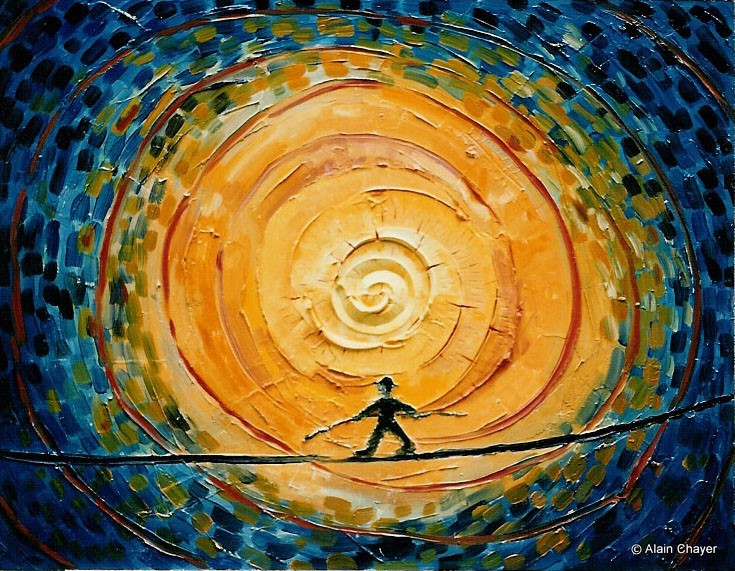
Zarathustra, aged thirty, comes down from his meditative mountain to preach to the crowd, like his Persian prototype Zoroaster; but the crowd turns from him to see a rope-walker perform. The rope-walker falls, and dies. Zarathustra takes him upon his shoulders and carries him away; “because thou hast made danger thy calling, therefore shall I bury thee with my own hands.” “Live dangerously,” he preaches. “Erect your cities beside Vesuvius. Send out your ships to unexplored seas. Live in a state of war.” 

Nietzsche preaches to others to live dangerously, “Erect your cities beside Vesuvius. Send out your ships to unexplored seas. Live in a state of war.”

And remember to disbelieve. Zarathustra, coming down from the mountain, meets an old hermit who talks to him about God. “But when Zarathustra was alone, he spake thus with his heart: “Can it actually be possible? This old saint in his forest hath not yet heard aught of God being dead!” But of course God was dead, all the Gods were dead. 

For the old Gods came to an end long ago. And verily it was a good and joyful end of Gods!
They did not die lingering in the twilight,—although that lie is told! On the contrary, they once upon a time—laughed themselves unto death!
That came to pass when, by a God himself, the most ungodly word was uttered, the word: “there is but one God! Thou shalt have no other gods before me.”
An old grim beard of a God, a jealous one, forgot himself thus.
And then all Gods laughed and shook on their chairs and cried: “Is godliness not just that there are Gods, but no God?”
Whoever hath ears let him hear.
Thus spake Zarathustra.

All gods probably died when the most ungodly word was uttered, “There is but one God! Thou shalt have no other gods before me.”

What hilarious atheism! “Is not just this godliness, that there are no gods?” ”What could be created if there were Gods? … If there were Gods, how could I bear to be no God? Consequently there are no Gods.” “Who is more ungodly than I, that I may enjoy his teachings?” “I conjure you, my brethren, remain faithful to earth, and do not believe those who speak unto you of super terrestrial hopes! Poisoners they are, whether they know it or not.” Many an erstwhile rebel returns to this sweet poison at last, as a necessary anesthesia for life. The ”higher men” gather in Zarathustra’s cave to prepare themselves to preach his doctrine; he leaves them for a while, and returns to find them offering incense to a donkey who has “created the world in his own image—i. e., as stupid as possible.” This is not edifying; but then, says our text: 

He who must be a creator in good and evil—verily, he must first be a destroyer, and break values into pieces.
Thus the highest evil is part of the highest goodness. But that is creative goodness.
Let us speak thereon, ye wisest men, however bad it be. To be silent is worse; all unuttered truths become poisonous.
And whatever will break on our truths;. let it break! Many a house hath yet to be built.”
Thus spake Zarathustra.

There is so much ungodly and stupid thinking goes on in the name of God and religion. Let it all destroy itself.

Is this irreverent? But Zarathustra complains that “nobody knoweth any longer how to revere,” and he calls himself “the most pious of all those who believe not in God.” He longs for belief, and pities “all who, like myself, suffer from the great loathing, for whom the old God died and no new God yet lieth in cradles and napkins.” And then he pronounces the name of the new God: 

Dead are all Gods; now we will that superman live. …
I teach you superman. Man is a something that shall be surpassed. What have ye done to surpass him? …
What is great in man is that he is a bridge and not a goal: what can be loved in man is that he is a transition and a destruction.
I love those who do not know how to live except in perishing, for they are those going beyond.
I love the great despisers because they are the great adorers, they are arrows of longing for the other shore.
I love those who do not seek beyond the stars for a reason to perish and be sacrificed, but who sacrifice themselves to earth in order that earth may some day become superman’s. …
It is time for man to mark his goal. It is time for man to plant the germ of his highest hope. …
Tell me, my brethren, if the goal be lacking to humanity, is not humanity itself lacking? …
Love unto the most remote man is higher than love unto your neighbor.

The old God has died for us. Man is the bridge to a new God. Man must evolve by perishing. Man must have a great longing for what lies beyond. Man must not be satisfied with what exist. There must be a higher goal.

Nietzsche appears to foresee that every reader will think himself the superman; and tries to guard against this by confessing that the superman is not yet born; we can only be his fore-runners and his soil. ”Will nothing beyond your capacity. … Be not virtuous beyond your ability; and demand nothing of yourselves contrary to probability.” Nat for us is the happiness which only the superman will know; our best goal is work. “For a long time I ceased not to strive for my happiness; now I strive for my work.” 

That higher goal must be real and achievable. Just do your work that is within your capacity, ability and reach. The superman will come.

Nietzsche is not content with having created God in his own image; he must make himself immortal. After the superman comes Eternal Recurrence. All things will return, in precise detail, and an infinite number of times; even Nietzsche will return, and this Germany of blood and iron and sack-cloth and ashes, and all the travail of the human mind from ignorance to Zarathustra. It is a terrible doctrine, the last and most courageous form of Yea saying and the acceptance of life; and yet how could it not be? The possible combinations of reality are limited, and time is endless; some day, inevitably, life and matter will fall into just such a form as they once had, and out of that fatal repetition all history must unwind its devious course again. To such a pass determinism brings us. No wonder Zarathustra feared to speak this his last lesson; feared and trembled and held back, until a voice spoke to him: “What matter about thyself, Zarathustra? Say thy word and break in pieces !”

Beyond the will to survive is the will to evolve.

.

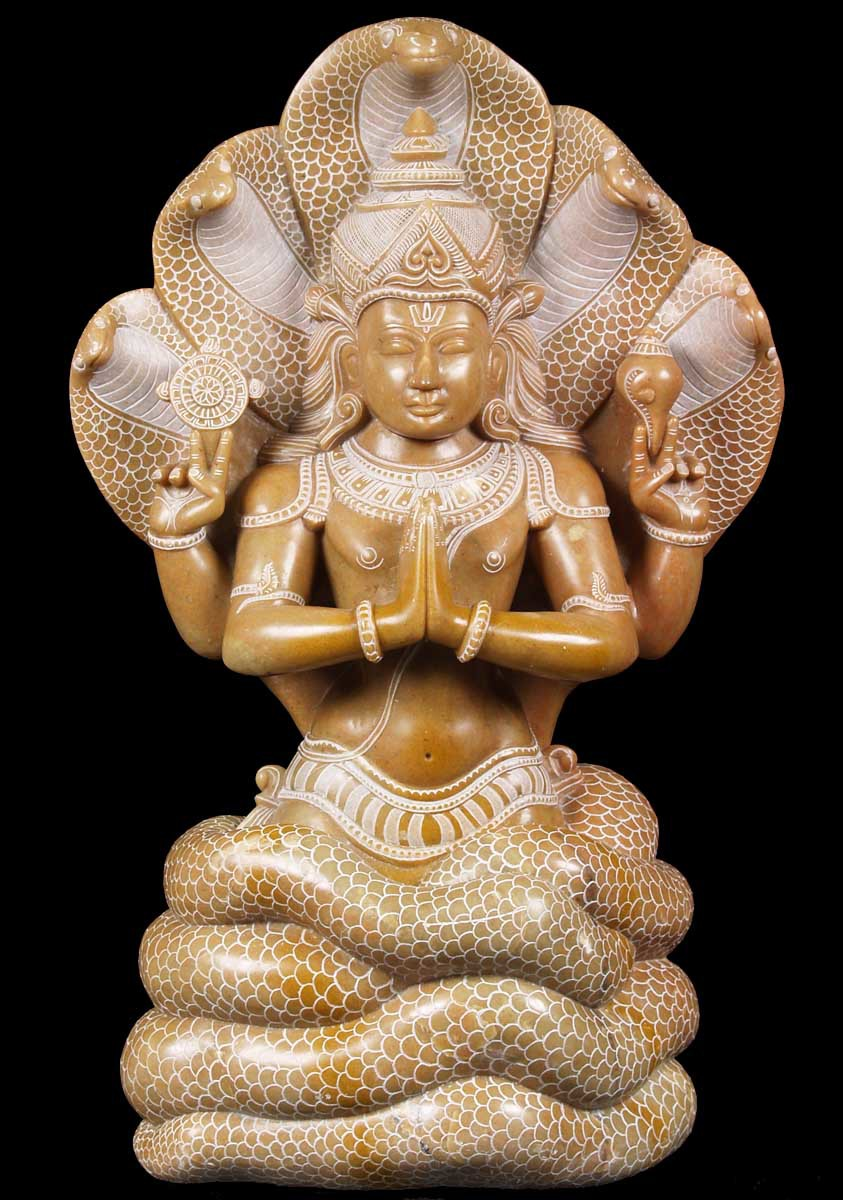
Patanjali Yoga Sutras

Reference: THE SANSKRIT CHANNEL
Reference: FOUR CHAPTERS ON FREEDOM

Definitions

To find the meaning of a Sanskrit word, enter its English transliteration in ‘Sanskrit Dictionary 1’ to obtain the Sanskrit script for the word; then, enter that word in Sanskrit script in ‘Sanskrit Dictionary 2’. You’ll get the full meanings from Sanskrit Dictionary 2.

  1. Sanskrit Dictionary 1
  2. Sanskrit Dictionary 2
  3. Sanskrit Dictionary 3
  4. Glossary for Patanjali Yoga

Guided Chant with Narrated Meanings

All 4 Chapters of Patanjali Yoga Sutras (58:27)

Chapter One: Samadhi Pada

  1. 1-Video with Meaning (15:56)
  2. 1-Video with Explanation (3:02:02)
  3. 1-Text with Meaning
  4. 1-Vinaire’s comments with summary

.

Chapter Two: Sadhana Pada

  1. 2-Video with Meaning (17:17)
  2. 2-Video with Explanation (3:02:33)
  3. 2-Text with Meaning
  4. 2-Vinaire’s comments with summary

.

Chapter Three: Vibhooti Pada

  1. 3-Video with Meaning (16:15)
  2. 3-Video with Explanation (3:17:00)
  3. 3-Text with Meaning
  4. 3-Vinaire’s comments with summary

.

Chapter Four: Kaivalya Pada

  1. 4-Video with Meaning (10:20)
  2. 4-Video with Explanation (2:02:03)
  3. 4-Text with Meaning
  4. 4-Vinaire’s comments with summary

.