BERGSON: Mind and Brain

Reference: The Story of Philosophy

This paper presents Chapter X Section 1.2 from the book THE STORY OF PHILOSOPHY by WILL DURANT. The  contents are from the 1933 reprint of this book by TIME INCORPORATED by arrangement with Simon and Schuster, Inc.

The paragraphs of the original material (in black) are accompanied by brief comments (in color) based on the present understanding.

.

I. HENRI BERGSON

2. Mind and Brain

We naturally incline to materialism, Bergson argues, because we tend to think in terms of space; we are geometricians all. But time is as fundamental as space; and it is time, no doubt, that holds the essence of life, and perhaps of all reality. What we have to understand is that time is an accumulation, a growth, a duration. “Duration is the continuous progress of the past which gnaws into the future and which swells as it advances”; it means that “the past in its entirety is prolonged into the present and abides there actual and acting.” Duration means that the past endures, that nothing of it is quite lost. “Doubtless we think with only, a small part of our past; but it is with our entire past … that we desire will, and act.” And since time is an accumulation, the future can never be the same as the past, for a new accumulation arises at every step. “Each moment is not only something new, but something unforeseeable; … change is far more radical than we suppose”; and that geometrical predictability, of all things which is the goal of a mechanist science is only an intellectualist delusion. At least “for a conscious being, to exist is to change, to change is to mature, to mature is to go on creating one’s self endlessly.” what if this is true of all things? Perhaps all reality is time and duration, becoming and change?

We naturally incline to materialism, Bergson argues, because we tend to think in terms of space. But time is as fundamental as space; and it holds the essence of life, and perhaps of all reality. We desire, will, and act with our entire past. To exist is to change.

In ourselves, memory is the vehicle of duration, the handmaiden of tune; and through it so much of our past is actively retained that rich alternatives present themselves for every situation. As life grows richer in its scope, its heritage and its memories, the field of choice widens, and at last the variety of possible responses generates consciousness, which is the rehearsal of response. “Consciousness seems proportionate to the living being’s power of choice. It lights up the zone of potentialities that surrounds the act. It fills the interval between what is done and what might be done.” It is no useless appendage; it is a vivid theatre of imagination, where alternative responses are pictured and tested before the irrevocable choice. “In reality,” then, “a living being is a center of action; it represents a sum of contingency entering into the world; that is to say, a certain quantity of possible action.” Man is no passively adaptive machine; he is a focus of redirected force, a center of creative evolution.

As life grows richer in its scope, its heritage and its memories, the field of choice widens, and at last the variety of possible responses generates consciousness. Man is no passively adaptive machine; he is a focus of redirected force, a center of creative evolution.

Free will is a corollary of consciousness; to say that we are free is merely to mean that we know what we are doing.

The primary function of memory is to evoke all those past perceptions which are analogous to the present perception, to recall to us what preceded and what followed them, and so to suggest to us that decision which is the most useful. But this is not all. By allowing us to grasp in a single intuition multiple moments of duration, it frees us from the movement of the flow of things, that is to say, from the rhythm of necessity. The more of these moments memory can contract into one, the firmer is the hold which it gives to us on matter; so that the memory of a living being appears indeed to measure, above all, its powers of action upon things.

To say that we are free is merely to mean that we know what we are doing. We are not free when we are reacting to a trigger.

If determinists were right, and every act were the automatic and mechanical resultant of pre-existent forces, motive would flow into action with lubricated ease. But on the contrary, choice is burdensome and effortful, it requires resolution, a lifting up of the power of personality against the spiritual gravitation of impulse or habit or sloth. Choice is creation and creation is labor. Hence the worried features of men; and their weary envy of the choiceless routine of animals, who “are so placid and self-contained.” But the Confucian peacefulness of your dog is no philosophic calm, no quiet surface of unfathomed depth; it is the certainty of instinct, the orderliness of an animal that need not, and cannot, choose. “In the animal, invention is never anything but a variation on the theme of routine. Shut up in the habits of the species, it succeeds, no doubt, in enlarging them by its individual initiative; but it escapes automatism only for an instant, for just the time to create a new automatism. The gates of its prison close as soon as they are opened; by pulling at its chain, it succeeds only in stretching it. With man, consciousness breaks the chain. In man, and man alone; it sets itself free.” *

* This is an example of Bergson’s facility in replacing argument with analogy, and of his tendency to exaggerate the gap between animals arid men. Philosophy should not flatter. Jerome Coignard was wiser, and “would have refused to sign the Declaration of the Rights of Man, because of the sharp and unwarranted distinction it drew between man and the gorilla.”

If determinists were right, motive would flow into action with lubricated ease. But on the contrary, choice is effortful, and it requires resolution. Determinism by instinct has been lessening as life organisms have evolved; until, in man, it is possible to reduce it completely.

Mind, then, is not identical with brain. Consciousness depends upon the brain, and falls with it; but so does a coat fall with the nail on which it hangs,—which does not prove that the coat is an “epiphenomenon,” an ornamental ectoplasm of the nail. The brain is the system of images and reaction-patterns; consciousness is the recall of images and the choice of reactions. “The direction of the stream is distinct from the river bed, although, it must adopt its winding course. Consciousness is distinct from, the organism which it animates, although it must undergo its vicissitudes.”

Consciousness is distinct from, the organism which it animates, although it must undergo its vicissitudes.

It is sometimes said that in ourselves, consciousness is directly connected with a brain, and that we must therefore attribute consciousness to living beings which have a brain, and deny it to those which have none. But it is easy to see the fallacy of such an argument. It would be just as though we should say that because in ourselves digestion is directly connected with a stomach, therefore only living beings with a stomach can digest. We should be entirely wrong, for it is not necessary to have a stomach, nor even to have special organs, in order to digest. An amoeba digests, although it is an almost undifferentiated protoplasmic mass. What is true is that in proportion to the complexity and perfection of an organism, there is a division of labor; special organs are assigned special functions, and the faculty of digesting is localized in the stomach, or rather is a general digestive apparatus, which works better because confined to that one function alone. In like manner, consciousness in man is unquestionably connected with the brain; but it by no means follows that a brain is indispensable to consciousness. The lower we go in the animal series, the more nervous centers are simplified and separate from one another, and at last they disappear altogether, merged in the general mass of an organism with hardly any differentiation. If, then, at the top of the scale of living beings, consciousness is attached to very complicated nervous centers, must we not suppose that it accompanies the nervous system down its whole descent, and that when at last the nerve stuff is merged in the yet undifferentiated living matter, consciousness is still there, diffused, confused, but not reduced to nothing? Theoretically, then, everything living might be conscious. In principle, consciousness is co-extensive with life.

In principle, consciousness is co-extensive with life.

Why is it, nevertheless, that we seem to think of mind and thought in terms of matter and the brain? It is because that part of our minds which we call the “intellect” is a constitutional materialist; it was developed, in the process of evolution, to understand and deal with material, spatial objects; from this field it derives all its concepts and its “laws,” and its notion of a fatalistic and predictable regularity everywhere! “Our intellect, in the narrow sense of the word, is intended to secure the perfect fitting of our body to its environment, to represent the relations of external things among themselves,—in short, to think matter.” It is at home with solids, inert things; it sees all becoming as being, * as a series of states; it misses the connective tissue of things, the flow of duration that constitutes their very life.

* Cf. Nietzsche: “Being is a fiction invented by those who suffer from becoming.”—Birth of Tragedy, p. xxvii.

We seem to think of mind and thought in terms of matter and the brain, because our intellect was developed to understand and deal with material, spatial objects. Therefore, it has the notion of a fatalistic and predictable regularity everywhere.

Look at the moving-picture; it seems to our tired eyes to be alive with motion and action; here, surely, science and mechanism have caught the continuity of life. On the contrary, it is just here that science and the intellect reveal their limitations. The moving picture does not move, is not a picture of motion; it is only a series of instantaneous photographs, “snap-shots,” taken in such rapid succession that when they are thrown in rapid succession upon the screen, the willing spectator enjoys the illusion of continuity, as he did in his boyhood with thumbnail movies of his pugilistic heroes. But it is an illusion none the less; and the cinema film is obviously a series of pictures in which everything is as still as if eternally congealed.

The moving picture does not move. It is only a series of instantaneous photographs taken in rapid succession. When they are thrown in rapid succession upon the screen, there is an illusion of motion. It is just here that science and the intellect reveal their limitations.

And as the “motion”-picture camera divides into static poses the vivid current of reality, so the human intellect catches a series of states, but loses the continuity that weaves them into life. We see matter and we miss energy; we think that we know what matter is; but when at the heart of the atom we find energy, we are bewildered, and our categories melt away. “No doubt, for greater strictness, all considerations of motion may be eliminated from mathematical processes; but the introduction of motion into the genesis of figures is nevertheless the origin of modern mathematics”;—nearly all the progress of mathematics in the nineteenth century was due to the use of the concepts of time and motion in addition to the traditional geometry of space. All through contemporary science, as one sees in Mach and Pearson and Henri Poincare, there runs the uncomfortable suspicion that “exact” science is merely an approximation, which catches the inertia of reality better than its life.

The human intellect catches a series of states, but loses the continuity that weaves them into life. “Exact” science is merely an approximation, which catches the inertia of reality better than its life.

But it is our own fault if, by insisting on the application of physical concepts in the field of thought, we end in the impasse of determinism, mechanism, and materialism. The merest moment of reflection might have shown how inappropriate the concepts of physics are in the world of mind: we think as readily of a mile as of half a mile, and one flash of thought can circumnavigate the globe; our ideas elude every effort to picture them as material particles moving in space, or as limited by space in their flight and operation; Life escapes these solid concepts; for life is a matter of time rather than of space; it is not position, it is change; it is not quantity so much as quality; it is not a mere redistribution of matter and motion, it is fluid and persistent creation.

A very small element of a curve is very near to being a straight line. And the smaller it is, the nearer. In the limit it may be termed a part of the straight line, as you please, for in each of its points a curve coincides with its tangent. So, likewise, ‘vitality’ is tangent, at any and every point, to physical and chemical forces; but such points are, in fact, only views taken by a mind which imagines stops at various moments of the movement that generates the curve. In reality, life is no more made-up of physico-chemical elements than a curve is composed of straight lines.

But it is our own fault if, by insisting on the application of physical concepts in the field of thought, we end in the impasse of materialism. Life escapes these solid concepts; for life is fluid and persistent creation.

How then shall we catch the flow and essence of life if not by thinking and the intellect? But is the intellect all? Let us for a while stop thinking, and just gaze upon that inner reality—our selves—which is better known to us than all things else: what do we see? Mind, not matter; time, not space; action, not passivity; choice, not mechanism. We see life in its subtle and penetrating flow, not in its “states of mind,” not in its devitalized and separated parts, as when the zoologist examines a dead frog’s legs, or studies preparations under a microscope, and thinks that he is a biologist studying life! This direct perception, this simple and steady looking-upon (intueor) a thing, is intuition; not any mystic process, but the most direct examination possible to the human mind. Spinoza was right: reflective thought is not by any means the highest form of knowledge; it is better, no doubt, than hearsay; but how weak it is beside the direct perception of the thing itself! “A true empiricism is one that sets itself the task of getting as close as possible to the original, of sounding the depths of life, of feeling the pulse of its spirit by a sort of intellectual auscultation”; we “listen in” on the current of life. By direct perception we feel the presence of mind; by intellectual circumlocution we arrive at the notion that thought is a dance of molecules in the brain. Is there any doubt that intuition here beholds more truly the heart of life? 

We don’t catch the flow and essence of life by thinking and the intellect. We can get a glimpse of it by directly looking at ourselves. This simple and steady looking-upon a thing is the most direct examination possible to the human mind. 

This does not mean that thinking is a disease, as Rousseau held, or that the intellect is a treacherous thing which every decent citizen should forswear. The intellect retains its normal function of dealing with the material and spatial world; and with the material aspects or spatial expressions of life and mind; intuition is limited to the direct feeling of life and mind, not in their external embodiments but in their inner being. “I have never maintained that it was necessary ‘to put something different in the place of intellect,’ or to set instinct above it. I have simply tried to show that when we leave the domain of mathematics and physics to enter that of life and consciousness, we must make our appeal to a certain sense of life which cuts across pure understanding and has its origin in the same vital impulse as instinct—although instinct, properly so-called, is quite a different thing.” Nor do we try “to refute intellect by intellect”; we merely “adopt the language of the understanding, since only the understanding has a language”; we cannot help it if the very words that we use are psychological only by symbolism, and still reek with the material connotations forced upon them by their origin. Spirit means breath, and mind means a measure, and thinking points to a thing; nevertheless these are the crass media through which the soul must express itself. “It will be said that we do not transcend our intellect, for it is still with our intellect, and through our intellect, that we see the other forms of consciousness”; even introspection and intuition are materialist metaphors. And this would be a legitimate objection, “if there did not remain, around our conceptual and logical thought, a vague nebulosity, made of the very substance out of which has been formed the luminous nucleus that we call the intellect.” The new psychology is revealing in us a mental region incomparably wider than the intellect. “To explore the most sacred depths of the unconscious, to labor in the sub-soil of consciousness: that will be the principal task of psychology in the century whIch is opening. I do not doubt that wonderful discoveries await it there.”

While the intellect deals with the material and spatial world; intuition is limited to the direct feeling of life and mind in their inner being. Intuition has its origin in the same vital impulse as instinct—although instinct is quite a different thing. The new psychology is revealing in us a mental region incomparably wider than the intellect. 

.
BERGSON: The Revolt against Materialism

Reference: The Story of Philosophy

This paper presents Chapter X Section 1.1 from the book THE STORY OF PHILOSOPHY by WILL DURANT. The  contents are from the 1933 reprint of this book by TIME INCORPORATED by arrangement with Simon and Schuster, Inc.

The paragraphs of the original material (in black) are accompanied by brief comments (in color) based on the present understanding.

.

I. HENRI BERGSON

1. The Revolt Against Materialism

The history of modern philosophy might be written in terms of the warfare of physics and psychology. Thought may begin with its object, and at last, in consistency, try to bring its own mystic reality within the circle of material phenomena and mechanical law; or it may begin with itself, and be driven, by the apparent necessities of Iogic, to conceive all things as forms and creatures of mind. The priority of mathematics and mechanics in the development of modern science, and the reciprocal stimulation of industry and physics under the common pressure of expanding needs, gave to speculation a materialistic impulsion; and the most successful of the sciences became the models of philosophy. Despite Descartes’ insistence that philosophy should begin with the self and travel outward, the industrialization of Western Europe drove thought away from thought and in the direction of material things.

The history of modern philosophy might be written in terms of the warfare of physics and psychology. Thought may begin with its object, and bring its own mystic reality to the interpretation of material phenomena; or it may begin with itself, and be driven by logic to conceive all things as forms.

Spencer’s system was the culminating expression of this mechanical point of view. Hailed though he was as “the philosopher of Darwinism,” he was more truly the reflex and exponent of industrialism; he endowed industry with glories and virtues which to our hind-sight seem ridiculous; and his outlook was rather that of a mechanician and an engineer absorbed in the motions of matter, than that of a biologist feeling the elan of life. The rapid obsolescence of his philosophy is due largely to the replacement of the physical by the biological stand-point in recent thought; by the growing disposition to see the essence and secret of the world in the movement of life rather than in the inertia of things. And indeed, matter itself has in our days almost taken on life: the study of electricity, magnetism, and the electron has given a vitalistic tinge to physics; so that instead of a reduction of psychology to physics—which was the more or less conscious ambition of English thought—we approach a vitalized physics and an almost spiritualized matter. It was Schopenhauer who first, in modern thought, emphasized the possibility of making the concept of life more fundamental and inclusive than that of force; it is Bergson who in our own generation has taken up this idea, and has almost converted a skeptical world to it by the force of his sincerity and his eloquence.

Spencer’s outlook was rather that of a mechanician absorbed in the motions of matter, than that of a biologist feeling the elan of life. But Schopenhauer was the first to emphasize the possibility of making the concept of life more fundamental and inclusive than that of force.

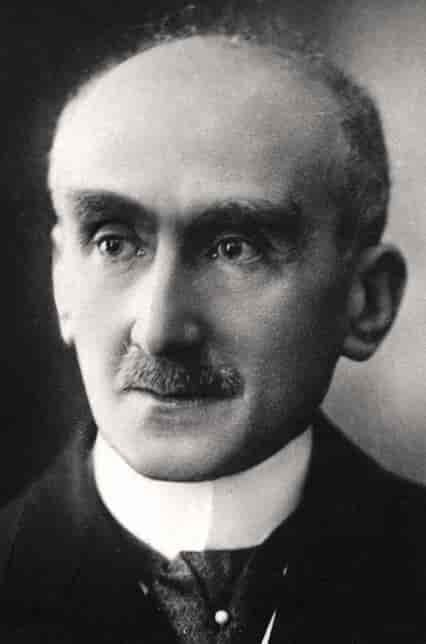
Bergson was born in Paris, in 1859, of French and Jewish parentage. He was an eager student, and seems to have taken every prize that turned up. He did homage to the traditions of modern science by specializing at first in mathematics and physics, but his faculty for analysis soon brought him face to face with the metaphysical problems that lurk behind every science; and he turned spontaneously to philosophy. In 1878 he entered the Ecole Normale Superieure, and on graduating, was appointed to teach philosophy at the Lycee of Clermont-Ferrand. There, in 1888, he wrote his first major work—the Essai sur les donnees immediates de la conscience (Essay on the immediate data of consciousness), translated as Time and Free-will. Eight quiet years intervened before the appearance of his next (and his most difficult) book—Matiere et memoiren (Matter and memory). In 1898 he became professor at the Ecole Normale, and in 1900 at the College de France, where he has been ever since. In 1907 he won international fame with his masterpiece—L’Evolution creatrice (Creative Evolution); he became almost overnight the most popular figure in the philosophic world; and all that was needed for his success was the placing of his books upon the Index Expurgatorius (Index of Purgatory) in 1914. In that same year he was elected to the French Academy.

Bergson specialized at first in mathematics and physics, but as he came face to face with the metaphysical problems, he turned spontaneously to philosophy. 

It is a remarkable thing that Bergson, the David destined to slay the Goliath of materialism, was in youth a devotee of Spencer. But too much knowledge leads to skepticism; early devotees are the likeliest apostates, as early sinners are senile saints. The more he studied Spencer, the more keenly conscious Bergson became of the three rheumatic joints of the materialist mechanism: between matter and life, between body and mind, and between determinism and choice. The patience of Pasteur had discredited the belief in abiogenesis (the generation of life by non-living matter); and after a hundred years of theory and a thousand vain experiments, the materialists were no nearer than before to solving the problem of the origin of life. Again, though thought and brain were obviously, connected, the mode of connection was as far from obvious as it had ever been. If mind was matter, and every mental act a mechanical resultant of neural states, of what use was consciousness? Why could not the material mechanism of the brain dispense with this “epiphenomenon,” as the honest and logical Huxley called it, this apparently useless flame thrown up by the heat of cerebral commotion? Finally, was determinism any more intelligible than free will? If the present moment contains no living and creative choice, and is totally and mechanically the product of the matter and motion of the moment before, then so was that moment the mechanical effect of the moment that preceded it, and that again of the one before … and so on, until we arrive at the primeval nebula as the total cause of every later event, of every line of Shakespeare’s plays, and every suffering of his soul; so that the sombre rhetoric of Hamlet and Othello, of Macbeth and Lear, in every clause and every phrase, was written far off there in the distant skies and the distant aeons, by the structure and content of that legendary cloud. What a draft upon credulity! What an exercise of faith such a theory must demand in this unbelieving generation! What mystery or miracle, of Old, Testament or New, could be half so incredible as this monstrous fatalistic myth, this nebula composing tragedies? There was matter enough for rebellion here; and if Bergson rose so rapidly to fame it was because he had the courage to doubt where all the doubters piously believed.

The mechanical view of no living and creative choice in the present moment inevitably leads to the primeval nebula as the total cause of every later event. Bergson had the courage to doubt this monstrous fatalistic myth.

.

NIETZSCHE: Finale

Reference: The Story of Philosophy

This paper presents Chapter IX Section 10 from the book THE STORY OF PHILOSOPHY by WILL DURANT. The  contents are from the 1933 reprint of this book by TIME INCORPORATED by arrangement with Simon and Schuster, Inc.

The paragraphs of the original material (in black) are accompanied by brief comments (in color) based on the present understanding.

.

X. Finale

“I love him who willeth the creation of something beyond himself, and then perisheth,” said Zarathustra.

Undoubtedly Nietzsche’s intensity of thought consumed him prematurely. His battle against his time unbalanced his mind; “it has always been found a terrible thing to war with the moral system of one’s age; it will have its revenge … from within and from without.” Towards the end Nietzsche’s work grew in bitterness; he attacked persons as well as ideas,—Wagner, Christ, etc. “Growth in wisdom,” he wrote, “may be exactly measured by decrease in bitterness”: but he could not convince his pen. Even his laughter became neurotic as his mind broke down; nothing could better reveal the poison that was corroding him than the reflection: “Perhaps I know best why man is the only animal that laughs: he alone suffers so excruciatingly that he was compelled to invent laughter.” Disease and increasing blindness were the physiological side of his breakdown. He began to give way to paranoiac delusions of grandeur and persecution; he sent one of his books to Taine with a note assuring the great critic that it was the most marvelous book ever written; and he filled his last book, Ecce Homo, with such mad self-praise as we have seen. Ecce homo!—alas, we behold the man here only too well!

Undoubtedly Nietzsche’s intensity of thought consumed him prematurely. His battle against his time unbalanced his mind. Towards the end Nietzsche’s work grew in bitterness; he attacked persons as well as ideas. Disease and increasing blindness were the physiological side of his breakdown.

Perhaps a little more appreciation by others would have forestalled this compensatory egotism, and given Nietzsche a better hold upon perspective and sanity. But appreciation came too late. Taine sent him a generous word of praise when almost all others ignored or reviled him; Brandes wrote to tell him that he was giving a course of lectures on the “aristocratic radicalism” of Nietzsche at the University of Copenhagen; Strindberg wrote to say that he was turning Nietzsche’s ideas to dramatic use; perhaps best of all, an anonymous admirer sent a check for $400. But when these bits of light came, Nietzsche was almost blind in sight and soul; and he had abandoned hope. “My time is not yet,” he wrote; “only the day after tomorrow belongs to me.”

Perhaps a little more appreciation by others would have forestalled this compensatory egotism, and given Nietzsche a better hold upon perspective and sanity. But appreciation came too late.

The last blow came at Turin in January, 1889, in the form of a stroke of apoplexy. He stumbled blindly back to his attic room, and dashed off mad letters: to Cosima Wagner four words-“Ariadne, I love you”; to Brandes a longer message signed “The Crucified”; and to Burckhardt and Overbeck such fantastic missives that the latter hurried to his aid. He found Nietzsche ploughing the piano with his elbows, singing and crying his Dionysian ecstasy.

They took him at first to an asylum, but soon his old mother came to claim him and take him under her own forglving care. What a picture!—the pious woman who had borne sensitively but patiently the shock of her son’s apostasy from all that she held dear, and who, loving him none the less, received him now into her arms, like another Pieta. She died in 1897, and Nietzsche was taken by his sister to live in Weimar. There a statue of him was made by Kramer—a pitiful thing, showing the once powerful mind broken, helpless, and resigned. Yet he was not all unhappy; the peace and quiet which he had never had when sane were his now; Nature had had mercy on him when she made him mad. He caught his sister once weeping as she looked at him, and he could not understand her tears: “Lisbeth,” he asked, “why do you cry? Are we not happy?” On one occasion he heard talk of books; his pale face lit up: “Ah!” he said, brightening, “I too have written some good books”—and the lucid moment passed. 

The last blow came at Turin in January, 1889, in the form of a stroke of apoplexy. They took him at first to an asylum, but soon his old mother came to claim him and take him under her own forgiving care. It was a once powerful mind broken, helpless, and resigned. 

He died in 1900. Seldom has a man paid so great a price for genius.

.

NIETZSCHE: Criticism

Reference: The Story of Philosophy

This paper presents Chapter IX Section 9 from the book THE STORY OF PHILOSOPHY by WILL DURANT. The  contents are from the 1933 reprint of this book by TIME INCORPORATED by arrangement with Simon and Schuster, Inc.

The paragraphs of the original material (in black) are accompanied by brief comments (in color) based on the present understanding.

.

IX. Criticism

It is a beautiful poem; and perhaps it is a poem rather than a philosophy. We know that there are absurdities here, and that the man went too far in an attempt to convince and correct himself; but we can see him suffering at every line, and we must love him even where we question him. There is a time when we tire of sentimentality and delusion, and relish the sting of doubt and denial; and then Nietzsche comes to us as a tonic, like open spaces and fresh winds after a long ceremony in a crowded church. “He who knows how to breathe in the air of my writings is conscious that it is the air of the heights, that it is bracing. A man must be built for it; otherwise the chances are that it will kill him.” Let none mistake this acid for infant’s milk.

There is a time when we tire of sentimentality and delusion, and relish the sting of doubt and denial; and then Nietzsche comes to us as a tonic, like open spaces and fresh winds after a long ceremony in a crowded church.

And then what style! “People will say, some day, that Heine and I were the greatest artists, by far, that ever wrote in German, and that we left the best any mere German could do an incalculable distance behind us.” And it is almost so.* ”My style dances,” he says; every sentence is a lance; the language is supple, vigorous, nervous,—the style of a fencer, too quick and brilliant for the normal eye. But on rereading him we perceive that something of this brilliance is due to exaggeration, to an interesting but at last neurotic egotism, to an over-facile inversion of every accepted notion, the ridicule of every virtue, the praise of every vice; he takes, we discover, a sophomore’s delight in shocking; we conclude that it is easy to be interesting when one has no prejudices in favor of morality. These dogmatic assertions, these unmodified generalizations, these prophetic repetitions, these contradictions—of others not more than of himself—reveal a mind that has lost its balance, and hovers on the edge of madness. At last this brilliance tires us out and exhausts our nerves, like whips upon the flesh, or loud emphasis in conversation. There is a sort of Teutonic bluster in this violence of speech; none of that restraint which is the first principle of art; none of that balance, harmony, and controversial urbanity, which Nietzsche so admired in the French. Nevertheless is it a powerful style; we are overwhelmed with the passion and iteration of it; Nietzsche does not prove, he announces and reveals; he wins us with his imagination rather than with his logic; he offers us not a philosophy merely, nor yet only a poem, but a new faith, a new hope, a new religion.

* Nietzsche thought himself a Pole.

Something of Nietzsche’s brilliance is due to exaggeration. These dogmatic assertions reveal a mind that has lost its balance, and hovers on the edge of madness. Nevertheless it is a powerful style. Nietzsche offers us a new faith, a new hope, a new religion.

His thought, as much as his style, reveals him as a son of the Romantic movement. ”What,” he asks, “does a philosopher firstly and lastly require of himself? To overcome his age in himself, to become ‘timeless.'” But this was a counsel of perfection which he more honored in the breach than in the observance; he was baptized with the spirit of his age, and by total immersion. He did not realize how Kant’s subjectivism—“the world is my idea,” as Schopenhauer honestly put it—had led to Fichte’s “absolute ego,” and this to Stirner’s unbalanced individualism, and this to the unmoralism of the superman. The superman is not merely Schopenhauer’s “genius,” and Carlyle’s “hero,” and Wagner’s Siegfried; he looks suspiciously like Schiller’s Karl Moor and Goethe’s Gotz; Nietzsche took more than the word Uebermensch (superior humans) from the young Goethe whose later Olympian calm he scorned so enviously. His letters are full of romantic sentiment and tenderness; “I suffer” recurs in them almost as frequently as “I die” in Heine. He calls himself “a mystic and almost maenadic ‘soul,” and speaks of The Birth of Tragedy as “the confession of a romanticist.” “I am afraid,” he writes to Brandes, “that I am too much of a musician not to be a romanticist.” “An author must becomesilent when his work begins to speak”; but Nietzsche never conceals himself, and rushes into the first person on every page. His exaltation of instinct against thought, of the individual against society, of the “Dionysian” against the “Apollonian” (i. e., the romantic against the classic type), betrays his time as definitely as the dates of his birth and his death. He was, for the philosophy of his age, what Wagner was for its music,—the culmination of the Romantic movement, the high tide of the Romantic stream; he liberated and exalted the “will” and the “genius” of Schopenhauer from all social restraint, as Wagner liberated and exalted the passion that had torn at its classic bonds in the Sonata Pathetique and the Fifth and Ninth Symphonies. He was the last great scion of the lineage of Rousseau.

Nietzsche’s thought, as much as his style, reveals him as a son of the Romantic movement. His exaltation of instinct against thought, of the individual against society, of the “Dionysian” against the “Apollonian”, betrays his time as definitely as the dates of his birth and his death. He was the last great scion of the lineage of Rousseau.

Let us go back now on the road we have traveled with Nietzsche, and tell him, however ineffectually, some of the objections with which we were so often tempted to interrupt him. He was wise enough to see for himself, in his later years, how much absurdity had contributed to the originality of The Birth of Tragedy. Scholars like Wilamowitz-Moellendorff laughed the book out of the philologic court. The attempt to deduce Wagner from Aeschylus was the self-immolation of a young devotee before a despotic god. Who would have thought that the Reformation was “Dionysian”—i. e., wild, unmoral, vinous, Bacchanalian; and that the Renaissance was quite the opposite of these, quiet, restrained, moderate, “Apollonian”? Who would have suspected that “Socratism was the culture of the opera”? The attack on Socrates was the disdain of a Wagnerian for logical thought; the admiration for Dionysus was a sedentary man’s idolatry of action (hence also the apotheosis of Napoleon), and a bashful bachelor’s secret envy of masculine bibulousness and sexuality. 

Nietzsche was wise enough to see for himself, in his later years, how much absurdity had contributed to the originality of The Birth of Tragedy. Who would have thought that the Reformation was “Dionysian” and that the Renaissance was quite the opposite of these, quiet, restrained, moderate, “Apollonian”?

Perhaps Nietzsche was right in considering the pre-Socratic age as the halcyon days of Greece; no doubt the Peloponnesian War undermined the economic and political basis of Periclean culture. But it was a little absurd to see in Socrates only a disintegrating criticism (as if Nietzsche’s own function was not chiefly this) and not also a work of salvage for a society ruined less by philosophy than by war and corruption and immorality. Only a professor of paradox could rank the obscure and dogmatic fragments of Heraclitus above the mellowed wisdom and the developed art of Plato. Nietzsche denounces Plato, as he denounces all his creditors—no man is a hero to his debtor ; but what is Nietzsche’s philosophy but the ethics of Thrasymachus and Callicles, and the politics of Plato’s Socrates?—With all his philology, Nietzsche never quite penetrated to the spirit of the Greeks; never learned the lesson that moderation and self-knowledge (as taught by the Delphic inscriptions and the greater philosophers) must bank, without extinguishing, the fires of passion and desire; that Apollo must limit Dionysus. Some have described Nietzsche as a pagan; but he was not that: neither Greek pagan like Pericles nor German pagan like Goethe; he lacked the balance and restraint that made these men strong. “I shall give back to men the serenity which is the condition of all culture,” he writes, but alas, how can one give what one has not?

Nietzsche was not even a pagan for he lacked the balance and restraint that made men like Pericles and Goethe strong.

Of all Nietzsche’s books, Zarathustra is safest from criticism, partly because it is obscure, and partly because its inexpugnable merits dwarf all fault-finding. The idea of eternal recurrence, though common to the “Apollonian” Spencer as well as to the “Dionysian” Nietzsche, strikes one as unhealthy fancy, a weird last-minute effort to recover the belief in immortality. Every critic has seen the contradiction between the bold preachment of egoism (Zarathustra “proclaims the Ego whole and holy, and selfishness blessed”—an unmistakable echo of Stirner) and the appeal to altruism and self-sacrifice in the preparation and service of the superman. But who, reading this philosophy, will classify himself all servant, and not as superman?

Of all Nietzsche’s books, Zarathustra is safest from criticism, partly because it is obscure, and partly because its inexpugnable merits dwarf all fault-finding.

As for the ethical system of Beyond Good and Evil and The Genealogy of Morals, it is stimulating exaggeration. We acknowledge the need of asking men to be braver, and harder on themselves,—almost all ethical philosophies have asked that; but there is no urgent necessity for asking people to be crueler and “more evil”—surely this is a work of supererogation? And there is no great call to complain that morality is a weapon used by the weak to limit the strong; the strong are not too deeply impressed by it, and make rather clever use of it in turn: most moral codes are imposed from above rather than from below; and the crowd praises and blames by prestige imitation. It is well, too, that humility should be occasionally maltreated; “we have had deprecation and ducking long enough,” as the good gray poet said; but one does not observe any superabundance of this quality in modern character. Nietzsche here fell short of that historical sense which he lauded as so necessary to philosophy; or he would have seen the doctrine of meekness and humbleness of heart as a necessary antidote to the violent and warlike virtues of the barbarians who nearly destroyed, in the first millennium of the Christian era, that very culture to which Nietzsche always returns for nourishment and refuge. Surely this wild emphasis on power and movement is the echo of a feverish and chaotic age? This supposedly universal “will to power” hardly expresses the quiescence of the Hindu, the calm of the Chinese, or the satisfied routine of the medieval peasant. Power is the idol of some of us; but most of us long rather for security and peace.

Nietzsche here fell short of that historical sense which he lauded as so necessary to philosophy. Surely this wild emphasis on power and movement is the echo of a feverish and chaotic age? Power is the idol of some of us; but most of us long rather for security and peace.

In general, as every reader will have perceived, Nietzsche fails to recognize the place and value of the social instincts; he thinks the egoistic and individualistic impulses need reinforcement by philosophy! One must wonder where were Nietzsche’s eyes when all Europe was forgetting, in a slough of selfish wars, those cultural habits and acquisitions which he admired so much, and which depend so precariously on cooperation and social amenity and self-restraint. The essential function of Christianity has been to moderate, by the inculcation of an extreme ideal of gentleness, the natural barbarity of men; and any thinker who fears that men have been corrupted out of egoism into an excess of Christian virtue needs only to look about him to be comforted and reassured.

Nietzsche fails to recognize the place and value of the social instincts; he thinks the egoistic and individualistic impulses need reinforcement by philosophy!

Made solitary by illness and nervousness, and forced into war against the sluggishness and mediocrity of men, Nietzsche was led to suppose that all the great virtues are the virtues of men who stand alone. He reacted from Schopenhauer’s submergence of the individual in the species to an unbalanced liberation of the individual from social control. Foiled in his search for love, he turned upon woman with a bitterness unworthy of a philosopher, and unnatural in a man; missing parentage and losing friendship, he never knew that the finest moments of life come through mutuality and comradeship, rather than from domination and war. He did not live long enough, or widely enough, to mature his half-truths into wisdom. Perhaps if he had lived longer he would have turned his strident chaos into a harmonious philosophy. Truer of him than of the Jesus to whom he applied them, were his own words: “He died too early; he himself would have revoked his doctrine had he reached” a riper age; “noble enough to revoke he was!” But death had other plans.

Nietzsche was led to suppose that all the great virtues are the virtues of men who stand alone. He never knew that the finest moments of life come through mutuality and comradeship, rather than from domination and war. He did not live long enough, or widely enough, to mature his half-truths into wisdom. 

Perhaps in politics his vision is sounder than in morals. Aristocracy is the ideal government; who shall deny it? “O ye kind heavens! there is in every nation … a fittest, a wisest, bravest, best; whom could we find and make king over us, all were in truth well …. By what art discover him? Will the heavens in their pity teach us no art? For our need of him is great!” But who are the best? Do the best appear only in certain families, and must we therefore have hereditary aristocracy? But we had it; and it led to clique-pursuits, class-irresponsibility, and stagnation. Perhaps aristocracies have been saved, as often as destroyed, by intermarriage with the middle classes; how else has the English aristocracy maintained itself? And perhaps inbreeding degenerates? Obviously there are many sides to these complex problems, at which Nietzsche has flung so lustily his Yeas and Nays.* Hereditary aristocracies do not like world-unification; they tend to a narrowly nationalistic policy, however cosmopolitan they may be in conduct; if they abandoned nationalism they would lose a main source of their power the manipulation of foreign relations. And perhaps a world-state would not be so beneficial to culture as Nietzsche thinks; large masses move slowly; and Germany probably did more for culture when she was merely “a geographical expression,” with independent courts rivaling one another in the patronage of art, than in her days of unity and empire and expansion; it was not an emperor who cherished Goethe and rescued Wagner.

* “In my youth,” says Nietzsche somewhere, “I flung at the world with Yea and Nay; now in my oId age I do penance for it.”

Perhaps in politics his vision is sounder than in morals. Aristocracy is the ideal government; who shall deny it? But who are the best? Do the best appear only in certain families, and must we therefore have hereditary aristocracy?

It is a common delusion that the great periods of culture have been ages of hereditary aristocracy: on the contrary, the efflorescent periods of Pericles and the Medici and Elizabeth and the Romantic age were nourished with the wealth of a rising bourgeoisie; and the creative work in literature and art was done not by aristocratic families but by the offspring of the middle class;—by such men as Socrates, who was the son of a midwife, and Voltaire, who was the son of an attorney, and Shakespeare, who was the son of a butcher. It is ages of movement and change that stimulate cultural creation; ages in which a new and vigorous class is rising to power and pride. And so in politics: it would be suicidal to exclude from statesmanship such genius as lacked aristocratic pedigree; the better formula, surely, is a “career open to talent” wherever born; and genius has a way of getting born in the most outlandish places. Let us be ruled by all the best. An aristocracy is good only if it is a fluent body of men whose patent to power lies not in birth but in ability,—an aristocracy continually selected and nourished out of a democracy of open and equal opportunity to all.

An aristocracy is good only if it is a fluent body of men whose patent to power lies not in birth but in ability,—an aristocracy continually selected and nourished out of a democracy of open and equal opportunity to all.

After these deductions (if they must be made), what remains? Enough to make the critic uncomfortable. Nietzsche has been refuted by every aspirant to respectability; and yet he stands as a milestone in modern thought, and a mountain-peak in German prose. No doubt he was guilty of a little exaggeration when he predicted that the future would divide the past into “Before Nietzsche” and “After Nietzsche”; but he did succeed in effecting a wholesome critical review of institutions and opinions that for centuries had been taken for granted. It remains that he opened a new vista into Greek drama and philosophy; that he showed at the outset the seeds of romantic decadence in the music of Wagner; that he analyzed our human nature with a subtlety as sharp as a surgeon’s knife, and perhaps as salutary ; that he laid bare some hidden roots of morality as no other modern thinker had done;* that “he introduced a value hitherto practically unknown in the realms of ethics—namely, aristocracy”; that he compelled an honest taking of thought about the ethical implications of Darwinism; that he wrote the greatest prose poem in the literature of his century; and (this above all) that he conceived of man as something that man must surpass. He spoke with bitterness, but with invaluable sincerity; and his thought went through the clouds and cobwebs of the modern mind like cleansing lightning and a rushing wind. The air of European philosophy is clearer and fresher now because Nietzsche wrote.**

* Though of course the essentials of Nietzsche’s ethic are to be found in Plato, Machiavelli, Hobbes, La Rochefoucauld, and even in the Vautrln of Balzac’s Pere Goriot.

** The extensive influence of Nietzsche on contemporary literature will need no pointing out to those who are familiar with the writings of Artzibashef, Strindberg. Przybyszewski, Hauptmann, Dehmel, Hamsun, and d’ Annunzlo.

Nietzsche has been refuted by every aspirant to respectability; and yet he stands as a milestone in modern thought, and a mountain-peak in German prose. No doubt he was guilty of a little exaggeration, but the air of European philosophy is clearer and fresher now because Nietzsche wrote.

.

NIETZSCHE: Aristocracy

Reference: The Story of Philosophy

This paper presents Chapter IX Section 8 from the book THE STORY OF PHILOSOPHY by WILL DURANT. The  contents are from the 1933 reprint of this book by TIME INCORPORATED by arrangement with Simon and Schuster, Inc.

The paragraphs of the original material (in black) are accompanied by brief comments (in color) based on the present understanding.

.

VIII. Aristocracy

Democracy means drift; it means permission given to each part of an organism to do just what it pleases; it means the lapse of coherence and interdependence, the enthronement of liberty and chaos. It means the worship of mediocrity, and the hatred of excellence. It means the impossibility of great men—how could great men submit to the indignities and indecencies of an election? What chance would they have? “What is hated by the people, as a wolf by the dogs, is the free spirit, the enemy of all fetters, the not-adorer,” the man who is not a “regular party-member.” How can the superman arise in such a soil? And how can a nation become great when its greatest men lie unused, discouraged, perhaps unknown? Such a society loses character; imitation is horizontal instead of vertical—not the superior man but the majority man becomes the ideal and the model; everybody comes to resemble everybody else; even the sexes approximate—the men become women and the women become men.

Democracy worships the  mediocrity, and the hatred of excellence. Such a society loses character. How can the superman arise in such a soil? And how can a nation become great when its greatest men lie unused, discouraged, perhaps unknown?

Feminism, then, is the natural corollary of democracy and Christianity. “Here is little of man; therefore women try to make themselves manly. For only he who is enough of a man will save the woman in woman.” Ibsen, “that typical old maid,” created the “emancipated woman.” ”Woman was created out of man’s rib?—‘wonderful is the poverty of my ribs!’ says man.” Woman has lost power and prestige by her “emancipation”; where have women now the position they enjoyed under the Bourbons? Equality between man and woman is impossible, because war between them is eternal; there is here no peace without victory—peace comes only when one or the other is acknowledged master. It is dangerous to try equality with a woman; she will not be content with that; she will be rather content with subordination if the man is a man. Above all, her perfection and happiness lie in motherhood. “Everything in woman is a riddle, and everything in woman hath one answer: its name is child-bearing.” “Man is for woman a means; the end is always the child. But what is woman for man? … A dangerous toy.” “Man shall be educated for war, and woman for the recreation of the warrior; everything else is folly.” Yet “the perfect woman is a higher type of humanity than the perfect man, and also something much rarer. … One cannot be gentle enough towards women.”

Feminism, then, is the natural corollary of democracy and Christianity. Woman has lost power and prestige by her “emancipation”. She will be rather content with subordination if the man is a man. Man is for woman a means; the end is always the child.

Part of the tension of marriage lies in its fulfillment of the woman and its narrowing and emptying of the man. When a man woos a woman he offers to give all the world for her; and when she marries him he does; he must forget the world as soon as the child comes; the altruism of love becomes the egoism of the family. Honesty and innovation are luxuries of celibacy. ”Where the highest philosophical thinking is concerned, all married men are suspect. … It seems to me absurd that one who has chosen for his sphere the assessment of existence as a whole should burden himself with the cares of a family, with winning bread, security, and social position for wife and children.” Many a philosopher has died when his child was born. “The wind blew through my key hole, saying, ‘Come!’ My door cunningly opened of itself, saying, ‘Go!’ But I lay fettered by my love unto my children.”

Part of the tension of marriage lies in its fulfillment of the woman and its narrowing and emptying of the man. Many a philosopher has died when his child was born.

With feminism come socialism and anarchism; all of them are of the litter of democracy; if equal political power is just, why not equal economic power? Why should there be leaders anywhere?. There are socialists who will admire the book of Zarathustra; but their admiration is not wanted. “There are some that preach my doctrine of life but at the same time are preachers of equality. … I do not wish to be confounded with these preachers of equality. For within me justice saith, ‘Men are not equal.'” “We wish to possess nothing in common.” “Ye preachers of equality, the tyrant-insanity of impotence thus crieth out of yourselves for equality.” Nature abhors equality, it loves differentiation of individuals and classes and species. Socialism is anti-biological: the process of evolution involves the utilization of the inferior species, race, class, or individual by the superior; all life is exploitation, and subsists ultimately on other life; big fishes catch little fishes and eat them, and that is the whole story. Socialism is envy: “they want something which we have.” * It is however, an easily managed movement; all that is necessary to control it is to open occasionally the trap-door between masters and slaves and let the leaders of discontent come up into paradise. It is not the leaders that must be feared, but those lower down, who think that by a revolution they can escape the subordination which is the natural result of their incompetence and sloth. Yet the slave is noble only when he revolts.

* (which predicts a revolution “compared with which the Paris Commune … will seem to have been but a slight indigestion”); Nietzsche, when he wrote these aristocratic passages, was living in a dingy attic on $1000 a year, most of which went into the publication of his books.

With feminism come socialism and anarchism. It is such impotence that cries out for equality. Men are not equal. All life is exploitation, and subsists ultimately on other life. Subordination is the natural result of incompetence and sloth.

In any case the slave is nobler than his modern masters—the bourgeoisie. It is a sign of the inferiority of nineteenth century culture that the man of money should be the object of so much worship and envy. But these business men too are slaves, puppets of routine, victims of busy-ness; they have no time for new ideas; thinking is taboo among them, and the joys of the intellect are beyond their reach. Hence their restless and perpetual search for “happiness,” their great houses which are never homes, their vulgar luxury without taste, their picture-galleries of “originals,” with cost attached, their sensual amusements that dull rather than refresh or stimulate the mind. “Look at these superfluous! They acquire riches and become poorer thereby”; they accept all the restraints of aristocracy without its compensating access to the kingdom of the mind. “See how they climb, these swift apes! They climb over one another, and thus drag themselves into the mud and depths. … The stench of shop-keepers, the wriggling of ambition, the evil breath.” There is no use in such men having wealth, for they cannot give it dignity by noble use, by the discriminating patronage of letters or the arts. “Only a man of intellect should hold property”; others think of property as an end in itself, and pursue it more and more recklessly,—look at “the present madness of nations, which desire above all to produce as much as possible, and to be as rich as possible.” At last man becomes a bird of prey: “they live in ambush for one another; they obtain things from each other by lying in wait. That is called by them good neighborliness. …They seek the smallest profits out of every sort of rubbish.” “To-day, mercantile morality is really nothing but a refinement on piratical morality—buying in the cheapest market and selling in the dearest.” And these men cry out for laissez-faire, to be let alone,—these very men who most need supervision and control. Perhaps even some degree of socialism, dangerous as that is, would be justified here: “We should take all the branches of transport and trade which favor the accumulation of large fortunes—especially therefore the money market—out of the hands of private persons or private companies, and look upon those who own too much, just as upon those who own nothing, as types fraught with danger to the community.” 

It is a sign of the inferiority of nineteenth century culture that the man of money should be the object of so much worship and envy. They are slaves to their routine and have no time for new ideas. They accept all the restraints of aristocracy without its compensating access to the kingdom of the mind. We should look upon those who own too much, just as upon those who own nothing, as types fraught with danger to the community.

Higher than the bourgeois, and lower than the aristocrat, is the soldier. A general who uses up soldiers on the battlefield, where they have the pleasure of dying under the anesthesia of glory, is far nobler than the employer who uses up men in his profit-machine; observe with what relief men leave their factories for the field of slaughter. Napoleon was not a butcher but a benefactor; he gave men death with military honors instead of death by economic attrition; people flocked to his lethal standard because they preferred the risks of battle to the unbearable monotony of making another million collar-buttons. “It is to Napoleon that the honor shall one day be given of having made for a time a world in which the man, the warrior, outweighed the tradesman and the Philistine.” War is an admirable remedy for peoples that are growing weak and comfortable and contemptible; it excites instincts that rot away in peace. War and universal military service are the necessary antidotes to democratic effeminacy. “When the instincts of a society ultimately make it give up war and conquest, it is decadent; it is ripe for democracy and the rule of shop-keepers.” Yet the causes of modern war are anything but noble; dynastic and religious wars were a little finer than settling trade disputes with guns. ”Within fifty years these Babel governments” (the democracies of Europe) “will clash in a gigantic war for the markets of the world.” * But perhaps out of that madness will come the unification of Europe;—an end for which even a trade-war would not be too great a price to pay. For only out of a unified Europe can come that higher aristocracy by which Europe may be redeemed.

* this prediction was written in 1887.

War is an admirable remedy for peoples that are growing weak and comfortable and contemptible; it excites instincts that rot away in peace. War and universal military service are the necessary antidotes to democratic effeminacy. 

The problem of politics is to prevent the business man from ruling. For such a man has the short sight and narrow grasp of a politician, not the long view and wide range of the born aristocrat trained to statesmanship. The finer man has a divine right to rule—i. e., the right of superior ability. The simple man has his place, but it is not on the throne. In his place the simple man is happy, and his virtues are as necessary to society as those of the leader; “it would be absolutely unworthy a deeper mind to consider mediocrity in itself as an objection.” Industriousness, thrift, regularity, moderation, strong conviction,—with such virtues the mediocre man becomes perfect, but perfect only as an instrument. “A high civilization is a pyramid; it can stand only upon a broad base; its prerequisite is a strongly and soundly consolidated mediocrity.” Always and everywhere, some will be leaders and some followers; the majority will be compelled, and will be happy, to work under the intellectual direction of higher men.

The problem of politics is to prevent the business man from ruling. For such a man has the short sight and narrow grasp of a politician, not the long view and wide range of the born aristocrat trained to statesmanship.

Wherever I found living things, there also I heard the speech of obedience. All living things are things that obey. And this is the second: he is commanded who cannot obey his own self. This is the way of living things. But this is the third I heard: to command is more difficult than to obey. And not only that the commander beareth the burden of all who obey, and that this burden easily crusheth him:— an effort and a jeopardy appeared unto me to be contained in all commanding; and whenever living things command they risk themselves.

He is commanded who cannot obey his own self. This is the way of living things.

The ideal society, then, would be divided into three classes. producers (farmers, proletaires and business men), officials (soldiers and functionaries), and rulers. The latter would rule, but they would not officiate in government; the actual work of government is a menial task. The rulers will be philosopher-statesmen rather than office-holders. Their power will rest on the control of credit and the army; but they themselves ,will live more like soldiers than like financiers. They will be Plato’s guardians again; Plato was right philosophers are the highest men. They will be men of refinement as well as of courage and strength; scholars and generals in one. They will be united by courtesy and corps d’esprit: “These men are kept rigorously within bounds by morality, veneration, custom, gratitude, still more by reciprocal surveillance, by jealousy inter pares; and on the other hand, in their attitude towards one another they will be inventive in consideration, self-command, delicacy, pride, and friendship.” 

The ideal society, then, would be divided into three classes: producers, officials and rulers. The latter would rule, but they would not officiate in government. They will be philosopher-statesmen. Their power will rest on the control of credit and the army. They will be men of refinement as well as of courage and strength; scholars and generals in one. 

Will this aristocracy be a caste, and their power hereditary? For the most part yes, with occasional openings to let in new blood. But nothing can so contaminate and weaken an aristocracy as marrying rich vulgarians, after the habit of the English aristocracy; it was such intermarriage that ruined the greatest governing body the world has ever seen—the aristocratic Roman senate. There is no “accident of birth”; every birth is the verdict of nature upon a marriage; and the perfect man comes only after generations of selection and preparation; “a man’s ancestors have paid the price of what he is.”

There is no “accident of birth”; every birth is the verdict of nature upon a marriage; and the perfect man comes only after generations of selection and preparation.

Does this offend too much our long democratic ears? But “those races that cannot bear this philosophy are doomed; and those that regard it as the greatest blessing are destined to be the masters of the world.” Only such an aristocracy can have the vision and the courage to make Europe a nation, to end this bovine nationalism, this petty Vaterlanderei (fatherlandism). Let us be “good Europeans,” as Napoleon was, and Goethe, and Beethoven, and Schopenhauer, and Stendhal, and Heine. Too long we have been fragments, shattered pieces of what might be a whole. How can a great culture grow in this air of patriotic prejudice and narrowing provincialism? The time for petty politics is past; the compulsion to great politics has come. When will the new race appear, and the new leaders? When will Europe be born?

Have ye not heard anything of my children? Speak to me of my garden, my Happy Isles, my new beautiful race. For their sake I am rich, for their sake I became poor. … What have I not surrendered? What would I not surrender that I might have one thing: those children, that living plantation, those life-trees of my highest will and my highest hope?

Only such an aristocracy can have the vision and the courage to make Europe a nation. Too long we have been fragments, shattered pieces of what might be a whole. 

.