Category Archives: Uncategorized

The Descent into Mental Chaos

roman-statue

Reference: Mindfulness Approach

.

Natural Order

The mind continually receives perceptions from the environment. These perceptions get refined into perceptual elements and get assimilated into an orderly mental matrix.

The refinement into perceptual elements comes about when attention is focused on the perception. Attention discriminates the perceptual elements within the perception. This makes finer understanding possible.

The attention refines perception into finer elements. The finer are these elements the greater is the possible understanding.

The assimilation of perceptual elements into the mental matrix takes place through natural free association that maintains continuity, harmony and consistency throughout the mental matrix. The wider is the assimilation, the more objective is the understanding.

Free association assimilates perceptual elements in the mental matrix. The wider is the context of assimilation the more objective is the understanding.

Human thought adds creative associations to the mental matrix, but it is careful to maintain the state of continuity, harmony and consistency. By its creativity, the human thought often triggers deep intuition that brings about leaps in evolution of thought.

Human thought operates in sync with free association to maintain continuity, harmony and consistency throughout the mental matrix.


Mental Chaos

A condition of mental chaos exists in the mind when it is unable to assimilate its content. This chaos disperses the attention, and brings considerable discomfort to the mind. The mind then tries to avoid, resist, suppress and deny its condition.

Thus, unattended, this mental chaos forms the basis of all mental disorders and psychosomatic illnesses. Even when there is no mental disorder, the chaotic condition of the mind itself acts as a disorder.

The unassimilated content starts as a mental shock, and then it mushrooms into anomalies and justifications, which get ignored. Ultimately, it results in mental conditioning, which strait-jackets the thinking of the person.

The chaotic condition in the mind exists because it is unable to assimilate its content.


The Mental Shock

The mental chaos starts when the mind fails to assimilate certain experiences. The common denominator of such experiences is shock. Here is an example of such a shock.

A child fell into the pool and almost drowned. He was extremely shaken up with that painful experience. Now he has grown up. He may have a general idea of near drowning once, but the details of that severe shock are unavailable to him. He feels very fearful whenever he is near a pool. He gets nauseated at the smell of chlorine. He hates swimming. No logic can resolve his irrational reactions to water.

The shock could come to the physical system as in the example above. It could also be a heavy loss that affects the emotional system, such as, the loss of a loved one. The shock may take the form of a highly stressful situation that messes up the thought process, such as, the shock resulting in PTSD (posttraumatic stress disorder).

Perceptions containing shock do not get refined and assimilated because they scatter attention. They lodge themselves in the mental matrix as unassimilated nodes. In future, whenever attention is placed on unassimilated nodes it gets scattered again. So these nodes are difficult to assimilate in the mental matrix.

The chaotic condition starts with the experience of a mental shock, which does not get assimilated in the mental matrix


Anomalies

The unassimilated nodes bury themselves under the anomalies they generate. These anomalies further add to the mental chaos. The anomalies are made up of discontinuities, disharmonies and inconsistencies. They may be described as follows

  1. DISCONTINUITY is something that simply does not make sense. For example, Joe has a good friend named Bill. Suddenly Bill starts to distance himself. This is incomprehensible to Joe.

  2. DISHARMONY is visible in conflicts. For example, Joe and Mary have a relationship that is full of conflicts. This is making both of them feel miserable.

  3. INCONSISTENCY exists between two observations that simply don’t go together. For example, Bill claims to be a successful businessman, but he is often filing for bankruptcies.

Even though the awareness of anomalies can lead back to the discovery of unassimilated nodes, most people do not have the discipline to do so. They succumb to the anomalies and start to justify their actions.

The unassimilated node generates anomalies, which, in the absence of discipline, get justified.


Justification

Justifications lead a person into a downward spiral. The person starts to avoid, resist, suppress and deny many areas of life. He distracts himself by engaging in less responsible activities. He spends more time entertaining himself to “forget his woes”.  He tries to give himself some boost through drugs and sex, but then becomes dependent on them. He ends up justifying those behaviors too. And so he keeps going downhill. The mental chaos continues to increase.

The justifications lead a person into a downward spiral of degradation.


Mental Conditioning

Over time the person comes to believe in his own justifications. He also comes to accept the chaotic state of his mind as normal. The unassimilated nodes and the anomalies have long receded to his “unconscious”. His justifications have now become a part of him. He has now become mentally conditioned.

In other words, the person has lost his ability to discriminate. He is still discomfited by the chaotic condition of his mind, but he can no longer discriminate between himself and the chaotic condition. He has become part of the chaos himself. He gets shoved around at the whim of the environment.

When justifications become part of the person, he becomes mentally conditioned.


The Situation

This situation applies to most people today. They are frustrated and angry at something but they have no idea who or what they are fighting against. They have long forgotten those moments of shock that started their descent into the mental chaos. Now all that they see is the quicksand of confusion.

A discipline is definitely needed but the ideas of disciplines too are in confusion. Maybe a good understanding of the situation is needed for a proper discipline to be worked out.


Summary

This chapter outlines the general situation of mental chaos that has come about. This situation descends further into “mental disorders” and “psychosomatic illnesses”. Hopefully the understanding of this chapter will guide us in developing a mental discipline, which will help to reverse this downward spiral.

The next chapter looks into the formation of fundamentals of such discipline.

.
The Mind’s Flaw

turner1

Reference: Mindfulness Approach

.

The Unassimilated Experience

The mind operates flawlessly as long as all its experiences are well assimilated. The flaws originate from experiences that do not get assimilated. The unassimilated experiences are the source of all aberrations of the mind. These aberrations then manifest as sickness in the body, and irrational behavior in the person.

Any cure of mental disorders depends on accessing the unassimilated content of the mind. However, it has always been very difficult to do so. Here is a brief summary of the major attempts to cure mental disorders.


Mesmerism

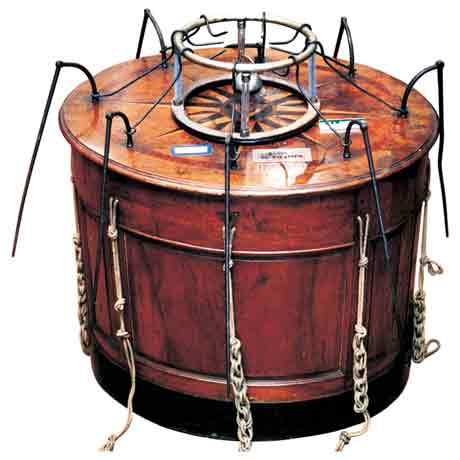
Mesmerism became popular in 18th century as it provided some cures by directly addressing the mind of the person, and much hope. Franz Mesmer was a German physician with a flamboyant personality. Wikipedia states:

“According to d’Eslon, Mesmer understood health as the free flow of the process of life through thousands of channels in our bodies. Illness was caused by obstacles to this flow. Overcoming these obstacles and restoring flow produced crises, which restored health. When Nature failed to do this spontaneously, contact with a conductor of animal magnetism was a necessary and sufficient remedy. Mesmer aimed to aid or provoke the efforts of Nature. To cure an insane person, for example, involved causing a fit of madness. The advantage of magnetism involved accelerating such crises without danger.”

Mesmer was able to produce crises in his patients by looking fixedly into their eyes using certain hand gestures, gently stroking their arms, and pressing abdominal area of the body with fingers. Mesmer was apparently triggering hitherto suppressed experiences in people. Such experiences caused crises when first brought into consciousness. But the person got better as those experiences got assimilated.


Hypnotism

In 1841 James Braid claimed to produce the phenomenon of mesmerism without the proximity, acts, or influence of a second party. He defined the phenomenon as “a peculiar condition of the nervous system, induced by a fixed and abstracted attention of the mental and visual eye, on one object, not of an exciting nature. His theory of hypnotism dispelled many fallacies in the theory of Mesmer. Wikipedia states:

“In his later works, Braid reserved the term “hypnotism” for cases in which subjects entered a state of amnesia resembling sleep. For other cases, he spoke of a “mono-ideodynamic” principle to emphasize that the eye-fixation induction technique worked by narrowing the subject’s attention to a single idea or train of thought (“monoideism”), which amplified the effect of the consequent “dominant idea” upon the subject’s body by means of the ideo-dynamic principle.”

Thus hypnotism tried to provide a better theory to explain the phenomenon of the mind observed under mesmerism. In the course of his investigations Braid reached the conclusion that hypnotism was wholly a matter of suggestion, implying that cures were affected by suggestions. But this was not what was happening under mesmerism.

Hypnotism merely explained and demonstrated the influence of mental impulses on the systems of the body. Hypnotic suggestions merely implanted ideas in the person below his awareness. Hypnotism did nothing to assimilate the unassimilated experiences in the mind.


Psychoanalysis

In early 1890s Freud came up with the system of psychoanalysis for treating mental disorders. He theorized that psychological disturbances are largely caused by personal conflicts existing at the unconscious level. Liberation from the effects of the “unconscious” is achieved by bringing this material into the conscious mind. This was done by patient talking to the therapist, and the therapist guiding the patient until the patient became aware of the hidden causes of his conflicts. Wikipedia states:

“During psychoanalytic sessions…the patient… may lie on a couch, with the analyst often sitting just behind and out of sight. The patient expresses his or her thoughts, including free associations, fantasies and dreams, from which the analyst infers the unconscious conflicts causing the patient’s symptoms and character problems. Through the analysis of these conflicts… the analyst confronts the patient’s pathological defenses to help the patient gain insight.”

Freud recognized the importance of the assimilation of unassimilated experiences. However, his methods involved the psychoanalyst interpreting the contents from the mind of the person, and giving those interpretations back to the person to induce insight. This method has the liability of such interpretations acting as hypnotic suggestions.


 Dianetics

The next advance came in 1950, when Hubbard expounded the Dianetics process of auditing the mind. He theorized that the cause of all psychosomatic illnesses and irrational behavior was an unknown reactive mind that was always “conscious”. Relief came when a person analytically accessed the painful contents of the reactive mind.

Hubbard came up with a much more efficient procedure that minimized hypnotic suggestions. He was able to get the person to recall the unassimilated content of the mind through codified processes on a gradient. However, Hubbard ended up intertwining his own esoteric beliefs of “thetan” and “past lives” into his upper level processes. Such processes lead to deep religious conditioning.


The Eastern Approach

When we look at the Eastern background we find an emphasis on the “therapist” being the person himself. Thus the Eastern approach does not have many of the liabilities accrued in the Western systems.

The modern Eastern approach started with Buddha 2600 years ago. Buddha taught mindfulness, which emphasized looking at things as they are. The discipline of mindfulness requires that one does not avoid, resist, deny or suppress the activity of the mind. This allows the mind to assimilate data more readily.

Buddha’s efforts led to a grass roots movement that spread like wildfire. It not only cured but also uplifted a large number of people.


Summary

After reviewing the past efforts to handle the mind’s flaw we shall now look at how such efforts may be improved. We start by looking at the goal of these efforts in the next chapter.

.

The Mind as a Matrix (old-2)

universe-brane-dendritic-matrix
Please see Course on Subject Clearing

Perceptions and the Mind

A matrix is a mathematical concept which is applicable to the universe. A matrix is made up of nodes where each node is in some relationship with every other node. The universe may be represented as a matrix of galaxies. A galaxy may be represented as a matrix of stars and planets, and so on to the matrix of atoms and frequencies.

The mind is made up of the perceptions of the environment. The environment exists as a matrix of objects, where each object is related to every other object by distance, gravity, etc. Therefore, the mind is made up of the perception of objects that are arranged in a matrix. The objects may appear in the mind as perceptual nodes. These perceptual nodes may be related to each other by the properties perceived for these objects. For example, in an animal mind, these perceptual nodes may be related by their property of being safe and edible.

The mind is, therefore, a matrix of perception of objects derived from the environment.

The mind is not something physical but it exists within the physical environment. It continually stores the perceptions coming from the environment. The perceptions are managed by breaking them down into refined perceptual nodes. A pattern of perceptual nodes when activated provides the perception of time. This is similar to storing a movie using a pattern of pixels.

The perceptions are managed by breaking them down into refined perceptual nodes.

In the human mind the perceptual nodes become still more refined. They store all possible properties of objects in the most detailed form. For example, a property, such as color, may be stored as an infinite-valued scale. The properties may also range from concrete to abstract.

Thus these perceptual nodes become numerous and they allow the mind to become increasingly discriminative and abstract. We may say that the perceptual nodes are made up of increasingly refined “perceptual elements”. Errors creep in only when perceptions do not get refined into perceptual elements and assimilated into the mental matrix.

The mind becomes very discriminative as perceptions are increasingly refined into “perceptual elements”.

The Animal Mind

The basic animal mind can be observed to operate entirely on automatic assimilation of perceptions from the environment into its coarse mind. This assimilation takes place on a continual basis. We may call this assimilation “free association”. Please note that this free association is not the same thing as the “technique of free association” in psychoanalysis.

Free association is the natural mechanism of evolution. Free association makes up the entire thinking of the animal mind.

The free association operates in an unbounded, universal context where nothing is suppressed. This allows animals to become part of a natural ecosystem with other life organisms.

Free association is objective in nature because of its universal context.

The Human Mind

In the much more complex human mind, the natural function of “free association” is further supported by “creative associations” of thought. This becomes possible because of the extreme refinement of the perceptual nodes. Thus there is imagination and the faculty to make projections. There is also a deeper faculty of intuition, which comes straight from the fundamental principle of “chaos to order”.

Thought becomes possible in the human mind because of the extreme refinement of the perceptual nodes.

The human thought is objective when it is in sync with the free association of universal nature. However, when it goes out of sync thinking becomes limited to a narrow and bounded context.

Thought is objective when it is in sync with free association. When it goes out of sync it reduces in context and becomes subjective.

Consciousness

The earlier models of the mind have been based on simple duality of functions observed. For example, In 1890s, Freud proposed the model of conscious and unconscious mind.

But the “matrix” model of the mind in this article presents a gradient of consciousness. The greater is the refinement of perceptions into perceptual elements the higher is the consciousness. This explains the greater consciousness in humans compared to the consciousness in animals.

Consciousness is a parameter of the refinement of perceptual nodes.

When the incoming perceptions of experiences do not get refined into perceptual elements, they get lodged into the mental matrix as “unassimilated nodes”. Thus the person is not conscious of such experiences because they could not be assimilated into the refined mental matrix. This describes the concept of “unconsciousness” proposed by Freud.

Freud’s “unconscious mind” is made up of unassimilated experiences.

Rationality

In 1950s, Hubbard proposed the model of analytical and reactive mind, while stating that the mind is always conscious. But this duality of analytical and reactive is not just binary. The mind is as rational as it can recognize differences, similarities and identities. Such aware helps it come up with sound judgments.

In the matrix model, the mind is guided by the characteristics of order. The whole purpose of the mind is to bring greater order. The characteristics of order are continuity, harmony and consistency.

The universal mind is engaged in bringing order through the mechanism of free association. When the powerful human mind is in sync with such natural free associations, and is continually engaged in sorting out anomalies, then it is acting rationally on a natural basis.

The mind is naturally rational as its associations are continually guided by the fundamental characteristics of order (continuity, harmony and consistency).

When an “unassimilated node” is activated as part of the thinking process it enforces its singular dramatization as perceived. That dramatization is not continuous, harmonious and consistent with the “present” because it is not assimilated into the mental matrix that is continually updated. The mind then appears to be reacting irrationally. This describes the concept of “reactive mind” proposed by Hubbard.

Hubbard’s “reactive mind” is made up of unassimilated experiences.

Memory

The models of Freud and Hubbard, which are based on simple duality, imply that perceptions are stored “as-is” in the mind. However, the matrix model describes the storage of perceptions as patterns of perceptual elements well assimilated within the mental matrix, which is continually updated. Since same perceptual elements may be utilized many times in different patterns, the matrix model provides a more efficient way of storing perceptions in the mind.

A “memory” is a pattern of perceptual elements that is activated by attention. Memory is clear and precise when its pattern is made up of refined and well assimilated elements. Memory shall consist of “holes” when the pattern contains “unassimilated nodes”.

A “memory” is a pattern of perceptual elements that is activated by attention.

Intelligence

With the matrix model it is easy to see the difference between the animal mind and the human mind in terms of how finely the perceptions are broken down into discriminative perceptual elements. This property defines the intelligence of the mind.

Intelligence of the mind depends on the refinement of the perceptual elements.

Power

The perceptual elements are related within the mental matrix by means of infinite-valued scales of properties. Thus all perceptions are continuous, harmonious and consistent when they are well assimilated throughout the mental matrix. The better assimilated the perceptions are, the greater is the resolution of the mind.

Power of the mind depends on the degree of assimilation of perceptions in the mental matrix.

Purpose

As the chaos in the environment impresses itself upon the mind through perceptions, the mind converts the chaos into order by assimilating them in its matrix of refined perceptual elements. The assimilated state of the mind is felt as emotions, which then generates sensations in the body. The emotions and sensations motivate the body to act. The body acts internally to maintain its health, and externally to bring order to the environment.

Thus we have a cycle, which operates from the environment through the mind-body system back on the environment, converting chaos into order. This explains the role of living organisms in the universe.

The purpose of the living mind-body organism is to bring order to its immediate environment, so as to speed up the evolution of the universe.

Emotions & Sensations

The mind is hard-wired to the body through the brain and the nervous system. As perceptions are received from the environment, they are continually assimilated into the mental matrix. This generates impulses in the body to bring appropriate responses from the endocrine, respiratory, muscular and other systems.

These impulses are generated by the mind as emotions and are sensed by the body as sensations.

This determines the health of the body internally and actions of the organism externally. The external actions then bring changes to the environment.

The Flaw

Errors enters into the highly complex human mind, when it is unable to fully assimilate an experience, and act in sync with natural associations The lack of proper assimilation then erodes thought from being rationally creative to becoming discontinuous, disharmonious and inconsistent. This is then reflected through sickness in the body and aberrations in the conduct of the organism.

.

From Chaos to Order

chaos1

Reference: Mindfulness Research

.

God versus Science

In the beginning God created the heaven and the earth, which were yet unformed, void and enveloped in darkness. From this then came the following at the pleasure of God.

  • Day 1 – Formation of light from darkness
  • Day 2 – Formation of firmament from waters
  • Day 3 – Formation of earth and plant life from the seas
  • Day 4 – Formation of regularity in terms of day, night, year and seasons
  • Day 5 – Formation of sea life in water and fowl on land
  • Day 6 – Formation of higher animal life and humans.

The formation ends here because “God rested on the seventh day”. The world then runs as formed.

To look at the above scientifically, we just have to make the following change.

God is the fundamental principle of “order precipitating from chaos”. The chaos is, of course, the yet unformed, void and dark “heaven and earth”.

And the order precipitates from chaos in the following stages:

  1. From electromagnetic energy to matter
  2. From matter to animation
  3. From animation to life
  4. From life to thought

These stages are studied as follows:

  • Stage 1 is the subject of PHYSICS & COSMOLOGY
  • Stage 2 is the subject of CHEMISTRY & BIOCHEMISTRY
  • Stage 3 is the subject of BIOLOGY & PROGRAMMING
  • Stage 4 is the subject of AWARENESS & MINDFULNESS

There are more details here compared to the descriptions in the Bible. This is not surprising because civilization has made considerable progress since the time Bible was written. But the big realization comes as follows.

The fundamental principle of order precipitating from chaos never rests. In other words, from the view of science God never rests.

The Principle of God

The fundamental principle is that order precipitates naturally from chaos. In fact, this universe is the manifestation of the cumulative order that has precipitated. Without this principle, there wouldn’t be a universe.

God is the principle that order precipitates naturally from chaos.

Some may argue that order could just as well be converting back to chaos. That may be so. But, evidently, there is a net increase in order at any point in time. In fact, time itself may be the very manifestation of this irreversibility.

Time is the irreversibility of the precipitation of this order.

The Bible represents chaos as the “yet unformed, void and dark heaven and earth”. Science may call it “potential order”. Here we may have hidden stages of earlier creation. In fact, ancient texts hint at the universe forming and dispersing cyclically. But these are fuzzy grounds.

Chaos may, at best, be defined as “potential order”.

Evidently, evolution proceeded with trial and error in the beginning. That is why the earlier stages took so long. Evolution is occurring much faster only at the current stage of “from life to thought”. Intelligence and imagination are phenomena that have emerged only at the current stage.

Considering God to be a supernatural being with intelligence is a big leap of imagination. 

We are on a firm ground when we look at God to be the principle of order precipitating naturally from chaos. This fundamental principle continues to drive the formation of this universe even at this very moment.

Creativity at any place, and in any form, is a manifestation of the principle of God.

The Creative Evolution

The “days” from the Bible, and the “stages” from science, simply describe the sequence of evolution. Each cycle in this evolution is “start, change, and stop”. For life organisms, this cycle  becomes “birth, survival, and death.”

Evolution is a sequence of creative cycles.

The evolution takes place in the ‘death to birth’ phase, based on learning that takes place during the ‘survival’ phase. Death clears away the older, used up forms; and birth brings about the newer, updated forms. Over each cycle the evolution may be infinitesimal, but over trillions of cycles there is a net evolution, and that evolution is creative.

Cycles are the clearing away of older forms and the generation of new ones.

The popular belief that “God rested on the seventh day,” may lead one to believe that there is no more creation, and life is all about surviving. This brings about the human desire to survive forever. But the reality of death and birth is natural. It serves a creative function. The desire to live forever is subjective and unnatural. God is more concerned with evolving than with surviving.

The fundamental directive of this universe is EVOLVE and not SURVIVE!

The Characteristics of Order

Evolution is bringing about order that is becoming increasingly complex. To understand where we are headed at this stage, it is necessary to understand the earlier stages

When we look at Stage 1 – “From electromagnetic energy to matter,” we find that the electromagnetic spectrum is flanked by space on one side and matter on the other. As the frequency goes to zero, the electromagnetic energy reduces to space. As the frequency goes very high the electromagnetic energy collapses into matter. We see this in the structure of the atom, in which the field of electromagnetic energy extends from space to the material nucleus. This tells us that there is continuity from space to matter through a field of electromagnetic energy. The purpose of this stage is to arrive at some form of stability.

The universe is fundamentally continuous.

When we look at Stage 2 – “From matter to animation,” we find that inanimate molecules evolve into self-animated RNA and DNA molecules. These complex molecules have enough electrons in their external orbits to form programmable circuits like that in a computer. There is a harmonious internal motion in all molecules, but it then starts to evolve into a series of external motions that are repetitive and in harmony with the internal motions. The purpose of this stage is to arrive at some form of harmonious external motion.

The universe is fundamentally harmonious.

When we look at Stage 3 – “From animation to life,” we find that self-animated molecules evolve into self-reproducing life organisms.  The repetitive external motions, in harmony with similar motions from other molecules, are able to build complex motions of a cell that are able to reproduce the whole cell. This ability to reproduce itself repetitively defines life. The cells than combine with other cells and grow into infinite and complex varieties of life organisms that can also reproduce themselves. There is consistency throughout this complex growth in the ability to reproduce oneself repetitively. The purpose of this stage is to arrive at the capability of reproducing itself.

The universe is fundamentally consistent.

The characteristics of order in this universe are continuity, harmony and consistency.

Life and Organisms

The first action of evolution was to establish something stable to build a structure with. It then built a structure that could be programmed. The structure was then programmed to reproduce itself. Here we have the emergence of life. Life manifests itself by mobilizing the elements from the environment into a body and then making that body reproduce itself repetitively. And so we have life organisms.

The basic characteristic of life is to bring order to the environment by developing organisms and enabling the organisms to reproduce.

Mind and Free Association

The seat of life is generally referred to as the mind. The fundamental activity of the mind is to support complex evolution by ensuring continuity, harmony and consistency. The mind operates on the fundamental principle of “chaos to order”. It associates perceptions from the environment freely to determine the order needed. It then mobilizes the organism to implement that order in the environment.

The mind uses the fundamental logic of continuity, harmony and consistency to freely associate the perceptions from the environment to organize it better.

The Emergence of Thought

The most advanced form of life organisms is the human form. Evolution introduces something new at this level—thought. Thought has the capability to generate new and creative associations above and beyond the free associations of the mind. The purpose of thought is to speed up evolution through the complexity of life. It does that by resolving discontinuities, disharmonies and inconsistencies at all stages of evolution.

Thought is on a mission to resolve discontinuities, disharmonies and inconsistencies at all stages of evolution.

Summary

The above is an outline of the evolution up to the current stage of “from life to thought”. In the next chapter we look more closely at the human mind, which is the seat of thought and free association.

.

Next chapter: The Mind as a Matrix

.

Obsolete: The Background

See: The Mind’s Flaw

turner1

Reference: Mindfulness Approach

.

The background of free association in the West is found in mesmerism, hypnotism, psychoanalysis and Dianetics. It involves giving commands to the person in highly suggestive state. The Eastern background, however, is found in mindfulness of “seeing things as they are”. It involves clearing up the unassimilated nodes implanted in the mind by the environment and their effects down the line.

Mesmerism

Mesmerism became popular in the 18th century as it did provide some cures by addressing the mind of the person. Franz Mesmer was a German physician with a flamboyant personality. Wikipedia states:

“According to d’Eslon, Mesmer understood health as the free flow of the process of life through thousands of channels in our bodies. Illness was caused by obstacles to this flow. Overcoming these obstacles and restoring flow produced crises, which restored health. When Nature failed to do this spontaneously, contact with a conductor of animal magnetism was a necessary and sufficient remedy. Mesmer aimed to aid or provoke the efforts of Nature. To cure an insane person, for example, involved causing a fit of madness. The advantage of magnetism involved accelerating such crises without danger.”

Mesmer was able to produce crises in his patients by looking fixedly into their eyes using certain hand gestures, gently stroking their arms, and pressing abdominal area of the body with fingers. It appears that Mesmer was triggering hitherto suppressed experiences in people. It was the proper assimilation of those experiences by the person, which affected the cure. That process took place through natural free association.

Hypnotism

In 1841 James Braid claimed to produce the phenomenon of mesmerism without the proximity, acts, or influence of a second party. He defined the phenomenon as “a peculiar condition of the nervous system, induced by a fixed and abstracted attention of the mental and visual eye, on one object, not of an exciting nature. His theory of hypnotism dispelled many fallacies in the theory of Mesmer. Wikipedia states:

“In his later works, Braid reserved the term “hypnotism” for cases in which subjects entered a state of amnesia resembling sleep. For other cases, he spoke of a “mono-ideodynamic” principle to emphasize that the eye-fixation induction technique worked by narrowing the subject’s attention to a single idea or train of thought (“monoideism”), which amplified the effect of the consequent “dominant idea” upon the subject’s body by means of the ideo-dynamic principle.”

But hypnotism did not allow the free association of mesmerism. It did not affect any cures. It only explained the relationship of mental impulses with various systems of the body. This relationship was used by unassimilated nodes to generate illnesses in the person. Free association helped assimilate those nodes and remove their ill effects on the body.

In the course of his investigations Braid reached the conclusion that hypnotism was wholly a matter of suggestion, implying that cures were affected by suggestions. This was a wrong conclusion. The suggestions under hypnotism simply implanted ideas in the person that could not be assimilated into his mental matrix. Hypnotism explained only the problem and not the cure. The cure due to free association was ignored by hypnotism

Psychoanalysis

In early 1890s Freud came up with the system of psychoanalysis for treating mental disorders. He theorized that psychological disturbances are largely caused by personal conflicts existing at the unconscious level. Liberation from the effects of the “unconscious” is achieved by bringing this material into the conscious mind. This was done by patient talking to the therapist, and the therapist guiding the patient until the patient became aware of the hidden causes of his conflicts. Wikipedia states:

“During psychoanalytic sessions…the patient… may lie on a couch, with the analyst often sitting just behind and out of sight. The patient expresses his or her thoughts, including free associations, fantasies and dreams, from which the analyst infers the unconscious conflicts causing the patient’s symptoms and character problems. Through the analysis of these conflicts… the analyst confronts the patient’s pathological defenses to help the patient gain insight.”

Freud recognized the importance of free association. In psychoanalysis, “free association” is one of the techniques to draw unconscious material out of the patient. However, Freud also used hypnotic techniques. Significant liability exists in psychoanalysis in terms of the analyst interpreting that material and adding his own ideas, which may then act on the patient as hypnotic suggestions.

Dianetics

The next advance came in 1950, when Hubbard expounded the Dianetics process of auditing the mind. He theorized that the cause of all psychosomatic illnesses and irrational behavior was an unknown reactive mind that was always “conscious”. Relief came when a person analytically access the painful contents of the reactive mind.

Hubbard addressed the liabilities of psychoanalysis to a large degree, and came up with a much more efficient procedure. The preclear’s ability to freely associate is, however, limited to the “programming” of a person’s case by a Case Supervisor. Upper level procedures seem to condition the person to Hubbard’s esoteric beliefs of “thetan” and “past lives”. In addition there is abundant possibility of misuse of detailed personal information collected by Hubbard’s monopolistic organizations.

Mindfulness

When we look at the Eastern background we find an emphasis on the “therapist” being none other than the person himself. Thus mindfulness does not have the liabilities accrued in the Western systems.

Mindfulness was taught by Buddha 2600 years ago. The discipline of mindfulness requires that one does not avoid, resist, deny or suppress the activity of the mind, but looks at things as they are.

Buddha’s system empowered the individual to handle his psychosomatic illnesses and irrational behavior by his own efforts. It led to a grass roots movement that spread like wildfire. It not only cured but also uplifted a large number of people.

Present Effort

The present effort is to learn from both western and eastern experiences, and to work out techniques that can be applied very simply. The free association of mindfulness is natural.and, therefore, it is a much safer approach.

The next chapter describes the results of the mindfulness application of free association.

.