Category Archives: Science

Comments on Quantization

feynman-1

Reference: Disturbance Theory

.

Quantization – Wikipedia

In physics, quantization is the process of transition from a classical understanding of physical phenomena to a newer understanding known as quantum mechanics. It is a procedure for constructing a quantum field theory starting from a classical field theory. This is a generalization of the procedure for building quantum mechanics from classical mechanics. One also speaks of field quantization, as in the “quantization of the electromagnetic field”, where one refers to photons as field “quanta” (for instance as light quanta). This procedure is basic to theories of particle physics, nuclear physics, condensed matter physics, and quantum optics.

The concept of quantization starts with cycles that make up the field, where each cycle has the same amount of energy. See Energy and Cycle. The phenomena of cycle leads to the quantization of more complex sub-atomic properties observed within the atom. This does not necessarily mean that these properties are completely discrete. However, the “action at a distance” approach explains all atomic and sub-atomic phenomena with mathematical discreteness quite successfully. This approach has given us Quantum Mechanics.

.

Quantum – Wikipedia

In physics, a quantum (plural: quanta) is the minimum amount of any physical entity involved in an interaction. The fundamental notion that a physical property may be “quantized” is referred to as “the hypothesis of quantization”. This means that the magnitude of the physical property can take on only discrete values consisting of integer multiples of one quantum.

The hypothesis of quantization is a mathematical one that uses probability statistics. This hypothesis comes from the belief in “action at a distance”.

For example, a photon is a single quantum of light (or of any other form of electromagnetic radiation), and can be referred to as a “light quantum”. Similarly, the energy of an electron bound within an atom is also quantized, and thus can only exist in certain discrete values. The fact that electrons can only exist at discrete energy levels in an atom causes atoms to be stable, and hence matter in general is stable.

A photon represents the energy equivalent of a certain number of cycles taking part in the photoelectric effect. Since each cycle has the same amount of energy, the energy of cycles that take part in this interaction at the sub-atomic level appears to be discrete. This leads to the perception of a discrete energy particle. We call such an energy particle a photon. Similar considerations apply to energy levels observed within an atom and the electrons.

Quantization is one of the foundations of the much broader physics of quantum mechanics. Quantization of the energy and its influence on how energy and matter interact (quantum electrodynamics) is part of the fundamental framework for understanding and describing nature.

Such quantization is obvious in the interactions between field and matter at sub-atomic and atomic levels, where a mass particle breaks into energy particles called “quanta”.

.
Elementary particle – Wikipedia

Elementary Particle

Reference: Disturbance Theory

.

Elementary particle – Wikipedia

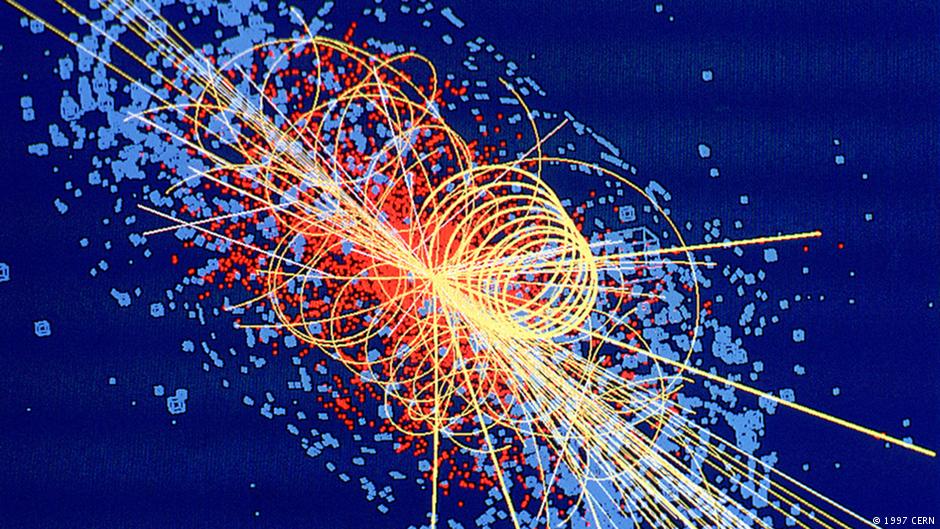
In particle physics, an elementary particle or fundamental particle is a particle whose substructure is unknown; thus, it is unknown whether it is composed of other particles. Known elementary particles include the fundamental fermions (quarks, leptons, antiquarks, and antileptons), which generally are “matter particles” and “antimatter particles”, as well as the fundamental bosons (gauge bosons and the Higgs boson), which generally are “force particles” that mediate interactions among fermions. A particle containing two or more elementary particles is a composite particle.

The concept of elementary particles is based on “action at a distance” ideology, which is primarily mathematical. According to this ideology particles have “space” (emptiness) between them that is not filled by any field. On the other hand, in Faraday’s field concept, a particle is simply a high frequency region within the field. There is no emptiness between particles.

Everyday matter is composed of atoms, once presumed to be matter’s elementary particles—atom meaning “unable to cut” in Greek—although the atom’s existence remained controversial until about 1910, as some leading physicists regarded molecules as mathematical illusions, and matter as ultimately composed of energy. Soon, subatomic constituents of the atom were identified. As the 1930s opened, the electron and the proton had been observed, along with the photon, the particle of electromagnetic radiation. At that time, the recent advent of quantum mechanics was radically altering the conception of particles, as a single particle could seemingly span a field as would a wave, a paradox still eluding satisfactory explanation.

The difference between a particle and a wave is that a particle propagates as itself, but a wave requires a medium to propagate in. As matter gets “thinner” it spreads and assumes wave characteristics within itself.

Via quantum theory, protons and neutrons were found to contain quarks—up quarks and down quarks—now considered elementary particles. And within a molecule, the electron’s three degrees of freedom (charge, spin, orbital) can separate via the wavefunction into three quasiparticles (holon, spinon, orbiton). Yet a free electron—which is not orbiting an atomic nucleus and lacks orbital motion—appears unsplittable and remains regarded as an elementary particle.

There are no particles inside the atom, The inconsistencies described above disappear when Faraday’s field concept is considered.

Around 1980, an elementary particle’s status, as indeed elementary—an ultimate constituent of substance—was mostly discarded for a more practical outlook, embodied in particle physics’ Standard Model, what’s known as science’s most experimentally successful theory. Many elaborations upon and theories beyond the Standard Model, including the popular supersymmetry, double the number of elementary particles by hypothesizing that each known particle associates with a “shadow” partner far more massive, although all such superpartners remain undiscovered. Meanwhile, an elementary boson mediating gravitation—the graviton—remains hypothetical.

The whole particle physics is an approximation of the field concept.

.

The Limitation of Einstein’s Theory

disturbance

Reference: Disturbance Theory

.

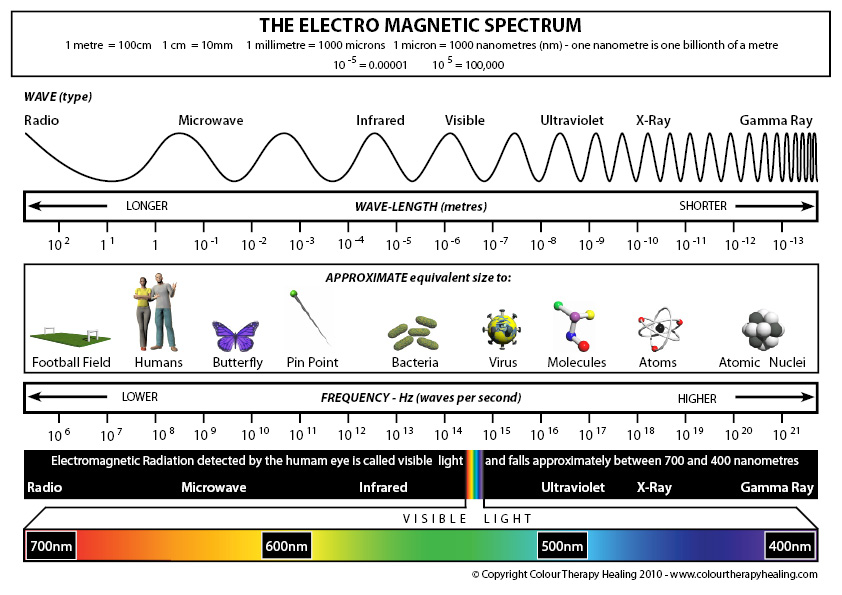
The Electromagnetic Spectrum happens to provide us with a universal range of physical substance. It presents to us a scale of inertia. Matter is a very special condition that exists at the upper end of this scale. The scale starts at the lower end with a theoretical state of emptiness of zero inertia.

The electromagnetic spectrum is a scale of inertia from emptiness to matter.

Like on any scale, the range of physical substance can best be understood from the reference point of zero inertia. However, this may create a great confusion because we are so used to looking at everything from the viewpoint of matter.

Our view of universe as “material” has been very narrow and upside down.

When we consider the substance as a whole range of field along with matter we start to have a much broader view. When we view from the theoretical state of EMPTINESS, instead of matter, the thinking reorients to right side up. We start to see the evolution of physical substance.

The physical substance evolving from emptiness is the correct view.

The fundamental substance appears as disturbance in emptiness.  We postulate this substance to be energy. This energy evolves as the electromagnetic field of increasing frequency. The electromagnetic field may be described in terms of disturbance levels (DL) as base 2 logarithm of frequency. For example, the disturbance level of yellow light is DL 49 because its frequency is 5.8 x 10¹⁴ (249) Hz. This makes it possible to conveniently map the whole range of physical substance.

We may map the whole range of physical substance as DISTURBANCE LEVELS.

The disturbance levels on the electromagnetic spectrum may be listed as follows (see appendix below for the method of calculation):

Emptiness …………………………………. 0

Radio Waves (3 Hz – 3 GHz) ……………. 1.6 – 31

Microwaves (3 GHz – 300 GHz) ………… 31 – 38

Infrared (300 GHz – 300 THz) …………… 38 – 48.5

Visible (400 THz – 800 THz) …………….. 48.5 – 49.5

Ultraviolet (800 THz – 30 PHz) ………….. 49.5 – 54.7

X-Rays (30 PHz – 30 EHz) ……………….. 54.7 – 64.7

Gammy Rays (> 30 EHz) …………………. 64.7 and greater

Electron ……………………………………… 66.7

Proton ………………………………………… 77.6

Neutron ………………………………………. 77.6

Earth ………………………………………….. 235.6

Sun ………..………………………………….. 256.6


We may now compare this reference point to the reference point used in the theory of relativity by Einstein.

Inertial Frame of Relativity

Einstein borrowed the inertial frame from Galileo and Newton and applied it to Relativity. This frame of reference views light (DL 49) from the reference of matter (DL 138.4 minimum). It is an upside down view.

The inertial frame of relativity views light from the reference of matter.

The speed of light is very close to the universal constant ‘c’, which is essentially a fixed ratio of space to time.  Einstein correctly assumed ‘c’ to be a universal constant. Because of this constant we can treat space-time as a single entity.

Space-time is a single property because time is related to space by ‘c’.

But even as a single entity, space-time scales up and down with disturbance levels, or inertia. The space-time at the level of matter is not the same space-time at the level of light. The inertia of light is many orders of magnitude lower than matter, but it is not zero because it has a disturbance level.

The inertia of light is not zero.

By saying that the “speed of light” is constant in all inertial frames, Einstein is basically assuming that the inertia of light is either zero, or insignifant to the inertial frames based on matter.

The theory of relativity ignores the inertia of light.

There is no doubt that Einstein’s theory of relativity has been very successful, but this success has occurred only where the phenomena has been material (DL > 138.4). For phenomemon of disturbance levels, such as, when considering quantum or electromagnetic phenomena, the inertia of light cannot be ignored.

The inertia of light cannot be ignored for electromagnetic and quantum phenomena.

An approach based on the zero inertia at the lower end of electromagnetic spectrum shall apply to the whole range of phenomena from electromagnetic to quantum to material.

The reference point of zero inertia at the lower end of the electromagnetic spectrum applies universally to the whole range of physical substance.

This is the reference point used by the Disturbance Theory.

.

APPENDIX

If the frequency is ‘f’ then the disturbance level is “log f / log 2”.

The frequency associated with a mass object is calculated as follows:

De Broglie Equation,       λ = h/p,

where h is Plank’s constant, and p is momentum

Frequency,                       f = c/λ = (c/h) p = 4.528 x 1041 p

Disturbance level,          DL = (log f) / (log 2) = 138.4 + 3.322 log p

For earth,

ME = 5.972 x 1024 kg, and VE = 3 x 10⁴ m/s

Hence, p = ME VE = 1.79 x 1029

Therefore, DL (earth) = 235.6

.

The Electromagnetic Spectrum (Old)

electromagnetic-spectrum

Reference: Disturbance Theory

.

The variations in the frequency of field cover the whole electromagnetic spectrum. At the bottom of this spectrum lies the EMPTINESS of zero frequency. At the top is the mass as seen in the nucleus of an atom. The layers of this spectrum build up in the following sequence.

  1. Emptiness (theoretical)
  2. Radio waves
  3. Microwave radiation
  4. Terahertz radiation
  5. Infrared radiation
  6. Visible radiation
  7. Ultraviolet radiation
  8. X-ray radiation
  9. Gamma radiation
  10. Mass

This whole spectrum of field may be seen in an atom from its outermost boundary to its center. The gamma rays are seen to be emitted by the nucleus, and X-rays from inner electrons.

The substance of field appears in emptiness in the form of disturbance at the beginning of this spectrum. The disturbance has a frequency. The frequency maintains itself and does not disappear. This property is recognized as inertia. In general, inertia is the resistance of physical substance to any change in its state of motion. Any effort to change frequency activates the restoring force of inertia. Thus, inertia “pins down” a phenomenon made up of frequencies, against the backdrop of emptiness.

As we move up the spectrum, the frequency increases and the field become denser in terms of its cycles. Each cycle has constant energy equal to the Planck’s constant ‘h‘. Therefore, energy of the field increases at a location in proportion to the frequency and becomes more focused in character. This leads to quantization at higher frequencies.

The wavelength to period ratio is also constant as represented by ‘c‘. Therefore, both wavelength and period shrink together inversely proportional to frequency. This is like extensions of the field consolidating themselves and gaining in endurance with increase in frequency. We see the extensions of the field as SPACE and their endurance as TIME.

The constants described above ensure the continuity of different regions of the field that are at different frequencies. These regions are bounded by smooth gradients of frequency. These gradients manifest as tension or force. These forces then become part of the field. We recognize these forces as gravitational, electromagnetic, nuclear, etc. These forces differ in their nature depending on the sharpness of the gradient as well as on their relative position on the spectrum.

As energy increases with frequency and forces become stronger, inertia also increases to balance them. If forces are represented by acceleration (increased motion relative to itself) then inertia is represented by “negative” acceleration (quantization). Basic inertia appears as permeability and permittivity. It balances the dynamic of conversion between electric (kinetic) and magnetic (potential) aspects of a cycle. This shows up in the constant rate of propagation of electromagnetic disturbance within the field.

With increasing frequency, inertia seems to develop into a structure of disturbance, which we may refer to as “quantization into mass”. Actual mass appears to be made up of high frequency of infinitesimal cycles that border into forming a continuum. The quantization into mass seems to start out like “eddies are forming in a flow”. We may identify these “eddies” as the multitudes of quantum particles. Thus the primary characteristic of quantization into mass appears to be rotational.

The rotational nature of mass tends to pin it down and reduce its linear motion. This also increases inertia. We may relate this inertia to natural speeds of quantum particles as we do so for the speed of light. The natural tendency for disturbance is to spread at infinite speed, but that tendency gets checked by inertia into a balanced finite speed. As inertia increases the “free speed” of the phenomenon reduces.

External force when impressed on a field increases its frequency, and thus becomes internalized as inertia. This may describe the conservation of force of Faraday.

The Newton’s Laws of motion apply to inertia at the level of matter at the top of the electromagnetic spectrum. At this level force manifests as acceleration of the “quantized” physical object, while inertia acts as “resistance to acceleration”. The balance of the two determines the “free speed” of the object.

Where the levels of inertia are far apart by many orders of magnitude, the vector addition is replaced by relativistic addition. A more exact algorithm needs to be developed to find the resultant motion of phenomena of different inertia interacting together.

.

SUMMARY

The Electromagnetic spectrum reduces to the emptiness of background as frequency goes to zero. Emptiness has no substance, which is represented by zero inertia. We may use it as the absolute reference point.

Substance seems to enter the picture with the disturbance of emptiness. We may look at the electromagnetic phenomenon whose substance is “disturbance”. The electromagnetic spectrum is a spectrum of this substance represented by inertia.

As the disturbance increases in frequency, its complexity increases. This is manifested as increase in inertia. Toward the upper end of the spectrum, where the frequency is very high, the inertia starts to manifest itself as particles of mass.

This spectrum is visible from the outer boundary of the atom to the nucleus at the center of the atom, as increasing substance and inertia.

.

Time and Period

Time

Reference: Disturbance Theory

.

Time is the property of endurance of a substance. In the absence of substance there is no endurance or time. The EMPTINESS (referenced earlier) is devoid of substance, and, therefore, it is also devoid of time.

Time is essentially the manifestation of change, which could be ephemeral or enduring. It could be a change in physical extensions perceived objectively; or it could be a change in mental abstractions experienced subjectively. The former is represented by the clock time; and the latter is simply felt inwardly.

We limit our considerations of time to changes in physical extensions perceived objectively.

We now consider physical substance broadly to be field, with matter as a special instance. The field is made up of cycles. The changes in frequencies of these cycles provide varying endurance or time. The duration of a single cycle is called a PERIOD.

The duration of field is made up of period of its cycles.

The period and wavelength of a cycle are closely related. If cycle is represented by a turn of a screw then period is the duration of that turn and wavelength is the advance made by the screw during that turn. The wavelength and period are proportional to each other.

The period is proportional to the wavelength of the cycle.

The ratio of wavelength to period is now considered a universal constant. This constant is ‘c’, known popularly as the speed of light. Like the Planck’s constant ‘h’, the ratio ‘c’ also remains constant for a cycle regardless of its frequency. Therefore, as frequency increase and cycles become denser, and both wavelength and period shrink as one.

As the period shrinks with increasing frequency the endurance of cycles increases.

Like the wavelength, period is also infinitesimal for matter and appears to be unchanging and absolute. It determines the character of time as absolute in relation to material objects. This is the clock time of Newton.

The infinitely enduring characteristic of matter represents the absolute time of Newton.

Space and time appear to be absolute and independent at the level of matter because their characteristics do not appear to vary. They do not appear to be related to each other by the universal constant ‘c’. We associate ‘c’ with the speed of light, which is unaffected by the usual speed of matter.

Newtonian mechanics works perfectly well at the level of matter, where cycles of field are infinitesimal in wavelength and period.

But when we consider “speeds closer to the speed of light”, we are actually considering phenomena that are closer to much smaller frequency and inertia of light. In this domain the cycles of field are finite in wavelength and period. They can be seen as dependent on each other by the proportionality constant ‘c’.

Relativistic mechanics comes into play for the field where cycles are not dense enough to have infinitesimal wavelength and period.

Relativistic addition replaces the vector addition of Newtonian mechanics where quantities being added are far apart in their velocity or frequency by many orders of magnitude. Einstein’s mathematical derivation of time dilation can now be understood better in terms of varying period of the field.

Einstein’s “time dilation” relates to the period of cycle increasing.

The cycles repeat in continuous sequence. This sequence is also a characteristic of time. The continuity of sequence is maintained despite changes in frequency. The frequency changes show up as gradients in the field. The gradient of frequency may reverse but time is not seen as reversing because, relative to perception, the change is always occurring in a “forward” sequence.

We perceive the flow of time in the “forward” sequence only.

It must be emphasized that space and time exist as properties of field and matter. They do not exist in the absence of field and matter.

Matter does not “move in space”; instead, it moves in the field and inertia represents the resistance to this motion.

Field is not a “condition in space”; instead it determies the varying conditions of space and time.

.