Category Archives: Science

Space and Wavelength (old)

Space

Reference: Disturbance Theory

Space is the property of the extensions of a substance. In the absence of substance there are no extensions, and therefore, there is no space. The EMPTINESS (referenced earlier) is devoid of substance, and, therefore, it is also devoid of space.

Matter is the only substance we have known until recent past. We consider “space” to be those regions of the universe that are not by filled by matter. The nature of space has been a mystery.

“Empty space” is the region of the universe not filled by matter.

We see space occupied by matter to be three-dimensional, so we consider “empty space” to be three-dimensional. We see the space occupied by matter to be rigid, so we measure “empty space” as if it were rigid. But this has not been satisfactory.

There have been considerations since ancient times that “empty space” is filled by invisible matter called aether. Aether is no longer considered to be matter, but its actual nature is still disputed. At present, “empty space” seems to be defined mathematically only.

We consider “empty space” as if it is filled by some unknown substance.

It is true that “empty space” cannot exist in the absence of extensions defined by some substance. In mid-19th century Michael Faraday, the great experimental researcher, proposed the idea of field to replace the notion of materialistic aether. This idea was supported by James Clerk Maxwell who went on to show mathematically that light was an example of this substance called field.

Faraday was the first to suggest that the “empty space” is actually the electromagnetic field.

However, the idea of field was opposed by scientists who believed in “action at a distance” because of the work done earlier by Newton. But as Faraday pointed out, Newton himself was not comfortable with the notion of “action at a distance” even though his mathematics seem to explain it.  However, this opposition persisted because the nature of gravitational attraction was not understood. In the early part of 20th century, Einstein came up with the mathematics to explain gravity but its connection with the mathematics of electromagnetic field is still lacking.

The opposition to the idea of “field replacing aether” came from its lack of explanation for gravitational attraction.

However, it is pretty much established that “empty space” is a field, but the exact nature of that field is yet to be determined. The field is a more basic substance than matter. It has spatial dimensions. These spatial dimensions may be understood in terms of the extensions of its cycles.  The extension of a single cycle is called a WAVELENGTH.

The extensions of field are made up of wavelength of its cycles.

As frequency increases, more cycles occur within a measured interval. Thus cycles become denser and wavelengths shrink with increasing frequency. We may say that the extensions of field shrink and become increasingly “substantial” in areas where frequency is greater.

The wavelength of a cycle shrinks with increasing frequency.

We associate material characteristics with the characteristics of atom. An atom is made up of high frequency field that is rapidly increasing in frequency toward its center. The nucleus at the center of the atom has the highest frequency and the smallest wavelength. It has the characteristics of material.

The characteristic of matter is approached with increasing frequency and shrinking wavelength.

On the whole the wavelength of an atom is infinitesimal. It is so small that any fluctuations in its value are insignificant. Thus, it appears to be unchanging and absolute. it determines the character of the “space occupied” by matter. Thus it also seems to have absolute characteristics as “space”. This is the space of Newton.

The absolute space of Newton is essentially the field of infinitesimal wavelength that makes up matter.

The empty space right next to a material surface may carry a gradient of decreasing frequency and increasing wavelength because the way atoms are structured.  The wavelengths of field within an empty box may add up to the dimensions of the box, but they wouldn’t be distributed evenly within that box. Einstein’s theory of relativity talks about length contraction as an object approaches the velocity of light. This can now be better understood in terms of varying wavelength of the field.

The characteristic of “empty space” varies with wavelengths of field .

Field does not “occupy space”, as thought by many. Field’s extensions appear as space. Field is not a “condition in space”, as thought. Field is a disturbance in emptiness.

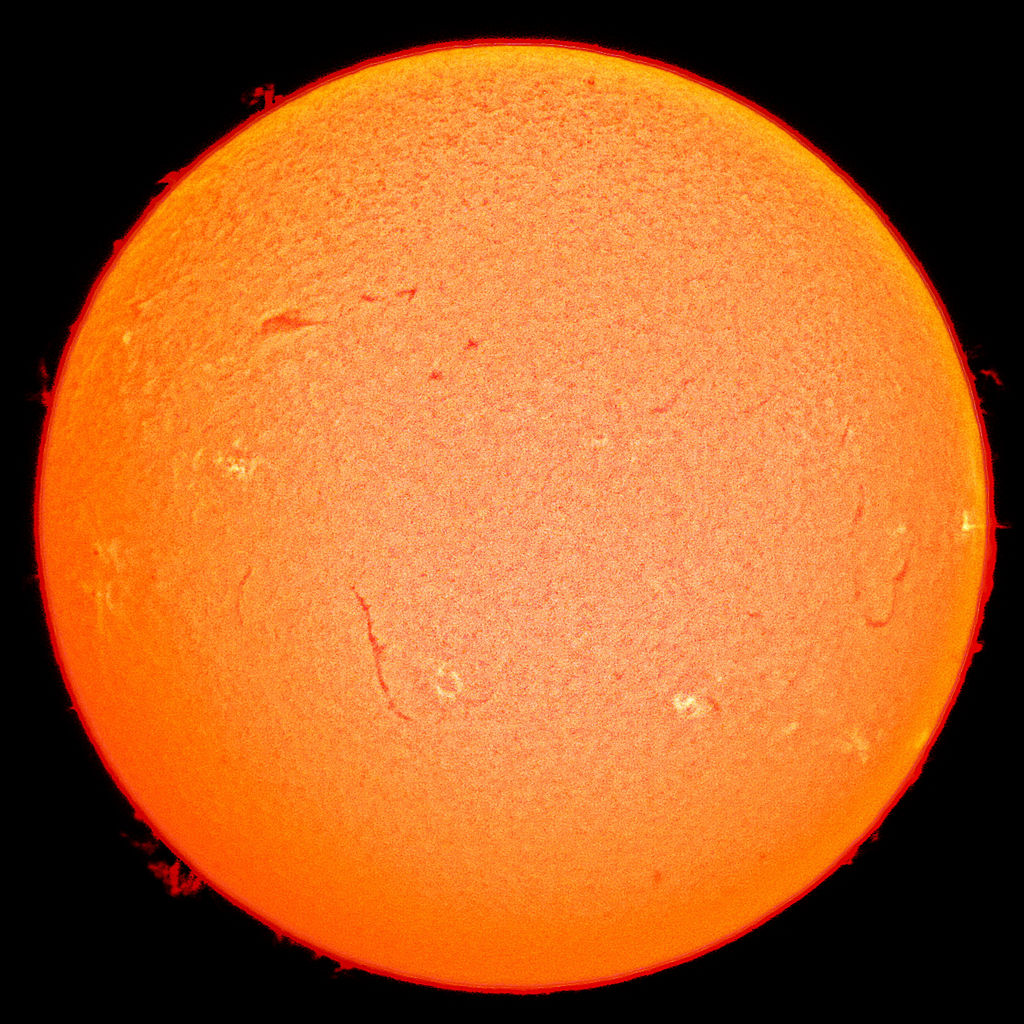
The background of sun, moon and stars should more properly be called field though we see it as “space”. The heavenly bodies are extremely dense regions of this field. They are not “matter in space”.

This universe is, therefore, made up of FIELD; and the background of this universe is EMPTINESS.

When we look at heavens, we are looking at the extensions of field among the stars and beyond.

.
Electromagnetic Spectrum (Wikipedia)


EM_Spectrum_Properties_edit.svg

Reference: Disturbance Theory

.

Parts from Wikipedia article are quoted in black. My comments follow in bold color italics.

Electromagnetic Spectrum – Wikipedia

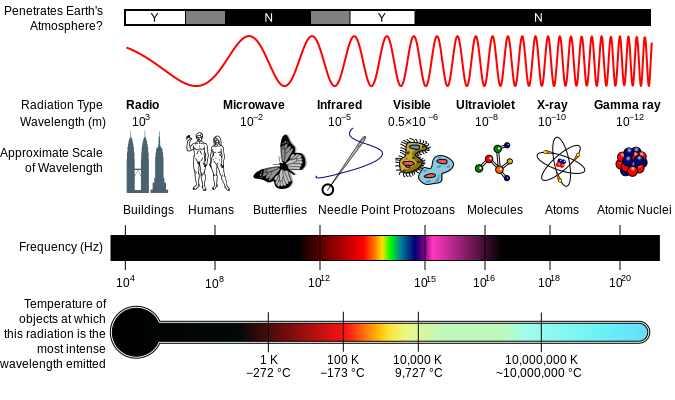
The electromagnetic spectrum is the entire range and scope (spectrum) of frequencies of electromagnetic radiation and their respective wavelengths and photon energies.

The Electromagnetic Spectrum of frequencies applies not only to the radiation but also to the fabric of the three-dimensional field. In this field the Faraday’s lines of force appear as frequency gradients.

The electromagnetic spectrum extends from below the low frequencies used for modern radio communication to gamma radiation at the short-wavelength (high-frequency) end, thereby covering wavelengths from thousands of kilometers down to a fraction of the size of an atom. Visible light lies toward the shorter end, with wavelengths from 400 to 700 nanometers. The limit for long wavelengths is the size of the universe itself, while it is thought that the short wavelength limit is in the vicinity of the Planck length. Until the middle of the 20th century it was believed by most physicists that this spectrum was infinite and continuous.

The lowest frequency on the electromagnetic spectrum shall theoretically be zero. At zero frequency there is no cycle, inertia, energy, extension or duration. In short, there is no substance, and therefore, no space or time. We may refer to this state as “absence of all phenomena”, or EMPTINESS. It shall act as a reference point for the universe, much like zero is the reference point for the scale.

As we move up from this point on the electromagnetic spectrum we have cycles appearing with increasing frequency. As a result, the field becomes denser, and the energy becomes more focused. This makes the substance of the field acquire more inertia. The extensions of the field become increasingly enduring, meaning both space and time become more apparent.

Nearly all types of electromagnetic radiation can be used for spectroscopy, to study and characterize matter. Other technological uses are described under electromagnetic radiation.

As the frequency increases different properties appear in interaction of field with matter. Field appears to condense into mass particles in the gamma range.

.

Comments on Energy

Sun energy

Reference: Disturbance Theory

.

Energy – Wikipedia

In physics, energy is the quantitative property that must be transferred to an object in order to perform work on, or to heat, the object. Energy is a conserved quantity; the law of conservation of energy states that energy can be converted in form, but not created or destroyed. The SI unit of energy is the joule, which is the energy transferred to an object by the work of moving it a distance of 1 metre against a force of 1 newton.

The fundamental unit of energy is the Planck’s constant ‘h’ that maps one cycle of back and forth conversion of electric and magnetic fields. Work is performed with the organization of these cycles into desired configurations. It appears that the number of these cycles does not increase or decrease; but they organize themselves in different ways. (See “Energy is not the ability to do work”)

Common forms of energy include the kinetic energy of a moving object, the potential energy stored by an object’s position in a force field (gravitational, electric or magnetic), the elastic energy stored by stretching solid objects, the chemical energy released when a fuel burns, the radiant energy carried by light, and the thermal energy due to an object’s temperature.

A uniformly moving (non-accelerating) body has fictitious motion only, which depends on an external frame of reference. By choosing an appropriate frame of reference, that velocity can be shown as zero. Therefore the kinetic energy is not because of “uniform motion”. The “kinetic energy” appears only at the moment of impact due to change in velocity.

Potential energy does not exist when a body is under equilibrium of forces. The potential energy appears only when the equilibrium of forces is disturbed, and a background force comes into play. In all instances when energy appears, active forces are present.

Mass and energy are closely related. Due to mass–energy equivalence, any object that has mass when stationary (called rest mass) also has an equivalent amount of energy whose form is called rest energy (in that frame of reference), and any additional energy (of any form) acquired by the object above that rest energy will increase the object’s total mass just as it increases its total energy. For example, after heating an object, its increase in energy could be measured as a small increase in mass, with a sensitive enough scale.

Both matter and field are physical substances. Matter has mass; similarly field has energy. Each cycle of field has energy equal to Planck’s constant ‘h’. Mass may be looked upon as resulting from a condensation of such cycles.

Living organisms require available energy to stay alive, such as the energy humans get from food. Human civilization requires energy to function, which it gets from energy resources such as fossil fuels, nuclear fuel, or renewable energy. The processes of Earth’s climate and ecosystem are driven by the radiant energy Earth receives from the sun and the geothermal energy contained within the earth.

All different forms of energies are configured from the basic cycle of the field of energy ‘h’.

.

Comments on Time – Wikipedia

Time

Reference: Disturbance Theory

.

Time is the indefinite continued progress of existence and events that occur in apparently irreversible succession from the past through the present to the future. Time is a component quantity of various measurements used to sequence events, to compare the duration of events or the intervals between them, and to quantify rates of change of quantities in material reality or in the conscious experience. Time is often referred to as a fourth dimension, along with three spatial dimensions.

Time is the experience of change. Such changes are from ephemeral to enduring. Continual changes have the characteristics of sequence. The sequence may reverse but from the viewpoint of experience the direction of change is always “forward”. Real time always refers to changes in physical extensions. Therefore, in the absence of matter and field there are no extensions and no time.

Time has long been an important subject of study in religion, philosophy, and science, but defining it in a manner applicable to all fields without circularity has consistently eluded scholars. Nevertheless, diverse fields such as business, industry, sports, the sciences, and the performing arts all incorporate some notion of time into their respective measuring systems.

Time has always been measured relative to changes in material aspects, whether in religion, philosophy, or science.

Two contrasting viewpoints on time divide prominent philosophers. One view is that time is part of the fundamental structure of the universe—a dimension independent of events, in which events occur in sequence. Isaac Newton subscribed to this realist view, and hence it is sometimes referred to as Newtonian time. The opposing view is that time does not refer to any kind of “container” that events and objects “move through”, nor to any entity that “flows”, but that it is instead part of a fundamental intellectual structure (together with space and number) within which humans sequence and compare events. This second view, in the tradition of Gottfried Leibniz and Immanuel Kant, holds that time is neither an event nor a thing, and thus is not itself measurable nor can it be travelled.

Newtonian time is measured objectively with respect to changes in matter. But Leibniz and Kant view time subjectively as an abstraction.

Time in physics is unambiguously operationally defined as “what a clock reads”. See Units of Time. Time is one of the seven fundamental physical quantities in both the International System of Units and International System of Quantities. Time is used to define other quantities—such as velocity—so defining time in terms of such quantities would result in circularity of definition. An operational definition of time, wherein one says that observing a certain number of repetitions of one or another standard cyclical event (such as the passage of a free-swinging pendulum) constitutes one standard unit such as the second, is highly useful in the conduct of both advanced experiments and everyday affairs of life. The operational definition leaves aside the question whether there is something called time, apart from the counting activity just mentioned, that flows and that can be measured. Investigations of a single continuum called spacetime bring questions about space into questions about time, questions that have their roots in the works of early students of natural philosophy.

The clock time is Newtonian time because a clock is made up of matter. When we consider field that underlies matter, the changes in the extension of the field appear as time, such that the extension and its change maintain a constant ratio ‘c’. In other words, the extensions of the field can change only at a certain rate determined by ‘c’. In abstract terms, neither space nor time can be considered independently of each other, as they occur in a fixed relationship.

Temporal measurement has occupied scientists and technologists, and was a prime motivation in navigation and astronomy. Periodic events and periodic motion have long served as standards for units of time. Examples include the apparent motion of the sun across the sky, the phases of the moon, the swing of a pendulum, and the beat of a heart. Currently, the international unit of time, the second, is defined by measuring the electronic transition frequency of caesium atoms. Time is also of significant social importance, having economic value (“time is money”) as well as personal value, due to an awareness of the limited time in each day and in human life spans.

The objectivity of time has improved with the discovery of the field. The subjectivity of time is felt very strongly as always.

.

Space (Wikipedia) (old)

en.wikipedia.org/wiki/SpaceSpace
Reference: Disturbance Theory

.

Parts from Wikipedia article are quoted in black. My comments follow in bold color italics.

Space – Wikipedia

Space is the boundless three-dimensional extent in which objects and events have relative position and direction. Physical space is often conceived in three linear dimensions, although modern physicists usually consider it, with time, to be part of a boundless four-dimensional continuum known as spacetime. The concept of space is considered to be of fundamental importance to an understanding of the physical universe. However, disagreement continues between philosophers over whether it is itself an entity, a relationship between entities, or part of a conceptual framework.

The above is an incomplete definition of space. This word “boundless” makes it a mathematical abstraction. Real space always describes the dimensional extent of something. If that something is not identified, then you do not have a complete description of space.

Our sense of space comes from the dimension of material objects. We assume space to be as rigid as these objects, but that doesn’t seem to go with reality. The above paragraph seems to admit to this incompleteness of definition.

Debates concerning the nature, essence and the mode of existence of space date back to antiquity; namely, to treatises like the Timaeus of Plato, or Socrates in his reflections on what the Greeks called khôra (i.e. “space”), or in the Physics of Aristotle (Book IV, Delta) in the definition of topos (i.e. place), or in the later “geometrical conception of place” as “space qua extension” in the Discourse on Place (Qawl fi al-Makan) of the 11th-century Arab polymath Alhazen. Many of these classical philosophical questions were discussed in the Renaissance and then reformulated in the 17th century, particularly during the early development of classical mechanics. In Isaac Newton’s view, space was absolute—in the sense that it existed permanently and independently of whether there was any matter in the space. Other natural philosophers, notably Gottfried Leibniz, thought instead that space was in fact a collection of relations between objects, given by their distance and direction from one another. In the 18th century, the philosopher and theologian George Berkeley attempted to refute the “visibility of spatial depth” in his Essay Towards a New Theory of Vision. Later, the metaphysician Immanuel Kant said that the concepts of space and time are not empirical ones derived from experiences of the outside world—they are elements of an already given systematic framework that humans possess and use to structure all experiences. Kant referred to the experience of “space” in his Critique of Pure Reason as being a subjective “pure a priori form of intuition”.

The reason the complete definition of space could not be discovered until now is because of the hidden reality of FIELD.  The existence of field was not known until it was discovered through extensive experimental observations made of the electromagnetic phenomena by Faraday. The space out there represents the dimensions of field. Field is the fundamental substance that fills the emptiness.

In the 19th and 20th centuries mathematicians began to examine geometries that are non-Euclidean, in which space is conceived as curved, rather than flat. According to Albert Einstein’s theory of general relativity, space around gravitational fields deviates from Euclidean space. Experimental tests of general relativity have confirmed that non-Euclidean geometries provide a better model for the shape of space.

The conceptualization of space has mostly been philosophical and mathematical. Assumptions about space have been slowly discovered over time as in non-Euclidian geometry and general relativity. Now it will take a study of field to get a better understanding of space.

.