Category Archives: Science

Comments on Rest Mass

rest mass

Reference: Disturbance Theory

.

Rest Mass – Wikipedia

The invariant mass, rest mass, intrinsic mass, proper mass, or in the case of bound systems simply mass, is that portion of the total mass of an object or system of objects that is independent of the overall motion of the system. More precisely, it is a characteristic of the system’s total energy and momentum that is the same in all frames of reference related by Lorentz transformations. If a center of momentum frame exists for the system, then the invariant mass of a system is equal to its total mass in that “rest frame”. In other reference frames, where the system’s momentum is nonzero, the total mass (a.k.a. relativistic mass) of the system is greater than the invariant mass, but the invariant mass remains unchanged.

Due to mass-energy equivalence, the rest energy of the system is simply the invariant mass times the speed of light squared. Similarly, the total energy of the system is its total (relativistic) mass times the speed of light squared.

The word “rest” means that mass is not being pushed through the surrounding field. The surrounding field is a continuation of mass. When the mass is pushed through the surrounding field there is the resistance of inertia and acceleration. When there is no manifestation of acceleration the mass is “at rest”. A mass moving at uniform velocity is “rest mass”. When a mass is accelerating, there is force and energy in addition to the mass. This may be looked upon as “equivalent additional mass”.

The Lorentz transformations look at field from the viewpoint of matter and gives it a “mass” that is equivalent to its energy.

Systems whose four-momentum is a null vector (for example a single photon or many photons moving in exactly the same direction) have zero invariant mass, and are referred to as massless. A physical object or particle moving faster than the speed of light would have space-like four-momenta (such as the hypothesized tachyon), and these do not appear to exist. Any time-like four-momentum possesses a reference frame where the momentum (3-dimensional) is zero, which is a center of momentum frame. In this case, invariant mass is positive and is referred to as the rest mass.

A field is defined as having cycles and not mass (tight cycles at the upper end of the electromagnetic scale). Therefore, a field is massless but not “cycle-less” or “inertia-less”.  To be able to move faster than light, a particle must have less inertia than a photon. The above description in terms of “four-momentum” is part of a mathematical theory.

If objects within a system are in relative motion, then the invariant mass of the whole system will differ from the sum of the objects’ rest masses. This is also equal to the total energy of the system divided by c2. See mass–energy equivalence for a discussion of definitions of mass. Since the mass of systems must be measured with a weight or mass scale in a center of momentum frame in which the entire system has zero momentum, such a scale always measures the system’s invariant mass. For example, a scale would measure the kinetic energy of the molecules in a bottle of gas to be part of invariant mass of the bottle, and thus also its rest mass. The same is true for massless particles in such system, which add invariant mass and also rest mass to systems, according to their energy.

Here the definition of “invariant” or rest mass is based on a center of momentum frame. An absolute definition of “rest mass” is possible only from the reference point of zero inertia.

For an isolated massive system, the center of mass of the system moves in a straight line with a steady sub-luminal velocity (with a velocity depending on the reference frame used to view it). Thus, an observer can always be placed to move along with it. In this frame, which is the center of momentum frame, the total momentum is zero, and the system as a whole may be thought of as being “at rest” if it is a bound system (like a bottle of gas). In this frame, which exists under these assumptions, the invariant mass of the system is equal to the total system energy (in the zero-momentum frame) divided by c2. This total energy in the center of momentum frame, is the minimum energy which the system may be observed to have, when seen by various observers from various inertial frames.

An isolated massive system moving at uniform velocity has zero acceleration same as a system at rest.  This is the center of momentum frame. The uniform velocity is not relevant because it is based on an arbitrary reference frame.

Note that for reasons above, such a rest frame does not exist for single photons, or rays of light moving in one direction. When two or more photons move in different directions, however, a center of mass frame (or “rest frame” if the system is bound) exists. Thus, the mass of a system of several photons moving in different directions is positive, which means that an invariant mass exists for this system even though it does not exist for each photon.

The “rest mass” basically boils down to a measure of INERTIA in the reference frame of Emptiness, which provides the reference point of zero inertia.

.
Comments on Mass

Mass

Reference: Disturbance Theory

.

Mass – Wikipedia

Mass is both a property of a physical body and a measure of its resistance to acceleration (a change in its state of motion) when a net force is applied. It also determines the strength of its mutual gravitational attraction to other bodies. The basic SI unit of mass is the kilogram (kg).

Mass is the inertial property of matter [see Comments on Inertia]. It manifests in very high frequency regions of the field, where cycles are squeezed very tightly together. The greater is the mass the higher is the frequency gradient with respect to the surrounding field. This frequency gradient acts as force during interactions.

In physics, mass is not the same as weight, even though mass is often determined by measuring the object’s weight using a spring scale, rather than balance scale comparing it directly with known masses. An object on the Moon would weigh less than it does on Earth because of the lower gravity, but it would still have the same mass. This is because weight is a force, while mass is the property that (along with gravity) determines the strength of this force.

Mass is the tightness of cycles at very high frequencies. Weight appears when the frequency gradient of mass interacts.

In Newtonian physics, mass can be generalized as the amount of matter in an object. However, at very high speeds, special relativity states that the kinetic energy of its motion becomes a significant additional source of mass. Thus, any stationary body having mass has an equivalent amount of energy, and all forms of energy resist acceleration by a force and have gravitational attraction. In modern physics, matter is not a fundamental concept because its definition has proven elusive.

Very high speeds are meaningless if the associated acceleration is zero. They have meaning only when there is acceleration or deceleration during interactions. This little fact modifies the theory of relativity.

There are several distinct phenomena which can be used to measure mass. Although some theorists have speculated that some of these phenomena could be independent of each other, current experiments have found no difference in results regardless of how it is measured:

  • Inertial mass measures an object’s resistance to being accelerated by a force (represented by the relationship F = ma).

During acceleration, matter moves through the surrounding field. The interaction of its frequency gradient with the surrounding field appears as the “resistance” called inertia. This “resistance” is equal to the force generating the acceleration. The ratio of force to acceleration provides a measure of inertial mass.

  • Active gravitational mass measures the gravitational force exerted by an object.

The gravitational force occurs between two material objects separated by field. This force is manifestation of the frequency gradients of masses with the surrounding field. Newton’s formula for gravitation then provides a measure of gravitational mass.

  • Passive gravitational mass measures the gravitational force exerted on an object in a known gravitational field.

Gravitational force is essentially a measure of the frequency gradient between the mass region and the surrounding field.

The mass of an object determines its acceleration in the presence of an applied force. The inertia and the inertial mass describe the same properties of physical bodies at the qualitative and quantitative level respectively, by other words, the mass quantitatively describes the inertia. According to Newton’s second law of motion, if a body of fixed mass m is subjected to a single force F, its acceleration a is given by F/m. A body’s mass also determines the degree to which it generates or is affected by a gravitational field. If a first body of mass mA is placed at a distance r (center of mass to center of mass) from a second body of mass mB, each body is subject to an attractive force Fg = GmAmB/r2, where G = 6.67×10⁻¹¹ N kg−2 m2 is the “universal gravitational constant”. This is sometimes referred to as gravitational mass. Repeated experiments since the 17th century have demonstrated that inertial and gravitational mass are identical; since 1915, this observation has been entailed a priori in the equivalence principle of general relativity.

Mass exists in a region of the field because of the tightness of the very high frequency cycles. The frequency gradient of this mass with the surrounding low frequency field determines the force required to move it through the field. This is perceived as inertia.

There is definite relationship between two masses and the relative frequency gradient, which determines the gravitational force between them. The distance between them is part of that combined frequency gradient.

.

Comments on Charge carrier

electric-field

Reference: Disturbance Theory

.

Charge carrier – Wikipedia

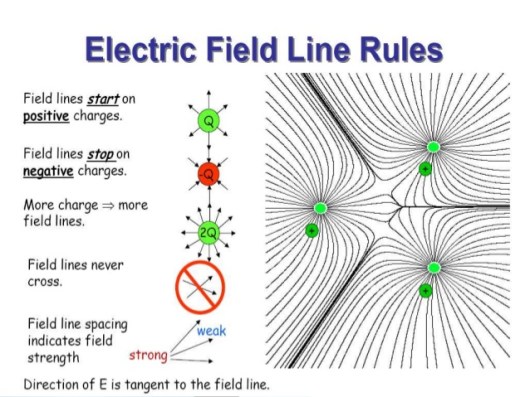
In physics, a charge carrier is a particle free to move, carrying an electric charge, especially the particles that carry electric charges in electrical conductors. Examples are electrons, ions and holes. In a conducting medium, an electric field can exert force on these free particles, causing a net motion of the particles through the medium; this is what constitutes an electric current.

A charge shall surround the particle that carries it. An electron is an eddy type configuration within the electromagnetic field. Ions are atoms or molecules that either hold extra charge, or have lost some charge. Holes are lower frequency regions (sinks) in the electromagnetic field. These “particles” are forced into motion by the difference in frequencies of the field. Such particles maintain their configuration and do not merge into surrounding field.

In different conducting media, different particles serve to carry charge:

  • In metals, the charge carriers are electrons. One or two of the valence electrons from each atom is able to move about freely within the crystal structure of the metal. The free electrons are referred to as conduction electrons, and the cloud of free electrons is called a Fermi gas.

In metals, the charges that generally belong to atoms, detach and move relatively freely within the lattice of atoms in the metal. These charges move like eddies at a higher frequency.

  • In electrolytes, such as salt water, the charge carriers are ions, which are atoms or molecules that have gained or lost electrons so they are electrically charged. Atoms that have gained electrons so they are negatively charged are called anions, atoms that have lost electrons so they are positively charged are called cations. Cations and anions of the dissociated liquid also serve as charge carriers in melted ionic solids (see e.g. the Hall–Héroult process for an example of electrolysis of a melted ionic solid). Proton conductors are electrolytic conductors employing positive hydrogen ions as carriers.

In electrolytes, parts of molecules become loose from each other and the frequency gradients become stretched. So the positive and negative charges appear far from each other and more visible.

  • In a plasma, an electrically charged gas which is found in electric arcs through air, neon signs, and the sun and stars, the electrons and cations of ionized gas act as charge carriers.

In plasma, the mechanism is the same as above except that the electromagnetic field is arranged on a different scale.

  • In a vacuum, free electrons can act as charge carriers. In the electronic component known as the vacuum tube (also called valve), the mobile electron cloud is generated by a heated metal cathode, by a process called thermionic emission. When an electric field is applied strong enough to draw the electrons into a beam, this may be referred to as a cathode ray, and is the basis of the cathode ray tube display widely used in televisions and computer monitors until the 2000’s.

The frequency modulation within a field can control the collection and motion of charge.

  • In semiconductors (the material used to make electronic components like transistors and integrated circuits), in addition to electrons, the travelling vacancies in the valence-band electron population (called “holes”), act as mobile positive charges and are treated as charge carriers. Electrons and holes are the charge carriers in semiconductors.

The “holes” are like low frequency sinks in the electromagnetic field. These charges may move like eddies at a lower frequency.

It can be seen that in some conductors, such as ionic solutions and plasmas, there are both positive and negative charge carriers, so an electric current in them consists of the two polarities of carrier moving in opposite directions. In other conductors, such as metals, there are only charge carriers of one polarity, so an electric current in them just consists of charge carriers moving in one direction.

The charge carrier basically carries a stable configuration of frequency gradient.

.

Classical to Quantum Mechanics

Blackbody Radiation
Reference: Disturbance Theory

.

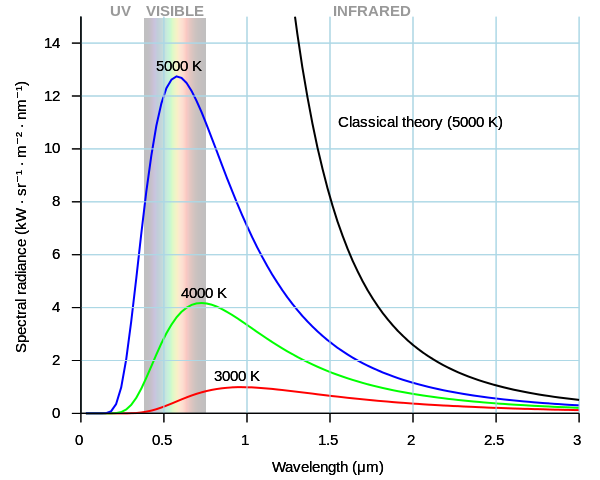
  1. The Classical Mechanics made a transition into Quantum Mechanics at the beginning of 20th century when the interactions between field and matter were studied. The first field-matter interaction was encountered in the Black Body Radiation. The classical equipartition theory failed to account for the energy of the emitted electromagnetic spectrum.

  2. There was a thermodynamic equilibrium observed between the temperature of the body and the spectrum of the electromagnetic field surrounding the body. In other words, the agitation of atoms (temperature) was in equilibrium with the absorption and emission of thermal electromagnetic radiation (spectrum).

  3. The formulae based on classical thermodynamics could either explain the low frequency part of the spectrum (Raleigh-Jean formula), or the high frequency part of the spectrum (Wien’s Distribution formula), but not the entire spectrum at once. Planck found the formula, which could replicate the entire spectrum by ingeniously interpolating between the above two formulae. This was purely an empirical effort based on mathematics. He came up with the explanation for his formula later.

  4. From Derivation of Planck’s radiation law:

    In order to reproduce the formula which he had empirically derived and presented in October 1900, Planck found that he could only do so if he assumed that the radiation was produced by oscillating electrons, which he modelled as oscillating on a massless spring (so-called “harmonic oscillators”). The total energy at any given frequency would be given by the energy of a single oscillator at that frequency multiplied by the number of oscillators oscillating at that frequency.

    However, he had to assume that

    1. The energy of each oscillator was not related to either the square of the amplitude of oscillation or the square of the frequency of oscillation (as it would be in classical physics), but rather just to the frequency,
      E α ν
    2. The energy of each oscillator could only be a multiple of some fundamental “chunk” of radiation, , so En = nhν
      where n = 0, 1, 2, 3, 4
    3. The number of oscillators with each energy Ewas given by the Boltzmann distribution, so

      Nn = N0e–nhν/kT

      where N0 is the number of oscillators in the lowest energy state.

      By combining these assumptions, Planck was able in November 1900 to reproduce the exact equation which he had derived empirically in October 1900. In doing so he provided, for the first time, a physical explanation for the observed blackbody curve.

  5. The frequency of the radiation matched the frequency of the “oscillators” in the body. The high frequency oscillators could be activated only when energy proportional to their frequency was available. Therefore, lesser numbers of oscillators were activated at higher frequencies. Planck thus resolved the Ultraviolet catastrophe.

  6. We may postulate that the kinetic and potential states of oscillators produce the electric and magnetic states of radiation respectively. Therefore, the electric state may be related to magnetic state the way the kinetic state is related to potential state. The magnetic state could be a concentrated electric state; and the electric state could be a flowing magnetic state.

  7. Thus an electromagnetic cycle consists of a pulse of energy of magnitude ‘h’. A three-dimensional electromagnetic field is made up of such dynamic pulses.

.

Black-body radiation (Notes)

Black_body
Reference: Disturbance Theory

.

Black body

  1. A black body is an idealized physical body that absorbs all incident electromagnetic radiation, regardless of frequency or angle of incidence.

  2. A black body in thermal equilibrium (that is, at a constant temperature) emits electromagnetic radiation called black-body radiation.

  3. The radiation has a spectrum that is determined by the temperature alone, not by the body’s shape or composition.

  4. It is extremely difficult to realize a perfect black body, for which, the absorption of radiation is 100%. Transmission and reflection is zero.

.

Thermodynamic equilibrium

  1. In thermodynamic equilibrium all kinds of equilibrium hold at once.

  2. It is characterized by no net macroscopic flows of matter or of energy.

  3. Any microscopic exchanges are perfectly balanced.

  4. The temperature is spatially uniform.

  5. Entropy maximizes with equilibrium.

Thermodynamic state

  • A thermodynamic system is a macroscopic object, the microscopic details of which are not explicitly considered in its thermodynamic description.

Internal energy

  • It excludes the kinetic energy of motion of the system as a whole and the potential energy of the system as a whole due to external force fields.

Boltzmann constant

  • The Boltzmann constant (kB or k), which is named after Ludwig Boltzmann, is a physical constant relating the average kinetic energy of particles in a gas with the temperature of the gas. It is the gas constant R divided by the Avogadro constant NA.

.

Equipartition theorem

  1. It relates the temperature of a system to its average energies in thermal equilibrium.

  2. It assumes that energy is shared equally among all of its various modes. For example, the average kinetic energy per degree of freedom in translational motion of a molecule should equal that in rotational motion.

  3. It gives the average values of individual components of the energy, such as, the kinetic energy of a particular particle, or the potential energy of a single spring. For example, it predicts that every atom in a monatomic ideal gas has an average kinetic energy of (3/2) kBT in thermal equilibrium.

  4. When the thermal energy kBT is smaller than the quantum energy spacing in a particular degree of freedom (such as at lower temperatures), the average energy and heat capacity of this degree of freedom are less than the values predicted by equipartition.

  5. Such decreases in heat capacity were among the first signs to physicists of the 19th century that classical physics was incorrect and that a new, more subtle, scientific model was required.

  6. Along with other evidence, equipartition’s failure to model black-body radiation—also known as the ultraviolet catastrophe—led Max Planck to suggest that energy in the oscillators in an object, which emit light, were quantized, a revolutionary hypothesis that spurred the development of quantum mechanics and quantum field theory.

.

Rayleigh–Jeans law

  1. The Rayleigh–Jeans law revealed an important error in physics theory of the time.

  2. The law predicted an energy output that diverges towards infinity as wavelength approaches zero (as frequency tends to infinity).

  3. Measurements of the spectral emission of actual black bodies revealed that the emission agreed with the Rayleigh–Jeans law at low frequencies but diverged at high frequencies; reaching a maximum and then falling with frequency, so the total energy emitted is finite.

.

Ultraviolet catastrophe

  1. The ultraviolet catastrophe was the prediction of classical physics that an ideal black body at thermal equilibrium will emit more energy as the frequency increases.

  2. A blackbody would release an infinite amount of energy, contradicting the principles of conservation of energy.

  3. The ultraviolet catastrophe results from the equipartition theorem of classical statistical mechanics which states that all harmonic oscillator modes (degrees of freedom) of a system at equilibrium have an average energy of (1/2)kT. It assumes that vibrating modes can increase infinitely.

.

Black-body radiation

  1. Black-body radiation is the thermal electromagnetic radiation within or surrounding a body.

  2. It has a specific spectrum and intensity that depends only on the body’s temperature.

  3. As its temperature increases the peak of the spectrum shifts from infra-red toward higher frequencies of visible light.

  4. Black-body radiation has a characteristic, continuous frequency spectrum.

  5. If each Fourier mode of the equilibrium radiation in an otherwise empty cavity with perfectly reflective walls is considered as a degree of freedom capable of exchanging energy, then, according to the equipartition theorem of classical physics, there would be an equal amount of energy in each mode.

  6. Since there are an infinite number of modes this implies infinite heat capacity (infinite energy at any non-zero temperature), as well as an unphysical spectrum of emitted radiation that grows without bound with increasing frequency, a problem known as the ultraviolet catastrophe.

  7. Instead, in quantum theory the occupation numbers of the modes are quantized, cutting off the spectrum at high frequency in agreement with experimental observation and resolving the catastrophe. The study of the laws of black bodies and the failure of classical physics to describe them helped establish the foundations of quantum mechanics.

Explanation

  1. The radiation from matter represents a conversion of a body’s thermal energy into radiative energy. At thermal equilibrium, matter emits and absorbs radiative substance. The radiative substance has a characteristic frequency distribution that depends on the temperature only.

  2. At thermodynamic equilibrium the amount of every wavelength in every direction of radiative energy emitted by a body at temperature T is equal to the corresponding amount that the body absorbs because it is surrounded by light at temperature T.

  3. The black-body curve is characteristic of thermal light, which depends only on the temperature of the body. The principle of strict equality of emission and absorption is always upheld in a condition of thermodynamic equilibrium.

  4. By making changes to Wien’s radiation law consistent with thermodynamics and radiation, Planck found a mathematical expression fitting the experimental data satisfactorily. Planck had to assume that the energy of the oscillators in the cavity was quantized, i.e., it existed in integer multiples of some quantity.

  5. Einstein built on this idea and proposed the quantization of radiative energy itself in 1905 to explain the photoelectric effect.

  6. These theoretical advances eventually resulted in the superseding of classical electromagnetism by quantum electrodynamics. These quanta were called photons and the black-body cavity was thought of as containing a gas of photons.

  7. In addition, it led to the development of quantum probability distributions, called Fermi–Dirac statistics and Bose–Einstein statistics, each applicable to a different class of particles, fermions and bosons.

Also see: Classical to Quantum Mechanics

.