We may view Space as “undisturbed field” with zero frequency. As space is disturbed a field of finite frequency is generated.
The field has electrical and magnetic aspects to it. As these aspects change, they reinforce each other through generation of force.
Thus field conveys force, which brings about changes elsewhere.
Inertia is expressed as “mass” in classical mechanics of matter. The equivalent expression of inertia would be as “frequency” in the field.
Inertia in a field shall increase with frequency. Higher frequency regions in a field shall have higher inertia, and more force shall be conveyed through such regions.
In very high frequency regions in a field, the frequency may condense and precipitate as mass.
Field has properties of interference and diffraction.
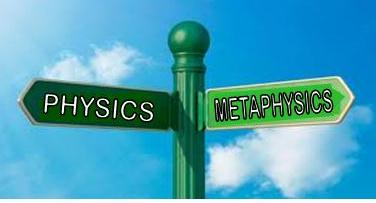
I started with investigation of the interface between Physics and Metaphysics and now I seem to have come to a full circle. But in doing so I have learned a lot.
The important part of E-learning is self-learning; and the important part of self-learning is repairing holes in understanding.
The holes in understanding parallel the logic of the subject. Logical holes when filled bring about understanding.
The first hole, undoubtedly, is not having the logical context to study a subject. The overall context is, obviously, this universe.
There is observation; there is something to be observed; and there is an observer. This is the beginning of Metaphysics.
Within metaphysics, it is Physics that focuses on the nature of what is observed. Metaphysics provides the context to understand physics.
Physics is the study of nature. This study starts with observation of the concrete universe. It continues with observation of the abstract patterns underlying the concrete universe. And then it goes deeper into abstraction.
Physics is characterized by objectivity that comes the concrete universe. Physics maintains this objectivity by being logically consistent with the concrete universe as it dives into abstraction.
Subjectivity is something different because it starts with the context of “self” instead of the context of universe. (But isn’t “self” included in the universe?)
Self is something abstract but it is assumed to be concrete. (Could this be the basic confusion?)
The concrete universe seems to be out there and self seems to be within. (What forms the interface?)
The relationship of self as observer to the universe as observed is the subject of Metaphysics.
What is the second hole in understanding that needs to be overcome?
The second hole in understanding occurs when a person does not know the scope and extent of the subject. In this case the hole is a missing overview.
The second hole leaves a person without a logical context to understand the information provided on the subject.
Lacking this logical context the person is also unable to formulate questions to ask when he does not understand something in that subject.
The overview of Mathematics shall include a brief introduction to Arithmetic, Algebra and Geometry showing the type of problems each part would address.
The overview of Physics shall include Mechanical, Chemical and Atomic nature of objects, going into a bit of detail in each area.
The overview of Metaphysics shall briefly describe awareness, the nature of self as observer and dimension of abstraction underlying the physical objects.
When studying a subject you ask yourself, “What is the scope and extent of this subject?” “What kind of logical context we have here?” “How can I get an overview of the subject?
What is the first hole in understanding that needs to be overcome?
The first hole in understanding occurs when a person does not know what the subject is all about, and why he should be studying it. The hole remains a hole even when he fills it with assumptions.
Mathematics is not just about avoiding to get short-changed at the grocery store. The subject of mathematics fills the need for accurate measurement and rational thinking to appreciate what is there. Mere introduction of counting brought great advance to the civilization. Mathematics helps one think in a clear and precise manner.
Physics or science is not just about inventing mechanical gadgets for our comfort. The subject of physics fills the need to observe nature objectively without bias, prejudice, fixed ideas, assumptions and blind faith. Physics is designed to steer one away from subjectivity and to look at things objectively without filters.
Metaphysics or spirituality is not just about surviving as spirit and thinking that one is immortal. The subject of metaphysics fills the need for grasping the universe. It steers one away from self-centric viewpoints and helps one acquire a universal viewpoint. Metaphysics looks at both the observed and the observer at once.
When studying a subject ask yourself, “What is this subject all about?” “Why should I be studying it?” “Am I putting something there that shouldn’t be there?”
A person drops out of High School because the confusion generated by his schooling seems to be increasing exponentially. He feels hopeless about learning. He can’t see any benefit from continuing in school. So he drops out.
What underlies that confusion are the holes in his understanding. He may start out with just a few holes in Kindergarten. But such holes, when not resolved, multiply to become significant by the end of the elementary school. The student tries to overcome the lack of understanding by memorizing his school materials. But such evasion serves only to increase those holes in his understanding. Even memorization fails to get good grades by the end of the middle school. That is when parents scramble to get the student tutored.
Teachers and after-school help focus only on the confusion related to his present grade. Overcoming confusion from earlier grades appears to be such a daunting task that it is not even attempted. But as long as those earlier holes are not filled, they keep on multiplying exponentially during the high school years until the student simply drowns in the resulting confusion.
When you sit down to help this student, you find that he can’t tell you coherently what he doesn’t know. Even when you know that these confusions may depend on just a few holes in student’s understanding from way back, you find the situation to be unsolvable. The student’s attention is so fixed on the present confusion that he cannot trace anything back. This has been the problem all along. One-on-one troubleshooting works but it is a hit and miss affair and not efficient enough.
.
Logical Remedy
The subject of this essay is an idea that seems to handle this dilemma. Any subject, whether it is mathematics or language-arts, begins from some important need. As observations follow that need, the subject develops slowly to form a structure based on logic. We may trace the logic of the subject all the way to a beginning premise. The later concepts develop out of the earlier concepts. Obviously, it would be difficult to understand the later concepts if earlier concepts are not understood.
This brings up a parallel between arrangement of holes in the student’s mind and the flow of logic in a subject. It is the filling of earlier holes that makes it possible to resolve the present confusion. Similarly, it is the understanding of earlier concepts that make it possible to comprehend the later ones.
The simple idea is to follow the logic of a subject to discover and resolve the earliest holes in the understanding of the student. It is then easy to come forward resolving rest of the holesin a logical sequence.
We seem to have found a simple and straight forward method to resolve confusion in any student quite rapidly and efficiently. When we applied this idea to a group of school dropouts, it worked like a charm. The students soon discovered the earliest difficulty they had with the subject. They knew the source of their difficulty now, and were eager to resolve it. This quickly established a two-way dialog and eager participation.
Getting that two-way dialog going was the first breakthrough. We knew how to approach the confusion; but we soon discovered that we had a tiger by the tail. We needed better planning to handle that confusion.
It was like putting an accident victim through a planned rehab.