Author Archives: vinaire

I am originally from India. I am settled in United States since 1969. I love mathematics, philosophy and clarity in thinking.

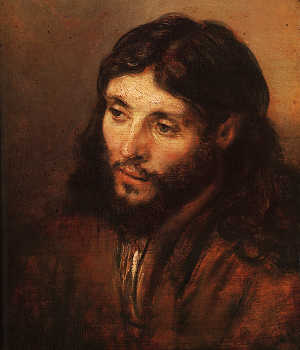
CHRISTIANITY: The Christ of Faith

Reference: Christianity

[NOTE: In color are Vinaire’s comments.]

In the end it seemed to those who knew him best that here was a man in whom the human ego had disappeared, leaving his life so completely under the will of God that it was transparent to that will. 

How does one move from the Jesus of history, whose life and work have thus far occupied us, to the Christ whom his followers came to believe had been God in human form? His disciples did not reach that conclusion before Jesus’ death, but even in his lifetime we can witness momentum building in its direction. Having tried in the preceding section to describe the facts of Jesus’ life, we turn now to the way he appeared to his disciples. Here we are on firmer ground, for if the Gospels disclose little in the way of historical facts, they are transparent as to his impact on his associates. Our presentation will fall into three parts: what they saw Jesus do, what they heard him say, and what they sensed him to be. 

How did the followers of Jesus came to believe that he had been God in human form? What was the impact of Jesus on his associates?

“He Went About Doing Good.” We begin with what Jesus did. The Gospel accounts, written by members of the early Church, vibrate with wonder at his performances. Their pages, especially those of Mark, teem with miracles. We have seen that these impressed multitudes, but it would be a mistake to place our emphasis there. For one thing, Jesus did not emphasize his miracles. He never used them as devices to strong-arm people into believing in him. He was tempted to do so, but in the wilderness soul-searchings that prefaced his ministry he rejected this temptation. Almost all of his extraordinary deeds were performed quietly, apart from the crowds, and as a demonstration of the power of faith. Moreover, other writings of the times abound in miracles, but this didn’t lead witnesses to deify their agents. They merely credited the miracle-workers with unusual powers. 

Jesus was a miracle worker but there were others too. But Jesus was different in that he did not emphasize his miracles. Almost all of his extraordinary deeds were performed quietly, apart from the crowds, and as a demonstration of the power of faith. 

We get a better perspective on Jesus’ actions if we place the emphasis where one of his disciples did. Once, in addressing a group, Peter found it necessary to compress into short compass what Jesus did during his lifetime. His summary? “He went about doing good” (Acts 10:38). A simple epitaph, but a moving one. Circulating easily and without affectation among ordinary people and social misfits, healing them, counseling them, helping them out of chasms of despair, Jesus went about doing good. He did so with such single-mindedness and effectiveness that those who were with him constantly found their estimate of him modulating to a new key. They found themselves thinking that if divine goodness were to manifest itself in human form, this is how it would behave. 

Jesus went about doing good, circulating easily and without affectation among ordinary people and social misfits, healing them, counseling them, helping them out of chasms of despair. He did so with such single-mindedness and effectiveness.

“Never Spoke Man Thus.” It was not only what Jesus did, however, that made his contemporaries think of him in new dimensions. It was also what he said. There has been a great deal of controversy over the originality of Jesus’ teachings. Possibly the most balanced view is that of the great Jewish scholar Joseph Klausner. If you take the teachings of Jesus separately, he wrote, you can find every one of them paralleled in either the Old Testament or its commentary, the Talmud. But if you take them as a whole, they have an urgency, an ardent, vivid quality, an abandon, and above all a complete absence of second-rate material that makes them refreshingly new. 

What Jesus said can be found in earlier writings in form or other. But if you take them as a whole, they have an urgency, an ardent, vivid quality, an abandon, and above all a complete absence of second-rate material that makes them refreshingly new. 

The language of Jesus has proved to be a fascinating study in itself, quite apart from its content. If simplicity, concentration, and the sense of what is vital are marks of great religious literature, these qualities alone would make Jesus’ words immortal. But this is just the beginning. They carry an extravagance of which wise men, tuned to the importance of balanced judgment, are incapable. Their passionate quality has led one poet to coin a special word for Jesus’ language, calling it “gigantesque.” If your hand offends you, cut if off. If your eye stands between you and the best, gouge it out. Jesus talks of camels that hump through needles’ eyes, of people who fastidiously strain gnats from their drinks while oblivious of the camels that caravan down their gullets. His characters go around with timbers protruding from their eyes, looking for tiny specks in the eyes of others. He talks of people whose outer lives are stately mausoleums while their inner lives stink of decaying corpses. This is not language tooled for rhetorical effect. The language is part of the message itself, prompted by its driving urgency. 

The language of Jesus has a passionate quality which is extraordinary in its driving urgency.

A second arresting feature of Jesus’ language was its invitational style. Instead of telling people what to do or what to believe, he invited them to see things differently, confident that if they did so their behavior would change accordingly. This called for working with peoples’ imaginations more than with their reason or their will. If listeners were to accept his invitation, the place to which they were being invited would have to seem real to them. So, because the reality his hearers were most familiar with consisted of concrete particulars, Jesus began with those particulars. He spoke of mustard seeds and rocky soil, of servants and masters, of weddings and of wine. These specifics gave his teachings an opening ring of reality; he was speaking of things that were very much a part of his hearers’ worlds. But having gotten them that far, having roused in them a momentum of assent, Jesus would then ride that momentum while giving its trajectory a startling, subversive twist. That phrase, “momentum of assent,” is important, for its deepest meaning is that Jesus located the authority for his teachings not in himself or in God-as-removed but in his hearers’ hearts. My teachings are true, he said in effect, not because they come from me, or even from God through me, but because (against all conventionality) your own hearts attest to their truth. 

Instead of telling people what to do or what to believe, Jesus invited them to see things differently. He worked with peoples’ imaginations more than with their reason or their will. He spoke of things that were very much a part of his hearers’ worlds and their own truth.

So what did Jesus use his invitational, gigantesque language to say? Quantitatively, not a great deal, as far as the records report; everything that the New Testament records can be spoken in two hours. Yet his teachings may be the most repeated in history. “Love your neighbor as yourself.” “Whatsoever you would that men should do unto you, do you also unto them.” “Come unto me, all you that labor and are heavy laden, and I will give you rest.” “You shall know the truth, and the truth shall make you free.” Most of the time, however, he told stories that we call parables: of buried treasure, of sowers who went out to sow, of pearl merchants, of a good Samaritan, of a young man who blew his inheritance on a binge and found himself cadging scraps from the pigs, of a man who had two sons. The world knows them well. People who heard these stories were moved to exclaim, “This man speaks with authority…. Never spoke man thus!” 

Jesus didn’t say much, yet his teachings may be the most repeated in history. Most of the time he told stories that we call parables. People who heard these stories were moved at their authenticity.

They were astonished, and with reason. If we are not it is because we have heard Jesus’ teachings so often that their edges have been worn smooth, dulling their subversiveness. If we could recover their original impact, we too would be startled. Their beauty would not cover the fact that they are “hard sayings” for presenting a scheme of values so counter to the usual as to rock us like an earthquake. 

His sayings had an edge of subversiveness. They presented a scheme of values so counter to the usual as to rock the hearers like an earthquake. 

We are told that we are not to resist evil but to turn the other cheek. The world assumes that evil must be resisted by every means available. We are told to love our enemies and bless those who curse us. The world assumes that friends are to be loved and enemies hated. We are told that the sun rises on the just and the unjust alike. The world considers this undiscriminating; it would like to see clouds over evil people and is offended when they go unpunished. We are told that outcasts and harlots enter the kingdom of God before many who are perfunctorily righteous. Again unfair, the world thinks; respectable people should head the procession. We are told that the gate to salvation is narrow. The world would prefer it to be broad. We are told to be as carefree as birds and flowers. The world counsels prudence. We are told that it is more difficult for the rich to enter the Kingdom than for a camel to pass through a needle’s eye. The world admires wealth. We are told that the happy people are those who are meek, who weep, who are merciful and pure in heart. The world assumes that it is the rich, the powerful, and the wellborn who are happy. The great Russian philosopher Nikolai Berdyaev said that a wind of freedom blows through these teachings that frightens the world and makes us want to deflect them by postponement—not yet, not yet! H. G. Wells was evidently right: Either there was something mad about this man, or our hearts are still too small for his message. 

A wind of freedom blows through these teachings that frightens the world and makes us want to deflect them by postponement. Either there was something mad about this man, or our hearts are still too small for his message. 

Again we must come back to what those teachings were about. Everything that came from his lips formed the surface of a burning glass to focus human awareness on the two most important facts about life: God’s overwhelming love of humanity, and the need for people to accept that love and let it flow through them to others. In experiencing God as infinite love bent on peoples’ salvation, Jesus was an authentic child of Judaism; he differed, we have seen, only in not allowing the post-Exilic holiness code to impede God’s compassion. Time after time, as in his story of the shepherd who risked ninety-nine sheep to go after the one that had strayed, Jesus tried to convey God’s absolute love for every single human being. To perceive this love and to let it penetrate one’s very marrow was to respond in the only way that was possible—in profound and total gratitude for the wonders of God’s grace. 

Jesus emphasized God’s overwhelming love of humanity, and the need for people to accept that love and let it flow through them to others. He did not allow the post-Exilic holiness code to impede God’s compassion. 

The only way to make sense of Jesus’ extraordinary admonitions as to how people should live is to see them as cut from this understanding of the God who loves human beings absolutely, without pausing to calculate their worth or due. We are to give others our cloak as well as our coat if they need it. Why? Because God has given us what we need. We are to go with others the second mile. Why again? Because we know, deeply, overwhelmingly, that God has borne with us for far longer stretches. Why should we love not only our friends but our enemies, and pray for those who persecute us? “So that you may be children of your Father in heaven; for he makes his sun rise on the evil and on the good, and sends rain on the righteous and the unrighteous…. Be perfect, therefore, as your heavenly Father is perfect” (Matthew 5:45, 48). We say his ethic is perfectionistic—a polite word for unrealistic—because it asks that we love unreservedly. But the reason we consider that unrealistic, Jesus would have answered, is because we do not experience the constant, unstinted love that flows from God to us. If we did experience it, problems would still arise. To which of the innumerable needy should limited supplies of coats and cloaks be given? If the target of evil is someone other than myself, should I still not resist it? Jesus offered no rule book to obviate hard choices. What he argued was the stance from which they should be approached. All we can say in advance, as we face the demands of a tangled world, is that we should respond to our neighbors—all of them insofar as we can foresee the consequences of our acts—not in proportion to what we judge to be their due, but in proportion to their need. The cost to us personally should count for nothing. 

We are to give others our cloak as well as our coat if they need it. Why? Because God has given us what we need. Jesus offered no rule book to obviate hard choices. What he argued was the stance from which they should be approached. The cost to us personally should count for nothing. 

We have spoken of what Jesus did and what he said. But these alone would not have been enough to edge his disciples toward the conclusion that he was divine had it not been for a third factor: what he was. 

“We Have Seen His Glory.” “There is in the world,” writes Dostoevsky, “only one figure of absolute beauty: Christ. That infinitely lovely figure is…an infinite marvel.” 

Certainly, the most impressive thing about the teachings of Jesus is not that he taught them but that he appears to have lived them. From the accounts that we have, his entire life was one of humility, self-giving, and love that sought not its own. The supreme evidence of his humility is that it is impossible to discover precisely what Jesus thought of himself. His concern was what people thought of God—God’s nature and God’s will for their lives. True, by indirection this tells us something about Jesus’ own self-image, but it is the obvious, that he esteemed himself to be less than God. “Why do you call me good? Don’t you know that only God is good?” It is impossible to read what Jesus said about selflessness without sensing how free of pride he was himself. Similarly with sincerity. What he said on the subject could only have been said by someone whose life was uncluttered by deceit. Truth was like the air to him. 

Jesus appears to have lived what he taught. His entire life was one of humility, self-giving, and love that sought not its own. His life was uncluttered by deceit. Truth was like the air to him.

Through the pages of the Gospels Jesus emerges as a man of strength and integrity who bore about him, as someone has said, no strangeness at all save the strangeness of perfection. He liked people and they liked him in turn. They loved him; they loved him intensely and they loved him in numbers. Drawn to him not only for his charismatic powers but for the compassion they sensed in him as well, they surrounded him, flocked about him, followed him. He stands by the Sea of Galilee and they press so hard that he has to speak to them from a boat. He sets out for the day and a crowd of several thousand accumulates, missing their lunch, staying on until suddenly they discover that they are famished. People responded to Jesus, but equally he responded to them. He felt their appeal, whether they were rich or poor, young or old, saints or sinners. We have seen that he ignored the barriers that mores erected between people. He loved children. He hated injustice because of what it did to those he called, tenderly, “the least of these” (Matthew 25:40). Above all he hated hypocrisy, because it hid people from themselves and precluded the authenticity he sought to build into relationships. In the end it seemed to those who knew him best that here was a man in whom the human ego had disappeared, leaving his life so completely under the will of God that it was transparent to that will. It came to the point where they felt that as they looked at Jesus they were looking at something resembling God in human form. 

In the end it seemed to those who knew him best that here was a man in whom the human ego had disappeared, leaving his life so completely under the will of God that it was transparent to that will.

This is what lies behind the lyric cry of the early Church: “We have seen his glory,…full of grace and truth” (John 1:14). Centuries later, Shakespeare put it this way:

Some say that ever ’gainst that season comes
Wherein our Savior’s birth is celebrated,
The bird of dawning singeth all night long;
And then, they say, no spirit can walk abroad;
The nights are wholesome; then no planets strike,
No fairy tales, nor witch hath power to charm,
So hallow’d and so gracious is the time.

It came to the point where people felt that as they looked at Jesus they were looking at something resembling God in human form. 

.

Grade 7: Clearing Course

Reference: Clearing Course Instruction Booklet

On this course, Hubbard provides a prepared structure of GPMs to run. He came up with this structure from his research, must probably by auditing himself. Hubbard assumes that this basic structure of reactive bank is the same for every person. 

The first pair of items to be audited on Clearing Course is: TO BE NOBODY……TO BE EVERYBODY. This is presented as Item 1, Part 1, Run 1. In other words, this pair of items is presented as the ultimate core of the reactive mind.

It is important to understand what Hubbard is doing here. Hubbard is assuming that beginning of the reactive mind starts with some imperceptible identity that the thetan has assumed. 

.

The Thetan and The Dynamics

A thetan is a first dynamic entity. From the viewpoint of evolution, the first dynamic is preceded by seven other dynamics. The universe started with the Eighth Dynamic (the God dynamic). But Hubbard assumes that the universe is the product of agreement among thetans (the first dynamic). In other words, Hubbard assumes that humanlike “beingnesses” are the Cause of this universe. 

Hubbard’s conception of Eight Dynamics is a genius concept, but, unfortunately, he sequences them in an inverted fashion because of his human-centric fixation. 

The Eight Dynamics

.

The Eighth Dynamic impulse

The Eighth Dynamic impulse is TO EVOLVE, according to which the other dynamics flow. The “thought form” that this impulse takes, at first, is not a human beingness; but whatever that form is, it ultimately evolves into a human beingness (or thetan).

Therefore, a whole chain of beingesses exists prior to the evolved beingness of the thetan. The intelligence of thetan is a much later phenomenon that was preceded by much trial and error by the impulse to evolve.

Hubbard’s first mention of thetan occurs in the book HISTORY OF MAN, published in 1952. It is essentially an account of the Fifth Dynamic. The Fifth Dynamic is a combination of Seventh and Sixth Dynamics. The Seventh Dynamic is “the impulse to evolve” and not thetans. The Sixth Dynamic is “the basic substance” that evolves and not the evolved form of matter, energy, space and time that we perceive today.

.

Earlier Similar

So, there is much earlier similar that exists prior to Thetan and MEST.

The Clearing Course talks about a mysterious blue light that appears in the mind and causes anaten (analytical attenuation). Most likely this light represents earlier similar items that are missing.

The Clearing Course, therefore, starts at a much later point and not from the bottom of the reactive bank. Not to recognize this is a fundamental error on Hubbard’s part. 

The first pair of items in the reactive bank is most likely to be of the order of TO BE……TO NOT BE.

.

Clearing

[NOTE: I don’t recommend this Grade Level to be run at all as it proceeds from unwarranted assumptions. This Grade is run “blindly” entirely on E-meter.]

The action on the Clearing Course is to keep spotting the light, or calling the same item, again and again until no more reads occur on the E-meter. You don’t have to see the light to spot it or see the thetan or see the object or objects.  You only need to spot the place where you are with the idea of what should be there. GPM Line Plot is not used.

.

Grade 7 Glossary

CHAIN
Anything in the bank that occurs several times will not erase unless it’s the earliest time it occurred.  This is known as the basic on the “chain”.  A number of similar things, early to late in different points of time, make a chain.

ERASURE
You are not seeking RELEASE from the bank at this level.  You are erasing.  Therefore “the bank has blown” is nonsense – one has blown from the bank, so get back in it and run it. Total erasure is the aim.

ITEM 1, PART 1, RUN 1
This is the pair of items that represents the ultimate core of the reactive bank. Apparently, this is the impulse to evolve.

PAIN
Pain only occurs when you have left something charged behind you (earlier).

PART B (is nouns)
Be careful of first one because it is used in the sense of a noun.  Don’t run it otherwise than as a pure noun.

PARTS
The five parts are Parts A, B, C, D, & E as detailed in the section on The Clearing Course Platen. The PARTS go as they do in the first run.  (7s, THEN Basic End Words, THEN Confusion GPM, THEN Objects – hollow, THEN Objects – solid.) 

RELEASE 
You’ll go Release a lot of times.  Ignore it.  We are erasing in R6.  Release can be ignored because the R6 bank is vanishing.  Not true of lower grades.

REPEATER TECHNIQUE
The items are flattened by repeater technique.  Just repeat them until they no longer read.  Get your own reaction off.  Repeat again.  Repeat to no read.  Beware of session suppress and invalidate.

RERUN
If you start getting pain or sickness, you got into a later run or you bypassed some charge and must rerun the earlier area you just did.  Something is still alive.  If in doubt, rerun the lot from the start of the part.  Erase thoroughly.  But if it is a later run, get back into the correct one.

RUN
This row of five parts is called a RUN.  See the section on The Pattern of the Bank. There are four runs.

SICKNESS
Sickness is part of the somatic.  It runs out.

THETAN IN THE ITEM
A thetan is a certain configuration of the impulses that exist. It is a “mental form” opposed to a physical form. The expression “thetan in the item” means the “viewpoint” or “identity” at the moment of the item. One then has to get the earliest moment of one’s own beingness in the bank and spot it.

.

The Pattern of the Bank

The apparent pattern of the bank is as follows (see the section on Clearing Course Platen below):

Part A – The 7s                       (earliest)
Part B – The Basic End Words
Part C – The Confusion GPM           (Run 1)
Part D – The Objects – hollow
Part E – The Objects – solid
 
Part A – The 7s
Part B – The Basic End Words
Part C – The Confusion GPM           (Run 2)
Part D – The Objects – hollow
Part E – The Objects – solid
 
Part A – The 7s
Part B – The Basic End Words
Part C – The Confusion GPM           (Run 3)
Part D – The Objects – hollow
Part E – The Objects – solid
 
Part A – The 7s
Part B – The Basic End Words
Part C – The Confusion GPM           (Run 4)
Part D – The Objects – hollow
Part E – The Objects – solid

.

The Clearing Course Platen

This data is provided for the sake of describing this Grade. This Grade is not used with Subject Clearing approach.

Part A: The 7s

LIGHT (front left)

  1. TO BE NOBODY……TO BE EVERYBODY
  2. TO BE ME……TO BE YOU
  3. TO BE MYSELF……TO BE OTHERS
  4. TO BE AN ANIMAL……TO BE ANIMALS

LIGHT (front left)

  1. TO BE A BODY……TO BE BODIES
  2. TO BE MATTER……TO BE SPACE
  3. TO BE A SPIRIT……TO BE SPIRITS
  4. TO BE A GOD……TO BE GODS

LIGHT (front left)

  1. TO DO NOTHING……TO DO EVERYTHING
  2. TO DO MUCH……TO DO LITTLE
  3. TO DO IT ALL……TO DO NOT ANY
  4. TO DO AMBITIOUSLY……TO DO SLIGHTLY

LIGHT (front left)

  1. TO DO MORE……TO DO LESS
  2. TO DO SPLENDIDLY……TO DO AWFULLY
  3. TO DO WISELY……TO DO FOOLISHLY
  4. TO DO RIGHT……TO DO WRONG

LIGHT (front left)

  1. TO HAVE NOTHING……TO HAVE EVERYTHING
  2. TO HAVE MUCH……TO HAVE LITTLE
  3. TO HAVE ALL……TO HAVE NONE
  4. TO HAVE HUGELY……TO HAVE POORLY

LIGHT (front left)

  1. TO HAVE GREEDILY……TO HAVE PICKINGLY
  2. TO HAVE MIGHTILY……TO HAVE SPARSELY
  3. TO HAVE MAGNIFICENTLY……TO HAVE TAWDRILY
  4. TO HAVE TOTALITY……TO HAVE NEGATIVENESS

LIGHT (front left)

  1. TO STAY EVERYWHERE……TO STAY NOWHERE
  2. TO STAY HERE……TO STAY THERE
  3. TO STAY NEAR……TO STAY FAR
  4. TO STAY UP……TO STAY DOWN

LIGHT (front left)

  1. TO STAY OUT……TO STAY IN
  2. TO STAY BACK……TO STAY FORWARD
  3. TO STAY EARLIER……TO STAY LATER
  4. TO STAY PRESENT……TO STAY ABSENT

LIGHT (front left)

.

Part B: The Basic End Words

The Basic End Words are:

  1. THE NOW
  2. THE PAST
  3. THE FUTURE
  4. THE TIME
  5. THE SPACE
  6. THE MOTION
  7. THE ENERGY
  8. THE MASSES
  9. THE SELF
  10. THE OTHERS
  11. THE LIFE

LIGHT

  1. THE EXISTENCE
  2. THE CONDITIONS
  3. THE EFFECTS
  4. THE PICTURES
  5. THE MIND
  6. THE HISTORIES
  7. THE REACTION
  8. THE GOAL
  9. THE CHAOS
  10. THE UNIVERSE

.

Part C: The Confusion GPM 

Use the above end word in the blanks below.

LIGHT (front left)
Pair: CREATING TO DESTROY _______ …… DESTROYING TO CREATE _______

.

Parts D: The Hollow Objects

LIGHT

  1. 1 hollow [object] going away
  2. 2 hollow [objects] going away
  3. 3 hollow [objects] going away
  4. 4 hollow [objects] going away
  5. 1 hollow [object] coming in
  6. 2 hollow [objects] coming in
  7. 3 hollow [objects] coming in
  8. 4 hollow [objects] coming in

For each set of eight items (preceded by LIGHT), the following hollow objects are used:

  1. Triangle
  2. Circle
  3. Square
  4. Oval
  5. Tetrahedron (three sides and base)
  6. Sphere
  7. Cube
  8. Egg
  9. Prism
  10. Cylinder
  11. Rectahedron (long box)
  12. Flat cylinder 
  13. Pyramid (four sides and base)
  14. Coil
  15. Diamond Box
  16. Oval coil

.

Parts E: The Solid Objects

LIGHT

  1. 1 solid [object] going away
  2. 2 solid [objects] going away
  3. 3 solid [objects] going away
  4. 4 solid [objects] going away
  5. 1 solid [object] coming in
  6. 2 solid [objects] coming in
  7. 3 solid [objects] coming in
  8. 4 solid [objects] coming in

For each set of eight items (preceded by LIGHT), the following solid objects are used:

  1. Circle
  2. Square
  3. Oval
  4. Tetrahedron
  5. Sphere
  6. Cube
  7. Egg
  8. Prism
  9. Cylinder
  10. Rectahedron (long box)
  11. Flat cylinder
  12. Pyramid (four sides and base)
  13. Coil
  14. Diamond Box
  15. Oval coil

.

Grade 6: Dramatization

Reference: Grassroots Scientology

Grade 6 is also called R6EW. Here we have exercises followed by a glossary of key words for Grade 6. The R6EW process is described in detail here: SOLO AUDITING AND R6 EW.

.

Instructions

  1. These processes are run by oneself applying The 12 Aspects of Mindfulness instead of depending on the E-meter.
  2. In response to the commands of these processes, simply look without thinking. Let the mind present you with the answer. If no answer comes up within a reasonable time, you have reached the EP (end phenomenon) for the moment.
  3. These commands tend to be general. The better you understand the command and its scope, the more answers shall come up.
  4. The answers that come up, shall depend on the level of your confront. The higher is your confront the deeper shall be the answers that come up. Your confront improves as you do the processing. After completing a grade, if you repeat it again, you may find some new answers coming up.
  5. “Repetitive to EP” means you contemplate over the command and acknowledge each answer, until no more answers are coming up.
  6. “Run alternately to EP” means that you contemplate over the two commands alternatively, until no more answers are coming up.
  7. “Run the bracket in sequence to EP” means that you sequentially contemplate on the commands provided as a bracket, until no more answers are coming up.
  8. “To EP” is the abbreviation for the above. When there is a single command you run it repetitively. When there are more than one command, you run them as a group, repetitively.

.

EXERCISE

Each command is independently run.

  1. You start with the two commands of Flow 1. 
  2. In response to the first command you write down the “end word” which most closely describes the dramatization. Please study the process in the last few sections of SOLO AUDITING AND R6 EW.
  3. In response to the second command you write down the “end word” which most closely describes the opposite of that dramatization for you.
  4. Consult the synonyms and antonyms for these words in a dictionary until the “pair of these end-words” seems just right to you.
  5. You run these two commands of Flow 1 repeatedly until you exhausted all possible answers. In other words, you have extracted all possible pairs of end-words that are relevant to your case.
  6. You may arrange these pairs in a list in the order that makes most sense to you.
  7. Execute the steps 1-6  for Flow 2 and Flow 3.
  8. You may then combine the lists from all flows and rearrange all the pairs in the order that makes most sense to you.
  9. Hopefully, this process will bring lots of realizations and great relief to you.

R6EW F1:
“What am I dramatizing?” (write down the end word)
“What would oppose that?” (write down the end word)

R6EW F2:
“What have I caused another to dramatize?”
“What would oppose that?”

R6EW F3:
“What are others dramatizing to others?”
“What would oppose that?”

.

Key Word List

Look up these key words in the sequence provided, in the glossary below.

GRADE 6, R6, END WORD, R6EW, DRAMATIZATION

.

Grade 6 Glossary

END WORD
An End Word is the final word of a goal. It is always a noun or a condition made into a noun. For example, with a goal such as “To Grab Books”, Books is the end word. Each end word, however, has many verb or action words related to it, thus making up a series of goals. It is the end word that is the common denominator to the whole of a GPM.  

DRAMATIZATION
Dramatization is thinking or acting in a manner that is dictated by an unassimilated impression contained in the mental matrix. When dramatizing, the individual is like an actor playing his dictated part and going through a whole series of actions. Irrational conduct is the result of dramatization.

GRADE 6
Grade 6 is called R6EW, where R6 means “Routine 6,” which refers to the core of the “Reactive Mind.” EW means “End Words,” which refers to nouns that express dramatizations, such as, “depression.” On this grade you want to find pair of opposite end words, such as, “depression-elation,” that best describe dramatizations that are real to you in present time.  Finding and listing of pairs of end words release one from subconsciously held conflicts. 

R6
R6 is a research designation where ‘R’ stands for ‘Routine’ followed by the research code number. During this research the OT III Implant was discovered: “The pictures contain God, the Devil, angels, space opera, theaters, helicopters, a constant spinning, a spinning dancer, trains and various scenes very like modern England. You name it, it’s in this implant we call in its entirely ‘R6’.” R6 became a synonym for the ‘reactive mind’.

R6EW
R6EW simply consists of this: find an end word, preferably the one you are dramatizing (that would mean the one you would be most stuck in).  If it’s a plus you find its minus, and so on.  It sometimes takes some doing. The main rule is always find the pair, don’t leave one.  If you are in trouble after finding an end word, it’s not that end word that’s troubling you. Also see Grade VI.

.

The words provided in this glossary are specialized for Grade VI. For related words please see

  1. Scientology Technical Dictionary
  2. KHTK Glossary (Metaphysics)

.

Grade 5: Power Processes

Reference: Grassroots Scientology

.

Instructions

  1. These processes are run by oneself applying The 12 Aspects of Mindfulness instead of depending on the E-meter.
  2. In response to the commands of these processes, simply look without thinking. Let the mind present you with the answer. If no answer comes up within a reasonable time, you have reached the EP (end phenomenon) for the moment.
  3. These commands tend to be general. The better you understand the command and its scope, the more answers shall come up.
  4. The answers that come up, shall depend on the level of your confront. The higher is your confront the deeper shall be the answers that come up. Your confront improves as you do the processing. After completing a grade, if you repeat it again, you may find some new answers coming up.
  5. “Repetitive to EP” means you contemplate over the command and acknowledge each answer, until no more answers are coming up.
  6. “Run alternately to EP” means that you contemplate over the two commands alternatively, until no more answers are coming up.
  7. “Run the bracket in sequence to EP” means that you sequentially contemplate on the commands provided as a bracket, until no more answers are coming up.
  8. “To EP” is the abbreviation for the above. When there is a single command you run it repetitively. When there are more than one command, you run them as a group, repetitively.

.

POWER PROCESS (Pr Pr)

Power processes address “source”, “existence” and “condition” in that order. You may run these processes safely using the Subject Clearing approach.

.

SOURCE (Power Process 4)
Here one meditates on “logical” relationships.

  1. Tell me a source.
  2. Tell me about it.
  3. Tell me a no source.
  4. Tell me about it.

“SOURCE” – A Scientology Power Process

.

EXISTENCE (Power Process 5)
Here one meditates on the “reality” of things.

  1. What is?
  2. What isn’t?

“EXISTENCE” – A Scientology Power Process

.

CONDITION (Power Process 6)
Here one meditates on the “conditions” needing resolution.

  1. Tell me an existing condition.
  2. Tell me how you handled it.

“CONDITIONS” – A Scientology Power Process

.

CORRECTIVE PROCESSES

Power processes 1, 2, and 3 are corrective processes and are used when the PC is not running well on Power Process 4, 5, or 6.

Power Process 1: PROBLEM
This process is run when the person is committing present time overts as a solution.

(a) What overt have you committed?
(b) What problem were you trying to solve?
(c) What haven’t you said?
(d) What problem were you trying to solve?

.

Power Process 2: FIXED SOLUTION
This process is run when the pc is collapsed into his bank by former practices. The person is using some practice, opinion or belief as a fixed solution.

(a) “Give me some practices, opinions, or beliefs you have been connected to whether you left them or not.” Run to the first blowdown item.
(b) Then take the blowdown item plus the two items up and two items down from it and assess those five item to one.
(c) Run on the item;

  1. What condition have you encountered in __________________________?
  2. How have you handled it?

.

Power Process 3: GRIEF
This process is run when the pc has been caused grief by auditing or the organization.

(a) What condition have you encountered in Scientology (or auditing or dianetics)?
(b) How have you handled it?

.

POWER PROCESSES ALL FLOWS

Power Process 1

Flow 1

  1. What has another done to you?
  2. What problem was he/she trying to solve?
  3. What hasn’t another said to you?
  4. What problem was he/she trying to solve?

Flow 2

  1. What have you done to another?
  2. What problem were you trying to solve?
  3. What haven’t you said to another?
  4. What problem were you trying to solve?

Flow 3

  1. What has another done to another or others?
  2. What problem were they trying to solve?
  3. What hasn’t another said to another or others?
  4. What problem were they trying to solve?

Flow 0

  1. What have you done to yourself?
  2. What problem were you trying to solve?
  3. What haven’t you said to yourself?
  4. What problem were you trying to solve?

.

Power Process 2

“Give me some practices, opinions or beliefs you have been connected to, whether you left them or not.” Run reading items.

Flow 1

  1. What condition have you encountered in/with ______________?
  2. How have you handled it?

Flow 2

  1. What condition has another encountered in/with ______________?
  2. How has he/she handled it?

Flow 3

  1. What condition have others encountered in/with ______________?
  2. How have they handled it?

Flow 0

  1. What condition have you encountered with yourself because of ______________?
  2. How have you handled it?

.

Power Process 3

For those overwhelmed by a clearing practice.

Flow 1

  1. What condition have you encountered in Scientology (or auditing, clearing, educting, Eductivism, EST, or Dianetics)?
  2. How have you handled it?

Flow 2

  1. What condition has another encountered in Scientology (or auditing, clearing, educting, Eductivism, EST or Dianetics)?
  2. How has he/she handled it?

Flow 3

  1. What condition have others encountered in Scientology (auditing, clearing, educting, Eductivism, EST or Dianetics)?
  2. How have they handled it?

Flow 0

  1. What condition have you encountered in yourself because of Scientology (auditing, clearing, educting, Eductivism, EST or Dianetics)?
  2. How have you handled it? 

.

Power Process 4

Look up the definition of SOURCE. You run the Flows and the commands within them in the sequence given. Each set of command is run repetitively until it is exhausted of all possible answers.

Flow 1

  1. Tell me a source.
  2. Tell me about it.
  3. Tell me a no-source.
  4. Tell me about it.

Flow 2

  1. Tell me a source for another.
  2. Tell me about it.
  3. Tell me a no-source for another.
  4. Tell me about it.

Flow 3

  1. Tell me a source for others.
  2. Tell me about it.
  3. Tell me a no-source for others.
  4. Tell me about it.

Flow 0

  1. Tell me about yourself as a source.
  2. Tell me about it.
  3. Tell me about yourself as a no-source.
  4. Tell me about it.

When there is difficulty in running the SOURCE process, run Power Process 1 instead. The reason is that one may be committing overts in an attempt to resolve some problem and this situation needs to be handled first.

.

Power Process 5

Flow 1

  1. What is?
  2. What isn’t?

Flow 2

  1. What is for another?
  2. What isn’t for another?

Flow 3

  1. What is for others?
  2. What isn’t for others?

Flow 0

  1. What is for yourself?
  2. What isn’t far yourself?

.

Power Process 6

Flow 1

  1. Tell me an existing condition.
  2. Tell me how you have handled it.

Flow 2

  1. Tell me an existing condition for another.
  2. Tell me how he/she has handled it.

Flow 3

  1. Tell me an existing condition for others.
  2. Tell me how they have handled it.

Flow 0

  1. Tell me an existing condition in yourself.
  2. Tell me how you have handled it.

.

POWER PLUS PROCESSES

Power Process 1B
L & N to first B.D. Item, “What person have you known?”
Run terminal in following processes.

Flow 1

  1. What has _________ done for you?
  2. What problem was he/she trying to solve?
  3. What hasn’t __________ said to you?
  4. What problem was he/she trying to solve?

Flow 2

  1. What have you done to _________ ?
  2. What problem were you trying to solve?
  3. What haven’t you said to ________ ?
  4. What problem were you trying to solve?

Flow 3

  1. What has __________ done to others?
  2. What problem was he/she trying to solve?
  3. What hasn’t __________ said to others?
  4. What problem was he/she trying to salve?

 Flow 3A

  1. What have others done to __________ ?
  2. What problem were they trying to solve?
  3. What haven’t others said to ________ ?
  4. What problem were they trying to solve?

Flow 0

  1. What have you done to yourself because of _______?
  2. What problem were you trying to solve?
  3. What haven’t you said to yourself because of __________?
  4. What problem were you trying to solve?

.

Power Process 1C
L & N to first B.D. Item, “What place have you known?”
Run the place found in the following processes.

Flow 1

  1. What has another done to you in _________?
  2. What problem was he/she trying to solve?
  3. What hasn’t another said to you in _________?
  4. What problem was he/she trying to solve?

Flow 2

  1. What have you done to another in _________?
  2. What problem were you trying to solve?
  3. What haven’t you said to another in _________?
  4. What problem were you trying to solve.

Flow 3

  1. What has another done to another in _________?
  2. What problem were they trying to solve?
  3. What hasn’t another said to others in _________?
  4. What problem were they trying to solve?

Flow 0

  1. What have you done to yourself in _________?
  2. What problem were you trying to solve?
  3. What haven’t you said to yourself in _________?
  4. What problem were you trying to solve?

.

Power Process 1D
L & N to first B.D. Item, “What subject would you like to know more about?”
Run the subject found in the same processes as given in 1C (places), Quad flow.

.

DEFINITIONS

ATTENTION
Attention is focusing of the mind. A person’s attention naturally goes to what needs to be resolved. When he can’t resolve it then the attention gets fixed on it at first in an increased effort to resolve it, but upon failing to do that the attention gets scattered all over the place from that point of failure.

GENERALITY
A generality may point out a general pattern, such as, through a mathematical equation. It still needs to be filled with specifics in order to reach a worthwhile conclusion in a situation.

DELUSION
A delusion occurs when one is not seeing things as they are. It could be there but not very obvious, or it could be very obvious. 

.

BUDDHISM: The Silent Sage

Reference: Buddhism

[NOTE: In color are Vinaire’s comments.]

Buddha insisted that he was human in every respect. He made no attempt to conceal his temptations and weaknesses. He admitted that the months when he was first alone in the forest had brought him to the brink of mortal terror.

To understand Buddhism it is of utmost importance to gain some sense of the impact of Buddha’s life on those who came within its orbit. 

It is impossible to read the accounts of that life without emerging with the impression that one has been in touch with one of the greatest personalities of all time. The obvious veneration felt by almost all who knew him is contagious, and the reader is soon caught up with his disciples in the sense of being in the presence of something close to wisdom incarnate. 

Buddha is akin to wisdom incarnate.

Perhaps the most striking thing about him was his combination of a cool head and a warm heart, a blend that shielded him from sentimentality on the one hand and indifference on the other. He was undoubtedly one of the greatest rationalists of all times, resembling in this respect no one as much as Socrates. Every problem that came his way was automatically subjected to cool, dispassionate analysis. First, it would be dissected into its component parts, after which these would be reassembled in logical, architectonic order with their meaning and import laid bare. He was a master of dialogue and dialectic, and calmly confident. “That in disputation with anyone whomsoever I could be thrown into confusion or embarrassment—there is no possibility of such a thing.” 

Buddha had a cool head but a warm heart. He was a master of dialogue and dialectic, and calmly confident.

The remarkable fact, however, was the way this objective, critical component of his character was balanced by a Franciscan tenderness so strong as to have caused his message to be subtitled “a religion of infinite compassion.” Whether he actually risked his life to free a goat that was snagged on a precipitous mountainside may be historically uncertain, but the act would certainly have been in character, for his life was one continuous gift to the famished crowds. Indeed, his self-giving so impressed his biographers that they could explain it only in terms of a momentum that had acquired its trajectory in the animal stages of his incarnations. The Jataka Tales have him sacrificing himself for his herd when he was a stag, and hurling himself as a hare into a fire to feed a starving brahmin. Dismiss these post facto accounts as legends if we must; there is no question but that in his life as the Buddha the springs of tenderness gushed abundant. Wanting to draw the arrows of sorrow from everyone he met, he gave to each his sympathy, his enlightenment, and the strange power of soul, which, even when he did not speak a word, gripped the hearts of his visitors and left them transformed.

The objective, critical component of Buddha’s character was balanced by a strong Franciscan tenderness. He gave his sympathy, his enlightenment, and the strange power of soul to everyone he met.

Socially, the Buddha’s royal lineage and upbringing were of great advantage. “Fine in presence,” he moved among kings and potentates with ease, for he had been one of them. Yet his poise and sophistication seem not to have distanced him from simple villagers. Surface distinctions of class and caste meant so little to him that he often appears not even to have noticed them. Regardless of how far individuals had fallen or been rejected by society, they received from the Buddha a respect that stemmed from the simple fact that they were fellow human beings. Thus many an outcaste and derelict, encountering for the first time the experience of being understood and accepted, found self-respect emerging and gained status in the community. “The venerable Gautama bids everyone welcome, is congenial, conciliatory, not supercilious, accessible to all.”

Buddha moved among kings and potentates with ease, for he had been one of them. Yet his poise and sophistication seem not to have distanced him from simple villagers.

There was indeed an amazing simplicity about this man before whom kings bowed. Even when his reputation was at its highest he would be seen, begging-bowl in hand, walking through streets and alleys with the patience of one who knows the illusion of time. Like vine and olive, two of the most symbolic plants that grow from the meagerest of soils, his physical needs were minimal. Once at Alavi during the frosts of winter he was found resting in meditation on a few leaves gathered on a cattle path. “Rough is the ground trodden by the hoofs of cattle; thin is the couch; light the monk’s yellow robe; sharp the cutting wind of winter,” he admitted. “Yet I live happily with sublime uniformity.” 

There was indeed an amazing simplicity about this man before whom kings bowed. His physical needs were minimal.

It is perhaps inaccurate to speak of Buddha as a modest man. John Hay, who was President Lincoln’s secretary, said it was absurd to call Lincoln modest, adding that “no great human being is modest.” Certainly, the Buddha felt that he had risen to a plane of understanding that was far above that of anyone else in his time. In this respect he simply accepted his superiority and lived in the self-confidence this acceptance bequeathed. But this is different from vanity or humorless conceit. At the final assembly of one of his sangha’s (order’s) annual retreats, the Exalted One looked round over the silent company and said, “Well, ye disciples, I summon you to say whether you have any fault to find with me, whether in word or in deed.” And when a favorite pupil exclaimed, “Such faith have I, Lord, that methinks there never was nor will be nor is now any other greater or wiser than the Blessed One,” the Buddha admonished:

“Of course, Sariputta, you have known all the Buddhas of the past.”
“No, Lord.”
“Well then, you know those of the future?”
“No, Lord.”
“Then at least you know me and have penetrated my mind thoroughly?”
“Not even that, Lord.”
“Then why, Sariputta, are your words so grand and bold?”

Buddha simply accepted his superiority and lived in the self-confidence this acceptance bequeathed. But this is different from vanity or humorless conceit.

Notwithstanding his own objectivity toward himself, there was constant pressure during his lifetime to turn him into a god. He rebuffed all these categorically, insisting that he was human in every respect. He made no attempt to conceal his temptations and weaknesses—how difficult it had been to attain enlightenment, how narrow the margin by which he had won through, how fallible he still remained. He confessed that if there had been another drive as powerful as sex he would never have made the grade. He admitted that the months when he was first alone in the forest had brought him to the brink of mortal terror. “As I tarried there, a deer came by, a bird caused a twig to fall, and the wind set all the leaves whispering; and I thought: ‘Now it is coming—that fear and terror.’” As Paul Dahlke remarks in his Buddhist Essays, “One who thus speaks need not allure with hopes of heavenly joy. One who speaks like this of himself attracts by that power with which the Truth attracts all who enter her domain.” 

Buddha insisted that he was human in every respect. He made no attempt to conceal his temptations and weaknesses. He admitted that the months when he was first alone in the forest had brought him to the brink of mortal terror.

Buddha’s leadership was evidenced not only by the size to which his order grew, but equally by the perfection of its discipline. A king visiting one of their assemblies, which was prolonged into a full-moon night, burst out at last, “You are playing me no tricks? How can it be that there should be no sound at all, not a sneeze, nor a cough, in so large an Assembly, among 1,250 of the Brethren?” Watching the Assembly, seated as silent as a clear lake, he added, “Would that my son might have such calm.”

Buddha’s leadership was evidenced not only by the size to which his order grew, but equally by the perfection of its discipline. 

Like other spiritual geniuses—one thinks of Jesus spotting Zacchaeus in a tree—the Buddha was gifted with preternatural insight into character. Able to size up, almost at sight, the people who approached him, he seemed never to be taken in by fraud and front but would move at once to what was authentic and genuine. One of the most beautiful instances of this was his encounter with Sunita the flower-scavenger, a man so low in the social scale that the only employment he could find was picking over discarded bouquets to find an occasional blossom that might be bartered to still his hunger. When the Buddha arrived one day at the place where he was sorting through refuse, Sunita’s heart was filled with awe and joy. Finding no place to hide—for he was an outcaste—he stood as if stuck to the wall, saluting with clasped hands. The Buddha “marked the conditions of Arahatship [sainthood] in the heart of Sunita, shining like a lamp within a jar,” and drew near, saying, “Sunita, what to you is this wretched mode of living? Can you endure to leave the world?” Sunita, “experiencing the rapture of one who has been sprinkled with ambrosia, said, ‘If such as I may become a monk of yours, may the Exalted One suffer me to come forth!’” He became a renowned member of the order.

The Buddha was able to size up, almost at sight, the people who approached him. He seemed never to be taken in by fraud and front but would move at once to what was authentic and genuine. 

The Buddha’s entire life was saturated with the conviction that he had a cosmic mission to perform. Immediately after his enlightenment he saw in his mind’s eye “souls whose eyes were scarcely dimmed by dust and souls whose eyes were sorely dimmed by dust”—the whole world of humanity, milling, lost, desperately in need of help and guidance. He had no alternative but to agree with his followers that he had been “born into the world for the good of the many, for the happiness of the many, for the advantage, the good, the happiness of gods and men, out of compassion for the world.” His acceptance of this mission without regard for personal cost won India’s heart as well as her mind. “The monk Gautama has gone forth into the religious life, giving up the great clan of his relatives, giving up much money and gold, treasure both buried and above ground. Truly while he was still a young man without gray hair on his head, in the beauty of his early manhood he went forth from the household life into the homeless state.”

The Buddha’s entire life was saturated with the conviction that he had a cosmic mission to perform. Immediately after his enlightenment he saw in his mind’s eye the whole world of humanity, milling, lost, desperately in need of help and guidance. 

Encomiums to the Buddha crowd the texts, one reason undoubtedly being that no description ever satisfied his disciples completely. After words had done their best, there remained in their master the essence of mystery—unplumbed depths their language could not express because thought could not fathom them. What they could understand they revered and loved, but there was more than they could hope to exhaust. To the end he remained half light, half shadow, defying complete intelligibility. So they called him Sakyamuni, “silent sage (muni) of the Sakya clan,” symbol of something beyond what could be said and thought. And they called him Tathagata, the “Thus-come,” the “Truth-winner,” the “Perfectly Enlightened One,” for “he alone thoroughly knows and sees, face to face, this universe.” “Deep is the Tathagata, unmeasurable, difficult to understand, even like the ocean.”

No description of Buddha ever satisfied his disciples completely. What they could understand they revered and loved, but there was more than they could hope to exhaust. To the end he remained half light, half shadow, defying complete intelligibility.

.