Monthly Archives: March 2023

Happiness: Precept 4

Reference: The Happiness Rundown

4. LOVE AND HELP CHILDREN

Today’s children will become tomorrow’s civilization. Bringing a child into the world today is a little bit like dropping one into a tiger’s cage. Children can’t handle their environments and they have no real resources. They need love and help to make it. 

It is a delicate problem to discuss. There are almost as many theories on how to raise a child or not raise him as there are parents. Yet if one does it incorrectly much grief can result and one may even complicate his or her own later years. Some try to raise children the way they were themselves raised, others attempt the exact opposite, many hold to an idea that children should just be let grow on their own. None of these guarantee success. The last method is based on a materialistic idea that the development of the child parallels the evolutionary history of the race; that in some magical way, unexplained, the “nerves” of the child will “ripen” as he or she grows older and the result will be a moral, well-behaving adult. Although the theory is disproven with ease—simply by noticing the large criminal population whose nerves somehow did not ripen—it is a lazy way to raise children and achieves some popularity. It doesn’t take care of your civilization’s future or your older years. 

A child is a little bit like a blank slate. If you write the wrong things on it, it will say the wrong things. But, unlike a slate, a child can begin to do the writing: the child tends to write what has been written already. The problem is complicated by the fact that, while most children are capable of great decency, a few are born insane and today, some are even born as drug addicts: but such cases are an unusual few. 

It does no good just to try to “buy” the child with an overwhelm of toys and possessions or to smother and protect the child: the result can be pretty awful. 

One has to make up his mind what he is trying to get the child to become. This is modified by several things: a) what the child basically can become due to inherent make-up and potential; b) what the child, himself, really wants to become; c) what one wants the child to become; d) the resources available. But remember that whatever these all add up to, the child will not survive well unless he or she eventually becomes self-reliant and very moral. Otherwise the end product is likely to be a liability to everyone including the child. 

Whatever is one’s affection for the child, remember that the child cannot survive well in the long run if he or she does not have his or her feet put on the way to survival. It will be no accident if the child goes wrong: the contemporary society is tailor-made for a child’s failure . 

It will help enormously if you obtain a child’s understanding of and agreement to follow the precepts contained in this book. 

What does have a workability is simply to try to be the child’s friend. It is certainly true that a child needs friends. Try to find out what a child’s problem really is and without crushing their own solutions, try to help solve them. Observe them—and this applies even to babies. Listen to what children tell you about their lives. Let them help—if you don’t, they become overwhelmed with a sense of obligations which they then must repress. 

It will help the child enormously if you obtain understanding of and agreement to this way to happiness and get him or her to follow it. It could have an enormous effect on the child’s survival—and yours. 

A child factually does not do well without love. Most children have an abundance of it to return.

The way to happiness has on its route the loving and the helping of children from babyhood to the brink of adult life.

.

Exercise

0. Make sure you have completed the exercise section at Happiness: Precept 3-1. Study the precept above.

1. Check the responses to the following questions for false data (see false data steps at Happiness: Prologue).

(a) “Have you been told or taught not to love and help children?”
(b) “Do you have any rules or ideas contrary to loving and helping children?”
(c) “Have you been led to believe that you shouldn’t love and help children?”
(d) “Do you know of anything that conflicts with loving and helping children?”
(e) “Do you have any false data about loving and helping children?”

.

2. Go over each of the following questions repetitively, until there are no more answers: 

(a) “How have others transgressed against the precept: ‘Love and help children’?”
(b) “How have you transgressed against the precept: ‘Love and help children’?”

Do a quick review to see if you did not miss any answers on this step. You should be feeling good about this step.

.

3. See if the following question definitely brings up some name you know of:

“Is there any specific person in your past who really transgressed against the precept: ‘Love and help children’?”

If no name comes up then go to step 4. if a name has come up, then continue with step 3 as follows:

“Can you recall an exact moment when you observed ___(name)___ transgressing this precept?”

If there is a realization, go to step 4. Otherwise, continue contemplating as follows, until there is some realization.

“Is there any time when you wanted to be like ___(name)___ ?” 
“Is there any time when you decided that loving and helping children was not a good thing?”
“Did you ever do anything bad to ___(name)___ ? 
(Get all possible answers)
“Are there any differences between ___(name)___ and yourself?”
“Are there any similarities between ___(name)___  and yourself?”

.

4. Handle any anomalies that come up on the following question by looking at the anomaly more closely. 

”Do you have any reservations about loving and helping children?” 

If the anomaly does not resolve then review the precept as well as all the exercise steps above to see if anything was missed. Then do step 4 again. When there is no anomaly go to step 5.

.

5. Contemplate on the following question.

“Do you have any reservations about getting someone else to love and help children?” 

If any reservation comes up, then consider the following: 

“How would that be a problem?” 

Get answers to this question until there are no reservations.

.

CHRISTIANITY: Protestantism

Reference: Christianity

[NOTE: In color are Vinaire’s comments.]

Divine cannot be equated with anything finite. One cannot absolutize dogmas, the Sacraments, the Church, the Bible, or personal religious experience. But as long as they point beyond themselves to God, they can be invaluable. 

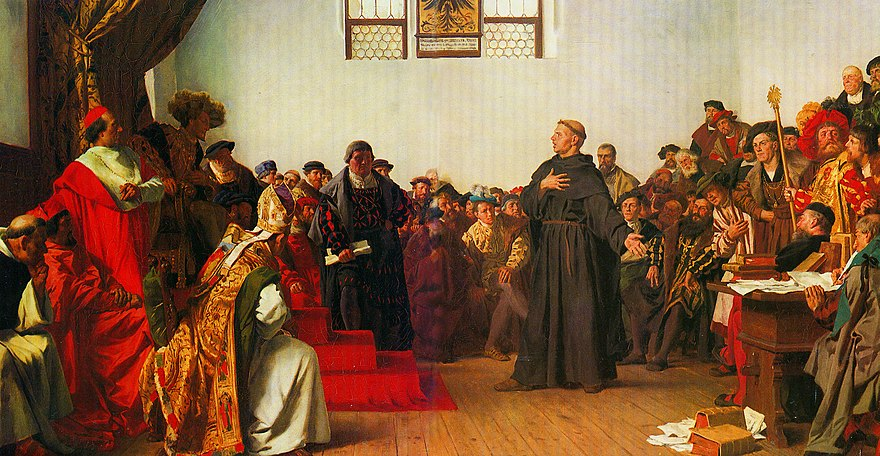
The causes that led to the break between Roman Catholicism and what came to be known as Protestant Christianity are complex and still in dispute. Political economy, nationalism, Renaissance individualism, and a rising concern over ecclesiastical abuses all played their part. They do not, however, camouflage the fact that the basic cause was religious, a difference in Christian perspective between Roman Catholicism and Protestantism. As we are concerned here with ideas rather than history, we shall say no more about the causes of the Protestant Reformation. Instead, we shall be content to treat the sixteenth century—Luther, Calvin, the Ninety-five Theses, the Diet of Worms, King Henry VIII, the Peace of Augsburg—as a vast tunnel. The Western Church entered that tunnel whole; it emerged from it in two sections. More accurately, it emerged in several sections, for Protestantism is not so much a Church as a movement of Churches.

Protestantism is not so much a Church as a movement of Churches.

The deepest differences in Protestantism today are not denominational; they are emphases that cut across denominations and often combine in the same person: fundamentalist, conservative evangelical, mainline, charismatic, and social activist. In this brief overview we shall not go into these differences, which tend to be of recent origin. Instead, without repeating the bulk of its faith and practice, which it shares with Catholicism and Orthodoxy—Protestantism is more Christian than Protestant—we shall proceed to its two great enduring themes with which we must here be content. They are (1) justification by faith and (2) the Protestant Principle.

Protestantism is more Christian than Protestant—its two great enduring themes are (1) justification by faith and (2) the Protestant Principle.

Faith. Faith, in the Protestant conception, is not simply a matter of belief, an acceptance of knowledge held with certainty yet not on evidence. It is a response of the entire self; in Emil Brunner’s phrase, “a totality-act of the whole personality.” As such it does include a movement of the mind in assent—specifically, a conviction of God’s limitless, omnipresent creative power—but this is not its all. To be truly faith it must include as well a movement of the affections in love and trust, and a movement of the will in desire to be an instrument of God’s redeeming love. When Protestantism says that human beings are justified—that is, restored to right relationship with the ground of their being, and with their associates—by faith, it is saying that such restoration requires a movement of the total self, in mind, will, and affections, all three. It is a mark of the strength of the ecumenical movement in our time that Roman Catholic theologians now increasingly understand faith in the same way.

Faith, in the Protestant conception, is not simply a matter of belief, it is a response of the entire self. It requires a movement of the total self, in mind, will, and affections, all three. 

Thus defined, faith is a personal phenomenon. “Right beliefs” or “sound doctrine” can be accepted secondhand and largely by rote, but service and love cannot. Faith is the response by which God, heretofore a postulate of philosophers or theologians, becomes God for me, my God. This is the meaning of Luther’s statement that “Everyone must do his own believing as he will have to do his own dying.” 

Faith is a personal phenomenon—“Everyone must do his own believing as he will have to do his own dying.” 

To feel the force of the Protestant emphasis on faith as response of the entire self, we need to see it as a passionate repudiation of religious perfunctoriness. Luther’s protest against indulgences, which were thought to help reduce their purchasers’ time in purgatory, is only a symbol of this wider protest, which extended in a number of directions. No number of religious observances, no record of good deeds, no roster of doctrines believed could guarantee that an individual would reach his or her desired state. Such things were not irrelevant to the Christian life; but unless they helped to transform the believer’s heart (his or her attitudes and response to life), they were inadequate. This is the meaning of the Protestant rallying cry, “Justification by faith alone.” It does not mean that the Creeds or the Sacraments are unimportant. It means that unless these are accompanied by the experience of God’s love and a returning love for God, they are insufficient. Similarly with good works. The Protestant position does not imply that good works are unimportant. It means that fully understood, they are correlatives of faith rather than its preludes. If one really does have faith, good works will flow from it naturally, whereas the reverse cannot be assumed; that is, good works do not necessarily lead to faith. To a large extent both Paul and Luther had been driven to their emphasis on faith precisely because a respectable string of good works, doggedly performed, had not succeeded in transforming their hearts.

To feel the force of the Protestant emphasis on faith as response of the entire self, we need to see it as a passionate repudiation of religious perfunctoriness.

Once more we need to draw here on the analogy of the child in its home, an analogy that speaks so directly to one aspect of human religiousness that we have cited it several times already. After the child’s physical needs have been met, or rather while they are being met, the child needs above all to feel the enveloping love and acceptance of its parents. Paul, Luther, and Protestants in general say something comparable for human beings throughout their lifespans. Since from first to last they are vulnerable before the powers that confront them, their lifelong need is to know that their basic environment, the ground of being from which they have derived and to which they will return, is for them rather than against them. If they can come to know this to the extent of really feeling it, they are released from the basic anxiety that causes them to try to elbow their way to security. This is why, just as the loved child is the cooperative child, the man or woman in whom God’s love has awakened the answering response of faith is the one who can truly love other people. The key is inward. Given faith in God’s goodness, everything of importance follows. In its absence, nothing can take its place.

Since from first to last human beings are vulnerable before the powers that confront them, their lifelong need is to know that their basic environment, the ground of being from which they have derived and to which they will return, is for them rather than against them.

The Protestant Principle. The other controlling perspective in Protestantism has come to be called the Protestant Principle. Stated philosophically, it warns against absolutizing the relative. Stated theologically, it warns against idolatry. 

The Protestant Principle warns against absolutizing the relative.

The point is this. Human allegiance belongs to God—this all religions (with allowance for terminology) will affirm. God, however, is beyond nature and history. God is not removed from these, but the divine cannot be equated with either or any of their parts, for while the world is finite, God is infinite. With these truths all the great religions in principle agree. They are, however, very hard truths to keep in mind; so hard that people continually let them slip and proceed to equate God with something they can see or touch or at least conceptualize more precisely than the infinite. Early on they equated God with statues, until prophets—the first “protestants” or protesters on this score—rose up to denounce their transpositions, dubbing their pitiful substitutes idols, or “little pieces of form.” Later, people stopped deifying wood and stone, but this did not mean that idolatry ended. While the secular world proceeded to absolutize the state, or the self, or human intellect, Christians fell to absolutizing dogmas, the Sacraments, the Church, the Bible, or personal religious experience. To think that Protestantism devalues these or doubts that God is involved in them is to misjudge it seriously. It does, however, insist that none of them is God. All, being involved in history, contain something of the human; and since the human is always imperfect, these instruments are to some degree imperfect as well. As long as they point beyond themselves to God, they can be invaluable. But let any of them claim absolute or unreserved allegiance—which is to say claim to be God—and it becomes diabolical. For this, according to tradition, is what the devil is: the highest angel who, not content to be second, was determined to be first. 

Divine cannot be equated with anything finite. One cannot absolutize dogmas, the Sacraments, the Church, the Bible, or personal religious experience. But as long as they point beyond themselves to God, they can be invaluable. 

In the name of the sovereign God, who transcends all the limitations and distortions of finite existence, therefore, every human claim to absolute truth or finality must be rejected. Some examples will indicate what this principle means in practice. Protestants cannot accept the dogma of papal infallibility because this would involve removing from criticism forever opinions that, having been channeled through human minds, can never (in the Protestant view) wholly escape the risk of limitation and partial error. Creeds and pronouncement can be believed; they can be believed fully and wholeheartedly. But to place them beyond the cleansing crossfire of challenge and criticism is to absolutize something finite—to elevate “a little piece of form” to the position that should be reserved for God alone. 

Every human claim to absolute truth or finality must be rejected, such as, the dogma of papal infallibility.

Instances of what Protestants consider idolatry are not confined to other sects or religions. Protestants admit that the tendency to absolutize the relative is universal; it occurs among them as much as it does anywhere, bringing the need for continual self-criticism and reformation to the door of Protestantism itself. The chief Protestant idolatry has been Bibliolatry. Protestants do believe that God speaks to people through the Bible as in no other way. But to elevate it as a book to a point above criticism, to insist that every word and letter was dictated directly by God and so can contain no historical, scientific, or other inaccuracies, is again to forget that in entering the world, God’s word must speak through human minds. Another common instance of idolatry within Protestantism has been the deification of private religious experience. Its insistence that faith must be a living experience has often led its constituents to assume that any vital experience must be the working of the Holy Spirit. Perhaps so, but again the experience is never pure Spirit. The Spirit must assume the contours of the human vessel, which means again that the whole is never uncompounded. 

In entering the world, God’s word must speak through human minds that are not perfect. This applies to words recorded in the Bible as well.

By rejecting all such absolutes, Protestantism tries to keep faith with the first Commandment, “You shall have no other gods before me” (Exodus 20:3). The injunction contains a negative, and for many the word Protestant too carries a predominantly negative ring. Is not a Protestant a person who protests against something? We have seen that this is certainly true; Protestants who are truly such protest without ceasing the usurpation of God’s place by anything less than God. But the Protestant Principle can just as well be put positively, which is how it should be put if its full import is to be appropriated. It protests against idolatry because it testifies for (protestant = one who testifies for) God’s sovereignty in human life. 

By rejecting all such absolutes, Protestantism tries to keep faith with the first Commandment, “You shall have no other gods before me.” 

But how is God to enter human life? To insist that God cannot be equated with anything in this tangible, visible world leaves people at sea in God’s ocean. God doubtless surrounds us; but to gain access to human awareness, divinity needs to be condensed and focused. 

But, to gain access to human awareness, divinity needs to be condensed and focused. 

This is where, for Protestants, the Bible figures. In its account of God working through Israel, through Christ, and through the early Church, we find the clearest picture of God’s great goodness, and how human beings may find new life in fellowship with the divine. In this sense the Bible is, for Protestants, ultimate. But note with care the sense in which this is so. It is ultimate in the sense that when human beings read this record of God’s grace with true openness and longing for God, God stands at the supreme intersection between the divine and the human. There, more than anywhere else in the world of time and space, people have the prospect of catching, not with their minds alone but with their whole beings, the truth about God and the relation in which God stands to their lives. No derivative interpretation by councils, peoples, or theologians can replace or equal this. The Word of God must speak to each individual soul directly. It is this that accounts for the Protestant emphasis on the Bible as the living word of God. 

The Word of God must speak to each individual soul directly. It is this that accounts for the Protestant emphasis on the Bible as the living word of God. 

Is not this concept of Christianity freighted with danger? The Protestant readily admits that it is. First, there is the danger of misconstruing God’s word. If, as the Protestant Principle insists, all things human are imperfect, does it not follow that each individual’s vision of God must at least be limited and possibly quite erroneous? It does. Protestantism not only admits this; it insists on it. But as the fact happens to be true, how much better to recognize it and open the door to the corrections of the Holy Spirit working through other minds than to saddle Christendom with what is in fact limited truth masquerading as finality. As Jesus himself says: “I still have many things to say to you, but you cannot bear them now. When the Spirit of truth comes, he will guide you into all the truth” (John 16:12). One very important reason for restricting final loyalty to the transcendent God is to keep the future open. 

All things human are imperfect; therefore, it does follow that each individual’s vision of God must at least be limited and possibly quite erroneous.

The other danger is that Christians will derive different truths from the Bible. The nine hundred-odd denominations of Protestantism in the United States alone prove not only that this danger exists, but that it could conceivably slope toward complete individualism. Protestantism admits this, but adds three points. 

First, Protestant diversity is not as great as its hundreds of denominations, most of them more adequately termed sects, suggest. Most of these are of negligible size. Actually, 85 percent of all Protestants belong to twelve denominations. Considering the freedom of belief Protestantism affirms in principle, the wonder lies not in its diversity but in the extent to which Protestants have managed to stay together.

Second, Protestant divisions reflect differing national origins in Europe or differing social groupings in the United States more than they do differing theologies. 

The third point, however, is the most important. Who is to say that diversity is bad? People differ, and historical circumstances, too, can occasion life-affecting differences that must be taken seriously: “New occasions teach new duties.” Protestants believe that life and history are too fluid to allow God’s redeeming Word to be enclosed in a single form, whether it be doctrinal or institutional. They are concerned about the brokenness of Christ’s “body” and take steps to mend differences that are no longer meaningful; this is the so-called ecumenical movement, which is vigorous. But they do not believe that people should cuddle up to one another just to keep warm. Comforts of togetherness should not lead to structures that will restrict the dynamic character of God’s continuing revelation. “The Spirit bloweth where it listeth” (John 3:8). 

Diversity is not bad. Comforts of togetherness should not lead to structures that will restrict the dynamic character of God’s continuing revelation.

Protestants acknowledge, then, that their perspective is fraught with dangers—the danger of uncertainty as individuals wrestle inwardly (and at times in what seems like a frightening aloneness) to try to determine whether they have heard God’s will correctly; the danger of schism as Christians find themselves apprehending God’s will diversely. But they accept these dangers because, risk for risk, they prefer their precarious freedom to the security of doctrines or institutions that, even while looking toward God, remain fallible. It is their faith that, in the end, prevents these burdens from discouraging them. Asked where he would stand if the Church excommunicated him, Luther is said to have replied, “Under the sky.”

Protestants prefer their precarious freedom to the security of doctrines or institutions that, even while looking toward God, remain fallible. Asked where he would stand if the Church excommunicated him, Luther is said to have replied, “Under the sky.”

.

Happiness: Precept 3-1

Reference: The Happiness Rundown

3-1. Be faithful to your sexual partner

Unfaithfulness on the part of a sexual partner can heavily reduce one’s survival. History and the newspapers carry floods of instances of the violence of human passions aroused by unfaithfulness. “Guilt” is the milder evil. Jealousy and vengeance are the greater monsters: one never knows when they will cease to sleep. It is all very well to speak of “being civilized” and “uninhibited” and “understanding”; no talk will mend ruined lives. A “feeling of guilt” is nowhere near as sharp as a knife in the back or ground glass in the soup. 

Additionally, there is the question of health. If you do not insist upon faithfulness from a sexual partner, you lay yourself open to disease. For a very brief period, it was said that sexual diseases were all under control. This is not now the case, if it ever was. Incurable strains of such diseases now exist. 

The problems of sexual misbehavior are not new. The powerful religion of Buddhism in India vanished from there in the seventh century. According to its own historians the cause was sexual promiscuity in its monasteries. More modernly, when sexual promiscuity becomes prevalent in an organization, commercial or otherwise, the organization can be seen to fail. No matter how civilized their discussions about it, families shatter in the face of unfaithfulness. 

The urge of the moment can become the sorrow of a lifetime. Impress those around you with that and safeguard your own health and pleasure. 

.

Exercise

0. Make sure you have completed the exercise section at Happiness: Precept 3. Study the precept above.

1. Check the responses to the following questions for false data (see false data steps at Happiness: Prologue).

(a) “Have you been told or taught not to be faithful to your sexual partner?”
(b) “Do you have any rules or ideas contrary to being faithful to your sexual partner?”
(c) “Have you been led to believe that you shouldn’t be faithful to your sexual partner?”
(d) “Do you know of anything that conflicts with being faithful to your sexual partner?”
(e) “Do you have any false data about being faithful to your sexual partner?”

.

2. Go over each of the following questions repetitively, until there are no more answers: 

(a) “How have others transgressed against the precept: ‘Be faithful to your sexual partner’?”
(b) “How have you transgressed against the precept: ‘Be faithful to your sexual partner’?”

Do a quick review to see if you did not miss any answers on this step. You should be feeling good about this step.

.

3. See if the following question definitely brings up some name you know of:

“Is there any specific person in your past who really transgressed against the precept: ‘Be faithful to your sexual partner’?”

If no name comes up then go to step 4. if a name has come up, then continue with step 3 as follows:

“Can you recall an exact moment when you observed ___(name)___ transgressing this precept?”

If there is a realization, go to step 4. Otherwise, continue contemplating as follows, until there is some realization.

“Is there any time when you wanted to be like ___(name)___ ?” 
“Is there any time when you decided that not being faithful to your sexual partner was a good thing?”
“Did you ever do anything bad to ___(name)___ ? 
(Get all possible answers)
“Are there any differences between ___(name)___ and yourself?”
“Are there any similarities between ___(name)___  and yourself?”

.

4. Handle any anomalies that come up on the following question by looking at the anomaly more closely. 

”Do you have any reservations about being faithful to your sexual partner?” 

If the anomaly does not resolve then review the precept as well as all the exercise steps above to see if anything was missed. Then do step 4 again. When there is no anomaly go to step 5.

.

5. Contemplate on the following question.

“Do you have any reservations about getting someone else to be faithful to their sexual partner?” 

If any reservation comes up, then consider the following: 

“How would that be a problem?” 

Get answers to this question until there are no reservations.

.

Wrap up Precept 3

0. Review Precept 3.

1. Contemplate over the following question.

“Is there any conflict between not being promiscuous and any other ideas you have encountered?”

Handle any conflict with false data steps.

.

2. Go over each of the following questions repetitively, until there are no more answers: 

“Have you thought of any other transgressions of others against the precept: ‘Don’t be promiscuous’?”
“Have you thought of any other transgressions of your own against the precept: ‘Don’t be promiscuous’?”
“During these sessions have you thought of any withhold?”

.

3. Consider this question:

“Do you have any feeling that you wouldn’t be yourself if you followed the precept: ‘Don’t be promiscuous’?”

If this is not the case, go to the Step 4. Otherwise, ask yourself,

“Can you recall any person who felt the way you do about the precept: ‘Don’t be promiscuous’?”

If no name comes up then go to step 4. if a name has come up, then continue with step 3 as follows:

“Can you recall an exact moment when you observed ___(name)___ transgressing this precept?”

If there is a realization, go to step 4. Otherwise, continue contemplating as follows, until there is some realization.

“Is there any time when you wanted to be like ___(name)___ ?” 
“Is there any time when you decided that being promiscuous was a good thing?”
“Did you ever do anything bad to ___(name)___ ? 
(Get all possible answers)
“Are there any differences between ___(name)___ and yourself?”
“Are there any similarities between ___(name)___  and yourself?”

.

4. Check over the following questions. and handle any anomalies that come up.

“Do you have any other considerations about not being promiscuous?”
“Do you have any other considerations about others not being promiscuous?”

.

Happiness: Precept 3

Reference: The Happiness Rundown

3. DON’T BE PROMISCUOUS

Sex is the means by which the race projects itself into the future through children and the family. A lot of pleasure and happiness can come from sex: nature intended it that way so the race would go on. But, misused or abused, it carries with it heavy penalties and punishments: nature seems to have intended it that way also. 

3-1. Be faithful to your sexual partner. Unfaithfulness on the part of a sexual partner can heavily reduce one’s survival. History and the newspapers carry floods of instances of the violence of human passions aroused by unfaithfulness. “Guilt” is the milder evil. Jealousy and vengeance are the greater monsters: one never knows when they will cease to sleep. It is all very well to speak of “being civilized” and “uninhibited” and “understanding”; no talk will mend ruined lives. A “feeling of guilt” is nowhere near as sharp as a knife in the back or ground glass in the soup. 

Additionally, there is the question of health. If you do not insist upon faithfulness from a sexual partner, you lay yourself open to disease. For a very brief period, it was said that sexual diseases were all under control. This is not now the case, if it ever was. Incurable strains of such diseases now exist. 

The problems of sexual misbehavior are not new. The powerful religion of Buddhism in India vanished from there in the seventh century. According to its own historians the cause was sexual promiscuity in its monasteries. More modernly, when sexual promiscuity becomes prevalent in an organization, commercial or otherwise, the organization can be seen to fail. No matter how civilized their discussions about it, families shatter in the face of unfaithfulness. 

The urge of the moment can become the sorrow of a lifetime. Impress those around you with that and safeguard your own health and pleasure. 

Sex is a big step on the way to happiness and joy. There is nothing wrong with it if it is followed with faithfulness and decency.

.

Exercise

0. Make sure you have completed the exercise section at Happiness: Precept 2-2. Study the precept above.

1. Check the responses to the following questions for false data (see false data steps at Happiness: Prologue).

(a) “Have you been told or taught to be promiscuous?”
(b) “Do you have any rules or ideas contrary to not being promiscuous?”
(c) “Have you been led to believe that you should be promiscuous?”
(d) “Do you know of anything that conflicts with not being promiscuous?”
(e) “Do you have any false data about being promiscuous?”

.

2. Go over each of the following questions repetitively, until there are no more answers: 

(a) “How have others transgressed against the precept: ‘Don’t be promiscuous’?”
(b) “How have you transgressed against the precept: ‘Don’t be promiscuous’?”

Do a quick review to see if you did not miss any answers on this step. You should be feeling good about this step.

.

3. See if the following question definitely brings up some name you know of:

“Is there any specific person in your past who really transgressed against the precept: ‘Don’t be promiscuous’?”

If no name comes up then go to step 4. if a name has come up, then continue with step 3 as follows:

“Can you recall an exact moment when you observed ___(name)___ transgressing this precept?”

If there is a realization, go to step 4. Otherwise, continue contemplating as follows, until there is some realization.

“Is there any time when you wanted to be like ___(name)___ ?” 
“Is there any time when you decided that being promiscuous was a good thing?”
“Did you ever do anything bad to ___(name)___ ? 
(Get all possible answers)
“Are there any differences between ___(name)___ and yourself?”
“Are there any similarities between ___(name)___  and yourself?”

.

4. Handle any anomalies that come up on the following question by looking at the anomaly more closely. 

”Do you have any reservations about not being promiscuous?” 

If the anomaly does not resolve then review the precept as well as all the exercise steps above to see if anything was missed. Then do step 4 again. When there is no anomaly go to step 5.

.

5. Contemplate on the following question.

“Do you have any reservations about getting someone else not to be promiscuous?” 

If any reservation comes up, then consider the following: 

“How would that be a problem?” 

Get answers to this question until there are no reservations.

.

CHRISTIANITY: Eastern Orthodoxy

Reference: Christianity

[NOTE: In color are Vinaire’s comments.]

The Eastern Church has no pope. Instead, it holds that God’s truth is disclosed through “the conscience of the Church,” using this phrase to refer to the consensus of Christians generally through ecclesiastical councils. 

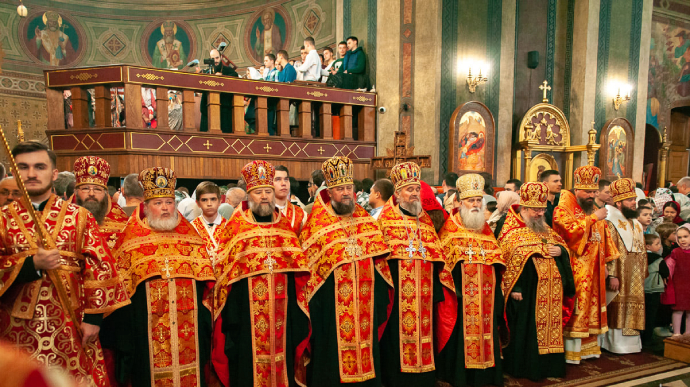
The Eastern Orthodox Church, which today has somewhere in the neighborhood of 250 million communicants, broke officially with the Roman Catholic Church in 1054, each charging the other with responsibility for the break. Eastern Orthodoxy includes the Churches of Albania, Bulgaria, Georgia, Greece, Romania, Russia, Serbia, and Sinai. While each of these Churches is self-governing, they are in varying degrees in communion with one another, and their members think of themselves as belonging primarily to the Eastern Church and only secondarily to their particular divisions within it. 

There is no overall governing authority over the Eastern Orthodox Church. They are a group of self-governing churches.

In most ways the Eastern Orthodox Church stands close to the Roman Catholic, for during more than half their histories they constituted a single body. It honors the same seven Sacraments and interprets them in fundamental respects exactly as does the Roman Church. On the teaching authority there is some difference, but even here the premise is the same. Left to private interpretation the Christian faith would disintegrate into conflicting claims and a mass of uncertainties. It is the Church’s responsibility to insure against this, and God enables it to do so; the Holy Spirit preserves its official statements against error. This much is shared with Rome. The differences are two. One of these has to do with extent. The Eastern Church considers the issues on which unanimity is needed to be fewer than does the Roman Church. In principle only issues that are mentioned in scripture can qualify, which is to say that the Church can interpret doctrines but it cannot initiate them. In practice the Church has exercised her prerogative as interpreter only seven times, in the Seven Ecumenical Councils, all of which were held before 787. This means that the Eastern Church assumes that though the articles a Christian must believe are decisive, their number is relatively few. Strictly speaking, all the decisions that the Ecumenical Councils reached are embedded in the creeds themselves; beyond these there is no need for dogmatic pronouncements on such matters as purgatory, indulgences, the Immaculate Conception, or the bodily assumption of Mary, the last of which Orthodoxy introduced in practice but without proclaiming as dogma. Catholics regard these dogmas positively, as the development of doctrine, whereas the Orthodox consider them “innovations.” Generalizing this difference, we can say that the Latin Church stresses the development of Christian doctrine, whereas the Greek Church stresses its continuity, contending that there has been no need for the Church to exercise its teaching authority outside the Ecumenical Councils. What is referred to as “the magisterium of the academy” enters into this difference, for nothing like the great university centers of Bologna and Paris characterize the Eastern experience. When we reach for an image to epitomize Roman Catholicism, we think of the Middle Ages. Its counterpart for Eastern Orthodoxy is the Church Fathers. 

In most ways the Eastern Orthodox Church stands close to the Roman Catholic Church. The differences are two. The Eastern Church assumes that though the articles a Christian must believe are decisive, their number is relatively few. The Latin Church stresses the development of Christian doctrine, whereas the Greek Church stresses its continuity. 

The other way in which the Eastern Church’s understanding of its role as teaching authority differs from the Western pertains to the means by which its dogmas are reached. The Roman Church, as we have seen, holds that in the final analysis they come through the pope; it is the decisions that he announces that the Holy Spirit preserves from error. The Eastern Church has no pope—if we want to epitomize the difference between the two Churches, it is this. Instead, it holds that God’s truth is disclosed through “the conscience of the Church,” using this phrase to refer to the consensus of Christians generally. This consensus needs, of course, to be focused, which is what ecclesiastical councils are for. When the bishops of the entire Church are assembled in Ecumenical Council, their collective judgment establishes God’s truth in unchangeable monuments. It would be correct to say that the Holy Spirit preserves their decisions from error, but it would be truer to the spirit of the Eastern Church to say that the Holy Spirit preserves Christian minds as a whole from lapsing into error, for the bishops’ decisions are assumed to do no more than focus the thought of the latter. 

The Eastern Church has no pope. Instead, it holds that God’s truth is disclosed through “the conscience of the Church,” using this phrase to refer to the consensus of Christians generally through ecclesiastical councils. 

This brings us to one of the special emphases of the Eastern Church. Because in many ways it stands midway between Roman Catholicism and Protestantism, it is more difficult to put one’s finger on features within it that are clearly distinctive; but if we were to select two (as we did in our sketch of Roman Catholicism), one of these would be its exceptionally corporate view of the Church. 

Common to all Christians is the view of the Church as the mystical body of Christ. Just as the parts of the body are joined in common well-being or malaise, so too are the lives of Christians interrelated. All Christians accept the doctrine that they are “members of one another”; but while matters of degree are notoriously difficult to determine, it could be argued that the Eastern Church has taken this notion more seriously than either Roman Catholicism or Protestantism. Each Christian is working out his or her salvation in conjunction with the rest of the Church, not individually to save a separate soul. The Russian branch of Orthodoxy has a saying to this effect: “One can be damned alone, but saved only with others.” And Orthodoxy goes further. It takes seriously Saint Paul’s theme of the entire universe as “groaning and in travail” as it awaits redemption. Not only is the destiny of the individual bound up with the entire Church; it is responsible for helping to sanctify the entire world of nature and history. The welfare of everything in creation is affected to some degree by what each individual contributes to or detracts from it. 

The Russian branch of Orthodoxy has a saying to this effect: “One can be damned alone, but saved only with others.” Not only is the destiny of the individual bound up with the entire Church; it is responsible for helping to sanctify the entire world of nature and history. 

Though the most important consequence of this strong corporate feeling is the spiritual one just stated—the downplaying of that “holy selfishness” that puts its own personal salvation before everything else—the concept comes out in two other quite practical ways. One of these has already been noted. In identifying the Church’s teaching authority with Christian conscience as a whole—“the conscience of the people is the conscience of the Church”—Orthodoxy maintains that the Holy Spirit’s truth enters the world diffused through the minds of Christians generally. Individual Christians, laity as well as clergy, are cells in “the mind of Christ,” which functions through them collectively. 

Orthodoxy maintains that the Holy Spirit’s truth enters the world diffused through the minds of Christians generally. Individual Christians, laity as well as clergy, are cells in “the mind of Christ,” which functions through them collectively. 

The other side of this point concerns administration. Whereas the administration of the Roman Church is avowedly hierarchical, the Eastern Church grounds more of its decisions in the laity. Congregations, for example, have more say in the selection of their clergy. The Roman Church may argue that this confuses the offices of laity with clergy; but the strong corporate feeling of the Eastern Church has led her to believe, again, that divine guidance, even when it reaches down to touch practical issues of Church administration, is more generally diffused among Christians than Rome allows. The clergy has its uninfringeable domain, the administration of the Sacraments; but outside that domain the line that separates clergy from the laity is thin. Priests need not be celibate. Even the titular head of the Eastern Church, the Patriarch of Constantinople, is no more than “first among equals,” and the laity is known as the “royal priesthood.” 

Whereas the administration of the Roman Church is avowedly hierarchical, the Eastern Church grounds more of its decisions in the laity. Priests need not be celibate.

In presenting the religions of Asia, it was suggested that union has counted for more there, and individuality less, than in the West; Hinduism sets the pace, with merger with the Absolute as its presiding goal. If this is roughly correct it helps to explain why it is the easternmost branch of Christianity that has most emphasized the corporate nature of the Church, both the ecclesiastical equality of its members (as against Catholicism), and their solidarity (as against Protestantism). It is also possible that residing, as it does, on the outskirts of Europe, it may have acquired less of a modern, Western overlay, and in consequence stands somewhat closer to early Christianity. We shall not explore that possibility, however, but proceed to the second distinctive emphasis its geography may have fostered, its mysticism, which resonates in ways with that of Asia. 

The easternmost branch of Christianity has most emphasized the corporate nature of the Church, both the ecclesiastical equality of its members (as against Catholicism), and their solidarity (as against Protestantism). 

Like all the religions we have considered, Christianity believes reality to be composed of two realms, the natural and the supernatural. Following death, human life is fully translated into the supernatural domain. Even in the present world, however, it is not insulated from it. For one thing the Sacraments, as we have seen, are channels whereby supernatural grace is made available to people in their current state. 

Like other religions, Christianity believes reality to be composed of two realms, the natural and the supernatural. 

This much virtually all Christianity teaches. The differences come when we ask to what extent it should be a part of the Christian program to try to partake of supernatural life while here on earth. Roman Catholicism holds that the Trinity dwells in every Christian soul, but its presence is not normally felt. By a life of prayer and penance it is possible to dispose oneself for a special gift by which the Trinity discloses its presence and the seeker is lifted to a state of mystical ecstasy. But as human beings have no right to such states, the states being wholly in the nature of free gifts of grace, the Roman Church neither urges nor discourages their cultivation. The Eastern Church encourages the mystical life more actively. From very early times, when the deserts near Antioch and Alexandria were filled with hermits seeking illumination, the mystical enterprise has occupied a more prominent place in its life. As the supernatural world intersects and impregnates the world of sense throughout, it should be a part of Christian life in general to develop the capacity to experience directly the glories of God’s presence.

Does the fish soar to find the ocean,
The eagle plunge to find the air,
That we ask of the stars in motion
If they have rumour of thee there?
Not where the wheeling systems darken,
And our benumbed conceiving soars,
The drift of pinions, would we harken,
Beats at our own clay-shuttered doors.
The angels keep their ancient places;
Turn but a stone, and start a wing:
‘Tis ye, ‘tis your estranged faces
That miss the many-splendoured thing.

(Francis Thompson, “The Kingdom of God”)

The Eastern Church encourages the mystical life more actively. By a life of prayer and penance it is possible to dispose oneself for a special gift by which the Trinity discloses its presence and the seeker is lifted to a state of mystical ecstasy. 

Mysticism is a practical program even for the laity. The aim of every life should be union with God—actual deification, by Grace, to the point of sharing the Divine Life; theosis is the Greek word for the doctrine that this sharing is possible. As our destiny is to enter creatively into the life of the Trinity, the love that circulates incessantly among the Father, Son, and Holy Spirit, movement toward this goal should be a part of every Christian life. For only as we advance toward increasing participation in the Trinity are we able to love God with our whole heart and soul and mind, and our neighbor as ourselves. The mystical graces are open to everyone, and it is incumbent for each to make of one’s life a pilgrimage toward glory.

The aim of every life should be union with God—actual deification, by Grace, to the point of sharing the Divine Life; theosis is the Greek word for the doctrine that this sharing is possible. 

.