Relativity and the Problem of Space (Part 3)

Reference: http://www.relativitybook.com/resources/Einstein_space.html
NOTE: Einstein’s statements are in black italics. My understanding follows in bold color italics.

.

When a smaller box s is situated, relatively at rest, inside the hollow space of a larger box S, then the hollow space of s is a part of the hollow space of S, and the same “space”, which contains both of them, belongs to each of the boxes. When s is in motion with respect to S, however, the concept is less simple. One is then inclined to think that s encloses always the same space, but a variable part of the space S. It then becomes necessary to apportion to each box its particular space, not thought of as bounded, and to assume that these two spaces are in motion with respect to each other.

Einstein makes the assumption that an impression of bounded space (s) is contained within the impression of larger bounded space (S). Both impressions are projected on a background SPACE. He then imagines spaces (s) and (S) to be unbounded and in motion relative to each other. This is all subjective based on abstraction of material dimensions.

Before one has become aware of this complication, space appears as an unbounded medium or container in which material objects swim around. But it must now be remembered that there is an infinite number of spaces, which are in motion with respect to each other.

The concept of space as something existing objectively and independent of things belongs to pre-scientific thought, but not so the idea of the existence of an infinite number of spaces in motion relatively to each other.

This latter idea is indeed logically unavoidable, but is far from having played a considerable rôle even in scientific thought.

Thus, Einstein’s spaces are the abstraction of “unbounded material objects”, which are in motion with respect to each other. There are infinite numbers of such spaces. This type of space is not a container in which material objects swim around. Only the background SPACE has that distinction, which, actually, provides an objective reference point of zero dimension and zero inertia.

But what about the psychological origin of the concept of time? This concept is undoubtedly associated with the fact of “calling to mind”, as well as with the differentiation between sense experiences and the recollection of these. Of itself it is doubtful whether the differentiation between sense experience and recollection (or simple re-presentation) is something psychologically directly given to us. Everyone has experienced that he has been in doubt whether he has actually experienced something with his senses or has simply dreamt about it. Probably the ability to discriminate between these alternatives first comes about as the result of an activity of the mind creating order.

Motion exists due to sequential changes in material extensions. While material extensions provide an impression of space, changes in these extensions provide the impression of time. Einstein’s space is subjective abstraction of unbounded material extensions. Changes in this abstraction of material extensions provide Einstein’s conception of time. This time is also subjective.

The physical reality exists only in terms of material extensions and changes in them. The objective reality of SPACE exists only as the background, which is best interpreted as “zero” of dimension and “zero” of inertia. The objective reality of TIME is also the same background viewed as “zero” of change.

An experience is associated with a “recollection”, and it is considered as being “earlier” in comparison with present “experiences”. This is a conceptual ordering principle for recollected experiences, and the possibility of its accomplishment gives rise to the subjective concept of time, i.e. that concept of time which refers to the arrangement of the experiences of the individual.

Our experience is made up of ordered perceptual elements that may be arranged in a matrix-like fashion. Many logical sequences exist in such a matrix from a point in different directions. Each of this logical sequence will represent the experience of time.

.

Earlier notes by Vinaire:

To think that “the hollow space of s is a part of the hollow space of S” is treating space as matter. This is an example of “matter-centric” thinking. It introduces an arbitrary like “earth is at the center of the universe”. Logically space is simply the background. The idea of “an infinite number of spaces in motion relatively to each other” does not make sense.

In the Disturbance Theory of Space, pure space is simply the concept of undisturbed space that arises when there is disturbance. The disturbed space exists objectively as electromagnetic wave.  We cannot say if undisturbed space exists by itself before there is any disturbance. The undisturbed space interfaces with the physical actuality of disturbed space only as a concept. We may say that undisturbed space is the limiting condition of electromagnetic wave of frequency zero.

The disturbance introduces the idea of time. Pure time is the background of all changes. It exists only as a concept. Actual time exists as change in the form of the “period” of the disturbance. More precisely, real space exists as the wavelength of the disturbance.

Diving into psychology simply means looking at the conceptual relationships that exist in the mind, as well as the physical relationships out there. “Calling to mind” is a process of reconstructing observations. Sense experience is direct observation that helps reconstruction. Any reconstruction involves ordering of events. This is essentially putting together a logical sequence of changes.

This brings time into view. Motion is changing relationships whether physical or conceptual.

.

Previous: Relativity and the Problem of Space (Part 2)
Next:  Relativity and the Problem of Space (Part 4)

.

Relativity and the Problem of Space (Part 2)

Reference: http://www.relativitybook.com/resources/Einstein_space.html
NOTE: Einstein’s statements are in black italics. My understanding follows in bold color italics.

.

The psychological origin of the idea of space, or of the necessity for it, is far from being so obvious as it may appear to be on the basis of our customary habit of thought. The old geometers deal with conceptual objects (straight line, point, surface), but not really with space as such, as was done later in analytical geometry. The idea of space, however, is suggested by certain primitive experiences. 

The idea of space is suggested by the concepts of locations and extensions, which are represented by points, lines, surfaces and volumes in geometry. These are abstractions of material dimensions. Further abstraction of space is dealt with in analytical geometry.

Suppose that a box has been constructed. Objects can be arranged in a certain way inside the box, so that it becomes full. The possibility of such arrangements is a property of the material object “box”, something that is given with the box, the “space enclosed” by the box. This is something which is different for different boxes, something that is thought quite naturally as being independent of whether or not, at any moment, there are any objects at all in the box. When there are no objects in the box, its space appears to be “empty”.

The space enclosed by a box is defined by the extensions of the box. This space may remain empty or be filled by material objects of lesser dimensions.

So far, our concept of space has been associated with the box. It turns out, however, that the storage possibilities that make up the box-space are independent of the thickness of the walls of the box. Cannot this thickness be reduced to zero, without the “space” being lost as a result? The naturalness of such a limiting process is obvious, and now there remains for our thought the space without the box, a self-evident thing, yet it appears to be so unreal if we forget the origin of this concept. One can understand that it was repugnant to Descartes to consider space as independent of material objects, a thing that might exist without matter.  (At the same time, this does not prevent him from treating space as a fundamental concept in his analytical geometry.) The drawing of attention to the vacuum in a mercury barometer has certainly disarmed the last of the Cartesians. But it is not to be denied that, even at this primitive stage, something unsatisfactory clings to the concept of space, or to space thought of as an independent real thing.

By reducing the thickness of the walls of the box to zero we can make the box disappear. We are then left with an impression of the extensions of the box on a background. Einstein is calling this impression “space without the box”. The actual SPACE, however, is the background on which the internal dimensions of the box are projected. The background SPACE is like a “blank canvas” on which impressions of the box are “drawn”.

The ways in which bodies can be packed into space (e.g. the box) are the subject of three-dimensional Euclidean geometry, whose axiomatic structure readily deceives us into forgetting that it refers to realisable situations.

The axiomatic structure of Euclidean geometry basically applies to the three-dimensional impressions left by solid objects.

If now the concept of space is formed in the manner outlined above, and following on from experience about the “filling” of the box, then this space is primarily a bounded space. This limitation does not appear to be essential, however, for apparently a larger box can always be introduced to enclose the smaller one. In this way space appears as something unbounded.

Bounded space is the three-dimensional impression of material objects projected on background SPACE. By increasing these dimensions we may approach the impression of unbounded space.

I shall not consider here how the concepts of the three-dimensional and the Euclidean nature of space can be traced back to relatively primitive experiences.

Rather, I shall consider first of all from other points of view the rôle of the concept of space in the development of physical thought.

The key idea to understand here is that the concept of space is subjective as it is derived from the impressions of material objects that are not there. This is the thought of space as abstracted from physical reality.

.

Earlier notes by Vinaire:

We cannot seem to think of space independent of material bounds. We may think of unbounded space as space far away from material bounds.

The concepts of Euclidean geometry (straight line, point, surface) derive from material objects being arranged in space. We may consider its axiomatic structure to be matter-centric. Descartes analytical geometry deals with abstract relationships that may move away from being matter-centric.

Experience seems to consist of relationships that extend from physical to conceptual. We may conceive of a dimension of abstraction in which such relationships exist. We may expand the idea of physical reality to the idea of “overall reality” that consists of all physical and conceptual relationships. The “overall reality” shall then impose the need that all relationships must form a logically consistent whole. The concepts of Euclidean geometry would have to be consistent with physical reality to be “real”.

The physical, conceptual and abstract relationships exist in some background. That background is space. However, when there are no relationships it does not make sense to conceive of a background for them. Thus space exists only when relationships exist.

.

Previous: Relativity and the Problem of Space (Part 1)
Next:  Relativity and the Problem of Space (Part 3)

.


Relativity and the Problem of Space (Part 1)

Reference: http://www.relativitybook.com/resources/Einstein_space.html
NOTE: Einstein’s statements are in black italics. My understanding follows in bold color italics.

.

From “Relativity and the Problem of Space” Albert Einstein (1952)

It is characteristic of Newtonian physics that it has to ascribe independent and real existence to space and time as well as to matter, for in Newton’s law of motion the idea of acceleration appears. But in this theory, acceleration can only denote “acceleration with respect to space”. Newton’s space must thus be thought of as “at rest”, or at least as “unaccelerated”, in order that one can consider the acceleration, which appears in the law of motion, as being a magnitude with any meaning. Much the same holds with time, which of course likewise enters into the concept of acceleration.

Newtonian physics describes velocity as the rate of change of the distance of a body with respect to another body. Such distances are interpreted in terms of the material dimensions. This constitutes the understanding of space in terms of material dimensions.

Newtonian physics describes acceleration as the rate of change of the velocity of a body. Acceleration is a change relative to the inertia of a body itself, and not relative to another body. This constitutes the understanding of background SPACE in terms of inertia.

Newton himself and his most critical contemporaries felt it to be disturbing that one had to ascribe physical reality both to space itself as well as to its state of motion; but there was at that time no other alternative, if one wished to ascribe to mechanics a clear meaning.

The physical reality of space exists in terms of material dimensions. The physical reality of the state of motion (acceleration) exists in terms of material inertia. Here SPACE acts as the background of zero inertia and zero dimension.

It is indeed an exacting requirement to have to ascribe physical reality to space in general, and especially to empty space. Time and again since remotest times philosophers have resisted such a presumption. Descartes argued somewhat on these lines: space is identical with extension, but extension is connected with bodies; thus there is no space without bodies and hence no empty space. The weakness of this argument lies primarily in what follows. It is certainly true that the concept extension owes its origin to our experiences of laying out or bringing into contact solid bodies. But from this it cannot be concluded that the concept of extension may not be justified in cases which have not themselves given rise to the formation of this concept. Such an enlargement of concepts can be justified indirectly by its value for the comprehension of empirical results.

Since the concept of space depends on material dimensions, it cannot be conceived in the absence of matter. Descartes was, therefore, correct. “Empty space” cannot be conceived when material dimensions do not exist. Any concept of “empty space” shall only be subjective. Objectively, we may conceive of background SPACE only as a reference point of zero dimension.

The assertion that extension is confined to bodies is therefore of itself certainly unfounded. We shall see later, however, that the general theory of relativity confirms Descartes’ conception in a roundabout way.

According to mindfulness, extension and inertia is confined to material bodies. Descartes argument that space is identical with extension is similar to the argument that it is identical with inertia. In reality, the background SPACE is neither identical with extension nor with inertia. It is simply the background reference point of zero inertia and zero dimensions.

What brought Descartes to his remarkably attractive view was certainly the feeling that, without compelling necessity, one ought not to ascribe reality to a thing like space, which is not capable of being “directly experienced”.

Our reality starts with physical perceptions. It is extended by the mental derivations as abstractions. We view zero as an absence of quantity. We may view background SPACE as the absence of the direct experience of physical perceptions.

.

Earlier notes by Vinaire:

Newtonian physics treats space, time and matter to be independent of each other. This brings into question the physical reality of space. Newtonian physics does not offer answer to this question.

The basic concept of space comes from the dimensions suggested by objects. Space is not considered by philosophers to have a physical reality of its own.

We ascribe physical reality to those things that we can experience directly. When there appears discontinuity in physical reality we look at it more closely to set up a precise logical continuity. The scientific thought evolves in this way.

Descartes is logical in arguing that space and bodies should be continuous. The Disturbance theory establishes this continuity of space with matter through energy. When matter is absent there seems to be “empty space”, but that space is actually filled with energy.

.

Previous: Disturbance Theory of Space
Next:  Relativity and the Problem of Space (Part 2)

.

Disturbance Theory of Space (old)

See: BOOK: The Disturbance Theory

D2

Einstein stated in a note to the fifteenth edition of “Relativity – The Special and General Theory” by Albert Einstein:

“In this edition I have added, as a fifth appendix, a presentation of my views on the problem of space in general and on the gradual modifications of our ideas on space resulting from the influence of the relativistic viewpoint. I wished to show that space-time is not necessarily something to which one can ascribe a separate existence, independently of the actual objects of physical reality. Physical objects are not in space, but these objects are spatially extended. In this way the concept of “empty space” loses is meaning.” – A. Einstein, June 9th, 1952

The Disturbance Theory of Space came about as an effort to understand Einstein’s thoughts on the nature of space. Einstein’s used the philosophical basis that the natural laws are consistent across all inertial systems. The Disturbance Theory uses the philosophical basis that reality is harmonious, and discontinuities and inconsistencies do not exist in nature,

The Disturbance Theory proposes the following model based on the conjecture that electromagnetic phenomenon results from disturbance of space. The salient points of the Disturbance Theory are as follows.

  1. “Space – energy – matter” is a continuous system. The electromagnetic spectrum defines the fundamental character of energy. This electromagnetic spectrum starts with space and ends in matter.

  2. As the frequency of energy spectrum approaches zero, energy approaches condition of undisturbed SPACE. The undisturbed space is analogous to the undisturbed surface of a lake.

  3. Space, when disturbed, splits into electric and magnetic fields. Ripples of these fields appear in the form of electromagnetic waves of finite frequency, much like ripples on the surface of lake when disturbed.

  4. The undisturbed space does not have bounds and hence it has no form. When disturbed, space acquires bounds in the form of “wave-length” and “period” of the electromagnetic wave.

  5. The disturbance exists in its electromagnetic form. The undisturbed space forms the background of this disturbance; it does not exist otherwise.

  6. The “period” represents change in space, and it is an aspect of SPACE. Period introduces TIME. This makes time an aspect of space.

  7. Thus, space and time are bound to each other by the ratio of wave-length to period of the disturbance. Einstein assumed this ratio to be the constant speed of light “c”.

  8. Thus, time is not independent of space as assumed in Newtonian physics.

  9. Physical space is, therefore, not empty but it essentially consists of disturbance. The form of this disturbance is electromagnetic. We may refer to physical space as a “disturbance field”.

  10. The “disturbance field” covers the electromagnetic spectrum of frequency. The wavelengths and periods within this field are proportional to each other, but inversely proportional to the frequency.

  11. Areas consisting of uniform frequency in this field appear as areas consisting of uniform motion or constant velocity.

  12. Areas consisting of gradients of changing frequency in this field appear as areas consisting of accelerated motion or gravity.

  13. As the frequency of energy spectrum approaches extremely high values, the condition approached is matter.

  14. Areas in the disturbance field of extremely high frequencies have the characteristics of extremely small wavelengths and periods. We have used them as “material points in space”. We now recognize them as atoms.

  15. The current science views physical reality from the reference point of matter. This is so because the concept of “dimensionless” point, which forms foundation of mathematics used in physics, is abstraction from the material point of extremely small wavelength.

  16. In reality, a material point, which marks a location in space, is not dimensionless but has dimensions equal to de Broglie’s wavelength for matter. The Euclidean geometry is a good approximation of physical reality only in a material medium.

  17. A physical point in “empty space” will have dimensions equal to wavelength of disturbance in that region.  It cannot be approximated by a dimensionless Euclidean point.

  18. The physical location in the uniform regions of the disturbance field of space shall be symmetrical in the four dimensions of space-time. A lot more work needs to be done on the concept of physical point or location.

The essays following this one shall be devoted to a comparison of Disturbance Theory of Space to Einstein’s ideas contained in Appendix 5: “Relativity and the Problem of Space”.

We shall then make effort to resolve any inconsistency found in order to improve the Disturbance Theory of Space.

.

Education and Self-Learning

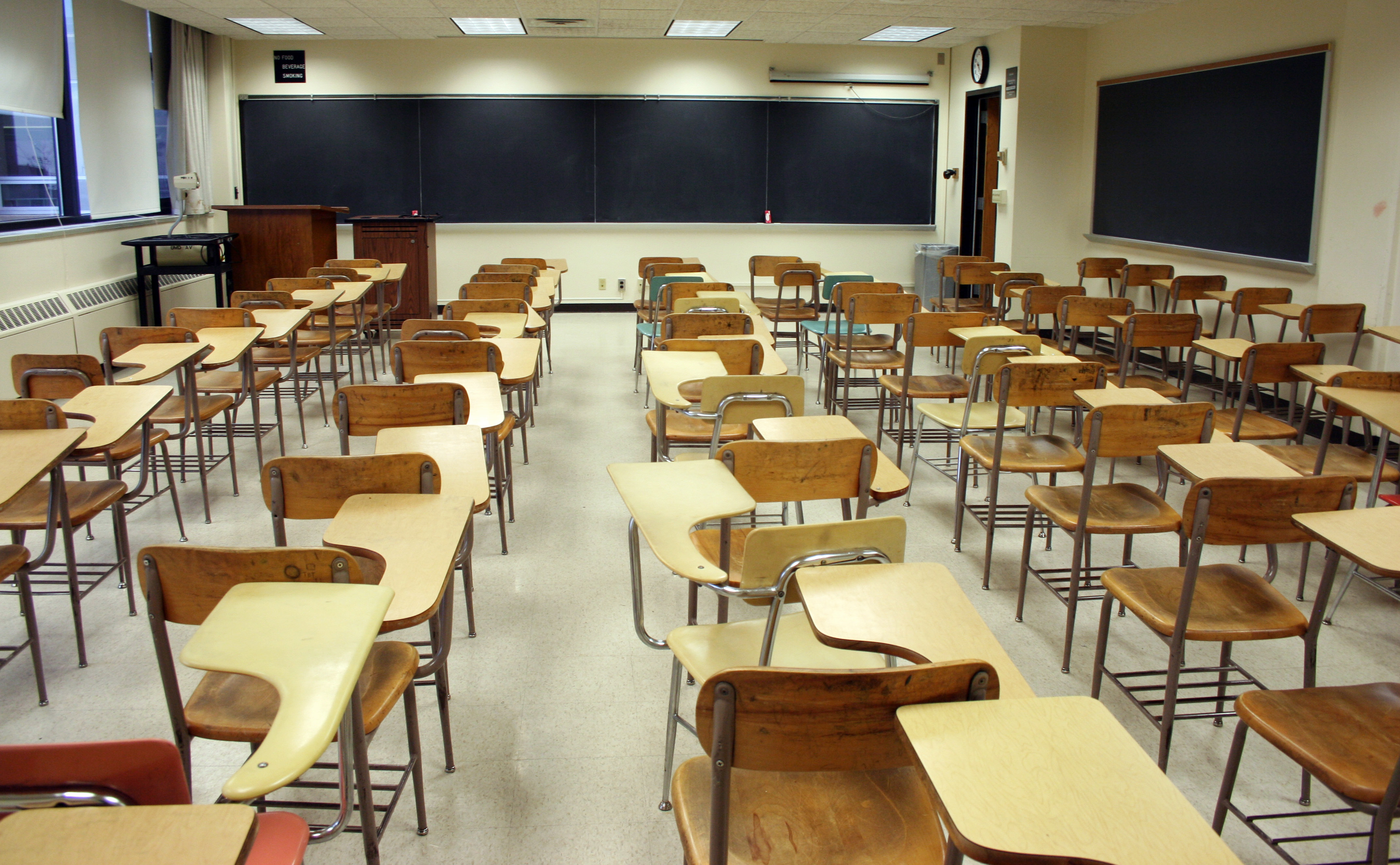
school1

Reference: Subject: Education

Education in schools seem to be taking a nosedive. The need for self-learning seems to be greater than ever. Self-learning is a life long activity. The student should be self-learning naturally from what he observes, reads and listens. But the current education system seems to make it so difficult that the student gets discouraged and gives up.

.

Mathematics & Language Arts

The subjects of mathematics and language-arts are very important. Mathematics helps develop the discipline of critical thinking. Language-arts helps develop the ability to communicate precisely. But these subjects are not taught that way in the school system. The students are increasingly confused and less motivated to learn.

The first action should be to clean up all the confusions that the students have in mathematics and language-arts, and then teach these subjects with the purpose to sharpen critical thinking and communication. This will motivate them to start learning again.

.

Development of a Subject

A subject comes about because there is some human need to be met. It has a scope. It starts out with a basic premise. Concepts develop around this premise as the subject develops.  The subject acquires a certain logic. A person who is having difficulty in a subject has holes in his understanding. These holes seem to parallel the logic of the subject.

.

Handling of a Subject

So we first clarify for the student the need for the subject, and its scope so he can relate to it. Then we clarify the premise of the subject, and the surrounding concepts. Then we go over later concepts in a logical sequence and resolve remaining confusion.

So we handle confusion of a student in a subject by clarifying the logic of the subject. This tells us that the curriculum for any subject should follow development of its logic starting from its purpose and basic premise. The textbooks also should follow the logical map of the subject, but that doesn’t seem to be the case with most textbooks these days. So, a person, interested in learning, must discover the logic of a subject for himself.

Data on most subjects is available on Internet these days, but the student need to rearrange that data in a logical order to fully understand the subject. This is a skill that needs to be learned. This will need a study course in Self-learning.

.

Summary

In short,

  1. The current education system is on a nosedive. It engages the teachers more in testing the student than teaching him. It expects the students to learn from videos and textbooks. This is the case at High School level.
  2. The current education system is weak and inefficient in teaching the students at the earlier elementary and middle school levels. The students end up memorizing the contents of a subject in a rote manner. They are unable to think with the subject.
  3. So, the students arrives at the High School level full of holes in their understanding. They are then pushed through the High School curriculum at a rapid pace, with no regard to their confusion.

Two things must happen before a student can become a self-learner.

  1. We first resolve all holes in his understanding.
  2. Then we put him on a path to Self-learning.

.