The Constant “c”

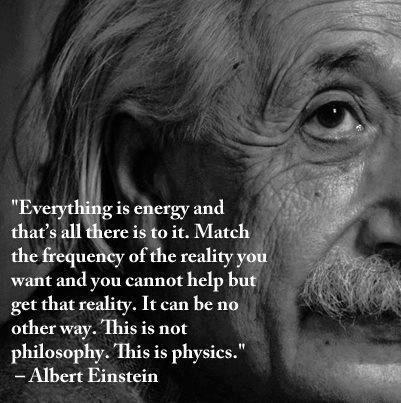
einstein

There is sequence of items. Sequence exists because the items can be ordered according to some criterion. All criteria, whether concrete or abstract, reduce to space and time.

Infinite space-time, when disturbed, appears as finite intervals of wavelength-period. The disturbance can have a whole spectrum of relative frequencies. These are electromagnetic waves. This is fundamental energy.

Wavelength and period always appear in a constant ratio referred to as “c”. The constant “c” represents a very fundamental characteristic that involves space and time. It is probably there even when space is undisturbed.

So this constant “c” underlies everything. We may define this constant in terms of arbitrary units of length and time, but the constant is not arbitrary. So all sequences seems to be based, one way or other, on this constant “c”.

.

Interface between Space and Mass

U6wd6

Counting is an idea of sequence in which we assume numbers of increasing value to occur at equal intervals.

A scale represents gradient values of some characteristic.

The gradient values seem to extend in one direction to infinity and in the other direction to nothing.

“Infinity” is infinitely growing. “Nothing” is infinitely diminishing. We can neither define infinity nor nothing with absolute certainty.

A scale usually assumes a reference point of “zero” with values increasing in a positive direction and decreasing in the opposite negative direction on the scale. This reference point is usually some easily recognizable point, such as, the sea level. It is arbitrary.

A scale also assumes a unit value for the characteristic being measured as “one”. The unit is some easily recognizable measure, such as, the length of a foot. It is also arbitrary.

There is neither an absolute reference point, nor an absolute unit to measure any characteristic.

The sense of unit comes only through presence of an identifiable boundary that separates mass from surrounding space.

The attention shifts from space to mass at the boundary of the unit. This is the case even with an assumed unit within space. The attention shifts from one kind of supposition to another kind.

The shift, as perceived, is never absolute. Therefore, there must be a gradient of energy from space to mass at the boundary of the unit.

This gradient of energy occurs in terms of its frequency. Space is “zero” frequency. Mass is “infinite” frequency.

There is a steep gradient of energy from zero frequency (awareness as space) to extremely high frequency (awareness as mass) at any separation between space and mass.

.

The Nature of Space

Space

Pure space = Electromagnetic phenomenon at zero frequency.

This is my conjecture. I wonder if we can prove it!

I see pure space similar to the undisturbed surface of a pond. A wave of disturbance moves outwards in a circle on the surface of pond when we lob a stone into it. Similarly, a wave of disturbance travels outwards as a sphere in space from the point of disturbance.

This disturbance travels in space as electromagnetic wave of certain frequency. The electromagnetic waves actually have a whole spectrum of frequency, but the ratio of the wavelength to the period is always constant. Einstein called this constant the speed of light “c”, but it is much more than that.

The constant “c” is the ratio of pure space to pure time.

One may object to the above conjecture by saying that the nature of disturbance within a single media is always in the form of a longitudinal wave. This is the case when sound waves travel within water or air. The transverse wave occurs only at the interface between two media. This is the case when waves travel on the surface of water where it interfaces with air. The electromagnetic waves are transverse in nature yet they travel within 3D volume of space. How do we explain this inconsistency?

It is true that the nature of disturbance in a 3D volume is longitudinal, and that it requires a 2D interface for the disturbance to be transverse. We find that electromagnetic waves are transverse because the disturbance in the volume of space takes place at the interface between electrical and magnetic media. This is an interesting observation about space.

When space is disturbed it splits into electrical and magnetic fields.

.

Mathematics of Space and Time

mountain-mcescher

Mathematics brings to us the fundamental idea of SEQUENCE. When we count numbers we are following a sequence.

A sequence consists of arrangement of items. The sequence is there because we compare the items in a certain way. There is sequence in time. There is sequence of logic. There is sequence in terms of heights. In fact, sequence is possible in terms of any characteristic.

So, underlying a sequence there is a criterion. It forms the basis of the sequence. Space and time seems to offer the fundamental basis and criteria for sequence.

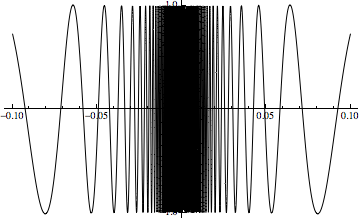
Both space and time are infinite when undisturbed. When  disturbance takes place space and time seem to become segmented into finite intervals. The “finite interval of space” is the wavelength; the “finite interval of time” is the period.

As the “wavelength” increases or decrease, the “period” also increases and decreases according to a constant ratio. The constant “c”, or “speed of light”, seems to represent this ratio. As wavelength goes to infinite, the period also goes to infinite. It appears that the limiting value of “infinite wavelength over infinite period” is the same constant “c”. This constant may even apply to undisturbed space . This means that space and time are fundamentally entwined in some definite way. Space cannot occur without time; and time cannot occur without space. We define this constant “c” in terms of arbitrary units of length and time. But the constant “c” is not arbitrary.

All sequences seem to be based one way or other on the constant “c”.

To summarize the above, all items in a sequence must have bounds so we can identify and compare them. No bounds apply to undisturbed space and time, which have the characteristic of being infinite. Bounds emerge when there is disturbance of space and time. The disturbance has wave characteristics. Space and time become segmented into sequence of wavelengths and periods. The wavelengths and periods support a constant ratio. We represent this ratio by the constant “c”.

The constant “c” has the unit of “length over time”, which is same as the units of speed. But there is nothing moving in space and time. What we have is disturbance of space and time. Here we may have a real definition of “point”. This “point” has dimensions of wavelength and period.

This “point” starts out with infinite dimension of undisturbed space-time. The “point” reduces in dimension as frequency of disturbance increases. It is possible that “point” at the level of matter is the size of de Broglie’s wavelength.

This makes it possible to do away with the arbitrary notion of Euclidean point.

.

Quantum Physics & Mathematics

qm

Mathematics views reality as fundamentally discrete. It even approximates continuity through infinity of vanishing discrete units. It then finds itself becoming increasingly complex when it tries to deal with the reality at the quantum level.

Understanding seems to decrease with Increasing complexity.

At the quantum level we find the wave nature coexisting with particle nature. From the viewpoint of abstraction, this is “continuity” coexisting with “discrete-ness”.

Physics has been using the model prescribed by Euclidean geometry in its application of mathematics. The “probability function” at quantum level assumes locations in space to be like dimensionless points of Euclidean geometry. This approach is adequate to model mass particles in space, but when it comes to space with no mass particles in it, the Euclidean approach becomes questionable.

How can a point that, by definition, has a boundary, be devoid of volume or mass? It is at best an idealization for a vanishing particle, but when it comes to defining continuity, that supposes no boundary at the level of “point” this idealization does not seem to work. The boundary comes from the mass of a particle. When there is no mass there is no boundary. Pure energy has no point like boundaries. If pure energy has boundaries at all, then they seem to enclose a dimension equal, at least, to the wavelength of energy.

When it comes to modeling continuity of space, the dimensionless point presents a logical inconsistency.

We expect the atomic electron with “diffused mass” to have a “large” location. When we try to approximate that location with dimensionless points it seems to introduce arbitrary assumptions. We base the “probability function” of quantum mechanics on Euclidean geometry, and this basis is questionable. It is no wonder that there are so many suppositions, conclusions and conjectures related to quantum mechanics that lead to incomprehensible oddities.

We desperately need to model the quantum phenomenon such that it moves our understanding toward greater simplicity. It may need mathematics that can conceive of “points” that have variable dimensions. Such mathematics may define photons by “points” that have dimensions equal to the wavelength of the corresponding electromagnetic wave.

We may need a mathematical model for quantum phenomenon that shows continuity condensing toward increasing “discrete-ness”.

.