The Kinetic Condition

kinetic

Reference: A Critique of Scientology Philosophy

From Scientology 8-8008, section THETA-MEST THEORY:

In Scientology, the static is represented by the mathematical symbol theta; the kinetic is called MEST… It is now considered that the origin of MEST lies with theta itself, and that MEST, as we know the physical universe, is a product of theta… Here we have the static of space acting against the kinetic of possession to produce action in the field of thought, emotion or effort, the various categories of doingness.

The truth is that static transforms into kinetic the moment it is disturbed. Scientology tries to explain the source of this disturbance by assigning unlimited spiritual capabilities to the static. By associating static with “spiritual” and kinetic with “physical”, Scientology introduces considerable confusion.

Scientology Filter #4: It is an arbitrary assumption in Scientology that static is entirely spiritual and kinetic is entirely physical.

The static is space in the physical dimension, but awareness in the spiritual dimension. But the static condition is never absolute. It contains the seed of disturbance.

In the physical dimension the disturbance in space grows and diminishes producing motion. This disturbance in space implies the presence of time. Without time there can be no disturbance in space.

POSTULATE 7: Time lies within space as the seed of disturbance.

In the spiritual dimension the disturbance in awareness grows and diminishes producing emotion.  This disturbance in awareness implies the presence of desire. Without desire there can be no disturbance in awareness.

POSTULATE 8: Desire lies within awareness as the seed of disturbance.

This leads immediately to the following corollary.

COROLLARY 8: The physical concept of time extends into metaphysics as the concept of desire.

Space and time together appear as motion. Similarly, awareness and desire together appear as emotion. We may therefore say,

COROLLARY 9: The physical concept of motion extends into metaphysics as the concept of emotion.

.

In physical dimension the spectrum of motion shows that space, when disturbed, transforms into energy; and when disturbed further, condenses into matter. This whole spectrum of space-energy-matter can be seen in the structure of an atom. The nucleus of an atom is enveloped in energy, which is surrounded by space.

POSTULATE 9: Space, when disturbed, transforms into energy.

POSTULATE 10: Energy, when disturbed further, condenses into matter.

Similarly, in spiritual dimension a spectrum of emotion shows that awareness, when disturbed, transforms into consciousness; and when disturbed further, condenses into identity. This whole spectrum of awareness-consciousness-identity may be seen in the structure of human form.

POSTULATE 11: Awareness, when disturbed, transforms into consciousness.

POSTULATE 12: Consciousness, when disturbed further, condenses into identity.

This leads immediately to the following conclusions.

COROLLARY 10: The physical concept of energy extends into metaphysics as the concept of consciousness.

COROLLARY 11: The physical concept of matter extends into metaphysics as the concept of identity.

.

Motion and emotion go hand in hand. There cannot be any emotion without motion. This leads to the following corollary.

COROLLARY 12: There can be no awareness without space, no desire without time, no consciousness without energy, and no identity without matter.

The physical form is made up of space, energy and matter. Space includes energy, which includes matter.

COROLLARY 13: The physical form may be visualized as a core of matter, enveloped in energy and surrounded by space.

Similarly, the spiritual form is made up of awareness, consciousness and identity. Awareness includes consciousness, which includes identity.

COROLLARY 14: The spiritual form may be visualized as a core of identity, enveloped in consciousness and surrounded by awareness.

An inanimate object, such as diamond, obviously has a physical form. But it may be considered to have a fixed spiritual form too. The spiritual form of diamond consists of the core identity of diamond, which is enveloped in “consciousness” of properties, and surrounded by “awareness” of value.

The postulates above may be summarized as follows.

Corollary 15: The kinetic condition in the physical dimension is displayed as MEST (Matter, energy, space and time) .

Corollary 16: The kinetic condition in the spiritual dimension is displayed as ICAD (Identity, consciousness, awareness and desire) .

The concept of Theta in Scientology should be expanded to ICAD. The Theta-MEST theory of Scientology should be presented as “ICAD-MEST Theory”.

.

Out-of-Body Experience

It is from out-of-body experience (OBE) that Scientology derives its idea of thetan. In OBE, a person feels that he is outside the body. He can view his own body from a distance. He can perceive the environment also from that vantage point. This experience is accompanied by a feeling of peace and painlessness.

From Scientology Technical Dictionary:

“EXTERIORIZATION, 1 . the state of the thetan, the individual himself, being outside his body. When this is done, the person achieves a certainty that he is himself and not his body. (PXL Gloss) 2 . the phenomenon of being in a position in space dependent on only one’s consideration, able to view from that space, bodies and the room, as it is. (PAB 125) 3 . the act of moving out of the body with or without full perception. (HCOB 22 Oct 71)”

Scientology refers to OBE as “exteriorization”. Objectively, a person is the spiritual viewpoint as well as the physical body. The “exteriorized” viewpoint cannot exist without the body. The two remain connected as part of the same identity. It is more likely that the viewpoint is expanding beyond the body rather than that a thetan is leaving the body.

From Scientology Technical Dictionary:

“VIEWPOINT, 1. a point of awareness from which one can perceive. (PAB 2) 2 . that thing which an individual puts out remotely, to look through. A system of remote lookingness— we’ll call it just remote viewpoint. That’s a specialized kind of viewpoint. And the place from which the individual is himself looking, we’ll call flatly a viewpoint. (2ACC 17A, 5312CM07)”

The error here is to think of viewpoint as a location in space. The viewpoint is actually “the frame of reference” that a person is using to observe. Most people look at the world from the frame of reference of their body. When this frame of reference happens to become larger than the body, the person experiences the dramatic phenomenon of OBE or exteriorization.

Exteriorization is due to expansion of the person’s viewpoint (frame of reference) and not because some thetan has detached itself from the body.

We can get a better idea of this spatial aspect of viewpoint from the following example.

Let’s look at an atom. When the viewpoint is limited to the nucleus we are subjectively aware of the nucleus, but not much else. When that viewpoint expands to the first electronic shell of the atom we can objectively see the nucleus. When that viewpoint expands beyond the electronic region, we can objectively see the whole atom – a nucleus surrounded by electronic shells. If we expand that viewpoint beyond the electromagnetic field, we can objectively see atoms as “whirlpools” in the electromagnetic field.

Human viewpoint has many dimensions. Spatial dimension is just one aspect of it. But this one aspect can easily expand beyond earth. The resulting view is essentially visualization but it can be a good approximation of reality, and very vivid as in case of OBE.

Most people are interiorized into their identity. When a person’s viewpoint expands beyond his physical body and subjective self, he obtains a great sense of freedom.

But when a person’s viewpoint remains interiorized into his physical identity, it represents a level of fixation deeper than fixed attention. Such deeper fixation is referred to as a filter (See: The Scientific View).

The interiorization of viewpoint is visible in filters, such as, biases, prejudices, assumptions, fixed ideas, blind faith, etc.

It is the freeing of the fixed idea, “I am just this body” that brings about the out-of-body experience. To fully understand one’s identity, one needs to expand out of the subjectivity of what one is. Exteriorization from other filters leads to greater objectivity of viewpoint and understanding of one’s true identity..

A person is as sane as he can expand his viewpoint.

.

Chicago Speeches Of Swami Vivekananda

The Thetan

exteriorization

Reference: Scientology Fundamentals

Please see The Definition of THETAN

From Scientology 8-8008, section THE BEINGNESS OF MAN:

“The personality and beingness which actually is the individual and is aware of being aware and is ordinarily and normally the “person” and who the individual thinks he is, is the thetan; and this awareness can continue, is clarified and is not interrupted by a detachment from the body which is accomplished by standard processing.”

In an out-of-body experience (OBE), a person feels that he is outside the body. He can view his own body from a distance. He can perceive the environment also from that vantage point. Scientology interprets this phenomenon to assert that the person has moved out of the body. This person is the “thetan”, which can exist all by itself without the physical body.

In reality the viewpoint has shifted from the frame of reference of the body to a frame of reference that surrounds the body. The metaphysical viewpoint has not separated itself from the physical body. This would be inconsistent.

Most people look at the world from the frame of reference of their body all the time. When, all of a sudden, this frame of reference happens to shift from body to the environment, the person experiences the dramatic phenomenon of OBE.

In the out-of-body phenomena the viewpoint shifts from the frame of reference of the body to a frame of reference that surrounds the body.

Scientology Filter: It is an arbitrary assumption in Scientology that the spiritual beingness of a person can be separated literally from the physical beingness.

Human viewpoint has many dimensions. Spatial view is just one aspect of it. We can get a better idea of this aspect from the following example.

Let’s look at an atom. When the viewpoint is limited to the nucleus we are subjectively aware of the nucleus, but not much else. When that viewpoint expands to the first electronic shell of the atom we can objectively see the nucleus. When that viewpoint expands beyond the electronic region, we can objectively see the whole atom – a nucleus surrounded by electronic shells. If we expand that viewpoint beyond the electromagnetic field, we can objectively see atoms as “whirlpools” in the electromagnetic field.

The spatial aspect of human viewpoint can easily expand beyond earth. What one sees is a good approximation of reality. It is very vivid in case of OBE.

The Scientology thetan is simply the spatial aspect of the human viewpoint.

.

Static & Kinetic

Knowledge-Units-conversion-image-2

Reference: Scientology

From Scientology 8-8008, section THETA-MEST THEORY

“Scientology is essentially a study of statics and kinetics. If anything, it is more exact than what are called the physical sciences, for it is dealing with a theoretical static and a theoretical kinetic which are at the opposite ends of a spectrum of all motion.”

Hubbard is correct in recognizing that there is a spectrum of motion, one end of which is STATIC and the other end is KINETIC. He is also correct in saying that static is theoretical in the sense that it is not absolute.  The static becomes kinetic the moment it is disturbed. Therefore, the kinetic is actual and not theoretical.

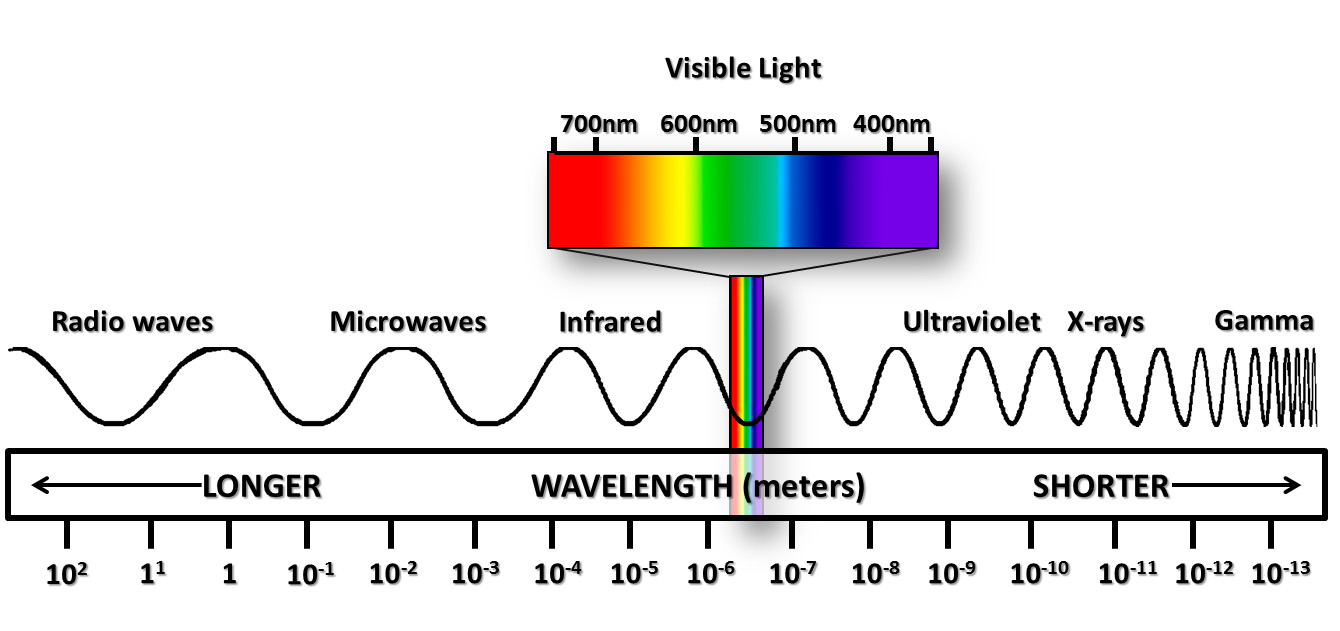
In physical sciences, the basic spectrum of motion is the electromagnetic spectrum. The key characteristic of this spectrum is frequency. This frequency is likely to reduce to zero in the direction of static and increase to infinity in the direction of kinetic. Science does not say anything about the limits at either end of the electromagnetic spectrum.

.

From Scientology 8-8008, section THETA-MEST THEORY:

“In Scientology, the static is represented by the mathematical symbol theta; the kinetic is called MEST… It is now considered that the origin of MEST lies with theta itself, and that MEST, as we know the physical universe, is a product of theta.”

The above statement from Scientology asserts that MEST is a product of theta. It does not say that theta transforms into MEST. That means, theta remains theta while it produces MEST. In other words, static remains static, while it produces kinetic. But we note that the moment static is disturbed, it transforms into kinetic. In a spectrum one end gradually transforms into the other end.

Therefore, the idea, “MEST is a product of Theta” is inconsistent if Theta and MEST are considered the opposite ends of the spectrum of motion.

Scientology Filter #1: It is an arbitrary assumption in Scientology that the kinetic (MEST) is a product of the static (Theta).

The scientific truth is that static transforms into kinetic the moment it is disturbed. The kinetic then gradually increases across the spectrum of motion.

.

From Scientology 8-8008, section THETA-MEST THEORY:

“Theta can be the property or beingness of any individual and is, for our purposes, considered to be individualistic for each individual. MEST stands for matter, energy, space and time, and is a composite of the first letter of each. The word MEST appearing all by itself denotes the physical universe. MEST with a designation word after it designates another’s universe.”

In Scientology, Theta (static) is associated with spirituality, and MEST (kinetic) represents the physical universe. It, therefore, implies that spiritual reality produces the physical reality. This parallels the philosophy of Semitic religions (Judaism, Christianity and Islam) that God created the world.

But, then, motion is given both spiritual and physical aspects in Scientology. Motion is implied to be spiritual at lower frequencies and physical at higher frequencies. This is not so.

Scientology Filter #2: It is an arbitrary assumption in Scientology that spiritual (Theta) and physical (MEST) lie in the dimension of motion.

In the scientific view of universal reality, we recognize the physical to be the outward expression and the spiritual to be the inner essence. Spiritual may be seen as the abstraction of the physical as in physical, mathematical, and philosophical principles. Since the universal reality is a single system, we may postulate the following.

POSTULATE 4: Spiritual and physical aspects of universal reality lie in a continuous dimension called abstraction.

This leads to the following corollary.

COROLLARY 6: The metaphysical and physical concepts parallel each other in the dimension of abstraction.

Thus we may postulate continuity of a physical concept in metaphysics, and continuity of a metaphysical concept in physics. This may generate some unique perspectives that may lead to interesting insights.

For example, we express the physical energy as a spectrum of motion. We may then express spiritual energy as a spectrum of emotion. Spiritual emotion develops as physical motion in the dimension of abstraction.

This opens the door to exploring the abstract nature of metaphysics with a scientific precision that has so far been applied to physical reality only.

.