Stress and Education

Stressed

Reference: Critical Thinking in Education

.

The biggest challenge to education is the stressed child, or the stressed student. When a child is stressed his attention is introverted onto his personal issues and he cannot learn.

The education at SLS is successful because it is addressing the challenge of stress successfully through its special curriculum. Learning requires extroverted attention.  The SLS environment is very extroverting.

Rule: The school environment should be such that it extroverts attention.

The general stress in the current society is increasing. It is inevitable that a certain percentage of children coming to school have stressful situations that are holding their attention. Their introverted attention then does not allow them to learn.

It is absolutely necessary for school to provide a stress-free extroverting environment so that learning can take place. If the school’s environment is also stressful then the student becomes conditioned and robotic.

At SLS, the first half hour of the day is devoted to activities that extroverts attention. The following exercise may also be used to extrovert attention.

This exercise may be conducted with a group of students, or it could be applied to a student who has difficulty learning.

.

EXERCISE: EXTROVERSION

PURPOSE: To extrovert the attention by exploring the five physical senses.

STEPS:

(Touch – 5 minutes minimum)

  1. Go to an environment where you can explore the sense of touch.

(a)  Touch two different surfaces and compare how they feel.

(b)  Touch them alternately until you can discern the uniqueness of each surface.

(c)  Touch a third surface repeatedly to get a feel of it. Then touch it alternately with one of the earlier surfaces, until you can discern how this third surface is unique.

(d)  Similarly touch additional surfaces carefully until you can discern their uniqueness.

  1. Explore the sensation of touch until you can do so happily without feeling any resistance inside you.

  2. Exercise the sense of touch for at least 5 minutes. You may do it for as long as you want.

.

 (Sight – 5 minutes minimum)

  1. Go to an environment where you can explore the shapes and colors of things.

(a)  Look at two different objects and compare their shapes and colors.

(b)  Look at them alternately until you can discern the uniqueness of their shapes and colors.

(c)  Look at a third object repeatedly to get an idea of its shape and color. Then look at it alternately with one of the earlier objects, until you can discern how this third object is unique.

(d)  Similarly look at additional objects carefully until you can discern their unique shapes and colors.

  1. Explore the sight of objects until you can do so happily without feeling any resistance inside you.

  2. Exercise the sense of sight for at least 5 minutes. You may do it for as long as you want.

.

 (Hearing, Smell & Taste – total 10 minutes minimum)

  1. Sit around a table and unpack your lunches and drinks. Don’t hold yourself back from talking.

  2. Start smelling and tasting little bits of your lunch, while listening to each other talk. You may even listen to your own voice.

(a)  Explore the different sounds that you hear as to their timbre, pitch, loudness and other qualities.

(b)  Explore the different odors as to how pleasant or pungent they are, and as to their other qualities.

(c)  Explore the different tastes as to how sweet or salty they are, and as to their other qualities.

  1. Explore the sounds, smells and tastes until you can do so happily without feeling any resistance inside you.

  2. Do this exploration for at least 10 minutes. You may do it for as long as you want.

  3. Take some deep breaths, appreciate what is around you, and get ready for your next school activity.

.

The SLC Math Course

Supervisor

Reference: Critical Thinking in Education

.

MATERIALS

The SLC Math curriculum is designed with the following rule in mind.

RULE # 1: The curriculum follows the sequence in which concepts are developed systematically in a subject.

The subject of mathematics starts with COUNTING. The next concept is PLACE VALUE. Place values allow one to write large numbers in a concise manner. The student must learn how to read and write large numbers before proceeding to the next concept of ADDITION.

Mathematics introduces the student to systematic learning. Counting and place values provide ways to think systematically.

.

SELF-LEARNING

The SLC Math curriculum consists of lesson plans that are concise, relevant and easy to follow. The students are encouraged to read and understand the lessons on their own. Supervisors are there to help him as needed.

RULE # 2: The lesson plans are concise, relevant, and written in plain language that is easy to follow.

Each math lesson is followed by a large number of exercises for practice. Answers are provided for all exercise problems. The students are encouraged to do the exercises and check their answers. The correct answers reinforce the students’ confidence.

RULE # 3: Each lesson plan is followed by a large number of exercises, with answers provided for all exercise problems.

The students are encouraged to trace the incorrect answers back to the exact error made.  Supervisors are there to assist them in this effort. Once a student becomes aware of the exact error he is less likely to make it again.

The student works to get the correct answers first, and then works on the speed. He learns the methods of arithmetic that make computations easier and faster.

The student may do every fifth or every tenth problem first to sample problems of different level of difficulties. He may then practice the problems that are at the right level of difficulty for him..

.

COMPLETION OF A LESSON PLAN

When the student has studied and practiced a lesson plan he asks the supervisor to check him. The supervisor spot checks him on the concepts of the lesson and have him solve some exercise problems. If the student fails the spot-check the supervisor sends him back to study and practice some more, and come back for another spot-check. When the student passes the spot-check he goes to the class tutor to be examined on his understanding of the lesson plan.

The class tutor examines the student’s knowledge from the viewpoint of skill. He makes sure that the student has required skills. If the tutor finds some minor things missing in the student’s understanding then he tutors him on the spot. If he finds something major missing then he sends the student back to the supervisor with exact instructions on what the student must restudy and practice.

In the end, the class tutor requires the student to do three exercise problems correctly in a row. When the student answers all three problems correctly, the class tutor announces him complete on the lesson plan.

RULE # 4: In order to complete a lesson plan, the student must solve three exercise problems (of reasonable difficulty) correctly in a row.

.

CLASSES & SUPERVISION

Classes are divided by the levels of the curriculum. Levels Pre-0 and 0 are written for skill levels learned in Pre-kindergarten and Kindergarten respectively. Similarly, Levels 1 and 2 are written for skills learned in primary and middle school respectively. Each level consists of a number of lesson plans. When a student has completed all lesson plans for a level, he moves up to the next level.

If the student is found lacking the skills of a level he is assigned to that level. He is then examined for completion of each lesson plan on that level.

The SLC math course is performance based. The students can move through these levels rapidly. He is not held back because of age. Normally a student is allowed to advance through these levels at a pace most suitable for him. By the time a student has completed Level 2 he is deemed to be a self-learner. He then continues up through Level 3 and above rapidly with minimal supervision.

A higher level student is also trained on supervisor skills. He supervises at least one lower level student through to completion.

RULE # 5: A higher level student must be able to assist a lower level student to completion.

.

Comments on Mass

Mass

Reference: Disturbance Theory

.

Mass – Wikipedia

Mass is both a property of a physical body and a measure of its resistance to acceleration (a change in its state of motion) when a net force is applied. It also determines the strength of its mutual gravitational attraction to other bodies. The basic SI unit of mass is the kilogram (kg).

Mass is the inertial property of matter [see Comments on Inertia]. It manifests in very high frequency regions of the field, where cycles are squeezed very tightly together. The greater is the mass the higher is the frequency gradient with respect to the surrounding field. This frequency gradient acts as force during interactions.

In physics, mass is not the same as weight, even though mass is often determined by measuring the object’s weight using a spring scale, rather than balance scale comparing it directly with known masses. An object on the Moon would weigh less than it does on Earth because of the lower gravity, but it would still have the same mass. This is because weight is a force, while mass is the property that (along with gravity) determines the strength of this force.

Mass is the tightness of cycles at very high frequencies. Weight appears when the frequency gradient of mass interacts.

In Newtonian physics, mass can be generalized as the amount of matter in an object. However, at very high speeds, special relativity states that the kinetic energy of its motion becomes a significant additional source of mass. Thus, any stationary body having mass has an equivalent amount of energy, and all forms of energy resist acceleration by a force and have gravitational attraction. In modern physics, matter is not a fundamental concept because its definition has proven elusive.

Very high speeds are meaningless if the associated acceleration is zero. They have meaning only when there is acceleration or deceleration during interactions. This little fact modifies the theory of relativity.

There are several distinct phenomena which can be used to measure mass. Although some theorists have speculated that some of these phenomena could be independent of each other, current experiments have found no difference in results regardless of how it is measured:

  • Inertial mass measures an object’s resistance to being accelerated by a force (represented by the relationship F = ma).

During acceleration, matter moves through the surrounding field. The interaction of its frequency gradient with the surrounding field appears as the “resistance” called inertia. This “resistance” is equal to the force generating the acceleration. The ratio of force to acceleration provides a measure of inertial mass.

  • Active gravitational mass measures the gravitational force exerted by an object.

The gravitational force occurs between two material objects separated by field. This force is manifestation of the frequency gradients of masses with the surrounding field. Newton’s formula for gravitation then provides a measure of gravitational mass.

  • Passive gravitational mass measures the gravitational force exerted on an object in a known gravitational field.

Gravitational force is essentially a measure of the frequency gradient between the mass region and the surrounding field.

The mass of an object determines its acceleration in the presence of an applied force. The inertia and the inertial mass describe the same properties of physical bodies at the qualitative and quantitative level respectively, by other words, the mass quantitatively describes the inertia. According to Newton’s second law of motion, if a body of fixed mass m is subjected to a single force F, its acceleration a is given by F/m. A body’s mass also determines the degree to which it generates or is affected by a gravitational field. If a first body of mass mA is placed at a distance r (center of mass to center of mass) from a second body of mass mB, each body is subject to an attractive force Fg = GmAmB/r2, where G = 6.67×10⁻¹¹ N kg−2 m2 is the “universal gravitational constant”. This is sometimes referred to as gravitational mass. Repeated experiments since the 17th century have demonstrated that inertial and gravitational mass are identical; since 1915, this observation has been entailed a priori in the equivalence principle of general relativity.

Mass exists in a region of the field because of the tightness of the very high frequency cycles. The frequency gradient of this mass with the surrounding low frequency field determines the force required to move it through the field. This is perceived as inertia.

There is definite relationship between two masses and the relative frequency gradient, which determines the gravitational force between them. The distance between them is part of that combined frequency gradient.

.

Comments on Charge carrier

electric-field

Reference: Disturbance Theory

.

Charge carrier – Wikipedia

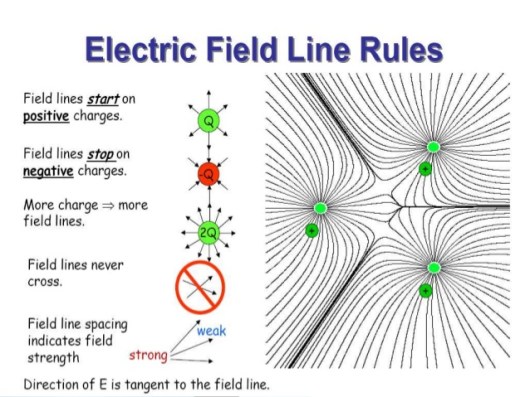
In physics, a charge carrier is a particle free to move, carrying an electric charge, especially the particles that carry electric charges in electrical conductors. Examples are electrons, ions and holes. In a conducting medium, an electric field can exert force on these free particles, causing a net motion of the particles through the medium; this is what constitutes an electric current.

A charge shall surround the particle that carries it. An electron is an eddy type configuration within the electromagnetic field. Ions are atoms or molecules that either hold extra charge, or have lost some charge. Holes are lower frequency regions (sinks) in the electromagnetic field. These “particles” are forced into motion by the difference in frequencies of the field. Such particles maintain their configuration and do not merge into surrounding field.

In different conducting media, different particles serve to carry charge:

  • In metals, the charge carriers are electrons. One or two of the valence electrons from each atom is able to move about freely within the crystal structure of the metal. The free electrons are referred to as conduction electrons, and the cloud of free electrons is called a Fermi gas.

In metals, the charges that generally belong to atoms, detach and move relatively freely within the lattice of atoms in the metal. These charges move like eddies at a higher frequency.

  • In electrolytes, such as salt water, the charge carriers are ions, which are atoms or molecules that have gained or lost electrons so they are electrically charged. Atoms that have gained electrons so they are negatively charged are called anions, atoms that have lost electrons so they are positively charged are called cations. Cations and anions of the dissociated liquid also serve as charge carriers in melted ionic solids (see e.g. the Hall–Héroult process for an example of electrolysis of a melted ionic solid). Proton conductors are electrolytic conductors employing positive hydrogen ions as carriers.

In electrolytes, parts of molecules become loose from each other and the frequency gradients become stretched. So the positive and negative charges appear far from each other and more visible.

  • In a plasma, an electrically charged gas which is found in electric arcs through air, neon signs, and the sun and stars, the electrons and cations of ionized gas act as charge carriers.

In plasma, the mechanism is the same as above except that the electromagnetic field is arranged on a different scale.

  • In a vacuum, free electrons can act as charge carriers. In the electronic component known as the vacuum tube (also called valve), the mobile electron cloud is generated by a heated metal cathode, by a process called thermionic emission. When an electric field is applied strong enough to draw the electrons into a beam, this may be referred to as a cathode ray, and is the basis of the cathode ray tube display widely used in televisions and computer monitors until the 2000’s.

The frequency modulation within a field can control the collection and motion of charge.

  • In semiconductors (the material used to make electronic components like transistors and integrated circuits), in addition to electrons, the travelling vacancies in the valence-band electron population (called “holes”), act as mobile positive charges and are treated as charge carriers. Electrons and holes are the charge carriers in semiconductors.

The “holes” are like low frequency sinks in the electromagnetic field. These charges may move like eddies at a lower frequency.

It can be seen that in some conductors, such as ionic solutions and plasmas, there are both positive and negative charge carriers, so an electric current in them consists of the two polarities of carrier moving in opposite directions. In other conductors, such as metals, there are only charge carriers of one polarity, so an electric current in them just consists of charge carriers moving in one direction.

The charge carrier basically carries a stable configuration of frequency gradient.

.

Classical to Quantum Mechanics

Blackbody Radiation
Reference: Disturbance Theory

.

  1. The Classical Mechanics made a transition into Quantum Mechanics at the beginning of 20th century when the interactions between field and matter were studied. The first field-matter interaction was encountered in the Black Body Radiation. The classical equipartition theory failed to account for the energy of the emitted electromagnetic spectrum.

  2. There was a thermodynamic equilibrium observed between the temperature of the body and the spectrum of the electromagnetic field surrounding the body. In other words, the agitation of atoms (temperature) was in equilibrium with the absorption and emission of thermal electromagnetic radiation (spectrum).

  3. The formulae based on classical thermodynamics could either explain the low frequency part of the spectrum (Raleigh-Jean formula), or the high frequency part of the spectrum (Wien’s Distribution formula), but not the entire spectrum at once. Planck found the formula, which could replicate the entire spectrum by ingeniously interpolating between the above two formulae. This was purely an empirical effort based on mathematics. He came up with the explanation for his formula later.

  4. From Derivation of Planck’s radiation law:

    In order to reproduce the formula which he had empirically derived and presented in October 1900, Planck found that he could only do so if he assumed that the radiation was produced by oscillating electrons, which he modelled as oscillating on a massless spring (so-called “harmonic oscillators”). The total energy at any given frequency would be given by the energy of a single oscillator at that frequency multiplied by the number of oscillators oscillating at that frequency.

    However, he had to assume that

    1. The energy of each oscillator was not related to either the square of the amplitude of oscillation or the square of the frequency of oscillation (as it would be in classical physics), but rather just to the frequency,
      E α ν
    2. The energy of each oscillator could only be a multiple of some fundamental “chunk” of radiation, , so En = nhν
      where n = 0, 1, 2, 3, 4
    3. The number of oscillators with each energy Ewas given by the Boltzmann distribution, so

      Nn = N0e–nhν/kT

      where N0 is the number of oscillators in the lowest energy state.

      By combining these assumptions, Planck was able in November 1900 to reproduce the exact equation which he had derived empirically in October 1900. In doing so he provided, for the first time, a physical explanation for the observed blackbody curve.

  5. The frequency of the radiation matched the frequency of the “oscillators” in the body. The high frequency oscillators could be activated only when energy proportional to their frequency was available. Therefore, lesser numbers of oscillators were activated at higher frequencies. Planck thus resolved the Ultraviolet catastrophe.

  6. We may postulate that the kinetic and potential states of oscillators produce the electric and magnetic states of radiation respectively. Therefore, the electric state may be related to magnetic state the way the kinetic state is related to potential state. The magnetic state could be a concentrated electric state; and the electric state could be a flowing magnetic state.

  7. Thus an electromagnetic cycle consists of a pulse of energy of magnitude ‘h’. A three-dimensional electromagnetic field is made up of such dynamic pulses.

.