THE BHAGAVAD GITA: Chapter 13

Reference: Course on The Bhagavad Gita
English Translation By Shri Purohit Swami

.

Chapter 13

अर्जुनउवाच
प्रकृतिंपुरुषंचैवक्षेत्रंक्षेत्रज्ञमेवच।
एतद्वेदितुमिच्छामिज्ञानंज्ञेयंचकेशव।।13.1।।

13.1 Arjuna asked: My Lord! Who is God and what is Nature; what is Matter and what is the Self; what is that they call Wisdom, and what is it that is worth knowing? I wish to have this explained.

श्रीभगवानुवाच
इदंशरीरंकौन्तेयक्षेत्रमित्यभिधीयते।
एतद्योवेत्तितंप्राहुःक्षेत्रज्ञइतितद्विदः।।13.2।।

13.2 Lord Shri Krishna replied: O Arjuna! The body of man is the playground of the Self; and That which knows the activities of Matter, sages call the Self.

क्षेत्रज्ञंचापिमांविद्धिसर्वक्षेत्रेषुभारत।
क्षेत्रक्षेत्रज्ञयोर्ज्ञानंयत्तज्ज्ञानंमतंमम।।13.3।।

13.3 I am the Omniscient self that abides in the playground of Matter; knowledge of Matter and of the all-knowing Self is wisdom.

The discourse now begins on the difference between Nature and what underlies that nature. The nature includes this body-mind system and the impulse that energizes it. Standing apart from Nature is the Static viewpoint. Nature is everywhere manifested in all different forms, but the Static viewpoint stands apart as One.

तत्क्षेत्रंयच्चयादृक्चयद्विकारियतश्चयत्।
सचयोयत्प्रभावश्चतत्समासेनमेश्रृणु।।13.4।।

13.4 What is called Matter, of what it is composed, whence it came, and why it changes, what the Self is, and what Its power – this I will now briefly set forth.

ऋषिभिर्बहुधागीतंछन्दोभिर्विविधैःपृथक्।
ब्रह्मसूत्रपदैश्चैवहेतुमद्भिर्विनिश्िचतैः।।13.5।।

13.5 Seers have sung of It in various ways, in many hymns and sacred Vedic songs, weighty in thought and convincing in argument.

महाभूतान्यहङ्कारोबुद्धिरव्यक्तमेवच।
इन्द्रियाणिदशैकंचपञ्चचेन्द्रियगोचराः।।13.6।।

13.6 The five great fundamentals (earth, fire, air, water and ether), personality, intellect, the mysterious life force, the ten organs of perception and action, the mind and the five domains of sensation;

Here we have the Nature being expressed from the Static viewpoint. The substance of the universe is energy, which condenses into matter. From matter springs life and life develops an intellect that ponders over its own nature. Manifested as mind it senses the external world through the perceptions of light, sound, touch, taste and smell.

इच्छाद्वेषःसुखंदुःखंसङ्घातश्चेतनाधृतिः।
एतत्क्षेत्रंसमासेनसविकारमुदाहृतम्।।13.7।।

13.7 Desire, aversion, pleasure, pain, sympathy, vitality and the persistent clinging to life, these are in brief the constituents of changing Matter.

अमानित्वमदम्भित्वमहिंसाक्षान्तिरार्जवम्।
आचार्योपासनंशौचंस्थैर्यमात्मविनिग्रहः।।13.8।।

13.8 Humility, sincerity, harmlessness, forgiveness, rectitude, service of the Master, purity, steadfastness, self-control;

इन्द्रियार्थेषुवैराग्यमनहङ्कारएवच।
जन्ममृत्युजराव्याधिदुःखदोषानुदर्शनम्।।13.9।।

13.9 Renunciation of the delights of sense, absence of pride, right understanding of the painful problem of birth and death, of age and sickness;

असक्ितरनभिष्वङ्गःपुत्रदारगृहादिषु।
नित्यंचसमचित्तत्वमिष्टानिष्टोपपत्तिषु।।13.10।।

13.10 Indifference, non-attachment to sex, progeny or home, equanimity in good fortune and in bad;

मयिचानन्ययोगेनभक्ितरव्यभिचारिणी।
विविक्तदेशसेवित्वमरतिर्जनसंसदि।।13.11।।

13.11 Unswerving devotion to Me, by concentration on Me and Me alone, a love for solitude, indifference to social life;

अध्यात्मज्ञाननित्यत्वंतत्त्वज्ञानार्थदर्शनम्।
एतज्ज्ञानमितिप्रोक्तमज्ञानंयदतोन्यथा।।13.12।।

13.12 Constant yearning for the knowledge of Self, and pondering over the lessons of the great Truth – this is Wisdom, all else ignorance.

These verses differentiate wisdom, which leads to freedom, from ignorance that binds one. Wisdom lies in the constant yearning for the knowledge of Self and pondering over the lessons of great Truth. Ignorance lies in clinging to life and to the changing constituents of matter.

ज्ञेयंयत्तत्प्रवक्ष्यामियज्ज्ञात्वाऽमृतमश्नुते।
अनादिमत्परंब्रह्मनसत्तन्नासदुच्यते।।13.13।।

13.13 I will speak to thee now of that great Truth which man ought to know, since by its means he will win immortal bliss – that which is without beginning, the Eternal Spirit which dwells in Me, neither with form, nor yet without it.

सर्वतःपाणिपादंतत्सर्वतोऽक्षिशिरोमुखम्।
सर्वतःश्रुतिमल्लोकेसर्वमावृत्यतिष्ठति।।13.14।।

13.14 Everywhere are Its hands and Its feet; everywhere It has eyes that see, heads that think and mouths that speak; everywhere It listens; It dwells in all the worlds; It envelops them all.

सर्वेन्द्रियगुणाभासंसर्वेन्द्रियविवर्जितम्।
असक्तंसर्वभृच्चैवनिर्गुणंगुणभोक्तृच।।13.15।।

13.15 Beyond the senses, It yet shines through every sense perception. Bound to nothing, It yet sustains everything. Unaffected by the Qualities, It still enjoys them all.

The Static viewpoint stands apart from energy, yet energy is there because of it. The Static viewpoint has no form, yet it appears to have the form of energy that it views. Since energy is everywhere, so also is this viewpoint. The sense perceptions are made of energy, and so the Static viewpoint also dwells in them. The Static viewpoint has no Qualities, yet it enjoys all the qualities of energy forms.

बहिरन्तश्चभूतानामचरंचरमेवच।
सूक्ष्मत्वात्तदविज्ञेयंदूरस्थंचान्तिकेचतत्।।13.16।।

13.16 It is within all beings, yet outside; motionless yet moving; too subtle to be perceived; far away yet always near.

अविभक्तंचभूतेषुविभक्तमिवचस्थितम्।
भूतभर्तृचतज्ज्ञेयंग्रसिष्णुप्रभविष्णुच।।13.17।।

13.17 In all beings undivided, yet living in division, It is the upholder of all, Creator and Destroyer alike;

ज्योतिषामपितज्ज्योतिस्तमसःपरमुच्यते।
ज्ञानंज्ञेयंज्ञानगम्यंहृदिसर्वस्यविष्ठितम्।।13.18।।

13.18 It is the Light of lights, beyond the reach of darkness; the Wisdom, the only thing that is worth knowing or that wisdom can teach; the Presence in the hearts of all.

As covered in these verses, the Static viewpoint spans over the opposites. That means it covers the whole dimension from one end to the other of all attributes. In short, it is relative to what is viewed, yet it views it completely without distortion. This is the viewpoint worth attaining.

इतिक्षेत्रंतथाज्ञानंज्ञेयंचोक्तंसमासतः।
मद्भक्तएतद्विज्ञायमद्भावायोपपद्यते।।13.19।।

13.19 Thus I have told thee in brief what Matter is, and the Self worth realizing and what is Wisdom. He who is devoted to Me knows; and assuredly he will enter into Me.

प्रकृतिंपुरुषंचैवविद्ध्यनादीउभावपि।
विकारांश्चगुणांश्चैवविद्धिप्रकृतिसंभवान्।।13.20।।

13.20 Know thou further that Nature and God have no beginning; and that differences of character and quality have their origin in Nature only.

कार्यकारणकर्तृत्वेहेतुःप्रकृतिरुच्यते।
पुरुषःसुखदुःखानांभोक्तृत्वेहेतुरुच्यते।।13.21।।

13.21 Nature is the Law which generates cause and effect; God is the source of the enjoyment of all pleasure and pain.

Those who are devoted assuredly shall attain the Static viewpoint and have the wisdom of Nature and Self. Neither energy (Nature) nor its energizing impulse (Self) has any beginning. All differences of character and qualities have their origin in Nature only. Pleasure and pain is a reaction that should make one look more closely the cause of this effect, and understand what is really there.

पुरुषःप्रकृतिस्थोहिभुङ्क्तेप्रकृतिजान्गुणान्।
कारणंगुणसङ्गोऽस्यसदसद्योनिजन्मसु।।13.22।।

13.22 God dwelling in the heart of Nature experiences the Qualities which nature brings forth; and His affinity towards the Qualities is the reason for His living in a good or evil body.

उपद्रष्टाऽनुमन्ताचभर्ताभोक्तामहेश्वरः।
परमात्मेतिचाप्युक्तोदेहेऽस्मिन्पुरुषःपरः।।13.23।।

13.23 Thus in the body of man dwells the Supreme God; He who sees and permits, upholds and enjoys, the Highest God and the Highest Self.

यएवंवेत्तिपुरुषंप्रकृतिंचगुणैःसह।
सर्वथावर्तमानोऽपिनसभूयोऽभिजायते।।13.24।।

13.24 He who understands God and Nature along with her qualities, whatever be his condition in life, he comes not again to earth.

There is gross to subtlest of impulses that dwell in the body. The grosser impulses are born out of the evolution of the energy as that body. The subtlest of the impulses, on which the grosser impulses depend, can understand this evolution of qualities in Nature and be unattached completely.

ध्यानेनात्मनिपश्यन्तिकेचिदात्मानमात्मना।
अन्येसांख्येनयोगेनकर्मयोगेनचापरे।।13.25।।

13.25 Some realize the Supreme by meditating, by its aid, on the Self within, others by pure reason, others by right action.

अन्येत्वेवमजानन्तःश्रुत्वाऽन्येभ्यउपासते।
तेऽपिचातितरन्त्येवमृत्युंश्रुतिपरायणाः।।13.26।।

13.26 Others again, having no direct knowledge but only hearing from others, nevertheless worship, and they, too, if true to the teachings, cross the sea of death.

यावत्सञ्जायतेकिञ्चित्सत्त्वंस्थावरजङ्गमम्।
क्षेत्रक्षेत्रज्ञसंयोगात्तद्विद्धिभरतर्षभ।।13.27।।

13.27 Wherever life is seen in things movable or immovable, it is the joint product of Matter and Spirit.

The freedom of the static viewpoint (from which all motion can be viewed) is arrived at through meditation, pure reason, right action, or worship based on right teachings. Motion arises from the energizing of matter by spirit.

समंसर्वेषुभूतेषुतिष्ठन्तंपरमेश्वरम्।
विनश्यत्स्वविनश्यन्तंयःपश्यतिसपश्यति।।13.28।।

13.28 He who can see the Supreme Lord in all beings, the Imperishable amidst the perishable, it is he who really sees.

समंपश्यन्हिसर्वत्रसमवस्थितमीश्वरम्।
नहिनस्त्यात्मनाऽऽत्मानंततोयातिपरांगतिम्।।13.29।।

13.29 Beholding the Lord in all things equally, his actions do not mar his spiritual life but lead him to the height of Bliss.

प्रकृत्यैवचकर्माणिक्रियमाणानिसर्वशः।
यःपश्यतितथाऽऽत्मानमकर्तारंसपश्यति।।13.30।।

13.30 He who understands that it is only the Law of Nature that brings action to fruition, and that the Self never acts, alone knows the Truth.

The Imperishable energizes everything equally. Everything acts according to its own nature. When you can make this differentiation you have achieved the static viewpoint.

यदाभूतपृथग्भावमेकस्थमनुपश्यति।
ततएवचविस्तारंब्रह्मसम्पद्यतेतदा।।13.31।।

13.31 He who sees the diverse forms of life all rooted in One, and growing forth from Him, he shall indeed find the Absolute.

अनादित्वान्निर्गुणत्वात्परमात्मायमव्ययः।
शरीरस्थोऽपिकौन्तेयनकरोतिनलिप्यते।।13.32।।

13.32 The Supreme Spirit, O Prince, is without beginning, without Qualities and Imperishable, and though it be within the body, yet It does not act, nor is It affected by action.

यथासर्वगतंसौक्ष्म्यादाकाशंनोपलिप्यते।
सर्वत्रावस्थितोदेहेतथाऽऽत्मानोपलिप्यते।।13.33।।

13.33 As space, though present everywhere, remains by reason of its subtlety unaffected, so the Self, though present in all forms, retains its purity unalloyed.

All diverse forms of life have evolved out of the same energy with the same internal impulse. They all are still rooted in that energy that has no beginning, no qualities and is eternal. That subtle energy is within the body and everywhere else. It neither participates nor is affected by the activities of the life organisms.

यथाप्रकाशयत्येकःकृत्स्नंलोकमिमंरविः।
क्षेत्रंक्षेत्रीतथाकृत्स्नंप्रकाशयतिभारत।।13.34।।

13.34 As the one Sun illuminates the whole earth, so the Lord illumines the whole universe.

क्षेत्रक्षेत्रज्ञयोरेवमन्तरंज्ञानचक्षुषा।
भूतप्रकृतिमोक्षंचयेविदुर्यान्तितेपरम्।।13.35।।

13.35 Those who with the eyes of wisdom thus see the difference between Matter and Spirit, and know how to liberate Life from the Law of Nature, they attain the Supreme.”

The same spirit energizes all matter. Knowing the oneness that underlies all the laws of Nature liberates you from all confusion.

.

Final Comment

Chapter 13 looks more closely at Nature and Self. Nature is energy that is everywhere manifested in all different forms. Self. however, is the Static viewpoint that stands apart. Energy condenses into matter. From matter springs life. Life develops an intellect. Intellect ponders over its own nature. Wisdom lies in the constant yearning for the knowledge of Self and pondering over the lessons of great Truth. Ignorance lies in clinging to life and to the ever changing constituents of matter.

The Static viewpoint stands apart from energy, yet energy is there because of it. The Static viewpoint has no form, yet it appears to have the form of energy that it views. Since energy is everywhere, so also is this viewpoint. The sense perceptions are made of energy, and so the Static viewpoint also dwells in them. The Static viewpoint has no Qualities, yet it enjoys all the qualities of energy forms.

Thus, the Static viewpoint spans over the dimensions of all attributes from one end to the other. It is relative to what it views. This is the viewpoint worth attaining. It is arrived at through meditation, pure reason, right action, or worship based on right teachings.

Though everything acts according to its own nature, everything is energized equally by imperishable spirit. When you can make this differentiation you have achieved the static viewpoint. Knowing the oneness that underlies all the laws of Nature liberates you from all confusion.

.
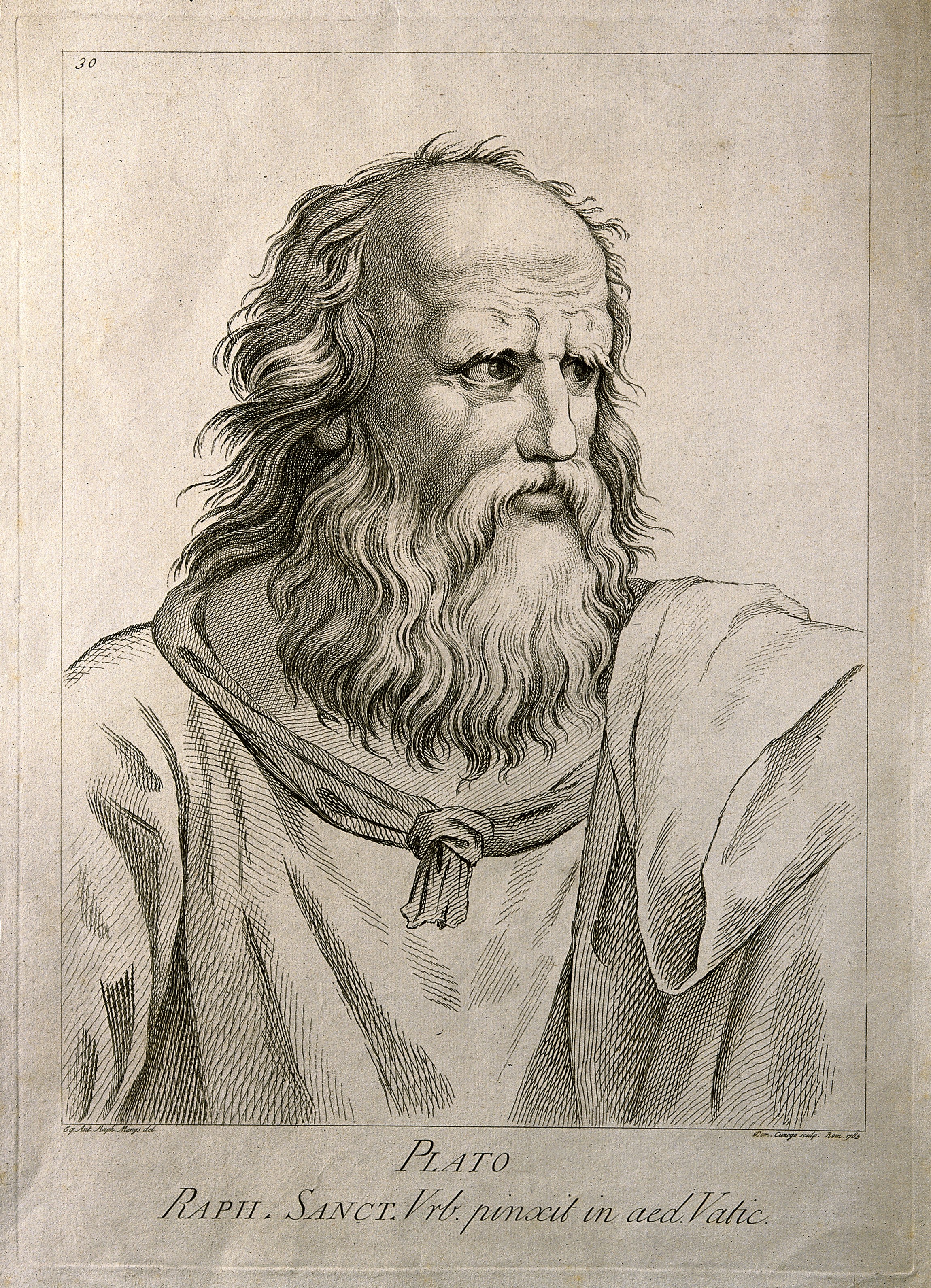
PLATO: Criticism

Reference: The Story of Philosophy 

This paper presents Chapter I, Section 10 from the book THE STORY OF PHILOSOPHY by WILL DURANT. The contents are from the 1933 reprint of this book by TIME INCORPORATED by arrangement with Simon and Schuster, Inc.

The paragraphs of the original material (in black) are accompanied by brief comments (in color) based on the present understanding.  Feedback on these comments is appreciated.

The heading below is linked to the original materials.

.

X. CRITICISM 

And now what shall we say of this whole Utopia? Is it feasible? And if not, has it any practicable features which we could turn to contemporary use? Has it ever in any place or measure been realized? 

At least the last question must be answered in Plato’s favor. For a thousand years Europe was ruled by an order of guardians considerably like that which was visioned by our philosopher. During the Middle Ages it was customary to classify the population of Christendom into laboratores (workers), bellatores (soldiers), and oratores (clergy). The last group, though small in number, monopolized the instruments and opportunities of culture, and ruled with almost unlimited sway half of the most powerful continent on the globe. The clergy, like Plato’s guardians, were placed in authority not by the suffrages, of the people, but by their talent as shown in ecclesiastical studies and administration, by their disposition to a life of meditation and simplicity, and (perhaps it should be added) by the influence of their relatives with the powers of state and church. In the latter half of the period in which they ruled, the clergy were as free from family cares as even Plato could desire; and in some cases, it would seem, they enjoyed no little of the reproductive freedom accorded to the guardians. Celibacy was part of the psychological structure of the power of the clergy; for on the one hand they were unimpeded by the narrowing egoism of the family, and on the other their apparent superiority to the call of the flesh added to the awe in which lay sinners held them, and to the readiness of these sinners to bare their lives in the confessional. 

Plato intended people to be fitting in a society in the best way possible according to their nature. On the surface Plato’s ideas seem to have been quite successful under Catholicism, but did they really accomplish what Plato intended? Catholicism did use the power of religion to keep people in line. But that did not help people evolve per their potential.

Much of the politics of Catholicism was derived from Plato’s ”royal lies,” or influenced by them: the ideas of heaven, purgatory, and hell, in their medieval form, are traceable to the last book of the Republic; the cosmology of scholasticism comes largely from the Timaeus; the doctrine of realism (the objective reality of general ideas) was an interpretation of the doctrine of Ideas; even the educational “quadrivium” (arithmetic, geometry, astronomy and music) was modeled on the curriculum outlined in Plato. With this body of doctrine the people of Europe were ruled with hardly any resort to force; and they accepted this rule so readily that for a thousand years they contributed plentiful material support to their rulers, and asked no voice in the government. Nor was this acquiescence confined to the general population; merchants and soldiers, feudal chieftains and civil powers all bent the knee to Rome. It was an aristocracy of no mean political sagacity; it built probably the most marvelous and powerful organization which the world has ever known. 

Plato’s ideas built a powerful organization in Catholicism, but that organization has been only as stable as its “royal lies” (the postulates of Catholic theism). This organization suppressed the seeking of scientific knowledge, which has been its undoing.

The Jesuits who for a time ruled Paraguay were semi-Platonic guardians, a clerical oligarchy empowered by the possession of knowledge and skill in the midst of a barbarian population. And for a time the Communist Party which ruled Russia after the revolution of November, 1917, took a form strangely reminiscent of the Republic. They were a small minority, held together almost by religious conviction, wielding the weapons of orthodoxy and excommunication, as sternly devoted to their cause as any saint to his, and living a frugal existence while ruling half the soil of Europe. 

A society built on Plato’s republic is only as successful as it paves the way for the evolution of the civilization.

Such examples indicate that within limits and with modifications, Plato’s plan is practicable; and indeed he himself had derived it largely from actual practice as seen on his travels. He had been impressed by the Egyptian theocracy: here was a great and ancient civilization ruled by a small priestly class; and compared with the bickering and tyranny and incompetence of the Athenian Ecclesia Plato felt that the Egyptian government represented a much higher form of state (Laws, 819). In Italy he had stayed for a time with a Pythagorean community, vegetarian and communist, which had for generations controlled the Greek colony in which it lived. In Sparta he had seen a small ruling class living a hard and simple life in common in the midst of a subject population; eating together, restricting mating for eugenic ends, and giving to the brave the privilege of many wives. He had no doubt heard Euripides advocate a community of wives, the liberation of slaves, and the pacification of the Greek world by an Hellenic league (Medea, 230; Fragm., 655) ; no doubt, too, he knew some of the Cynics who had developed a strong communist movement among what one would now call the ‘Socratic Left. In short, Plato must have felt that in propounding his plan he was not making an impossible advance on realities which his eyes had seen.

Plato’s Republic is a utopia, which has been approximated to various degrees. Its ultimate weakness lies in the need for external control of human nature.

Yet critics from Aristotle’s day to ours have found in the Republic many an opening for objection and doubt. “These things and many others,” says the Stagyrite, with cynical brevity, ”have been invented several times over in the course of ages.” It is very pretty to plan a society in which all men will be brothers; but to extend such a term to all our male contemporaries is to water out of it all warmth and significance. So with common property: it would mean a dilution of responsibility; when everything belongs to everybody nobody will take care of anything. And finally, argues the great conservative, communism would fling people into an intolerable continuity of contact; it would leave no room for privacy or individuality; and it would presume such virtues of patience and cooperation as only a saintly minority possess. ”We must neither assume a standard of virtue which is above ordinary persons, nor an education which is exceptionally favored by nature and circumstance; but we must have regard to the life which the majority can share, and to the forms of government to which states in general can attain.”

All warmth and significance goes out the window when external controls are enforced. Whether the property is common or not, people may not take responsibility for it. The need for privacy may not get fulfilled when one is living in a close nit community. It may be difficult to enforce a strict standard of virtue and education.

So far Plato’s greatest (and most jealous) pupil; and most of the criticisms of later date strike the same chord. Plato underrated, we are told, the force of custom accumulated in the institution of monogamy, and in the moral code attached to that institution; he underestimated the possessive jealousy of males in supposing that a man would be content to have merely an aliquot portion of a wife; he minimized the maternal instinct in supposing that mothers would agree to have their children taken from them and brought up in a heartless anonymity. And above all he forgot that in abolishing the family he was destroying the great nurse of morals and the chief source of those cooperative and communistic habits which would have to be the psychological basis of his state; with unrivaled eloquence he sawed off the branch on which he sat.

To all these criticisms one can reply very simply, that they destroy a straw man. Plato explicitly exempts the majority from his communistic plan; he recognizes clearly enough that only a few are capable of the material self-denial which he proposes for his ruling class; only the guardians will call every guardian brother or sister; only the guardians will be without gold or goods. The vast majority will retain all respectable institutions—property, money, luxury, competition, and whatever privacy they may desire. They will have marriage as monogamic as they can bear, and all the morals derived from it and from the family; the fathers shall keep their wives and the mothers shall keep their children ad libitum and nauseam. As to the guardians, their need is not so much a communistic disposition as a sense of honor, and love of it; pride and not kindness is to hold them up. And as for the maternal instinct, it is not strong before the birth, or even the growth, of the child; the average mother accepts the new-born babe rather with resignation than with joy; love for it is a development, not a sudden miracle, and grows as the child grows, as it takes form under the painstaking care of the mother; not until it has become the embodiment of maternal artistry does it irrevocably catch the heart.

Some of the ideas of Plato’s conflict with natural instincts, such as, monogamy, the maternal instinct and the family; but they apply only to a very small minority of guardians who operate basically on the sense of honor and pride in their function.

Other objections are economic rather than psychological. Plato’s republic, it is argued, denounces the division of every city into two cities, and then offers us a city divided into three. The answer is that the division in the first case is by economic conflict; in Plato’s state the guardian and auxiliary classes are specifically excluded from participation in this competition for gold and goods. But then the guardians would have power without responsibility; and would not this lead to tyranny? Not at all; they have political power and direction, but no economic power or wealth; the economic class, if dissatisfied with the guardians’ mode of rule, could hold up the food supply, as Parliaments control executives by holding up the budget. Well, then, if the guardians have political but not economic power, how can they maintain their rule? Have not Harrington and Marx and many others shown that political power is a reflex of economic power, and becomes precarious as soon as economic power passes to a politically subject group—as to the middle classes in the eighteenth century?

In Plato’s republic the wealthy do not rule the poor. Instead the centers of political and economic powers are separated. But how practical is this?

This is a very fundamental objection, and perhaps a fatal one. The answer might be made that the power of the Roman Catholic Church, which brought even kings to kneel at Canossa, was based, in its earlier centuries of rule, rather on the inculcation of dogmas than on the strategy of wealth. But it may be that the long dominion of the Church was due to the agricultural condition of Europe: an agricultural population is inclined to supernatural belief by its helpless dependence on the caprice of the elements, and by that inability to control nature which always leads to fear and thence to worship; when industry and commerce developed, a new type of mind and man arose, more realistic and terrestrial, and the power of the Church began to crumble as soon as it came into conflict with this new economic fact. Political power must repeatedly readjust itself to the changing balance of economic forces. The economic dependence of Plato’s guardians on the economic class would very soon reduce them to the controlled political executives of that class; even the, manipulation of military power would not long forestall this inevitable issue—any more than the military forces of revolutionary Russia could prevent the development of a proprietary individualism among the peasants who controlled the growth of food, and therefore the fate of the nation. Only this would remain to Plato: that even though political policies must be determined by the economically dominant group, it is better that those policies should be administered by officials specifically prepared for the purpose, than by men who stumble out of commerce or manufacturing into political office without any training in the arts of statesmanship. 

The reality is that the economically dominant group will eventually control the political policies. Control through dogmas is not possible when the economic centers become independent. Political power must repeatedly readjust itself to the changing balance of economic forces. It is good if political policies are implemented by officials specifically prepared for the purpose.

What Plato lacks above all, perhaps, is the Heracleitean sense of flux and change; he is too anxious to have the moving picture of this world become a fixed and still tableau. He loves order exclusively, like any timid philosopher; he has been frightened by the democratic turbulence of Athens into an extreme neglect of individual values; he arranges men in classes like an entomologist classifying flies; and he is not averse to using priestly humbug to secure his ends. His state is static; it might easily become an old-fogey society, ruled by inflexible octogenarians hostile to invention and jealous of change. It is mere science without art; it exalts order, so dear to the scientific mind, and quite neglects that liberty which is the soul of art; it worships the name of beauty, but exiles the artists who alone can make beauty or point it out. It is a Sparta or a Prussia, not an ideal state. 

Plato lacks the sense of flux and change, for he dreams up an orderly and static society. America incorporates that flux and change.

And now that these unpleasant necessities are candidly written down, it remains to do willing homage to the power and profundity of Plato’s conception. Essentially he is right—is he not?—what this world needs is to be ruled by its wisest men. It is our business to adapt his thought to our own times and limitations. Today we must take democracy for granted: we cannot limit the suffrage as Plato proposed; but we can put restrictions on the holding of office, and in this way secure that mixture of democracy and aristocracy which Plato seems to have in mind. We may accept without quarrel his contention that statesmen should be as specifically and thoroughly trained as physicians; we might establish departments of political science and administration in our universities; and when these departments have begun to function adequately we might make men ineligible for nomination to political office unless they were graduates of such political schools. We might even make every man eligible for an office who had been trained for it, and thereby eliminate entirely that complex system of nominations in which the corruption of our democracy has its seat; let the electorate choose any man who, properly trained and qualified, announces himself as a candidate. In this way democratic choice would be immeasurably wider than now, when Tweedledum and Tweedledee stage their quadrennial show and sham. Only one amendment would be required to make quite democratic this plan for the restriction of office to graduates in administrative technique; and that would be such equality of educational opportunity as would open to all men and women, irrespective of the means of their parents, the road to university training and political advancement. It would be very simple to have municipalities and counties and states offer scholarships to all graduates of grammar school, high school and college who had shown a certain standard of ability, and whose parents were financially unable to see them through the next stage of the educational process. That would be a democracy worthy of the name. 

It is true that this world needs to be ruled by its wisest men. Today we must take democracy of universal suffrage for granted and put restrictions on the holding of office. Statesmen should be as specifically and thoroughly trained as physicians.

Finally, it is only fair to add that Plato understands that his Utopia does not quite fall within the practicable realm. He admits that he has described an ideal difficult of attainment; he answers that there is nevertheless a value in painting these pictures of our desire; man’s significance is that he can image a better world, and will, some part of it at least into reality; man is an animal that makes Utopias. ‘We look before and after and pine for what is not.” Nor is it all without result: many a dream has grown limbs and walked, or grown wings and flown, like the dream of Icarus that men might fly. After all, even if we have but drawn a picture, it may serve as goal and model of our movement and behavior; when sufficient of us see the picture and follow its gleam, Utopia will find its way upon the map. Meanwhile “in heaven there is laid up a pattern of such a city, and he who desires may behold it, and beholding, govern himself accordingly. But whether there really is or ever will be such a city on earth, … he will act according to the laws of that city, and no other” (592). The good man will apply even in the imperfect state, the perfect law. 

Man must dream a better world, and the closest outcome will be forged from the laws of nature.

Nevertheless, with all these concessions to doubt, the Master was bold enough to risk himself when a chance offered to realize his plan. In the year 387 B. C. Plato received an invitation from Dionysius, ruler of the then flourishing and powerful Syracuse, capital of Sicily, to come and turn his kingdom into Utopia; and the philosopher, thinking like Turgot that it was easier to educate one man—even though a king—than a 

whole people, consented. But when Dionysius found that the plan required either that he should become a philosopher or cease to be a king, he balked; and the upshot was a bitter quarrel. Story has it that Plato was sold into slavery, to be rescued by his friend and pupil Anniceris; who, when Plato’s Athenian followers wished to reimburse him for the ransom he had paid, refused, saying that they should not be the only ones privileged to help philosophy. This (and, if we may believe Diogenes Laertius, another similar) experience may account for the disillusioned conservatism of Plato’s last work, the Laws. 

Plato’s utopia requires that the human nature be conquered, such that those in power want to resolve anomalies for the sake of knowledge.

And yet the closing years of his long life must have been fairly happy. His pupils had gone out in every direction, and their success had made him honored everywhere. He was at peace in his Academe, walking from group to group of his students and giving them problems and tasks on which they were to make research and, when he came to them again, give report and answer. La Rochefoucauld said that “few know how to grow old.” Plato knew: to learn like Solon and to teach like Socrates; to guide the eager young, and find the intellectual love of comrades. For his students loved him as he loved them; he was their friend as well as their philosopher and guide. 

Plato’s love was to research and to teach.

One of his pupils, facing that great abyss called marriage, invited the Master to his wedding feast. Plato came, rich with his eighty years and joined the merry-makers gladly. But as the hours laughed themselves away, the old philosopher retired into a quiet corner of the house, and sat down on a chair to win a little sleep. In the morning, when the feast was over, the tired revelers came to wake him. They found that during the night, quietly and without ado, he had passed from a little sleep to an endless one. All Athens followed him to the grave. 

Plato had a great life and he passed away peacefully at the age of eighty.

.

THE BHAGAVAD GITA: Chapter 12

Reference: Course on The Bhagavad Gita
English Translation By Shri Purohit Swami

.

Chapter 12

अर्जुनउवाच
एवंसततयुक्तायेभक्तास्त्वांपर्युपासते।
येचाप्यक्षरमव्यक्तंतेषांकेयोगवित्तमाः।।12.1।।

12.1 “Arjuna asked: My Lord! Which are the better devotees who worship Thee, those who try to know Thee as a Personal God, or those who worship Thee as Impersonal and Indestructible?

श्रीभगवानुवाच
मय्यावेश्यमनोयेमांनित्ययुक्ताउपासते।
श्रद्धयापरयोपेतास्तेमेयुक्ततमामताः।।12.2।।

12.2 Lord Shri Krishna replied: Those who keep their minds fixed on Me, who worship Me always with unwavering faith and concentration; these are the very best.

येत्वक्षरमनिर्देश्यमव्यक्तंपर्युपासते।
सर्वत्रगमचिन्त्यंचकूटस्थमचलंध्रुवम्।।12.3।।

12.3 Those who worship Me as the Indestructible, the Undefinable, the Omnipresent, the Unthinkable, the Primeval, the Immutable and the Eternal;

संनियम्येन्द्रियग्रामंसर्वत्रसमबुद्धयः।
तेप्राप्नुवन्तिमामेवसर्वभूतहितेरताः।।12.4।।

12.4 Subduing their senses, viewing all conditions of life with the same eye, and working for the welfare of all beings, assuredly they come to Me.

The difference between worshipping a God with attributes and a God without attributes is simply in the degree of abstraction of those attributes. The attributes are always there.

क्लेशोऽधिकतरस्तेषामव्यक्तासक्तचेतसाम्।
अव्यक्ताहिगतिर्दुःखंदेहवद्भिरवाप्यते।।12.5।।

12.5 But they who thus fix their attention on the Absolute and Impersonal encounter greater hardships, for it is difficult for those who possess a body to realise Me as without one.

येतुसर्वाणिकर्माणिमयिसंन्यस्यमत्पराः।
अनन्येनैवयोगेनमांध्यायन्तउपासते।।12.6।।

12.6 Verily, those who surrender their actions to Me, who muse on Me, worship Me and meditate on Me alone, with no thought save of Me,

The goal through Unmanifested is more difficult because one is consciously tracing every connection from concrete to the ultimate abstraction quite overtly. On the other hand it is much simpler to just follow the discipline of natural laws (dharma), and let go of any anxiety and curiosity about things. In the latter approach, the connections sort themselves out in the background over time; though this may take a lot longer. The optimum approach may lie somewhere in between.

Please note that in SUBJECT CLEARING we use the first approach of consciously tracing every connection from concrete to the ultimate abstraction quite overtly. But while doing that we also make use of the second approach to speed up the process where much complexity exists.

तेषामहंसमुद्धर्तामृत्युसंसारसागरात्।
भवामिनचिरात्पार्थमय्यावेशितचेतसाम्।।12.7।।

12.7 O Arjuna! I rescue them from the ocean of life and death, for their minds are fixed on Me.

मय्येवमनआधत्स्वमयिबुद्धिंनिवेशय।
निवसिष्यसिमय्येवअतऊर्ध्वंनसंशयः।।12.8।।

12.8 Then let thy mind cling only to Me, let thy intellect abide in Me; and without doubt thou shalt live hereafter in Me alone.

अथचित्तंसमाधातुंनशक्नोषिमयिस्थिरम्।
अभ्यासयोगेनततोमामिच्छाप्तुंधनञ्जय।।12.9।।

12.9 But if thou canst not fix thy mind firmly on Me, then, My beloved friend, try to do so by constant practice.

Freedom comes from the resolution of all anomalies. The best approach is to follow the discipline of natural laws (dharma), and simply let go of all anxieties. The anomalies will resolve themselves in the background over time. If you cannot do that just focus on the resolution of one anomaly at a time.

अभ्यासेऽप्यसमर्थोऽसिमत्कर्मपरमोभव।
मदर्थमपिकर्माणिकुर्वन्सिद्धिमवाप्स्यसि।।12.10।।

12.10 And if thou are not strong enough to practise concentration, then devote thyself to My service, do all thine acts for My sake, and thou shalt still attain the goal.

अथैतदप्यशक्तोऽसिकर्तुंमद्योगमाश्रितः।
सर्वकर्मफलत्यागंततःकुरुयतात्मवान्।।12.11।।

12.11 And if thou art too weak even for this, then seek refuge in union with Me, and with perfect self-control renounce the fruit of thy action.

If you can’t focus on resolving anomalies one at a time, then simply perform actions for their naturally intended purpose. If you can’t even do this then simply act with an equanimity of mind without thinking of the results.

श्रेयोहिज्ञानमभ्यासाज्ज्ञानाद्ध्यानंविशिष्यते।
ध्यानात्कर्मफलत्यागस्त्यागाच्छान्तिरनन्तरम्।।12.12।।

12.12 Knowledge is superior to blind action, meditation to mere knowledge, renunciation of the fruit of action to meditation, and where there is renunciation peace will follow.

Here Lord Krishna summarizes what has been said above.

अद्वेष्टासर्वभूतानांमैत्रःकरुणएवच।
निर्ममोनिरहङ्कारःसमदुःखसुखःक्षमी।।12.13।।

12.13 He who is incapable of hatred towards any being, who is kind and compassionate, free from selfishness, without pride, equable in pleasure and in pain, and forgiving,

सन्तुष्टःसततंयोगीयतात्मादृढनिश्चयः।
मय्यर्पितमनोबुद्धिर्योमद्भक्तःसमेप्रियः।।12.14।।

12.14 Always contented, self-centred, self-controlled, resolute, with mind and reason dedicated to Me, such a devotee of Mine is My beloved.

यस्मान्नोद्विजतेलोकोलोकान्नोद्विजतेचयः।
हर्षामर्षभयोद्वेगैर्मुक्तोयःसचमेप्रियः।।12.15।।

12.15 He who does not harm the world, and whom the world cannot harm, who is not carried away by any impulse of joy, anger or fear, such a one is My beloved.

The translation above pretty much says it. A Yogi is somebody who simply stands apart from the world of judgment.

अनपेक्षःशुचिर्दक्षउदासीनोगतव्यथः।
सर्वारम्भपरित्यागीयोमद्भक्तःसमेप्रियः।।12.16।।

12.16 He who expects nothing, who is pure, watchful, indifferent, unruffled, and who renounces all initiative, such a one is My beloved.

योनहृष्यतिनद्वेष्टिनशोचतिनकाङ्क्षति।
शुभाशुभपरित्यागीभक्ितमान्यःसमेप्रियः।।12.17।।

12.17 He who is beyond joy and hate, who neither laments nor desires, to whom good and evil fortunes are the same, such a one is My beloved.

This is self explanatory. This can be achieved little by little. It is all that is worthy.

समःशत्रौचमित्रेचतथामानापमानयोः।
शीतोष्णसुखदुःखेषुसमःसङ्गविवर्जितः।।12.18।।

12.18 He to whom friend and foe are alike, who welcomes equally honour and dishonour, heat and cold, pleasure and pain, who is enamoured of nothing,

तुल्यनिन्दास्तुतिर्मौनीसन्तुष्टोयेनकेनचित्।
अनिकेतःस्थिरमतिर्भक्ितमान्मेप्रियोनरः।।12.19।।

12.19 Who is indifferent to praise and censure, who enjoys silence, who is contented with every fate, who has no fixed abode, who is steadfast in mind, and filled with devotion, such a one is My beloved.

येतुधर्म्यामृतमिदंयथोक्तंपर्युपासते।
श्रद्दधानामत्परमाभक्तास्तेऽतीवमेप्रियाः।।12.20।।

12.20 Verily those who love the spiritual wisdom as I have taught, whose faith never fails, and who concentrate their whole nature on Me, they indeed are My most beloved.”

The above is self-evident. It must be understood that ‘Me’ stands for the core of the universe from which all natural laws spring forth and form the universe.

.

Final Comment

Underlying this infinite attributes of this universe we encounter fewer but broader attributes as we dive deeper into the abstraction of the natural laws. That is the direction of approaching the Unmanifested, the “Me” of the Bhagavad Gita.

The Unmanifested may be approached in various ways. The most difficult method of approaching the Unmanifested is through the knowledge of the natural laws. Less difficult is to simply meditate to gradually resolve anomalies by simply concentrating on dharma. Still simpler is to perform actions with an equanimity of mind without thinking of the results. With such renunciation Supreme Peace follows.

A Yogi is one who simply stands apart from the world of judgment. He approaches this state gradually with great perseverance.

.

PLATO: The Ethical Solution

Reference: The Story of Philosophy 

This paper presents Chapter I, Section 9 from the book THE STORY OF PHILOSOPHY by WILL DURANT. The contents are from the 1933 reprint of this book by TIME INCORPORATED by arrangement with Simon and Schuster, Inc.

The paragraphs of the original material (in black) are accompanied by brief comments (in color) based on the present understanding.  Feedback on these comments is appreciated.

The heading below is linked to the original materials.

.

IX. THE ETHICAL SOLUTION 

And now our political digression is ended, and we are ready at last to answer the question with which we began—What is justice? There are only three things worth while in this world—justice, beauty and truth; and perhaps none of them can be defined. Four hundred years after Plato a Roman procurator of Judea asked, helplessly, ”What is truth?”—and philosophers have not yet answered, nor told us what is beauty. But for justice Plato ventures a definition. “Justice,” he says, “is the having and doing what is one’s own.” (433). 

Plato says, “Justice is the having and doing what is one’s own.” What is one’s own, in total honesty, would simply be one’s inherent nature.

This has a disappointing sound; after so much delay we expected an infallible revelation. What does the definition mean? Simply that each man shall receive the equivalent of what he produces, and shall perform the function for which he is best fit. A just man is a man in just the right place, doing his best, and giving the full equivalent of what he receives. A society of just men would be therefore a highly harmonious and efficient group; for every element would be in its place, fulfilling its appropriate function like the pieces in a perfect orchestra. Justice in a society would be like that harmony of relationships whereby the planets are held together in their orderly (or, as Pythagoras would have said, their musical) movement. So organized, a society is fit for survival; and justice receives a kind of Darwinian sanction. Where men are out of their natural places, where the business man subordinates the statesman, or the soldier usurps the position of the king—there the coordination, of parts is destroyed, the joints decay, the society disintegrates and dissolves. Justice is effective coordination. 

Plato’s dream for justice requires that man be totally natural and without any aberrations.

And in the individual too, justice is effective coordination, the harmonious functioning of the elements in a man, each in its fit place and each making its cooperative contribution to behavior. Every individual is a cosmos or a chaos of desires, emotions and ideas; let these fall into harmony, and the individual survives and succeeds; let them lose their proper place and function, let emotion try to become the light of action as well as its heat (as in the fanatic), or let thought try to become the heat of action as well as its light, (as in the intellectual)—and disintegration of personality begins, failure advances like the inevitable night. Justice is a taxis ki cosmos—anorder and beauty—of the parts of the soul; it is to the soul as health is to the body. All evil is disharmony: between man and nature, or man and men, or man and himself.

It is true that that basis for justice, beauty and truth is harmony, continuity and consistency, but how does one achieve that?

So Plato replies to Thrasymachus and Callicles, and to all Nietzscheans forever: Justice is not mere strength, but harmonious strength—desires and men falling into that order which constitutes intelligence and organization; justice is not the right of the stronger, but the effective harmony of the whole. It is true that the individual who gets out of the place to which his nature and talents adapt him may for a time seize some profit and advantage; but an inescapable Nemesis pursues him—as Anaxagoras spoke of the Furies pursuing any planet that should wander out of its orbit; the terrible baton of the Nature of Things drives the refractory instrument back to its place and its pitch and its natural note. The Corsican lieutenant may try to rule Europe with a ceremonious despotism fitted better to an ancient monarchy than to a dynasty born overnight; but he ends on a prison-rock in the sea, ruefully recognizing that he is “the slave of the Nature of Things.” Injustice will out. 

According to Plato, justice is not the right of the stronger, but the effective harmony of the whole. Injustice will out. But this is theoretical and, generally, not practical.

There is nothing bizarrely new in this conception; and indeed we shall do well to suspect, in philosophy, any doctrine which plumes itself on novelty. Truth changes her garments frequently (like every seemly lady), but under the new habit she remains always the same. In morals we need not expect startling innovations: despite the interesting adventures of Sophists and Nietzscheans, all moral conceptions revolve about the good of the whole. Morality begins with association and interdependence and organization; life in society requires the concession of some part of the individual’s sovereignty to the common order; and ultimately the norm of conduct becomes the welfare of the group. Nature will have it so, and her judgment is always final; a group survives, in competition or conflict with another group, according to its unity and power, according to the ability of its members to cooperate for common ends. And what better cooperation could there be than that each should be doing that which he can do best? This is the goal of organization which every society must seek, if it would have life. Morality, said Jesus, is kindness to the weak; morality, said Nietzsche, is the bravery of the strong; morality, says Plato, is the effective harmony of the whole. Probably all three doctrines must be combined to find a perfect ethic; but can we doubt which of the elements is fundamental? 

The ethical solution depends on sorting out the aberrated nature of man. So we are back at square one. But at least we have “the effective harmony of the whole” as Plato’s idea of morality.

.

The World of Atom (Part XIII)

Reference: Boorse 1966: The World of Atom

PART XIII – NEW PARTICLES AND ATOMIC ACCELERATORS

THE WORLD OF ATOM by Boorse

Chapter 72: The positive Electron – The First Particle of Antimatter (Carl D. Anderson 1905 – 1991)

The Positive Electron. Dirac’s theory implies negative-energy states and the possibility of electrons emerging from these states along with anti-electrons (positrons). Dirac suggested that the chance of such pair being created would be small because it would require energy equivalent to at least twice the mass of electron. However enough energy is present in cosmic radiation to create such a pair as it passes through a sheet of matter. Carl Anderson’s discovery of such pair of particles in his cosmic ray photographs established the Dirac theory as one of the most reliable in physics. This has led to the concept of antimatter.

Chapter 73: The discovery of the Deuteron (Harold Clayton Urey 1893 – 1981)

A Hydrogen Isotope of Mass 2 and its concentration. Fractional distillation of hydrogen to obtain a concentration of deuteron was accomplished by Harold Urey in 1932. This allowed the experimental investigation which resulted in the discovery of neutron soon afterwards.

Chapter 74: Discovery of the Neutron (James Chadwick 1891 – 1974)

The Existence of a Neutron. Scientists faced great difficulty in accounting for the mass and charge of a nucleus in terms of the electron and proton only. Chadwick pictured the beryllium radiation as being not electromagnetic but rather as consisting of neutral particles with masses equal to the mass of the proton. He proved that these particles are highly penetrating because they have no charge and are thus not repelled by the electric fields surrounding nuclei. Neutron and proton are now considered as two different energy states of the same fundamental particle, the nucleon. 

Chapter 75: Fermi’s Contributions (Enrico Fermi 1901 – 1954)

Quanta of a Field as Particles. Fermi-Dirac statistics add the restriction that electrons influence one another in such a way as to pre-empt or exclude identical motion in the same volume element (Pauli’s exclusion principle). Fermi did this to account for degeneracy. This was soon used to explain the properties of metals and to solve all kinds of solid-state problems. Fermi showed how various atomic problems can be treated statistically, to give results that are fairly accurate. Fermi demonstrated the existence of new radioactive elements produced by neutron irradiation. He developed a complete theory of β-decay and β-emission from the nucleus. His neutron research finally culminated in the first self-sustaining nuclear chain reaction on Dec 2, 1942.

Chapter 76: Artificial Nuclear Disintegration (John Cockcroft 1897 – 1967, Ernest Walton 1903 – 1995)

Experiments with High Velocity Positive Ions. Cockcroft and Walton were the first to construct an ion accelerator of sufficient energy to produce nuclear disintegrations.Gamow showed that α-particles, because of their wave nature, do indeed penetrate the Coulomb potential barrier at relatively low energies. Cockcroft became convinced that the wave properties of protons would allow them to enter light nuclei at low energies. Ernest Walton was then developing one of the first linear accelerators. Their collaboration in 1932 resulted in the first proton-induced artificial nuclear disintegration. The results showed that nuclei could be disrupted by particles of lower energy than previously supposed.

Chapter 77: The Electrostatic Generator (Robert Jemison Van De Graaff 1901 – 1967)

The Electrostatic Production of High Voltage for Nuclear Investigations. The Van de Graaff generator was developed as a particle accelerator for physics research; its high potential is used to accelerate subatomic particles to great speeds in an evacuated tube. It was the most powerful type of accelerator of the 1930s until the cyclotron was developed.

Chapter 78: The Cyclotron (Ernest O. Lawrence 1901 – 1958), Milton S. Livingston 1905 – 1986)

Production of High-Speed Ions. Lawrence introduced a new procedure: to accelerate ions to very high speeds in a series of steps, each of which would involve only a relatively small voltage. In a cyclotron, one must first have a magnetic field at right angles to the plane of the path of the ion and then an alternating electric field that changes its direction periodically in phase with motion of the ion.

Chapter 79: The Discovery of Induced Radioactivity (Jean F. Joliot 1900 – 1958, Irene Curie Joliot 1897 – 1956)

A New Type of Radioactivity. The Joliot-Curies showed in 1934 that when lighter elements, such as boron and aluminum, were bombarded with α-particles, the lighter elements continued to emit radiation even after the α−source was removed. They showed that this radiation consisted of positrons. The induced radioactivity appeared because an unstable nucleus had been created. This discovery set off similar research in physics laboratories around the world. 

Chapter 80: Prediction of the Meson (Hideki Yukawa 1907 – 1981)

On the Interaction of Elementary Particles. Hideki Yukawa developed a quantum field theory of the nuclear forces. He quantized the nuclear force field in complete analogy with the electromagnetic radiation field. The interaction between two charged particles is described as arising from the mutual emission and absorption of photons. Yukawa postulated that a much heavier particle is emitted by the neutron and then absorbed by the proton that generates strong interactions between them and thus account for nuclear forces. Later pi mesons (pions) were discovered that have the property predicted by Yukawa.

.

MAIN POINTS

  1. Discovery of positron confirm the negative energy levels of Dirac’s theory.
  2. At the fundamental level matter and antimatter are created together.
  3. Discovery of Deuteron helped with the discovery of neutron.
  4. Neutron and proton are two different energy states of the same fundamental particle.
  5. Development of particle accelerators for research of the nucleus.
  6. Creation of unstable nucleus and induced radioactivity.
  7. A quantum field theory of the nuclear forces.

THEORY
The inside of the nucleus has no charge. It mainly consists of “neutrons.” As the energy levels decrease in the direction of increasing radius the neutron becomes a positively charged proton. Therefore, “protons” seem to exist on the surface of the nucleus. As energy level decreases further with increasing radius, the charge switches polarity, and we have negatively charged electrons. A sharp gradient of decrease in mass exists from proton to electron. Beyond electrons we have the fluid energy of electromagnetic radiation. The charged layer made up of protons and electrons is like a softening solid becoming partially fluid. Therefore, in nature, solid mass is separated from fluid energy by a semi-fluid layer of charge. The solid mass, the electrifying charge, and the fluid energy exist in perfect balance.

.