Tantra: A Technology for Transformation

Reference: Inner Engineering: A Yogi’s Guide to Joy by Sadhguru

The following is an excerpt from the above book by Sadhguru:

.

Tantra: A Technology for Transformation

Today, there are many practices associated with the occult sciences masquerading as spiritual processes.

Let us say I am in India and you are in America. I want to send you a flower, but I am not willing to take the journey that Columbus took. If I make this flower suddenly land in your lap, this is occult. There is nothing spiritual about it; it is just another way of handling the physical dimension of life.

In India, we have many sophisticated occult processes. There are people who can just look at a photograph and make or break a person’s life. They could ensure that the person contracts some ailment that the body could not customarily have acquired in such a short span of time. These occult practitioners can also create health, but unfortunately many of them use their ability in other ways, as there seems to be a better market for these negative talents. In any case, whether it is employed for ill health or good health is beside the point. The use of occult toward any self-oriented goal is inadvisable.

The yogic tradition is filled with stories of the great yogi Gorakhnath. Some say he lived in the eleventh century, but there are many accounts that date him much earlier. He was a disciple of Matsyendranath, an illustrious yogi in his own right. Such was his level of attainment that Matsyendranath was often venerated as a reincarnation of Shiva or Adiyogi. The lore tells us that Matsyendranath lived for about six hundred years. This need not be accepted literally or discarded as hagiography either. It essentially indicates an exceptionally long life span and the tremendous awe with which this iconic figure was regarded.

Gorakhnath became his disciple, and he adored and worshipped his master. Gorakhnath was all fire and intensity. Matsyendranath saw too much fire in him, and not enough restraint. Fire burns through many things, so Gorakhnath started burning through the walls of ignorance, and suddenly he had enormous power. Matsyendranath saw that he was running a little ahead of himself, so he told him, “Go away for fourteen years. Don’t stay near me. You are imbibing too much from me.”

This was the hardest thing for Gorakhnath to do. If Matsyendranath had said, “Give up your life,” he would have done it at once. “Go away” was something he could not bear. But since that was what his beloved master demanded of him, he went away.

For fourteen years, he counted the days and hours, waiting for the moment when he could return. The moment the period was over, he came rushing back. When he came, he found a disciple guarding the cave where Matsyendranath lived. Gorakhnath said, “I want to see my master!”

The yogi who was guarding the cave said, “I have no such instructions, so you had better wait.”

Gorakhnath flared up. He said, “I’ve waited for fourteen years, you fool! I don’t know when you came here. Maybe you came here the day before yesterday. How dare you stop me!”

He pushed him aside and went into the cave. Matsyendranath was not there. Gorakhnath came back and shook the disciple and said, “Where is he? I want to see my master now!”

The disciple said, “I have no instructions to tell you where he is.”

Gorakhnath could not contain himself. He used his occult powers, looked into the disciple’s mind, and identified where Matsyendranath was. He then started heading in that direction. His guru was waiting for him halfway.

Matsyendranath said, “I sent you away for fourteen years, because you were beginning to become occult-oriented. You were losing sight of the spiritual process and beginning to enjoy the power that it gave you. When you come back, the first thing that you do is use occult to open up your brother disciple’s mind. Another fourteen years for you.”

And so he sent him away again.

There are many stories about Gorakhnath making forays into this forbidden realm, and Matsyendranath punishing him again and again. At the same time, Gorakhnath evolved finally into the greatest disciple that Matsyendranath ever produced.

This is how the practice of occult in has always been treated in the yogic culture. It was never treated with respect. It was seen as a way of misusing life, of encroaching into areas where you should not. It was practiced only by certain types of people obsessed with power or money.

At the same time, occult is not always a negative thing. It has earned this reputation through misuse. Occult is essentially a technology. No science or technology is intrinsically negative. If we start using technology to kill or torture people, then after some time we think, “Enough of this damn technology!” That is what has happened to occult. Too many people misused it for personal benefit. So, generally on the spiritual path, occult is shunned.

What is often referred to as occult is broadly what we know as tantra. In the current understanding in society, tantra is about using very unorthodox or socially unacceptable methods. But in its classical sense, tantra simply means “technology.” It has nothing to do with unbridled sexuality. It is important to make a clear distinction between the occult kind of tantra and spiritual tantra. These two were divided as “left- hand tantra” and “right-hand tantra,” and are completely different in nature.

Left-hand tantra involves various rituals which may seem weirder than weird to many. The left hand is very external; you need materials and elaborate arrangements to make it happen. Occult practices, generally referred to as left-hand tantra, gave people powers to communicate across distances, to appear in two different places at the same time, and use energies to their own benefit and to the detriment of others. Right-hand tantra is more internal; it is about enabling you to use your energies to make things happen. You use all the simple aspects of life as a subjective science to turn inward and do something with yourself. The left-hand tantra is a rudimentary technology and more available to the uninitiated, while the right-hand tantra is highly refined and only available through powerful initiations.

Tantra is a certain capability; without it there is no spiritual process. If you have no tantra in you, you have no technology to transform people; all you have are words. Words can be inspirational and directional, but not transformative. A scholar cannot be labeled a guru. Without a technology for transformation there is no master. So there is no guru without tantra. Today there are too many people claiming to be gurus, but all they are doing is rehashing the scriptures. A true guru’s work is to overhaul the entire human mechanism from acquired cyclical patterns of karma toward its ultimate possibility. It is like a mechanic’s job, removing karmic warts! If there is no tantra or technology in him, you cannot call that person a guru.

.

Serpent Power

Reference: Inner Engineering: A Yogi’s Guide to Joy by Sadhguru

The following is an excerpt from the above book by Sadhguru:

.

Serpent Power

The word kundalini literally means “energy.” It refers to a certain type of energy within every human being which is largely latent and unmanifest. The kundalini has always been symbolized in the yogic tradition as a coiled cobra.

A coiled cobra knows stillness of a very high quality. When the snake is motionless, it is so absolutely still that even if it is lying in your way, you will miss it. Only when it moves do you see it. But these coils hold a hidden volatile dynamism within themselves. So kundalini is referred to as a coiled cobra because this tremendous energy exists within each and every human being, but until it moves, you never realize it is there.

To live a full-fledged physical life, a minuscule amount of this physical energy is adequate. Only when the need to transcend physicality happens do you need a burst of energy which will launch you beyond this reality. It is like the difference in the quantum of energy required in air travel and in a rocket launch. Flying within the atmosphere is one thing and breaking the atmospheric barrier for space travel is quite another. Similarly, transcending physicality requires another dimension of energy altogether.

There is not a single Indian temple where there is no image of a snake. This is not because this is a culture of serpent worshippers. It signifies that a sacred space holds the possibility of arousing the unmanifest energies in you.

Snakes are known to be highly perceptive creatures. (Part of the reason for this of course is that they are stone deaf and perceive only reverberation.) The snake is particularly drawn to a person who is meditative. In the tradition, it is always said that if a yogi is meditating in a place, there will be a snake somewhere nearby. If your energies become still, the snake is naturally drawn to you.

Though physically there is a world of a difference between a snake and a human being, it is very close in terms of its energy system. If you encounter a cobra in the wild, you might find it coming into your hands without any resistance because its energies and yours are so akin to each other. Unless your chemistry shows alarm which it interprets as danger, the snake has no intention of giving up its venom, which is its wealth, the medicinal properties of which are being increasingly acknowledged in the world today.

Historically, of course, the snake has received much bad press because of the biblical story of Adam and Eve. But if you examine the tale closely, you’ll see it is the snake that initiated life on this planet. Otherwise there was just a dumb couple who didn’t know what to do with themselves. You and I wouldn’t have been here without that wonderful serpent!

Ultimately, the rising of the kundalini energy sets the basis for a much larger perception of life. Traditional images of Adiyogi, or Shiva, depict a snake with him to indicate that his perception is at its peak. Only if energy rises to a certain level of intensity and volume can reality be perceived in its utmost purity. Otherwise every other karmic imprint that we have (which goes right back to the single-celled creature that we once were millennia ago) will interfere with the way we perceive reality.

DIANETICS: Introduction

Reference: Hubbard 1950: Dianetics TMSMH

These are some comments based on the Introduction of Dianetics from the book, DIANETICS: THE MODERN SCIENCE OF MENTAL HEALTH.

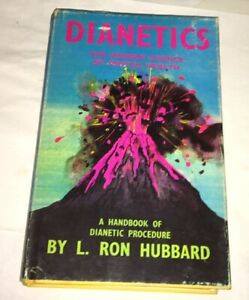
NOTE: Winter wrote the introduction to the first edition of the DIANETICS book. A year later, he critiqued only minor assumptions and outrageous claims of Hubbard in a book whose cover is reproduced above. After about 70 years, we are now in a position to navigate through the hype of Hubbard, and really strengthen the actual discovery of Dianetics—that there are impressions in the mind generated by traumas that underlie consciousness and influence human thinking, health and behavior.

.

Comments on
Introduction

KEY WORDS: Unconsciousness, Engrams

This introduction by physician J. A. Winter states, “In the creation of any New Idea, there is one step which is highly important. It is so obvious as to be frequently overlooked. This step, the sine qua non of any idea, consists in examining the basic assumptions of the subject and determining whether or not they need to be revised. The creator of a New Idea asks, ‘What would happen if I assume that this belief which everyone has had for centuries isn’t necessarily so?’”

The above statement defines Subject Clearing too. What makes Dianetics so revolutionary, and at the same time evolutionary, is that it examines the basic assumptions underlying the subject of life and the functioning of the mind. Dianetics exposes some of these assumptions.

One of the assumptions has been that the mind cannot record what is happening in the environment when the person is unconscious.

In Dianetics therapy, impressions  from the periods of unconsciousness were found to exist in the mind. This led to the speculation of impressions from existence prior to birth, such as, in the womb, or in the DNA. Such past impressions have been known as samskara in the ancient Vedic philosophy. It is interesting to note that, in Buddhism, the mind is considered to be an organ of perception. We, therefore, have six organs of perception—touch, sight, hearing, smell, taste and the mental matrix.

The actual discovery of Dianetics is that the mind is capable of recording events, such as, severe injury, delirium, or surgical anesthesia, while the person appears to be unconscious. Such recordings normally stay below the level of consciousness, but can be retrieved back into consciousness with some effort.

Such recordings, called ENGRAMS, are susceptible to reactivation during future periods of mental anguish. The engram, hidden beneath unexplored layers of “unconsciousness,” possesses a power of command not unlike that of a post-hypnotic suggestion, in a far more insidious and tragic effect. This fact has been found to be a single, direct source of aberrated behavior in Man. 

Winter states, “We should feel free to examine the basic assumptions of any body of knowledge we wish, without fear of committing lese majeste. If any system of thought is going to wither in the light of investigation, it does not deserve the title of Authority.”

Soon after a very successful publication of Dianetics in May 1950, Hubbard, the originator of Dianetics, started to act as an Authority. Dr. Winter, who served as the medical director of the Hubbard’s Dianetics Research Foundation, resigned in October 1950, stating “there was a difference between the ideals inherent within the dianetics hypothesis and the actions of the Foundation.” He published A Doctor’s Report on Dianetics in 1951 (see the image above), that was critical of Hubbard’s Authority. Some detail’s of Winter’s book may be found at Early Scientology / Dianetics – 1950.

It is important to look beyond the Authority of Hubbard at the actual scientific facts that support or deny the claims made by Hubbard with respect to Dianetics.

.

DIANETICS: Synopsis

Reference: Hubbard 1950: Dianetics TMSMH

These are some comments based on the Synopsis of Dianetics from the book, DIANETICS: THE MODERN SCIENCE OF MENTAL HEALTH.

.

Comments on
Synopsis

KEY WORDS: Dianetics, Individuality, Survival

Dianetics was more or less theoretical at the time this book was published, and lots of kinks remained to be smoothed out of its procedure. But it was a great step forward.

Dianetics was designed to handle the psychosomatic causes of illnesses. Shocks and pains were the starting points for looking for the cause that contributed to all illnesses and aberrations. This was identified as engram (cellular impression) because of past trauma. Resolution of illnesses occurred when these engrams were located and desensitized through repeated recounting.

Finding the engram took a lot of clever guessing and questioning on the part of the auditor, since the preclear (the patient) was under reverie and passively obeying auditor’s commands. This yielded at least one engram per case. The running of the engram was usually quite dramatic and affected the case positively.

Locating and resolving the engrams do yield some remarkable results.

However, the rest of the case was not that easy to resolve. Other anomalies that made up the majority of the case were mostly out of reach of Dianetics. Thus, Dianetics results have been quite dramatic but limited in terms of resolving the whole case of a person.

Dianetics’ assertion, “The problems of thought and mental function can be resolved within the bounds of the finite universe,” is quite logical. This approach was taken by Buddha 2600 years ago. It freed Buddhism from mysticism and metaphysics.

Hubbard’s states, “THE DYNAMIC PRINCIPLE OF EXISTENCE IS: SURVIVE!” An individual is surviving along four “dynamics” as follows:

Hubbard’s principle, however, fixes his whole philosophy on survival such that evolution is ignored. The truth is that the individual and the rest of the universe is surviving with the goal to EVOLVE.

The stated goal of Dianetics therapy is to clear the individual of all his mental and physical aberrations. This means freeing the person from all fixations so he can operate freely. But this includes freeing the individual from fixation on his survival. Many individuals have been fixated on personal survival so much that they have been dreaming of immortality in terms of their souls living forever. But, the truth is:

No specific individuality survives permanently. All individualities go through life cycles, so that the consciousness of the universe evolves toward Knowingness.

The current situation in all civilized societies around the world is the focus of individuals on personal survival. Such individuals are unable to evolve beyond living on the first dynamic. Evolution requires willingness to live as well as to die. An individual fixated on living will crave for immortality of his individuality. He will resist death at all costs. He cannot sacrifice himself willingly when circumstances ask for it. 

This is an aspect of the mental impression or engram. When this is shared by all humanity it becomes a “fourth dynamic engram.” This particular fourth dynamic engram is FIXATION ON FIRST DYNAMIC SURVIVAL.

Dianetics, which focuses on the individual, is not capable of handling this fourth dynamic engram of fixation on survival. 

There is no individual decision-making beyond the “body-mind system.” The individual soul is still part of the body-mind system. The “spirit” energizes the body-mind system, just as electricity energizes a machine. There is no individuality in the realm of spirit. Yet, Dianetics seems to postulate “spirit” to have individuality, which is spelled out later in Scientology as “Thetan.” Buddhism has no such concept of a permanent soul, thetan or atman.

But there is consciousness that goes beyond individuality. The true “I” represents a certain level of consciousness.

There are a lot of good ideas in Dianetics, and there is no intention here to minimize the effectiveness of Dianetics in making the sick well. But the handling the whole case of a person requires the handling of the fourth dynamic engram. Dianetics, and its extension, Scientology, is not designed to handle that. Buddhism, on the other hand, is designed to handle the fourth dynamic engram and it can use the technology developed in Dianetics.

Dianetic engrams are just a few low hanging fruits that do bring significant relief on the first dynamic of a person. But the Dianetic therapy does not bring about the evolution of the individual in expanding his viewpoint, or “I,” to other dynamics.

It may be possible to greatly enhance the value of Dianetics by aligning its techniques with the postulates of Buddhism.

THE BHAGAVAD GITA: Chapter 13

Reference: Course on The Bhagavad Gita
English Translation By Shri Purohit Swami

.

Chapter 13

अर्जुनउवाच
प्रकृतिंपुरुषंचैवक्षेत्रंक्षेत्रज्ञमेवच।
एतद्वेदितुमिच्छामिज्ञानंज्ञेयंचकेशव।।13.1।।

13.1 Arjuna asked: My Lord! Who is God and what is Nature; what is Matter and what is the Self; what is that they call Wisdom, and what is it that is worth knowing? I wish to have this explained.

श्रीभगवानुवाच
इदंशरीरंकौन्तेयक्षेत्रमित्यभिधीयते।
एतद्योवेत्तितंप्राहुःक्षेत्रज्ञइतितद्विदः।।13.2।।

13.2 Lord Shri Krishna replied: O Arjuna! The body of man is the playground of the Self; and That which knows the activities of Matter, sages call the Self.

क्षेत्रज्ञंचापिमांविद्धिसर्वक्षेत्रेषुभारत।
क्षेत्रक्षेत्रज्ञयोर्ज्ञानंयत्तज्ज्ञानंमतंमम।।13.3।।

13.3 I am the Omniscient self that abides in the playground of Matter; knowledge of Matter and of the all-knowing Self is wisdom.

The discourse now begins on the difference between Nature and what underlies that nature. The nature includes this body-mind system and the impulse that energizes it. Standing apart from Nature is the Static viewpoint. Nature is everywhere manifested in all different forms, but the Static viewpoint stands apart as One.

तत्क्षेत्रंयच्चयादृक्चयद्विकारियतश्चयत्।
सचयोयत्प्रभावश्चतत्समासेनमेश्रृणु।।13.4।।

13.4 What is called Matter, of what it is composed, whence it came, and why it changes, what the Self is, and what Its power – this I will now briefly set forth.

ऋषिभिर्बहुधागीतंछन्दोभिर्विविधैःपृथक्।
ब्रह्मसूत्रपदैश्चैवहेतुमद्भिर्विनिश्िचतैः।।13.5।।

13.5 Seers have sung of It in various ways, in many hymns and sacred Vedic songs, weighty in thought and convincing in argument.

महाभूतान्यहङ्कारोबुद्धिरव्यक्तमेवच।
इन्द्रियाणिदशैकंचपञ्चचेन्द्रियगोचराः।।13.6।।

13.6 The five great fundamentals (earth, fire, air, water and ether), personality, intellect, the mysterious life force, the ten organs of perception and action, the mind and the five domains of sensation;

Here we have the Nature being expressed from the Static viewpoint. The substance of the universe is energy, which condenses into matter. From matter springs life and life develops an intellect that ponders over its own nature. Manifested as mind it senses the external world through the perceptions of light, sound, touch, taste and smell.

इच्छाद्वेषःसुखंदुःखंसङ्घातश्चेतनाधृतिः।
एतत्क्षेत्रंसमासेनसविकारमुदाहृतम्।।13.7।।

13.7 Desire, aversion, pleasure, pain, sympathy, vitality and the persistent clinging to life, these are in brief the constituents of changing Matter.

अमानित्वमदम्भित्वमहिंसाक्षान्तिरार्जवम्।
आचार्योपासनंशौचंस्थैर्यमात्मविनिग्रहः।।13.8।।

13.8 Humility, sincerity, harmlessness, forgiveness, rectitude, service of the Master, purity, steadfastness, self-control;

इन्द्रियार्थेषुवैराग्यमनहङ्कारएवच।
जन्ममृत्युजराव्याधिदुःखदोषानुदर्शनम्।।13.9।।

13.9 Renunciation of the delights of sense, absence of pride, right understanding of the painful problem of birth and death, of age and sickness;

असक्ितरनभिष्वङ्गःपुत्रदारगृहादिषु।
नित्यंचसमचित्तत्वमिष्टानिष्टोपपत्तिषु।।13.10।।

13.10 Indifference, non-attachment to sex, progeny or home, equanimity in good fortune and in bad;

मयिचानन्ययोगेनभक्ितरव्यभिचारिणी।
विविक्तदेशसेवित्वमरतिर्जनसंसदि।।13.11।।

13.11 Unswerving devotion to Me, by concentration on Me and Me alone, a love for solitude, indifference to social life;

अध्यात्मज्ञाननित्यत्वंतत्त्वज्ञानार्थदर्शनम्।
एतज्ज्ञानमितिप्रोक्तमज्ञानंयदतोन्यथा।।13.12।।

13.12 Constant yearning for the knowledge of Self, and pondering over the lessons of the great Truth – this is Wisdom, all else ignorance.

These verses differentiate wisdom, which leads to freedom, from ignorance that binds one. Wisdom lies in the constant yearning for the knowledge of Self and pondering over the lessons of great Truth. Ignorance lies in clinging to life and to the changing constituents of matter.

ज्ञेयंयत्तत्प्रवक्ष्यामियज्ज्ञात्वाऽमृतमश्नुते।
अनादिमत्परंब्रह्मनसत्तन्नासदुच्यते।।13.13।।

13.13 I will speak to thee now of that great Truth which man ought to know, since by its means he will win immortal bliss – that which is without beginning, the Eternal Spirit which dwells in Me, neither with form, nor yet without it.

सर्वतःपाणिपादंतत्सर्वतोऽक्षिशिरोमुखम्।
सर्वतःश्रुतिमल्लोकेसर्वमावृत्यतिष्ठति।।13.14।।

13.14 Everywhere are Its hands and Its feet; everywhere It has eyes that see, heads that think and mouths that speak; everywhere It listens; It dwells in all the worlds; It envelops them all.

सर्वेन्द्रियगुणाभासंसर्वेन्द्रियविवर्जितम्।
असक्तंसर्वभृच्चैवनिर्गुणंगुणभोक्तृच।।13.15।।

13.15 Beyond the senses, It yet shines through every sense perception. Bound to nothing, It yet sustains everything. Unaffected by the Qualities, It still enjoys them all.

The Static viewpoint stands apart from energy, yet energy is there because of it. The Static viewpoint has no form, yet it appears to have the form of energy that it views. Since energy is everywhere, so also is this viewpoint. The sense perceptions are made of energy, and so the Static viewpoint also dwells in them. The Static viewpoint has no Qualities, yet it enjoys all the qualities of energy forms.

बहिरन्तश्चभूतानामचरंचरमेवच।
सूक्ष्मत्वात्तदविज्ञेयंदूरस्थंचान्तिकेचतत्।।13.16।।

13.16 It is within all beings, yet outside; motionless yet moving; too subtle to be perceived; far away yet always near.

अविभक्तंचभूतेषुविभक्तमिवचस्थितम्।
भूतभर्तृचतज्ज्ञेयंग्रसिष्णुप्रभविष्णुच।।13.17।।

13.17 In all beings undivided, yet living in division, It is the upholder of all, Creator and Destroyer alike;

ज्योतिषामपितज्ज्योतिस्तमसःपरमुच्यते।
ज्ञानंज्ञेयंज्ञानगम्यंहृदिसर्वस्यविष्ठितम्।।13.18।।

13.18 It is the Light of lights, beyond the reach of darkness; the Wisdom, the only thing that is worth knowing or that wisdom can teach; the Presence in the hearts of all.

As covered in these verses, the Static viewpoint spans over the opposites. That means it covers the whole dimension from one end to the other of all attributes. In short, it is relative to what is viewed, yet it views it completely without distortion. This is the viewpoint worth attaining.

इतिक्षेत्रंतथाज्ञानंज्ञेयंचोक्तंसमासतः।
मद्भक्तएतद्विज्ञायमद्भावायोपपद्यते।।13.19।।

13.19 Thus I have told thee in brief what Matter is, and the Self worth realizing and what is Wisdom. He who is devoted to Me knows; and assuredly he will enter into Me.

प्रकृतिंपुरुषंचैवविद्ध्यनादीउभावपि।
विकारांश्चगुणांश्चैवविद्धिप्रकृतिसंभवान्।।13.20।।

13.20 Know thou further that Nature and God have no beginning; and that differences of character and quality have their origin in Nature only.

कार्यकारणकर्तृत्वेहेतुःप्रकृतिरुच्यते।
पुरुषःसुखदुःखानांभोक्तृत्वेहेतुरुच्यते।।13.21।।

13.21 Nature is the Law which generates cause and effect; God is the source of the enjoyment of all pleasure and pain.

Those who are devoted assuredly shall attain the Static viewpoint and have the wisdom of Nature and Self. Neither energy (Nature) nor its energizing impulse (Self) has any beginning. All differences of character and qualities have their origin in Nature only. Pleasure and pain is a reaction that should make one look more closely the cause of this effect, and understand what is really there.

पुरुषःप्रकृतिस्थोहिभुङ्क्तेप्रकृतिजान्गुणान्।
कारणंगुणसङ्गोऽस्यसदसद्योनिजन्मसु।।13.22।।

13.22 God dwelling in the heart of Nature experiences the Qualities which nature brings forth; and His affinity towards the Qualities is the reason for His living in a good or evil body.

उपद्रष्टाऽनुमन्ताचभर्ताभोक्तामहेश्वरः।
परमात्मेतिचाप्युक्तोदेहेऽस्मिन्पुरुषःपरः।।13.23।।

13.23 Thus in the body of man dwells the Supreme God; He who sees and permits, upholds and enjoys, the Highest God and the Highest Self.

यएवंवेत्तिपुरुषंप्रकृतिंचगुणैःसह।
सर्वथावर्तमानोऽपिनसभूयोऽभिजायते।।13.24।।

13.24 He who understands God and Nature along with her qualities, whatever be his condition in life, he comes not again to earth.

There is gross to subtlest of impulses that dwell in the body. The grosser impulses are born out of the evolution of the energy as that body. The subtlest of the impulses, on which the grosser impulses depend, can understand this evolution of qualities in Nature and be unattached completely.

ध्यानेनात्मनिपश्यन्तिकेचिदात्मानमात्मना।
अन्येसांख्येनयोगेनकर्मयोगेनचापरे।।13.25।।

13.25 Some realize the Supreme by meditating, by its aid, on the Self within, others by pure reason, others by right action.

अन्येत्वेवमजानन्तःश्रुत्वाऽन्येभ्यउपासते।
तेऽपिचातितरन्त्येवमृत्युंश्रुतिपरायणाः।।13.26।।

13.26 Others again, having no direct knowledge but only hearing from others, nevertheless worship, and they, too, if true to the teachings, cross the sea of death.

यावत्सञ्जायतेकिञ्चित्सत्त्वंस्थावरजङ्गमम्।
क्षेत्रक्षेत्रज्ञसंयोगात्तद्विद्धिभरतर्षभ।।13.27।।

13.27 Wherever life is seen in things movable or immovable, it is the joint product of Matter and Spirit.

The freedom of the static viewpoint (from which all motion can be viewed) is arrived at through meditation, pure reason, right action, or worship based on right teachings. Motion arises from the energizing of matter by spirit.

समंसर्वेषुभूतेषुतिष्ठन्तंपरमेश्वरम्।
विनश्यत्स्वविनश्यन्तंयःपश्यतिसपश्यति।।13.28।।

13.28 He who can see the Supreme Lord in all beings, the Imperishable amidst the perishable, it is he who really sees.

समंपश्यन्हिसर्वत्रसमवस्थितमीश्वरम्।
नहिनस्त्यात्मनाऽऽत्मानंततोयातिपरांगतिम्।।13.29।।

13.29 Beholding the Lord in all things equally, his actions do not mar his spiritual life but lead him to the height of Bliss.

प्रकृत्यैवचकर्माणिक्रियमाणानिसर्वशः।
यःपश्यतितथाऽऽत्मानमकर्तारंसपश्यति।।13.30।।

13.30 He who understands that it is only the Law of Nature that brings action to fruition, and that the Self never acts, alone knows the Truth.

The Imperishable energizes everything equally. Everything acts according to its own nature. When you can make this differentiation you have achieved the static viewpoint.

यदाभूतपृथग्भावमेकस्थमनुपश्यति।
ततएवचविस्तारंब्रह्मसम्पद्यतेतदा।।13.31।।

13.31 He who sees the diverse forms of life all rooted in One, and growing forth from Him, he shall indeed find the Absolute.

अनादित्वान्निर्गुणत्वात्परमात्मायमव्ययः।
शरीरस्थोऽपिकौन्तेयनकरोतिनलिप्यते।।13.32।।

13.32 The Supreme Spirit, O Prince, is without beginning, without Qualities and Imperishable, and though it be within the body, yet It does not act, nor is It affected by action.

यथासर्वगतंसौक्ष्म्यादाकाशंनोपलिप्यते।
सर्वत्रावस्थितोदेहेतथाऽऽत्मानोपलिप्यते।।13.33।।

13.33 As space, though present everywhere, remains by reason of its subtlety unaffected, so the Self, though present in all forms, retains its purity unalloyed.

All diverse forms of life have evolved out of the same energy with the same internal impulse. They all are still rooted in that energy that has no beginning, no qualities and is eternal. That subtle energy is within the body and everywhere else. It neither participates nor is affected by the activities of the life organisms.

यथाप्रकाशयत्येकःकृत्स्नंलोकमिमंरविः।
क्षेत्रंक्षेत्रीतथाकृत्स्नंप्रकाशयतिभारत।।13.34।।

13.34 As the one Sun illuminates the whole earth, so the Lord illumines the whole universe.

क्षेत्रक्षेत्रज्ञयोरेवमन्तरंज्ञानचक्षुषा।
भूतप्रकृतिमोक्षंचयेविदुर्यान्तितेपरम्।।13.35।।

13.35 Those who with the eyes of wisdom thus see the difference between Matter and Spirit, and know how to liberate Life from the Law of Nature, they attain the Supreme.”

The same spirit energizes all matter. Knowing the oneness that underlies all the laws of Nature liberates you from all confusion.

.

Final Comment

Chapter 13 looks more closely at Nature and Self. Nature is energy that is everywhere manifested in all different forms. Self. however, is the Static viewpoint that stands apart. Energy condenses into matter. From matter springs life. Life develops an intellect. Intellect ponders over its own nature. Wisdom lies in the constant yearning for the knowledge of Self and pondering over the lessons of great Truth. Ignorance lies in clinging to life and to the ever changing constituents of matter.

The Static viewpoint stands apart from energy, yet energy is there because of it. The Static viewpoint has no form, yet it appears to have the form of energy that it views. Since energy is everywhere, so also is this viewpoint. The sense perceptions are made of energy, and so the Static viewpoint also dwells in them. The Static viewpoint has no Qualities, yet it enjoys all the qualities of energy forms.

Thus, the Static viewpoint spans over the dimensions of all attributes from one end to the other. It is relative to what it views. This is the viewpoint worth attaining. It is arrived at through meditation, pure reason, right action, or worship based on right teachings.

Though everything acts according to its own nature, everything is energized equally by imperishable spirit. When you can make this differentiation you have achieved the static viewpoint. Knowing the oneness that underlies all the laws of Nature liberates you from all confusion.

.