JUDAISM: A Look at Judaism

Reference: Judaism

Note: The original text is provided below.
Previous / Next

.

Summary

.

Comments

.

Original Text

It has been estimated that one-third of our Western civilization bears the marks of its Jewish ancestry. We feel its force in the names we give to our children: Adam Smith, Noah Webster, Abraham Lincoln, Isaac Newton, Rebecca West, Sarah Teasdale, Grandma Moses. Michelangelo felt it when he chiseled his “David” and painted the Sistine Ceiling; Dante when he wrote the Divine Comedy and Milton, Paradise Lost. The United States carries the indelible stamp of its Jewish heritage in its collective life: the phrase “by their Creator” in the Declaration of Independence; the words “Proclaim Liberty throughout the land” on the Liberty Bell. The real impact of the ancient Jews, however, lies in the extent to which Western civilization took over their angle of vision on the deepest questions life poses. 

When, mindful of the impact the Jewish perspective has had on Western culture, we go back to the land, the people, and the history that made this impact, we are in for a shock. We might expect these to be as impressive as their influence, but they are not. In time span the Hebrews were latecomers on the stage of history. By 3000 B.C.E. (Before the Common Era, as Jews prefer to render the period B.C.), Egypt already had her pyramids, and Sumer and Akkad were world empires. By 1400 Phoenicia was colonizing. And where were the Jews in the midst of these mighty eddies? They were overlooked. A tiny band of nomads milling around the upper regions of the Arabian desert, they were too inconspicuous for the great powers even to notice.

When they finally settled down, the land they chose was equally unimpressive. One hundred and fifty miles in length from Dan to Beersheba, about fifty miles across at Jerusalem but much less at most places, Canaan was a postage stamp of a country, about one-eighth the size of Illinois. Nor does the terrain make up for what the region lacks in size. Visitors to Greece who climb Mount Olympus find it easy to imagine that the gods chose to live there. Canaan, by contrast, was a “mild and monotonous land. Did the Prophets flash their lightning of conviction from these quiet hills where everything is open to the sky?” Edmund Wilson asked on a visit to the Holy Land. “Were the savage wars of Scripture fought here? How very unlikely it seems that [the Bible emerged] from the history of these calm little hills, dotted with stones and flocks, under pale and transparent skies.” Even Jewish history, when viewed from without, amounts to little. It is certainly not dull history, but by external standards it is very much like the histories of countless other little peoples, the people of the Balkans, say, or possibly the Native tribes of North America. Small peoples are always getting pushed around. They get shoved out of their lands and try desperately to scramble back into them. Compared with the histories of Assyria, Babylon, Egypt, and Syria, Jewish history is strictly minor league.

If the key to the achievement of the Jews lies neither in their antiquity nor in the proportions of their land and history, where does it lie? This is one of the greatest puzzles of history, and a number of answers have been proposed. The lead that we shall follow is this: What lifted the Jews from obscurity to permanent religious greatness was their passion for meaning.

.

HINDUISM: A Look at Hinduism

Reference: Hinduism

Note: The original Text is provided below.
Previous / Next

.

Summary

मृत्युःसर्वहरश्चाहमुद्भवश्चभविष्यताम्।
कीर्तिःश्रीर्वाक्चनारीणांस्मृतिर्मेधाधृतिःक्षमा।।10.34।।

10.34 I am all-devouring Death; I am the Origin of all that shall happen; I am Fame, Fortune, Speech, Memory, Intellect, Constancy and Forgiveness.

.

Comments

.

Original Text

“If I were asked under what sky the human mind… has most deeply pondered over the greatest problems of life, and has found solutions to some of them which well deserve the attention even of those who have studied Plato and Kant—I should point to India. And if I were to ask myself from what literature we who have been nurtured almost exclusively on the thoughts of Greeks and Romans, and of one Semitic race, the Jewish, may draw the corrective which is most wanted in order to make our inner life more perfect, more comprehensive, more universal, in fact more truly human a life…again I should point to India.” ~ Max Müller

On July 16, 1945, in the deep privacy of a New Mexico desert, an event occurred that may prove to be the most important single happening of the twentieth century. A chain reaction of scientific discoveries that began at the University of Chicago and centered at “Site Y” at Los Alamos was culminated. The first atomic bomb was, as we say, a success. 

No one had been more instrumental in this achievement than Robert Oppenheimer, director of the Los Alamos project. An observer who was watching him closely that morning has given us the following account: “He grew tenser as the last seconds ticked off. He scarcely breathed. He held on to a post to steady himself…. When the announcer shouted ‘Now!’ and there came this tremendous burst of light, followed…by the deep-growling roar of the explosion, his face relaxed in an expression of tremendous relief.” This much from the outside. But what flashed through Oppenheimer’s own mind during those moments, he recalled later, were two lines from the Bhagavad-Gita in which the speaker is God: 

I am become death, the shatterer of worlds; 
Waiting that hour that ripens to their doom. 

This incident provides a profound symbol for this chapter’s opening, and Mahatma Gandhi’s life can join it in setting the stage for the faith we are about to explore. In an age in which violence and peace faced each other more fatefully than ever before, Gandhi’s name became, in the middle of our century, the counterpoise to those of Stalin and Hitler. The achievement for which the world credited this man (who weighed less than a hundred pounds and whose worldly possessions when he died were worth less than two dollars) was the British withdrawal from India in peace, but what is less known is that among his own people he lowered a barrier more formidable than that of race in America. He renamed India’s untouchables harijan, “God’s people,” and raised them to human stature. And in doing so he provided the nonviolent strategy as well as the inspiration for Martin Luther King, Jr.’s comparable civil rights movement in the United States. 

Gandhi’s own inspiration and strategy carries us directly into this chapter’s subject, for he wrote in his Autobiography: “Such power as I possess for working in the political field has derived from my experiments in the spiritual field.” In that spiritual field, he went on to say, “truth is the sovereign principle, and the Bhagavad-Gita is the book par excellence for the knowledge of Truth.”

.

The Nature of Time

Reference: The Universe and Physical Elements

When we look at the 3D figure of a person, we are looking at space. But when we watch that 3D figure through birth, childhood, teenage years, youth, middle-age, old-age and death, then we are looking at space-time.

We see every human being go through this same cycle. Similarly, we see groups, societies, nations, civilizations, species, objects, ideas, plans, actions, etc., going through the same cycle of BEGIN-CONTINUE-END. 

We can say that time is related to cycles of things in this universe. There are many cycles at lower levels, which are part of fewer larger cycles at a higher level, which are in turn part of still larger and fewer cycles at still higher levels. The cycles grow longer in duration but lesser in numbers as we move up to higher levels. The ultimate cycle is the cycle of the universe. It will include all cycles at all levels.

The cyclical nature of the universe is manifested as time. 

.

Measure of Time

We may define time as follows.

Time is the duration of a cycle.

We measure the duration of these cycles in terms of standard cycles, which, in our case, are determined by the rotation of the earth about its axis, and the revolution of the earth around the sun. 

Time may be subdivided endlessly into smaller units to measure the duration of smaller cycles. Similarly, time may be multiplied endlessly to generate larger units to measure the duration of larger cycles. But time is, essentially, a duration. We keep the measure of time consistent by using the units derived from the same standard cycle of a “day.”

.

Eternity

When an object, such as, a distant star, seem to endure indefinitely at its location, then it is thought to be at rest. Compared to that star, the planets are moving, and compared to the planets, the moons are moving. “Forever” then becomes an unchanging condition in terms of location or otherwise. Compared to it, a changing condition becomes a purveyor of time.

Eternity may be described as “forever” and the state of “absolute rest”. 

.

Change and Motion

A basic change occurs when an object disappears at a location and appears at an adjacent location. Continuous changes in locations are interpreted as the movement of that object. When planets in the sky appear to move, they are simply changing their location compared to unmoving stars that form the background. The stars are relatively more fixed at their locations, or have greater endurance. The movement of the planets provides the sense of time passing.

Passage of time may be described as “change” and by the state of “motion”.

.

Dimensions of Time

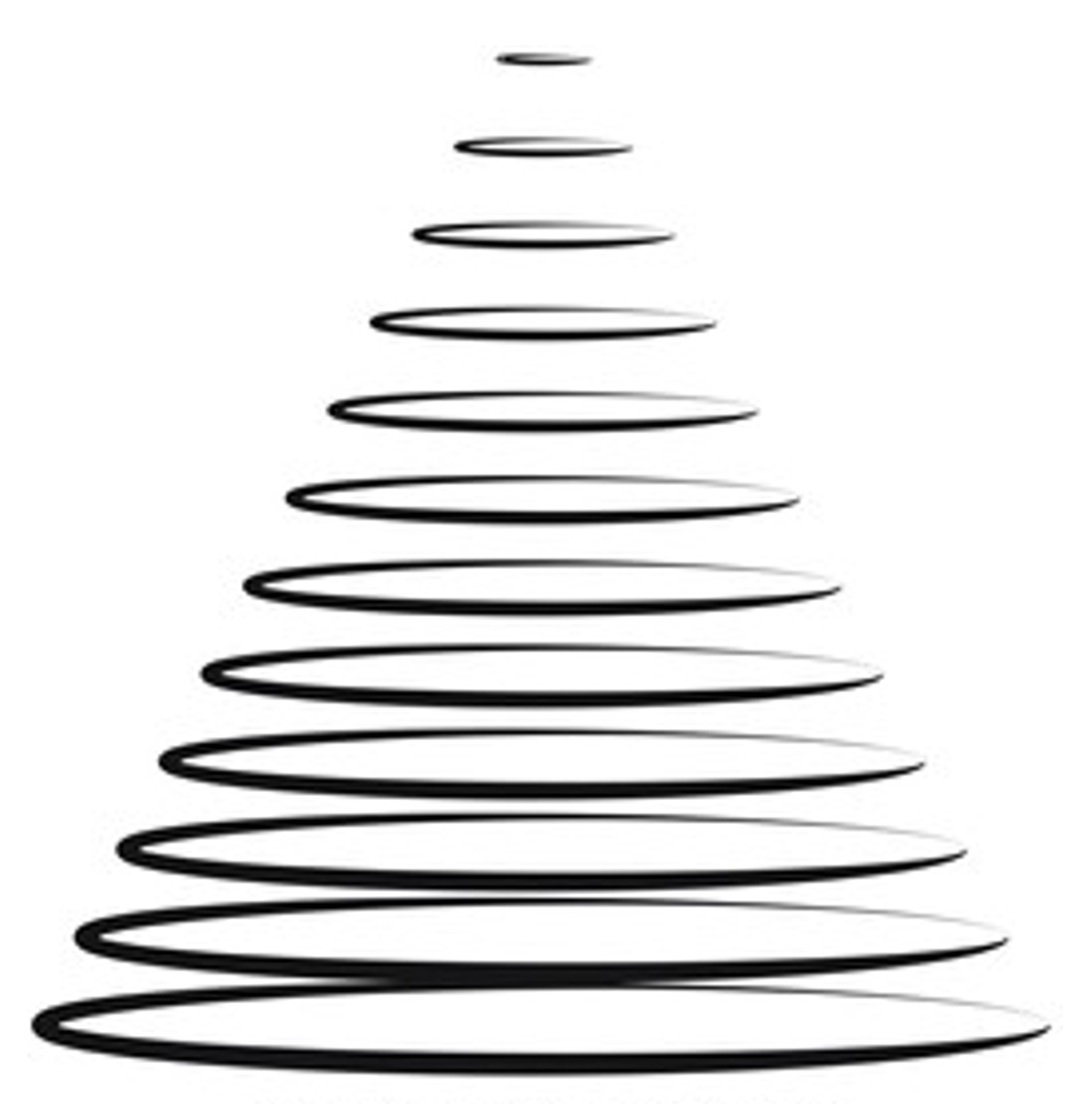
We may visualize the cycles on different planes like the conical arrangement as shown in the figure above. The larger cycles are more fundamental. The cycle of the universe shall appear at the base of this cone. It will be of infinite duration.

The common dimension of time shall appear within each cycle. Each cycle shall belong to an activity or an object. It will describe the history of that thing from the beginning to the end. 

The first dimension of time is the dimension of survival.

But there is another dimension of time along the axis of the cone in the figure above. This dimension cuts across the different planes of the cycles. 

The second dimension of time is the dimension of evolution.

In the first dimension we have changes that repeat more or less mechanically, such as, the common survival activities of day to day life, which can be quite complex. The physical speed and acceleration of objects shall also be included in this dimension.  The character of space and time remains the same within a cycle.

In the second dimension we have evolutionary changes. New characteristics appear, which never existed before. The very character of space and time changes when different planes are crossed. Here we find deeper reasons for things; and inspirations for more complex innovations. Space wise our view starts to become more panoramic. Time wise our view starts to include more of past and future. We start to see the impulse to evolve expressing itself in infinity of ways. The view start to broaden, and the ultimate view may be expressed as The Static Viewpoint.

.

Summary

Survival is the pre-requisite to evolution, which is the goal. One is surviving in order to evolve. Underlying each and every cycle is the impulse to evolve. The universe is evolving in terms of increasing complexity and awareness.

.

The Nature of Space

Reference: The Universe and Physical Elements

An object is made of substance, and it has a form. The dimensions of that substance are energy and matter. The dimensions of that form are space and time.

The dimensions of that space are length, width and height. The dimension of time is change.

.

Space and Lines of Force

The space of a matter particle, therefore, is the volume of that particle. An example of a particle is the point-like nucleus of hydrogen atom. It is called a proton. Its volume is very, very small. This small space contains all the substance of the proton. It has the mass property of matter

Similarly, the space of an energy quantum is the volume of that quantum. An example of a quantum is the blob-like atom of hydrogen (excluding the nucleus). It is called an electron. Its substance may be considered to be “soft expanded mass.” Its space is about 1836 times larger than the space of a proton. 

This space of electron seems to contain as much mass as that of a proton. That means, if the mass of a proton is loosened up 1836 times, it will become as large as an electron. The number 1836 is the mass ratio of proton to electron. Using the above equivalence we can calculate the diameter of the hydrogen atom. This may just be a random coincidence of numbers, but it highlights the insight of Faraday. 

According to Faraday,

Mass is concentrated lines of force in atom. The normal lines of force describe the phenomena of electricity and magnetism. When spread out, these lines of force may describe the propagation of light.

.

Space and Density of Substance

We may, therefore, define space as the extents of substance. The substance can be matter, or energy, or even a cycle within the universe. The substance is most condensed in matter, and most spread out in case of light. Therefore, space is most concentrated in matter, and most spread out in light.

Space defines the extents of substance.

The concentration of lines of force seems to define the mass property of substance. The greater is the “mass density,” the lesser is space. The lesser is mass density, the more expanded is space. Space, therefore, seems to relate inversely to the density of mass. The space that we see around us has the least density of mass. Space is the opposite of matter.

Space is inversely proportional to “mass density” of substance.

We now have a new concept of “mass density” of substance that derives from the concentration of Faraday’s lines of force. It is different from the density of matter that derives from the concentrations of atoms. The character of space itself seems to be determined by “mass density” of substance. Einstein has earlier related the character of space to “speed of the observer.” Though, mathematically demonstrable, the explanation provided by Einstein is not as clear as the explanation of Faraday.

The space is most concentrated in the innermost cycles, and most expanded in the outermost cycles of the universe.

.

Space and Inertia

The nucleus of an atom resides within the volume of the quanta of electrons. There is no “empty space” in the atom, but two different concentration of substance. We may expect an exchange of substance between different concentrations. When the substance leaves the nucleon it expands to the mass density of electron. When the substance moves back to the nucleon, it shrinks to the mass density of nucleon. This gives us a dynamic atom, in which an equilibrium is being maintained between two different concentrations. But something is keeping these two concentrations separate. 

In A Logical Approach to Theoretical Physics, a vortex model of condensing substance is advanced. This model predicts that when the substance condenses its speed slows and the curvature of its path increases. This is what happens in a whirlpool. The curvature of the arms of galaxies is much larger than the curvature of light. 

This confirms that the smaller cycles of more condensed substance lie within larger cycles of less condensed substance.

We are made of very concentrated material substance. Earlier cycles of the universe, therefore, appear as very large background of space to us. We are not moving in a void even even in the outer space between the planets. We are moving through a substance of extremely small mass density.

Matter replaces other matter, such as water or air, when it is placed in it because they all consist of atoms. But when matter is placed in outer space it may not replace the substance of space because there are no atoms. The substance of space may simply exchange with the high concentration of substance in matter. Therefore, matter may experience some resistance when accelerating through space. This may explain the phenomenon of inertia.

Inertia is due to interaction between substances of two very different mass densities.

.

Speed of Light

It appears that the inherent motion of substance is the result of a balance between its inertia and acceleration.  At the “speed of light” the acceleration of light is zero because it is balanced by its inertia. The reason the “speed of light” is not infinite because it has some inertia.

When you push a substance to go at a speed higher than it’s natural speed, it’s mass density is most likely reduces proportionally.

You cannot push a rocket to the speed of light without turning the rocket into light. Since the rocket must remain material, you may accelerate it only to the limit up to which matter still maintains  its integrity. One may say that there is a speed at which mass of the rocket appears to become infinite because it simply cannot be accelerated; but that speed is a small fraction of the speed of light.

This differs from the conclusions arrived at from Einstein’s postulates.

NOTE: The speed referred to above is different from the relative speed that we measure usually. This speed is related to mass density of matter. It is assumed that there is a range of mass density within which matter maintains the integrity of its form and properties.

.

Subject: Philosophy

Reference: Course on Subject Clearing
Reference: The Story of Philosophy

The Philosophers

  1. Plato
  2. Aristotle and Greek Science
  3. Francis Bacon
  4. Spinoza
  5. Voltaire and the French Enlightenment
  6. Immanuel Kant and German idealism
  7. Schopenhauer
  8. Herbert Spencer
  9. Friedrich Nietzsche
  10. Henri Bergson
  11. Benedetto Croce
  12. Bertrand Russell
  13. George Santayana
  14. William James
  15. John Dewey

Additions

  1. Comments on Descartes’ Works
  2. A Look at Kant’s Philosophy
  3. The Philosophy of Karl Marx
  4. Tertium Organum

.

Writings to be Reviewed

Philosophy began with the problem of the organization of a just social order.

  1. A Bird’s Eye View
  2. Philosophy Definitions #1
  3. Philosophy Definitions #2
  4. PHILOSOPHY PROJECT
  5. Looking at the Philosophy Project
  6. Interface between Physics and Metaphysics
  7. Reality & Mindfulness
  1. BEGINNING
  2. SOMETHING AND NOTHING
  3. KNOWABLE AND UNKNOWABLE
  4. THE NATURE OF THOUGHT
  5. THE NATURE OF EXISTENCE
  6. Intuition or Gibberish?
  7. TIME
  8. Granting of Beingness & Space
  1. THE NATURE OF CONSIDERATION
  2. Considerations and Free Will
  3. THE NATURE OF TRUTH
  4. AN ANALYSIS OF CAUSE
  5. THE NATURE OF KNOWLEDGE
  1. Some Practical Philosophy

.