Reference: Hinduism
Note: The original Text is provided below.
Previous / Next
Sikhism reaches the most reasonable theological compromise between the Hindu and Muslim faiths. It rejects caste distinctions, images as aids to worship, the notion of avatars, and the sanctity of the Vedas.
.
Summary
Hindus are inclined to regard Sikhs as somewhat wayward members of their own extended family, but Sikhs reject this reading. They see their faith as having issued from an original divine revelation that inaugurated a new religion.
The revelation was imparted to Guru Nanak around the year 1500 that God is neither Hindu nor Muslim; one simply follows God’s path. Nanak was born into the Hindu kshatriya caste—that was under Muslim domination in Punjab, northwest India. Nanak valued his Hindu heritage while also recognizing the nobility of Islam.
Sikhism reaches the most reasonable theological compromise between the Hindu and Muslim faiths. In keeping with Hinduism, Sikhisms affirms the ultimacy of a supreme and formless God who is beyond human conceiving. In keeping with the Islamic revelation, however, it rejects the notion of avatars (divine incarnations), caste distinctions, images as aids to worship, and the sanctity of the Vedas.
Only in a secondary sense was Guru Nanak a guru. The only True Guru is God. Others qualify as gurus in proportion as God speaks through them. The Sacred Text known as the Guru Granth Sahib, or Collection of Sacred Wisdom, has ever since been revered by the Sikhs as their living Guru; it lives in the sense that the will and words of God are alive within it.
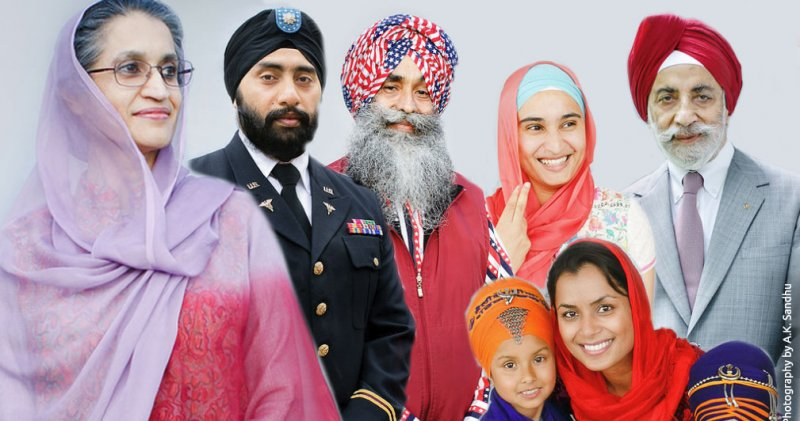
Sikhism has been under heavy assault during much of its history. Those who are prepared to commit their lives unreservedly to the faith belong to the institution of the Khalsa, or Pure Order. Open to men and women alike, it requires that those who enter it abstain from alcohol, meat, and tobacco. They wear “the five Ks,” which are uncut hair, a comb, a sword or dagger, a steel bracelet, and undershorts.
The name Singh (literally lion, and by extension stalwart and lionhearted) is extended to all Sikh men, and to women the name Kaur, or princess, extended. These matters concern religious forms. Centrally, Sikhs seek salvation through union with God by realizing, through love, the Person of God, who dwells in the depths of their own being. Union with God is the ultimate goal. World renunciation does not figure in this faith. The Sikhs have no tradition of renunciation, asceticism, celibacy, or mendicancy. They are householders who support their families with their earnings and donate one-tenth of their income to charity.
.
Comments
Sikhism was a revelation suitable for its time. It helped Hinduism survive under Muslim domination.
.
Original Text
Hindus are inclined to regard Sikhs (literally disciples) as somewhat wayward members of their own extended family, but Sikhs reject this reading. They see their faith as having issued from an original divine revelation that inaugurated a new religion.
The revelation was imparted to Guru Nanak, guru being popularly explained as a dispeller of ignorance or darkness (gu) and bringer of enlightenment (ru). Nanak, pious and reflective from his birth in 1469, around the year 1500 mysteriously disappeared while bathing in a river. On reappearing three days later he said: “Since there is neither Hindu nor Muslim, whose path shall I follow? I will follow God’s path. God is neither Hindu nor Muslim, and the path I follow is God’s.” His authority for those assertions, he went on to explain, derived from the fact that in his three-day absence he had been taken to God’s court, where he was given a cup of nectar (amrit, from which Amritsar, Sikhism’s holy city, is named) and was told:
This is the cup of the adoration of God’s name. Drink it. I am with you. I bless you and raise you up. Whoever remembers you will enjoy my favor. Go, rejoice in my name and teach others to do so also. Let this be your calling.
That Nanak began by distinguishing his path from both Hinduism and Islam underscores the fact that Sikhism arose in a Hindu culture—Nanak was born into the kshatriya caste—that was under Muslim domination. Sikhism’s homeland is the Punjab, “the land of the five rivers” in northwest India, where Muslim invaders were in firm control. Nanak valued his Hindu heritage while also recognizing the nobility of Islam. Here were two religions, each in itself inspired, but which in collision were exciting hatred and slaughter.
If the two sides had agreed to negotiate their differences, they could hardly have reached a more reasonable theological compromise than the tenets of Sikhism afford. In keeping with Hinduism’s sanatana dharma (Eternal Truth), the revelation that was imparted to Nanak affirms the ultimacy of a supreme and formless God who is beyond human conceiving. In keeping with the Islamic revelation, however, it rejects the notion of avatars (divine incarnations), caste distinctions, images as aids to worship, and the sanctity of the Vedas. Having departed from Hinduism in these respects, however, the Sikh revelation leans back toward it in endorsing, as against Islam, the doctrine of reincarnation.
This relatively even division between Hindu and Muslim doctrines has led outsiders to suspect that in his deep, intuitive mind, if not consciously, Nanak worked out a faith he hoped might resolve the conflict religion had produced in his region. As for the Sikhs themselves, they acknowledge the conciliatory nature of their faith, but ascribe its origins to God. Only in a secondary sense was Guru Nanak a guru. The only True Guru is God. Others qualify as gurus in proportion as God speaks through them.
The official Sikh gurus are ten in number and, beginning with Guru Nanak, the Sikh community took shape through their ministrations. The tenth in this lineage, Guru Gobind Singh, announced that he was the last of this line; following his death the Sacred Text that had taken shape would replace human gurus as the head of the Sikh community. Known as the Guru Granth Sahib, or Collection of Sacred Wisdom, this scripture has ever since been revered by the Sikhs as their living Guru; it lives in the sense that the will and words of God are alive within it. For the most part it consists of poems and hymns that came to six of the Gurus as they meditated on God in the deep stillness of their hearts and emerged to sing joyfully God’s praises.
Sikhism has been under heavy assault during much of its history. At a time when the faith was particularly hard pressed, the Tenth Guru called for those who were prepared to commit their lives unreservedly to the faith to step forward. To the “beloved five” who responded he gave a special initiation, thereby instituting the Khalsa, or Pure Order, which continues to this day. Open to men and women alike who are willing to fulfill its regulations, it requires that those who enter it abstain from alcohol, meat, and tobacco, and that they wear “the five Ks,” so-called because in Punjabi all begin with the letter “k.” The five are uncut hair, a comb, a sword or dagger, a steel bracelet, and undershorts. Originally, all five of these had protective as well as symbolic sides. Together with the comb, uncut hair (typically gathered in a turban) shielded the skull while tying in with the yogic belief that uncut hair conserves vitality and draws it upward; the comb for its part symbolized cleanliness and good order. The steel bracelet provided a small shield, while at the same time “shackling” its wearer to God as a reminder that hands should always be in God’s service. Undershorts, which replaced the Indian dhoti, meant that one was always dressed for action. The dagger, now largely symbolic, was originally needed for self-defense.
At the same time that he instituted the Khalsa, Guru Gobind Singh extended his name Singh (literally lion, and by extension stalwart and lionhearted) to all Sikh men, and to women he gave the name Kaur, or princess. The names remain in force for Sikhs, right down to today.
These matters concern religious forms. Centrally, Sikhs seek salvation through union with God by realizing, through love, the Person of God, who dwells in the depths of their own being. Union with God is the ultimate goal. Apart from God life has no meaning; it is separation from God that causes human suffering. In the words of Nanak, “What terrible separation it is to be separated from God and what blissful union to be united with God!”
World renunciation does not figure in this faith. The Sikhs have no tradition of renunciation, asceticism, celibacy, or mendicancy. They are householders who support their families with their earnings and donate one-tenth of their income to charity.
Today there are some 13 million Sikhs in the world, most of them in India. Their headquarters are in the famed Golden Temple, which is located in Amritsar.
.