Category Archives: Uncategorized

The Mindfulness Guide

Mindfulness Guide

Reference: Mindfulness Approach

.

The role of the mindfulness guide is to help reestablish the ability of a person to think for himself. This is done by resolving all unassimilated nodes in the person’s mental matrix. The mindfulness guide does not assert any control over the other person.

The mindfulness guide acts as follows when guiding another person.

ACT ONE: He must review his commitment to restore the other person’s ability to think for himself.

ACT TWO: He must establish himself simply as a guide in the mind of the other person, and not as some authority.

ACT THREE: His beginning actions are to clean up the anomalies currently absorbing the other person’s attention. He does that by listening to the other person and acknowledging his concerns. He then explains the discipline of mindfulness, and how it can handle the other person’s concerns.

ACT FOUR: His next action is to establish in the other person the understanding of the discipline of mindfulness through the exercises Mindfulness meditation and Discerning the Environment. He then helps the person unwind his mind through the exercise, Accessibility of Memory.

This approach shall help extrovert the person’s attention and help him think more clearly. This is especially vital for heavily introverted cases.

The mindfulness guide then helps the other person become a mindfulness practitioner by practicing subsequent exercises as laid out here.

.

Universe, the Beginning

Reference: The Creation Hymn of Rig Veda

.

Here we have the Ancient Creation Hymn along with a modern scientific rendition.

.

There was neither non-existence nor existence then.
There was neither the realm of space nor the sky which is beyond.
What stirred?
Where?
In whose protection?
Was there water, bottomlessly deep?

Prior to the universe there was no idea of existence or non-existence.

There was no awareness of matter, energy, space or time.

The universe seems to arise from some disturbance 

Of what? We do not know.

There was neither death nor immortality then.
There was no distinguishing sign of night nor of day.
That One breathed, windless, by its own impulse.
Other than that there was nothing beyond.

There was no idea of death or immortality then.

There was neither day nor night.

There was only the slightest awareness

Of motion appearing by itself

Darkness was hidden by darkness in the beginning,
with no distinguishing sign, all this was water.
The life force that was covered with emptiness,
that One arose through the power of heat.

Lack of motion was hidden by lack of awareness

Nothing was distinguishable, everything was the same

The motion that arose was surrounded by no motion

There alone was the power of awareness.

Desire came upon that One in the beginning,
that was the first seed of mind.
Poets seeking in their heart with wisdom
found the bond of existence and non-existence.

It was the desire that was the disturbance

It was the beginning of the mind

There was then the awareness of existence

That also brought the awareness of non-existence.

Their cord was extended across.
Was there below?
Was there above?
There were seed-placers, there were powers.
There was impulse beneath, there was giving forth above.

Scale was formed from physical motion to metaphysical awareness, 

All opposites, such as below and above, had a scale as well.

There was concrete reality, and the abstraction underlying it

There was desire below,  and there was change above.

Who really knows?
Who will here proclaim it?
Whence was it produced?
Whence is this creation?
The gods came afterwards, with the creation of this universe.
Who then knows whence it has arisen?

Before the beginning of awareness

There was non-awareness

Before the beginning of motion

Who would know what was there?

Any knower came afterwards with the creation

Who then knows how disturbance came to be?

Whence this creation has arisen
– perhaps it formed itself, or perhaps it did not –
the One who looks down on it,
in the highest heaven, only He knows
or perhaps He does not know.

The beginning of the universe is there

Perhaps it formed itself, or perhaps it did not

Maybe the broadest viewpoint of it

Could reveal the secret of the beginning

Or, perhaps, it may not.


Summary

  1. We do not know what was there prior to the beginning of the universe. So, we shall call that state BRAHMAN as referred to in the ancient Vedas. This is also the “noumenon” of Kant.

  2. The universe seems to arise from the disturbance of this earlier state of BRAHMAN, or absolute zero. This beginning is characterized by motion and awareness. This is also the “phenomenon” of Kant.

  3. When there is motion there is also awareness. When there is no motion there is no awareness. Thus, motion and awareness present two different aspects of disturbance.

  4. The dimension of disturbance may be represented by a ‘concrete-to-abstract’ scale with concrete motion at one end also appearing as abstract awareness at the other end.

  5. This scale may be formalized as physical motion that is getting increasingly abstracted as metaphysical awareness.

  6. Thus there is a gradient of abstraction from PHYSICAL to METAPHYSICAL just like there is a gradient of temperature from HOT to COLD.


Universe, Inertia & Consistency (old)

Inertia1

Reference: Disturbance Theory

The universe is the superset of everything that exists. There is no awareness beyond the universe. We may only speculate what is beyond the universe. When we become aware of something new we see it as part of this universe. We do not see it as “beyond this universe”. This boundary of this universe is thus determined by awareness. Beyond this universe there is simply non-awareness.

This is a universe of awareness. There is no awareness beyond this universe.

The universe consists of awareness. The awareness is made up of perception and further speculations arising from that perception. The perception may be divided into matter, energy, space, and time. When space is disturbed by time we have energy. When that energy condenses we have matter.

We perceive space being disturbed by time into energy. We further perceive energy condensing into matter.

Undisturbed space forms a reference point for this universe, physically as the absence of DISTURBANCE, and metaphysically as the absence of AWARENESS.

Physically, space is disturbed by time. This results in MOTION. The basic motion consists of interchanging electrical and magnetic fields. The frequency of this interchange generates an electromagnetic spectrum. This motion is balanced by inertia to appear as uniform speed.

Inertia in this universe provides a counterbalance to runaway motion.

Metaphysically, space is disturbed by desire. This results in EMOTION. The basic emotion consists of interchanging perception and recognition fields. The frequency of this interchange generates a spectrum of tones. This emotion is balanced by consistency to appear as uniform existence.

Consistency in this universe provides a counterbalance to runaway emotion.

This description of the inertia and consistency is objective. Human awareness is highly complex, but underlying that awareness there is inertia and consistency. This concept of inertia and consistency needs to be applied to the phenomena observed at the sub-atomic level of Quantum Mechanics.

.

Lorentz transformation

lorentz

Reference: Disturbance Theory

.

From Wikipedia,

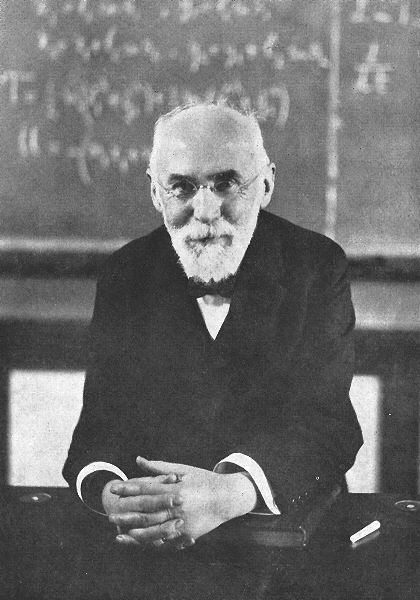
“In physics, the Lorentz transformations are coordinate transformations between two coordinate frames that move at constant velocity relative to each other. The transformations are named after the Dutch physicist Hendrik Lorentz.

“Frames of reference can be divided into two groups: inertial (relative motion with constant velocity) and non-inertial (accelerating in curved paths, rotational motion with constant angular velocity, etc.). The term “Lorentz transformations” only refers to transformations between inertial frames, usually in the context of special relativity.”

“Historically, the transformations were the result of attempts by Lorentz and others to explain how the speed of light was observed to be independent of the reference frame.”

Thus, the earth provides one reference frame, and the Sun provides another. Since the earth is moving relative to the sun, one would expect the velocity of light to be slightly different in the two reference frames. However, this difference is practically undetectable from the experiments conducted so far. This resulted in the assumption that speed of light is independent of the reference frame.

Is the assumption that the speed of light is independent of the reference frame, correct?

This assumption will definitely be correct if the speed of light is infinite. But the measurements show that the speed of light is 3 x 10⁸ meters /second. It takes sunlight an average of 8 minutes and 20 seconds to travel from the Sun to the Earth. Why is the speed of light finite?

From the essay, The Inertial Frame and Space,

“The truth seems to be that matter cannot move freely through space.  Matter encounters resistance when pushed through space. This resistance is INERTIA.”

The speed of light is finite because its propagation through space is not without resistance. Light has a limiting speed because its acceleration is balanced by inertia.

The speed ‘c’ of light is the result of a balance of forces.

We know that the earth is always accelerating toward the sun; but it has hit a limiting speed because this acceleration is balanced by its inertia. This may be the case with the speed of all heavenly bodies.

A heavenly body has a limiting speed because its acceleration is balanced by its inertia.

It is the resistance between space and the moving object that limits the speed; therefore, we may use space as the common reference frame for both matter and energy.  This is the SRF (space reference frame) mentioned in The Inertial Frame and Space.

In SRF, the naturally balanced speeds of objects and radiation shall depend on their inertia. Light has a very high speed because its inertia is very small. The speed of the earth is likely to be very small because its inertia is very large. The speed of the sun shall be smaller still because its inertia is much larger than that of the earth.

This means that the speed of light shall be different relative to the earth and the sun.

The speed of light ‘c’ remains a universal constant in SRF. But it is not a constant in the reference frames of material origin.

The assumption that the speed of light is independent of the reference frame (of material origin) is theoretically incorrect.

This brings into question the usefulness of Lorenz transformations that are based on this assumption. This also brings into question those aspects of the Theory of Relativity that utilize Lorentz transformations.

Lorentz transformations have only a limited application.

There cannot be matter traveling at speeds that are significant fractions of the speed of light. Only sub-atomic particles with very small inertia can have speeds anywhere near the speed of light. But in that range more useful than velocities are frequencies, where the ratio of wavelength to period is ‘c’.

In Cosmology, Lorentz transformations may provide good approximations only for relative speeds that are very small compared to the speed of light. That happens to be the case in explaining the aberration of light.

In my opinion, the Theory of Relativity only resolves those difficult problems in physics, where the speeds are relatively very small compared to the speed of light. For larger relative speeds in the material realm, the speed of light cannot be held as a constant.

Lorentz transformations may provide good approximations only for relative speeds that are very small compared to the speed of light.

.


Aberration of light in SRF

Reference: Disturbance Theory

.

Problem: Celestial objects have apparent motion. (See https://en.wikipedia.org/wiki/Aberration_of_light )

What is true position of the celestial objects?
ra_and_dec_on_celestial_sphere

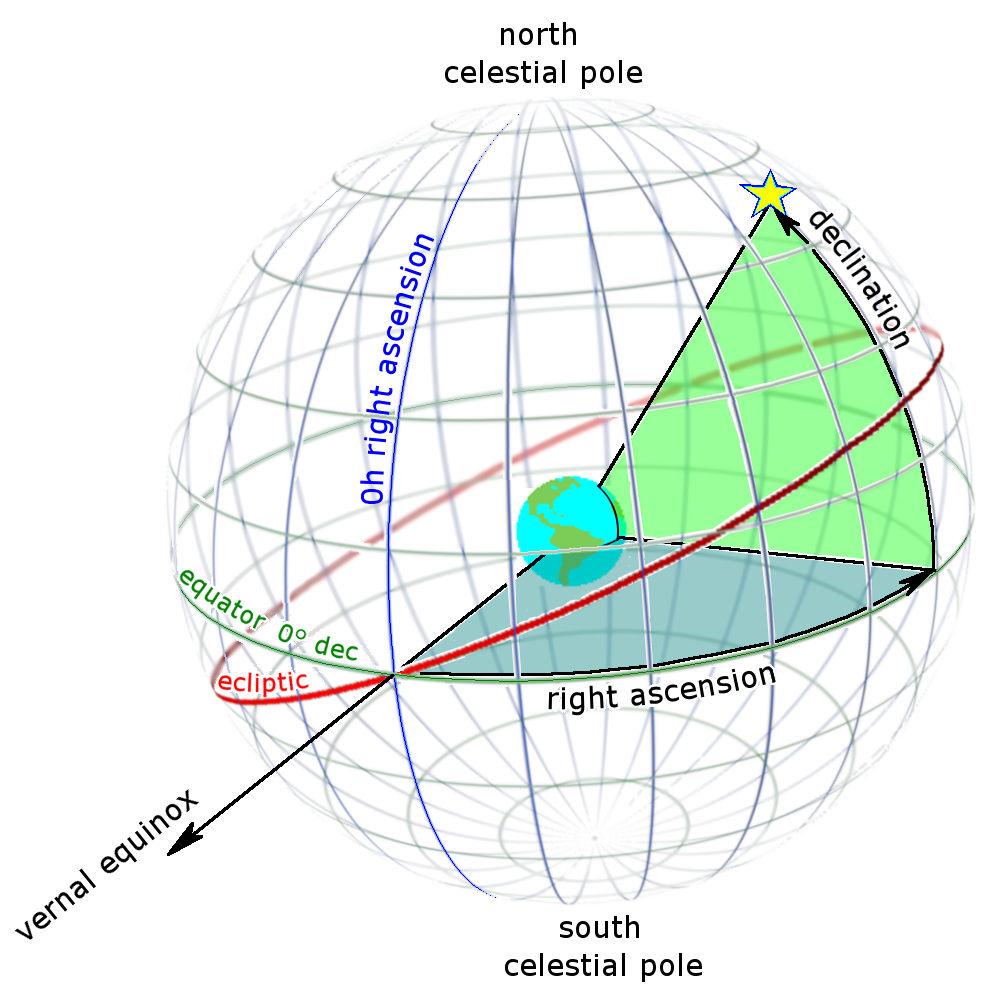
Mean Equator and Equinox of J2000.0: This coordinate system is oriented with its xy-plane parallel to the mean Earth equator at epoch J2000.0, and its z-axis pointing toward the mean north celestial pole of J2000.0. The x-axis points toward the mean equinox of J2000.0. This coordinate system is used for expressing the positions of stars in catalogs and planets in basic solar system ephemerides.

Right Ascension: Angular distance on the celestial sphere measured eastward along the celestial equator from the equinox to the hour circle passing through the celestial object.

Declination: Angular distance on the celestial sphere north or south of the celestial equator. It is measured along the hour circle passing through the celestial object.

Distance: The distance from the center of the Earth to the Solar System object, given in astronomical units (kilometers for the Moon). Distance is not calculated for stars.

Celestial Sphere: An imaginary sphere of arbitrarily large radius, concentric with Earth. All objects in the observer’s sky can be thought of as projected upon the inside surface of the celestial sphere, as if it were the underside of a dome or a hemispherical screen. The celestial sphere is a practical tool for spherical astronomy, allowing observers to plot positions of objects in the sky when their distances are unknown or unimportant.

Shouldn’t there be a motion?

The celestial sphere does not rotate with the earth. But it moves around the sun with earth. This may affect the observation of true position.

Annual aberration — a deflection caused by the velocity of the Earth’s motion around the Sun, relative to an inertial frame. This is independent of the distance of the star from the Earth.

Light-time correction is a displacement in the apparent position of a celestial object from its true position (or geometric position) caused by the object’s motion during the time it takes its light to reach an observer.

Is the aberration of light constant for all celestial objects?

It appears to be so for stars. For objects in the solar system their speeds become relevant.

Why is James Bradley’s (1729) explanation not adequate for the aberration of light?

Bradley conceived of an explanation in terms of a corpuscular theory of light in which light is made of particles that do not require a medium. His classical explanation appeals to the motion of the earth relative to a beam of light-particles moving at a finite velocity, and is developed in the Sun’s frame of reference. However, once the wave nature of light was better understood, a medium needed to be accounted for.

The aberration of light is an astronomical phenomenon which produces an apparent motion of celestial objects about their true positions, dependent on the velocity of the observer.

Let a star be at distance ‘d’ from earth. Light takes time = ‘d/c’ to reach earth from the star. If earth is moving at velocity ‘v’, then it has moved a distance ‘v.d/c’ during the time star light reaches earth. The ratio of these two distances is ‘v/c’. This is the angle of aberration.

In SRF, the only motion visible is acceleration. Uniform motion is indistinguishable from ‘rest’. Earth is always accelerating toward the sun, so this motion shall be visble in SRF. Earth’s velocity ‘v’ is the result of balanced acceleration.

Light’s velocity ‘c’ is also the result of balanced acceleration. It is a limiting velocity. Light has velocity ‘c’ because it cannot be accelerated anymore.

The motion visible in SRF is balanced acceleration. So, the explanation given above for angle of aberration based on ‘v’ and ‘c’ shall be valid in SRF.

In SRF, the motion of planets shall be perceived as if they are moving in a groove carved in space. Light is moving, similarly, in a groove carved in space.

Conclusion:

James Bradley’s (1729) explanation for aberration of light became unacceptable in 1804 because light was established to be a wave. It was no longer looked upon as corpuscular as was assumed earlier by Newton. So, the medium of light (aether) became an issue.

In SRF (space reference frame), the aether is the space itself. From SRF point of view, the change in view of light from corpuscular to wave would not have created an issue in 1804 with the earlier 1729 explanation for aberration of light.

.