Category Archives: Subject Clearing

Mind and the Universe

Reference: Course on Subject Clearing

Normally, the mind perceives the environment, assesses its condition, and directs the body to perform activities to resolve the situation perceived. 

The “environment” includes the body in the sense that the mind monitors the body to maintain it in good condition. The “environment” also includes the mind itself in the sense that the mind monitors itself to keep it clear of any doubt, perplexity and confusion.

But how does the mind do it? What structure of the mind lends support to its functions?

.

Overview

The universe enters the mind through the sense channels of touch, sight, hearing, smell and taste. These sensations are then used to make a copy of the universe within the mind. This copy is multi-dimensional, which is continually being added to little bit at a time. This copy is an approximation of what the universe may be like. This approximation is getting better and more complete all the time with the combined effort of mankind.

We do not know what the exact form of a complete universe may look like. So, we postulate a ONENESS as expressed by the word UNIVERSE (entire, all, literally, turned into one). That means, the reality of the universe is a unity. This translates as the universe being continuous, consistent and harmonious.

The property of continuous, consistent and harmonious gives us a criterion by which to measure if the copy of the universe in our mind is complete and exact.

Therefore, we start with the view that everything in this universe is connected with everything else at some level. The universe is a well-integrated system.

.

Mind: A Copy of the Universe

The universe may be conceived as a matrix.

A matrix is made up of nodes where each node is in some relationship with every other node. The universe may be represented as a matrix of galaxies that are related through gravity. A galaxy may be represented as a matrix of stars. The matrix of stars may be extended by planets and their moons. We get an object, such as a moon, represented by a matrix of atoms. An atom is represented by a matrix of quanta. Finally, a quantum is represented by a matrix of frequencies. A copy of the universe within the mind may similarly be visualized as a matrix within matrix.

The gives us a model of the universe and the mind as a matrix within matrix ad infinitum.

Therefore, the mind may be looked upon as a mental matrix that is a copy of the universal matrix.

.

Discussing the Concepts of Subject Clearing

Reference: Course on Subject Clearing

Subject Clearing is a new method of self-learning, and self-clearing any confusions, false data, etc. It is a new approach to education and may take some time to get used to.

As you go through this Subject Clearing course, questions may arise. You may place your questions in the COMMENTS section below, and I shall address them within a few hours.

Alternatively, if you would like to discuss it face-to-face in a zoom session, then let me know your location or time difference relative to Florida, USA, and how to reach you. I shall then send you a ZOOM LINK with an appointed time for a short session.

Thank you.

.

Please check out: Subject: Education

.

The Nature of Time

Reference: The Universe and Physical Elements

When we look at the 3D figure of a person, we are looking at space. But when we watch that 3D figure through birth, childhood, teenage years, youth, middle-age, old-age and death, then we are looking at space-time.

We see every human being go through this same cycle. Similarly, we see groups, societies, nations, civilizations, species, objects, ideas, plans, actions, etc., going through the same cycle of BEGIN-CONTINUE-END. 

We can say that time is related to cycles of things in this universe. There are many cycles at lower levels, which are part of fewer larger cycles at a higher level, which are in turn part of still larger and fewer cycles at still higher levels. The cycles grow longer in duration but lesser in numbers as we move up to higher levels. The ultimate cycle is the cycle of the universe. It will include all cycles at all levels.

The cyclical nature of the universe is manifested as time. 

.

Measure of Time

We may define time as follows.

Time is the duration of a cycle.

We measure the duration of these cycles in terms of standard cycles, which, in our case, are determined by the rotation of the earth about its axis, and the revolution of the earth around the sun. 

Time may be subdivided endlessly into smaller units to measure the duration of smaller cycles. Similarly, time may be multiplied endlessly to generate larger units to measure the duration of larger cycles. But time is, essentially, a duration. We keep the measure of time consistent by using the units derived from the same standard cycle of a “day.”

.

Eternity

When an object, such as, a distant star, seem to endure indefinitely at its location, then it is thought to be at rest. Compared to that star, the planets are moving, and compared to the planets, the moons are moving. “Forever” then becomes an unchanging condition in terms of location or otherwise. Compared to it, a changing condition becomes a purveyor of time.

Eternity may be described as “forever” and the state of “absolute rest”. 

.

Change and Motion

A basic change occurs when an object disappears at a location and appears at an adjacent location. Continuous changes in locations are interpreted as the movement of that object. When planets in the sky appear to move, they are simply changing their location compared to unmoving stars that form the background. The stars are relatively more fixed at their locations, or have greater endurance. The movement of the planets provides the sense of time passing.

Passage of time may be described as “change” and by the state of “motion”.

.

Dimensions of Time

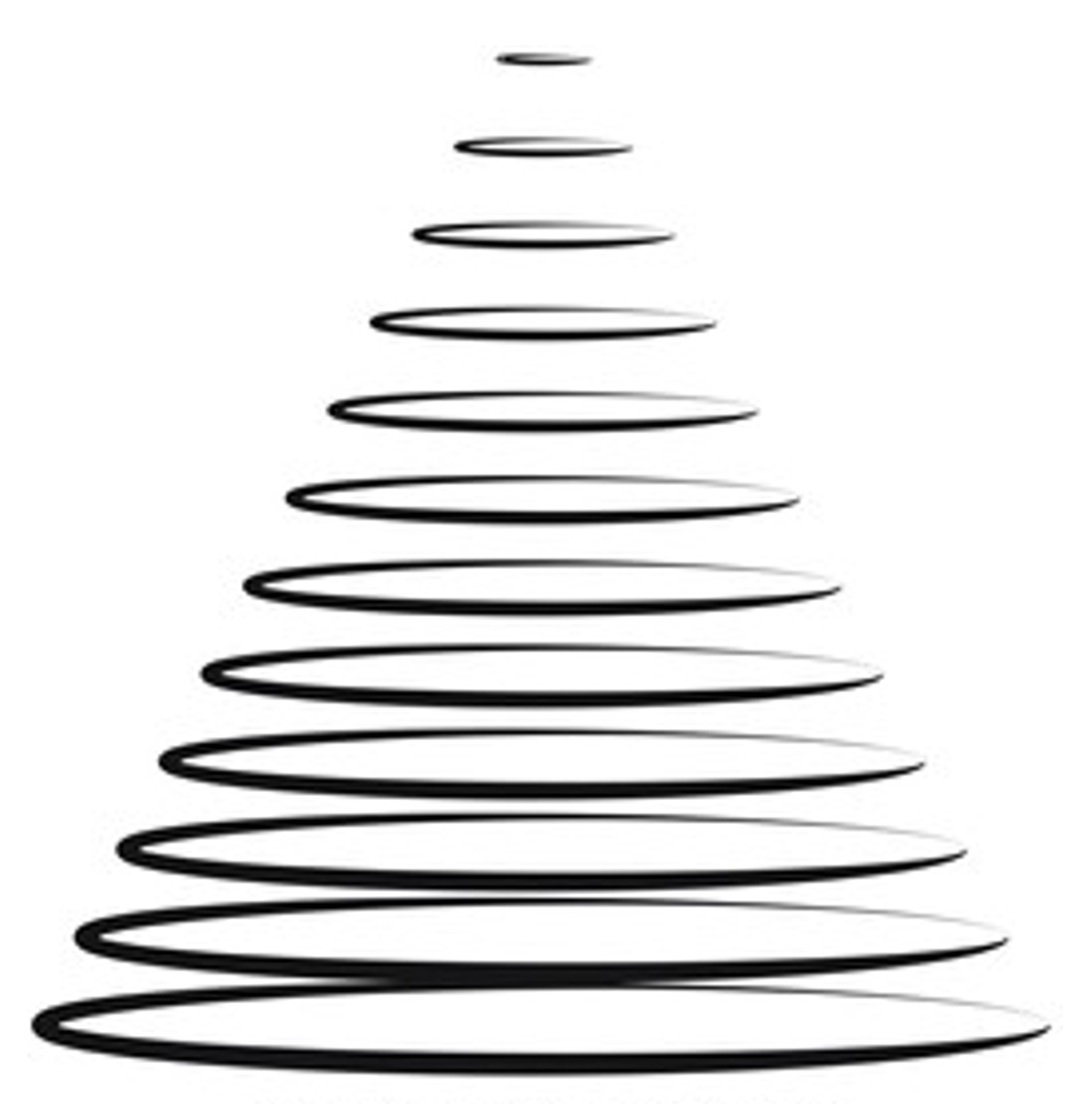
We may visualize the cycles on different planes like the conical arrangement as shown in the figure above. The larger cycles are more fundamental. The cycle of the universe shall appear at the base of this cone. It will be of infinite duration.

The common dimension of time shall appear within each cycle. Each cycle shall belong to an activity or an object. It will describe the history of that thing from the beginning to the end. 

The first dimension of time is the dimension of survival.

But there is another dimension of time along the axis of the cone in the figure above. This dimension cuts across the different planes of the cycles. 

The second dimension of time is the dimension of evolution.

In the first dimension we have changes that repeat more or less mechanically, such as, the common survival activities of day to day life, which can be quite complex. The physical speed and acceleration of objects shall also be included in this dimension.  The character of space and time remains the same within a cycle.

In the second dimension we have evolutionary changes. New characteristics appear, which never existed before. The very character of space and time changes when different planes are crossed. Here we find deeper reasons for things; and inspirations for more complex innovations. Space wise our view starts to become more panoramic. Time wise our view starts to include more of past and future. We start to see the impulse to evolve expressing itself in infinity of ways. The view start to broaden, and the ultimate view may be expressed as The Static Viewpoint.

.

Summary

Survival is the pre-requisite to evolution, which is the goal. One is surviving in order to evolve. Underlying each and every cycle is the impulse to evolve. The universe is evolving in terms of increasing complexity and awareness.

.

The Nature of Space

Reference: The Universe and Physical Elements

An object is made of substance, and it has a form. The dimensions of that substance are energy and matter. The dimensions of that form are space and time.

The dimensions of that space are length, width and height. The dimension of time is change.

.

Space and Lines of Force

The space of a matter particle, therefore, is the volume of that particle. An example of a particle is the point-like nucleus of hydrogen atom. It is called a proton. Its volume is very, very small. This small space contains all the substance of the proton. It has the mass property of matter

Similarly, the space of an energy quantum is the volume of that quantum. An example of a quantum is the blob-like atom of hydrogen (excluding the nucleus). It is called an electron. Its substance may be considered to be “soft expanded mass.” Its space is about 1836 times larger than the space of a proton. 

This space of electron seems to contain as much mass as that of a proton. That means, if the mass of a proton is loosened up 1836 times, it will become as large as an electron. The number 1836 is the mass ratio of proton to electron. Using the above equivalence we can calculate the diameter of the hydrogen atom. This may just be a random coincidence of numbers, but it highlights the insight of Faraday. 

According to Faraday,

Mass is concentrated lines of force in atom. The normal lines of force describe the phenomena of electricity and magnetism. When spread out, these lines of force may describe the propagation of light.

.

Space and Density of Substance

We may, therefore, define space as the extents of substance. The substance can be matter, or energy, or even a cycle within the universe. The substance is most condensed in matter, and most spread out in case of light. Therefore, space is most concentrated in matter, and most spread out in light.

Space defines the extents of substance.

The concentration of lines of force seems to define the mass property of substance. The greater is the “mass density,” the lesser is space. The lesser is mass density, the more expanded is space. Space, therefore, seems to relate inversely to the density of mass. The space that we see around us has the least density of mass. Space is the opposite of matter.

Space is inversely proportional to “mass density” of substance.

We now have a new concept of “mass density” of substance that derives from the concentration of Faraday’s lines of force. It is different from the density of matter that derives from the concentrations of atoms. The character of space itself seems to be determined by “mass density” of substance. Einstein has earlier related the character of space to “speed of the observer.” Though, mathematically demonstrable, the explanation provided by Einstein is not as clear as the explanation of Faraday.

The space is most concentrated in the innermost cycles, and most expanded in the outermost cycles of the universe.

.

Space and Inertia

The nucleus of an atom resides within the volume of the quanta of electrons. There is no “empty space” in the atom, but two different concentration of substance. We may expect an exchange of substance between different concentrations. When the substance leaves the nucleon it expands to the mass density of electron. When the substance moves back to the nucleon, it shrinks to the mass density of nucleon. This gives us a dynamic atom, in which an equilibrium is being maintained between two different concentrations. But something is keeping these two concentrations separate. 

In A Logical Approach to Theoretical Physics, a vortex model of condensing substance is advanced. This model predicts that when the substance condenses its speed slows and the curvature of its path increases. This is what happens in a whirlpool. The curvature of the arms of galaxies is much larger than the curvature of light. 

This confirms that the smaller cycles of more condensed substance lie within larger cycles of less condensed substance.

We are made of very concentrated material substance. Earlier cycles of the universe, therefore, appear as very large background of space to us. We are not moving in a void even even in the outer space between the planets. We are moving through a substance of extremely small mass density.

Matter replaces other matter, such as water or air, when it is placed in it because they all consist of atoms. But when matter is placed in outer space it may not replace the substance of space because there are no atoms. The substance of space may simply exchange with the high concentration of substance in matter. Therefore, matter may experience some resistance when accelerating through space. This may explain the phenomenon of inertia.

Inertia is due to interaction between substances of two very different mass densities.

.

Speed of Light

It appears that the inherent motion of substance is the result of a balance between its inertia and acceleration.  At the “speed of light” the acceleration of light is zero because it is balanced by its inertia. The reason the “speed of light” is not infinite because it has some inertia.

When you push a substance to go at a speed higher than it’s natural speed, it’s mass density is most likely reduces proportionally.

You cannot push a rocket to the speed of light without turning the rocket into light. Since the rocket must remain material, you may accelerate it only to the limit up to which matter still maintains  its integrity. One may say that there is a speed at which mass of the rocket appears to become infinite because it simply cannot be accelerated; but that speed is a small fraction of the speed of light.

This differs from the conclusions arrived at from Einstein’s postulates.

NOTE: The speed referred to above is different from the relative speed that we measure usually. This speed is related to mass density of matter. It is assumed that there is a range of mass density within which matter maintains the integrity of its form and properties.

.

The Nature of Energy

Reference: The Universe and Physical Elements

The word “energy,” as used by Newton meant, the “capacity for doing work imparted by matter in motion.” Moving matter had momentum that was transferred upon impact. The change in momentum of an object constituted force acting upon that object. When that force produced movement against some resistance, it was seen as work being performed. The capacity for doing work was then converted into actual work. Thus, we have mechanical energy. Heat was also recognized as energy. Heat involves motion of matter at atomic level. Thus, the basis of energy is momentum resulting from matter in motion.

In other words, to have energy we must have both matter (substance) and motion.

We usually recognize matter as a substance because it is substantial enough to be sensed; but when it comes to light, we recognize it only as energy. Light is recognized to have momentum, even when it is minuscule compared to a material particle. 

Light is energy. Is light a substance with motion? 

Newton did consider light to be a substance with motion. He considered light to be made of particles.  

Light being a substance, that was very different from matter, was considered by Newton.

But, the existence of light particles could not be proved. Not everyone looked at light as a substance. Many looked at light as a wave traveling in space, and a wave theory for light was advanced. This theory did not require light to be a substance, but it did require a substantial medium for the propagation of light. 

The alternative of light being a wave that was traveling in some medium was considered by most physicists.

Meanwhile, electricity was discovered and was intensely studied. Electricity was found to be a substance that was very different from matter. Based on his very precise experiments, Faraday forwarded the idea that electricity consisted of lines of force. These lines of force, when concentrated, formed the atoms of matter. Faraday supported Newton’s idea of light having substance. He suggested that light consisted of much finer lines of force. 

Faraday suggested that matter got loosened into lines of force in electricity and light, and no medium was required for the propagation of light.

Maxwell applied the idea of lines of force to the wave theory of light. Using brilliant mathematics, Maxwell developed an electromagnetic theory, from which he could derive the “speed of light”. This was a wonderful validation of the electromagnetic theory. But Maxwell had to assume certain electromagnetic properties for space. Maxwell essentially declared space to be the medium for light waves. Later when very precise experimentation was carried out, no such medium for light could be detected. This was shocking for most physicists.

Light, more likely, was a substance that spread out in wave form.

Soon after the above discovery, Max Planck came up with the mathematical concept of “quantum” to resolve the problem of Black Body radiation. This idea basically proposed a proportionality between radiant energy and its frequency. This was a radical departure from classical physics because, in wave theory, energy is proportional to the amplitude. Einstein then applied this idea of quantum to successfully explain the photoelectric phenomenon, proving that the idea of quantum was quite practical. Based on this understanding, Einstein proposed the concept of “photon” as a particle of light. 

Einstein finally provided the proof of light being a substance. 

Einstein also showed that a particle of radiative energy became more condensed as it increased in frequency. Thus, the electromagnetic spectrum was also a spectrum of substance that, ultimately, included matter. Furthermore, with increase in frequency the speed of quantum reduced from the speed of light to a fraction of that speed for much condensed electrons.

Energy at the level of light could now be separated into substance and motion as in the case of matter.

A substance may now be defined more broadly as “that which is substantial enough to be detected or sensed.” Substance shall range from gradually thickening  radiative energy to rigid matter. Radiative energy was viscous rather than absolutely rigid like matter. Both viscosity and rigidity were now relatable to the property of mass inherent in any substance.

The substance may be quantifiable on a scale of mass.

Experimentally, no variations in the speed of light could be detected, making motion an inherent property of photon. Similarly, motion could be looked upon as an inherent property of quantum throughout the spectrum of substance, even when it could be affected by external conditions within a certain range. Evidently, such inherent speed decreased with increasing viscosity, rigidity or mass.

Motion is inherent to substance to some degree. It may be quantifiable on the scale of mass within a certain range.

Material particles are discrete and they are made of discrete atoms. But the quantum of radiative energy is a continuous wave-like flow of extremely thin consistency. This quantum may be compared to a certain concentration of Faraday’s lines of forces. The consistency of quantum thickens as its frequency increases. 

A quantum may be viewed as a concentration of lines of force.

.

ADDITIONAL THOUGHTS

Energy is proportional to frequency actually means that energy is proportional to its “mass density.” The idea of frequency comes from partially successful wave-theory.

.

Reference:

  1. A Logical Approach to Theoretical Physics

.