Category Archives: Science

Disturbance Theory of Space (old)

See: BOOK: The Disturbance Theory

D2

Einstein stated in a note to the fifteenth edition of “Relativity – The Special and General Theory” by Albert Einstein:

“In this edition I have added, as a fifth appendix, a presentation of my views on the problem of space in general and on the gradual modifications of our ideas on space resulting from the influence of the relativistic viewpoint. I wished to show that space-time is not necessarily something to which one can ascribe a separate existence, independently of the actual objects of physical reality. Physical objects are not in space, but these objects are spatially extended. In this way the concept of “empty space” loses is meaning.” – A. Einstein, June 9th, 1952

The Disturbance Theory of Space came about as an effort to understand Einstein’s thoughts on the nature of space. Einstein’s used the philosophical basis that the natural laws are consistent across all inertial systems. The Disturbance Theory uses the philosophical basis that reality is harmonious, and discontinuities and inconsistencies do not exist in nature,

The Disturbance Theory proposes the following model based on the conjecture that electromagnetic phenomenon results from disturbance of space. The salient points of the Disturbance Theory are as follows.

  1. “Space – energy – matter” is a continuous system. The electromagnetic spectrum defines the fundamental character of energy. This electromagnetic spectrum starts with space and ends in matter.

  2. As the frequency of energy spectrum approaches zero, energy approaches condition of undisturbed SPACE. The undisturbed space is analogous to the undisturbed surface of a lake.

  3. Space, when disturbed, splits into electric and magnetic fields. Ripples of these fields appear in the form of electromagnetic waves of finite frequency, much like ripples on the surface of lake when disturbed.

  4. The undisturbed space does not have bounds and hence it has no form. When disturbed, space acquires bounds in the form of “wave-length” and “period” of the electromagnetic wave.

  5. The disturbance exists in its electromagnetic form. The undisturbed space forms the background of this disturbance; it does not exist otherwise.

  6. The “period” represents change in space, and it is an aspect of SPACE. Period introduces TIME. This makes time an aspect of space.

  7. Thus, space and time are bound to each other by the ratio of wave-length to period of the disturbance. Einstein assumed this ratio to be the constant speed of light “c”.

  8. Thus, time is not independent of space as assumed in Newtonian physics.

  9. Physical space is, therefore, not empty but it essentially consists of disturbance. The form of this disturbance is electromagnetic. We may refer to physical space as a “disturbance field”.

  10. The “disturbance field” covers the electromagnetic spectrum of frequency. The wavelengths and periods within this field are proportional to each other, but inversely proportional to the frequency.

  11. Areas consisting of uniform frequency in this field appear as areas consisting of uniform motion or constant velocity.

  12. Areas consisting of gradients of changing frequency in this field appear as areas consisting of accelerated motion or gravity.

  13. As the frequency of energy spectrum approaches extremely high values, the condition approached is matter.

  14. Areas in the disturbance field of extremely high frequencies have the characteristics of extremely small wavelengths and periods. We have used them as “material points in space”. We now recognize them as atoms.

  15. The current science views physical reality from the reference point of matter. This is so because the concept of “dimensionless” point, which forms foundation of mathematics used in physics, is abstraction from the material point of extremely small wavelength.

  16. In reality, a material point, which marks a location in space, is not dimensionless but has dimensions equal to de Broglie’s wavelength for matter. The Euclidean geometry is a good approximation of physical reality only in a material medium.

  17. A physical point in “empty space” will have dimensions equal to wavelength of disturbance in that region.  It cannot be approximated by a dimensionless Euclidean point.

  18. The physical location in the uniform regions of the disturbance field of space shall be symmetrical in the four dimensions of space-time. A lot more work needs to be done on the concept of physical point or location.

The essays following this one shall be devoted to a comparison of Disturbance Theory of Space to Einstein’s ideas contained in Appendix 5: “Relativity and the Problem of Space”.

We shall then make effort to resolve any inconsistency found in order to improve the Disturbance Theory of Space.

.
The Constant “c”

einstein

There is sequence of items. Sequence exists because the items can be ordered according to some criterion. All criteria, whether concrete or abstract, reduce to space and time.

Infinite space-time, when disturbed, appears as finite intervals of wavelength-period. The disturbance can have a whole spectrum of relative frequencies. These are electromagnetic waves. This is fundamental energy.

Wavelength and period always appear in a constant ratio referred to as “c”. The constant “c” represents a very fundamental characteristic that involves space and time. It is probably there even when space is undisturbed.

So this constant “c” underlies everything. We may define this constant in terms of arbitrary units of length and time, but the constant is not arbitrary. So all sequences seems to be based, one way or other, on this constant “c”.

.

Interface between Space and Mass

U6wd6

Counting is an idea of sequence in which we assume numbers of increasing value to occur at equal intervals.

A scale represents gradient values of some characteristic.

The gradient values seem to extend in one direction to infinity and in the other direction to nothing.

“Infinity” is infinitely growing. “Nothing” is infinitely diminishing. We can neither define infinity nor nothing with absolute certainty.

A scale usually assumes a reference point of “zero” with values increasing in a positive direction and decreasing in the opposite negative direction on the scale. This reference point is usually some easily recognizable point, such as, the sea level. It is arbitrary.

A scale also assumes a unit value for the characteristic being measured as “one”. The unit is some easily recognizable measure, such as, the length of a foot. It is also arbitrary.

There is neither an absolute reference point, nor an absolute unit to measure any characteristic.

The sense of unit comes only through presence of an identifiable boundary that separates mass from surrounding space.

The attention shifts from space to mass at the boundary of the unit. This is the case even with an assumed unit within space. The attention shifts from one kind of supposition to another kind.

The shift, as perceived, is never absolute. Therefore, there must be a gradient of energy from space to mass at the boundary of the unit.

This gradient of energy occurs in terms of its frequency. Space is “zero” frequency. Mass is “infinite” frequency.

There is a steep gradient of energy from zero frequency (awareness as space) to extremely high frequency (awareness as mass) at any separation between space and mass.

.

The Nature of Space

Space

Pure space = Electromagnetic phenomenon at zero frequency.

This is my conjecture. I wonder if we can prove it!

I see pure space similar to the undisturbed surface of a pond. A wave of disturbance moves outwards in a circle on the surface of pond when we lob a stone into it. Similarly, a wave of disturbance travels outwards as a sphere in space from the point of disturbance.

This disturbance travels in space as electromagnetic wave of certain frequency. The electromagnetic waves actually have a whole spectrum of frequency, but the ratio of the wavelength to the period is always constant. Einstein called this constant the speed of light “c”, but it is much more than that.

The constant “c” is the ratio of pure space to pure time.

One may object to the above conjecture by saying that the nature of disturbance within a single media is always in the form of a longitudinal wave. This is the case when sound waves travel within water or air. The transverse wave occurs only at the interface between two media. This is the case when waves travel on the surface of water where it interfaces with air. The electromagnetic waves are transverse in nature yet they travel within 3D volume of space. How do we explain this inconsistency?

It is true that the nature of disturbance in a 3D volume is longitudinal, and that it requires a 2D interface for the disturbance to be transverse. We find that electromagnetic waves are transverse because the disturbance in the volume of space takes place at the interface between electrical and magnetic media. This is an interesting observation about space.

When space is disturbed it splits into electrical and magnetic fields.

.

Mathematics of Space and Time

mountain-mcescher

Mathematics brings to us the fundamental idea of SEQUENCE. When we count numbers we are following a sequence.

A sequence consists of arrangement of items. The sequence is there because we compare the items in a certain way. There is sequence in time. There is sequence of logic. There is sequence in terms of heights. In fact, sequence is possible in terms of any characteristic.

So, underlying a sequence there is a criterion. It forms the basis of the sequence. Space and time seems to offer the fundamental basis and criteria for sequence.

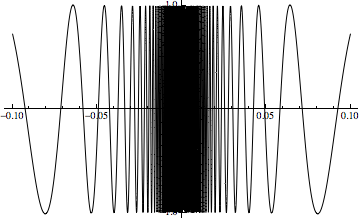
Both space and time are infinite when undisturbed. When  disturbance takes place space and time seem to become segmented into finite intervals. The “finite interval of space” is the wavelength; the “finite interval of time” is the period.

As the “wavelength” increases or decrease, the “period” also increases and decreases according to a constant ratio. The constant “c”, or “speed of light”, seems to represent this ratio. As wavelength goes to infinite, the period also goes to infinite. It appears that the limiting value of “infinite wavelength over infinite period” is the same constant “c”. This constant may even apply to undisturbed space . This means that space and time are fundamentally entwined in some definite way. Space cannot occur without time; and time cannot occur without space. We define this constant “c” in terms of arbitrary units of length and time. But the constant “c” is not arbitrary.

All sequences seem to be based one way or other on the constant “c”.

To summarize the above, all items in a sequence must have bounds so we can identify and compare them. No bounds apply to undisturbed space and time, which have the characteristic of being infinite. Bounds emerge when there is disturbance of space and time. The disturbance has wave characteristics. Space and time become segmented into sequence of wavelengths and periods. The wavelengths and periods support a constant ratio. We represent this ratio by the constant “c”.

The constant “c” has the unit of “length over time”, which is same as the units of speed. But there is nothing moving in space and time. What we have is disturbance of space and time. Here we may have a real definition of “point”. This “point” has dimensions of wavelength and period.

This “point” starts out with infinite dimension of undisturbed space-time. The “point” reduces in dimension as frequency of disturbance increases. It is possible that “point” at the level of matter is the size of de Broglie’s wavelength.

This makes it possible to do away with the arbitrary notion of Euclidean point.

.