Reference: Religion
[I wrote this essay back in July 1995 in response to a Christian colleague of mine who asked me,
“Must all Hindus believe that there is one god, and not the many that are worshipped and served? In all Hindus minds, are all the gods nothing more than symbolic representations of the ultimate reality? If not, why not? Do the gods exist the same way that humans exist?”
Since then I have had further realizations on this subject. God is looked upon as a Being in Semitic religions. However, in Vedic religions, the ultimate reality is thought to be unknowable. We can only speculate on that unknowable and, maybe come up with our own gods. See The Creation Hymn of Rig Veda.
The original essay is republished here with some minor touch ups.]
.
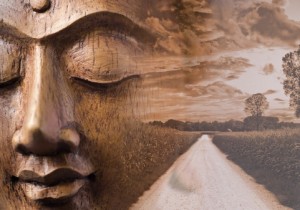
A Hindu does not believe that the physical image he is worshipping is God. To him a physical image only serves to focus his attention while he is seeking the experience of God. Once he attains that experience, he can throw away all the images and still be a Hindu.
A Hindu does not have beliefs like a Christian does. To him knowledge comes from actual experience, and not from a belief in some agreed-upon doctrine. A person may “believe in Love” but he is in for a big surprise when he falls in love for the first time. A “belief in God” does not mean that one understands God. That understanding comes from the experience of God. A belief to a Hindu is like an initial assumption with which to start on a spiritual search. It can change as the knowledge unfolds itself.
Authoritarian doctrines only enforce beliefs. They do not provide a way to experience God. Such doctrines primarily end up providing the justification to the ego: “I am right because I believe, and you are wrong for not believing.” A person holding such an attitude, unfortunately, has grossly been misled. To a Hindu the scriptures are merely a guide. He follows them to attain the experience of God. He does not use them to make himself right and others wrong.
Are there one or many gods? To a Hindu this question is misleading. “Can you argue if Love is one or many?” He asks, “How do you quantify something which is not physical?” The numerous manifestations of Love may be counted but it is absurd to quantify Love itself. God is a spiritual reality much deeper than Love. Its manifestation is the whole universe and everything in it. When somebody argues, “God is One” or “God is many,” he is confusing God with God’s manifestation.
A person believing in “one God” is likely to hold a mental “image” for that God. He is worshipping that image believing it to be God. In this frame of mind he looks at someone who is worshipping a physical image, and condemns him for doing so. It never occurs to him that the physical image may just be a prop in one’s effort to experience God. The idea, “God is One,” thus, misleads the “believer” into thinking that God must have an identity. It further serves to generate the claim, “My God is true, your god is false.” This claim provides a wonderful excuse to the ignorant to indulge in violent and barbaric crimes. To a Hindu, the idea of quantifying God by giving it an identity is misleading in the first place. It is a result of ignorance.
The question, “Do the gods exist the same way that humans exist?” highlights the assumption of an identity for God. To a Hindu it is like asking, “Does Love exist the same way as humans exist?” Love is an aspect of spirituality which is expressed through the infinitely diverse activities of life. It does not have a separate identity of its own, but it is readily recognizable to those who have experienced love. God is more than an aspect of spirituality. God is spirituality itself. God does not have an identity, yet it is recognizable to those who have experienced that ultimate reality.
Reading the scriptures of many religions, it appears as though God has an identity, for God is referred to as “He” who “speaks” and “commands”. But this is a breakdown of human communication to express spiritual experiences. Prophets who experienced God had to resort to poetic language to communicate that experience. Experience of God is much more intense than the experience of Love. After that experience one’s viewpoint does not assume a fixed identity for God.
How do you perceive something that has no identity or form? Let us take a number, such as 3. Do we see the number 3 when we look at three objects? No. We perceive ‘3’ as an abstract pattern common to three occurrences of an object. Do we see the relation A + B = B + A when we add two quantities? No. It is self-evident in the process of addition. Do we see the Law of Gravity when we see an apple fall from the tree? No. It is a principle which we know from experience by seeing all heavy objects fall toward earth. Do we really see Love when we see a mother nourishing her baby? No. It is an aspect of spirituality inherent to all Life that we can become aware of.
These are things one grasps mentally as being common to many physical observations. We recognize this process as abstraction. As one moves deeper into abstraction one encounters fewer denominators but each of which is capable of explaining greater number of physical observations. Some people have a hard time understanding Mathematics and Physics because they fail to make the mental jump from visible examples to the underlying abstract relationships.
The subject of Religion poses similar difficulties. Religion goes deeper into abstraction than Mathematics and Physics as it attempts to understand the denominator of infinite manifestations that exist. Spirituality lies in the dimension of abstraction. As a person dives deeper into spirituality he experiences the shedding away of “identities” and a restoration of greater awareness. He becomes more “alive” and capable of influencing larger strata of life and physical phenomena.
To a Hindu mind, God is the essence of all existence. It is the key to a complete understanding of the infinite “relationships” which make up the physical universe of space-energy-matter and time, and the play of life within it. The search for God is inward, toward more abstraction, and not outward in the physical universe of visible manifestations. God being the denominator of all existence is the deepest of all abstractions.
The certainty that one KNOWS, exists neither in space-energy-matter and time, nor in the reflection of them in the mind. One must dive deep into abstraction to gain that certainty of complete understanding. There is nothing wrong with using images and symbols to get at the deeper meaning. But one must discriminate between the image and the experience it symbolizes. Mathematics uses symbols to gain insights. Language uses symbols to communicate. Religion uses all physical manifestations to experience its source. All knowledge has been gained through the observation of physical phenomena. It is rare that one can experience knowledge directly in a single step.
So, a Hindu symbolizes the various aspects of existence and spirituality to arrive at the deeper understanding of God. BRAHMA symbolizes creation, VISHNU symbolizes survival, and MAHESH (or SHIVA) symbolizes dissolution. Together, this TRINITY describes the cycle of existence: Beginning, Continuation, End. This is the great abstraction which the Hindu mind reached about ten thousand years ago. These symbols and idols in Hinduism are nothing in themselves. They are there to remind certain abstractions underlying all life. To a Hindu, all such symbols and idols are “educational aids.” They drop into relative insignificance to the degree one gains an awareness of God.
Most religions allude to beings without human bodies, such as angels and devas, and to miracles which surpass human understanding. They ascribe such phenomena directly to God. But, truly speaking, all phenomena are attributable to God. There may be beings with identities finer than physical bodies or miracles yet to be fully understood by man. But they are part of existence like any thing else. Religious authorities have declared many such phenomena miraculous and divine when it has given hope for better survival. But such viewpoints have changed as mankind has matured. What has not changed is the fact that God is the common denominator of all phenomena miraculous or otherwise.
To a Hindu, the physical existence is the surface manifestation of an infinitely deep reality referred to as God. The existence of God does not depend on the existence of the physical phenomena. In fact, all physical phenomena extend from the reality of God. A symbol or “identity” requires space-energy-matter and time, to exist. Thus, no identity can be God itself. No image, mental or physical, can substitute for God. God exists like LOVE exists; like CREATIVITY, INTELLIGENCE and ETHICS exist. All these are different aspects of spirituality which lie in the dimension of abstraction. God is ultimate in spirituality. Nay, God is spirituality itself. God cannot be defined in terms of any identity. God can only be experienced. As a person becomes aware of the identities he has unwittingly assumed and gives them up, he regains his basic essence. And in doing so he moves closer to the experience of God.
.