
Being established in mindfulness is a mental state of ‘seeing things as they are’. It does not matter whether your eyes are closed or open; whether you are sitting, standing or walking; whether you are engaged in some activity or not.
You practice ‘seeing as they are’ in all modes of existence.
.
MINDFULNESS APP _: Practice seeing things as they are.
Give out these coaching instructions one every minute slowly and clearly. This will allow the student time to settle down after each instruction.
-
We shall now practice seeing things as they are… first with eyes closed and then with eyes open. Keep your eyes closed.
-
Recall a playful moment from your childhood. Look at the “picture” that comes up. Consider it for what it is.
-
Consider the thoughts present in that picture. Give them time to come up. See them for what they are.
-
Consider the emotions present in that picture. Give them time to come up. See them for what they are.
-
Consider the efforts present in that picture. Give them time to come up. See them for what they are.
-
Now open your eyes and look at your hands for what they are.
-
Look at the size of the hands for what it is.
-
Look at the color of the skin for what it is.
-
Look at the texture of the skin for what it is.
-
Close your eyes. Recall a beautiful place that you visited. Look at the “picture” that comes up. Consider it for what it is.
-
Consider the thoughts present in that picture. Give them time to come up. See them for what they are.
-
Consider the emotions present in that picture. Give them time to come up. See them for what they are.
-
Consider the efforts present in that picture. Give them time to come up. See them for what they are.
-
Open your eyes. Find something in the room to look at.
-
Look at the size of the object for what it is.
-
Look at the color of the object for what it is.
-
Look at the texture of the object for what it is.
-
Close your eyes. Recall a moment when you met somebody you really liked. Take your time to consider that moment thoroughly for what it is.
-
Open your eyes. Spot something in this room. Take your time to consider that thing thoroughly for what it is.
-
For the next five minutes, first close your eyes and recall a pleasant moment from your past. Consider it thoroughly for what it is. Then open your eyes and spot something in this room. Consider it thoroughly for what it is. Alternate these two actions several times.
-
(After five minutes) Let the mindfulness meditation session end.
.

Mental discomfort also distracts one from seeing things as they are. One should always maintain a mental posture that is comfortable.
One cannot address the mental discomfort by resisting, avoiding or suppressing it. One may address it properly only through free association. Please see The 3 Rules of Meditation.
.
MINDFULNESS PREP 3: Allow the mind to settle down for meditation.
-
It is important to maintain the mental approach of free association with nothing resisted, avoided or suppressed.
-
No relief occurs when the mind is continually interfered with as by forcefully searching for answers.
-
Let the mind unwind and experience whatever comes up. Let the answers emerge by themselves.
-
Handle any upset by experiencing it fully and letting the emotions discharge. Do not hold back anything in your mind.
-
Handle any embarrassment the same way. Embarrasment is an upset with oneself.
-
If there are too many uncontrollable thoughts, start putting them down on a notepad as necessary. This will allow you to move on.
-
Understand the 12 Aspects of Mindfulness. Click on the links to practice them.
.
Major revision on 7/26/16.
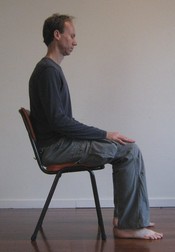
Physical discomfort distracts one from seeing things as they are. One should always maintain a physical posture that is comfortable.
Therefore, when we prepare for meditation we must adjust the sitting position such that we can maintain a comfortable posture for a long time. For some people the lotus position is very comfortable. For others, sitting on a chair may be more comfortable.
Physical discomfort is the first issue that should be addressed during meditation.
.
MINDFULNESS PREP 2: Overcoming physical discomfort in meditation.
-
It is important to maintain a sitting position in meditation with spine upright.
-
You may sit either in a lotus position or on a chair. You may use support to keep your back upright.
-
Choose a sitting position that you can maintain comfortably for at least an hour. Some fidgeting to make the posture comfortable is okay.
-
Continual fidgeting, or trying to restrain oneself from fidgeting, is equally a distraction during meditation.
-
Your body should be stably grounded during meditation. If you are sitting on a chair make sure your feet are flat on the floor, and your arms are resting on your thighs. Adjust your posture as necessary to feel grounded.
-
As you are settling down in meditation start relaxing your body from neck all the way down to the toes. It is okay to adjust your position during meditation to make it more comfortable.
-
When any physical discomfort occurs during meditation, experience it fully. Do not resist, avoid or suppress it. Sooner or later you will realize the reason for the discomfort and be able to fix it.
.
Minor revision on 7/26/16
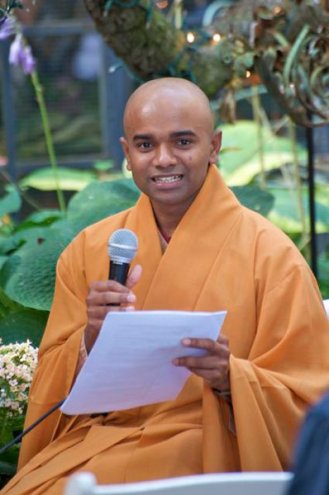
Being established in mindfulness is a mental state of ‘seeing things as they are’. When you are established in mindfulness, you feel comfortable and confident at all times. That is the ideal situation.
You learn mindfulness in small steps. The key is to see things as they are. It does not matter whether your eyes are closed or open; whether you are sitting, standing or walking; whether you are engaged in some activity or not.
Sitting with eyes closed in mindfulness meditation is simply the beginning step.
.
MINDFULNESS PREP 1: How to impart coaching instructions.
-
We find that those who have learned to meditate can sit in meditation for hours quite comfortably. Discomfort seems to arise when one is learning to meditate.
-
We start meditation with simple breathing exercises. But then we find it hard to meditate because it requires remembering all the instructions we have received.
-
All we need to know about meditation is ‘see things as they are.’ This is to be done effortlessly. But we get confused and engage in efforts, such as, trying to make the mind still.
-
It is better to start meditation with ‘see things as they are. Then provide pre-recorded coaching instructions to help the students prepare for deeper meditation.
-
Coaching instructions should be simple and called about 20 seconds apart. This gives the students enough time to digest and implement the instruction.
-
The students then get gradually established in meditation without feeling rushed or getting confused.
-
Coaching instructions are no longer needed as progress is made. The students start to meditate on their own.
-
Soon the students are established in mindfulness.
.
Revised 7/26/16

Mindfulness is “seeing things as they are.”
It is difficult to see things as they are when there is suppression. Suppression occurs when one is not allowed to be one’s natural self. The natural self is logical and sensible. An illogical person has been suppressed to become that way.
Suppression may come about when a person is too young to understand the situation and he is badly controlled; or when the person finds that there is no recourse available to some obvious and continuing injustice. There can be suppression also when one is continually being harassed and attacked overtly or covertly.
Suppression may get absorbed into one’s thinking. This is the case when one finds one can’t think without interfering with it, or when there is too much resistance involved in one’s thinking.
When one starts to contemplate on suppression in one’s life and in the society around one, the suppression seems to come off in layers. As these layers come off, there comes about increasing understanding and feelings of peace within oneself.
.
MINDFULNESS # 03: Observe suppression, interference and resistance.
Establish the students in mindfulness meditation by calling out the instructions of Mindfulness 0: See Things as They are. Then call out the following instructions.
Give out the instructions “one per minute” slowly and clearly. This will give the student some time to settle down with it.
-
Become aware of any feeling of suppression that might be there.
-
Observe nonjudgmentally. It is neither good nor bad. It is what it is.
-
Do not resist anything. Do not suppress anything. Do not interfere with what is there.
-
Simply become aware of the feeling of suppression and move on.
-
When it is difficult to move on, simply observe that feeling of suppression more closely. Let further details appear as they may.
-
Let the realizations come as they may, and move on.
-
Become aware of any feeling of interference that might be there. Trace it back to underlying suppression. Simply become aware and move on.
-
Become aware of any feeling of resistance that might be there. Trace it back to underlying suppression. Simply become aware and move on.
-
Expand your span of attention to your whole life as far back as possible. Let the perceptions pour in.
-
Become aware of the feelings of suppression, interference and resistance present during various stage of your life.
-
Expand your span of attention to other people whom you have come across in your life. Let the perceptions pour in.
-
Become aware of the suppression, interference and resistance that you saw happening with others.
-
Observe nonjudgmentally. It is neither good nor bad. It is what it is.
-
Do not resist anything. Do not suppress anything. Do not interfere with what is there.
-
Simply become aware of the underlying suppression and move on.
-
When it is difficult to move on, simply observe the suppression more closely. Let further details appear as they may.
-
Let the realizations come as they may, and move on.
-
Continue contemplating on suppression, interference and resistance till the end of the meditation session.
.

