Author Archives: vinaire

I am originally from India. I am settled in United States since 1969. I love mathematics, philosophy and clarity in thinking.

Zero, One, Infinity and God

trimurthis

Reference: Religion

[Here is an old essay that I wrote back in June 1998. It is presented again with some spelling corrections.]

Brahman is a concept central to Hinduism, yet a great deal of mystery surrounds it. It is stated to be an actuality beyond the reality of this universe, which is impossible to describe. The mental discipline and effort required to experience Brahman appears to be daunting indeed.

Jnana Yoga prescribes discrimination as the process to comprehend this concept. By saying “neti, neti (not this, not that)” one can finally arrive at the realization of Brahman. It is said that to one who has realized Brahman the world appears as a “mansion of mirth.” One can then see through the reality of this world as if it were an “illusion.”

With all these hints let us examine the concept of Brahman using the modern vocabulary available to us.

To a mathematical mind, Brahman would be like a zero where this universe is concerned. Zero is an absence of quantity. An absolute zero would be an absence of all quantity. The universe is reducible to matter, energy, space, and time, all of which are quantities. Thus, Brahman can said to be the absence of all matter, all energy, all space, and all time. More precisely, then,

Brahman is an actuality that has no mass, no motion, no wavelength, and no location in space, or in time.

Furthermore, zero is that point from which all quantities are measured. Thus, Brahman can said to be that point from which the very nature of Space, Time, Energy, and Matter is postulated. By postulate, we mean, something put there as the basis or foundation. More precisely, then,

Brahman is the absolute potential.

Now, there is nothing except Brahman. Thus, the capability to postulate and consider would be inherent to Brahman. This infinite power to be Cause is called Sakti in Hinduism. It is difficult to speak of Sakti as separate from Brahman because any separation first requires the consideration of Space. It is also difficult to assign sequence to Brahman and Sakti because any sequence requires the consideration of Time. More precisely, then,

Sakti is Brahman as infinite cause.

We think of God as a Super Being separate and remote from us.  But this may be looked upon as the considerations of matter, energy, space, and time combined with Brahman or Sakti.

Is God one?  Brahman or Sakti, certainly, cannot be described quantitatively as being one.  “God is One” is not an inherent condition.  It is a consideration added to the actuality of Brahman or Sakti after adding the basic considerations of matter, energy, space, and time.

It is not surprising that the differentiation among Brahman, Sakti and the considerations of matter, energy, space, time, etc. are not easy to grasp.

A problem persists as a problem as long as it is not viewed in its entirety. The moment we view a problem thoroughly it ceases to be a problem because it reduces to an understanding.  Similarly, a reality persists as a reality as long as it is not viewed in its entirety. The moment we view it thoroughly we recognize it to be made up of certain considerations that we hold in common.

Thus, reality may be changed if we can only muster up enough courage to view it thoroughly, and recognize our own considerations leading up to it. But the fact of the matter is that when one is very much attached to a reality, changing that reality would be a terrible thing indeed.

Is God zero, one, or infinity? One can answer that question only when one is willing to examine it  thoroughly, along with a thorough examination of one’s own considerations involved, from a non-attached viewpoint.  Reality or considerations may be changed, but the inherent condition or actuality can never be changed.

.

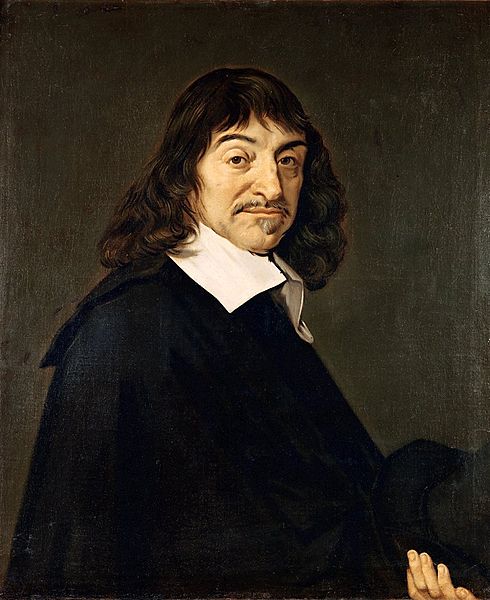
Comments on Descartes’ Works

[Italics below denote the quotes from Wikipedia Article on Descartes]

Descartes is often regarded as the first thinker to provide a philosophical framework for the natural sciences as these began to develop.

I have great admiration for Descartes for both his mathematical and philosophical works.


Emily Grosholz. Cartesian method and the problem of reduction. Oxford University Press. ISBN 0198242506. “But contemporary debate has tended to…understand [Cartesian method] merely as the ‘method of doubt’…I want to define Descartes’s method in broader terms…to trace its impact on the domains of mathematics and physics as well as metaphysics.”

I understand Descartes Method to be a lot more than just a method of doubt. His method helps determine points of certainties.


In his Discourse on the Method, he attempts to arrive at a fundamental set of principles that one can know as true without any doubt. To achieve this, he employs a method called hyperbolical/metaphysical doubt, also sometimes referred to as methodological skepticism: he rejects any ideas that can be doubted, and then reestablishes them in order to acquire a firm foundation for genuine knowledge.

That is a wonderful goal set by Descartes for himself. My personal passion is to make knowledge simpler to understand, starting from fundamental ideas that are on very firm footing. I’ll be ecstatic if I can spot a gap or inconsistency in Descartes’ reasoning. My object for doing that would be  to discover possible simplicities.


Initially, Descartes arrives at only a single principle: thought exists. Thought cannot be separated from me, therefore, I exist (Discourse on the Method and Principles of Philosophy). Most famously, this is known as cogito ergo sum (English: “I think, therefore I am”). Therefore, Descartes concluded, if he doubted, then something or someone must be doing the doubting; therefore the very fact that he doubted proved his existence. “The simple meaning of the phrase is that if one is skeptical of existence, that is in and of itself proof that he does exist.”

Yes, one can be certain about the existence of thought. I wrote the essay The Nature of Thought to express my ideas on this subject. I can see that thought cannot be separated from me if “me” is looked upon as part of thought. Therefore, “I” would exist as thought. But I doubt Descartes’ conclusion that “I” is the doer and that thought originates from “I”. It is quite possible that essence of thought is independent of “I”, and “I” may simply act on it the way a magnifying glass acts on rays of light.


Descartes concludes that he can be certain that he exists because he thinks. But in what form? He perceives his body through the use of the senses; however, these have previously been unreliable. So Descartes determines that the only indubitable knowledge is that he is a thinking thing. Thinking is what he does, and his power must come from his essence. Descartes defines “thought” (cogitatio) as “what happens in me such that I am immediately conscious of it, insofar as I am conscious of it”. Thinking is thus every activity of a person of which he is immediately conscious.

“Thought is visualization. The purpose of thought is to give form to the unknowable.” The essence of thought could come from some unknowable dimension that is independent of “I”. Thought, “I”, and body exist in the dimension of form. A “thinking thing” could be a “modulating thing” that may be modulating part of some “dimension of no form” into this dimension of form. There is no reason to believe that “thought” and “I” are the fundamental principles of existence.


To further demonstrate the limitations of the senses, Descartes proceeds with what is known as the Wax Argument. He considers a piece of wax; his senses inform him that it has certain characteristics, such as shape, texture, size, color, smell, and so forth. When he brings the wax towards a flame, these characteristics change completely. However, it seems that it is still the same thing: it is still the same piece of wax, even though the data of the senses inform him that all of its characteristics are different. Therefore, in order to properly grasp the nature of the wax, he should put aside the senses. He must use his mind. Descartes concludes:

“And so something which I thought I was seeing with my eyes is in fact grasped solely by the faculty of judgment which is in my mind.”

One is looking at change. Form changes. Is there a constant underlying this changing form perceived by the senses? Descartes concludes it is the faculty of judgment. This is what I have referred to as the ability to consider. But does this ability reside in this dimension of form? I doubt that it does.


In this manner, Descartes proceeds to construct a system of knowledge, discarding perception as unreliable and instead admitting only deduction as a method. In the third and fifth Meditation, he offers an ontological proof of a benevolent God (through both the ontological argument and trademark argument). Because God is benevolent, he can have some faith in the account of reality his senses provide him, for God has provided him with a working mind and sensory system and does not desire to deceive him. From this supposition, however, he finally establishes the possibility of acquiring knowledge about the world based on deduction and perception. In terms of epistemology therefore, he can be said to have contributed such ideas as a rigorous conception of foundationalism and the possibility that reason is the only reliable method of attaining knowledge.

Perceptions originate from one’s consideration of what is out there. Perceptions on the surface are changing all the time, but the considerations that underlie them become more and more persistent in their form as one dives deeper into thought. But even those deepest considerations are, ultimately, arbitrary. It is the consistency of such considerations which makes them so persistent. Deduction is simply diving deeper toward increasingly persistent (unchanging) considerations. If there is God, it does not lie in this dimension of form. Viewing from this dimension, God is simply unknowable. Any speculations or lasting considerations about God are simply modulations of thought. Knowledge could be a rigorous system consistent within itself, even when the foundations are arbitrary. Those foundations have only to be firmly set. From then on it is consistency that forms the basis of reason.


In Descartes’s system, knowledge takes the form of ideas, and philosophical investigation is the contemplation of these ideas. This concept would influence subsequent internalist movements as Descartes’s epistemology requires that a connection made by conscious awareness will distinguish knowledge from falsity. As a result of his Cartesian doubt, he viewed rational knowledge as being “incapable of being destroyed” and sought to construct an unshakable ground upon which all other knowledge can be based. The first item of unshakable knowledge that Descartes argues for is the aforementioned cogito, or thinking thing.

There is nothing fundamentally true or false. But there are fundamentals regarded as true because of their firmness. Any relative inconsistency with respect to those fundamentals, and their derivatives, would then be regarded as falsity. None of the consistency, which underlies reasoning itself, can ever be destroyed because its power comes from the firmness of the fundamentals. Descartes views the premise of “thinking thing” as that fundamental firmness, even when it can be shown to be arbitrary. The fundamentals are only as firm as one considers them to be.


Descartes also wrote a response to skepticism about the existence of the external world. He argues that sensory perceptions come to him involuntarily, and are not willed by him. They are external to his senses, and according to Descartes, this is evidence of the existence of something outside of his mind, and thus, an external world. Descartes goes on to show that the things in the external world are material by arguing that God would not deceive him as to the ideas that are being transmitted, and that God has given him the “propensity” to believe that such ideas are caused by material things.

The firmness of the external world is simply a reflection of the firmness of one’s fundamental beliefs that one may not be fully aware of. Hence they seem to come involuntarily. Thus, the external word seems to provide evidence to an internal “programming” that one is not aware of.


Descartes was also known for his work in producing the Cartesian Theory of Fallacies. This can be most easily explored using the statement: “This statement is a lie.” While it is most commonly referred to as a paradox, the Cartesian Theory of Fallacies states that at any given time a statement can be both true and false simultaneously because of its contradictory nature. The statement is true in its fallacy. Thus, Descartes developed the Cartesian Theory of Fallacies, which greatly influenced the thinking of the time. Many would-be philosophers were trying to develop inexplicable statements of seeming fact, however, this laid rumors of such a proposition impossible. Many philosophers believe that when Descartes formulated his Theory of Fallacies, he intended to be lying, which in and of itself embodies the theory.

A problem persists as long as one is not aware of the solution. Confusion persists as long as one is not aware of the stable data. The moment one becomes aware of the solution or the stable data, problems and confusions disappear. Thus, underlying anything that is persisting, there is something unknown. It is the absence of that knowledge, which produces the persistance. This is how the Cartesian Theory of Fallacies may be best explained.

The Cartesian approach is a shorter version of my favorite “neti, neti.”

.

Philosophy of self

[This is going to be a collection of comments on the data that exists on the subject of self. Quotes and comments are going to be continually added here. Readers are welcome to put their thoughts in the comments section.]

Original comment of May 29, 2011

From Wikipedia:

The philosophy of self is the defining of the essential qualities that make a person distinct from all others. There have been a number of different approaches to defining these qualities. The self is the idea of a unified being which is the source of consciousness. Moreover, this self is the agent responsible for the thoughts and actions of an individual to which they are ascribed. It is a substance, which therefore endures through time; thus, the thoughts and actions at different moments of time may pertain to the same self. As the notion of subject, the “self” has been harshly criticized by Nietzsche at the end of the 19th century, on behalf of what Gilles Deleuze would call a “becoming-other”

Vinaire’s comments:

It is consideration that brings into existence the essential qualities that make a person distinct from others. Therefore, self may be viewed as a unique combination of considerations. Self may be called a substance because it is made up of considerations

It is incorrect to assume that self is the source of consciousness. More likely, as I see it, self is a filter of consciousness. The idea that thoughts and actions come from self, and that self is responsible for them is again not a very accurate picture. More likely, self is as much a part of the situation as those thoughts and actions are, for which it is being made responsible. Self does not stand outside of the situation.

What is beyond self is also beyond consideration. It is, therefore, unknowable (meaning it cannot be considered).

.

May 30, 2011:

SOURCE: Wikipedia

SUBJECT: Philosophy of Self

KEY WORDS: Subject, subjective consciousness, consciousness, awareness, object, reference, objective

(1) Consciousness or awareness has to do with the interaction between observer and observed, or between subject and object.

(2) An object is something thrown out there, or put forth to be observed. It becomes the point, place or source of origin of information carried back to the subject.

(3) The very act of thinking delivers self-knowledge to the thinker.

(4) “Cogito ergo sum (I think therefore I am)” –  René Descartes

.

June 1, 2011

These comments have been converted to the essay: Comments on Descartes’ Works

.

June 5, 2011

These comments are place under the section on Friedrich Nietzsche.

September 13, 2011

These comments have been converted to the essay: Going Beyond Self

 .

September 21 2011

The following seems to be parallel between life and mathematics:

If self is equivalent to one, then nirvana (or, Brahma) is equivalent to zero, and the universe is equivalent to infinity.

On this “scale” God would be one because God is also self (individuality). Similarly, Jehovah and Allah would rate one.

There would always be conflict among supreme selves, because there cannot be more than one supreme self.

Looking at Knowledge

knowledge paradigm

Please see Course on Subject Clearing

From Wikipedia: Knowledge is a collection of facts, information, and/or skills acquired through experience or education or (more generally) the theoretical or practical understanding of a subject. It can be implicit (as with practical skill or expertise) or explicit (as with the theoretical understanding of a subject); and it can be more or less formal or systematic.”

Knowledge is acquired through personal experience, but much of it consists of the use of observations made by others. We absorb this knowledge when we listen to our parents, go to school, go to the church, work on a job, read books and use Internet.

Full benefits may be obtained from observations made by others only when we can grasp the facts as clearly as the original observer grasped it through direct experience. As knowledge travels via different routes, and passes through various hands, it may acquire opinions and distortions. A person, looking at the knowledge coming from others, may not know of the distortion present. It is important to detect such distortion and the underlying filters. This is especially true when one is looking at the fundamentals of a subject.

Knowledge is imparted primarily via written and spoken “words” (NOTE: “Word” is used here to include all symbols). Therefore, the first step in looking at knowledge is to recognize the meaning of words that are being used.

.

Words and their meanings

We have dictionaries available to help us find the meaning of words. When doing so, keep in mind that words have evolved over time and they have acquired different shades of meanings.

(1) Start with the root meaning of the word.

A good place to start would be to grasp the common denominator of the various meanings attributed to a word. The derivation of a word may help you understand how the various meanings have evolved. Look up the derivation of the word first. Follow the derivation back to its roots to find the “root meaning.”  For example, when you follow the derivation of the word study, you may come up with the root meaning “eagerness.” This may be the common denominator of the various meanings of the word study as “eagerness to know.”

Dictionaries usually provide useful derivations of words. You may use dictionaries on Internet, such as, link http://dictionary.reference.com. To really get the history of a word, you may have to go to a reference, such as, “Dictionary of Word Origins” by John Ayato. Check out the derivation and history of the word arithmetic.

(2) Look up and visualize the various definitions of the word.

Next, look up the definitions provided for that word. As you look at each meaning, relate it to your experience and visualize it in your mind. If the word is exuberant then look at the times when you felt exuberant, or perceived somebody else being exuberant. It is much easier to visualize when the word refers to something concrete. You can find the actual thing to look at, or you may find a model or, at least, a picture of that thing. For example, for the word archipelago, you may easily find models or pictures in an encyclopedia or on the Internet.

If the definition refers to something abstract, then you can still find examples that illustrate that idea or concept. For example, the word ineffable is very abstract; but you can find enough examples to define it for yourself. Look up as many examples as necessary, and follow it up with your own examples. You may even work out how ineffable is that way, or not that way until it starts to make sense. Use your experience and visualization.

(3) If there are words in definitions that you don’t understand then look them up too. 

It is possible to get into long word chains when looking up the words in definitions, but this needs to be done. Keep in mind that words are only approximations. What is important is getting a clear visualization of what is meant. So, get enough understanding of the word to be able to visualize the context. Keep on visualizing that word in different contexts until suddenly the meaning becomes clear.  A skillful use of visualization may help you keep the word chains short.

Keep a record of the words as you look them up. Cross out a word as soon as its meaning is understood. Sometimes a word may come up again that you had looked up earlier. But this time it may be used differently. It is okay to look up the same word as many times as necessary. Each time you look up a word you may pick up a new dimension of its meaning.

(4) Select the definition that clarifies the context the most.

A dictionary may provide several definitions for a word. Check out how each definition fits into the context through visualization. Even if the right definition is not there, the visualization will help you work it out. Once you have a clear idea of the meaning that fits in that context, use that word in several sentences. This is so that you feel comfortable with using the word when writing or speaking.

.

Subject and understanding

Sorting out the meaning of words, as above, removes the initial hurdle in understanding a subject. But the distortion due to unknown filters (viewpoints) may still be present. The following steps may help detect unknown curves present in a subject.

(1) List the key words of the subject.

Scan through the material to be studied and list all the key words. These are the words that carry the key concepts. For example, in the subject of mathematics, some of the key words are: mathematics, arithmetic, algebra, geometry, number, addition, subtraction, multiplication, division, equation, unknown, variable, space, and direction, distance, position, etc. This list may grow as you get deeper into the subject. Words may also be added as the definition of a word may refer to additional words in that subject that may carry key concepts.

(2) Arrange the key words in the sequence in which the concepts have evolved.

Start by arranging the words in the sequence that they appear in the material being studied. As you gain familiarity with their meanings, keep rearranging the key words in the sequence they seem to have evolved. Move the words embodying more fundamental concepts toward the top. Move the words embodying derived concepts toward the bottom. You may attach brief clues to the words as to what they mean.

(3) Use the list as the “context” in which to understand the key words.

Go up and down the sequence of the key words. Clarify and align the meanings further as necessary. Notice any gaps or inconsistencies and try to resolve them. Include them in your list if they cannot be resolved.

(4) Study the subject in detail to resolve gaps and inconsistencies.

The purpose of study is not to memorize any information, but to resolve gaps and inconsistencies in understanding. What you already understand should be of no further concern. Make sure you understand the materials as you proceed. The moment some material start to become confusing, stop and locate the source of confusion. Clear the confusion; or, at least, note it down in your list, before proceeding further.

Note that there are likely to be many contributors to a subject. For example, you may look at religion as a subject contributed to by many different cultures. You may find different contributors referring to similar concepts by different key words. Add such keywords to your List. If more than one key word seems to embody the same concept, then note down the similarities and differences among the meaning of those key words.

(5) Clarify the fundamentals of the subject as a priority.

Your Key Words List may branch out and grow into an inverted “Key Words Tree” as you move lower and lower down the list. The gaps and inconsistencies at the lower part of tree may depend on those at the top. It is, therefore, worthwhile to start addressing the gaps and inconsistencies closer to the top as a priority. This is where the fundamentals of a subject would reside.

Study the fundamentals from various sources. You may create a Key Word List or Tree just for these fundamentals. It is the most important part of any subject. You may create experiments where you find obvious gaps in the fundamental knowledge. Fill these gaps with research and make the whole subject as much complete and consistent as possible.

.

Gaps and Inconsistencies

It is believed by many that, “God created the universe” and that “God is good.” An inconsistency comes about when one observes that there is evil in this world. Rationalization then enters into the picture in the form of Satan who is created by God, but who has a mind of his own. One then wonders if it is bad to have a mind of one’s own. Any consistency then just falls apart.

Again, if God created the universe then God must have created space too. Then, God would have no location in space in the beginning. Similarly, God will have no form or identity either.

These are some obvious examples of inconsistencies that indicate that there are gaps in knowledge that are rationalized by a large number of people. A gap in knowledge would be obvious if one simply looks and does not rationalize. It is rationalization of such gaps that generates inconsistencies in knowledge.

The whole concept of looking with mindfulness goes against rationalization. It makes the gaps stand out quite uncomfortably clear. However, mindfulness is necessary if any progress is to be made in the field of knowledge.

.

The Ultimate Filter

Rationalization comes from attachment to one’s ideas or considerations. One wants one’s considerations to be right. But, more important than any one consideration being right, is the consistency among all considerations.

The more basic is a consideration the stronger seems to be the desire for it to be right. Thus, the strongest attachment seems to be to the idea of self. Even when the body is known to be mortal, one still wants to believe that one is immortal as soul or spirit. This is believed almost universally. In all religions, self is believed to be everlasting.

There is nothing wrong with having such ideas and considerations. It is the attachment to these considerations which creates a filter. It attaches unnecessary importance to those considerations and prevents one from researching and filling the gaps in knowledge.

The attachment to self seems to be the ultimate filter that distorts knowledge.

.

Summary

Any subject must be looked at mindfully starting with its concepts expressed as key words. The key words should be listed starting with those that express the fundamental concepts followed by those, which are derived from earlier concepts.

As the study of the subject progresses and better understanding comes about, the list of key words may be continually rearranged to achieve a sort of consistency of ideas. This may reveal inconsistencies and gaps in understanding. This then motivates research deeper into the subject.

The consistencies of the fundamental concepts in a subject are far more important as that affects all the derived concepts. Thus, any worthwhile research shall naturally gravitate toward the study of the fundamentals of any subject and the consistency therein.

.

The Algebra of Unknowable

October 7, 2014
This issue is now obsolete.  For latest reference please see: Universe and Awareness and subsequent issues linked to it.
This issue simply established that intuition lies in the dimension of unknowable, which is orthognal to the dimension of logical associations.

.

The mathematics of UNKNOWABLE is essentially the mathematics of dimensions and the location of the viewpoint.

Space has three dimensions that are usually denoted by x, y, and z-coordinates. These coordinates are orthogonal to each other. That means no projections can be made from one space coordinate to another. In other words, the three primary dimensions of space are inherently independent of each other. For a viewpoint confined to any one of the coordinates, the other two coordinates shall be unknowable.

Let’s look at the dimension of real numbers. It contains natural numbers, whole numbers, rational numbers, and even the irrational numbers. However, the ‘square root of negative one’ is undefined in this dimension. It is, therefore, considered to be a number in an imaginary dimension. Mathematicians had a great difficulty in accepting the idea of this imaginary number in the beginning. But then uses were found for this concept in the field of electricity. One then had to adjust one’s viewpoint.

The point I am making is that there are dimensions independent of each other that cannot be projected on each other. And as long as one’s viewpoint is confined to a dimension, the other dimensions would remain UNKNOWABLE. The viewpoint would have to free itself from one dimension to be able to comprehend this other dimension independent of it.

Our physical universe is set within the dimension of CONSIDERATION. We perceive what we consider to be the input to the mind. Here we have LOGIC. We are totally conditioned to perceiving and thinking this way. INTUITION does not lie in this dimension of logical considerations. For a person attached to thinking in a logical way, it would be impossible to know the source of intuition that does not lie in the dimension of consideration.

The dimension of intuition would be unknowable and inaccessible to a viewpoint immersed in logical thinking.

Looking per KHTK essays allows one to bypass logical thinking and to enter in the dimension of intuition.

.