Author Archives: vinaire

I am originally from India. I am settled in United States since 1969. I love mathematics, philosophy and clarity in thinking.

Definition of Unknowable

October 7, 2014
This issue is now obsolete.  For latest reference please see: Universe and Awareness and subsequent issues linked to it.
This issue simply established that we shall never be able to know this Universe in an absolute sense. The two links provided here are better explained by Chapter 3 of the book The Tao of Physics. We shall never fully know what is there through logical associations.

.

No matter how much you know, there is always something unknown beyond it. And that is wonderful because that makes one strive farther to achieve a deeper understanding. Understanding, in my view, is bottomless.

It is this condition of never being able to know something in an absolute sense, which I like to refer to as Unknowable. Here are some definitions of unknowable on Internet: unknowable.

Some supporting references are:

Uncertainty principle
Gödel’s incompleteness theorems

.

New Paradigm for Education is needed

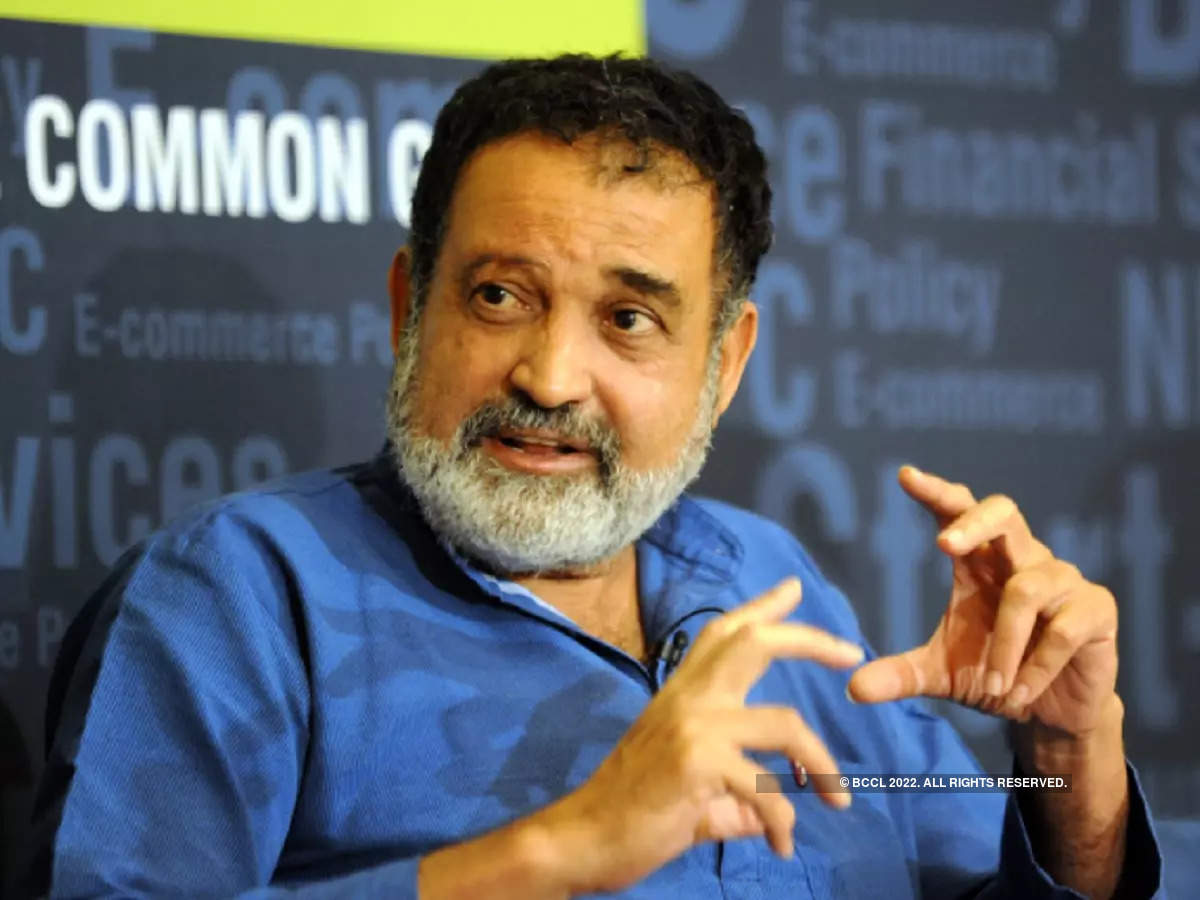
TV Mohandas Pai was a Director at Infosys until recently. He is a Chartered Accountant, but his views as a well-informed outsider to the IIT system, are quite relevant. The article was published in The Economic Times.

IITs may become less relevant
By Mohandas Pai

The IITs have completed 50 years and have helped build India. They were set up for producing high quality technical human capital for India and have met their objectives. But, as is the character with such institutions, they have not changed with the times and are not providing India with what she now needs. They have remained largely teaching institutions , as they were set up, not transforming into research based, innovation driven agents of change for the India that is now emerging.They seem unwilling and unable to change – overburdened by work, driven by a small vision, starved of adequate resources and owned by an apathetic master. They seem to be in a state of perpetual decline though there are some bright spots, but not large enough to meet the needs of time.Very recently, a Union Minister made a statement that IITs are known for their world class students and their world class alumni, of which he presumed himself to be one but not world class faculty. Partly true, but forgetting that he and his ilk are largely responsible for this outcome. The IITs today enjoy substantial academic autonomy but lack adequate administrative and financial autonomy . The IIT boards and the directors are unable to take any financial decision which they deem fit without the approval of the government . Even for an overseas travel of the director or the faculty, permission is needed. They are subject to austerity measures of the government, a perfect situation to emasculate an educational institution.

The demand for an IIT seat is enormous and has spawned a tutorial industry that earns more revenues than the IITs themselves. This has resulted in large number of students spending up to two years of their youth going to cramming schools learning pattern recognition, forgetting the art of thinking and problem solving knowing that their lives are made once they get entry into the hallowed portals. Today about 60% or more of the intake is from the coaching mandis. This has also resulted in many bright young Indians deciding not to undergo the ordeal and go overseas for higher education. 250,000 of them study overseas, over 110,000 in the United States, about 45,000 in the UK spending about $ 6bn on fees and costs annually, depriving this country of much needed resources for education and talent, adding to the wealth of those countries. The IITs too have steadfastly refused to change. They remain small by global comparison . They are between 6,000-9 ,000 students in size, with an annual intake of about 500 PhDs, and about 1,000 undergraduates.

Overall , the 15 IITs graduate 7000 undergraduates, 6000 post graduates and about 1700 PhDs annually . Sadly only about 2% of the undergraduates go on to their masters and PhD in the IIT system. The IITs hold fast to the idea that by squeezing input they can get a quality output, an idea that has been consigned to the dustbin of history. Increasing the scale and size can give them the diversity of talent, the resources, the ability to have more quality faculty and the depth and width needed for an elite educational institution. Even the current increase in size was forced on them because of social initiatives. Contrast this with China. China today has about 1,000 universities, each between 25,000 to 40,000 students, running fully residential courses, turning out over 50,000 PhDs annually . China may, in the next 20 years, it will overtake the United States as the world centre of higher education.The Top Five Chinese universities , in the global top 50 now, have between 25,000-35 ,000 students and about 7000 PhD students each. China has invested for growth through quality institutions while India has lost out and is oblivious to it. Even in comparison to the engineering education system in India the IITs have become insignificant today. 10 years ago the IITs made up about 10% of India’s engineering output of human capital. Today they are less then 2% and declining further. India currently has about 3800 engineering colleges with an annual intake of 1.2 million, a size to rival China. Yes, about 50% of the colleges are of indifferent quality, some rank bad; but they are offering an answer to India’s youth. About 1,000 of them are of reasonable quality , very many have improved over time. No university or college was founded great, they evolved over time, so there is hope for India that these bad colleges will provide the sinews for India’s growth and answer the need of India’s young.In the meantime, the IITs will live in their ivory tower and possibly become less and less relevant to India’s need as neither are they meeting India’s need for more human capital nor producing the kind of PhDs India needs. What needs to be done to change this? The government has all the answers setting up many eminent committees, the latest of which is the Anil Kakodkar Committee of which the author is a member. The solutions are known to all, the government, the policy makers, the academics and the intelligentsia .

Total autonomy to the IITs, driven by a board of governors with a new vision, accountability through public opinion and transparency. Yet there is resistance to change, from government for the fear of losing control, from some part of academia because they become more accountable and lose the shelter of blaming the government for all ills and for inadequate performance and from some opinion makers who believe that the existing feudal system should continue since they have a disproportionate influence on them.

The best solution is to open up the education system and allow competition, the dreaded word in academics, to come forth. India should revise her educational policies and allow the private sector to set up “innovation universities” granting them all that they need. Full autonomy, academic, administrative and financial to chart their own future. Some safeguards are needed, as this is a public good. A large corpus of say Rs 100 crore, an open merit based admission policy, a faculty compensation policy based on minimum UGC scales and an assurance that they will aim to be amongst the top 100 in the world over the next 25 years. To ensure access to the merited we need a national scholarship scheme which will fund students. India needs to trust the genius of her citizens to create institutions that are world class and not look at them through myopic eyes with suspicion.

India’s future is too important to be left to the benevolence of an apathetic, insensitive government which has destroyed academic excellence over the years, driven her young out and even today shows callous indifference. See the state of our universities today, so many have fallen from the high standards they had, see the state of the Presidency Colleges, it is indeed sad! Most policy makers and leaders have solved their personal issues by sending their children out to get a good education, so they are not impacted by the poor quality of higher education in India. It is the middle class and the poor who suffer, because they love their country more and see their future here; maybe they too want to take flight but do not have the resources to. As the saying goes “Yankee go home, but take me with you.” But will competition work? Yes, it will indeed.

The engineering colleges have opened up, very large numbers set up by political influence and plain bribery but they have served another purpose. Today there is a flight to quality. The bad colleges are dying since students have a choice, they are voting with their feet. The good ones are expanding and seeing greater demand. The market mechanism has worked, not by design but by serendipity. So there is hope. Look at various other sectors today. Bharti has made BSNL redundant and has given us a choice, Jet has overtaken Air India and given us a choice, the power system in Mumbai is still the best, and in education the Indian School of Business has turned our IIMs inside out. The IIMs actually want reform, expansion and are concerned about their future .

Competition and an open liberal environment for higher education will work . India’s best higher education institution, the Indian Institute of Science , was started by a private citizen many years ago and is still the best we have. India’s needs in higher education are too large to be met by the government , they need the genius of India’s citizens to meet them.

.

Birthday 2011

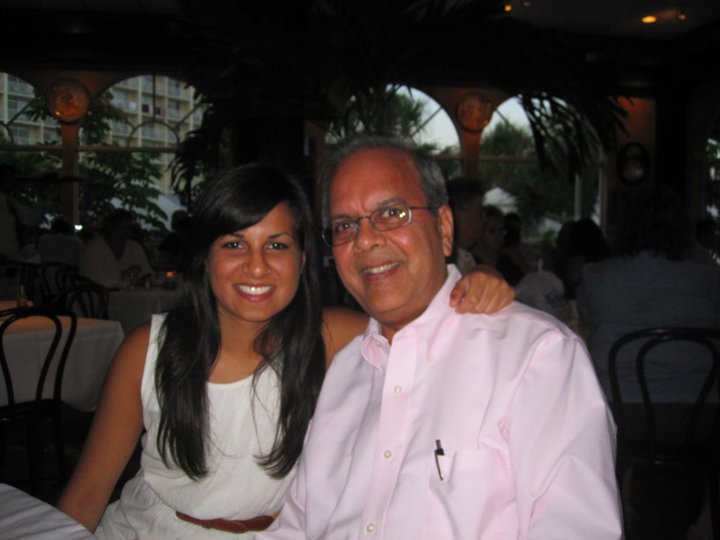
At the 2011 birthday celebration shared with my daughter.

A birthday shared with my daughter

My daughter seems to be looking forward to the possibilities in life… maybe there is a bit of apprehension.

Now that I have lived life somewhat, it is time to review it.


Here is a memory of 18 years ago…

My daughter’s expression is one of curiosity… what is this life all about?

I seem to be happy and simply living the life.

.

KHTK 5: ATENCIÓN

La atención no óptima es un indicador poderoso de dónde debería uno mirar.


TEORÍA

La atención nos ayuda a hacernos conscientes de las cosas. Normalmente nos es posible dirigir nuestra atención libremente y ponerla donde sea que queramos. Éste es el estado óptimo de la atención.

La atención cae hacia un nivel no óptimo cuando se mantiene regresando a una misma cosa. Por ejemplo, cuando uno no se siente bien físicamente la atención se queda más o menos fija en el cuerpo.

La atención tampoco es óptima cuando no se puede enfocar. Por ejemplo, cuando uno pierde su trabajo, el futuro repentinamente se vuelve incierto y la atención se dispersa entre muchas cosas.

CUANDO LA ATENCIÓN NO ES ÓPTIMA, YA SEA QUE SE ENCUENTRE FIJA O DISPERSA, SIEMPRE HAY UNA SITUACIÓN O CONDICIÓN QUE NECESITA RESOLVERSE. 

Entonces, la atención no óptima puede ser usada como indicador para determinar dónde mirar más cercanamente. Uno puede entonces descubrir inconsistencias que necesitan resolverse. Una inconsistencia sería algo que no tiene sentido. Los siguientes pasos pueden ser útiles: 

  1. Mira el área general en la que la atención no es óptima.
  2. Determina cuidadosamente el propósito básico de esa área.
  3. Visualiza cuál sería la escena ideal si ese propósito se estuviera cumpliendo.
  4. Nota las inconsistencias que ahora se hayan hecho visibles.

Simplemente hazte consciente de las inconsistencias. Luego repite los pasos anteriores para cada área de inconsistencia hasta que nada esté escondido o suprimido y la atención esté libre y estable.


APLICACIÓN

En ausencia de un compañero puedes hacer este ejercicio por ti mismo. El guía puede ayudar al estudiante de la siguiente manera: 

(A) Repasa la sección de teoría con tu estudiante.

  1. Responde sus preguntas de la mejor manera que te sea posible.
  2. Revisen los materiales de teoría hasta que no queden preguntas sin resolver.
  3. Asegúrate de que el estudiante entiende los puntos principales destacados en negritas en la sección de teoría.

(B) Haz que el estudiante haga los ejercicios en secuencia.

  1. Guía al estudiante a través de los ejercicios.
  2. Haz que el estudiante mire cuidadosamente cada área de atención no óptima. Déjalo descubrir y experimentar las inconsistencias hasta que su atención esté libre y estable.
  3. Mantén una comunicación abierta y amigable acerca de la experiencia que está teniendo el estudiante en el ejercicio.


EJERCICIOS

ESTOS SON LOS EJERCICIOS PARA KHTK 5. UN EJERCICIO ESTÁ COMPLETO CUANDO EL ESTUDIANTE ESTÁ SATISFECHO DE HABER REALIZADO TODOS LOS PASOS

Ejercicio 5-1

Recorre tu casa, y localiza áreas de atención no óptima. Aplica los cuatro pasos enlistados en la sección de teoría hasta que no quede nada escondido o suprimido en esa área. Experimenta completamente lo que aparezca hasta que la atención esté libre y estable. 

Ejercicio 5-2

Realiza una caminata en tu vecindario, y localiza áreas de atención no óptima. Aplica los cuatro pasos enlistados en la sección de teoría hasta que no quede nada escondido o suprimido en esa área. Experimenta completamente lo que aparezca hasta que la atención esté libre y estable. 

Ejercicio 5-3

Haz un recorrido en el parque. Mira objetos tan lejanos como tus ojos alcancen a ver, y localiza áreas de atención no óptima. Aplica los cuatro pasos enlistados en la sección de teoría hasta que no quede nada escondido o suprimido. Experimenta completamente lo que aparezca hasta que la atención esté libre y estable. 

Ejercicio 5-4

Visita una cafetería, observa los alrededores, y localiza áreas de atención no óptima. Aplica los cuatro pasos enlistados en la sección de teoría hasta que no quede nada escondido o suprimido. Experimenta completamente lo que aparezca hasta que la atención esté libre y estable. 

Ejercicio 5-5

Recorre lugares en los que haya mucha gente, como el mercado, la estación de autobuses o el aeropuerto, discretamente observa las personas y los alrededores, y localiza áreas de atención no óptima. Aplica los cuatro pasos enlistados en la sección de teoría hasta que no quede nada escondido o suprimido. Experimenta completamente lo que aparezca hasta que la atención esté libre y estable.


 .

The Self as the Looker

Most religions and philosophies stop at SELF as the ultimate source. A person, soul, spirit, etc., are examples of self, but then, in their turn, they are thought to be created by a more basic self called God. The basic self is considered to be eternal. It has neither beginning nor end. It cannot be described. The idea of looking beyond self is not even entertained.

What is self really?

Self is so intimate to one, yet one wonders what self truly is. Self may only be evaluated if there is something else of comparable magnitude. Let’s look at self as knowable compared to unknowable (beyond consideration). This is what Buddha did and found that self is not fixed. “Self is in flux like anything else.” said Buddha, “And furthermore, self may be completely extinguished.”

So what is the concept of self that Buddha had in mind?

To Buddha, self was a manifestation. Like any manifestation, self appeared, underwent changes, and ultimately disappeared.  It belonged to the knowable universe, which is the universe of consideration. But as self seems to underlie all considerations, it might be extending back into the unknowable too.

The Self forms the interface between knowable and unknowable.

Self interfaces with the knowable universe through consideration. Its interface with unknowable has to be by means other than consideration. It may act something like the “squaring function” that converts imaginary into real numbers.

Self may act to convert what is unknowable into knowable considerations.

This conversion alters what is unknowable into knowable. This is where “intuition” seems to lie. Intuition occurs out of the blue. This phenomenon is beyond logic. Logic is essentially the association of existing considerations.

The considerations persist as being knowable. But, recognition of the true nature of consideration might dissolve them back into unknowable. The unknowable may be looked upon as the state of deep understanding remaining after the cessation of all considerations. This state is recognized as NIRVANA in Buddhism.

The unknowable may be looked upon as an indescribable state of “no form, no consideration.” 

In the knowable universe, the core of a human being may be considered to be the self. The rest of the being may be looked upon as layers of considerations enveloping the self.  Please see Thinking & ThoughtThese layers filter what is being perceived. They judge what is there and pass it as perception.

A human being is the basic self covered by layers of considerations that filter and modify incoming perceptions.

As the filters interpret perceptions instead of simplifying them, the perceptions gains persistence. The persistence may gradually become so strong that it appears as the solid physical universe. This is also the self being represented as a physical body.

Perception, when continually interpreted, become increasingly persistent to a point of solidity we know as the physical body, and its extension, the physical universe.

Thus, it may be said that the physical universe is being generated by the very nature of these filters that are continually “judging.” These filters constitute the very nature of the being. Thus, as long as the being continues to be “judgmental” knowingly or unknowingly, the problem of the physical universe will remain.

The deeply judgmental nature of the being is generating the physical universe and all its problems and situations.

But, if one wants to dissolve the problems and situations that make up this universe, then all one has to do is to stop being judgmental and start looking at things for what they are. Some forms of judgment are anticipating what is there, or being resistive to what is there. This is covered in the KHTK essays.

One may start dissolving problems and situations by looking at them non-judgmentally for what they are.

Interestingly enough, looking per KHTK brings into view the filters that the self is looking through. As these layers of filters come into view they start to dissolve. The person then starts on a journey toward regaining his or her awareness as the basic self.

The basic self is aware without being judgmental.

Ultimately, the self itself may dissolve leaving behind an indescribably deep understanding that cannot be appreciated otherwise.

The unknowable may be appreciated only after the self is dissolved.

.

NOTE (added 7/20/12):

The center of gravity of an object is essentially the resultant of all the force vectors acting on the molecules of that object. Similarly, a center of consciousness may be looked upon as the resultant of all mental forces and energies associated with you through awareness at that moment. This center of such mental forces and energies may be called SELF.

A center of gravity is relatively stable compared to the moving particles of that object. Similarly, SELF may appear relatively stable compared to all the mental forces and energies, which are in a flux.

.