Author Archives: vinaire

I am originally from India. I am settled in United States since 1969. I love mathematics, philosophy and clarity in thinking.

Self-guided Meditation

Buddha.Head

Previous: Mindfulness Meditation
Next: Guided Meditation

Once you have become comfortable with mindfulness meditation, you may advance to self-guided meditation.

The purpose of self-guided meditation is to resolve doubts and perplexities that commonly occur in one’s life. Meditate on the doubt or perplexity uppermost in your mind by bringing up all data related to it, and letting it associate freely as described in this exercise.

.

Mindfulness Meditation 2: Let the confusion resolve through free association.


  1. Bring up in meditation the doubt or perplexity uppermost in your mind. For example, it could be a doubt regarding marital relationship.


  2. Let yourself be grounded in your body through awareness of breathing; and in your mind through awareness of the order in the universe.


  3. Let the data regarding the doubt and perplexity associate freely as it comes up. Do not avoid, resist, or suppress any thoughts, emotions, feelings, sensations, etc. Let anything suppressed be released.


  4. Do not anxiously dig into the mind for answers, or act out impulsively. Let the mind unwind itself. This process goes deeper than any logic.


  5. Broaden the context as wide as possible. For example, when doubt relates to marital relationship then broaden the context to all marital relationships that you are aware of, such as, those of parents, friends, acquaintances, etc.


  6. Look at basic purpose of the key area of doubt and perplexity. For example, in the case of marital relationship you would look at the purpose of marriage not only in yours, but also in other cultures.


  7. Work out the ideal scene for that area. For example, in the case of marital relationship, look at the actions and condition, which make a marital relationship happy and successful in the broad context.


  8. Place the specific data of your situation in the broad context, and let free association sort it all out.


  9. Repeat the above steps using the 12 aspects of mindfulness until the doubt and perplexity resolve.


  10. Other doubts and perplexities may arise during this process. Apply the same steps as above to resolve them.


.

 Major revision on 7/29/16


The Self (old)

Previous: The Dynamics
Next: The Human Mind

Nobel Laureate in physics, Erwin Schrodinger, who introduced Wave Mechanics to the world, remarked in his book “My View of the World”:

“If we agree to leave aside, without further discussion, as altogether too naively puerile, the idea of a soul dwelling in the body as in a house, quitting it at death, and capable of existing without it, then I think that one of the principal problems, if not the principal problem, without whose solution there can be no final peace for the metaphysical urge, can be quite briefly characterized as follows.

“Consider these four questions, which cannot, as a whole, be satisfactorily answered with any combination of ‘yes’ and ‘no’, but rather lead one on in an endless circle.

(1) Does there exist a Self?
(2) Does there exist a world outside Self?
(3) Does this Self cease with bodily death?
(4) Does the world cease with my bodily death?”

.

The Self is generally viewed as the sense of ‘I’. I know myself through the feelings and sensations of my body. I am intimately associated with this body through which I perceive things around me. This body provides me with an identity and individuality. This body exists, and therefore, ‘I’ (Self ) exists.

I do not feel the sensations from other bodies, so I am uniquely associated with one body only. There is a world that exists outside the body. So the world must exist outside the Self.

My observation is that other people are gone when their body dies. I am so intimately connected with the physiology of the body that I must also disintegrate with the body at death.  So the Self ceases with bodily death.

The world obviously has continued after other people have died. So the world would not cease with my bodily death. But it is also true that as I cease to exist, the world would cease to exist for me.

The above is a self-centered view that leads to the conclusion that the world ceases for the self that has dissolved but it continues for the selves that continue. So, the Self and the world must consist of the same ‘empirical’ elements. We must reject a world existing outside ‘Self’, because that to which we give the name ‘world’ is only a complex within the Self.

Yet my own body is only a complex within the world-complex. It is inconsistent to think that what is known as ‘world’ would be completely eliminated by a destructive attack on one small part of itself—of which, furthermore, it contains millions of examples.

Please note that I have borrowed the argument above from Schrodinger. This brings up the question, “How is ‘Self’ related to the ‘world’?”

The obvious answer is that both ‘Self’ and the ‘world’ must be greater than the body. Some aspect of Self, therefore, must continue after bodily death.

The sensations and perceptions through the body cease after the bodily death. Therefore, the sense of identity and individuality must also cease with bodily death. But there is a universal sense we have when we assume the viewpoint represented by philosophy, science and mathematics. This is like the universe perceiving itself through itself. Such universal sense, though in a much more intimate way, must remain after bodily death.

A universal Self seems to emerge with bodily death. It is no longer intimate with a single body. It is intimate with the whole universe.

The universal self is the same across the board from person to person. The plurality of individuality relies on the sense of body. After bodily death there is no more individuality. The continued individuality projected through the idea of “soul” is just an idea arising from wishful thinking.

The Self seems to have two parts. One part is unique to the body because it feels the sensations of one body and not those of other bodies. It is individualistic as it thinks in terms of emotions and memories in the narrow context of body. The second part of the Self is not narrow at all but is universally broad and the same from person to person. It thinks in terms of universal principles. It forms the genesis of all our knowledge. If the first part thinks in narrow terms, such as, 3+5 = 5+3, the second part thinks in broad terms, such as, A+B = B+A, where A and B can be any two numbers. It is the individualistic part that dissolves at bodily death. The universal part remains.

Self may be viewed as a spectrum of consciousness that condenses into the plurality of individuality in one direction, and expands into the oneness of universality in the other direction.

Nirvana of Buddhism is the cultivation of that oneness of universal consciousness of Self.

.

Guided Meditation

Mindfulness-Meditation-Freshness-Of-Experience-300x300

Previous: Self-guided Meditation
Next: Visualization

A Guide helps the student resolve his doubts and perplexities through mindfulness meditation. The Guide’s main role is ensuring that the principles of mindfulness are fully applied.

The Guide helps the student narrow his doubts and perplexities down to an effective item that the student then meditates on.  The Guide uses total objectivity and compassion in guiding the student.

.

Mindfulness Meditation 3: Mindfulness meditation with expert guidance.

  1. He listens compassionately to the student’s doubts and perplexities.

  2. He tries to understand the reason underlying the student’s doubts and perplexities.

  3. The Guide is totally non-judgmental and does not analyze any data given by the student.

  4. Only when he does not understand student’s “reasoning” that he questions the student.

  5. The student then meditates on the question asked by the Guide and provides an answer.

  6. This Q&A continues until the student comes up with something that simply makes no sense.

  7. This is the item, which the Guide assigns to the student to meditate upon until it resolves.

  8. The student meditates on that item using the mindfulness principles of no resistance, no suppression and no interference while letting the mind unwind on its own.

  9. When the student runs into any trouble, the Guide helps him enlarge the context of meditation in various ways.

  10. The Guide answers the student’s questions in a way to help the student arrive at his own realizations.

  11. The Guide assists the student with total objectivity and compassion.

The cycle continues until the student’s item resolves.

.

Electrons in Atom

Knowledge-Units-conversion-image-2

Reference: Spacetime 5: A New Model of Atom

The section Outline of Schrodinger’s Theory from Eddington’s book, “The Nature of the Physical World,” provides a wonderful description of Schrodinger’s model that may be compared to the Disturbance theory.

According to Schrödinger there is a sub-aether, which is rippling at a very high frequency. These ripples converge and coalesce to generate disturbed areas in space that act as discrete particles, such as, electrons.

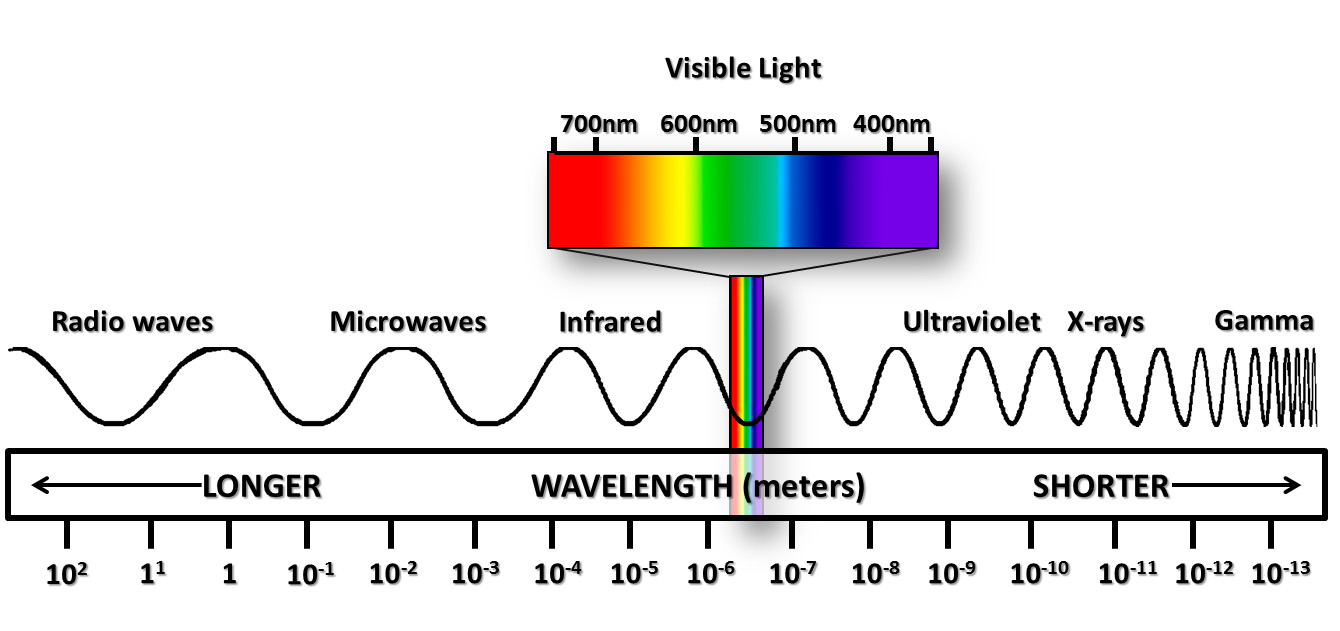
This is very much in line with the Disturbance theory, except that Schrödinger’s sub-aether is identified as space. The ripples in space result in a frequency spectrum that spans from undisturbed space of zero frequency at the lower end to extremely high frequencies at the upper end that collapse into mass. The very high frequency ripples of Schrödinger’s model are identified as the gamma ray region of the electromagnetic spectrum.

In Schrödinger’s model the velocity of ripples varies with wavelength or period. Those of shorter period travel faster. The speed may also be modified by local conditions, which may be compared to field of force.

In Disturbance theory, the speed of propagation is meaningless in subatomic regions where the constitution of space and time itself is changing because of relativistic effects, though space/time maintains a constant ratio ‘c’. The monitoring variable, therefore, is not speed but frequency.

The stormy regions of Schrödinger’s model are high frequency regions that are viewed as particles. In the Disturbance model they are viewed as 3-D “whirlpools” existing in a low frequency background. The high frequency gradients defining them influence the surrounding low frequency region.

The Schrödinger’s Equation is based on the idea of conservation of energy. The terms of the Schrödinger equation can be interpreted as total energy of the system, equal to the system kinetic energy plus the system potential energy. This equation is solved for the motion of sub-atomic particles. Frequency is recognized as the energy of the particle, and it provides the relationship between period and energy per the h rule. The motion of the Schrödinger’s particle is represented by the group-velocity and not the wave-velocity.

In Disturbance theory, the 3-D whirlpools are not viewed as particles. Instead they are made up of spherical shells. Frequency is associated with the excitation energy of these shells. Each cycle of this frequency has an energy equal to the Planck’s constant h. The excitation energy for these shells is represented by the frequency of light absorbed or emitted, and not by the high frequency that make up the shells.

The Schrödinger’s model defines the point location of the subatomic particle by a probability distribution function. This is not necessary for the shell represention of the model in Disturbance theory. The shells are made up of high frequency waves. They do not constitute a point particle. The only particle is the nucleus of the atom where extremely high frequency waves collapse as mass.

The Schrödinger’s equation was successfully solved for the emission of light from a hydrogen atom. The nucleus was represented by a “field of force” (potential energy) that influenced the motion of the electron (kinetic energy). The solution was a discrete set of frequencies that described the possible states of the electron. It agreed with Bohr’s quantized energy levels. It even provided the energy levels observed, which could not be predicted from the Bohr’s model. It was a considerable advance to have determined these energies by a wave-theory instead of by an inexplicable mathematical rule.

Eddington says, “It would be difficult to think of the electron as having two energies (i.e. being in two Bohr orbits) simultaneously; but there is nothing to prevent waves of two different frequencies being simultaneously present in the sub-aether. Thus the wave-theory allows us easily to picture a condition which the classical theory could only describe in paradoxical terms.” Light emitted from an atom is the difference between two energy levels of the electron. This is viewed in Schrödinger’s theory as the “beat” produced by two waves that are close to each other in frequency as in heterodyning.

This places the particle model of electron in doubt. This problem is not there in the Disturbance theory where light emission may be explained as “beats” produced by two adjacent oscillating shells.

Schrödinger assumes a wave function ψ in sub-aether as an elementary indefinable of the wave-theory. The probability that the particle or electron is within a given region is interpreted as being proportional to ψ2 in that region.

In Disturbance theory, the atomic structure consists of shells whose frequencies are in the gamma range. These frequencies increase as one moves closer to the center of the atom. These “shells” oscillate when excited. Localization occurs only in terms of the shell that is oscillating. Two closely resonating shells have “beats”that appear as light absorbed or emitted.

An oscillating shell may represent an electron inside the atom. As shells oscillate in succession, the electron may appear to move. The concept of “probability” in Schrödinger’s model may thus be given a meaning through Disturbance theory.

The “shells” increase in frequency as they get closer to the center until they “collapse” to form the nucleus. In a nucleus, these shells are so close together that they approach the classical definition of a particle. 

The picture of electron as a classical particle is much less proper compared to the nucleus. This lack of propriety is expressed indirectly by Heisenberg’s uncertainty principle.

Schrödinger’s sub-aether requires six-dimensions to describe two electrons within an atom, thus the sub-aether does not exist in physical space. There is no such problem with the model per Disturbance theory, which does not require additional dimensions to describe two electrons. 

Summary

The sub-aether of Schrödinger is an arbitray concept that is not consistent with real space. It becomes complex very rapidly as more electrons are considered. There is no sub-aether. There is simply the physical space. Disturbances in this space are adequately described  by the broad electromagnetic spectrum. Schrödinger’s very high frequencies of sub-aether are better described by the  gamma range of the electromagnetic spectrum.

In reality, there is no electron, as a particle, possible within the atom that can assume two different energies simultaneously. Instead of particles there are cascading spherical shells in the atom with frequencies in the gamma range. These frequencies increase toward the center of atom. Instead of electrons there are oscillating shells. When oscillating, some adjacent shells produce lower frequency “beats”, which appear as light absorbed or emitted by the atom.

There are no electrons as particles in atom. There are only high frequency shells that respond to excitation.

.


Mindfulness App _: See Things as They are

See

Reference: Mindfulness

Being established in mindfulness is a mental state of ‘seeing things as they are’. It does not matter whether your eyes are closed or open; whether you are sitting, standing or walking; whether you are engaged in some activity or not.

You practice ‘seeing as they are’ in all modes of existence.

.

MINDFULNESS APP _: Practice seeing things as they are.

Give out these coaching instructions one every minute slowly and clearly. This will allow the student time to settle down after each instruction.

START: Call out the instructions 1 to 15 per Mindfulness Prep 4: Final Preparation.

  1. We shall now practice seeing things as they are… first with eyes closed and then with eyes open. Keep your eyes closed.

  2. Recall a playful moment from your childhood. Look at the “picture” that comes up. Consider it for what it is.

  3. Consider the thoughts present in that picture. Give them time to come up. See them for what they are.

  4. Consider the emotions present in that picture. Give them time to come up. See them for what they are.

  5. Consider the efforts present in that picture. Give them time to come up. See them for what they are.

  6. Now open your eyes and look at your hands for what they are.

  7. Look at the size of the hands for what it is.

  8. Look at the color of the skin for what it is.

  9. Look at the texture of the skin for what it is.

  10. Close your eyes. Recall a beautiful place that you visited. Look at the “picture” that comes up. Consider it for what it is.

  11. Consider the thoughts present in that picture. Give them time to come up. See them for what they are.

  12. Consider the emotions present in that picture. Give them time to come up. See them for what they are.

  13. Consider the efforts present in that picture. Give them time to come up. See them for what they are.

  14. Open your eyes. Find something in the room to look at.

  15. Look at the size of the object for what it is.

  16. Look at the color of the object for what it is.

  17. Look at the texture of the object for what it is.

  18. Close your eyes. Recall a moment when you met somebody you really liked. Take your time to consider that moment thoroughly for what it is.

  19. Open your eyes. Spot something in this room. Take your time to consider that thing thoroughly for what it is.

  20. For the next five minutes, first close your eyes and recall a pleasant moment from your past. Consider it thoroughly for what it is. Then open your eyes and spot something in this room. Consider it thoroughly for what it is. Alternate these two actions several times.

  21. (After five minutes) Let the mindfulness meditation session end.

.